
CoinQuest
25.6k Posts

CoinQuest
 Square Verified+
Report
Block User
X(Twitter):@CQuestOfficial_

#BinanceTurns7

Top Voices
High-Frequency Trader
3.6 Years
416 Following
125.7K+ Followers
228.7K+ Liked
2 Badges
Posts
All
Quotes
Videos
Live
·
--
Bullish
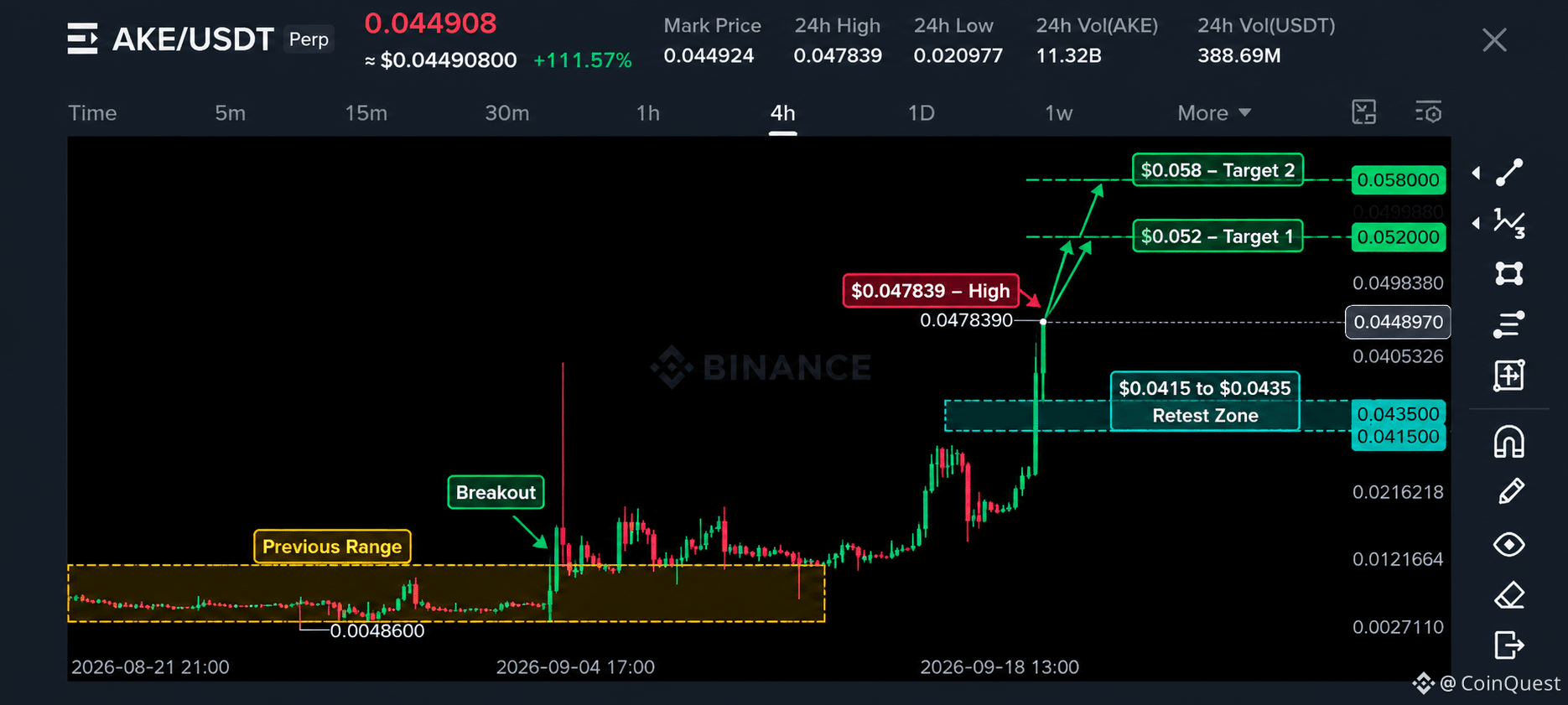
$AKE just went into full breakout mode🙄
After sitting in a long consolidation, price exploded through the previous range and pushed to $0.0478. The move is already too extended for me to chase around $0.045....
I'm looking for the breakout to prove itself on a pullback. If buyers defend $0.0415 to $0.0435, I like the continuation setup toward $0.0478, $0.052 and potentially $0.058
Lose $0.0385 and this setup is invalid then will try to short it ...
#AKE
$AKE just went into full breakout mode🙄
After sitting in a long consolidation, price exploded through the previous range and pushed to $0.0478. The move is already too extended for me to chase around $0.045....
I'm looking for the breakout to prove itself on a pullback. If buyers defend $0.0415 to $0.0435, I like the continuation setup toward $0.0478, $0.052 and potentially $0.058
Lose $0.0385 and this setup is invalid then will try to short it ...
#AKE
After sitting in a long consolidation, price exploded through the previous range and pushed to $0.0478. The move is already too extended for me to chase around $0.045....
I'm looking for the breakout to prove itself on a pullback. If buyers defend $0.0415 to $0.0435, I like the continuation setup toward $0.0478, $0.052 and potentially $0.058
Lose $0.0385 and this setup is invalid then will try to short it ...
#AKE
1
548
·
--
Bullish
30D trade $PIEVERSE 221.4 USDT
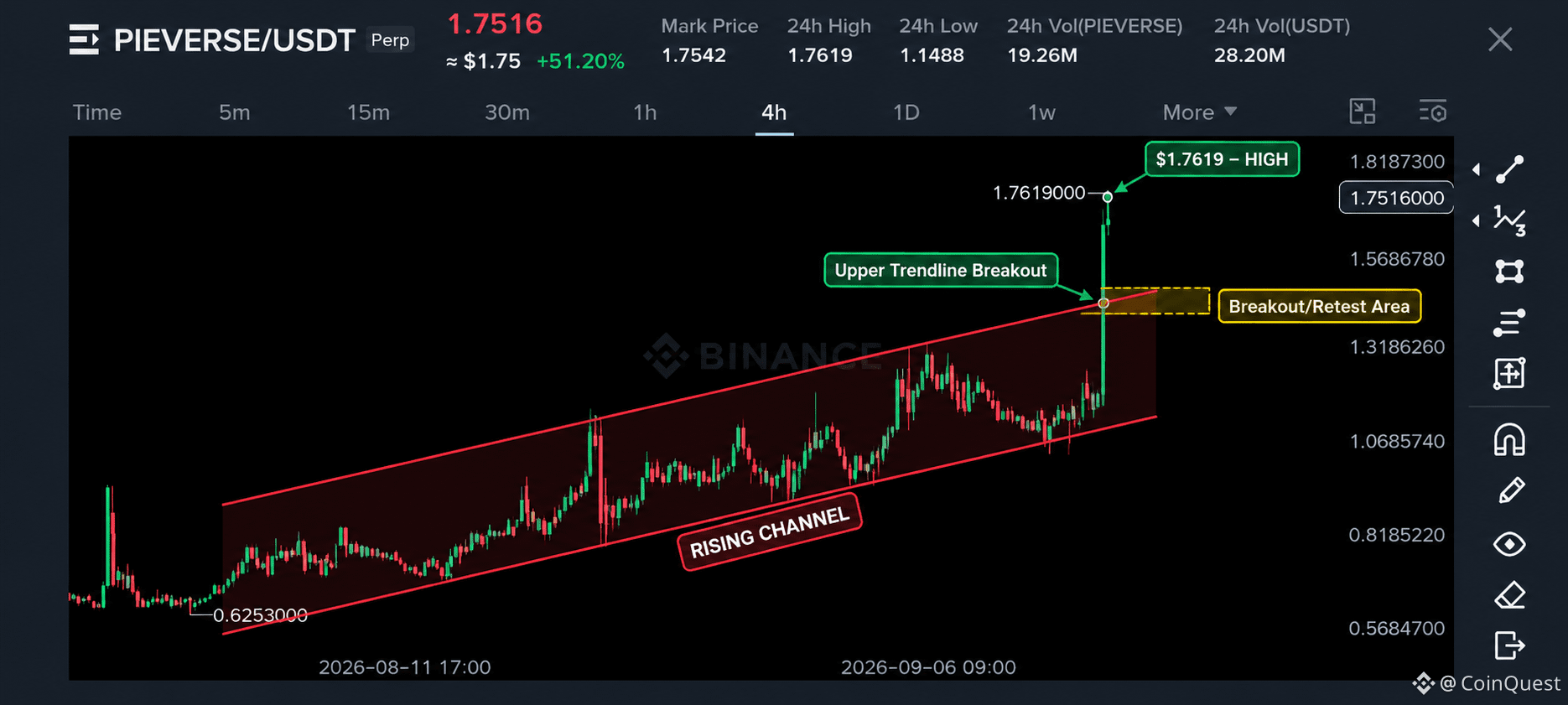
$PIEVERSE just broke out of a structure that had been building for weeks
Price was respecting this rising channel and finally pushed through the upper trendline with a huge expansion candle, taking it to $1.7619. After a move like this I'm not interested in chasing the candle
I'm watching the breakout area for a possible retest. If buyers defend that zone, the breakout can continue. If price falls back inside the old channel, this breakout starts looking much less convincing
For now the setup is about the retest, not FOMO...
#Pieverse
$PIEVERSE just broke out of a structure that had been building for weeks
Price was respecting this rising channel and finally pushed through the upper trendline with a huge expansion candle, taking it to $1.7619. After a move like this I'm not interested in chasing the candle
I'm watching the breakout area for a possible retest. If buyers defend that zone, the breakout can continue. If price falls back inside the old channel, this breakout starts looking much less convincing
For now the setup is about the retest, not FOMO...
#Pieverse
Price was respecting this rising channel and finally pushed through the upper trendline with a huge expansion candle, taking it to $1.7619. After a move like this I'm not interested in chasing the candle
I'm watching the breakout area for a possible retest. If buyers defend that zone, the breakout can continue. If price falls back inside the old channel, this breakout starts looking much less convincing
For now the setup is about the retest, not FOMO...
#Pieverse
832
·
--
Bearish
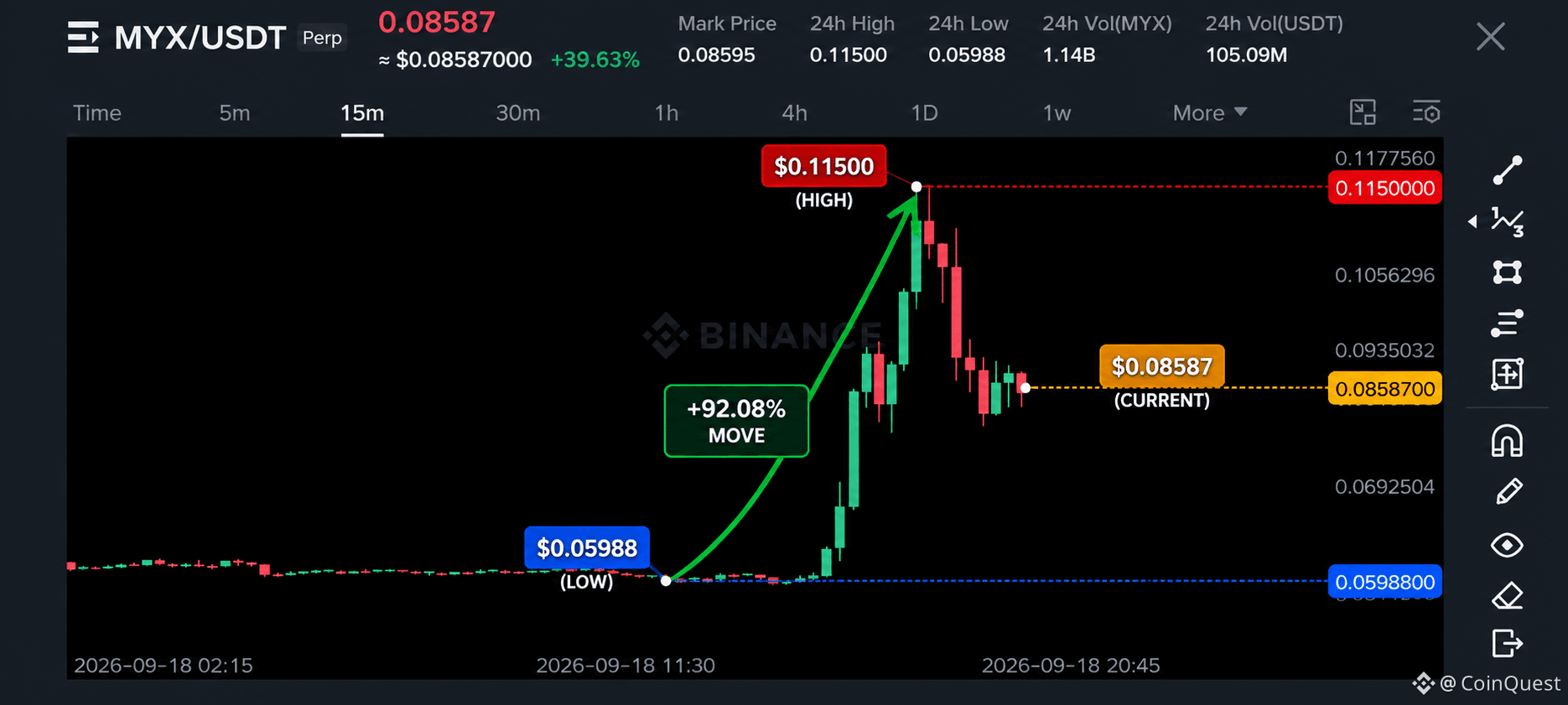
Congrats to everyone who caught the $MYX move 👏
We were watching this one when MYX was sitting around $0.06 and I warned not to blindly long or short after the sudden pump. Price then exploded toward $0.115 and has now pulled back to around $0.086
If you took the trade from the earlier setup, secure some profit and don't let a winning trade turn into a greedy one. MYX is still extremely volatile and the next important area I'm watching is $0.082 to $0.085
Nice move Binancians 🎯
Short Here 👇
{future}(MYXUSDT)
#MYX
Congrats to everyone who caught the $MYX move 👏
We were watching this one when MYX was sitting around $0.06 and I warned not to blindly long or short after the sudden pump. Price then exploded toward $0.115 and has now pulled back to around $0.086
If you took the trade from the earlier setup, secure some profit and don't let a winning trade turn into a greedy one. MYX is still extremely volatile and the next important area I'm watching is $0.082 to $0.085
Nice move Binancians 🎯
Short Here 👇
#MYX
We were watching this one when MYX was sitting around $0.06 and I warned not to blindly long or short after the sudden pump. Price then exploded toward $0.115 and has now pulled back to around $0.086
If you took the trade from the earlier setup, secure some profit and don't let a winning trade turn into a greedy one. MYX is still extremely volatile and the next important area I'm watching is $0.082 to $0.085
Nice move Binancians 🎯
Short Here 👇
#MYX
CoinQuest
·
--
Bullish$MYX just went from a boring $0.05 range to $0.115 in a matter of hours 🤯
And this is exactly where I don't want to be the guy blindly pressing long or short...
A move this violent can punish both sides. Chasing the green candle here is dangerous but shorting simply because it already pumped 90% can be just as painful if another squeeze comes in...
I'm watching $0.15 next for short opportunity ...
If MYX reaches that area and starts showing real rejection, that's where a small countertrend short could become interesting
Until then I'm staying out and letting the move develop
Sometimes the best trade after a crazy pump is waiting for the market to show you which side is actually trapped 👀
Short Trade :
Entry : 0.13-0.15
Targets : 0.11,0.10,0.085
SL : 0.165
#MYX
And this is exactly where I don't want to be the guy blindly pressing long or short...
A move this violent can punish both sides. Chasing the green candle here is dangerous but shorting simply because it already pumped 90% can be just as painful if another squeeze comes in...
I'm watching $0.15 next for short opportunity ...
If MYX reaches that area and starts showing real rejection, that's where a small countertrend short could become interesting
Until then I'm staying out and letting the move develop
Sometimes the best trade after a crazy pump is waiting for the market to show you which side is actually trapped 👀
Short Trade :
Entry : 0.13-0.15
Targets : 0.11,0.10,0.085
SL : 0.165
#MYX
500
·
--
Bearish
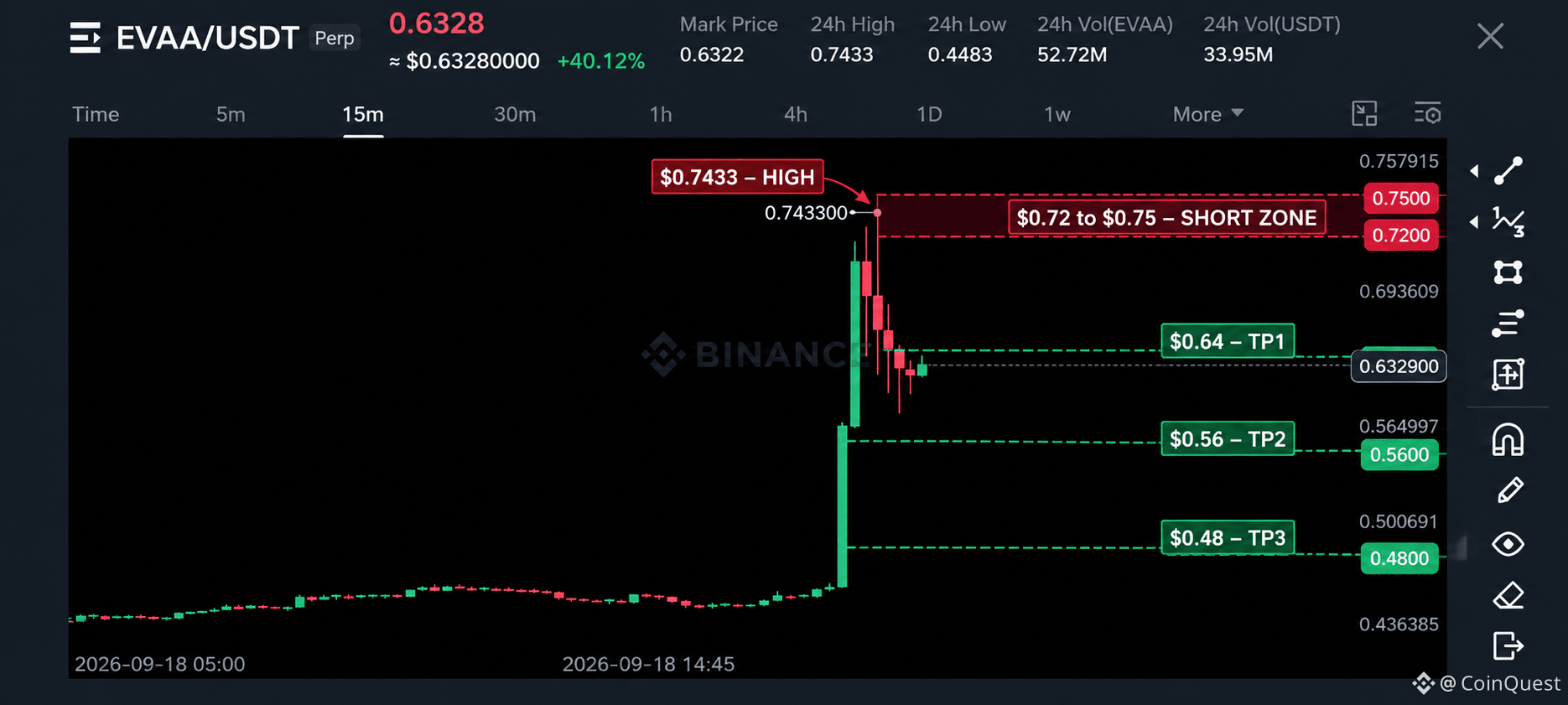
$EVAA gave the rejection we were watching
Price pushed into the $0.72 to $0.75 short zone and printed a $0.7433 high before getting rejected hard. Now it's back around $0.63 with the first target near $0.64 already reached
I wouldn't chase the short here after such a fast drop. If $0.64 turns into resistance again, the next levels I'm watching are $0.56 and $0.48. A move back above $0.75 would change the short thesis and $0.81 remains the bigger invalidation
Trade played out nicely so far 📉
Short here 👇
{future}(EVAAUSDT)
$EVAA gave the rejection we were watching
Price pushed into the $0.72 to $0.75 short zone and printed a $0.7433 high before getting rejected hard. Now it's back around $0.63 with the first target near $0.64 already reached
I wouldn't chase the short here after such a fast drop. If $0.64 turns into resistance again, the next levels I'm watching are $0.56 and $0.48. A move back above $0.75 would change the short thesis and $0.81 remains the bigger invalidation
Trade played out nicely so far 📉
Short here 👇
Price pushed into the $0.72 to $0.75 short zone and printed a $0.7433 high before getting rejected hard. Now it's back around $0.63 with the first target near $0.64 already reached
I wouldn't chase the short here after such a fast drop. If $0.64 turns into resistance again, the next levels I'm watching are $0.56 and $0.48. A move back above $0.75 would change the short thesis and $0.81 remains the bigger invalidation
Trade played out nicely so far 📉
Short here 👇
CoinQuest
·
--
$EVAA just bounced hard from $0.4094 and now it's running straight into the level that could decide this whole move 📉
The daily trend was bearish before this bounce and price has now reached the $0.73 to $0.75 area where the bigger resistance sits
That's the zone I'm interested in for a short
Entry $0.72 to $0.75
DCA $0.78
SL daily close above $0.81
TP1 $0.64
TP2 $0.56
TP3 $0.48
The bounce is strong so I'm not shorting just because EVAA pumped
I want sellers to actually show up around resistance
If $0.81 gets reclaimed on a daily close, this short thesis is invalid...
#EVAA
The daily trend was bearish before this bounce and price has now reached the $0.73 to $0.75 area where the bigger resistance sits
That's the zone I'm interested in for a short
Entry $0.72 to $0.75
DCA $0.78
SL daily close above $0.81
TP1 $0.64
TP2 $0.56
TP3 $0.48
The bounce is strong so I'm not shorting just because EVAA pumped
I want sellers to actually show up around resistance
If $0.81 gets reclaimed on a daily close, this short thesis is invalid...
#EVAA
238
·
--
Bullish
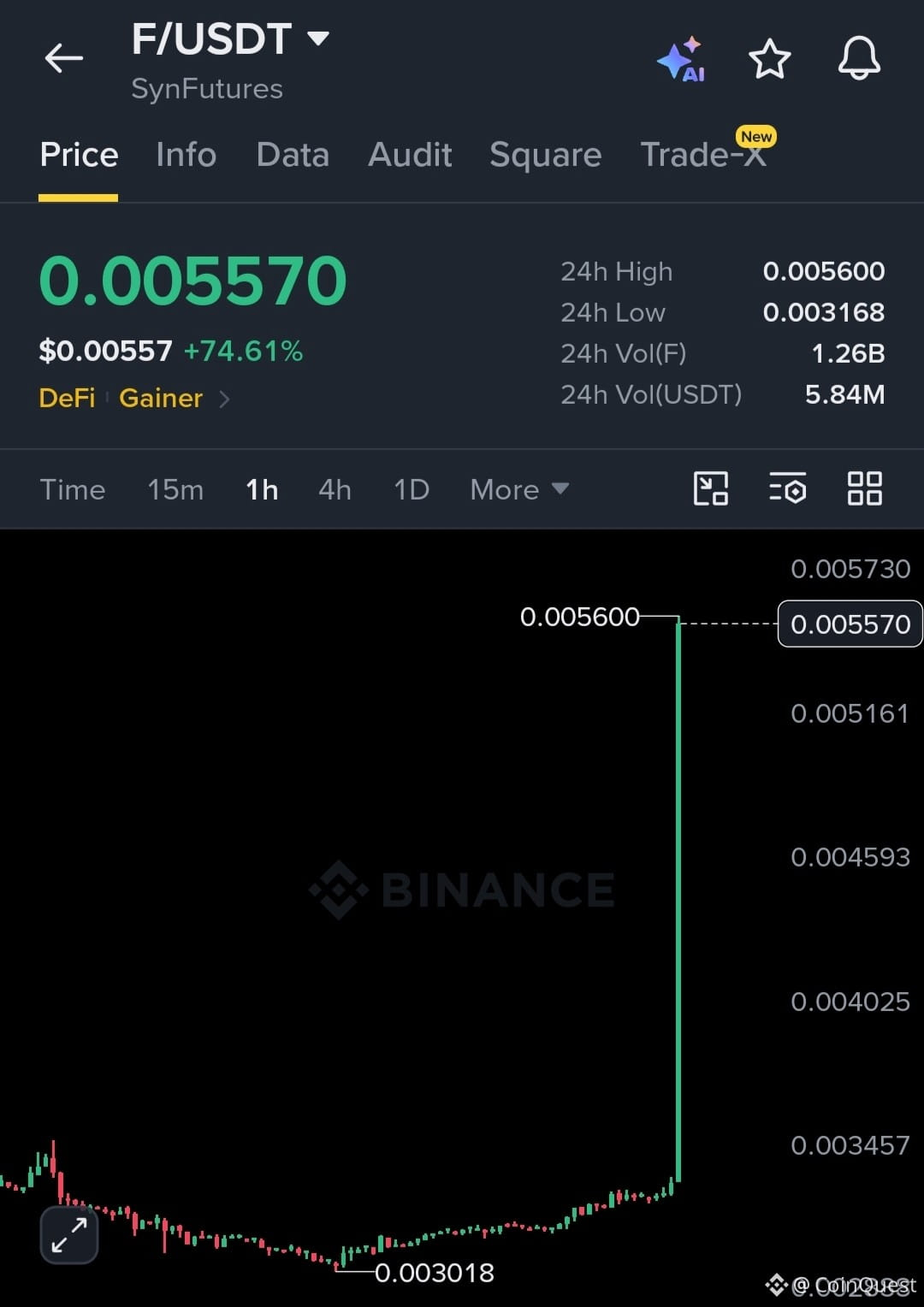
😅 $F JUST WOKE UP FROM A 2 YEAR SLEEP
Bro was chilling around $0.003 for days..... then suddenly decided 74% is enough for one candle 💀
$0.0056 hit..... whoever was sleeping on this one definitely woke up late 😂
Crypto never gets boring
$F said “watch me” 🚀
{spot}(FUSDT)
😅 $F JUST WOKE UP FROM A 2 YEAR SLEEP
Bro was chilling around $0.003 for days..... then suddenly decided 74% is enough for one candle 💀
$0.0056 hit..... whoever was sleeping on this one definitely woke up late 😂
Crypto never gets boring
$F said “watch me” 🚀
Bro was chilling around $0.003 for days..... then suddenly decided 74% is enough for one candle 💀
$0.0056 hit..... whoever was sleeping on this one definitely woke up late 😂
Crypto never gets boring
$F said “watch me” 🚀
1
409
·
--
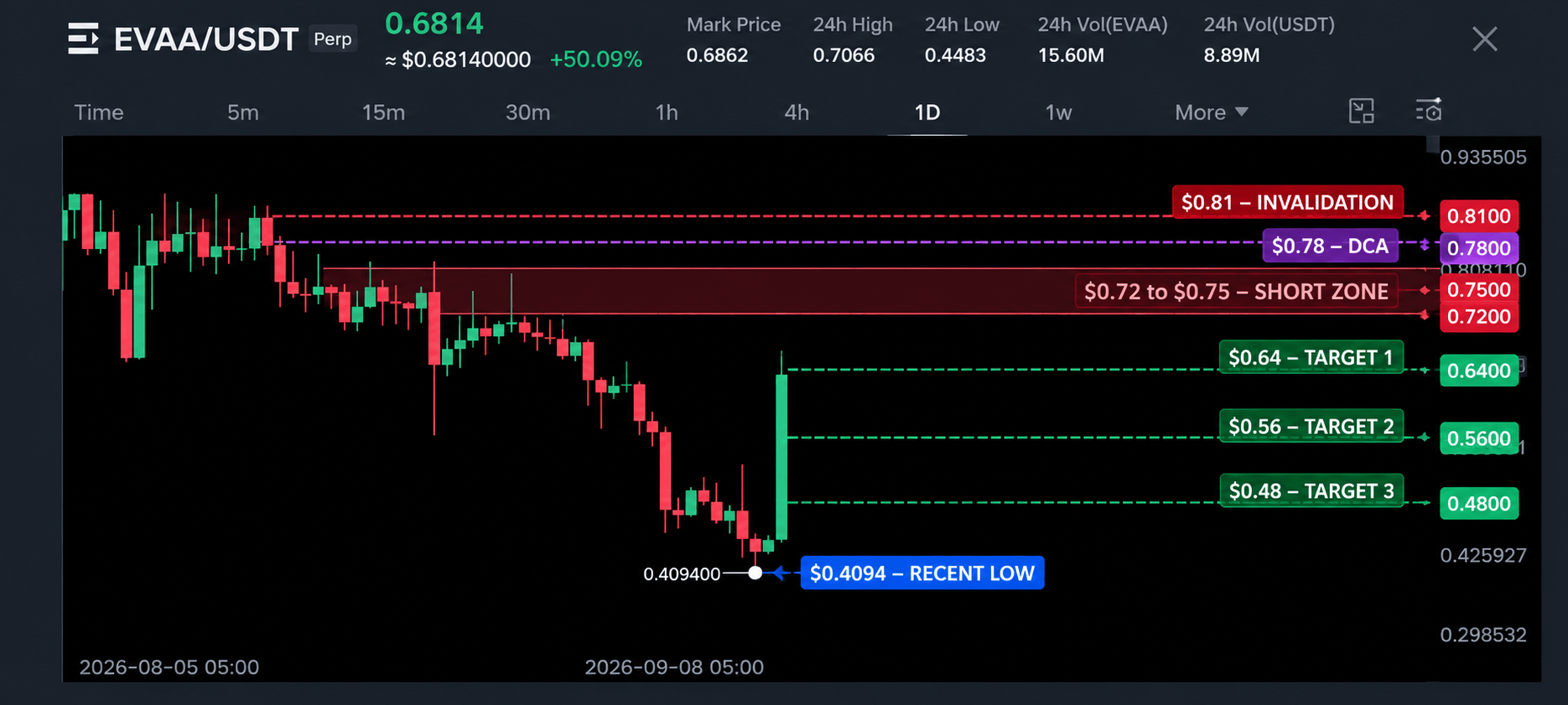
$EVAA just bounced hard from $0.4094 and now it's running straight into the level that could decide this whole move 📉
The daily trend was bearish before this bounce and price has now reached the $0.73 to $0.75 area where the bigger resistance sits
That's the zone I'm interested in for a short
Entry $0.72 to $0.75
DCA $0.78
SL daily close above $0.81
TP1 $0.64
TP2 $0.56
TP3 $0.48
The bounce is strong so I'm not shorting just because EVAA pumped
I want sellers to actually show up around resistance
If $0.81 gets reclaimed on a daily close, this short thesis is invalid...
#EVAA
$EVAA just bounced hard from $0.4094 and now it's running straight into the level that could decide this whole move 📉
The daily trend was bearish before this bounce and price has now reached the $0.73 to $0.75 area where the bigger resistance sits
That's the zone I'm interested in for a short
Entry $0.72 to $0.75
DCA $0.78
SL daily close above $0.81
TP1 $0.64
TP2 $0.56
TP3 $0.48
The bounce is strong so I'm not shorting just because EVAA pumped
I want sellers to actually show up around resistance
If $0.81 gets reclaimed on a daily close, this short thesis is invalid...
#EVAA
The daily trend was bearish before this bounce and price has now reached the $0.73 to $0.75 area where the bigger resistance sits
That's the zone I'm interested in for a short
Entry $0.72 to $0.75
DCA $0.78
SL daily close above $0.81
TP1 $0.64
TP2 $0.56
TP3 $0.48
The bounce is strong so I'm not shorting just because EVAA pumped
I want sellers to actually show up around resistance
If $0.81 gets reclaimed on a daily close, this short thesis is invalid...
#EVAA
6
1
5
3.1k
·
--
Bullish
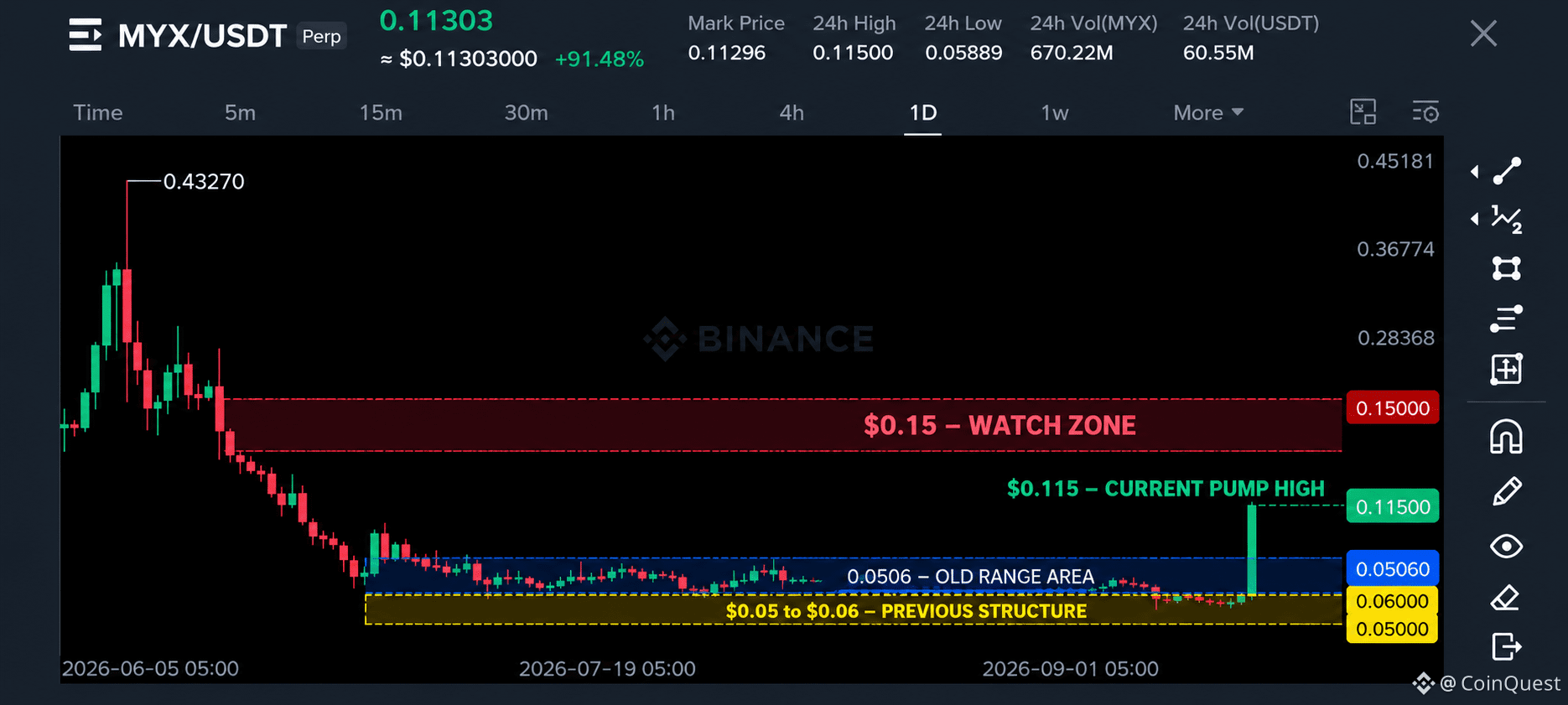
$MYX just went from a boring $0.05 range to $0.115 in a matter of hours 🤯
And this is exactly where I don't want to be the guy blindly pressing long or short...
A move this violent can punish both sides. Chasing the green candle here is dangerous but shorting simply because it already pumped 90% can be just as painful if another squeeze comes in...
I'm watching $0.15 next for short opportunity ...
If MYX reaches that area and starts showing real rejection, that's where a small countertrend short could become interesting
Until then I'm staying out and letting the move develop
Sometimes the best trade after a crazy pump is waiting for the market to show you which side is actually trapped 👀
Short Trade :
Entry : 0.13-0.15
Targets : 0.11,0.10,0.085
SL : 0.165
#MYX
$MYX just went from a boring $0.05 range to $0.115 in a matter of hours 🤯
And this is exactly where I don't want to be the guy blindly pressing long or short...
A move this violent can punish both sides. Chasing the green candle here is dangerous but shorting simply because it already pumped 90% can be just as painful if another squeeze comes in...
I'm watching $0.15 next for short opportunity ...
If MYX reaches that area and starts showing real rejection, that's where a small countertrend short could become interesting
Until then I'm staying out and letting the move develop
Sometimes the best trade after a crazy pump is waiting for the market to show you which side is actually trapped 👀
Short Trade :
Entry : 0.13-0.15
Targets : 0.11,0.10,0.085
SL : 0.165
#MYX
And this is exactly where I don't want to be the guy blindly pressing long or short...
A move this violent can punish both sides. Chasing the green candle here is dangerous but shorting simply because it already pumped 90% can be just as painful if another squeeze comes in...
I'm watching $0.15 next for short opportunity ...
If MYX reaches that area and starts showing real rejection, that's where a small countertrend short could become interesting
Until then I'm staying out and letting the move develop
Sometimes the best trade after a crazy pump is waiting for the market to show you which side is actually trapped 👀
Short Trade :
Entry : 0.13-0.15
Targets : 0.11,0.10,0.085
SL : 0.165
#MYX
1
2
637
·
--
Bearish
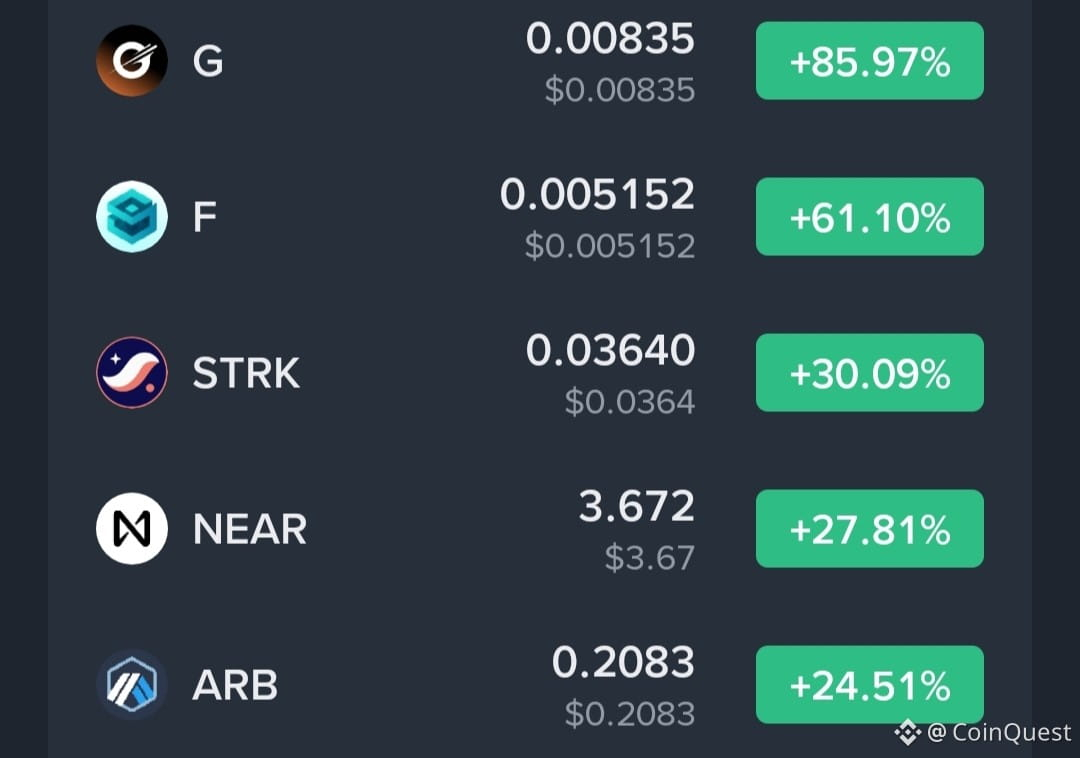
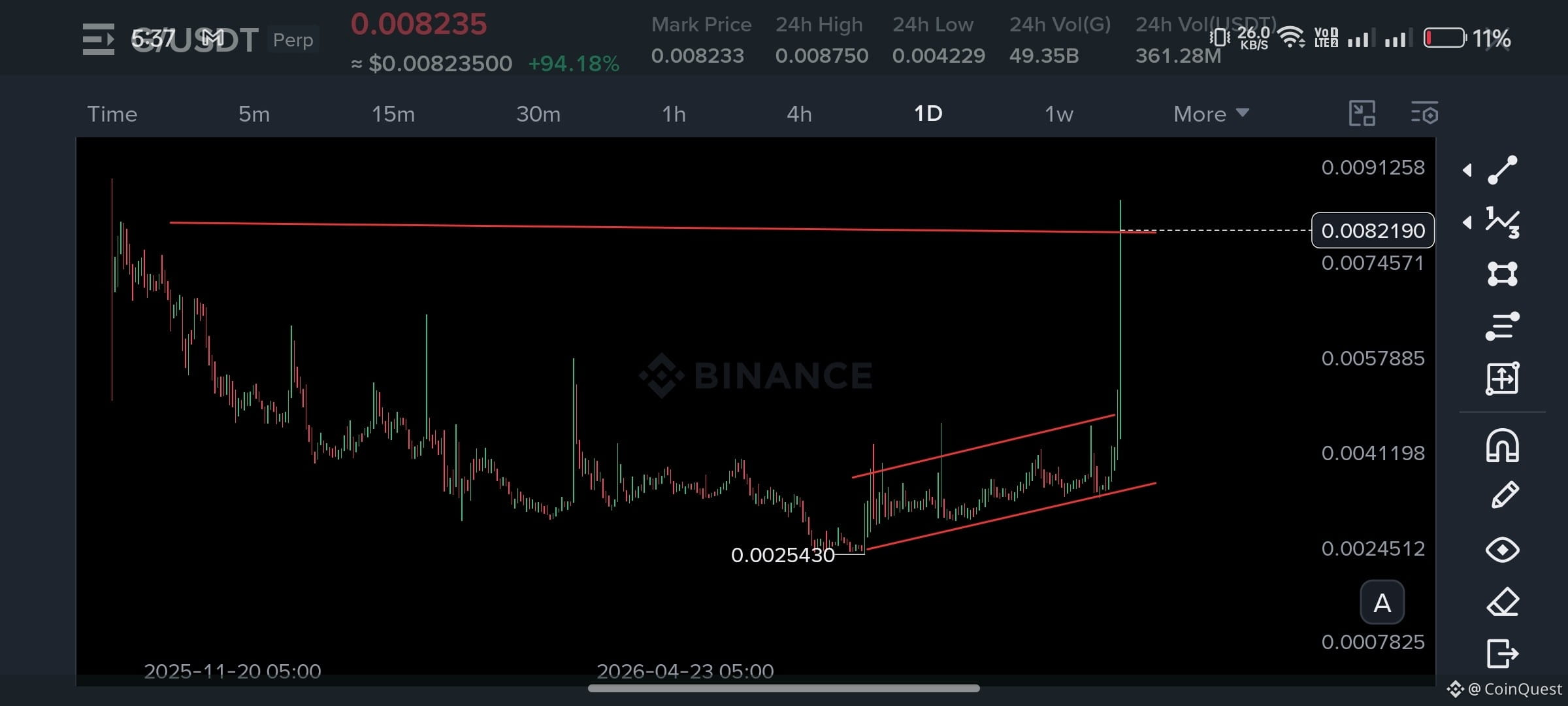
$G just went nearly vertical, near Big Supply Zone😉
Up around 95% today & broke $0.00875 😳
This is exactly where I stop chasing the green candles and start watching for the first serious reversal
I'm looking at the $0.0080 to $0.0090 area for a short if sellers start taking control as it's the big supply Zone here...
Entry $0.0090 to $0.0088
SL daily candle close above $0.0095
TP1 $0.0071
TP2 $0.0065
TP3 $0.0050
The move is extremely strong, so I'm not assuming the top is already in
I want the rejection first
If $0.0095 gets reclaimed on a daily close, the short idea is off...
#G
$G just went nearly vertical, near Big Supply Zone😉
Up around 95% today & broke $0.00875 😳
This is exactly where I stop chasing the green candles and start watching for the first serious reversal
I'm looking at the $0.0080 to $0.0090 area for a short if sellers start taking control as it's the big supply Zone here...
Entry $0.0090 to $0.0088
SL daily candle close above $0.0095
TP1 $0.0071
TP2 $0.0065
TP3 $0.0050
The move is extremely strong, so I'm not assuming the top is already in
I want the rejection first
If $0.0095 gets reclaimed on a daily close, the short idea is off...
#G
Up around 95% today & broke $0.00875 😳
This is exactly where I stop chasing the green candles and start watching for the first serious reversal
I'm looking at the $0.0080 to $0.0090 area for a short if sellers start taking control as it's the big supply Zone here...
Entry $0.0090 to $0.0088
SL daily candle close above $0.0095
TP1 $0.0071
TP2 $0.0065
TP3 $0.0050
The move is extremely strong, so I'm not assuming the top is already in
I want the rejection first
If $0.0095 gets reclaimed on a daily close, the short idea is off...
#G
2
1k
·
--
Bullish
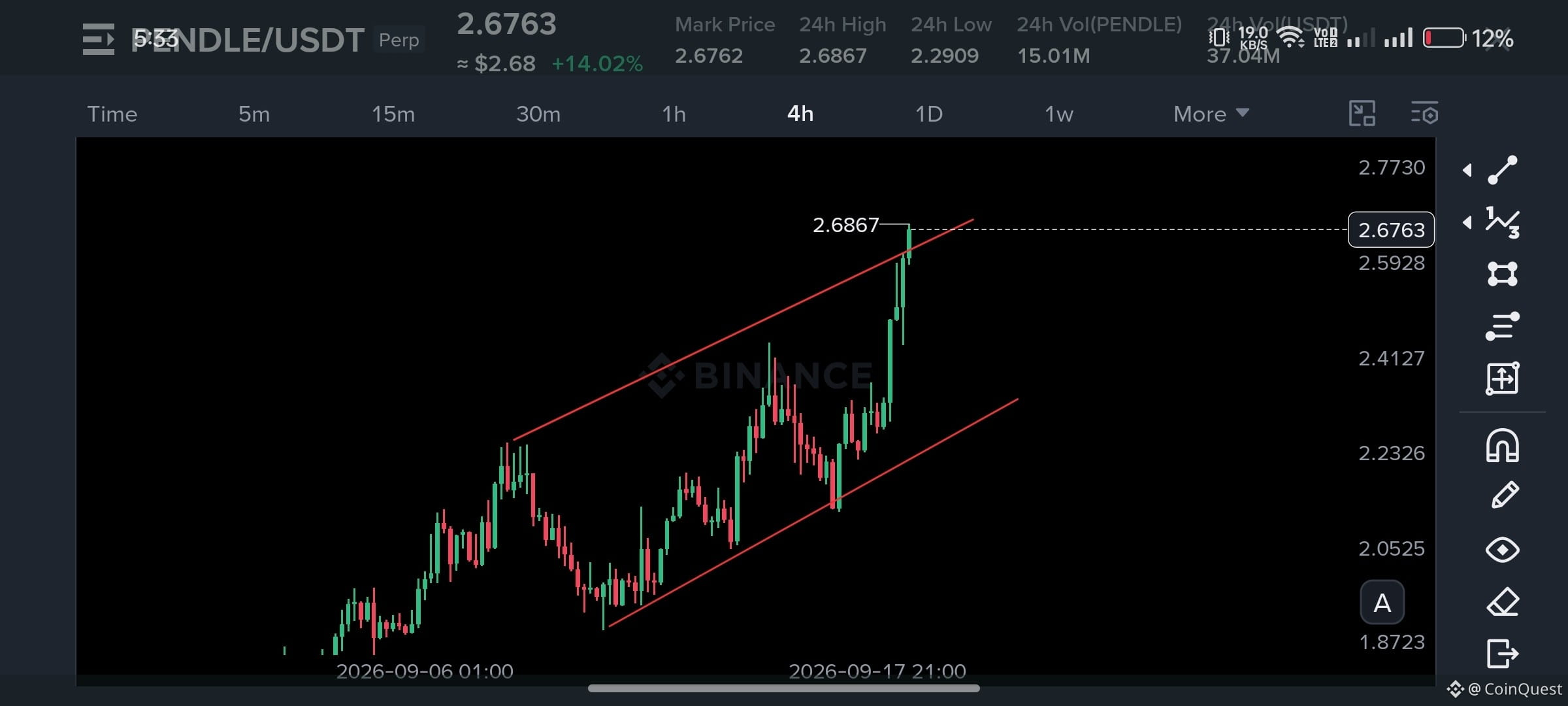
Everyone is watching $2.68 on $PENDLE ...
I'm watching what happens if it comes back to $2.55 👀
PENDLE has ripped from around $2.24 to $2.68 and the whole structure is still making higher highs and higher lows. I don't want to chase the move after a candle like this
I want the pullback
Long zone $2.58 to $2.63
DCA $2.52 to $2.55
TP1 $2.75
TP2 $2.90
TP3 $3.10
SL $2.45
If buyers defend the breakout area, this could simply be another continuation move
If $2.45 gives way, I'm not forcing the long
The trend is bullish ,I mean mega Bullish...
#PENDLE🔥🔥
{future}(PENDLEUSDT)
Everyone is watching $2.68 on $PENDLE ...
I'm watching what happens if it comes back to $2.55 👀
PENDLE has ripped from around $2.24 to $2.68 and the whole structure is still making higher highs and higher lows. I don't want to chase the move after a candle like this
I want the pullback
Long zone $2.58 to $2.63
DCA $2.52 to $2.55
TP1 $2.75
TP2 $2.90
TP3 $3.10
SL $2.45
If buyers defend the breakout area, this could simply be another continuation move
If $2.45 gives way, I'm not forcing the long
The trend is bullish ,I mean mega Bullish...
#PENDLE🔥🔥
I'm watching what happens if it comes back to $2.55 👀
PENDLE has ripped from around $2.24 to $2.68 and the whole structure is still making higher highs and higher lows. I don't want to chase the move after a candle like this
I want the pullback
Long zone $2.58 to $2.63
DCA $2.52 to $2.55
TP1 $2.75
TP2 $2.90
TP3 $3.10
SL $2.45
If buyers defend the breakout area, this could simply be another continuation move
If $2.45 gives way, I'm not forcing the long
The trend is bullish ,I mean mega Bullish...
#PENDLE🔥🔥
648
·
--
Bullish
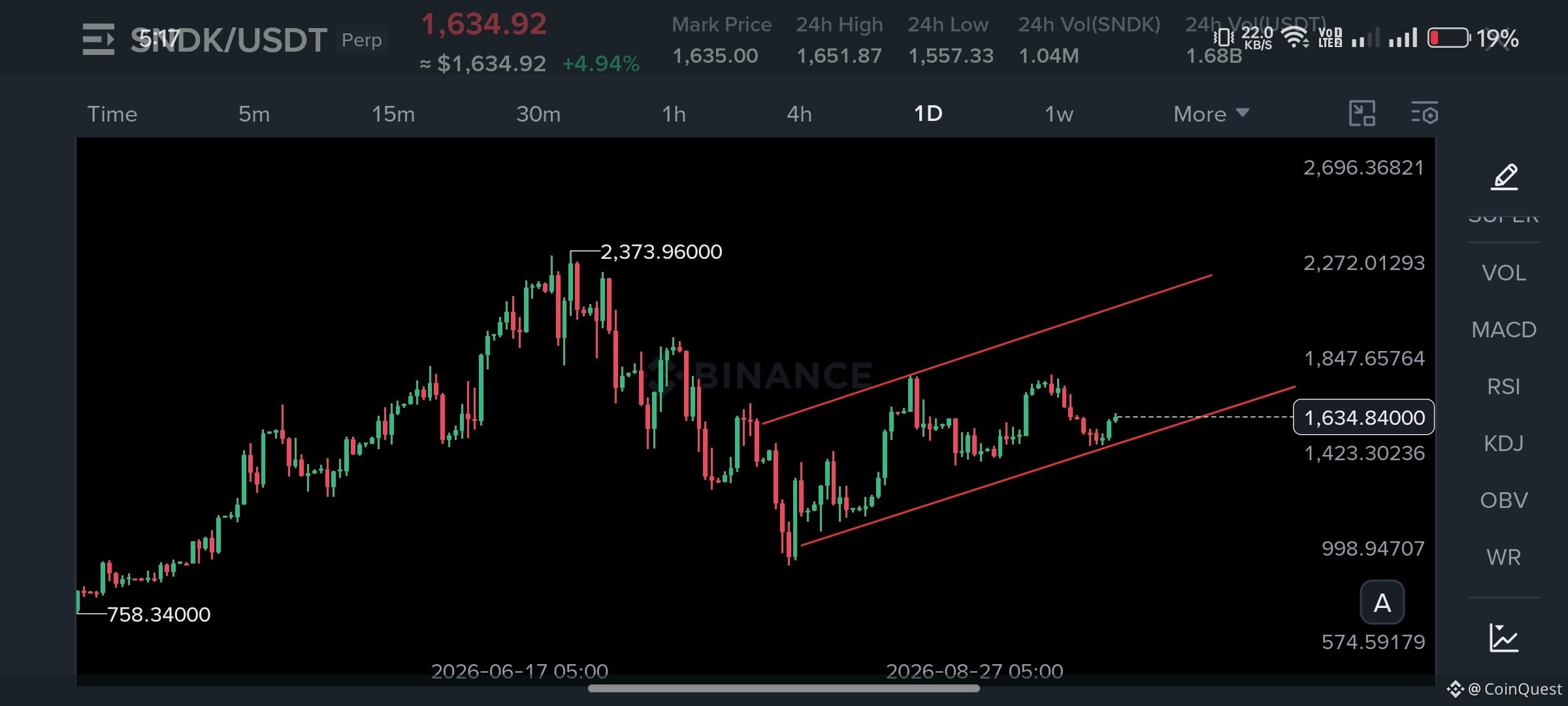
$SNDK just respected the 1D support and now $2,000 doesn't look as crazy as it did before 👀
The chart had a brutal move from around $972, then spent months building a much bigger structure instead of completely giving back the rally.
Now look where buyers stepped in
Around $1,500 to $1,520
Price is back around $1,630 and the next big area I'm watching is around $1,827. If SNDK can reclaim that zone and keep the higher low structure intact, the psychological $2,000 level becomes a very realistic area to watch
And there is actually a fundamental story behind the move too. SanDisk's FY2026 revenue jumped 175% and its data center business grew 437% as AI driven storage demand accelerated
So I'm not saying $2K is guaranteed....
I'm saying the chart has given bulls a reason to keep watching it😉
Now let's see what happens at $1,827...
#SNDK
$SNDK just respected the 1D support and now $2,000 doesn't look as crazy as it did before 👀
The chart had a brutal move from around $972, then spent months building a much bigger structure instead of completely giving back the rally.
Now look where buyers stepped in
Around $1,500 to $1,520
Price is back around $1,630 and the next big area I'm watching is around $1,827. If SNDK can reclaim that zone and keep the higher low structure intact, the psychological $2,000 level becomes a very realistic area to watch
And there is actually a fundamental story behind the move too. SanDisk's FY2026 revenue jumped 175% and its data center business grew 437% as AI driven storage demand accelerated
So I'm not saying $2K is guaranteed....
I'm saying the chart has given bulls a reason to keep watching it😉
Now let's see what happens at $1,827...
#SNDK
The chart had a brutal move from around $972, then spent months building a much bigger structure instead of completely giving back the rally.
Now look where buyers stepped in
Around $1,500 to $1,520
Price is back around $1,630 and the next big area I'm watching is around $1,827. If SNDK can reclaim that zone and keep the higher low structure intact, the psychological $2,000 level becomes a very realistic area to watch
And there is actually a fundamental story behind the move too. SanDisk's FY2026 revenue jumped 175% and its data center business grew 437% as AI driven storage demand accelerated
So I'm not saying $2K is guaranteed....
I'm saying the chart has given bulls a reason to keep watching it😉
Now let's see what happens at $1,827...
#SNDK
2
977
·
--
Bullish
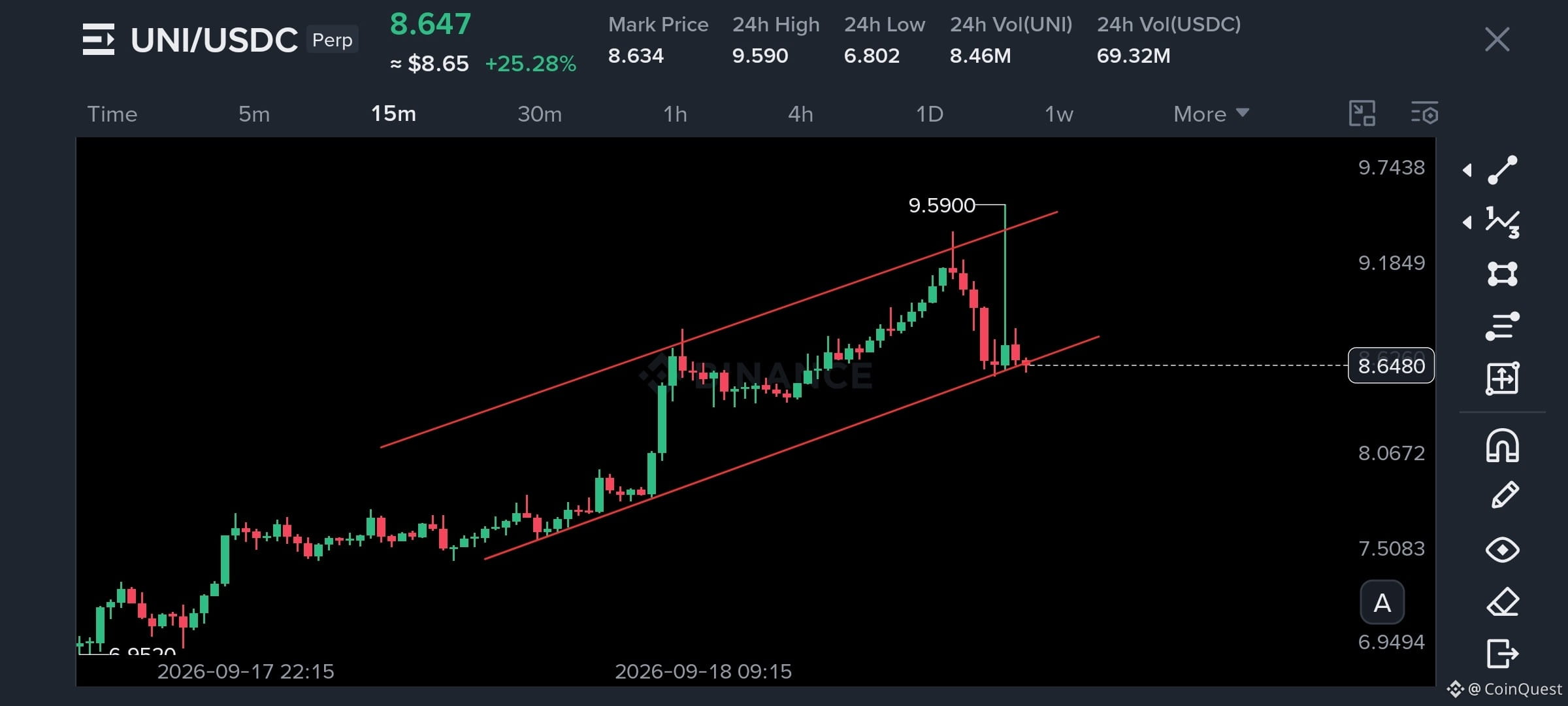
$UNI just made a massive move and now comes the part I actually care about 👀
UNI went from around $6 to $9 in just a few sessions and today pushed as high as $9.59 before pulling back toward $8.69
I'm not interested in chasing that vertical candle
Right now the interesting part is whether buyers can defend the area around $8.70 to $8.80 where the EMA 7 and EMA 25 are sitting
If that area holds and UNI starts pushing back toward $9.59, the momentum is still very much alive
But if this turns into a deeper pullback, I'd rather watch buyers prove themselves again than convince myself every dip is a buy
The move got everyone's attention
Now I want to see if the structure can keep it
#UNI
$UNI just made a massive move and now comes the part I actually care about 👀
UNI went from around $6 to $9 in just a few sessions and today pushed as high as $9.59 before pulling back toward $8.69
I'm not interested in chasing that vertical candle
Right now the interesting part is whether buyers can defend the area around $8.70 to $8.80 where the EMA 7 and EMA 25 are sitting
If that area holds and UNI starts pushing back toward $9.59, the momentum is still very much alive
But if this turns into a deeper pullback, I'd rather watch buyers prove themselves again than convince myself every dip is a buy
The move got everyone's attention
Now I want to see if the structure can keep it
#UNI
UNI went from around $6 to $9 in just a few sessions and today pushed as high as $9.59 before pulling back toward $8.69
I'm not interested in chasing that vertical candle
Right now the interesting part is whether buyers can defend the area around $8.70 to $8.80 where the EMA 7 and EMA 25 are sitting
If that area holds and UNI starts pushing back toward $9.59, the momentum is still very much alive
But if this turns into a deeper pullback, I'd rather watch buyers prove themselves again than convince myself every dip is a buy
The move got everyone's attention
Now I want to see if the structure can keep it
#UNI
344
·
--
Bullish
$BTC is holding up way too well considering what just happened in last days
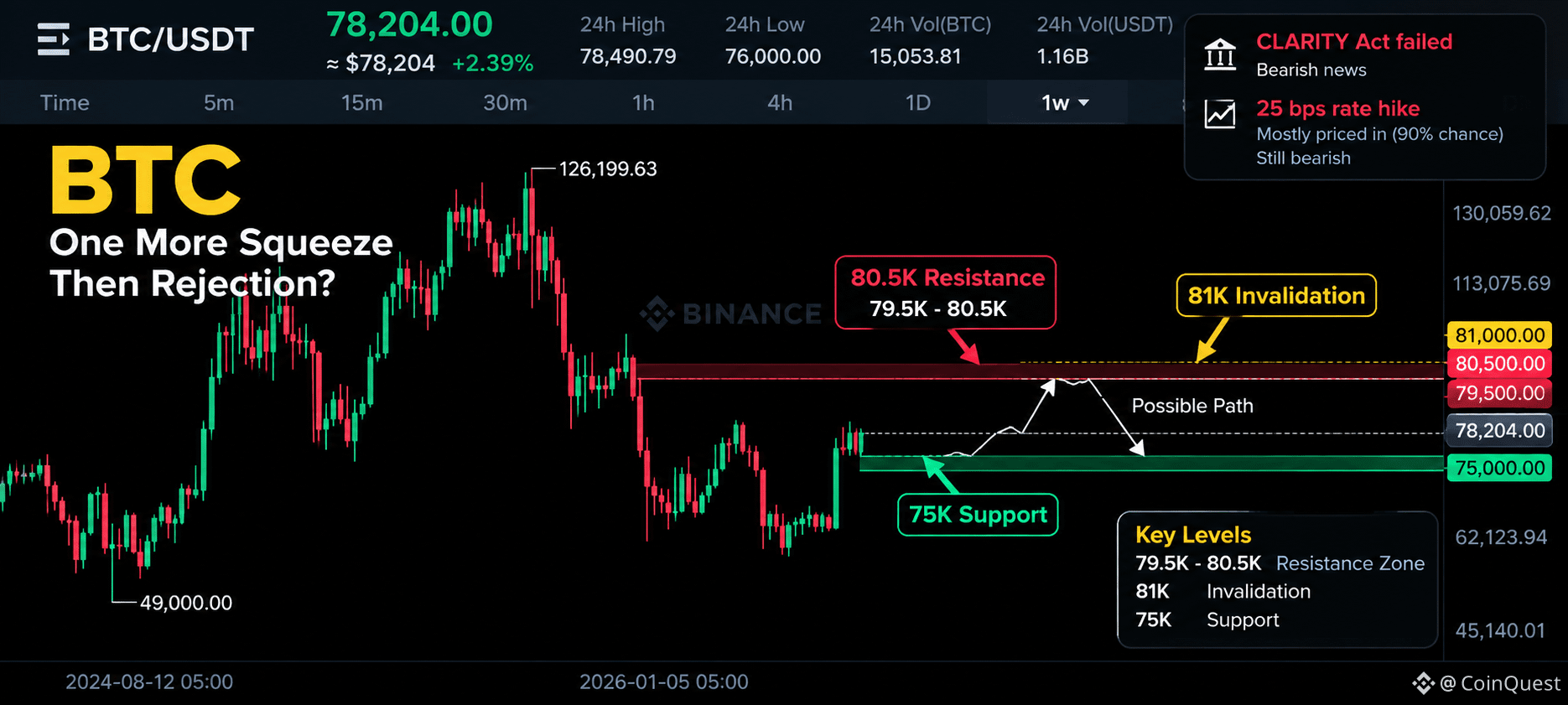
CLARITY Act failed and the Fed still delivered a 25 bps hike. BTC already absorbed much of the rate decision because the hike was heavily expected but the bigger question is why BTC is still pushing back above $75K after all that.
Right now I'm watching the $79.5K to $80.5K zone
If BTC squeezes higher into that resistance and gets rejected, I like the short side more
My expected path would be
$78K → short squeeze
$80K to $81K → rejection zone
$75K → support retest
I'm not shorting just because the news is bearish. I want the rejection first🤔
If BTC cleanly reclaims $81K and holds, this idea is wrong... But Remember ... reclaim should be on weeklay TF for this idea...
#BTC
$BTC is holding up way too well considering what just happened in last days
CLARITY Act failed and the Fed still delivered a 25 bps hike. BTC already absorbed much of the rate decision because the hike was heavily expected but the bigger question is why BTC is still pushing back above $75K after all that.
Right now I'm watching the $79.5K to $80.5K zone
If BTC squeezes higher into that resistance and gets rejected, I like the short side more
My expected path would be
$78K → short squeeze
$80K to $81K → rejection zone
$75K → support retest
I'm not shorting just because the news is bearish. I want the rejection first🤔
If BTC cleanly reclaims $81K and holds, this idea is wrong... But Remember ... reclaim should be on weeklay TF for this idea...
#BTC
CLARITY Act failed and the Fed still delivered a 25 bps hike. BTC already absorbed much of the rate decision because the hike was heavily expected but the bigger question is why BTC is still pushing back above $75K after all that.
Right now I'm watching the $79.5K to $80.5K zone
If BTC squeezes higher into that resistance and gets rejected, I like the short side more
My expected path would be
$78K → short squeeze
$80K to $81K → rejection zone
$75K → support retest
I'm not shorting just because the news is bearish. I want the rejection first🤔
If BTC cleanly reclaims $81K and holds, this idea is wrong... But Remember ... reclaim should be on weeklay TF for this idea...
#BTC
2
2
1.2k
·
--
$BR is not stopping…. but I definitely wouldn't climb this one blindly 👀
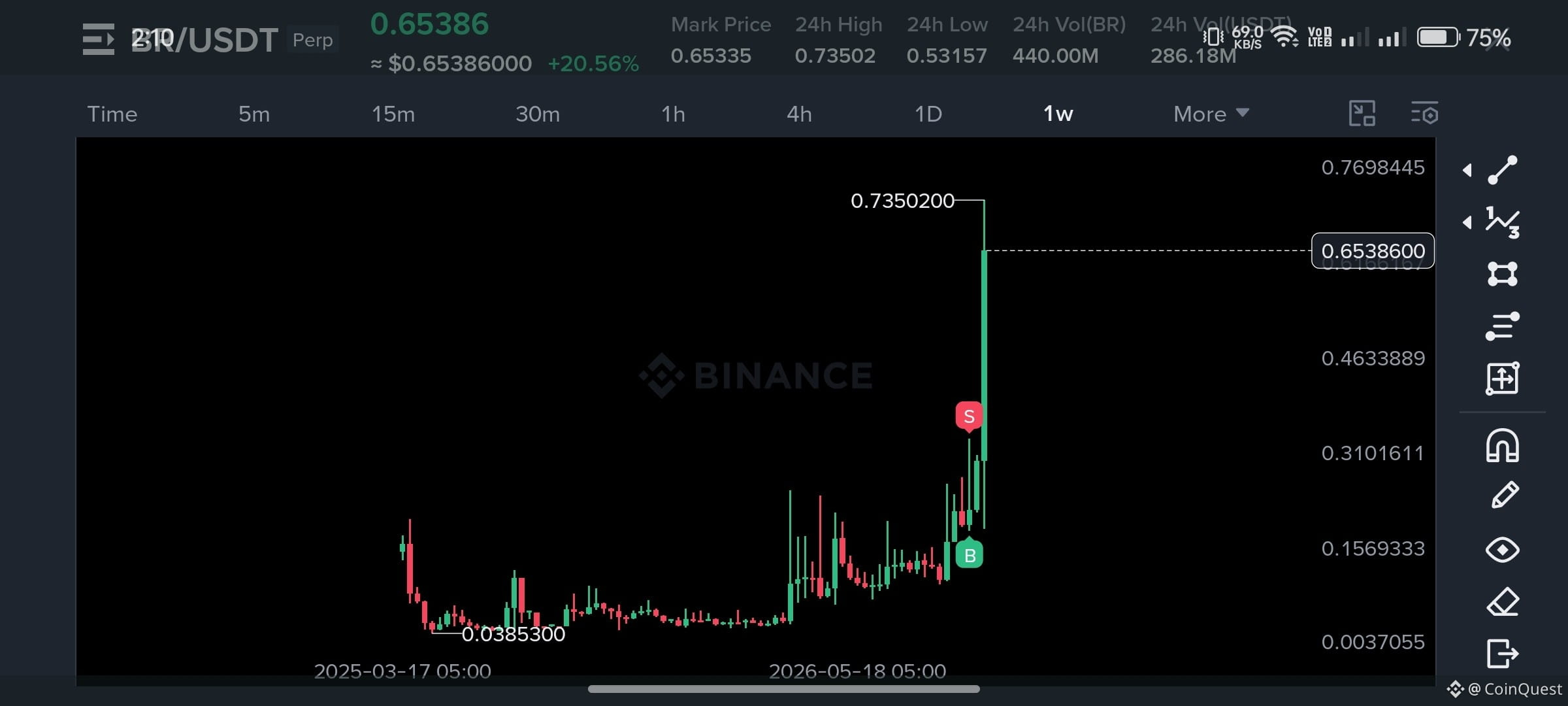
BR went from around $0.25 to above $0.73 in just a few days and the weekly chart now looks absolutely wild. Buyers are clearly in control, but after a move this aggressive I don't want to confuse momentum with a safe entry.
A pullback doesn't automatically mean the trend is over. In fact, I'd rather see BR cool down, build a proper base and then show buyers stepping back in than chase a green candle after the move has already happened.
The trend is strong
The risk is strong too
If you're already in, managing the position makes more sense to me than chasing. If you're not in, let the chart give you a better opportunity 😃
Don't short or Long it...infact stay away ,observe only ...Try to grab opportunity rather than shorting it blindly ... Anyway It will crash sooner or later
$BR is not stopping…. but I definitely wouldn't climb this one blindly 👀
BR went from around $0.25 to above $0.73 in just a few days and the weekly chart now looks absolutely wild. Buyers are clearly in control, but after a move this aggressive I don't want to confuse momentum with a safe entry.
A pullback doesn't automatically mean the trend is over. In fact, I'd rather see BR cool down, build a proper base and then show buyers stepping back in than chase a green candle after the move has already happened.
The trend is strong
The risk is strong too
If you're already in, managing the position makes more sense to me than chasing. If you're not in, let the chart give you a better opportunity 😃
Don't short or Long it...infact stay away ,observe only ...Try to grab opportunity rather than shorting it blindly ... Anyway It will crash sooner or later
BR went from around $0.25 to above $0.73 in just a few days and the weekly chart now looks absolutely wild. Buyers are clearly in control, but after a move this aggressive I don't want to confuse momentum with a safe entry.
A pullback doesn't automatically mean the trend is over. In fact, I'd rather see BR cool down, build a proper base and then show buyers stepping back in than chase a green candle after the move has already happened.
The trend is strong
The risk is strong too
If you're already in, managing the position makes more sense to me than chasing. If you're not in, let the chart give you a better opportunity 😃
Don't short or Long it...infact stay away ,observe only ...Try to grab opportunity rather than shorting it blindly ... Anyway It will crash sooner or later
1.5k
·
--
Bullish
$ZEC shorts keep getting the wrong signal 👀
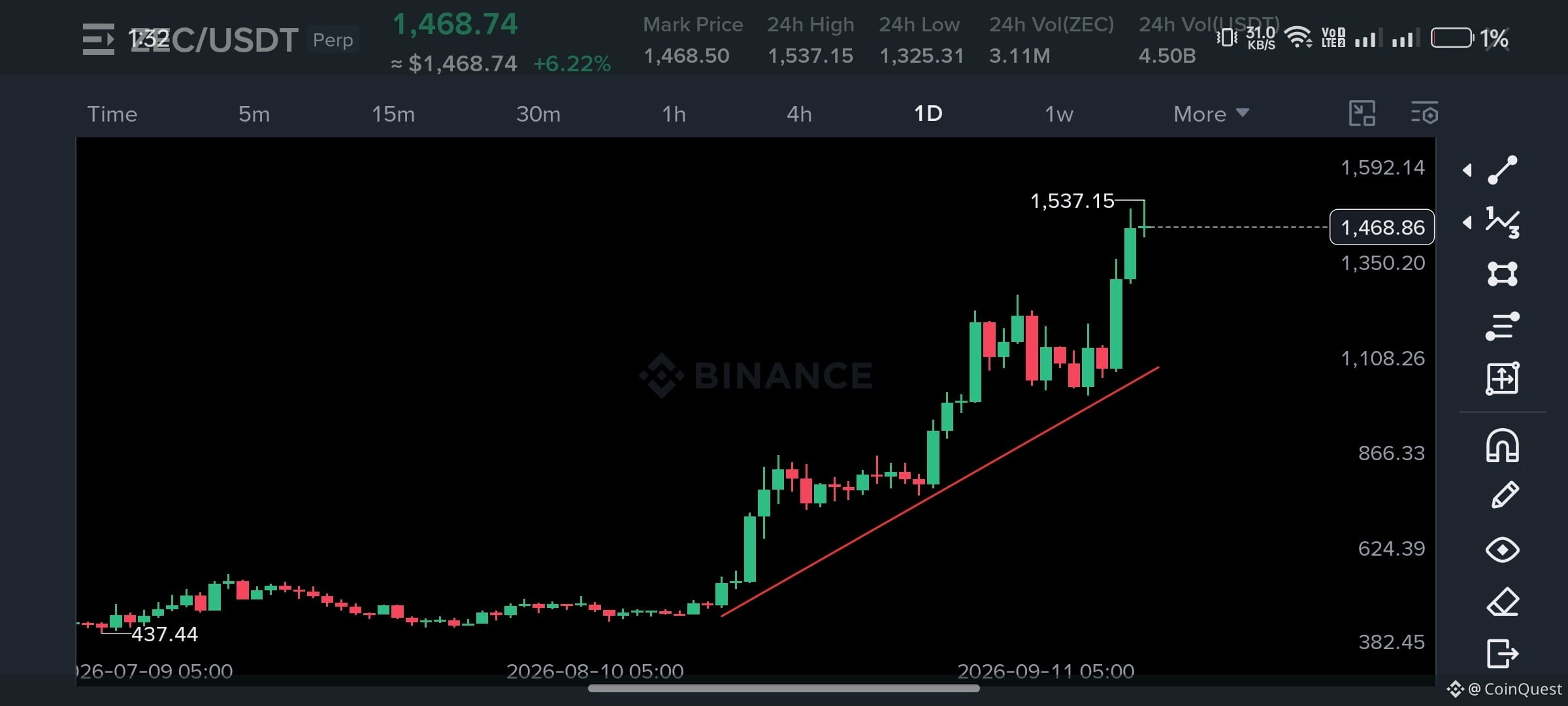
Every time ZEC pulls back, buyers are showing up again. Look at the 1D structure here, the higher lows are still holding and price keeps pushing back toward the highs instead of breaking the trend.
That doesn't mean ZEC cannot correct. After a move this strong, healthy pullbacks are completely normal. The mistake is assuming every red candle means the trend has reversed.
Right now I'm more interested in how buyers react to weakness than trying to short every pullback. If bulls keep absorbing the selling pressure, the trend is still doing exactly what it should 🚀
Current Biasness ... Hell Bullish😄
Long it Here 👇
{future}(ZECUSDT)
#zec
$ZEC shorts keep getting the wrong signal 👀
Every time ZEC pulls back, buyers are showing up again. Look at the 1D structure here, the higher lows are still holding and price keeps pushing back toward the highs instead of breaking the trend.
That doesn't mean ZEC cannot correct. After a move this strong, healthy pullbacks are completely normal. The mistake is assuming every red candle means the trend has reversed.
Right now I'm more interested in how buyers react to weakness than trying to short every pullback. If bulls keep absorbing the selling pressure, the trend is still doing exactly what it should 🚀
Current Biasness ... Hell Bullish😄
Long it Here 👇
#zec
Every time ZEC pulls back, buyers are showing up again. Look at the 1D structure here, the higher lows are still holding and price keeps pushing back toward the highs instead of breaking the trend.
That doesn't mean ZEC cannot correct. After a move this strong, healthy pullbacks are completely normal. The mistake is assuming every red candle means the trend has reversed.
Right now I'm more interested in how buyers react to weakness than trying to short every pullback. If bulls keep absorbing the selling pressure, the trend is still doing exactly what it should 🚀
Current Biasness ... Hell Bullish😄
Long it Here 👇
#zec
3
3
864
·
--
Bearish
$AIN looked clean on the surface… then the chart did something completely different 😭
I checked the contract and there is no obvious honeypot style setup showing up. No blacklist, no self destruct and no privileged balance modification according to CertiK. But that doesn't mean the token was low risk.
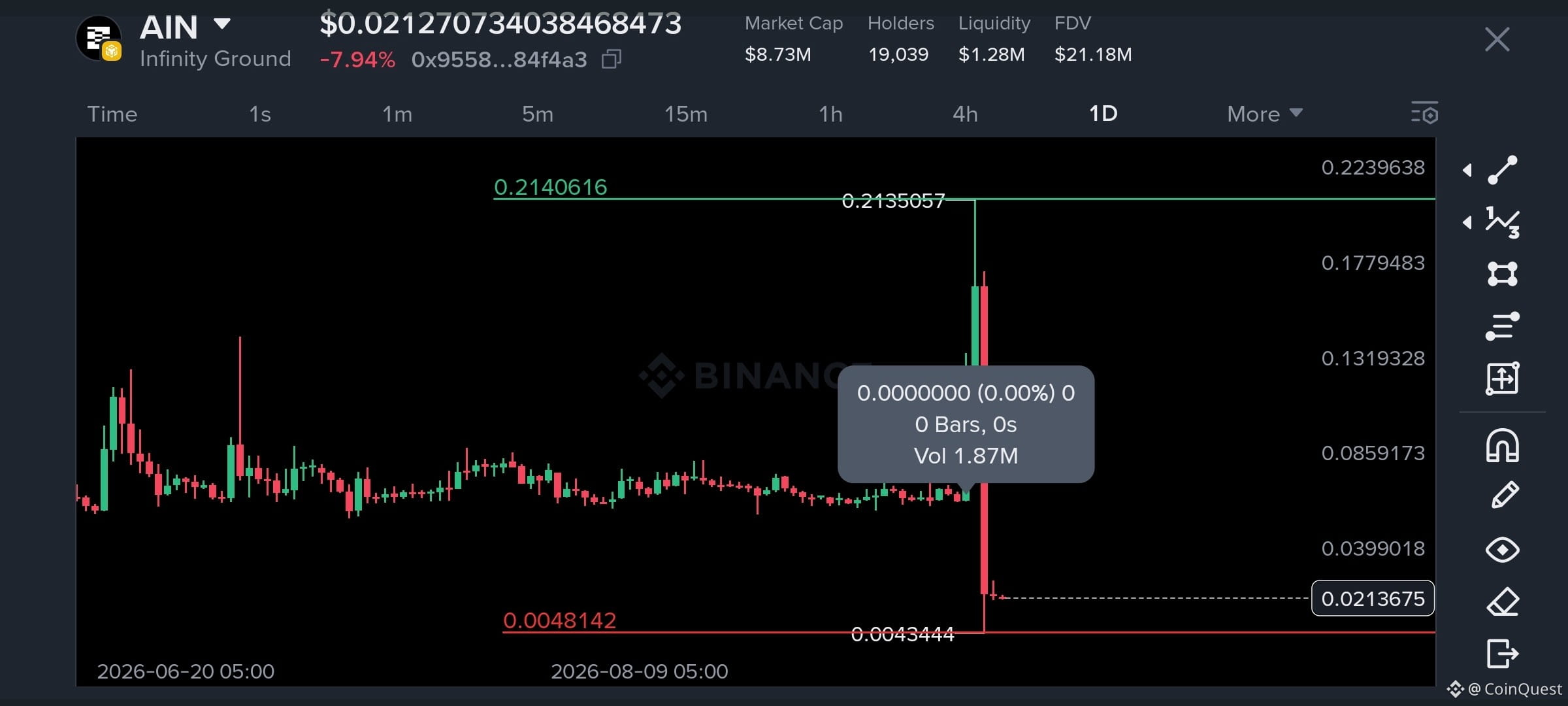
AIN went from around $0.07 to above $0.20 and then collapsed toward $0.02. That's not a normal pullback. The bigger story is the combination of low circulating supply, huge derivatives activity & extreme leverage. Open interest had grown massively while the move was happening, so once momentum flipped, forced selling could turn the reversal into a waterfall.
And this is why I don't want to call every violent crash a rug pull🙄
Sometimes the contract isn't the problem.
The market structure is.....
Short Here 👇
{future}(AINUSDT)
$AIN looked clean on the surface… then the chart did something completely different 😭
I checked the contract and there is no obvious honeypot style setup showing up. No blacklist, no self destruct and no privileged balance modification according to CertiK. But that doesn't mean the token was low risk.
AIN went from around $0.07 to above $0.20 and then collapsed toward $0.02. That's not a normal pullback. The bigger story is the combination of low circulating supply, huge derivatives activity & extreme leverage. Open interest had grown massively while the move was happening, so once momentum flipped, forced selling could turn the reversal into a waterfall.
And this is why I don't want to call every violent crash a rug pull🙄
Sometimes the contract isn't the problem.
The market structure is.....
Short Here 👇
I checked the contract and there is no obvious honeypot style setup showing up. No blacklist, no self destruct and no privileged balance modification according to CertiK. But that doesn't mean the token was low risk.
AIN went from around $0.07 to above $0.20 and then collapsed toward $0.02. That's not a normal pullback. The bigger story is the combination of low circulating supply, huge derivatives activity & extreme leverage. Open interest had grown massively while the move was happening, so once momentum flipped, forced selling could turn the reversal into a waterfall.
And this is why I don't want to call every violent crash a rug pull🙄
Sometimes the contract isn't the problem.
The market structure is.....
Short Here 👇
6
1
1k
·
--
Bullish
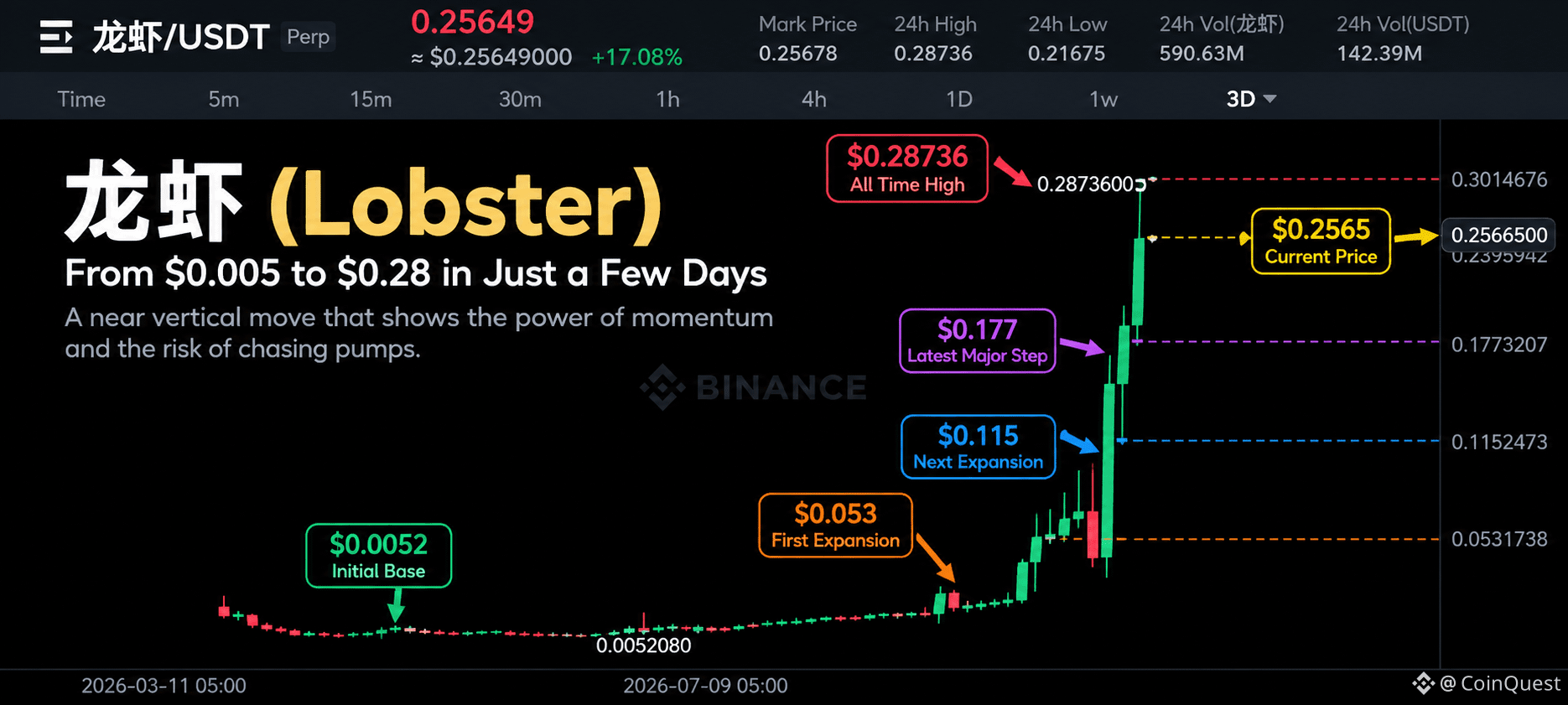
$龙虾 has gone from $0.005 to $0.28 & the 3D chart looks almost unreal 🤯
Look at the structure. Price spent months building around the lows, then started expanding higher and higher until the move became almost vertical. From roughly $0.0052 to $0.2874, this isn't just another breakout anymore. The entire valuation has been repriced in a matter of days, with market cap now around $230M according to CoinGecko data.
And this is where I become more careful.
There isn't much historical resistance above because price has entered a completely different range. That makes the upside exciting, but it also means there isn't an obvious level telling us where buyers will stop.
The real test isn't whether $龙虾 can print another green candle.
It's what happens when buyers finally get their first serious pullback.
If the market keeps absorbing every dip, this can continue into price discovery. But after a move this vertical, chasing every new high becomes a very different risk from buying the original breakout.
The chart is no longer asking whether the trend is bullish.
It is asking how long this kind of momentum can sustain itself 👀
Remember what I always said : Don't climb the ladder which already have hundreds of People 😄
$龙虾 has gone from $0.005 to $0.28 & the 3D chart looks almost unreal 🤯
Look at the structure. Price spent months building around the lows, then started expanding higher and higher until the move became almost vertical. From roughly $0.0052 to $0.2874, this isn't just another breakout anymore. The entire valuation has been repriced in a matter of days, with market cap now around $230M according to CoinGecko data.
And this is where I become more careful.
There isn't much historical resistance above because price has entered a completely different range. That makes the upside exciting, but it also means there isn't an obvious level telling us where buyers will stop.
The real test isn't whether $龙虾 can print another green candle.
It's what happens when buyers finally get their first serious pullback.
If the market keeps absorbing every dip, this can continue into price discovery. But after a move this vertical, chasing every new high becomes a very different risk from buying the original breakout.
The chart is no longer asking whether the trend is bullish.
It is asking how long this kind of momentum can sustain itself 👀
Remember what I always said : Don't climb the ladder which already have hundreds of People 😄
Look at the structure. Price spent months building around the lows, then started expanding higher and higher until the move became almost vertical. From roughly $0.0052 to $0.2874, this isn't just another breakout anymore. The entire valuation has been repriced in a matter of days, with market cap now around $230M according to CoinGecko data.
And this is where I become more careful.
There isn't much historical resistance above because price has entered a completely different range. That makes the upside exciting, but it also means there isn't an obvious level telling us where buyers will stop.
The real test isn't whether $龙虾 can print another green candle.
It's what happens when buyers finally get their first serious pullback.
If the market keeps absorbing every dip, this can continue into price discovery. But after a move this vertical, chasing every new high becomes a very different risk from buying the original breakout.
The chart is no longer asking whether the trend is bullish.
It is asking how long this kind of momentum can sustain itself 👀
Remember what I always said : Don't climb the ladder which already have hundreds of People 😄
4
1
2.3k
·
--
Bearish
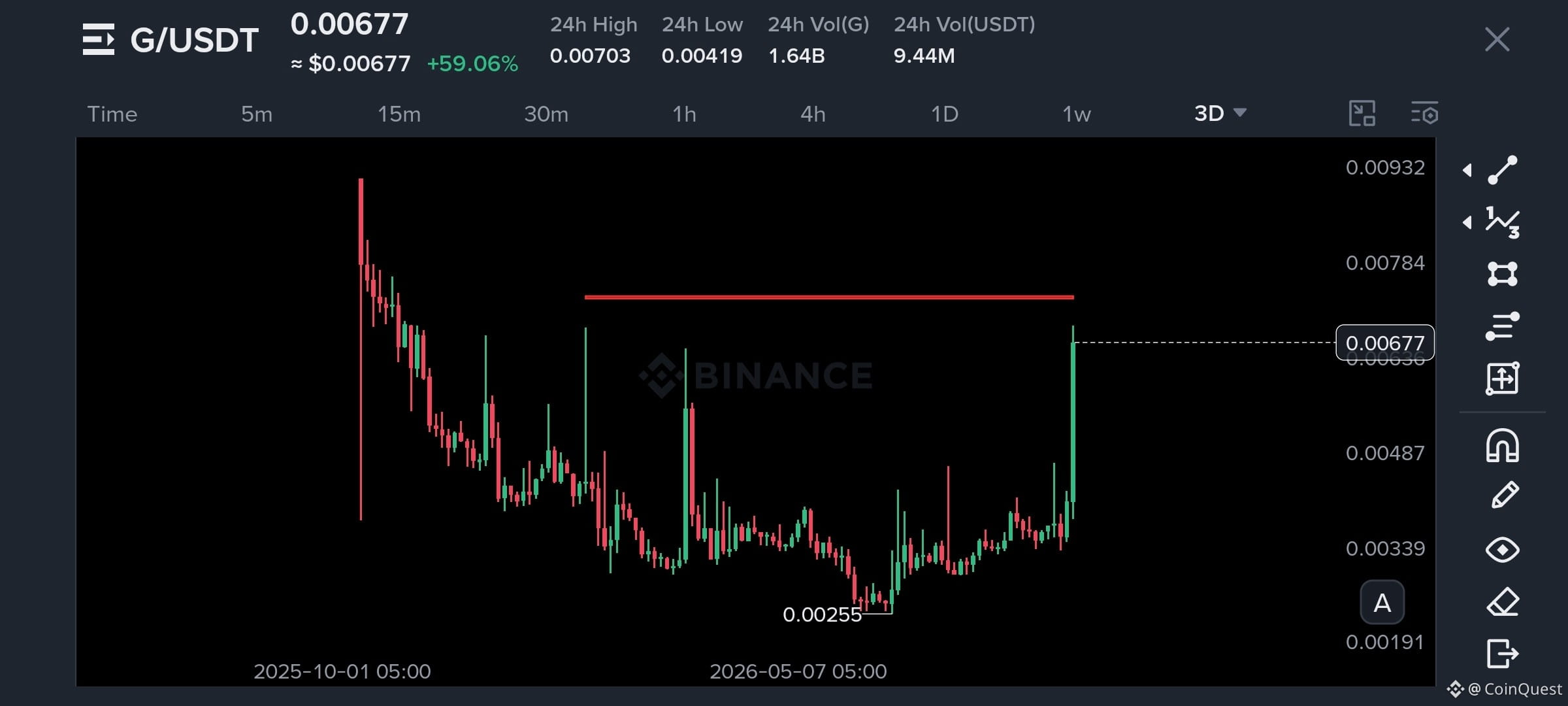
$G is up more than 60% & now I’m watching the other side of the move 👀
G just went vertical from around $0.0042 to a $0.00703 high. That kind of expansion can create a short opportunity, but I don't want to short simply because the coin is up 60%.
The important area is around $0.00650 to $0.00705. If price keeps rejecting the $0.0070 area and starts showing weakness on the lower timeframe, I’ll look for the pullback toward $0.0060 first, then $0.0055 and potentially $0.00495.
The interesting part is that the 3D trend is still bullish so this is a counter trend short and I’m treating it accordingly. If G ignores the rejection and breaks the recent high with strength, I want to be out quickly.
SHORT SETUP
Entry: $0.00650 to $0.00705
TP1: $0.00600
TP2: $0.00550
TP3: $0.00495
Tight SL: $0.00735
SL : $0.0080 ( Only after closing candle)
I’d keep this around 1% to 2% of wallet size because the trend is still bullish and this trade is basically betting on a mean reversion after an explosive move.
Great technical setup doesn't mean guaranteed outcome. If G refuses to follow the setup, the stop does its job 📉
SL Compulsory 🩸
{future}(GUSDT)
$G is up more than 60% & now I’m watching the other side of the move 👀
G just went vertical from around $0.0042 to a $0.00703 high. That kind of expansion can create a short opportunity, but I don't want to short simply because the coin is up 60%.
The important area is around $0.00650 to $0.00705. If price keeps rejecting the $0.0070 area and starts showing weakness on the lower timeframe, I’ll look for the pullback toward $0.0060 first, then $0.0055 and potentially $0.00495.
The interesting part is that the 3D trend is still bullish so this is a counter trend short and I’m treating it accordingly. If G ignores the rejection and breaks the recent high with strength, I want to be out quickly.
SHORT SETUP
Entry: $0.00650 to $0.00705
TP1: $0.00600
TP2: $0.00550
TP3: $0.00495
Tight SL: $0.00735
SL : $0.0080 ( Only after closing candle)
I’d keep this around 1% to 2% of wallet size because the trend is still bullish and this trade is basically betting on a mean reversion after an explosive move.
Great technical setup doesn't mean guaranteed outcome. If G refuses to follow the setup, the stop does its job 📉
SL Compulsory 🩸
G just went vertical from around $0.0042 to a $0.00703 high. That kind of expansion can create a short opportunity, but I don't want to short simply because the coin is up 60%.
The important area is around $0.00650 to $0.00705. If price keeps rejecting the $0.0070 area and starts showing weakness on the lower timeframe, I’ll look for the pullback toward $0.0060 first, then $0.0055 and potentially $0.00495.
The interesting part is that the 3D trend is still bullish so this is a counter trend short and I’m treating it accordingly. If G ignores the rejection and breaks the recent high with strength, I want to be out quickly.
SHORT SETUP
Entry: $0.00650 to $0.00705
TP1: $0.00600
TP2: $0.00550
TP3: $0.00495
Tight SL: $0.00735
SL : $0.0080 ( Only after closing candle)
I’d keep this around 1% to 2% of wallet size because the trend is still bullish and this trade is basically betting on a mean reversion after an explosive move.
Great technical setup doesn't mean guaranteed outcome. If G refuses to follow the setup, the stop does its job 📉
SL Compulsory 🩸
1
791
·
--
Bullish
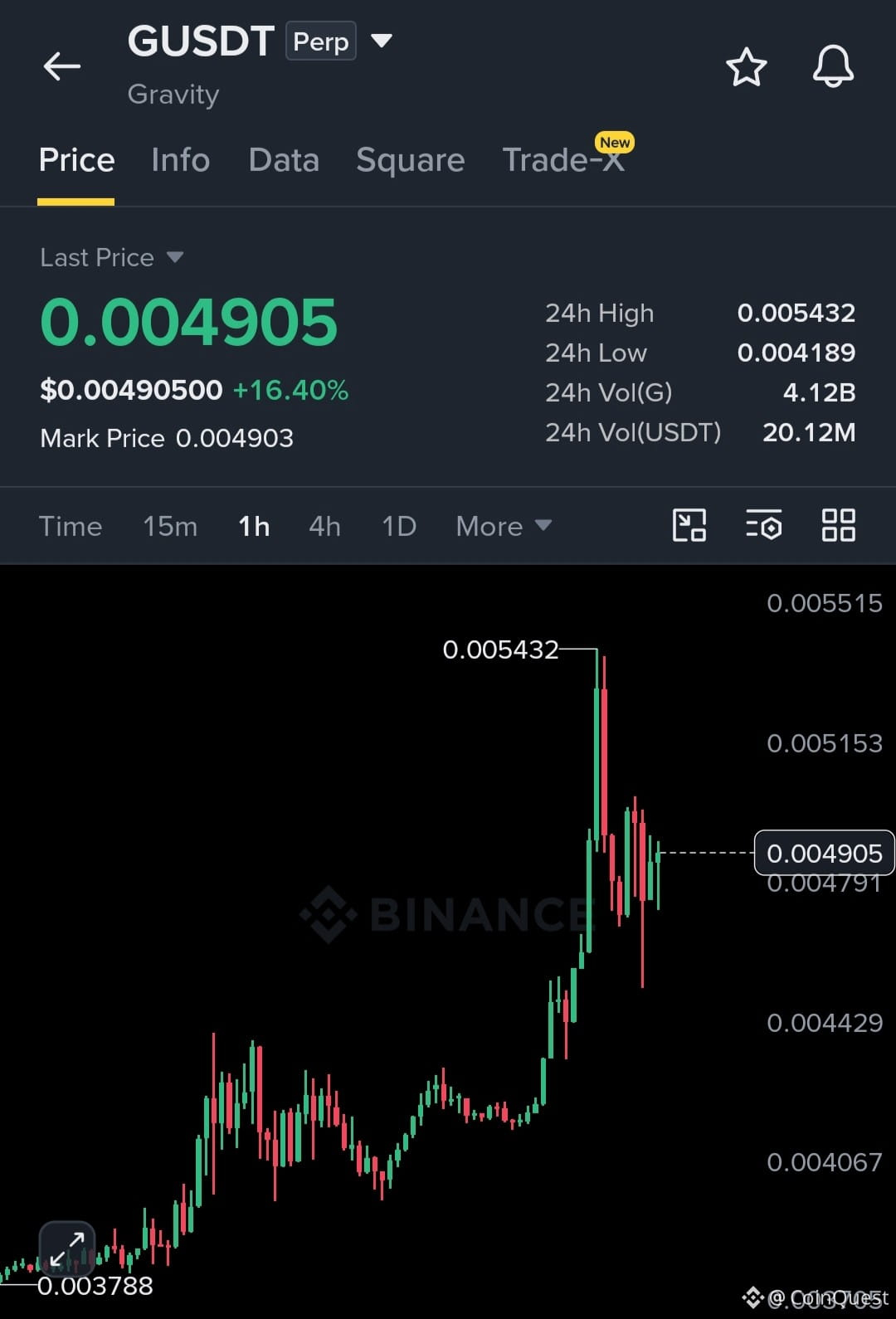
🚀 $G just broke out..... can it keep going?
$G just broke out of consolidation and now it’s holding around the EMA 7 area..... EMA 7 is above EMA 25 and EMA 99 with Supertrend still bullish 👀
The key now is $0.00478 to $0.00470..... if buyers defend this zone, the breakout could continue
Entry: $0.00478 to $0.00492
DCA: $0.00468
TP1: $0.00543
TP2: $0.00575
SL: $0.00448
🚀 $G just broke out..... can it keep going?
$G just broke out of consolidation and now it’s holding around the EMA 7 area..... EMA 7 is above EMA 25 and EMA 99 with Supertrend still bullish 👀
The key now is $0.00478 to $0.00470..... if buyers defend this zone, the breakout could continue
Entry: $0.00478 to $0.00492
DCA: $0.00468
TP1: $0.00543
TP2: $0.00575
SL: $0.00448
$G just broke out of consolidation and now it’s holding around the EMA 7 area..... EMA 7 is above EMA 25 and EMA 99 with Supertrend still bullish 👀
The key now is $0.00478 to $0.00470..... if buyers defend this zone, the breakout could continue
Entry: $0.00478 to $0.00492
DCA: $0.00468
TP1: $0.00543
TP2: $0.00575
SL: $0.00448
1
478
·
--
Bullish
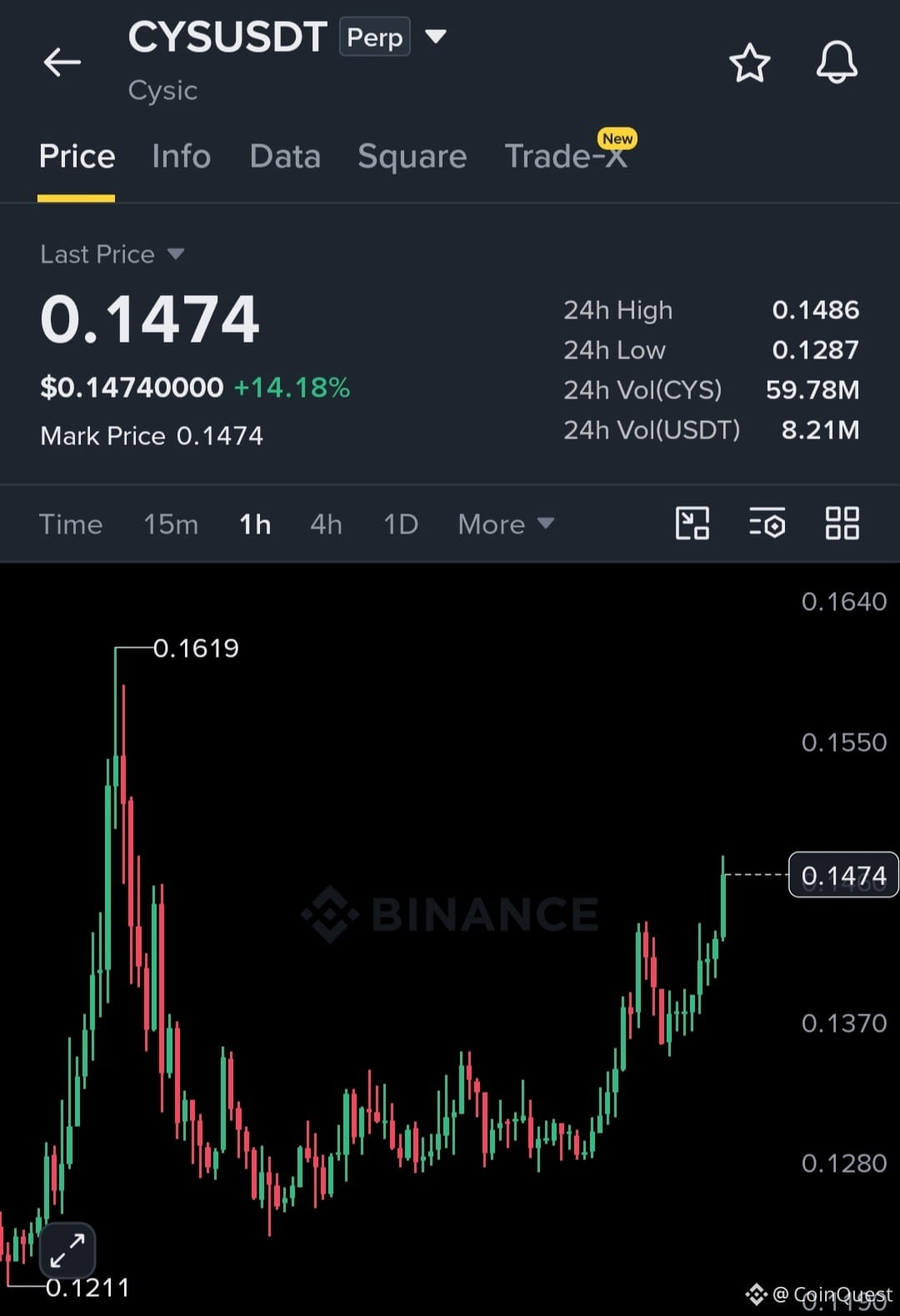
⚡ $CYS READY FOR ANOTHER PUSH.....?
$CYS is building a bullish structure after breaking out of the $0.1350 to $0.1400 area..... now holding above the key EMAs with higher lows forming
Entry: $0.1430 to $0.1480
DCA: $0.1380
TP1: $0.1545
TP2: $0.1619
SL: $0.1330
Main zone to watch is $0.1380 to $0.1430..... if it holds, the bullish structure stays intact 📈
{future}(CYSUSDT)
#Cys #CoinQuestArmy
⚡ $CYS READY FOR ANOTHER PUSH.....?
$CYS is building a bullish structure after breaking out of the $0.1350 to $0.1400 area..... now holding above the key EMAs with higher lows forming
Entry: $0.1430 to $0.1480
DCA: $0.1380
TP1: $0.1545
TP2: $0.1619
SL: $0.1330
Main zone to watch is $0.1380 to $0.1430..... if it holds, the bullish structure stays intact 📈
#Cys #CoinQuestArmy
$CYS is building a bullish structure after breaking out of the $0.1350 to $0.1400 area..... now holding above the key EMAs with higher lows forming
Entry: $0.1430 to $0.1480
DCA: $0.1380
TP1: $0.1545
TP2: $0.1619
SL: $0.1330
Main zone to watch is $0.1380 to $0.1430..... if it holds, the bullish structure stays intact 📈
#Cys #CoinQuestArmy
1
801
Log in to explore more content
Join global crypto users on Binance Square
⚡️ Get latest and useful information about crypto.
💬 Trusted by the world’s largest crypto exchange.
👍 Discover real insights from verified creators.
Email / Phone number
Trending Topics
BTCBreaks80K
94,601 views
1,636 Discussing
$BTC
What price is BTC going to hit in 2026?
Spot is sitting at $80,748. 104 days to go
↑ $90k - 58%
↑ $100k - 24%
↓ $70k dip first - 48%
The bull case floating around the floor:
>August had a proper run from $62,275 up to $81,479 — up 31% bottom to top
>The CLARITY Act flopped its Senate cloture vote 49-50 on 15 Sept. BTC was already sliding well before the vote, touched $74,968 in that hour, and won it all back inside three days
>The Fed hiked rates on 16 Sept — first time since July 2023. Spot is currently floating 7.4% above that day's low
>The altcoins are proper outrunning it. 30-day view: SOL up 38%, XRP up 35%, ETH up 32% versus BTC up 23%
>The timeline is still packed with reasons why this ought to break down — and that’s precisely the wall of worry bull markets tend to climb
>The midterms land on 3 Nov, right smack in the middle of this market window
So, what would you put down for a punt at +24% in 104 days?
$ETH
$SOL
#BTCBreaks80K #solonapumping #ETH🔥🔥🔥🔥🔥🔥 #BullMarket📈
Wealthy bloke
·5 Likes
·5k views
BuffettBecomesBerkshireChairmanEmeritus
24,569 views
573 Discussing
ZcashSpotETFTops$230MMonthlyInflow
6,298 views
83 Discussing