

Crypto PM
14.6k Posts

Crypto PM
 Square Verified+
Report
Block User
x.com/cryptopm_

Creator of the Year
Frequent Trader
9.1 Years
28 Following
323.3K+ Followers
391.9K+ Liked
4 Badges
Posts
All
Quotes
Videos
Live
·
--
Bearish
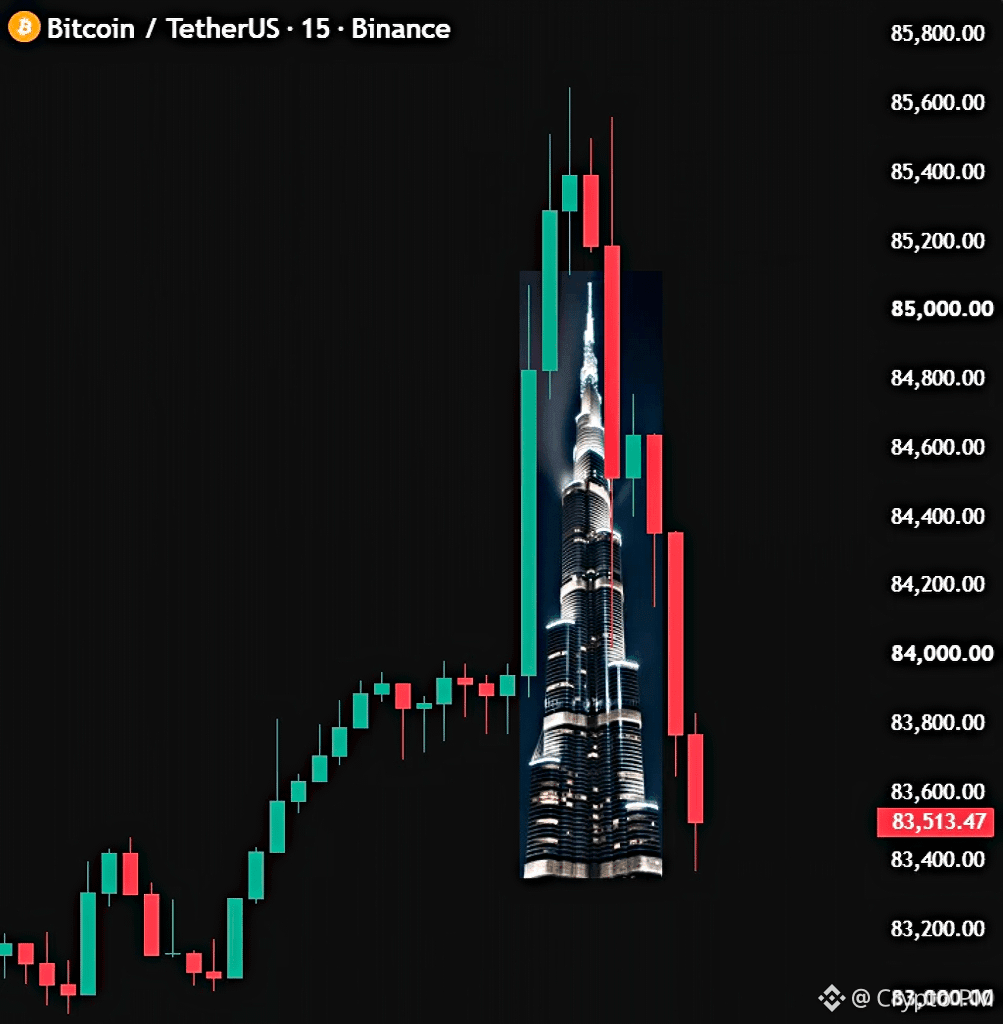
Burj Khalifa Pattern is Very Common For $BTC These Days 😂
Burj Khalifa Pattern is Very Common For $BTC These Days 😂
10
21
6.4k
·
--
Bullish
Everyone waiting for $BTC 50K 😂
But They missed the bottom opportunity.
Everyone waiting for $BTC 50K 😂
But They missed the bottom opportunity.
But They missed the bottom opportunity.

24
5
95
48.7k
·
--
Bullish
Women: “Looks matter.”
Men: “$1,000,000 $BTC matters.” 🧡
Women: “Looks matter.”
Men: “$1,000,000 $BTC matters.” 🧡
Men: “$1,000,000 $BTC matters.” 🧡

11
4
40
9.8k
·
--
Bullish
Same $BTC but different price, different opinion 😂
Same $BTC but different price, different opinion 😂

20
11
118
82.7k
·
--
Bearish
Me comeback again with my $10 trading capital,
after getting liquidated all money in $BTC 😂
Me comeback again with my $10 trading capital,
after getting liquidated all money in $BTC 😂
after getting liquidated all money in $BTC 😂

68
21
204
144.3k
·
--
Bullish
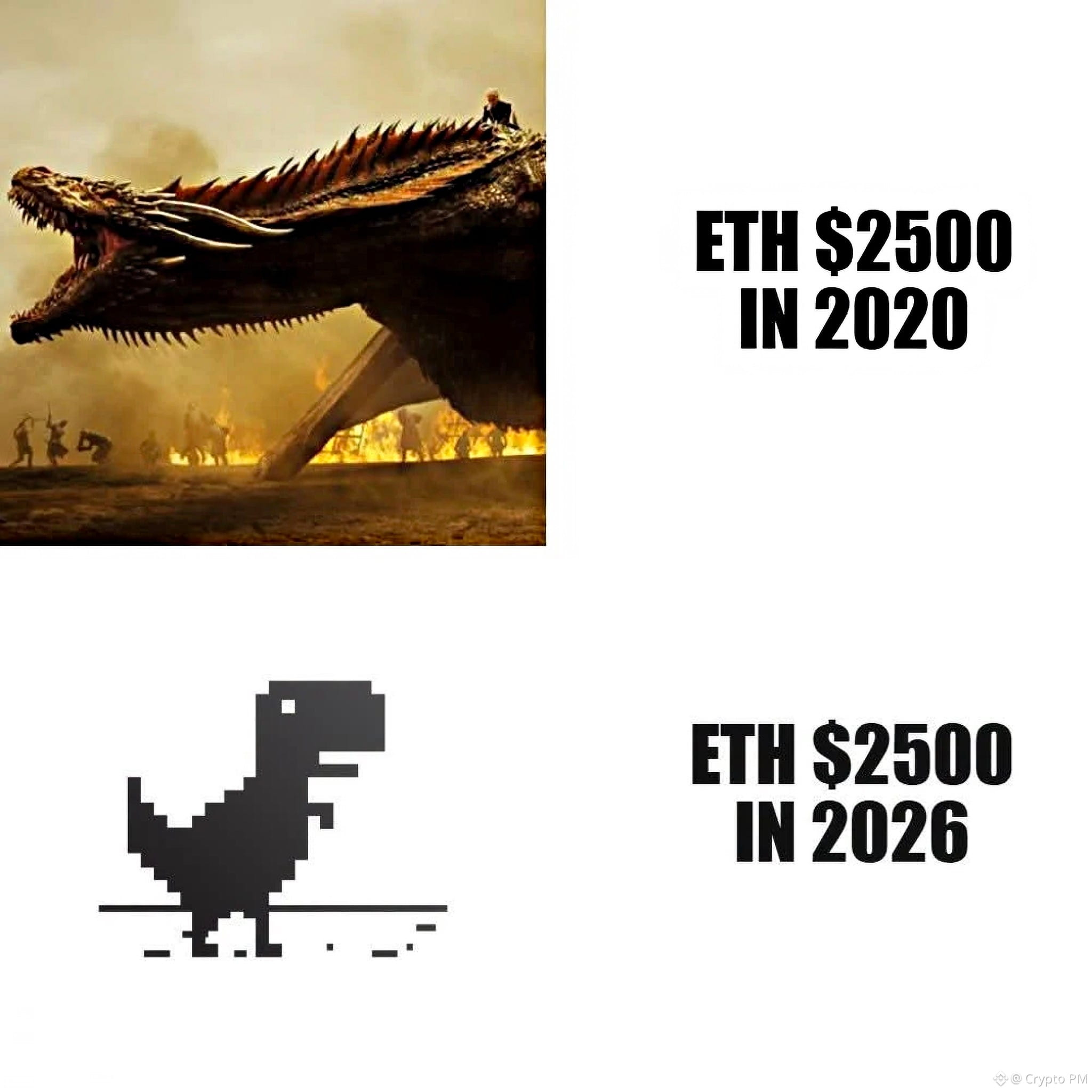
$ETH was massive dinosaur in 2020 at $2500 but today feels like ant 🐜 😂
$ETH was massive dinosaur in 2020 at $2500 but today feels like ant 🐜 😂
112
52
450
408.6k
·
--
Bullish
Michael Saylor wants U.S. banks to hold $BTC for their customers and offer loans backed by it.
{future}(BTCUSDT)
He believes the digital-asset industry could eventually grow to $100 trillion.
Saylor is also calling on regulators to clearly separate customer custody from Bitcoin-backed lending, and to keep both activities distinct from banks’ own holdings.
In his view, establishing clear cryptocurrency rules over the next two years is the most important step forward.
Michael Saylor wants U.S. banks to hold $BTC for their customers and offer loans backed by it.
He believes the digital-asset industry could eventually grow to $100 trillion.
Saylor is also calling on regulators to clearly separate customer custody from Bitcoin-backed lending, and to keep both activities distinct from banks’ own holdings.
In his view, establishing clear cryptocurrency rules over the next two years is the most important step forward.
He believes the digital-asset industry could eventually grow to $100 trillion.
Saylor is also calling on regulators to clearly separate customer custody from Bitcoin-backed lending, and to keep both activities distinct from banks’ own holdings.
In his view, establishing clear cryptocurrency rules over the next two years is the most important step forward.
4
1
26
6.6k
·
--
Bearish
The hackers behind the $388 million Bitget hack have moved about $83 million worth of stolen $XRP out of three wallets.
{future}(XRPUSDT)
Another $75 million is still sitting in accounts that can’t be frozen under the network’s current rules.
Whether the funds can be recovered will depend partly on where the hackers move the XRP next.
#Bitget #xrp
The hackers behind the $388 million Bitget hack have moved about $83 million worth of stolen $XRP out of three wallets.
Another $75 million is still sitting in accounts that can’t be frozen under the network’s current rules.
Whether the funds can be recovered will depend partly on where the hackers move the XRP next.
#Bitget #xrp
Another $75 million is still sitting in accounts that can’t be frozen under the network’s current rules.
Whether the funds can be recovered will depend partly on where the hackers move the XRP next.
#Bitget #xrp
7
16
2.5k
·
--
Bullish
Verified
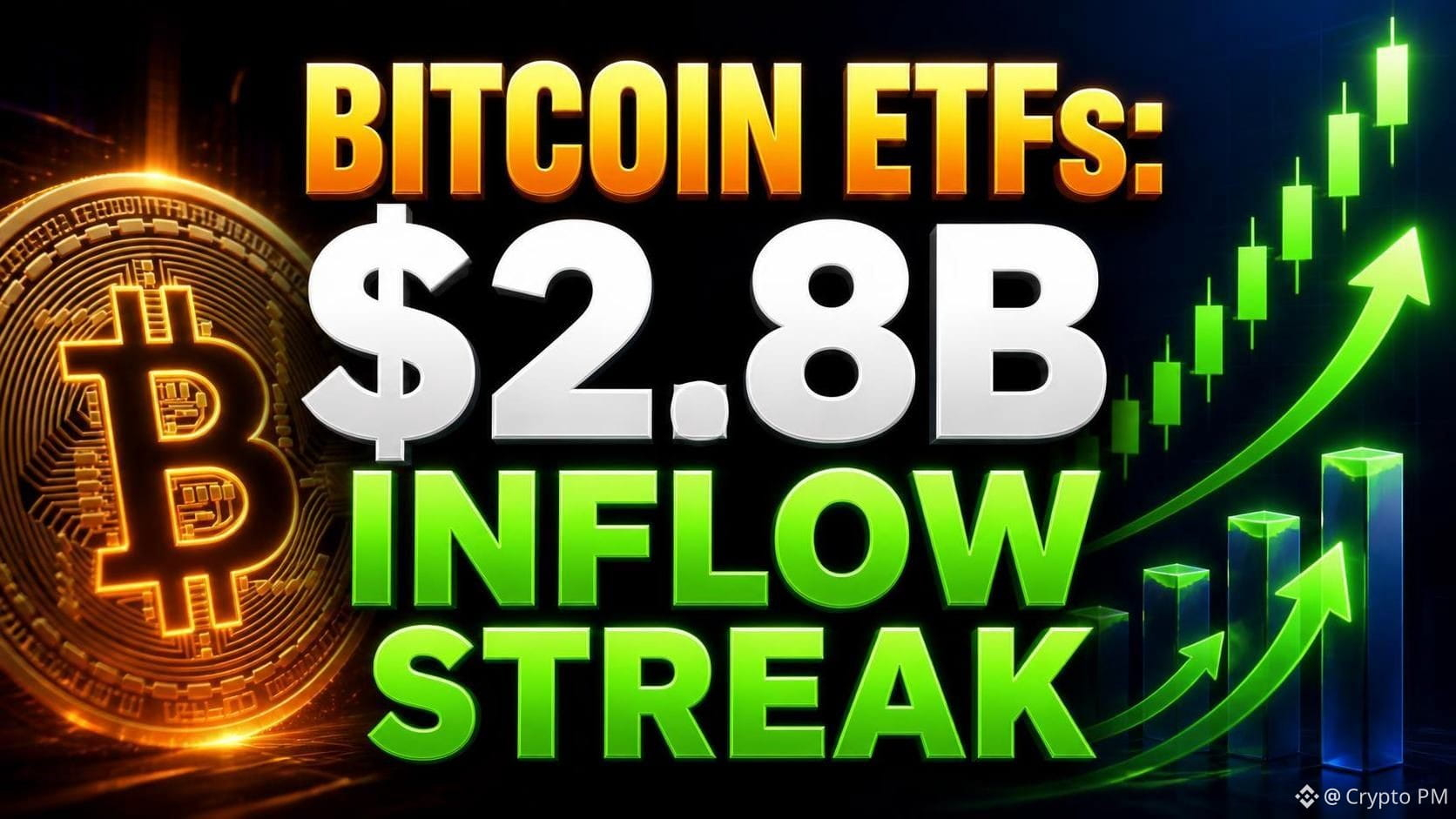
$BTC ETFs are on a roll, extending a six-day buying streak with over $2.8 billion flowing in since September 17.
Monday alone saw investors pile in with nearly $1 billion in shares.
Bitcoin has been a bit of a rollercoaster lately - it hit a high of $87,330 on Monday but has since settled back down, trading near $83,975.
#BTC #etf
$BTC ETFs are on a roll, extending a six-day buying streak with over $2.8 billion flowing in since September 17.
Monday alone saw investors pile in with nearly $1 billion in shares.
Bitcoin has been a bit of a rollercoaster lately - it hit a high of $87,330 on Monday but has since settled back down, trading near $83,975.
#BTC #etf
Monday alone saw investors pile in with nearly $1 billion in shares.
Bitcoin has been a bit of a rollercoaster lately - it hit a high of $87,330 on Monday but has since settled back down, trading near $83,975.
#BTC #etf
1
7
1.5k
·
--
Bullish
Verified
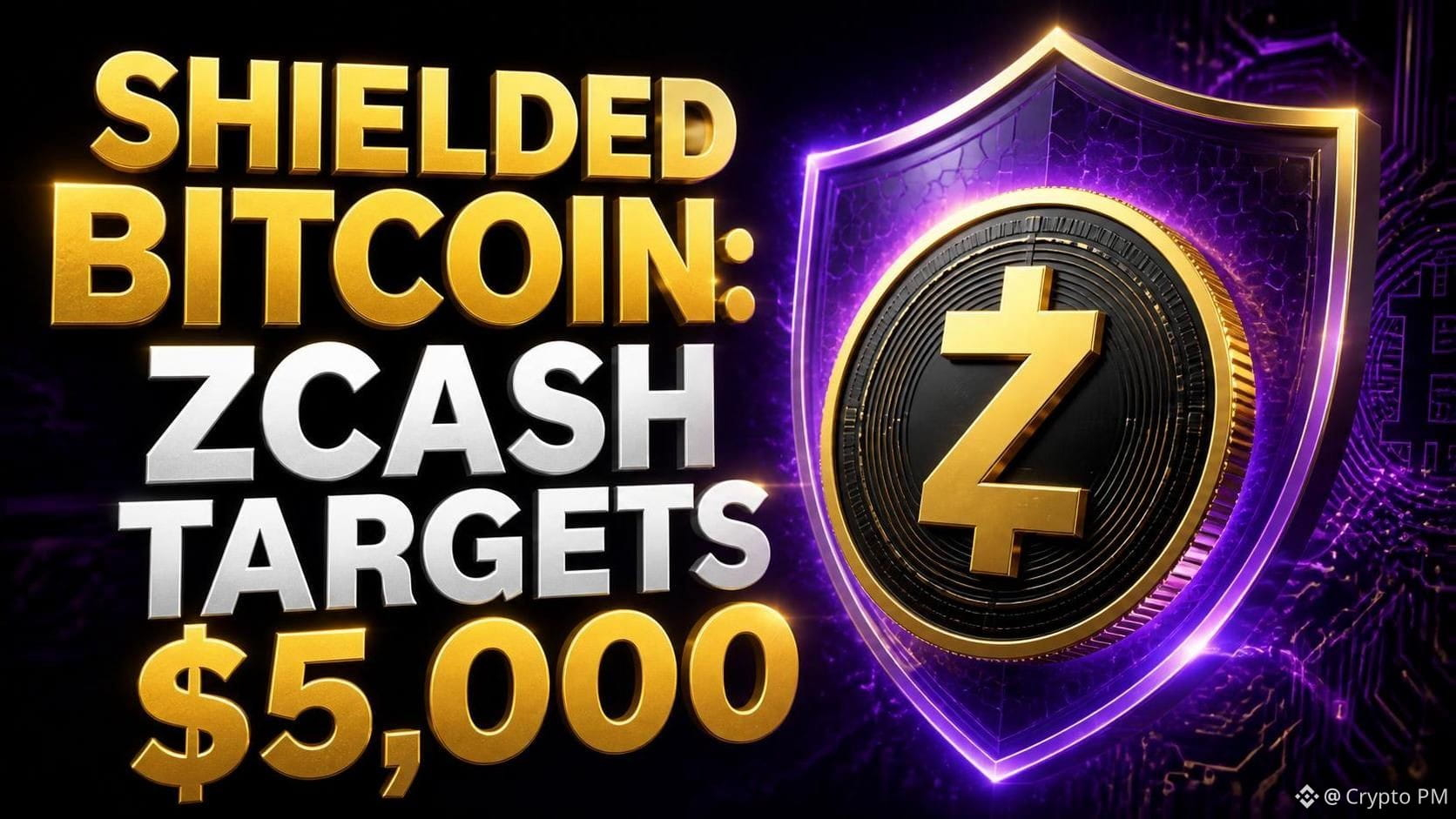
$ZEC co-founder Eli Bensasone supports Shielded $BTC and stated that his year-end target of $5,000 for Zcash remains valid.
{future}(ZECUSDT)
This proposal adds private transfer capabilities to the Bitcoin base layer without a soft fork or consensus change.
Bensasone’s earlier prediction that Zcash would surpass $1,200 by September 25 has proven accurate, and Zcash is currently trading at $1,545.89.
#zec #zcash #BTC
$ZEC co-founder Eli Bensasone supports Shielded $BTC and stated that his year-end target of $5,000 for Zcash remains valid.
This proposal adds private transfer capabilities to the Bitcoin base layer without a soft fork or consensus change.
Bensasone’s earlier prediction that Zcash would surpass $1,200 by September 25 has proven accurate, and Zcash is currently trading at $1,545.89.
#zec #zcash #BTC
This proposal adds private transfer capabilities to the Bitcoin base layer without a soft fork or consensus change.
Bensasone’s earlier prediction that Zcash would surpass $1,200 by September 25 has proven accurate, and Zcash is currently trading at $1,545.89.
#zec #zcash #BTC
1
6
2.1k
·
--
Bearish
Beginner traders when coming to this $BTC industry 😂😂👍
Beginner traders when coming to this $BTC industry 😂😂👍

139
48
417
254.3k
·
--
Bullish
Partly True
The yield on 10-year U.S. Treasuries climbed more than 4 basis points to 5.18%, while $BTC managed to hold near the $84,000 mark.
After briefly dipping below $83,000, the cryptocurrency steadied around $84,500.
$ONDO was one of the standout performers, surging to $0.50 and emerging as one of the market’s top-yielding altcoins.
#BitcoinSpotETFsNetInflow$191M #ONDO
The yield on 10-year U.S. Treasuries climbed more than 4 basis points to 5.18%, while $BTC managed to hold near the $84,000 mark.
After briefly dipping below $83,000, the cryptocurrency steadied around $84,500.
$ONDO was one of the standout performers, surging to $0.50 and emerging as one of the market’s top-yielding altcoins.
#BitcoinSpotETFsNetInflow$191M #ONDO
After briefly dipping below $83,000, the cryptocurrency steadied around $84,500.
$ONDO was one of the standout performers, surging to $0.50 and emerging as one of the market’s top-yielding altcoins.
#BitcoinSpotETFsNetInflow$191M #ONDO

3
2.8k
·
--
Bearish
4
1
12
5.3k

·
--
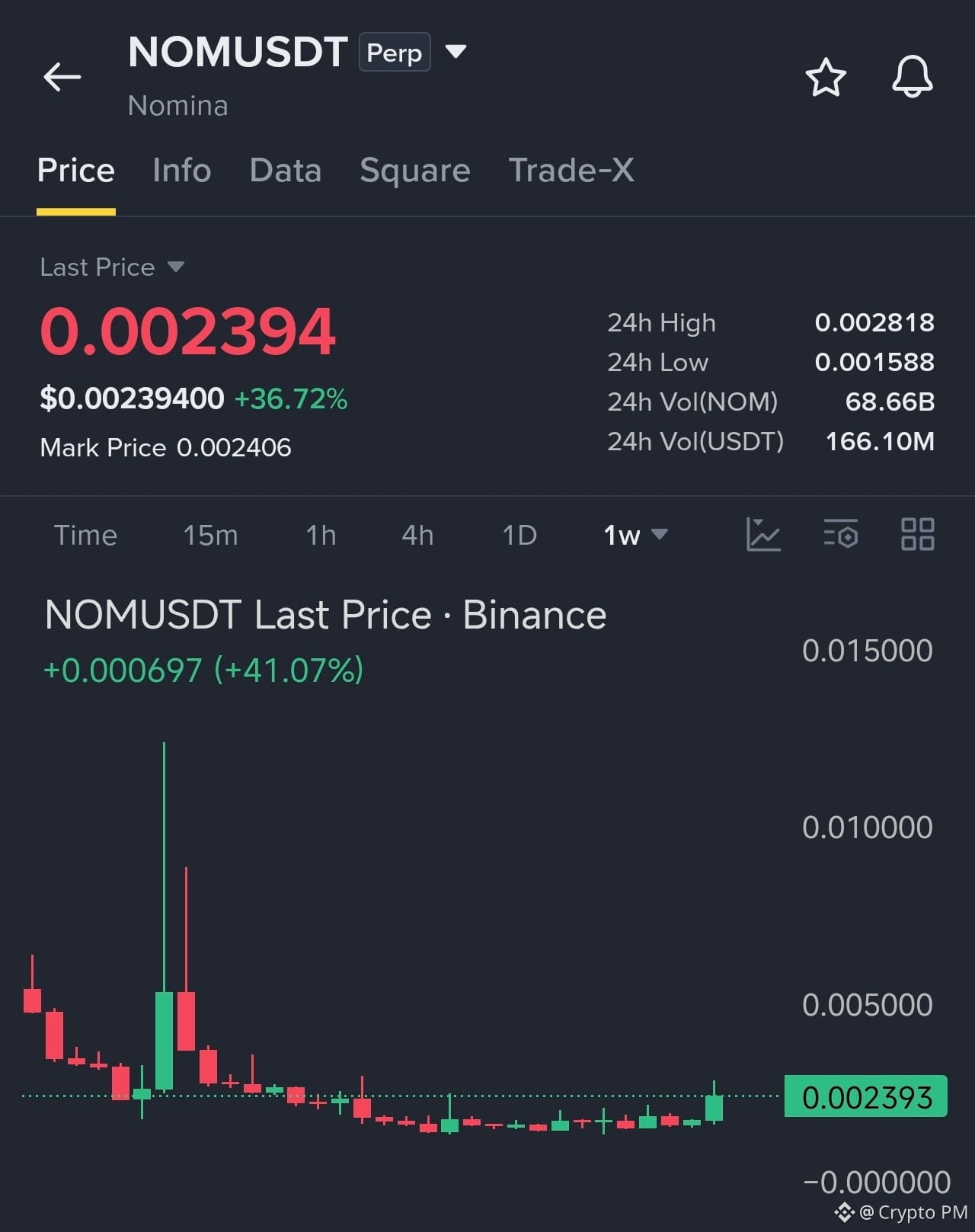
I’m watching the $NOM chart right now, and if you aren't paying attention to this massive 36.83% breakout to $0.00244, you are missing a wild move.
{future}(NOMUSDT)
While the broader crypto market is slightly down today, Nomina is absolutely flying.
But why are they buying?
What we are actually seeing is a textbook retail trading frenzy fueled by social media hype and exchange promos. A popular influencer called a "STRONG BREAKOUT" with specific long targets, sparking intense retail FOMO.
To throw gasoline on the fire, An exchange rolled out an "Auto Earn" campaign with a 500U NOM airdrop, giving retail buyers an immediate incentive to jump in.
On top of that, capital is actively rotating into altcoins , with the Altcoin Season Index up nearly 9%, and trading volume spiked over 302% in just one hour to confirm this breakout.
My Take:
The momentum we are seeing is heavily bullish in the short term, but trading a hype-driven pump with no major fundamental update means we have to stay on our toes.
If we can hold above our key $0.00230 support level, I expect us to push up and test the $0.00285 to $0.00305 target zone next.
However, if this promotional hype cools off and early buyers start taking profits, breaking below $0.00230 risks triggering a wave of stop-losses down toward $0.00200.
I’m keeping a close eye on the volume trends over the next 24 to 48 hours to see if this momentum has real staying power.
Are you riding this pump with us, or waiting to see if that $0.00230 support holds?
#Nomina
I’m watching the $NOM chart right now, and if you aren't paying attention to this massive 36.83% breakout to $0.00244, you are missing a wild move.
While the broader crypto market is slightly down today, Nomina is absolutely flying.
But why are they buying?
What we are actually seeing is a textbook retail trading frenzy fueled by social media hype and exchange promos. A popular influencer called a "STRONG BREAKOUT" with specific long targets, sparking intense retail FOMO.
To throw gasoline on the fire, An exchange rolled out an "Auto Earn" campaign with a 500U NOM airdrop, giving retail buyers an immediate incentive to jump in.
On top of that, capital is actively rotating into altcoins , with the Altcoin Season Index up nearly 9%, and trading volume spiked over 302% in just one hour to confirm this breakout.
My Take:
The momentum we are seeing is heavily bullish in the short term, but trading a hype-driven pump with no major fundamental update means we have to stay on our toes.
If we can hold above our key $0.00230 support level, I expect us to push up and test the $0.00285 to $0.00305 target zone next.
However, if this promotional hype cools off and early buyers start taking profits, breaking below $0.00230 risks triggering a wave of stop-losses down toward $0.00200.
I’m keeping a close eye on the volume trends over the next 24 to 48 hours to see if this momentum has real staying power.
Are you riding this pump with us, or waiting to see if that $0.00230 support holds?
#Nomina
While the broader crypto market is slightly down today, Nomina is absolutely flying.
But why are they buying?
What we are actually seeing is a textbook retail trading frenzy fueled by social media hype and exchange promos. A popular influencer called a "STRONG BREAKOUT" with specific long targets, sparking intense retail FOMO.
To throw gasoline on the fire, An exchange rolled out an "Auto Earn" campaign with a 500U NOM airdrop, giving retail buyers an immediate incentive to jump in.
On top of that, capital is actively rotating into altcoins , with the Altcoin Season Index up nearly 9%, and trading volume spiked over 302% in just one hour to confirm this breakout.
My Take:
The momentum we are seeing is heavily bullish in the short term, but trading a hype-driven pump with no major fundamental update means we have to stay on our toes.
If we can hold above our key $0.00230 support level, I expect us to push up and test the $0.00285 to $0.00305 target zone next.
However, if this promotional hype cools off and early buyers start taking profits, breaking below $0.00230 risks triggering a wave of stop-losses down toward $0.00200.
I’m keeping a close eye on the volume trends over the next 24 to 48 hours to see if this momentum has real staying power.
Are you riding this pump with us, or waiting to see if that $0.00230 support holds?
#Nomina
3
6
2.8k

·
--
Bullish
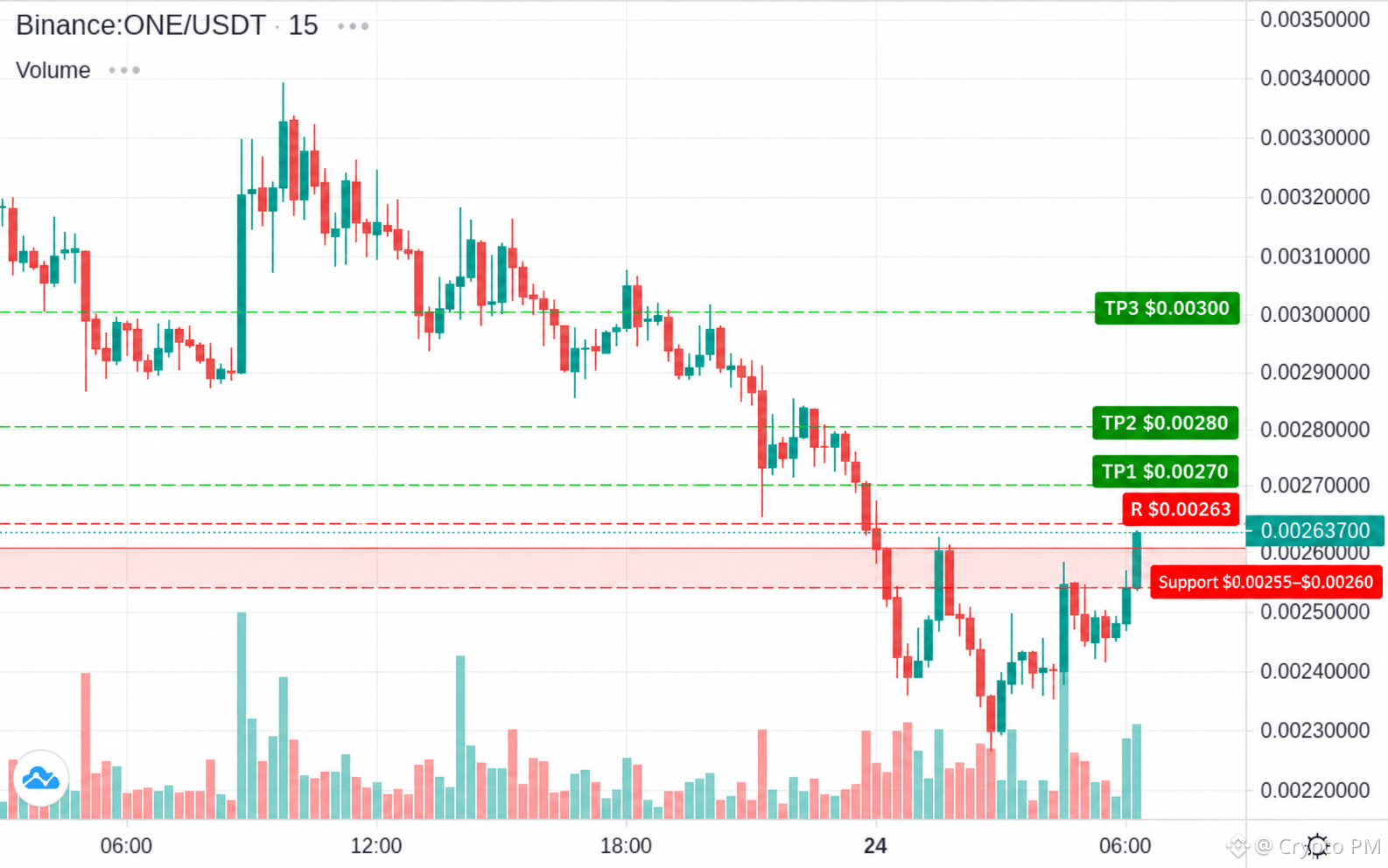
$ONE is showing strong bullish momentum on Binance.
{future}(ONEUSDT)
Price: $0.00243 → $0.00263 (+8.44%)
Volume: $14.80M (+9.98%)
Volume increased by $1.34M
A sharp recovery from the $0.00243 area has pushed $ONE back above $0.00260, with volume expanding alongside the move.
Bulls are now testing the $0.00263 area. If momentum continues, watch:
Target 1: $0.00270
Target 2: $0.00280
Target 3: $0.00300
Key zone to hold: $0.00255–$0.00260
The recovery from the recent lows combined with rising volume makes $ONE worth watching closely.
DYOR.
#one
$ONE is showing strong bullish momentum on Binance.
Price: $0.00243 → $0.00263 (+8.44%)
Volume: $14.80M (+9.98%)
Volume increased by $1.34M
A sharp recovery from the $0.00243 area has pushed $ONE back above $0.00260, with volume expanding alongside the move.
Bulls are now testing the $0.00263 area. If momentum continues, watch:
Target 1: $0.00270
Target 2: $0.00280
Target 3: $0.00300
Key zone to hold: $0.00255–$0.00260
The recovery from the recent lows combined with rising volume makes $ONE worth watching closely.
DYOR.
#one
Price: $0.00243 → $0.00263 (+8.44%)
Volume: $14.80M (+9.98%)
Volume increased by $1.34M
A sharp recovery from the $0.00243 area has pushed $ONE back above $0.00260, with volume expanding alongside the move.
Bulls are now testing the $0.00263 area. If momentum continues, watch:
Target 1: $0.00270
Target 2: $0.00280
Target 3: $0.00300
Key zone to hold: $0.00255–$0.00260
The recovery from the recent lows combined with rising volume makes $ONE worth watching closely.
DYOR.
#one
7
4
2.9k
·
--
Bearish
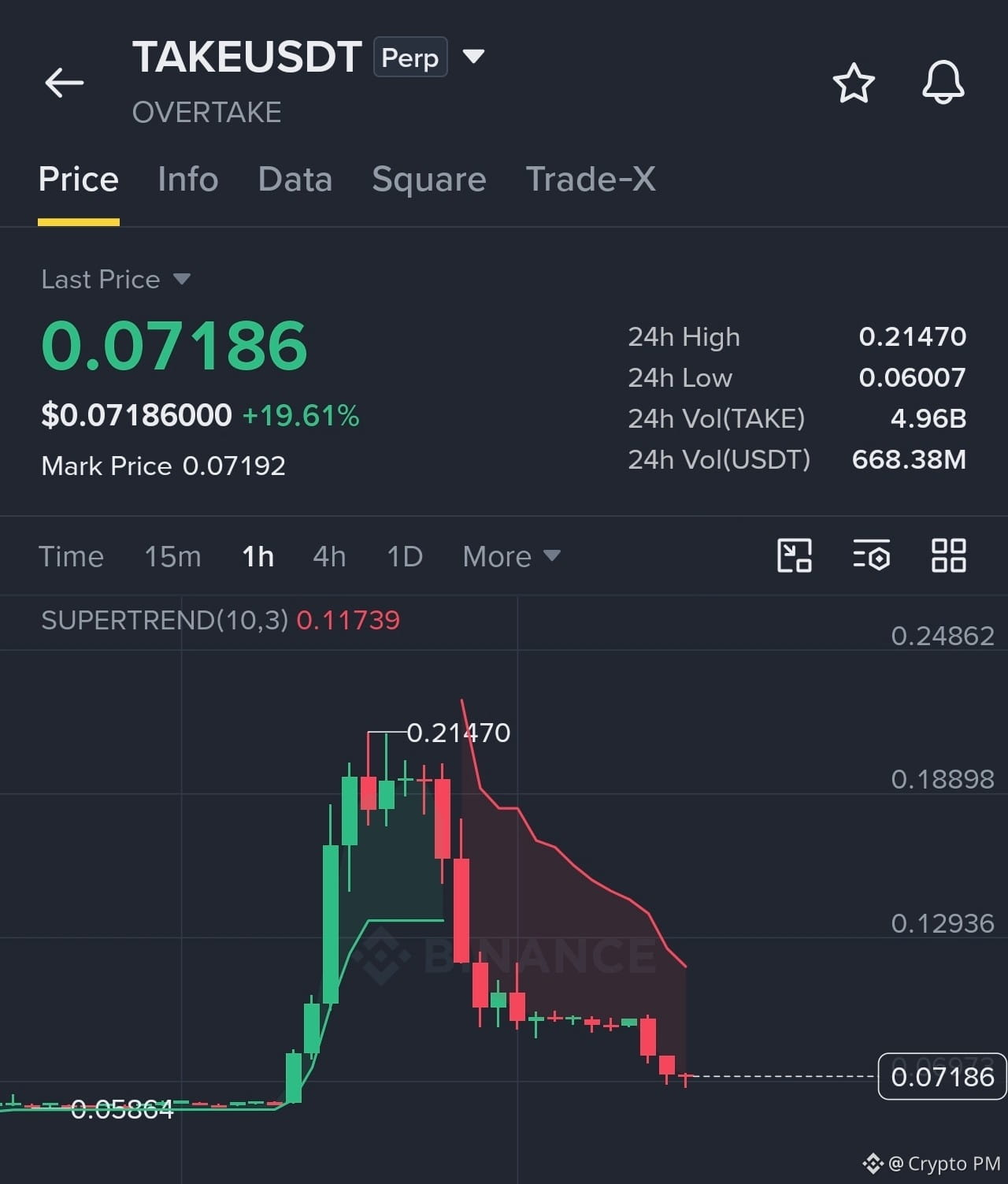
$TAKE just overtaking who longed on top 😂
Sorry bro if you trapped in another crime pump/dump.
$TAKE just overtaking who longed on top 😂
Sorry bro if you trapped in another crime pump/dump.
Sorry bro if you trapped in another crime pump/dump.
2
5
6.5k
·
--
Bullish
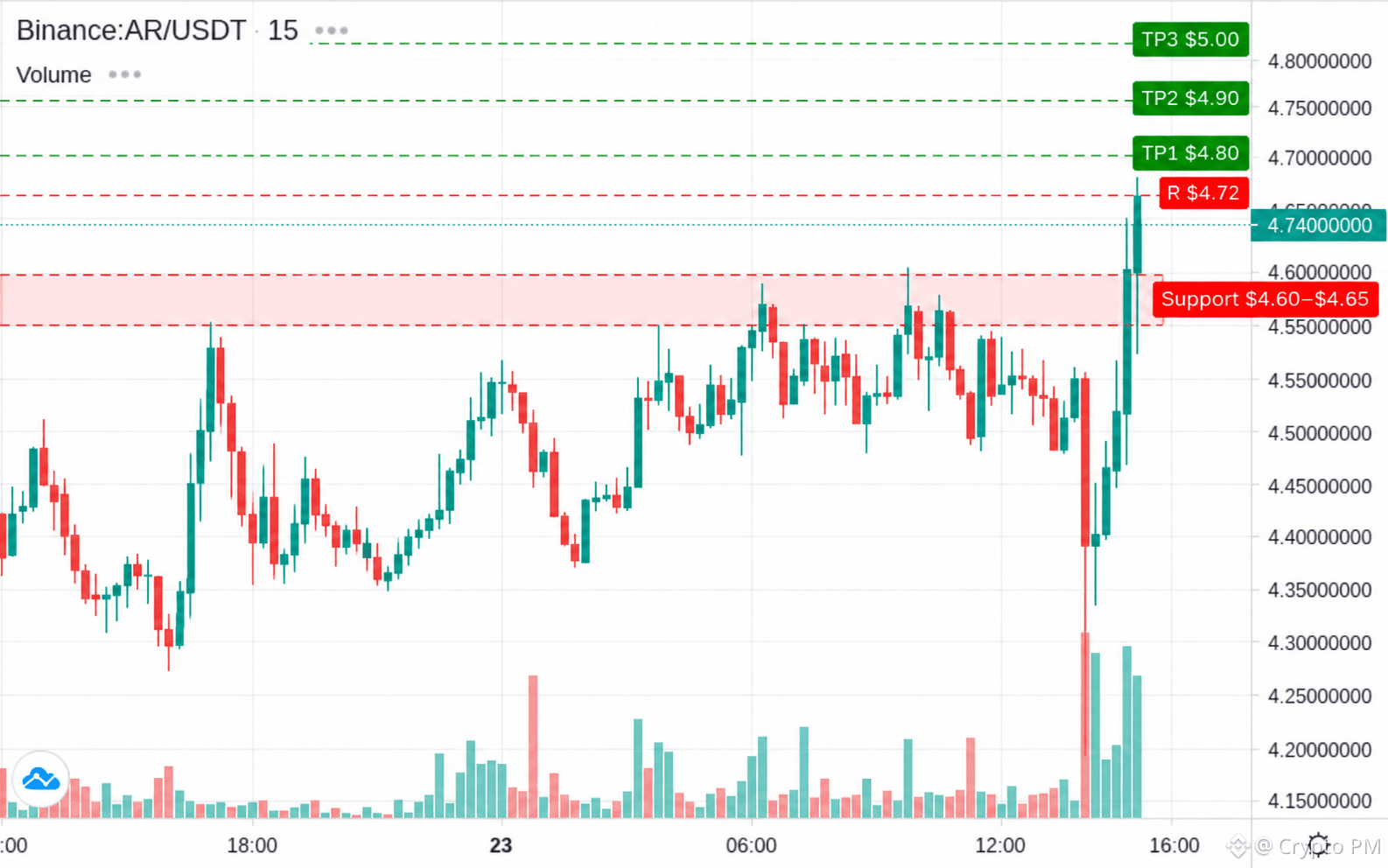
$AR is showing strong bullish momentum on Binance.
{future}(ARUSDT)
Price: $4.40 → $4.72 (+7.22%)
Volume: $6.45M (+21.47%)
Volume increased by $1.14M
A sharp recovery from the $4.40 area has pushed $AR above the $4.70 level, backed by a strong volume expansion.
Bulls are now testing the $4.72–$4.75 area. If momentum continues, watch:
Target 1: $4.80
Target 2: $4.90
Target 3: $5.00
Key zone to hold: $4.60–$4.65
The combination of breakout momentum and rising volume makes $AR worth watching closely.
DYOR.
#ar
$AR is showing strong bullish momentum on Binance.
Price: $4.40 → $4.72 (+7.22%)
Volume: $6.45M (+21.47%)
Volume increased by $1.14M
A sharp recovery from the $4.40 area has pushed $AR above the $4.70 level, backed by a strong volume expansion.
Bulls are now testing the $4.72–$4.75 area. If momentum continues, watch:
Target 1: $4.80
Target 2: $4.90
Target 3: $5.00
Key zone to hold: $4.60–$4.65
The combination of breakout momentum and rising volume makes $AR worth watching closely.
DYOR.
#ar
Price: $4.40 → $4.72 (+7.22%)
Volume: $6.45M (+21.47%)
Volume increased by $1.14M
A sharp recovery from the $4.40 area has pushed $AR above the $4.70 level, backed by a strong volume expansion.
Bulls are now testing the $4.72–$4.75 area. If momentum continues, watch:
Target 1: $4.80
Target 2: $4.90
Target 3: $5.00
Key zone to hold: $4.60–$4.65
The combination of breakout momentum and rising volume makes $AR worth watching closely.
DYOR.
#ar
1
8
2.2k
Log in to explore more content
Join global crypto users on Binance Square
⚡️ Get latest and useful information about crypto.
💬 Trusted by the world’s largest crypto exchange.
👍 Discover real insights from verified creators.
Email / Phone number
Trending Topics
BitcoinClears$85200
8,747 views
194 Discussing
We got the move, and $BTC is standing exactly where we were before the data. That’s what actual patience for a trade looks like.
The data came in mixed but with some important numbers. ADP Non-Farm Employment Change came at 90K vs 73K forecast, while Core PCE came in at 0.2% vs 0.3% expected. Final GDP was also stronger at 2.2% vs 1.5% forecast, while Personal Spending came in at 0.9% vs 0.8% expected. At the same time, Personal Income missed at 0.2% vs 0.5% forecast.
BTC initially surged to $85,600 and is now back where it needs to be. I’m still looking toward the lower ranges at $82,759 and the $80,000 liquidity, because the overhead liquidity is done and dusted.
We had a live session during the data, and during that session we saw the market at $83,800, then $85,600, and then back toward $83,000 and we still didn’t enter a trade.
That’s what patience is.
We can’t force an entry when the market has no clear direction. The same range is still in focus, and we’ll wait for the market to give us the setup.
Let me know, guys, how was the session? And should we have more regular sessions with our respected members so we can have proper discussions regarding the market?
#BitcoinClears$85200 #AltcoinSeasonIndexHoldsAbove60For5Days #USADPAdds90000JobsInSeptember #BitcoinSlipsBelow$84000 #SECToClarifyOnChainFundraisingRules
Crypto_LUX
·24 Likes
·15.3k views
AltcoinSeasonIndexHoldsAbove60For5Days
45,277 views
1,042 Discussing
USADPAdds90000JobsInSeptember
20,825 views
591 Discussing