


Since the FTX incident broke out, it has been like a political drama that continues to subvert us. Various regulatory and legal dramas have been staged, revealing the secrets hidden behind the scenes. Just when we were still immersed in the sadness of FTX's asset loss, the news of SBF's arrest once again triggered a torrent of public opinion. Then, the bankruptcy court's hearing on FTX's corporate restructuring provided unprecedented insider information.
In this ongoing legal battle, we continue to gain new information: What is Alameda's true financial situation? How much do we know about the whereabouts of FTX funds? What daunting charges will SBF face?
In order to help everyone sort out every detail of this theft, this article will sort out every important time node since SBF founded FTX, and fully interpret his recent court trial in the Bahamas. I hope that through this article, we can have a more complete understanding of this seemingly endless case.
Please follow the following content to explore the truth behind the FTX incident!
Recap history
FTX is a cryptocurrency exchange established in 2019 by SBF, who is also one of the founders of Alameda Research. However, FTX has been caught up in a series of management mistakes and financial problems. According to documents filed with the Delaware Bankruptcy Court, FTX's creditors include Chainalysis (a blockchain analysis company), Deloitte and PwC (accounting firms), Stripe (payment provider), and some law firms, among others. In addition, FTX's restructuring advisers allegedly found approximately $740 million in cryptocurrencies in FTX's offline cold wallets, which were used for private purposes.
In addition, FTX’s balance sheet contains some important assets, including FTX’s self-issued cryptocurrency FTT and related currencies, the native token of the Solana blockchain, etc. It is said that FTT accounts for about 40% of the balance sheet.
On November 2, 2022, Coindesk published an article revealing the assets related to FTX in Alameda Research's balance sheet. This article caused a stir in the market, causing FTX users to request withdrawals. However, due to FTX's management errors and financial problems, FTX was unable to meet users' withdrawal requests, resulting in users' assets being locked.
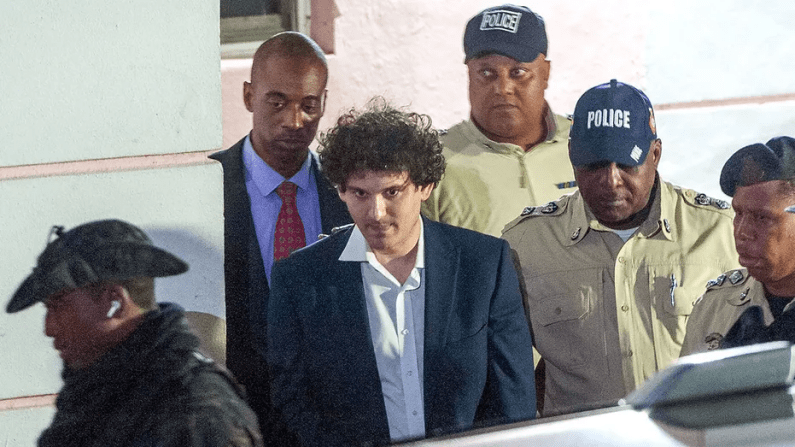
Against this backdrop, SBF resigned from FTX, FTX US, Alameda Research and its directly and indirectly owned subsidiaries on November 11, 2022. John J. Ray III, who was involved in handling the collapse of Enron (the seventh largest bankruptcy in U.S. history), was appointed CEO of FTX on the same day. At a hearing in the Bahamas court, SBF stated that he would not waive his right to oppose extradition to the United States and requested bail. However, his application for bail was rejected by a Bahamian magistrate and he was detained in Fox Hill Prison. The judge ordered an extradition hearing on February 8, 2023 and stipulated that SBF would be detained until at least February 8 of next year. In addition, another attempt at bail will be made at a hearing on January 17, 2023.
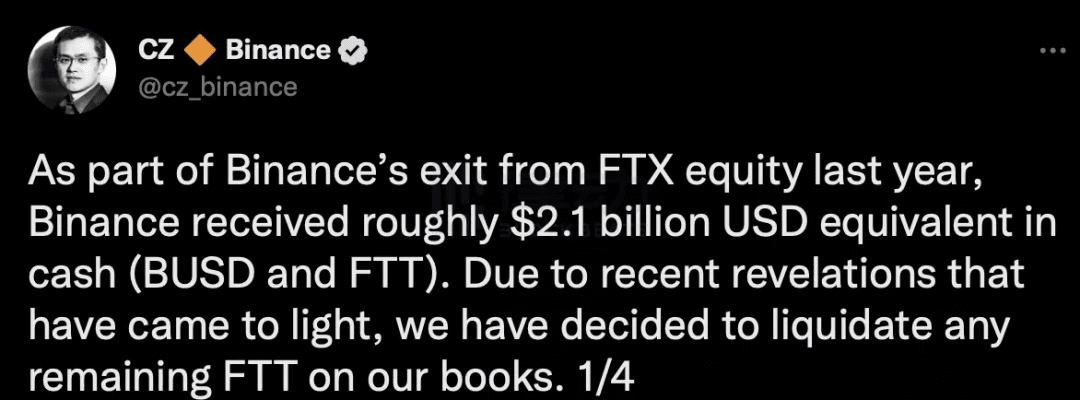
In addition, Binance played an important role in the FTX incident. Before the collapse of FTX in 2022, SBF announced that FTX had signed a non-compulsory acquisition letter of intent with Binance. However, Binance's founder CZ responded that a non-binding letter of intent was signed, and stated that Binance intends to fully acquire FTX and assist in solving the liquidity crunch. This news attracted market attention, but then FTX's coin price plummeted to $2.5. In addition, FTX stopped the withdrawal function for all users, indirectly proving that there were problems with FTX funds and raising concerns about misappropriation of user funds. This further exacerbated users' concerns and distrust of FTX.
Timeline
The trial is expected to last for 6 weeks. It has already entered the fourth week. Let’s review the proceedings of the trial in these 4 weeks.
According to Blockbeat, Chainchater, Coinage, and PAnews, the following timeline is compiled:
Jury: 12 jurors and 6 alternates
Week 1 (10.3-10.6):
Attendees: FTX co-founder Gary Wang, Paradigm co-founder Matt Huang, and former FTX engineers, etc.
• The FTX case that has attracted much attention in the industry went to trial. SBF was accused of defrauding clients and investors’ funds, and SBF appeared in person.
• Michael Lewis released a new book, “Going Infinite,” claiming that Alameda Research lost almost all of the $170 million it raised in its first round of financing.
• The U.S. Department of Justice believes that SBF maliciously deceived customers and stole funds, while SBF’s lawyers defended that FTX was simply overwhelmed by the rapid growth of the other two companies and had no intention of stealing customer funds
• U.S. prosecutors are seeking to recover the assets of two luxury jets in a legal battle that FTX creditors claim is owned by Bahamas-based charter flight operator Island Air Capital (IAC), which claims it purchased the planes using financing provided by FTX.
• FTX co-founder Gary Wang testified that SBF allowed Alameda to withdraw unlimited funds, and when FTX collapsed, Alameda had withdrawn $8 billion from the platform and $65 billion from its credit line.
• A witness in the SBF trial said a software error caused by the unusual way FTX handled customer deposits overstated the amount Alameda owed the trading platform’s customers by $8 billion.
• Paradigm co-founder Matt Huang testified in court that Paradigm invested a total of approximately US$278 million in FTX twice, but FTX always lacked a formal governance structure or even a board of directors, and SBF made it clear to it that Alameda Research did not receive preferential treatment at FTX.
• FTX’s former senior engineer Adam Yedidia testified in court on Thursday that SBF had already recognized that FTX had problems on the eve of its collapse in 2022 and that it would take even several years to resolve them.
• SBF told the CTO that it would ensure Alameda’s accounts would never be liquidated on FTX and allowed Alameda Research to spend $8 billion of the trading platform’s customer funds.

Week 2 (October 7-11):
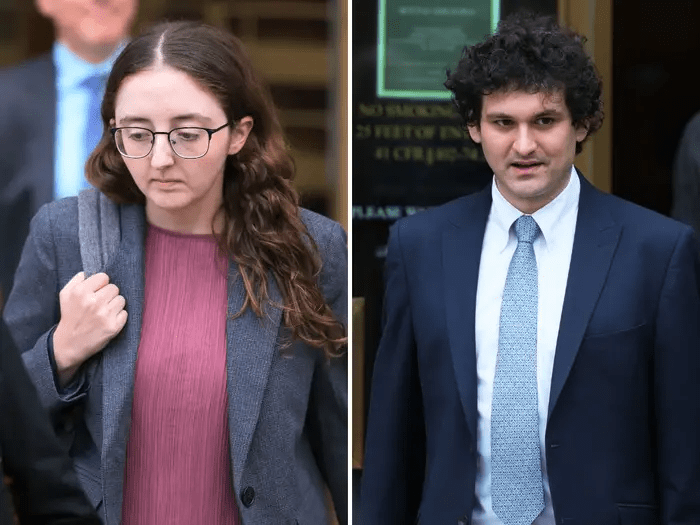
Attendees: Former Alameda CEO, ex-girlfriend Caroline Ellison
• Caroline Ellison previously pleaded guilty to fraud charges and signed a plea agreement clearing her of tax crimes.
• The SBF defense team disagreed with the U.S. Department of Justice’s claim that the $500 million investment in Anthropic in 2022 came from customer funds.
• Alameda bribed Chinese officials with $100 million to unfreeze Alameda’s trading accounts on Huobi and OKX.
• FTX customer balances are equal to hot wallet assets, but there is an additional $8 billion in liabilities.
• Alameda misappropriated FTX customer funds for investments and political donations
• SBF is trying to find a way to get regulators to crack down on its competitor Binance in order to increase FTX’s market share.
• SBF used Alemeda funds to purchase $600 million in Robinhood shares and transferred to another FTX entity to avoid public disclosure.
Week 3 (10.12-10.17)
Attendees: Nishad Singh, former FTX Engineering Director
• Singh pointed out that FTX had lent blank checks to SBF’s brother Gabriel Bankman-Fried’s team and illegally used user funds for political donations for the sole purpose of profit and influence, not Singh himself
• Singh described how SBF misused customer funds to build relationships with celebrities (paying approximately $1.3 billion in endorsement fees) and allocated $700 million to venture capital firm K5 Global. However, Singh argued that this was not practical, especially when FTX was short of funds, and that such expenditures should be reduced, but SBF did not adopt this approach.
• Singh expressed unease about SBF’s extravagant spending habits, such as large investments in AI companies and Bitcoin mining, and buying penthouses for employees. But SBF ultimately followed through.
• SBF’s lawyers applied in court to allow SBF to increase the dosage of Adderall (a drug for treating ADHD) during the trial. The reason is that this may affect SBF’s ability to testify in court.
• Singh admitted that in October 2022, he used an FTX loan to purchase a house on Orcas Island while knowing that FTX was misusing customer funds, and has now abandoned the property.
• Singh said he was unaware of the software bug that added $8 billion to Alameda's debt until he overheard a conversation between technical officials.
• Government evidence shows that months before FTX’s bankruptcy, SBF arranged to meet with influential people such as Clinton and the Governor of New York in Manhattan.
• An email shows that the Prime Minister of the Bahamas asked SBF to advise his son on the NFT project, and SBF provided contact information.

The latest progress this week (10.18 to date)
• Former FTX lobbyist Eliora Katz testified in SBF’s case, comparing SBF’s public statements in Congress about FTX investor protection a year ago with the insider reality: SBF said in the video at the time that FTX had a transparent system and reliable risk control, but in fact FTX’s finances were in disarray and customer funds were misappropriated. Katz mainly compared the differences between FTX’s external protection claims and its actual internal handling of customer funds.
• The prosecutor submitted a revised instruction to the judge, requesting that the jury not use the defendant's claim that he could repay the funds as a defense. Because the criminal behavior was "complete," the intent alone constituted abuse and fraud. The prosecutor also requested instructions that breaking the law motivated by moral or political beliefs could not be used as a defense. However, SBF's lawyer said that the jury should understand that only criminal acts stipulated by the law are sufficient to convict, and conviction cannot be based on vague feelings or beliefs. The core is that the prosecutor requested to exclude the use of repayment of funds or other illegal reasons as a defense, while the defense believes that only clear criminal reasons can lead to conviction.
• FTX’s former general counsel Can Sun testified that FTX falsely assured institutional clients that their assets would be safe in the event of bankruptcy, but he did not know that client funds were loaned to Alameda for use. FTX made false assurances to its clients, but Sun said he was not at fault and had signed a non-prosecution agreement with the government.
• SBF nominated financial expert Joseph Pimbley as its witness to refute the testimony of the US Department of Justice: Pimbley will provide data such as Alameda’s credit and user position structure extracted from the FTX database as evidence in court.
The SBF case will enter the final stage, the latest court hearing news on October 26:
• Sam Bankman-Fried's defense team asked the judge in the case to render a not guilty verdict, saying prosecutors failed to prove the charges
• SBF testified in court that he did not recall discussing the closure of Alameda Research via Signal in 2022 and said he did not remember how $13 billion of the company's money went missing.
• SBF stated in court that it was an industry practice for FTX customer assets to be stored together in a “comprehensive wallet”.

The SBF trial is still ongoing and no final ruling has been made. Due to the complexity of the case and the review of relevant evidence, the final verdict will take more time to decide.
Latest news and follow-up evaluation
Currently, the latest news is that FTX is undergoing debt restructuring. FTX is negotiating with three bidders to restart the exchange, and the company will make a decision on how to proceed before mid-December.
This FTX incident triggered two important reflections:
First of all, building trust is a long process. The FTX incident was huge in scale and involved a large amount of user money, which did cause users to feel uneasy and suspicious about centralized exchanges, and thus consider switching to decentralized exchanges (DEX) and custodial wallets. Compared with centralized exchanges that rely on centralized management, decentralized platforms can reduce single-point risks to a certain extent due to their distributed characteristics. During the incident, the price of decentralized platform assets rose significantly, reflecting that some users may consider further utilizing their autonomous power. At the same time, choosing a safe and reliable third-party wallet to hold digital assets has also become a security option.
In addition, the FTX incident once again highlights the importance of regulation and information transparency in the crypto industry. FTX's fund operations have blind spots, and executives can make unilateral decisions, leading to a crisis of trust. Exchanges should strengthen internal control account management and protect user rights. Regulators also need to have a deep understanding of exchange management, use appropriate regulatory methods, and strengthen industry governance.
The FTX incident once again highlights the importance of regulation and information disclosure in the crypto industry. FTX's fund operations lack effective supervision, and the management can arbitrarily transfer funds, but the impact of manipulation is not transparent, which has caused panic and trust crisis among users. Exchanges should strengthen internal control and establish strict risk management mechanisms and financial reporting systems. It is important to conduct regular third-party audits and publish audit reports so that users can easily monitor the status of the company. At the same time, regulators must also increase their supervision of the industry, such as formulating blockchain-related bills. Regulatory agencies can learn from each other's regulatory experience to form unified standards to avoid "slipping through the net."
When users gradually get used to using decentralized exchanges (DEX) and custodial wallets, it will be a long process to rebuild trust in centralized exchanges. However, if FTX's court case and debt restructuring can give creditors a satisfactory answer, it will be a very powerful shot in the arm for the crypto market. In general, all parties focus on cooperation, improve supervision and enhance transparency, which is conducive to the healthier development of the crypto field.
If you are interested in or have any thoughts on the FTX incident and SBF's legal process, please click the "Forward" button below to share with your friends and followers. We also look forward to hearing your insights and comments. Your feedback is the driving force for our continued discussion and analysis. Please leave your thoughts in the comment section. Thank you for your support and participation!