
Regulatory uncertainty and recent enforcement actions against major cryptocurrency exchanges have reduced the likelihood of Bitcoin breaking $30,000 in the near term, but investors remain bullish.

Bitcoin
It may have shown strength after successfully defending the $28,000 support level amid unfounded rumors about Binance, but an interesting development worth noting is that BTC has become increasingly less correlated with traditional markets after the Federal Reserve chose to provide emergency liquidity to banks.
The shift in central bank attitudes has led to a shift in the trend of U.S. Treasuries as traders seek shelter from upward inflationary pressures. Bitcoin appears agnostic to this trend, with its price hovering around $28,000 over the past week.
Meanwhile, the five-year Treasury yield fell to 3.50% on April 3 from 3.70% the previous week. Higher demand for debt instruments reduces payments, leading to lower yields. $152.6 billion in outstanding borrowings from the Fed-backed lending programs has been a driving factor.
The public’s lack of trust in banks is also causing them to rethink what the FDIC is and how the Fed is no longer in control of the trajectory of inflation. The question of whether Bitcoin can serve as a reliable store of value during a crisis remains open, but its 70% gain so far this year certainly proves the point.
Investors are reducing their cash positions
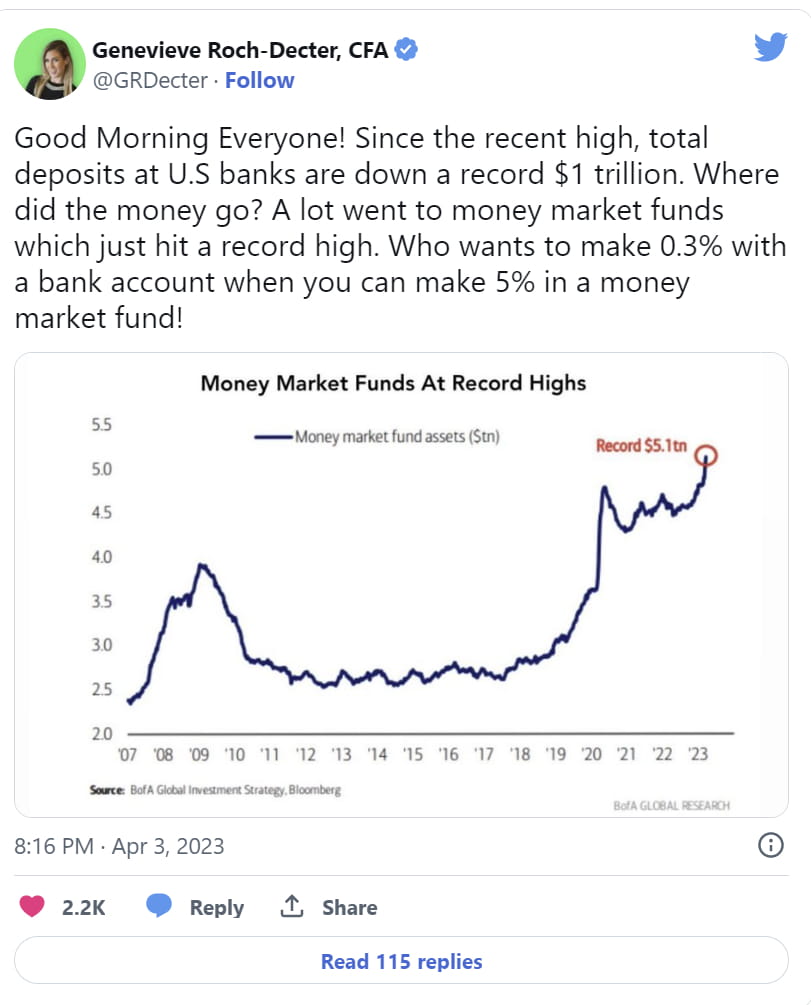
Total assets in U.S. money market funds hit a record high of $5.1 trillion, according to Bank of America. These instruments invest in short-term debt securities such as U.S. Treasuries, certificates of deposit and commercial paper. In addition, fund manager and analyst Genevieve Roch-Decter said investors have pulled $1 trillion out of banks because money market funds offer higher returns.
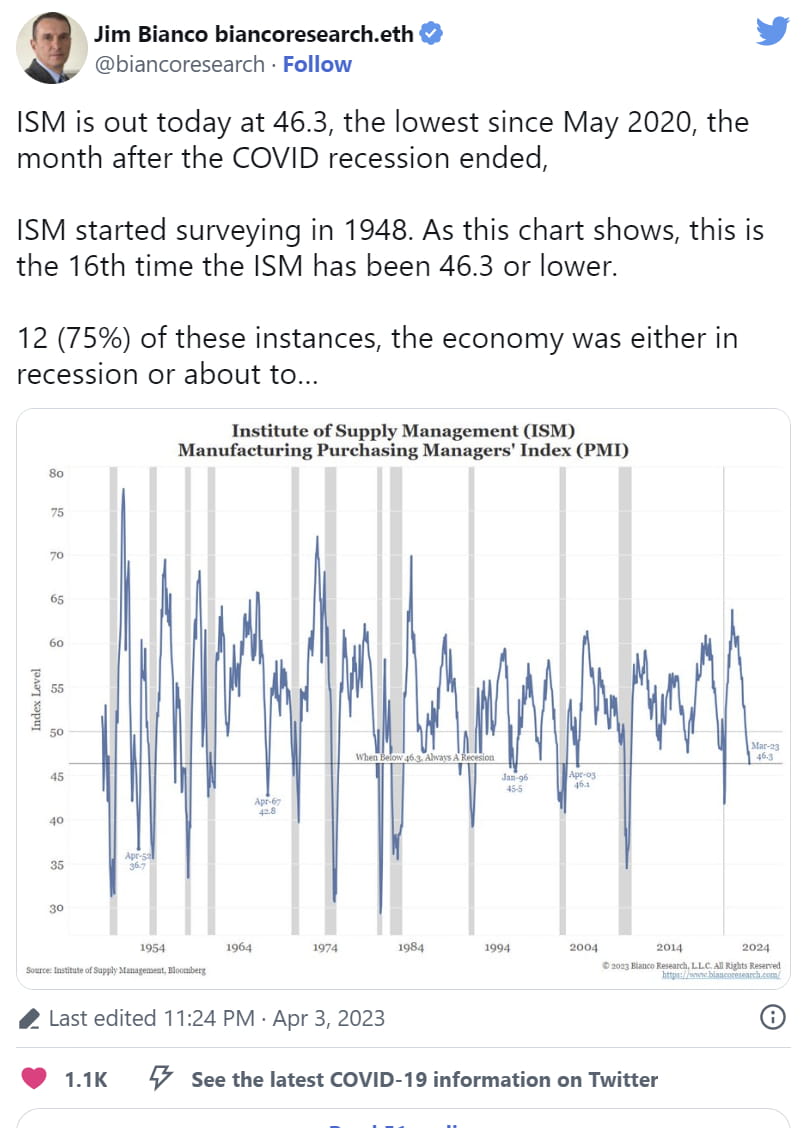
While Bitcoin investors view the cryptocurrency as a safe haven against inflation, a recession reduces demand for goods and services, leading to deflation. The risk rose sharply after the release of the March U.S. ISM Purchasing Managers Index data. The indicator came in at 46.3, reaching its lowest level since May 2020, below analysts’ forecast of 47.5, indicating contraction.
It’s the 16th time the level has been this low since 1948, and 75% of those times have been accompanied by a recession, according to Jim Bianco, a macro analyst at Bianco Research.
Let’s examine Bitcoin derivatives indicators to determine professional traders’ current market position.
Bitcoin derivatives traders are not folding under FUD
Bitcoin quarterly futures, popular among whales and arbitrage platforms, often trade at a slight premium to the spot market, a sign that sellers are demanding more funds to delay settlement for a longer period of time.
Therefore, futures contracts in a healthy market should trade at an annualized premium of 5% to 10% — a situation known as contango, which is not unique to crypto markets.
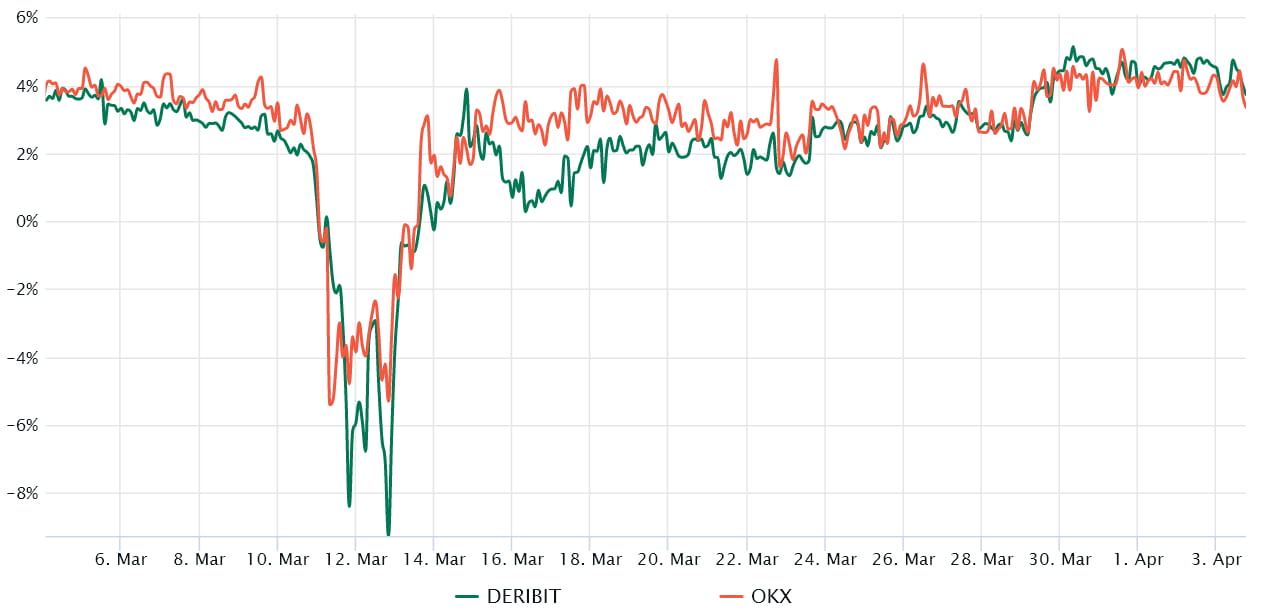
Bitcoin futures premium has been hovering around the neutral to bearish threshold since March 30, indicating that professional traders are reluctant to turn bullish despite BTC price holding near $28,000.
The absence of leveraged long demand does not always mean a fall in price. Therefore, traders should investigate Bitcoin’s options market to understand how whales and market makers assess the likelihood of future price movements.
A delta skew of 25% indicates when market makers and arbitrage desks are overcharging for upside or downside protection. In a bear market, options traders increase the odds of falling prices, causing the skew indicator to rise above 8%. On the other hand, bullish markets tend to push the skew indicator below -8%, indicating less demand for bearish put options.
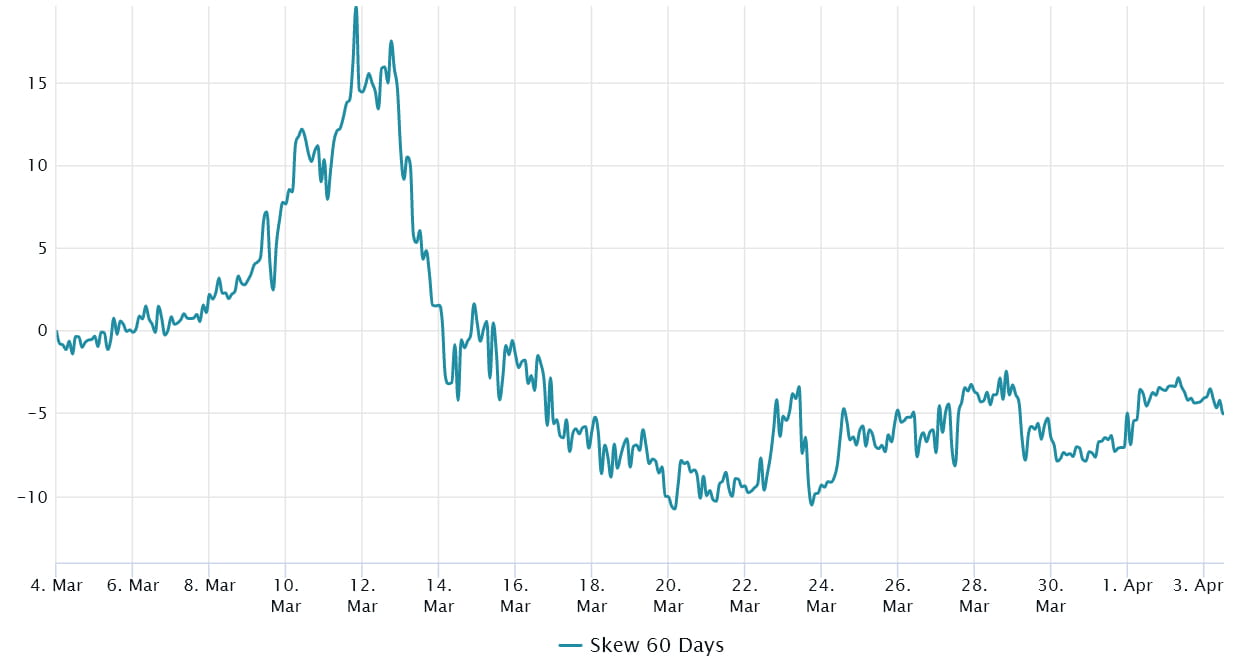
The 25% skew is currently at -5 as protective puts are trading slightly below neutral to bullish calls. This is a bullish indicator given the recent FUD generated after the Commodity Futures Trading Commission sued Binance on March 27. The regulator claimed that Binance and CZ violated regulatory compliance and derivatives laws by offering trading to U.S. customers without registering with the market regulator.
Bitcoin has performed well so far as the baking industry pressures the Federal Reserve to reverse its credit tightening policies. However, as long as regulatory uncertainty exists on major cryptocurrency exchanges, Bitcoin is unlikely to break $30,000.