



The fear and greed index, which reflects the investment sentiment in the cryptocurrency market, recorded 17, entering the 'extreme fear' stage. This indicates that there is strong caution across the market. Amid this psychological contraction, Bitcoin (BTC) is facing downward pressure due to multiple adverse factors coinciding.
Selling by long-term holders and ETF capital outflow
The most noticeable aspect in this downturn is the selling movement of long-term holders. Even the so-called 'Diamond hands' who have been the backbone of the market have started to realize profits, leading to an increase in selling pressure.
In addition, there is simultaneous capital outflow from Bitcoin spot ETFs. As institutional funds moved out of a net inflow phase, market liquidity decreased, which further increased downward pressure on prices. Concerns about market corrections are spreading as both individual and institutional demand weaken.
Collapse of technical support lines and chart structure
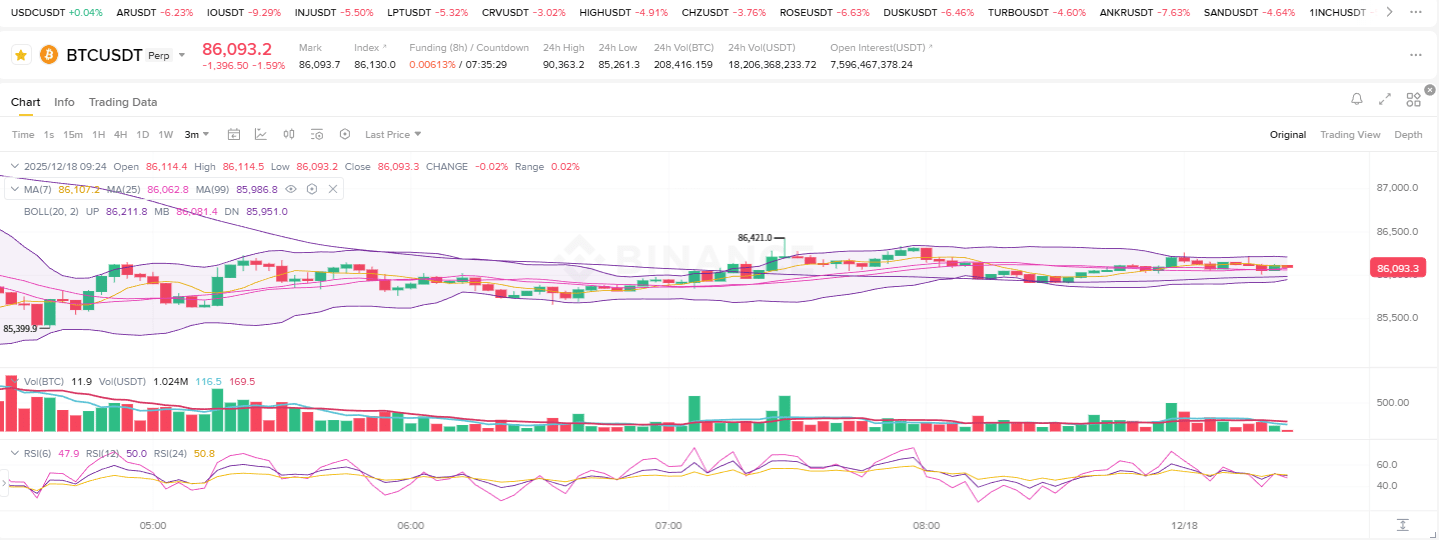
From a chart perspective, there are confirmed burden factors, and Bitcoin has fallen below the key support area, trading around $86,000 in the short term. Although there were attempts at a rebound, the current chart shows limited sideways movement rather than a clear trend recovery.
Moving average trends
Short-term moving averages are converging, indicating weakened directionality.
Prices fluctuate around major moving averages without forming a clear trend.
Bollinger Bands and Volatility
Bollinger Band width is narrowing significantly, forming a volatility reduction phase.
Prices are showing sideways movement, oscillating around the center line.
RSI Indicator
RSI is hovering around the neutral zone of 50.
Rather than signals of overbought or oversold, the market reflects a wait-and-see sentiment.
These indicators show that the current phase is closer to a period of consolidation after a decline rather than a strong rebound or a sharp drop.
In a situation where both Bitcoin and altcoins show a general downward trend, it is difficult to make profits by simply buying and holding coins. This is because losses increase in a declining phase, and predicting the timing of rebounds is also challenging.
Especially in a volatile down market, it is difficult to catch buying timing, and stop losses and rebounds can repeat, creating an environment that is psychologically easy to shake. This is why many investors choose to stay out of trading or wait during a down market.
Structure capable of responding even in a downturn, Binance futures trading
Binance offers a structure that allows for responses even in declining price phases through futures trading. In futures trading, you can take long positions betting on price increases as well as short positions betting on price declines.
In other words, it is characteristic that trading can utilize price fluctuations even when the market is in a downward trend. Additionally, Binance provides high liquidity, fast order execution, and various trading support features, ensuring a relatively stable trading environment even in highly volatile periods.
Things you must know before using Binance futures trading
Futures trading inherently includes fund movement and leverage usage, so it requires more preparation than regular spot trading.
1. Membership registration and KYC verification are mandatory
To use Binance futures trading, you must complete membership registration and KYC (identity verification).
You must complete KYC verification to activate futures trading functions, transfer funds between wallets, and lift account restrictions.
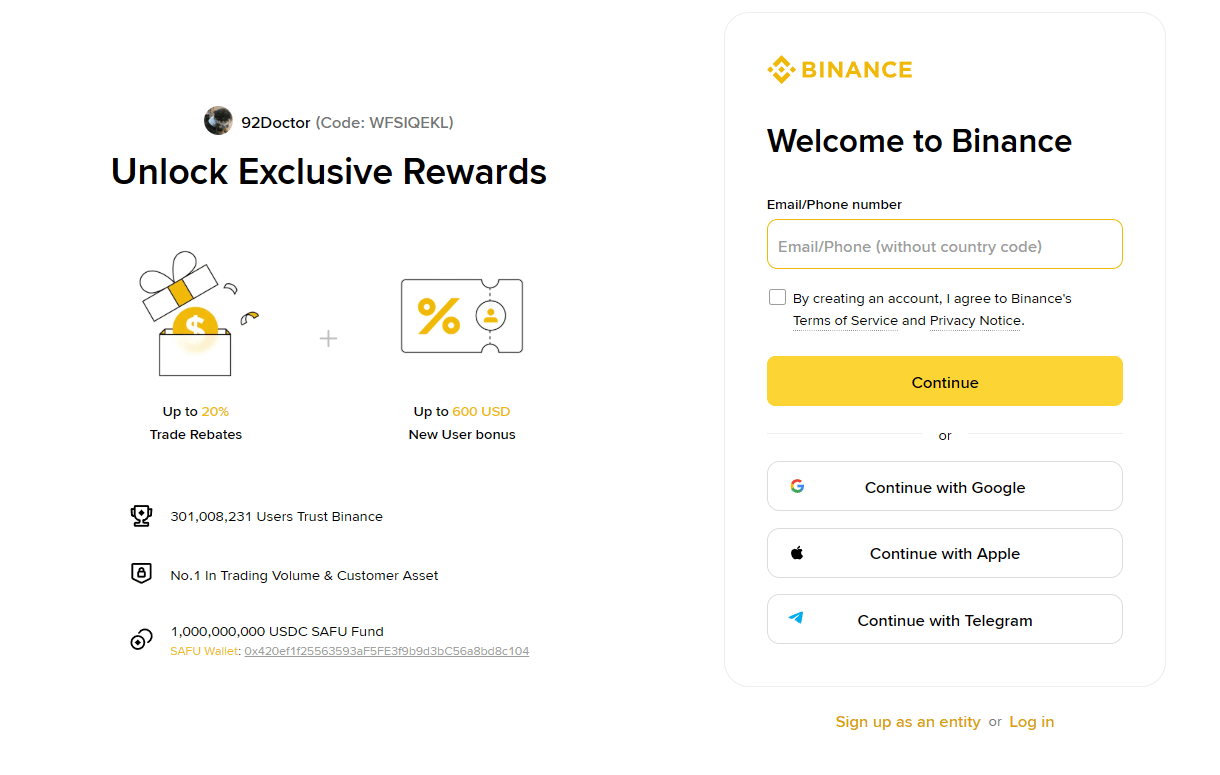
Registering for Binance through the link below will give you a 20% discount on fees, so be sure to take advantage of it.
🎁Get a 20% discount on Binance registration fees
Not only new registrants but also existing members can receive a 20% discount on fees if they meet the five conditions below.
The invited person already has an account registered with Binance.
The invited person has not previously accepted an invitation.
The invited person has not traded or used products on the Binance platform in the last 180 days using their account.
When a qualified invitee opens the link and logs in, a confirmation window will appear.
When the inviter clicks [Bind Now], the binding takes effect.
2. Security settings (OTP) recommended
Since futures trading involves the frequent movement of funds, it is recommended to set up OTP (two-factor authentication) security. Setting up OTP adds an extra layer of authentication, enhancing account security.
3. Fund transfer methods for futures trading (Spot wallet → Futures wallet)
On Binance, spot wallets and futures wallets are operated separately. To trade futures, you must go through the following process.
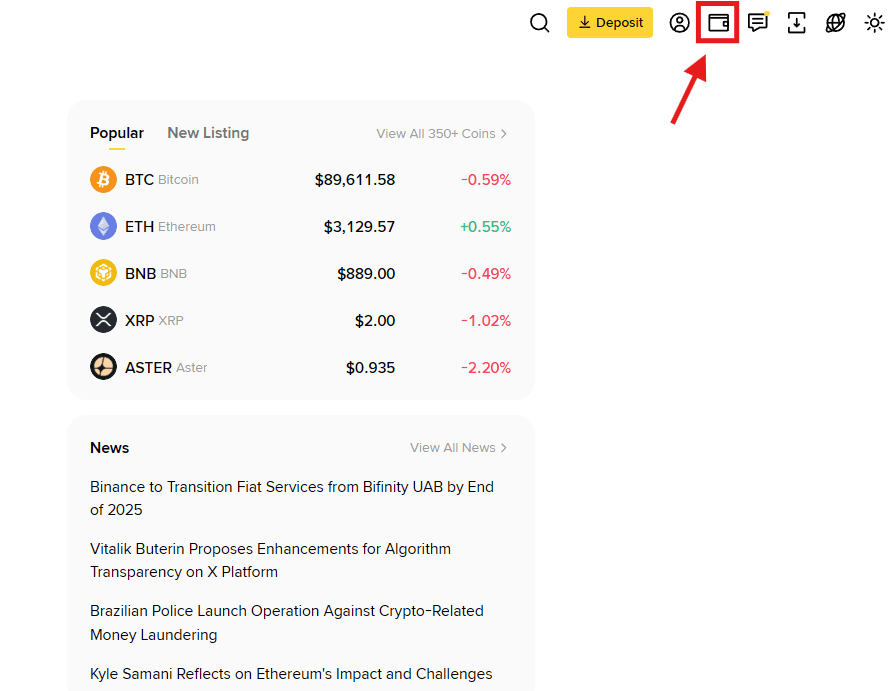
Select the Wallet menu
Click Transfer
Select Spot Wallet → Futures Wallet (USDT-M Futures)
Enter asset (usually USDT) and amount
Transfer complete
This movement between wallets is processed instantly without fees.
In a down market, it is not easy to make profits with a simple holding strategy, but understanding market structures and having response measures can broaden your options. Binance is a global exchange that has a trading structure capable of responding even in down markets, providing high liquidity, a stable system, and various security and management features.