



Iran explores crypto payments for war weapons (2:09)
For years, Iran has treated Bitcoin as a strategic financial reserve to blunt the impact of sanctions.
Now, with the country’s infrastructure under fire and the national leadership shaken, that digital lifeline is facing one of the biggest stress tests yet.
Blockchain analytics firm Elliptic revealed a massive flight of capital, as users scramble to move assets out of the reach of local authorities and potential exchange collapses.
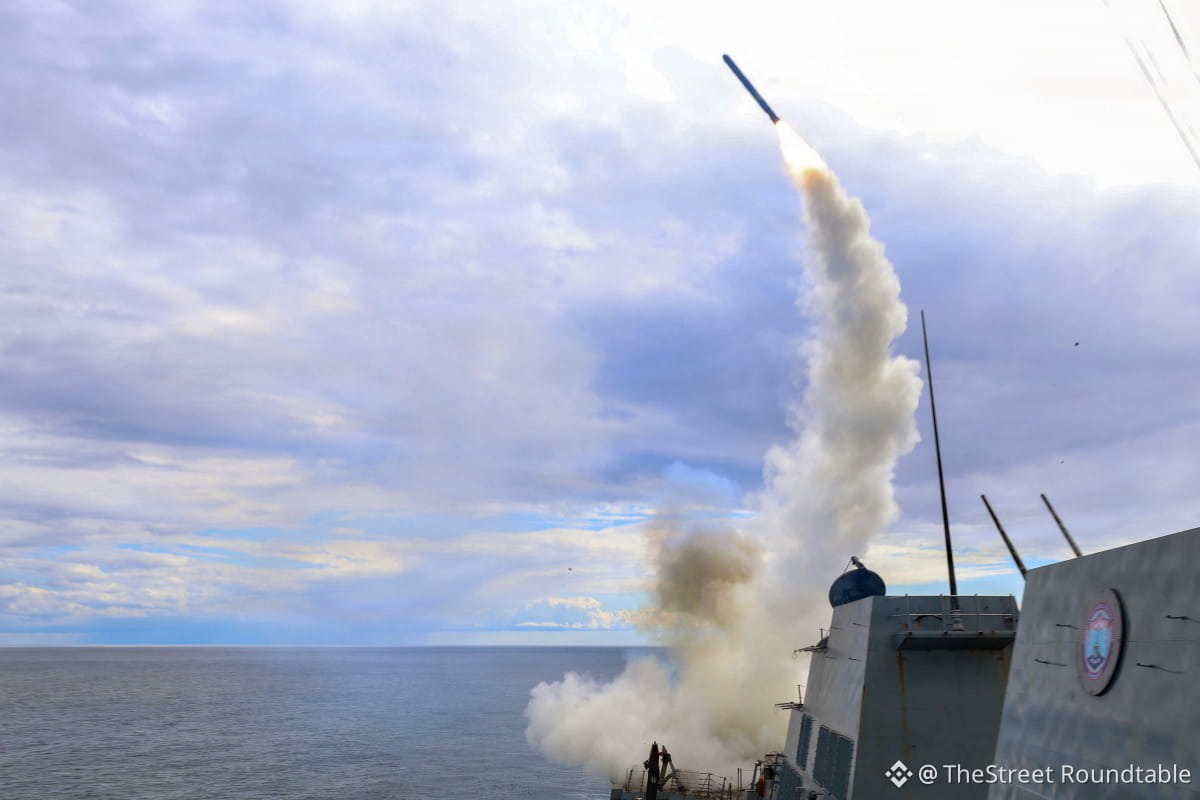 U.S. Military Launches Operation Epic Fury Attacking Iran
Strikes escalate pressure on Iran
Over the weekend, coordinated US and Israeli strikes targeted Iranian military infrastructure and leadership facilities in Tehran.
On Feb. 28, coordinated US–Israeli airstrikes hit Iranian military and leadership targets in Tehran, killing Supreme Leader Ayatollah Ali Khamenei. Iranian officials vowed retaliation, calling the killing a “legitimate duty” to avenge.
The conflict quickly expanded beyond Iran’s borders.
Iranian missile and drone strikes targeted Israeli territory and US-linked positions in the Gulf. Explosions were reported in the United Arab Emirates, including near Dubai and Abu Dhabi, as air defenses intercepted incoming projectiles. Several Gulf states have temporarily closed airspace amid fears of wider regional spillover.
The escalation also heightened risks around energy infrastructure and shipping routes in the Strait of Hormuz, a corridor that carries roughly a fifth of global oil supplies.
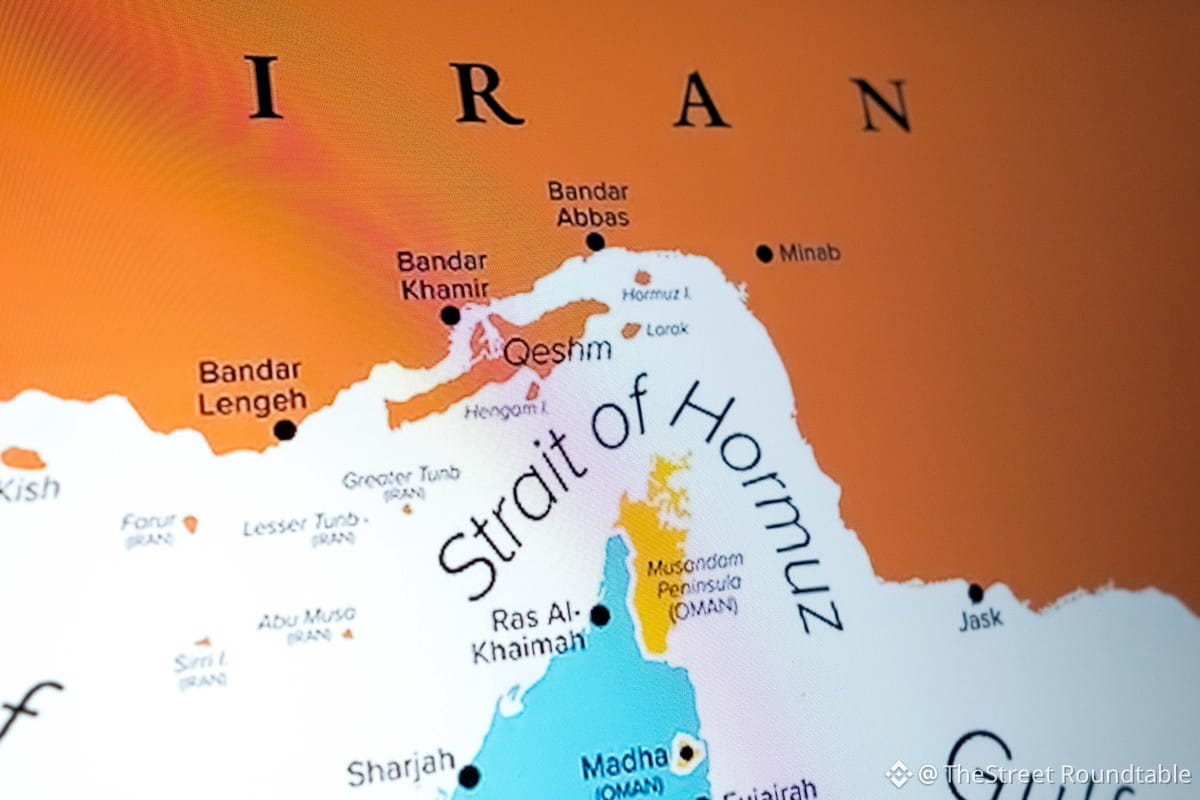 A map showing the Strait of Hormuz
Markets reacted with sharp volatility, while fears of sanctions tightening and infrastructure disruption grew inside Iran.
During past periods of unrest, including earlier internet blackouts, Iranians have turned to crypto markets amid financial uncertainty, making digital asset flows particularly sensitive to geopolitical shocks.
Related: US sanctioned country explores crypto payments for war weapons
Outflows from Nobitex jump 700%
According to Elliptic, outgoing crypto transactions from Iran’s largest exchange, Nobitex, surged 700% within minutes of the first strikes.
“Cryptoasset outflows from Iranian exchange Nobitex surged within minutes of the first US-Israeli attack on Iran, with outgoing transaction volumes spiking by 700%,” the firm wrote in a March 2 blog post.
Elliptic said transaction volumes leaving the platform “spiked almost immediately after the strikes,” suggesting a rapid response from users seeking to move funds.
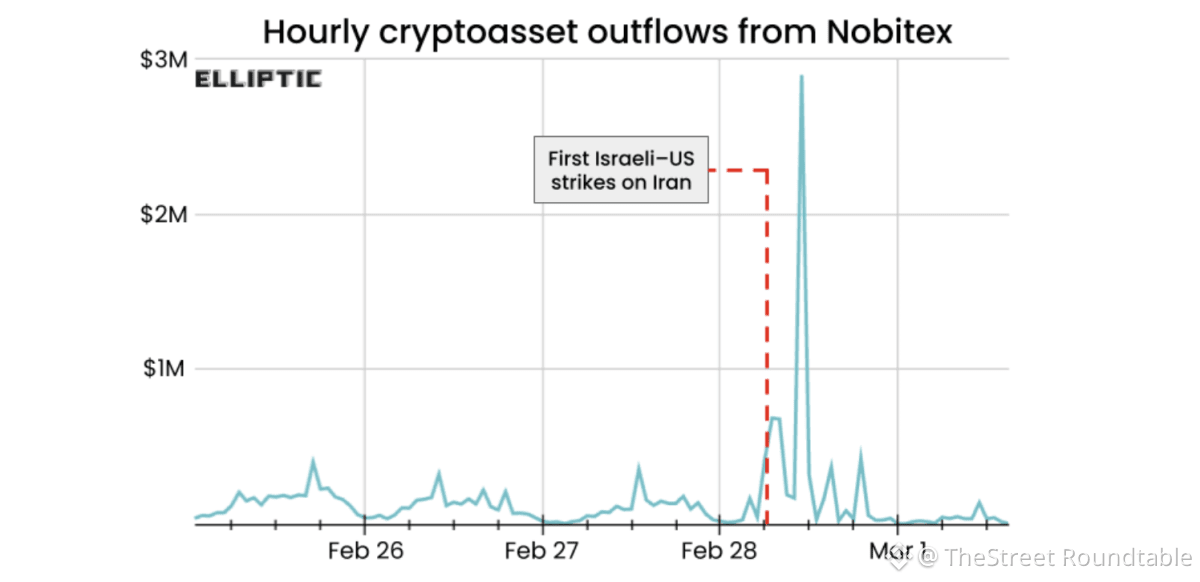
The firm added that the activity “potentially represents capital flight from Iran that bypasses the traditional banking system.”
Nobitex is central to Iran’s crypto market.
Trending on TheStreet Roundtable:
Bitcoin, XRP slide after Trump confirms Iran strikes
Khamenei dead, 75% chance Iran names new Supreme Leader by March 31
Bank of America resets new gold forecast
The exchange processed $7.2 billion in crypto transactions in 2025 and claims to have more than 11 million users.
The platform allows users to convert Iranian rials into crypto assets and withdraw them to external wallets. That structure enables funds to move abroad while avoiding parts of the traditional banking system, which remains heavily restricted.
Initial blockchain tracing conducted by the firm indicates that funds are being sent to overseas exchanges that have historically received significant inflows from Iran.
Elliptic also noted that other spikes in outflows occurred earlier this year.
One followed widespread demonstrations in January and a subsequent government-imposed internet blackout. Two additional surges came shortly after new US sanctions targeting Iranian actors.
Related: Andrew Tate sends harsh words at Bitcoin crash amid US-Iran war
Nobitex hack and rising security concerns
In June 2025, an anti-Iranian hacking group known as “Predatory Sparrow” claimed responsibility for an attack that destroyed nearly $90 million in crypto held on the platform.
Blockchain analytics firms said the hackers transferred the funds to addresses they could not access, effectively burning the assets to send a political message.
At the time, Nobitex said it had taken its website and app offline after detecting “unauthorized access” to its systems.
Elliptic has previously linked Nobitex to financial activity aligned with Iran’s Islamic Revolutionary Guard Corps (IRGC). US lawmakers have also raised concerns that Iranian crypto platforms may facilitate sanctions evasion.
Blockchain researchers say that historically, funds leaving Iranian exchanges do not necessarily exit the crypto ecosystem.
Instead, they often migrate to international exchanges or move into self-custodied wallets. The current surge may reflect users seeking to:
Move assets offshore
Reduce exposure to potential exchange disruptions
Shift holdings into private wallets amid wartime uncertainty
Iran’s state-sponsored mining industry, which accounts for an estimated 2% to 5% of the global Bitcoin hash rate, is also in the crosshairs.
The regime has long used subsidized electricity to mine BTC at an estimated cost of just $1,300 per coin, using the proceeds for trade settlement.
However, as military strikes target power substations, the energy-intensive mining rigs may soon go dark. If the Iranian grid fails, the regime loses a primary source of unsanctionable hard currency.
Related: What is Bitcoin mining? Explained