


The reason cryptocurrency futures trading interests me is that it can take advantage of market volatility. An important factor in futures trading is "leverage."
Today, I want to share my personal experience regarding Binance's leverage restrictions and the actual methods of use.
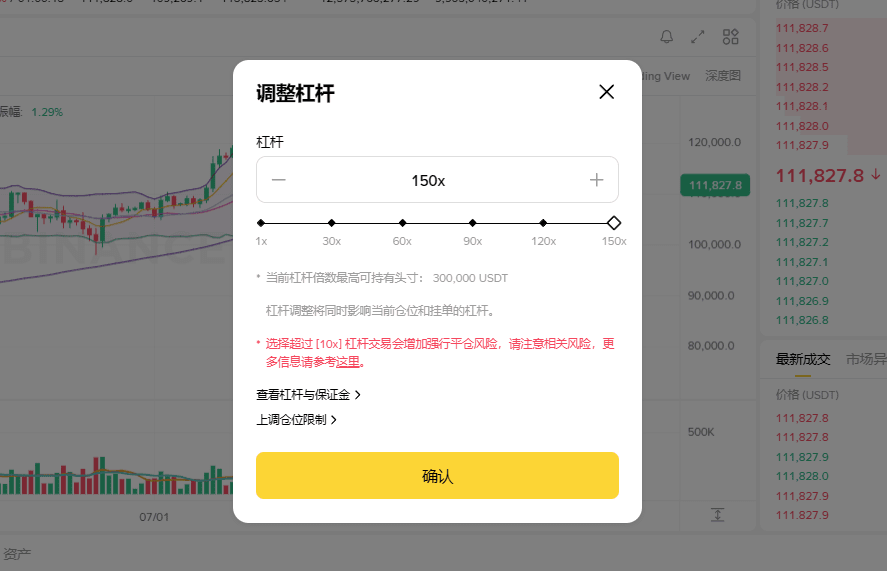
When I first started futures trading on Binance, the first thing I noticed was that the leverage could be set as high as 150 times. But when I actually tried trading, I found that different cryptocurrencies allowed different leverages, and in fact, my account status would also limit the maximum value that could be set. This is precisely due to Binance's leverage restrictions.
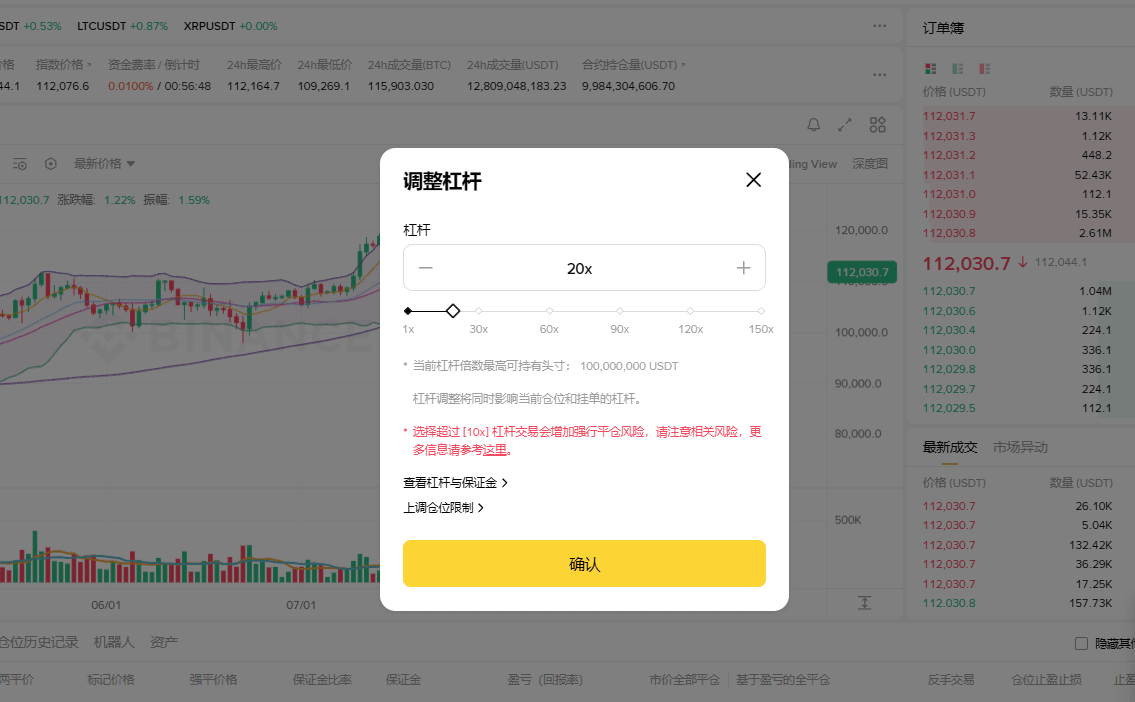
On Binance, new users or accounts with lower trading volumes will not be immediately allowed to use high leverage. Especially within the first 60 days, new users can only set leverage up to 20 times, and only as time goes by or trading history accumulates will leverage gradually open up. This Binance leverage limit can be seen as a risk management protection mechanism.
Additionally, for certain cryptocurrencies, if volatility is high or market liquidity is insufficient, Binance may adjust the maximum leverage based on its own judgment. For example, BTC/USDT can typically be set to 150 times, but newly listed altcoins are often limited to 10-20 times. This is also part of Binance's leverage limit policy.

After understanding these limits, I realized that rather than blindly increasing leverage, it is better to adjust it cautiously based on one's risk tolerance. For me, I mostly use 3 to 5 times leverage. This way, even if the market moves contrary to expectations, it can reduce the risk of being liquidated.
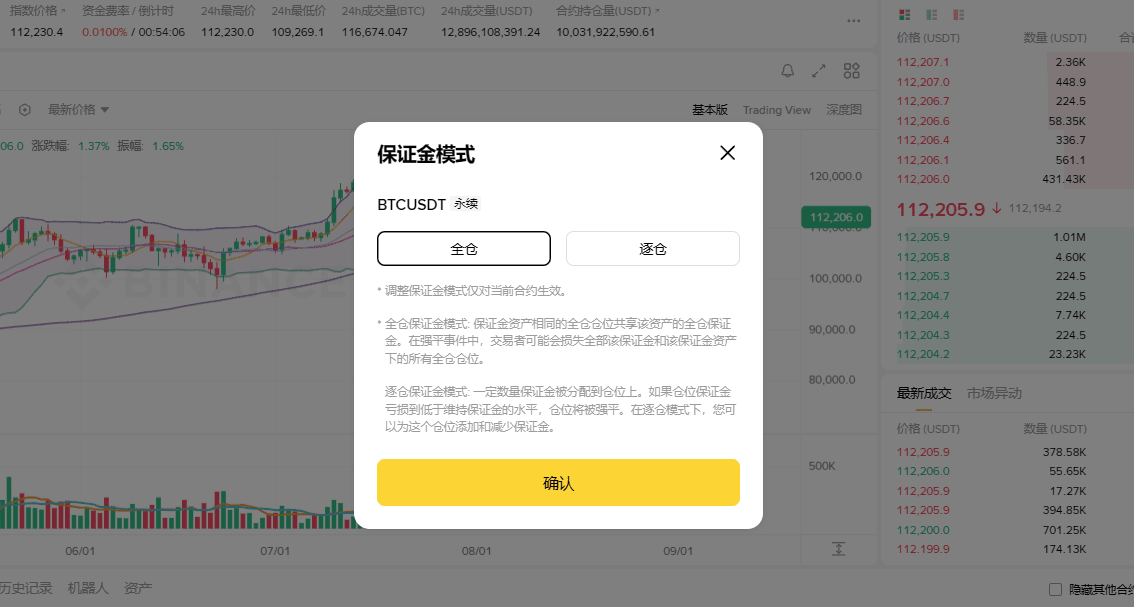
In fact, it's quite simple to set leverage on Binance. In the futures trading interface, choose 'Cross' or 'Isolated' mode, and then directly input the multiple or adjust it using the slider. However, it's important to note that in cross mode, the entire account funds may be exposed to risk, so beginners should practice in isolated mode first.
After opening a position, leverage can also be adjusted. However, during the holding period, only partial adjustments can be made, and in some cases, changes may not be possible at all. Therefore, carefully considering the leverage multiple before opening a position is very important.

It is important to note that based on account status or market conditions, previously allowed leverage may be reduced. Binance regularly updates its leverage limit policies and informs users through announcements or the trading interface, so it is essential to develop a habit of checking frequently. Furthermore, high-leverage trading can lead to total loss of funds in the event of unexpected price fluctuations, so emergency strategies must be prepared in advance.
When using leverage, it's essential to confirm the liquidation price and clearly set stop-loss conditions. The higher the leverage, the greater the potential profit, but the risk of loss also increases exponentially. Therefore, for inexperienced investors, adopting a conservative leverage setting is safer. I have set leverage over 10 times before but was liquidated due to a sudden drop. After that, I switched to a low-leverage strategy and realized that steady gains can be retained longer than quick profits.
I recommend that you enjoy a 20% discount on Binance contract trading fees.
📌 Claim 20% discount on Binance fees immediately!
Existing account users can also enjoy a 20% fee discount when meeting the following five conditions:
The invitee already has an account registered on Binance.
The invitee has never accepted an invitation before.
The invitee's account has not traded or used products on the Binance platform in the past 180 days.
Qualified invitees will see a confirmation window when opening the link and logging in.
The binding will only take effect after the invitee clicks [Now Binding].
In summary, Binance's leverage limits are designed to protect investors and are flexibly adjusted based on account credibility, trading history, and market volatility. Understanding these policies in advance and mastering their use can help reduce unnecessary losses. Those of us who focus on asset management should correctly understand and use leverage cautiously. Ultimately, a prudent attitude is the wisest investment approach.