



Most people have at least heard of cryptocurrency contract trading, but few truly understand its meaning or operational processes. For investors starting to analyze and study the Binance contract market, today I will share some genuinely helpful practical experiences.
This article will detail the basic concepts of contract trading, how it works in practice, and some tips for reducing costs.
What is contract trading?

As the name suggests, contract trading is a contract to buy or sell assets at a specific price on a future date.
Traditional futures contracts apply to physical assets like agricultural products, metals, or crude oil, but it is different in the cryptocurrency field.
In the cryptocurrency market, trading does not involve the actual exchange of Bitcoin or Ethereum, but rather settling the price differences based on asset price fluctuations.
Thus, it is a highly speculative form of investment, focusing on predicting whether the market will rise or fall.

For example, if the current price of Bitcoin is about $69,000 (about 483,000 RMB), and you predict it will rise to $76,900 (about 538,300 RMB) tomorrow, you would establish a long position. Conversely, if you think it will fall, you would establish a short position.
This process is somewhat like betting on the outcome of a football match, but the scale of investment and strategic operations are more complex.
The most important feature of contract trading is 'leverage.' This is a system that allows investors to borrow funds and trade with more money than they actually possess.
For example, if you have $770 (about 5,390 RMB), using 10x leverage allows you to trade up to $7,700 (about 53,900 RMB).
Of course, while profits can be magnified tenfold, losses will also expand similarly. That’s why leverage is called a 'double-edged sword.'
For beginners, it is recommended to start with low leverage of 3 to 5 times to familiarize themselves with the market rhythm.
How to conduct Binance contract trading
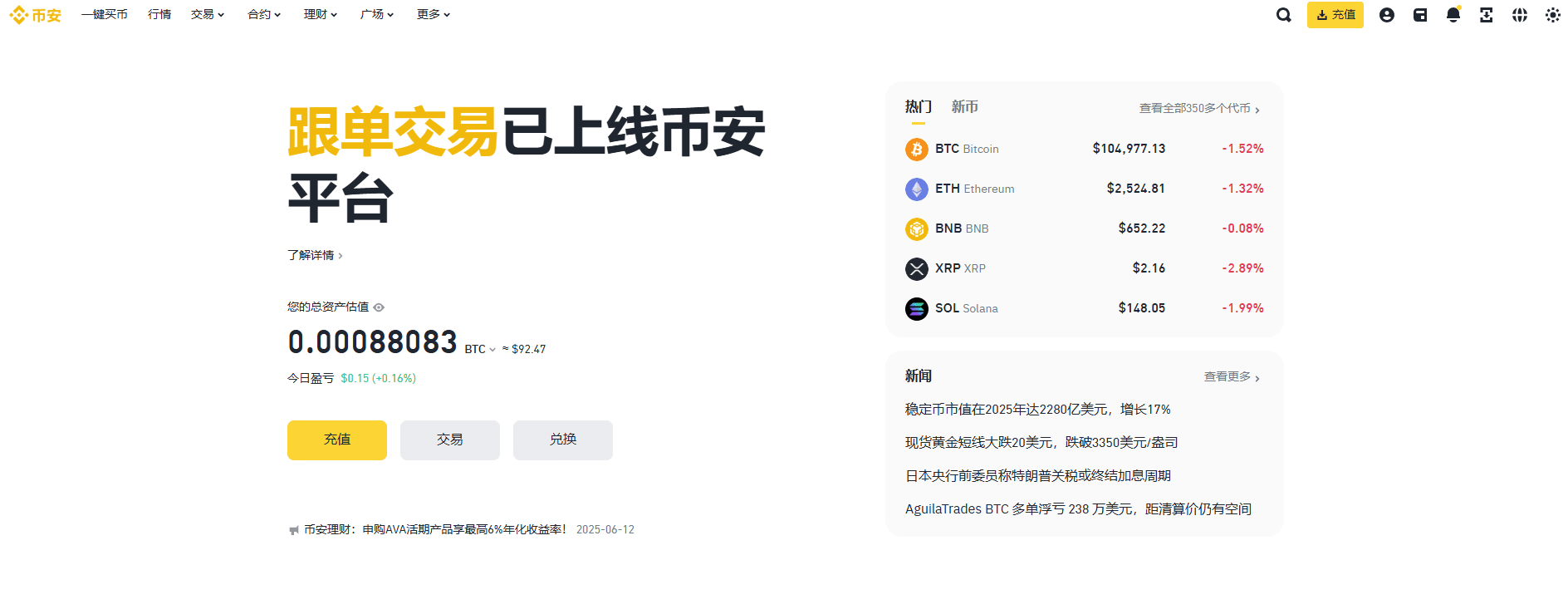
You can use the Binance app or the desktop web version for contract trading.
Select 'Contracts' from the bottom menu to enter the trading interface.
Choose the cryptocurrency you want to trade, set the leverage ratio, and decide whether to go long or short.
Bitcoin has a large market value and relatively stable volatility, making it more suitable for beginners.
Use long positions when bullish and short positions when bearish.
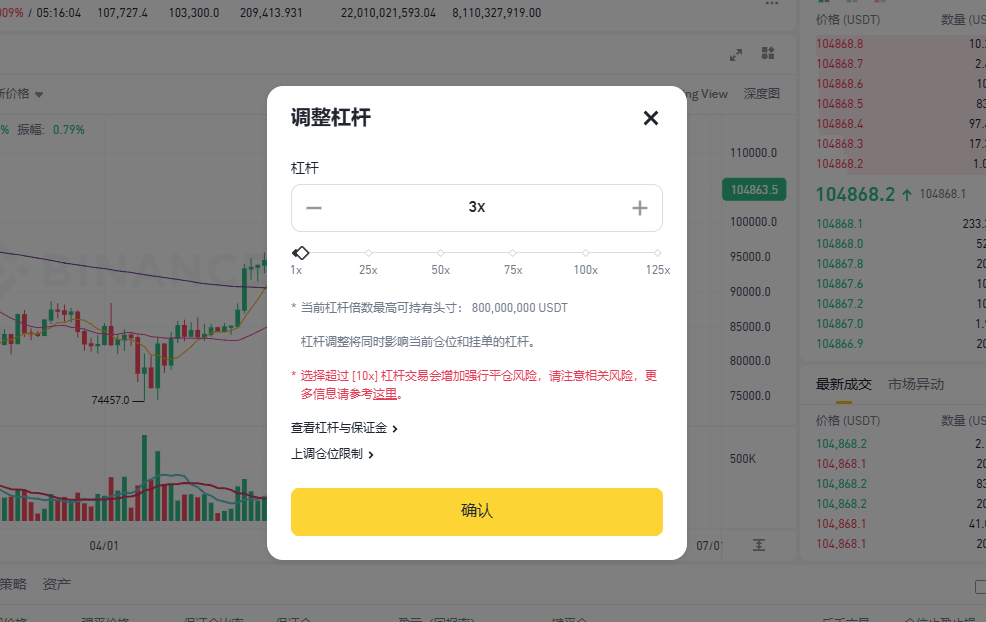
The default is 20x leverage, but the risk is extremely high; it is recommended to reduce it to below 5x.
An important setting is the 'margin mode.' Binance offers two options: isolated margin and cross margin.
In isolated margin mode, each position has its own independent margin, and losses are limited to that order.
The full margin mode uses the total funds in the account as margin, meaning that a single loss could affect the overall assets.
If you cannot check the charts at any time, it is recommended to use the isolated margin mode, which can further reduce overall risk.
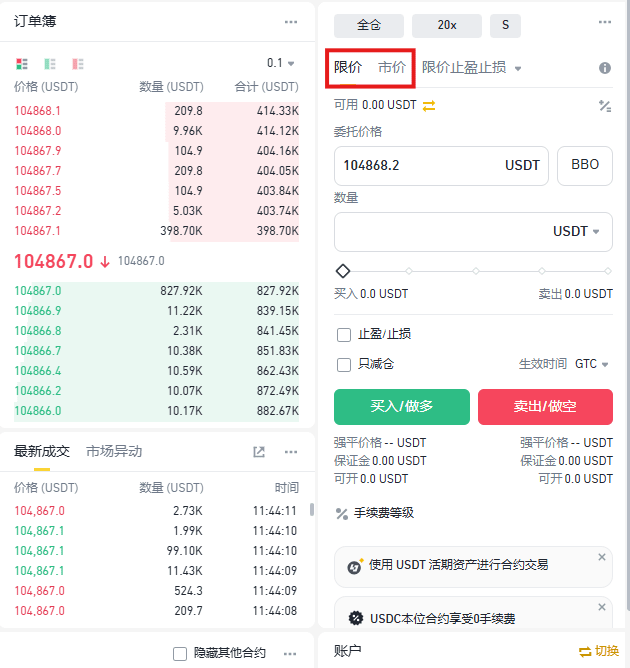
There are also differences in ordering methods. Market orders are executed immediately and are suitable for urgent orders, but have higher fees; limit orders only execute when the specified price is reached, although slower, they are more cost-effective.
On Binance, the transaction fee for limit orders is 0.02%, while for market orders it is 0.05%.
Leverage and transaction fees
Using leverage increases the transaction fee burden. For example, if you use 10x leverage on $770 (about 5,390 RMB) and trade 5 times in one day, the daily transaction fees could reach $15–23 (about 105–160 RMB).
Over the course of a month, this could exceed $385 (about 2,700 RMB), so it’s wiser to use limit orders as much as possible.
In the long run, limit orders have higher cost-effectiveness.
Contract trading: PC or mobile?

You can also choose to trade on a computer or a mobile device based on your usage scenario.
The mobile app allows you to check market trends anytime and quickly adjust positions, suitable for short-term operations.
However, complex technical analysis or multi-chart comparisons can be challenging.
Using a computer for trading allows for multiple indicators to facilitate more detailed analysis, helping to establish a more systematic trading strategy.

Contract trading is more like a structured asset management approach rather than mere speculation.
The most important thing is risk management and strategic decision-making.
Excessive leverage, uncontrolled position expansion, and lack of awareness of transaction fees are common causes of losses.
Conversely, properly using leverage, choosing isolated margin mode, using limit orders, and balancing mobile and PC usage can help you maintain profits more steadily.
The Binance contract market is undoubtedly an attractive investment option, but it is not a 'money printing machine,' and its risks are very clear.
Staying calm and objective is the most basic preparation.
Instead of pursuing accurate predictions, it’s better to cultivate a mindset that can face losses at any time.
Such a mindset not only helps in the growth of your assets but also fosters your financial literacy and healthy money management skills.
Haven't registered on Binance yet? It is recommended to use the link below to enjoy a 20% discount on transaction fees immediately.
Even for old users, if they meet the following five conditions, they can also enjoy the 20% discount:
Already have a Binance account
Never accepted a referral invitation
Have not used any Binance services in the past 180 days
Log in through the invitation link and see the confirmation screen
Click [Bind Now] to activate the discount
This is the complete explanation today about Binance contract trading and transaction fee discounts. I hope it helps you. If you still feel uncertain, it is recommended to try contract trading with the discount.