


Due to constant price fluctuations, cryptocurrencies like Bitcoin are essentially difficult to use as actual currency.
Of course, fiat currencies like the dollar can also change in value due to exchange rates, but cryptocurrencies can fluctuate by dozens of percentage points in a single day — this volatility is just too extreme.
This is the origin of the concept of 'Stable Pegging'. Stablecoins are cryptocurrencies designed to peg to the value of 1 dollar. The most well-known examples are 1 USDT or 1 USDC, both equal to 1 dollar.
By pegging 1 USDT or 1 USDC to 1 dollar, they serve a cash-like role, although they exist in digital form — like having a 'digital cash reserve' in an account.
You can withdraw it when you need it or use it to purchase assets like Bitcoin.
So you might ask, 'Why not just hold dollars directly?' The reason is that many cryptocurrency exchanges do not support direct connections with bank accounts. Most trades can only occur between currencies.
This is why a 'bridging asset' is needed, and stablecoins play this role perfectly. The meaning of 'stable' lies in its price stability.
How is price stability maintained?
Like other assets, the price of a coin is determined by supply and demand. If Bitcoin is favored, demand increases, and the price rises.
However, stablecoins are not meant for investment. Because their price is fixed at 1 dollar, there is no appreciation potential, and therefore no reason to hoard stablecoins for capital gains.
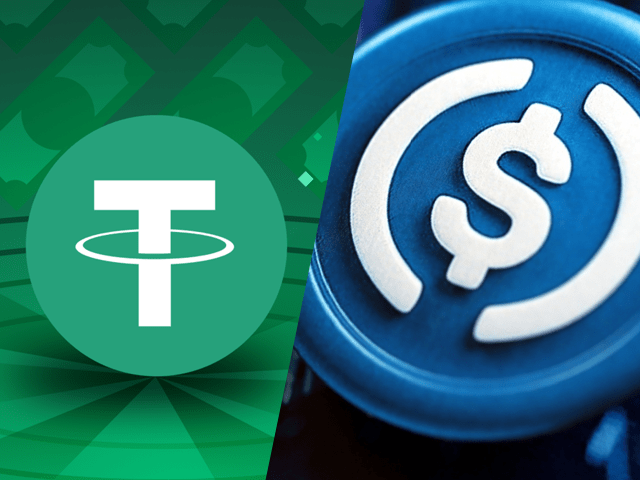
Let's look at the two most well-known stablecoins: USDT and USDC. As their name 'stable' implies, their prices consistently maintain at 1 dollar.
This stability is possible because the issuing institutions hold reserves like banks to ensure redemption. The market believes in the 1:1 peg because it trusts that these institutions can maintain the redemption mechanism.
Both USDT and USDC officially state that their issuance is fully backed by 100% reserves.
Tether (USDT) regularly publishes financial reports, while Circle (USDC) undergoes regular audits by Deloitte.
In the past, there were attempts to algorithmically peg a stablecoin to 1 dollar, but most of these attempts ended in failure — the most famous being the LUNA crisis, where the pegging mechanism collapsed and the token plummeted.
Can you invest in stablecoins?
Since stablecoin prices remain unchanged, they cannot profit from price increases.
But investing in stablecoins is more like putting money into a 'crypto version of a fixed deposit' account. In some countries, the annual interest rate for regular savings accounts is less than 1%, and fixed deposits are only around 2-3%.
Stablecoins typically offer an annual yield of 3-4%. How is this achieved? Users deposit dollars, receive stablecoins, and the issuing institution invests those dollars in U.S. Treasury bonds or similar low-risk assets, returning part of the earnings to users.
Although this method is not legally protected like traditional banks, its interest rates are usually about twice that of commercial banks.
As long as the reserve assets are indeed reliable, investing in stablecoins may be a choice worth considering. Currently, the total market capitalization of global stablecoins has reached around 255 billion dollars.
Due to numerous investors using stablecoins for trading, there is a massive amount of funds accumulated in stablecoins.
If you are interested in investing in stablecoins like a 'deposit', I recommend you register and use Binance.
By registering through the following referral link, you can get a 20% trading fee discount:
⭐ Get 20% fee discount on Binance
Even if you are already a Binance user, you can enjoy a 20% fee discount as long as you meet the following five conditions:
Registered a Binance account
Have never accepted recommendations from others
No transactions or use of Binance products in the past 180 days
After logging in via the referral link, you will see a confirmation window
Click 'Bind Now' to complete the activation
In this article, we learned what stablecoins are and how to enjoy fee discounts on Binance.
Thanks for reading, and I look forward to bringing you more valuable content next time!