



Ripple reinforces its position in the Middle East through key partnerships at the Fintech Dubai Summit, while President Trump's latest diplomatic tour from Saudi Arabia to Qatar opens up historic business deals and influence in the region.
Ripple expands its presence in the Middle East at the Fintech Dubai Summit
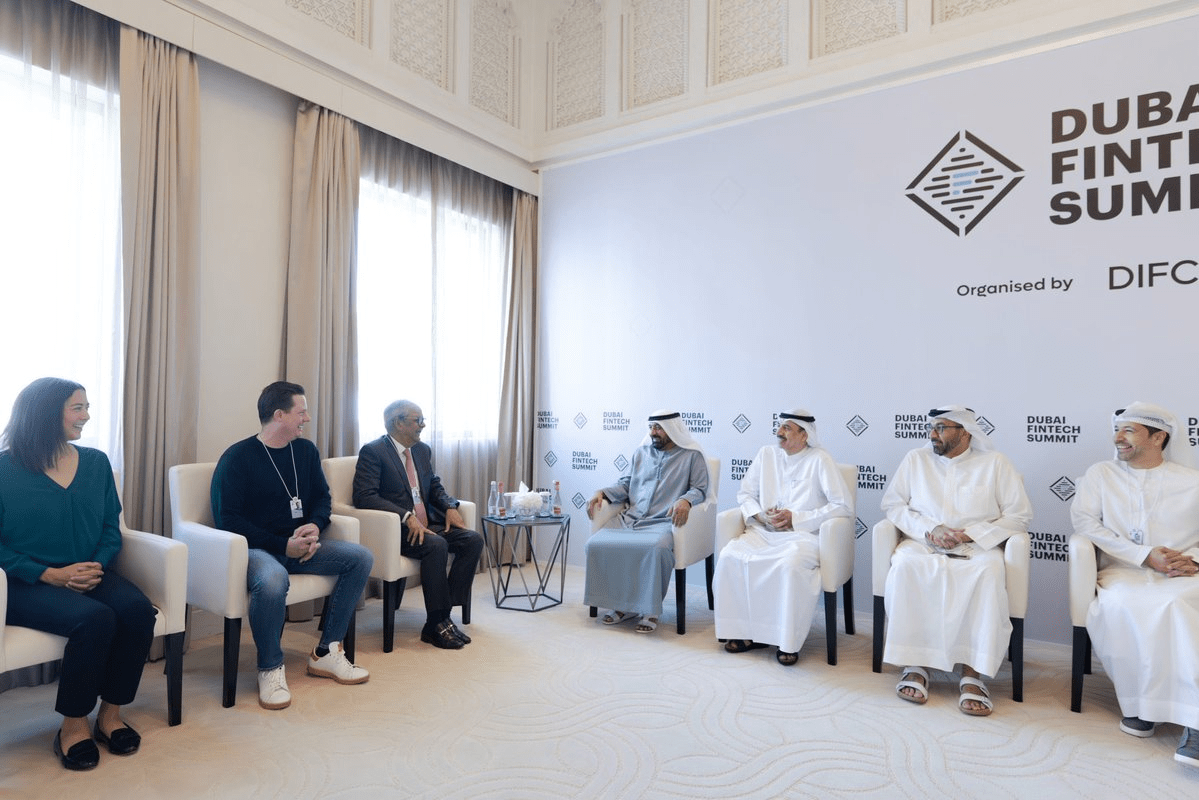
Ripple Labs is rapidly expanding its influence across the Middle East, highlighted by the significant participation of UAE officials at the Fintech Dubai Summit on May 14, 2025. Led by President Monica Long, the Ripple delegation discussed promoting digital payment infrastructure and driving financial innovation throughout the region.
The Middle East now accounts for 20% of Ripple's global customer base, a significant increase since the company established an office in Dubai in 2020. In 2024, Ripple further solidified its presence through a groundbreaking partnership with the innovation center of the Dubai International Financial Centre (DIFC). This collaboration focuses on promoting blockchain adoption and supporting early-stage startups in the region.
Adding to its success, Ripple has secured its first license from the Dubai Financial Services Authority (DFSA), allowing Ripple to offer regulated cross-border payment services through its Ripple Payments platform. This move grants Ripple access to the UAE's massive $400 billion trade market and promotes the use of its RLUSD stablecoin for secure, fast, and cost-effective transactions.
President Trump's Middle East tour: Historic diplomatic and business moves
While Ripple focuses on financial innovation, President Donald Trump's latest diplomatic tour has created waves across the region. Beginning in Saudi Arabia, Trump met with Crown Prince Mohammed bin Salman, resulting in a strategic economic partnership that includes a $142 billion defense deal. In a groundbreaking political move, Trump also announced the lifting of U.S. sanctions on Syria and held a historic meeting with interim President of Syria Ahmad al-Sharaa. This meeting is seen as a step towards expanding the Abraham Accords and normalizing relations between Syria and Israel.
In Qatar, Trump continued his high-level diplomacy by finalizing an unprecedented $1.2 trillion trade deal. This deal includes a historic order from Qatar Airways to purchase 160 Boeing jets, the largest in the company's history. These agreements also include significant investments in U.S. companies such as GE Aerospace, further strengthening the economic ties between the U.S. and the Gulf region.
Top U.S. business leaders join Trump's Middle East tour
Accompanying President Trump are some of the most influential business figures in the U.S., including Elon Musk, Sam Altman, and CEOs from Google, OpenAI, Nvidia, Uber, BlackRock, and Blackstone. Their presence underscores the administration's focus on strengthening U.S.-Middle East economic partnerships, particularly in areas such as artificial intelligence, defense technology, and financial services.
The delegation focused on business highlights the increasing trend of direct collaboration between major U.S. private corporations and Middle Eastern governments, paving the way for large-scale investments and technological advancements in the region.
Questions of ethics and geopolitical significance
Despite positive economic prospects, Trump's diplomatic tour has raised ethical concerns. Critics have pointed out potential conflicts of interest related to the ongoing business dealings of the Trump family in the region. Some worry that personal business ambitions may intertwine with official U.S. foreign policy efforts.
Moreover, while economic and diplomatic relations appear stronger than ever, ongoing tensions in the region - particularly the unresolved conflict in Gaza - remain a significant concern. Despite these challenges, the Middle East is emerging as a central stage for both blockchain innovation and high-level diplomatic strategy, with the U.S. playing a crucial role in shaping the region's future.