

The holdings of Bitcoin whales have dropped to their lowest level in six years, signaling a potential shift in the market.
The current situation indicates that as the **total supply** held by whales continues to weaken, the trend for Bitcoin is concerning. This significant reduction marks a critical change in market dynamics. According to IntoTheBlock, the number of Bitcoins held by large holders is continuously decreasing, indicating that whales are actively selling, currently reaching the lowest level since 2019.
The significant reduction in holdings may reflect a range of potential factors. One potential reason is that institutional investors or major shareholders are liquidating assets to cover operating costs during a price decline. Additionally, this may signify a strategic retreat, creating new opportunities for retail investors to enter the market.
Whales selling assets helps to distribute Bitcoin more evenly, potentially mitigating the impact of whale-driven market volatility. The net flow of Bitcoin to exchanges supports this view, indicating that outflows continue to exceed inflows, suggesting that despite whales' efforts to liquidate, demand remains steadfast.
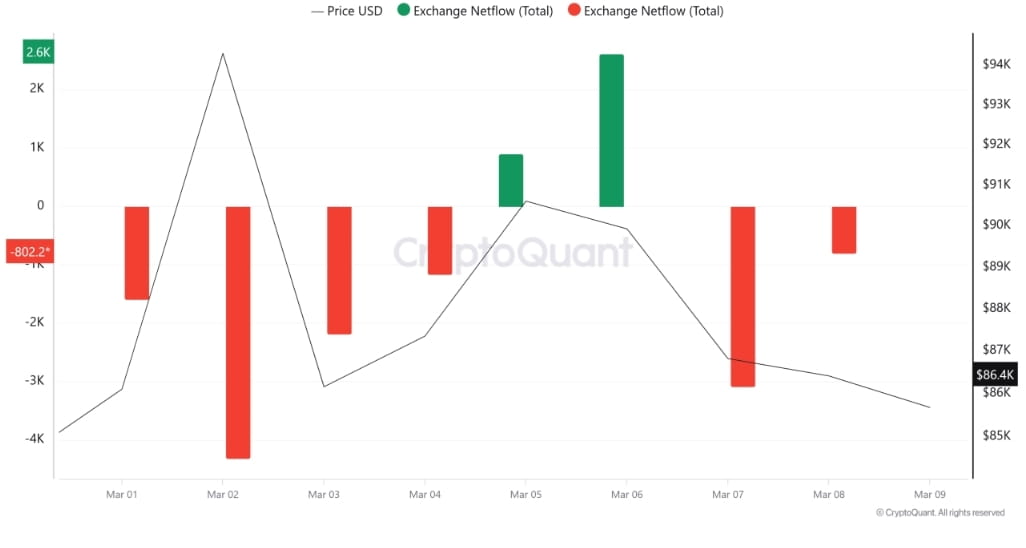
When we assess the current situation, a key question arises: How is Bitcoin's price trend? Despite a significant reduction in the supply of Bitcoin held by whales, overall, Bitcoin seems to be facing little selling pressure. Recent indicators suggest that while whale behavior is changing, the broader investor community still maintains strong interest in Bitcoin.
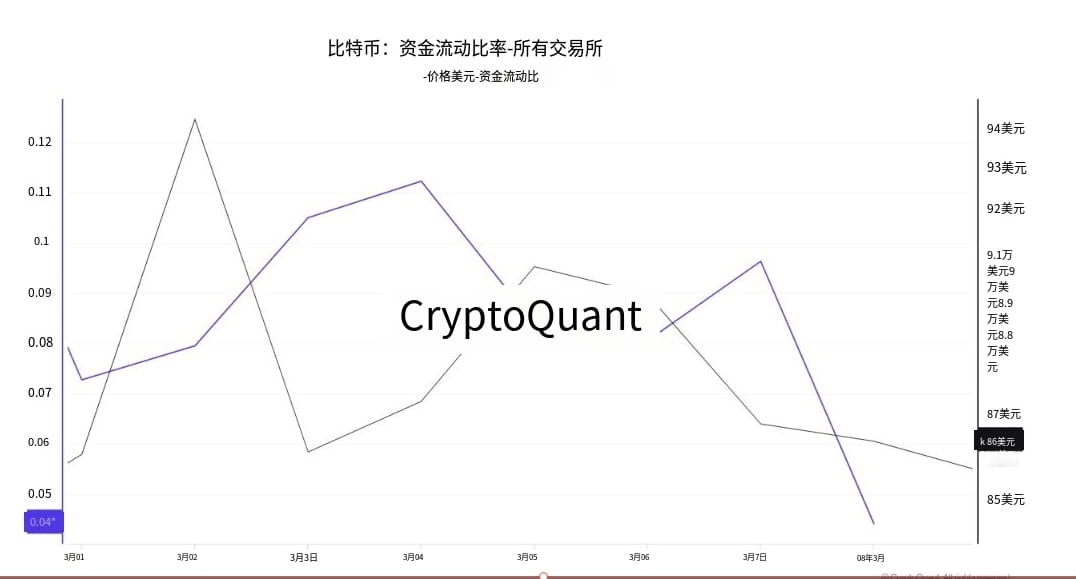
The ratio of fund flows to exchanges reflecting overall liquidity behavior has also experienced a decline. This decline indicates that **long-term holding sentiment** is strengthening, as many investors are currently retaining their Bitcoin instead of putting it on the market. Therefore, we can anticipate a period of consolidation during which buyer participation may not be sufficient to offset the selling pressure from whales.
According to analysis from Alphractal, maintaining Bitcoin above $84,550 seems crucial given the current trend. Consolidation above this threshold may help form a local bottom, laying the groundwork for a potential upward trend towards new historical highs.
However, caution is advised. If Bitcoin fails to maintain a position above $84,550 in the long term, it is expected to drop to $76,000—or even lower—approaching the historical high set in April 2021.
In summary, the current state of Bitcoin whale holdings and broader market dynamics highlight key challenges and opportunities. While the market is undergoing significant shifts, particularly with the major redistribution of Bitcoin, investors must remain vigilant and fully aware of the changes taking place. The future trajectory of Bitcoin still depends on sustained demand and the overall buying sentiment of retail investors.