

Written by: Siddhant Kejriwal
Compiled by: Blockchain in Plain Language
As we step into 2025, market sentiment is optimistic, supported by real progress and breakthrough innovations. This article summarizes the core narratives of the year in the cryptocurrency sector, integrating personal insights and research from leading industry institutions such as Bitwise, VanEck, Ark Invest, a16z, etc.
Let’s explore the trends shaping the future of digital assets together.
1) Bitcoin gaining economic traction
In 2024, significant changes occurred in the Bitcoin market dynamics, laying the foundation for key narratives in 2025.
In January 2024, the launch of Bitcoin spot trading platform ETFs marked a milestone event in the integration of cryptocurrencies with traditional finance. Among them, the iShares Bitcoin Trust (IBIT) managed by BlackRock stood out, attracting nearly $38 billion in net inflows in its first year, making it the most successful ETF launch in history.
Notably, the inflows into IBIT even surpassed those of the well-known fund tracking the Nasdaq 100 Index—Invesco QQQ Trust (QQQ). By mid-2024, IBIT's year-to-date inflows were approximately $18.97 billion, slightly ahead of QQQ's $18.9 billion.
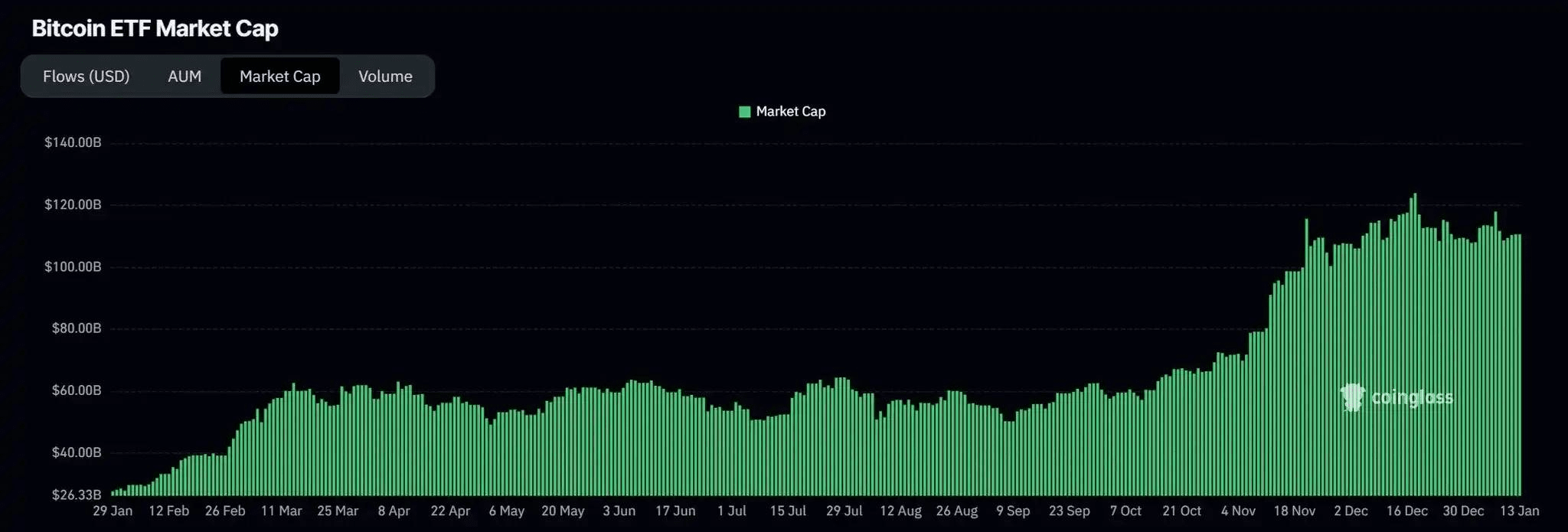
BTC ETF inflows | Image source: Coinglass
1) Historic ETF inflows and growth potential
Historical data shows that ETFs typically attract moderate inflows initially, but as investors become familiar and confident with these instruments, inflows can significantly increase. Given this pattern, the strong early performance of Bitcoin ETFs in 2024 could indicate broader adoption and greater capital inflows in 2025.
2) Macroeconomic tailwinds: Interest rate cuts
The macroeconomic environment at the end of 2024 provides favorable conditions for Bitcoin and other risk assets. In the fourth quarter, the Federal Reserve cut interest rates four times, totaling a 1% reduction. This monetary easing policy aimed at controlling inflation is expected to continue into 2025.
Interest rate cuts have reduced the opportunity cost of holding non-yielding investments, thereby enhancing the appeal of risk assets like Bitcoin and providing strong support for its growth.
3) Institutional adoption: Interest from businesses and governments
In 2024, the Bitcoin market shifted from a retail speculation-dominated pattern to large-scale institutional investment.
Corporate interest: Under the leadership of Michael Saylor, MicroStrategy significantly increased its Bitcoin holdings, purchasing approximately 258,320 BTC throughout the year for a total of about $22.07 billion, achieving a return on investment of 74.3%. This aggressive accumulation strategy solidifies MicroStrategy's position as a leading corporate Bitcoin holder while showcasing the potential high returns of such investments, which could influence other companies' decisions to pursue similar allocations in 2025.
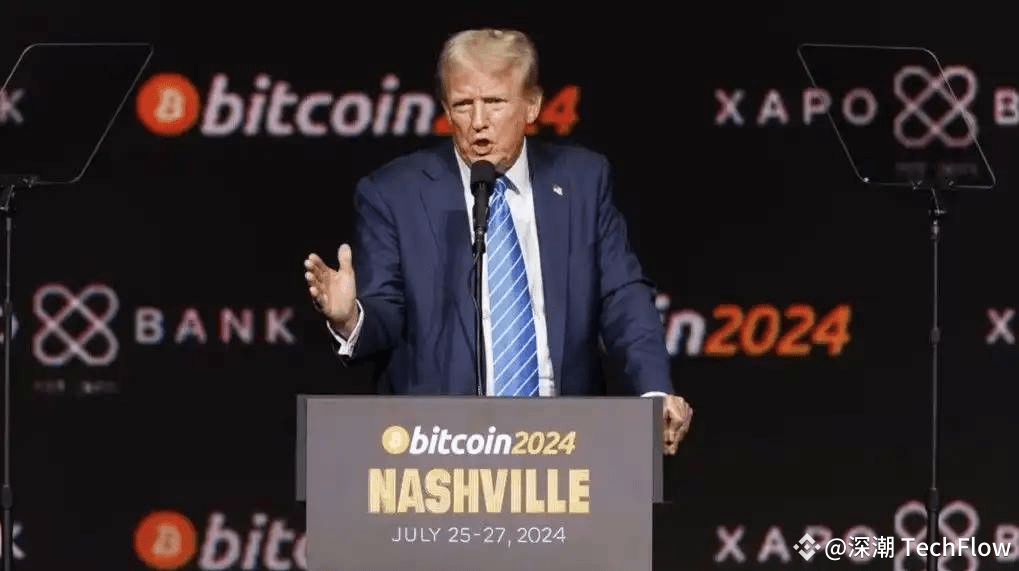
Government interest: At the governmental level, the incoming administration of President Donald Trump has signaled support for cryptocurrencies and is exploring the possibility of establishing a strategic Bitcoin reserve via executive order. While the details and feasibility of this reserve plan are still under discussion, the mere consideration of Bitcoin as a strategic asset by the U.S. government may prompt other countries to explore the inclusion of Bitcoin in their national reserves, thereby further enhancing the legitimacy and stability of the cryptocurrency market.
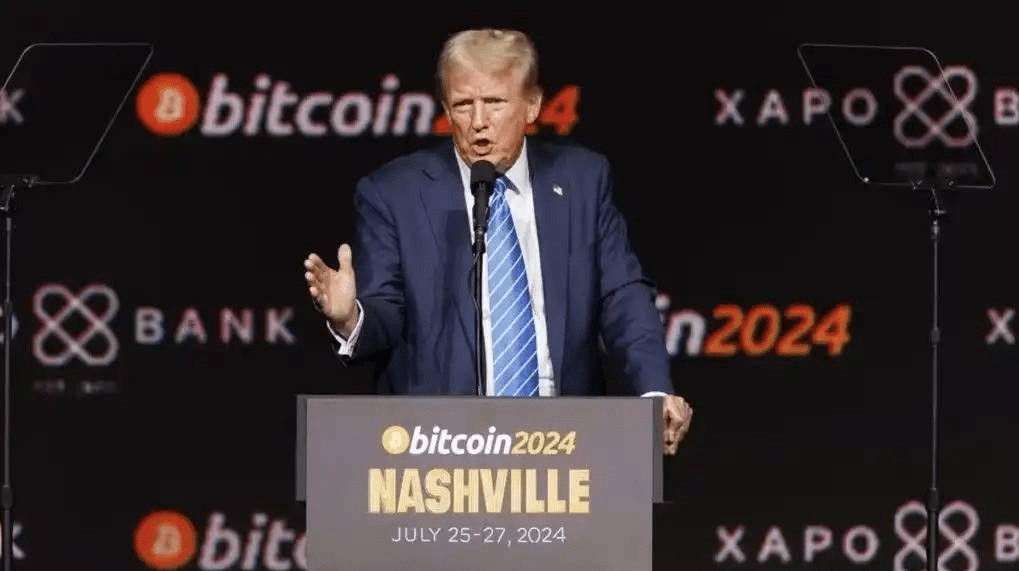
Trump promises to establish a Bitcoin strategic reserve at the Bitcoin Nashville conference | Image source: (Financial Times)
4) Conclusion
The successful launch of Bitcoin ETFs, favorable macroeconomic policies, and increased institutional interest signify that Bitcoin is at a transformative period. As 2025 unfolds, these narratives will drive Bitcoin's evolution from a speculative asset to a mainstream financial tool, attracting a more diverse set of investors and solidifying its position in the global financial ecosystem.
2) Bitcoin: A unique safe-haven asset?
In traditional finance, 'safe-haven' assets refer to secure assets that investors tend to choose during economic uncertainty or market volatility. Government bonds and gold are representative of this category, favored for their relative stability and backing by sovereign entities.
Government bonds: Debt securities issued by national governments that promise to pay interest periodically and return principal at maturity. Their low default risk and predictable returns make them attractive during market downturns.
Gold: As a means of storing value, gold is highly regarded for its scarcity and intrinsic value, typically maintaining or appreciating during financial crises.
In recent years, particularly analysis from ARK Invest, has indicated that Bitcoin is gradually evolving into a safe-haven asset, exhibiting the potential to provide shelter for investors during tumultuous times. Here are the key observations:
Intrinsic safe-haven characteristics
Bitcoin provides financial sovereignty, reduces counterparty risks, and enhances transparency. Its decentralized nature ensures it is not controlled by a single entity, mitigating the risks associated with centralized financial systems.
Advantages over traditional assets
Bitcoin’s decentralization, limited supply, high liquidity, and convenience far surpass those of bonds, gold, and cash. These attributes make Bitcoin a multi-purpose asset in the digital age, capable of enabling seamless global transactions.
1) Superior performance compared to traditional assets
Over the past seven years, Bitcoin has achieved an annualized return of 60%, far exceeding the average 7% return of bonds and other major assets. Bitcoin investors have consistently made profits over a five-year holding period. Meanwhile, the purchasing power of bonds, gold, and short-term U.S. Treasury bills has declined by 99% over the past decade.
Adaptability to changes in interest rates
The appreciation of Bitcoin's price has occurred across various interest rate environments, demonstrating its strong resilience and potential to hedge against fluctuations in monetary policy.
Performance during periods of risk aversion
In recent financial crises (such as regional bank failures), Bitcoin’s price surged over 40%, demonstrating its potential as a safe-haven asset.
Low correlation with other asset classes
From 2018 to 2023, the correlation between Bitcoin and bonds was only 0.26, while the correlation between bonds and gold was 0.46. This low correlation indicates that Bitcoin can effectively enhance portfolio diversification.
The potential to disrupt the safe-haven asset market
The current valuation of Bitcoin is approximately $1.3 trillion, which is only a small portion of the $130 trillion fixed-income market, indicating significant growth potential once it is accepted as a safe-haven asset.
Bitcoin's unique positioning and strong performance as a safe-haven asset are redefining the global financial market, providing investors with an unprecedented diversified option.
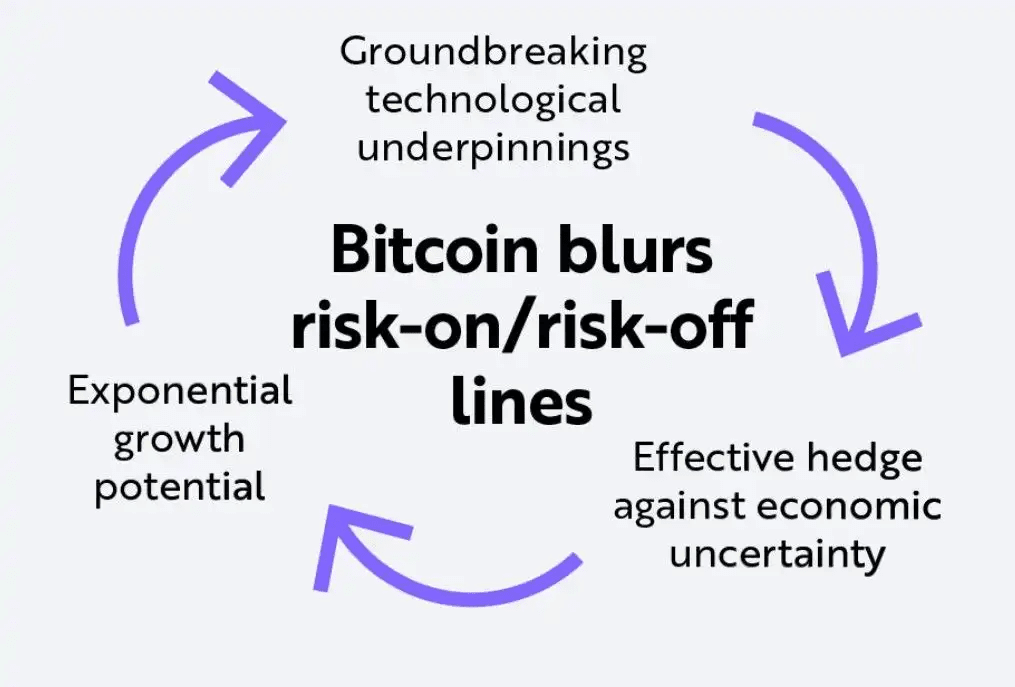
The perception of Bitcoin as a safe-haven asset is increasing | Image source: Ark Invest
2) The perception of Bitcoin has shifted from 'risk asset' to 'safe-haven asset'
Although Bitcoin's past high volatility led many to classify it as a 'risk asset', its gradual maturation and the highlighted characteristics are changing perceptions. As the global economic environment evolves, Bitcoin's role in investment portfolios may expand further, potentially redefining traditional asset allocation strategies.
3) Crypto stocks to watch in 2025
In 2024, cryptocurrency companies made waves on Wall Street, becoming one of the highest-performing sectors of the year. Many companies plan to go public in 2025, with others potentially surpassing traditional financial (TradFi) institutions in market capitalization.
1) Cryptocurrency companies that may go public in 2025
Analysts expect 2025 to be the 'Year of Crypto IPOs,' with several companies likely to go public:
Circle: The issuer of the USDC stablecoin has announced plans to relocate its headquarters to New York City before its IPO.
Kraken: A cryptocurrency exchange platform expected to go public in 2025.
Anchorage Digital: A digital asset platform soon to enter the public market.
Chainalysis: A blockchain data platform expected to go public.
Figure: A fintech company planning to go public.
2) Coinbase's market capitalization may surpass Charles Schwab
With the rapid growth of assets managed by Coinbase, many believe it may surpass Charles Schwab in 2025 to become the world's largest brokerage. This potential shift is attributed to Coinbase's diversified revenue streams, including its Ethereum Layer 2 network Base, staking services, and stablecoin business.
3) The impacts of these developments
Enhancing industry legitimacy: The entry of well-known cryptocurrency companies into the public market will boost the legitimacy of the cryptocurrency industry, attracting previously hesitant investors.
Broader investor access: Going public allows more investors to engage with the cryptocurrency industry through traditional investment vehicles like stocks, without the need to buy cryptocurrencies directly.
Market dynamics change: Including crypto companies like MicroStrategy and Block in major indices like the S&P 500 may attract funds from index funds, ETFs, and investors, further integrating cryptocurrencies into mainstream finance.
Evolving competitive landscape: As crypto companies grow in market capitalization and influence, traditional financial institutions may face greater competition, driving innovation and adaptive changes in the financial industry.
These changes signify the maturation of the cryptocurrency industry, indicating its transition from a niche market to an important component of the global financial ecosystem.
4) The stablecoin market may double by 2025
In 2024, the stablecoin market achieved significant growth, with its market capitalization surpassing the $200 billion mark. This expansion is expected to accelerate in 2025, potentially doubling the market size.
1) Growth in 2024 and predictions for 2025
In 2024, the market capitalization of stablecoins surged to $200 billion, reflecting increased adoption and integration with various financial systems.
Growth drivers: Increasing demand for digital assets that provide both stability of traditional fiat currencies and facilitate seamless transactions, while serving as a hedge against cryptocurrency volatility.
With the increase in adoption, the market prospects for stablecoins remain broad, and 2025 may become a turning point for their growth.
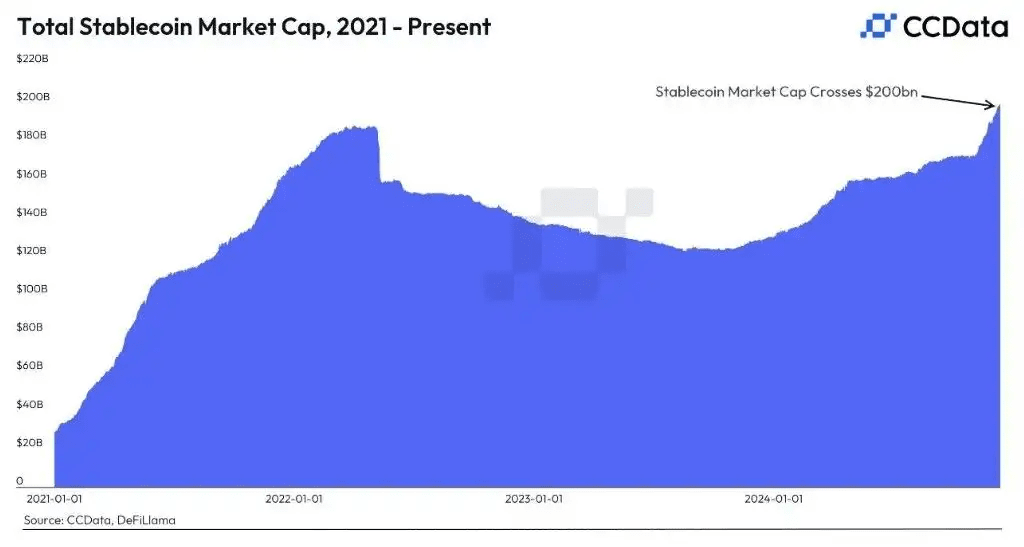
The market capitalization of stablecoins reached $200 billion in 2024 | Image source: CoinDesk
Industry analysts expect that by the end of 2025, the stablecoin market size could double. This prediction is based on several factors:
Increased acceptance of digital payments
Rapid development of blockchain technology
Clearer regulatory framework
These factors collectively create a more favorable environment for the proliferation and use of stablecoins.
2) Stablecoins and dollar hegemony
Contrary to early concerns that stablecoins might undermine the dollar's status, recent analysis by Reuters suggests that stablecoins could actually strengthen the dollar's dominance.
Dollar-pegged stablecoins support cross-border transactions priced in dollars, enhancing the dollar's utility in the global financial system.
This development highlights the adaptability of the U.S. dollar in the ever-changing digital economy.
3) The impact of stablecoin growth
Enhancing financial inclusivity: Stablecoins provide financial service access to regions with limited banking infrastructure, promoting broader economic participation.
Improved transaction efficiency: Using stablecoins simplifies cross-border payments, significantly reducing costs and settlement times compared to traditional banking systems.
Regulatory factors: As the stablecoin market rapidly expands, regulators are accelerating the development of frameworks to ensure financial stability and prevent illegal activities.
Integration with traditional finance: The increasing acceptance of stablecoins by financial institutions indicates that the integration of traditional finance with digital assets is accelerating. This may give rise to more innovative financial products and services.
5) RWA: An important crypto narrative for 2025
The tokenization of real-world assets (RWA) is rapidly developing, digitizing traditional assets such as credit, U.S. Treasury bonds, commodities, and stocks, enhancing liquidity, transparency, and accessibility in the financial market.
1) Growth prospects for 2025
According to Bitwise data, the tokenization scale of the RWA market has grown from less than $2 billion three years ago to about $13.7 billion. With increasing adoption and technological advancements, Bitwise predicts this market will grow to $50 billion by 2025.
Venture capital firm ParaFi anticipates that the RWA market could reach $2 trillion by 2030, while the Global Financial Markets Association (GFMA) estimates its potential market value could be as high as $16 trillion by 2030.
2) Growth drivers
Excellence in asset management
Tokenization provides instant settlement, lower costs than traditional securitization, and continuous liquidity. It enhances transparency and provides more convenient access to multiple asset classes.
Institutional adoption
Large financial institutions are increasingly adopting RWA tokenization. For example, BlackRock partnered with Securitize to tokenize the USD institutional digital liquidity fund on Ethereum, currently holding $515 million in assets, making it the largest tokenized U.S. Treasury fund.
Technological advancements
The development of blockchain technology and smart contracts has facilitated the efficient and secure tokenization of assets, attracting more investors and issuers.
3) The impact on the financial ecosystem
Enhanced liquidity
Tokenization allows assets to be held in fractions, enabling investors to buy and sell portions of assets, thereby enhancing market liquidity.
Expanding investment access
Investors are able to access previously illiquid or difficult-to-invest asset classes, achieving investment democratization.
Improved operational efficiency
By automating processes through smart contracts, administrative burdens and costs related to asset management and trading have been reduced.
Regulatory considerations
As the market grows, the regulatory framework is continuously evolving to address challenges related to security, compliance, and investor protection.
4) Summary
The tokenization of real-world assets (RWA) is reshaping the financial landscape, bringing higher efficiency, accessibility, and liquidity. It is expected that by 2025 and beyond, this field will grow significantly, with RWA tokenization becoming the cornerstone of modern finance, attracting both institutional and retail investors seeking innovative investment opportunities.
6) AI agents will experience exponential growth
In 2024, AI agents became a hot narrative in the cryptocurrency space, a trend driven by platforms such as Virtuals and ai16z. These platforms developed no-code solutions, making the deployment of AI agents more convenient. These dedicated AI bots are designed to understand user intent and execute complex tasks, thereby streamlining processes across various applications.
1) Expansion of AI agents in 2025
It is expected that by 2025, AI agents will significantly expand their integration within the cryptocurrency ecosystem, no longer limited to decentralized finance (DeFi) but penetrating multiple fields:
AI agents in the social media space (like AIXBT) are transforming platforms such as Crypto Twitter by providing real-time market intelligence and trend analysis, improving the efficiency of information dissemination.
In the field of financial analysis, AI-based analytical tools provide investors with deep insights, helping them make more informed decisions in the highly volatile cryptocurrency market.
In entertainment and interactive applications, AI agents are used to create engaging content and interactive experiences, enriching user engagement within the crypto community.
2) The proliferation of AI agents
With the increased availability and cost-effectiveness of AI agent development, their numbers are expected to surge. Currently, there are over 10,000 AI agents with millions of daily active users. By the end of 2025, the number of AI agents may grow to 1 million, indicating widespread application across various platforms.
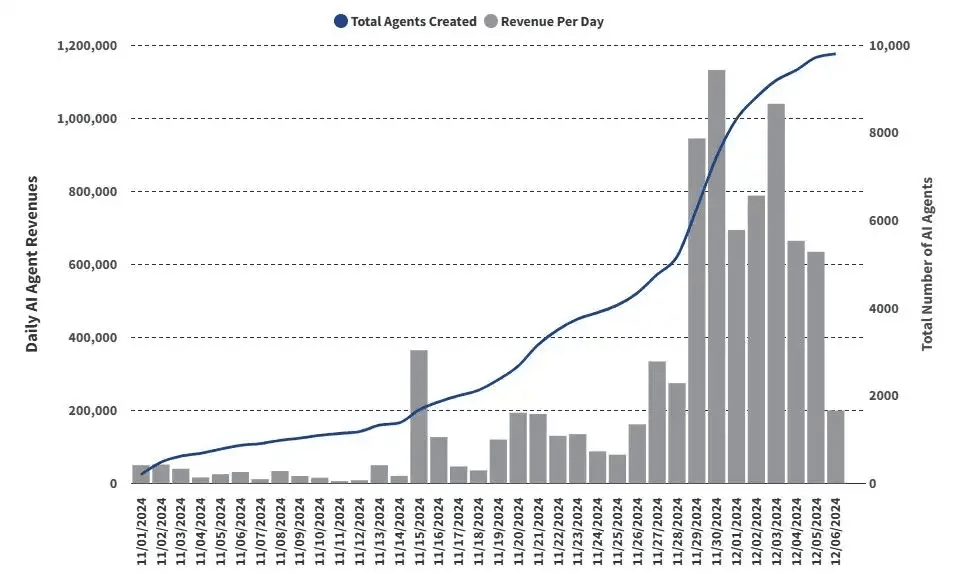
Exponential growth of AI agents in 2024 | Image source: VanEck
3) The rise of AI-themed meme coins
The fusion of AI technology and meme culture has given rise to AI-themed meme coins, adding a new dimension to the cryptocurrency market. The success of projects like Terminal of Truths and $GOAT meme coins has inspired the emergence of more similar initiatives that combine humor with advanced AI capabilities. This trend is expected to continue gaining momentum in 2025, attracting the attention of investors and crypto enthusiasts.
4) The impact on the cryptocurrency ecosystem
The rapid growth of AI agents and AI-themed meme coins heralds profound changes in the crypto space:
Enhancing accessibility: No-code platforms enable users without technical backgrounds to develop complex AI tools, thereby democratizing innovation.
Diverse application scenarios: The expansion of AI agents across multiple fields promotes a closer and more diverse ecosystem, accelerating broader adoption.
Market dynamics change: The rise of AI meme coins has brought new investment opportunities and challenges, profoundly impacting market sentiment and investor behavior.
5) Summary
The integration of AI agents and the rise of AI-themed meme coins are expected to play a key role in shaping narratives in the crypto space in 2025, driving innovation and expanding the boundaries of the digital asset market.
7) Ethereum's blob fee market is expected to surpass the $1 billion mark
EIP-4844 (also known as Proto-Danksharding) significantly enhances Ethereum's scalability by introducing transactions that carry 'Blob' data, optimizing the data storage of Layer 2 (L2) networks. This development also introduces a separate fee market known as the 'Blob Gas market.'
1) EIP-4844 and the analysis of blob data transactions
EIP-4844 improves Ethereum's scalability through a new transaction type (carrying large amounts of data 'Blob'). These blob data are temporarily stored in Ethereum's beacon nodes, allowing L2 solutions to publish data without competing for gas fees with Layer 1 (L1) transactions.
Outcome: Reduced costs and improved operational efficiency for L2.
2) Dual fee markets and base fee burn mechanisms
With the introduction of Blob data transactions, Ethereum currently operates two parallel fee markets:
Layer 1 fee market: Handles traditional transactions and smart contract executions.
Blob Gas market: Dedicated to L2 transactions utilizing blob data.
Both markets have adopted the base fee burn mechanism established by EIP-1559. Under this mechanism, a portion of transaction fees is burned, thereby reducing the overall supply of ETH and potentially enhancing its value.
3) Current utilization rates and ETH burn forecasts
Since November 2024, validators have been publishing over 20,000 blob data on Ethereum daily.
Forecast: If this trend continues or accelerates, blob fees may burn ETH worth over $1 billion by 2025. This milestone will further consolidate Ethereum's evolving security and economic model.
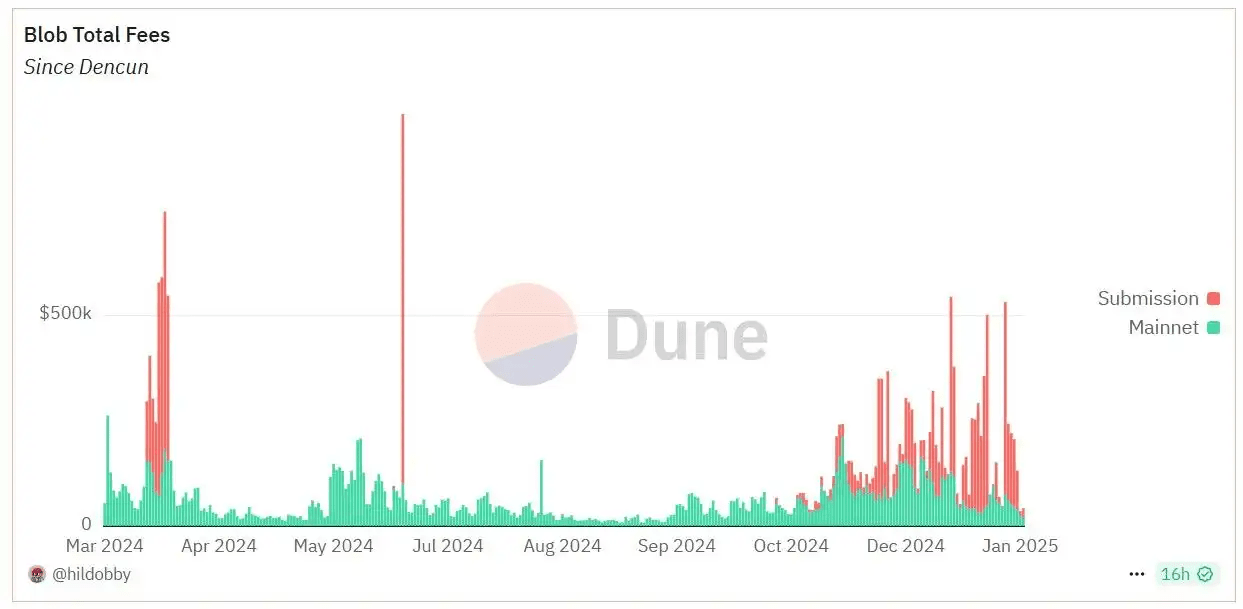
The Blob Gas market saw significant growth in the fourth quarter | Image source: Dune Analytics
4) Factors driving the expansion of blob space in 2025
Several key factors are expected to drive the rapid expansion of blob space usage in 2025:
A. Explosive growth of Layer 2
Surge in transaction volume: The annualized growth rate of Ethereum Layer 2 (L2) transaction volume has exceeded 300%, with users migrating to L2 platforms to use DeFi, gaming, and social applications to save costs and enjoy high throughput.
The proliferation of consumer-grade DApps: An increase in decentralized applications (DApps) on L2 will lead to more transactions returning to the Ethereum mainnet for final settlement, significantly increasing the demand for blob space.
B. Rollup optimization
Technological advancements: Improvements in rollup technology, such as more efficient data compression and lower data publication costs, will encourage L2 to store more transaction data in Ethereum's blob space to achieve higher throughput while maintaining decentralization.
C. The introduction of high-fee use cases
The rise of enterprise-level applications: The emergence of high-value transactions such as finance solutions based on zk-rollup and tokenization of real assets will prioritize security and immutability while enhancing the willingness to pay blob space fees.
5) The impact on the Ethereum ecosystem
Enhanced scalability: By transferring L2 data storage from the Ethereum main chain to blob space, the network can handle more transactions without congestion, improving user experience.
Economic impact: Burning blob fees will reduce ETH supply, potentially exerting upward pressure on ETH prices, benefiting holders and network participants.
Security considerations: The increased use of blob space emphasizes the need for ongoing monitoring to ensure that the network's consensus security remains robust under higher data throughput.
6) Summary
The implementation of EIP-4844 and the development of the Blob Gas market mark significant progress for Ethereum in scalability and economic models. As Layer 2 adoption accelerates and new use cases emerge, the utilization of blob space is expected to grow significantly by 2025, further solidifying Ethereum’s position as the leading platform for decentralized applications.
8) Summary and Outlook
Reflecting on transformative trends shaping the cryptocurrency space, it is clear that 2025 is filled with immense potential. However, in the face of this rapidly evolving market, we must maintain a balance of optimism and caution.
1) Key points
Innovation and growth
The rapid development of AI agents, the expansion of Ethereum Layer 2 solutions, and the tokenization of real-world assets highlight the vitality and dynamism of the cryptocurrency ecosystem.
Mainstreaming process
The process of integrating cryptocurrencies into the traditional financial system is accelerating, with increased institutional investment and the rise of stablecoins suggesting that digital assets are being more widely accepted and recognized.
Regulatory dynamics
It is expected that under the current U.S. government leadership, changes in regulatory policy will profoundly impact the development path of the cryptocurrency market, potentially bringing new opportunities while also posing new challenges. This serves as a reminder to remain cautious in the face of a rapidly changing market.
2) Recommendations for investors
In-depth research
Before making any investment decisions, it is essential to fully understand the relevant assets and technologies.
Avoid excessive leverage
Leverage trading may amplify gains but also intensify losses. A conservative leverage strategy is recommended to minimize potential risks.
Diversification in investments
Avoid concentrating the portfolio on a single asset or industry. Diversification helps mitigate risks and enhance potential returns.
Keep information updated
The crypto market is highly dynamic. Regularly keep an eye on the latest developments, regulatory changes, and market trends.
3) Conclusion
Although the cryptocurrency market presents unprecedented opportunities, it is crucial to invest with a mindset of self-discipline and information. By remaining cautiously optimistic, investors will be better equipped to navigate this evolving market, seizing its potential while avoiding inherent risks.