

#arge
arge
412 views
8 Discussing
Hot
Latest

·
--

Article
Testing liquid staking with ETH: understand first, evaluate laterI started a new Web3 experiment using a deliberately small amount of ETH.
The goal isn’t to find the highest APR.
I want to understand what actually happens throughout the cycle:
ETH → liquid staking → representative token → tracking → exit
For this test, I’m experimenting with Lido and wstETH, using a small exposure within the Web3 environment I’m reorganizing.
What I want to observe is not just how much it yields.
I’m going to record:
🔹 initial value;
🔹 ETH used;
Testing liquid staking with ETH: understand first, evaluate later
I started a new Web3 experiment using a deliberately small amount of ETH.
The goal isn’t to find the highest APR.
I want to understand what actually happens throughout the cycle:
ETH → liquid staking → representative token → tracking → exit
For this test, I’m experimenting with Lido and wstETH, using a small exposure within the Web3 environment I’m reorganizing.
What I want to observe is not just how much it yields.
I’m going to record:
🔹 initial value;
🔹 ETH used;
63
·
--
Article
Reorganizing a portfolio isn’t about chasing the highest returnOver the past few months, I’ve been testing real Web3 tools: networks, pools, stablecoins, exchanges, staking, and different experiences with deliberately limited capital.
All of that helped me learn.
But it also led to one conclusion:
Having more positions doesn’t necessarily mean having a better-organized portfolio.
This week, I changed the question.
Before:
Where can I get a higher return?
Now:
What is this capital for?
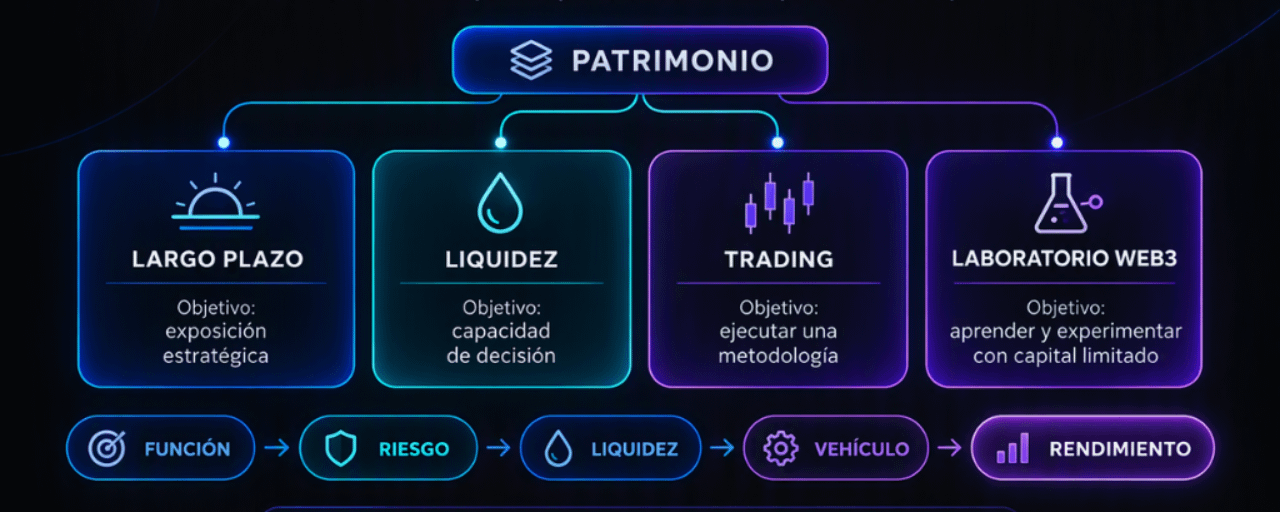
From there, I started separating each part by purpose:
Reorganizing a portfolio isn’t about chasing the highest return
Over the past few months, I’ve been testing real Web3 tools: networks, pools, stablecoins, exchanges, staking, and different experiences with deliberately limited capital.
All of that helped me learn.
But it also led to one conclusion:
Having more positions doesn’t necessarily mean having a better-organized portfolio.
This week, I changed the question.
Before:
Where can I get a higher return?
Now:
What is this capital for?
From there, I started separating each part by purpose:
89
·
--
Article
After 36 demo trades, I decided to share my trading journal
My first trades had a lot of data, but also too much room for interpretation.
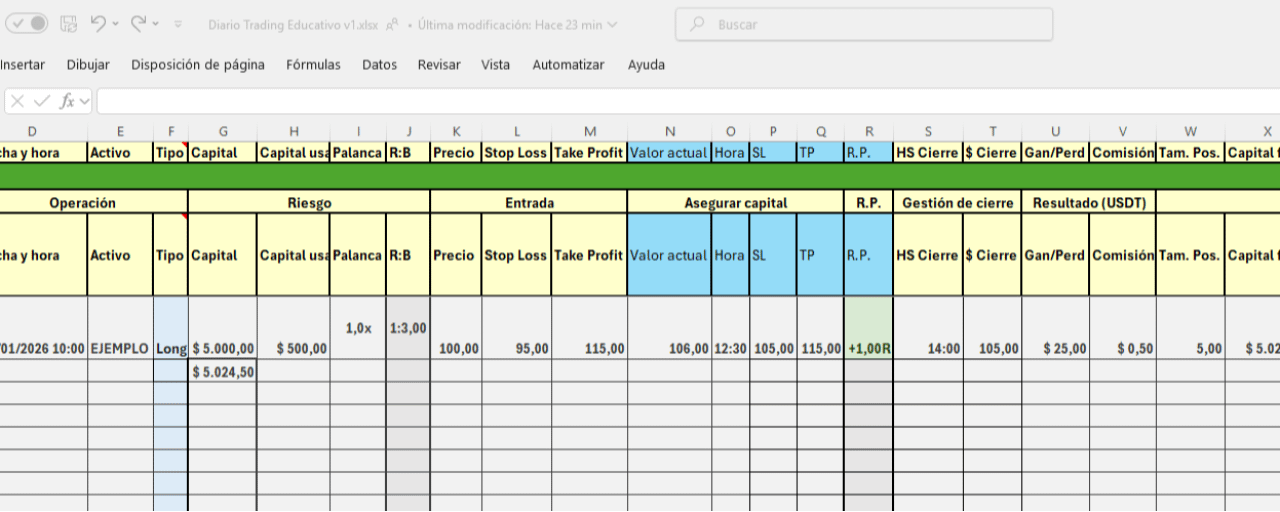
I could think a trade entry met my setup, only to discover later that a condition was missing. Or believe I was working with a 1:3 R:R when the actual calculation was different.
After 36 records, I kept modifying the spreadsheet to reduce that room for interpretation even further.
Today I finished the first public version of my Educational Trading Journal.
The idea isn’t to predict the market.
It’s something much simpler:
After 36 demo trades, I decided to share my trading journal
My first trades had a lot of data, but also too much room for interpretation.
I could think a trade entry met my setup, only to discover later that a condition was missing. Or believe I was working with a 1:3 R:R when the actual calculation was different.
After 36 records, I kept modifying the spreadsheet to reduce that room for interpretation even further.
Today I finished the first public version of my Educational Trading Journal.
The idea isn’t to predict the market.
It’s something much simpler:
1k
Log in to explore more content
Join global crypto users on Binance Square
⚡️ Get latest and useful information about crypto.
💬 Trusted by the world’s largest crypto exchange.
👍 Discover real insights from verified creators.
Email / Phone number
Trending Topics
1
#FedWatch
16.1M views
37,550 Discussing
2
#BitcoinCore32.1RaisesPeerConnectionLimit
10,264 views
304 Discussing
3
#VisaStablecoinSettlementTops$25BAnnualized
6 views
4 Discussing
4
#WestpacToCapCryptoPaymentsAtAUD10KPerMonth
2,402 views
75 Discussing
5
#RussiaPlansStandardizedTestForCryptoInvestors
3,523 views
116 Discussing
6
#EarningsSeason
6.2M views
30,587 Discussing
7
#BitcoinCoreIdentifiesThreeVulnerabilities
19,453 views
370 Discussing
8
#CanGoogleDefindItsCore
423,014 views
3,145 Discussing
9
#CanMicrosoftDeliverOnAI
677,140 views
4,453 Discussing
10
#RippleExpects$900MAnnualizedProductRevenueRunRate
1,801 views
12 Discussing