

#9500
9500
7 views
2 Discussing
Hot
Latest

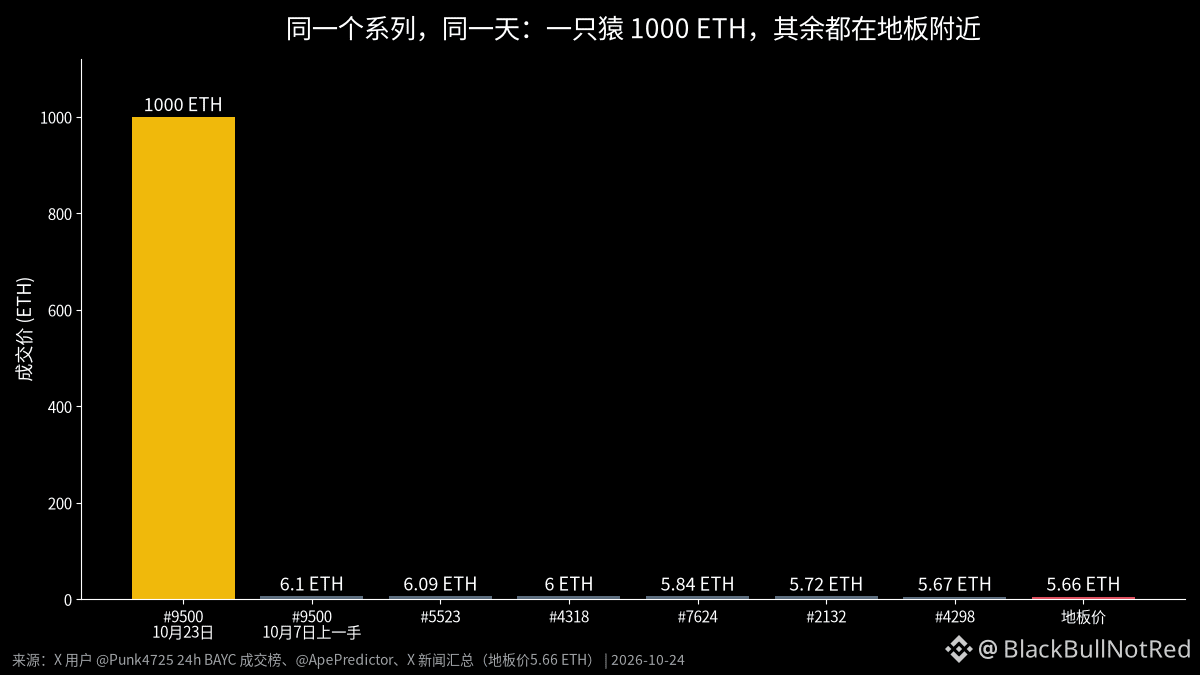
An ape with a floor price of 5.66 ETH sold for 1,000 ETH. Don’t rush to call it an NFT comeback.
BAYC #9500: sushi-chef headband, cigar in its mouth, and pretty average rarity. Its previous sale was just 6.1 ETH on October 7. Two weeks later, it was worth over 160 times more. What did other apes sell for that same day? 6.09, 6, 5.84, 5.72. And the floor? 5.66, completely unchanged.
If someone really believes in blue-chip NFTs, they’ll sweep a row of floor listings—not pick one ordinary ape and pay 1,000 ETH for it. People on X have already pointed out that both buyer and seller are fresh wallets, and this ape has two other red flags. A fresh wallet selling to another fresh wallet for more than 170 times the floor price? To me, that looks like someone trading with themselves. As for why they’d do it, money laundering, inflating valuations, or giving their own wallet a “historical sale price” all sound more plausible than “buying out of conviction.”
Who profited? The platform still collected its fee, and accounts shouting “NFTs are back” got a wave of traffic. Anyone who rushed to sweep the floor after seeing the headline got taken in by fake news.
Sale records can be manipulated; listing depth and the floor price can’t. Those are the two things to look at with NFTs—not one-off astronomical sales.
#NFT #BAYC
14
Log in to explore more content
Join global crypto users on Binance Square
⚡️ Get latest and useful information about crypto.
💬 Trusted by the world’s largest crypto exchange.
👍 Discover real insights from verified creators.
Email / Phone number
Trending Topics
1
#CanMicrosoftDeliverOnAI
624,461 views
4,106 Discussing
2
#CanGoogleDefindItsCore
383,835 views
2,889 Discussing
3
#FedWatch
16.1M views
37,237 Discussing
4
#BitcoinCore32.1RaisesPeerConnectionLimit
2,367 views
83 Discussing
5
#EarningsSeason
6.1M views
30,321 Discussing
6
#BitcoinCoreIdentifiesThreeVulnerabilities
12,584 views
265 Discussing
7
#RippleExpects$900MAnnualizedProductRevenueRunRate
1,520 views
10 Discussing
8
#GoogleToPreviewCryptoCustodySecuritySystem
3,814 views
96 Discussing
9
#FedToBeginShrinkingRateSettingCalendarIn2027
4,734 views
59 Discussing
10
#StrategyShareholdersApproveDailyDividends
4,270 views
79 Discussing