
#16856
16856
1 views
2 Discussing
Hot
Latest

·
--
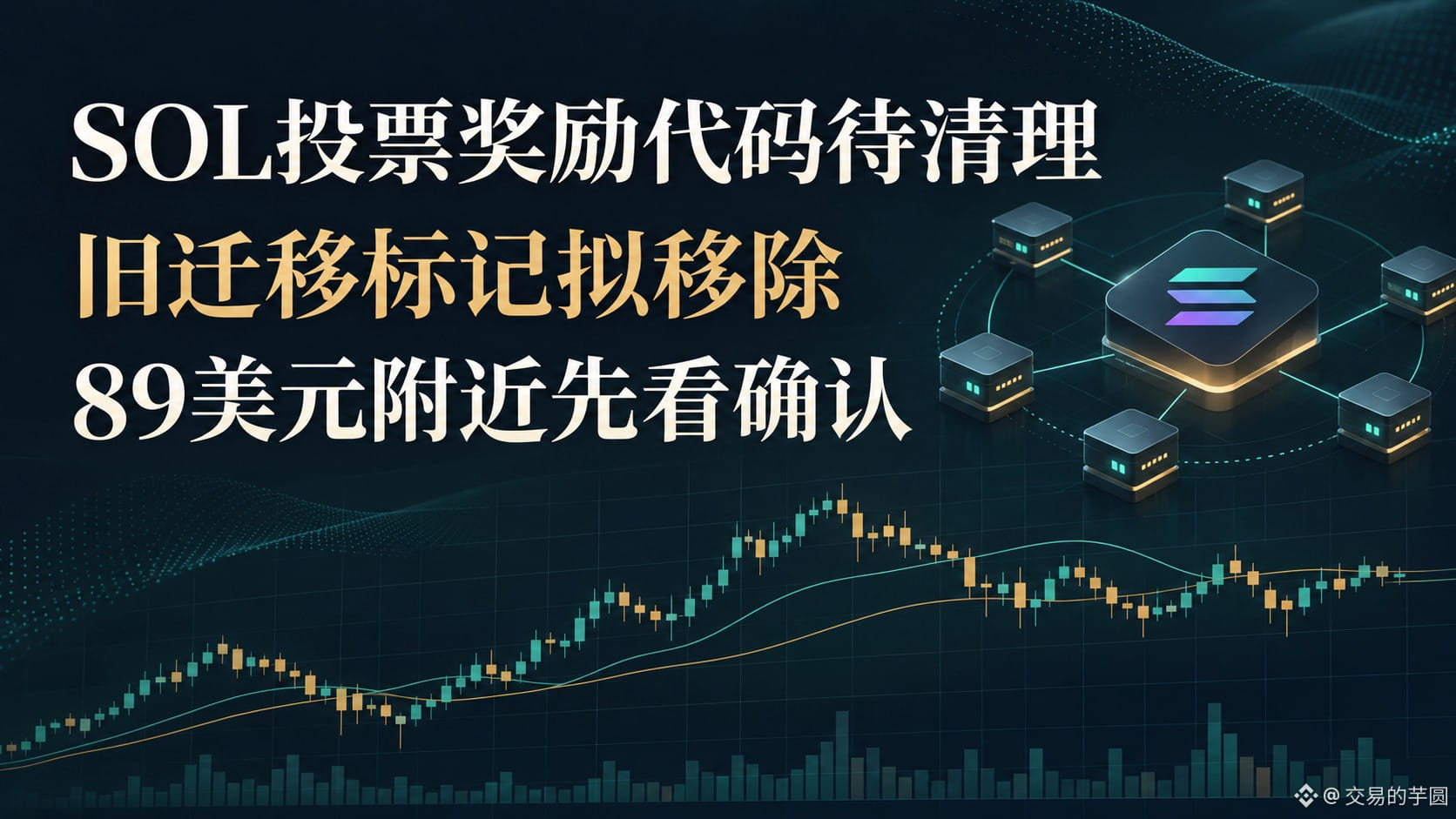
SOL vote-reward code cleanup|Legacy migration marker proposed for removal|Wait for confirmation near $89
My stance is cautious: seeing the words “vote rewards” in a code repository does not mean SOL yields are about to rise. On November 7, Anza-maintained Agave repository submitted PR #16856, proposing to remove a special epoch marker from the migration period and related branches in the vote_reward processing flow. The PR description says the migration has already taken place, so this historical handling logic can be removed. The PR is still Open, and the file diff shows mainly the deletion of old branches, with no new tests; this is a code change awaiting review, not an adjustment to mainnet parameters, and certainly no basis for claiming that staking income has increased. After comparing the PR description with the actual code diff, what I can confirm is that the maintainers want to simplify the accounting path for vote rewards. What I cannot confirm is when it will be merged, which release it will ship in, or how it will perform in practice.
Why should SOL traders care? Validator voting, reward records, and client implementation all affect how predictable network operations are; lower maintenance costs could be beneficial over the long term. But this kind of engineering work usually takes shape gradually through code review, testing, release, and node adoption, and there is a long chain between that and the token price. It does not directly create new spot buying. Solana’s official status page currently shows mainnet and RPC as operational, so the pending PR should not be framed as an on-chain outage in progress. SOL appears in Binance Square’s six-hour Most Searched list, but search interest only indicates attention, not evidence of fund inflows. None of this round’s Trending Topics directly corresponds to the PR, so I won’t force an unrelated tag.
The market reaction is equally muted. At the time of writing, SOL/USDT on Binance is around $89.63. The rolling 24-hour open was about $89.65, the high was $89.95, and the low was $88.73, for a change of about -0.02%; these figures do not support the claim that “the PR sent SOL soaring.” Farside’s latest visible data, for November 6, shows net outflows of about $24.2 million from SOL funds combined. That is data from the previous trading day, and weekend figures should not be treated as new subscriptions or redemptions. I see $89.95–$90.00 as the area that needs to be reclaimed and held in the short term, with $88.73 as this period’s low and a level to watch for risk. If the price breaks below it and cannot quickly recover, my current neutral view turns weaker. I would only become more confident in the engineering progress after a formal merge and release, followed by evidence of stable operation.
If I were trading it myself: I would stay out for now. My directional bias is a conditional spot long, with a current position of 0%. Only if the price moves above $90.00 on strong volume, holds $89.95 on a retest, and mainnet remains operational would I consider a trial position of no more than 1% of total capital, with no leverage. My first target would be $91.20, where I would sell half; my second target would be $92.40, where I would close the rest. After entry, I would stop out immediately if the price falls below $88.70. If it spikes higher but falls back below $89.95 within two hours, I would close early. Even if the PR is later merged, I would stick to my trading conditions if price action and fund flows do not confirm the move; I would not treat technical progress as a signal that the price must rise. #SOL
This is solely my personal market observation and does not constitute investment advice.
2
Log in to explore more content
Join global crypto users on Binance Square
⚡️ Get latest and useful information about crypto.
💬 Trusted by the world’s largest crypto exchange.
👍 Discover real insights from verified creators.
Email / Phone number
Trending Topics
1
#NvidiaInvestigatesAfterHuang’sAffairApology
21,867 views
293 Discussing
2
#BitcoinFiveWeeklyLosses
36,452 views
726 Discussing
3
#AIChipSlumpNasdaq
20,150 views
413 Discussing
4
#SouthKoreaSupremeCourtClarifiesVirtualAssetSeizureRules
0 views
0 Discussing
5
#EthereumSpotETFsPost$365MWeeklyOutflow
870 views
25 Discussing
6
#GalxeToIntegrateIntoGravityGraduallyCloseQuest
0 views
0 Discussing
7
#TradFiForBeginners
259,563 views
2,313 Discussing
8
#SouthKoreaDraftLawTargets15To20%ShareholderCap
186,518 views
969 Discussing
9
#KeplrAdvisesSocialLoginUsersToTransferAssets
88,398 views
668 Discussing
10
#TetherPlans€28.8MForJuventusCapitalIncrease
60,376 views
491 Discussing