
#12262
12262
0 views
2 Discussing
Hot
Latest

·
--
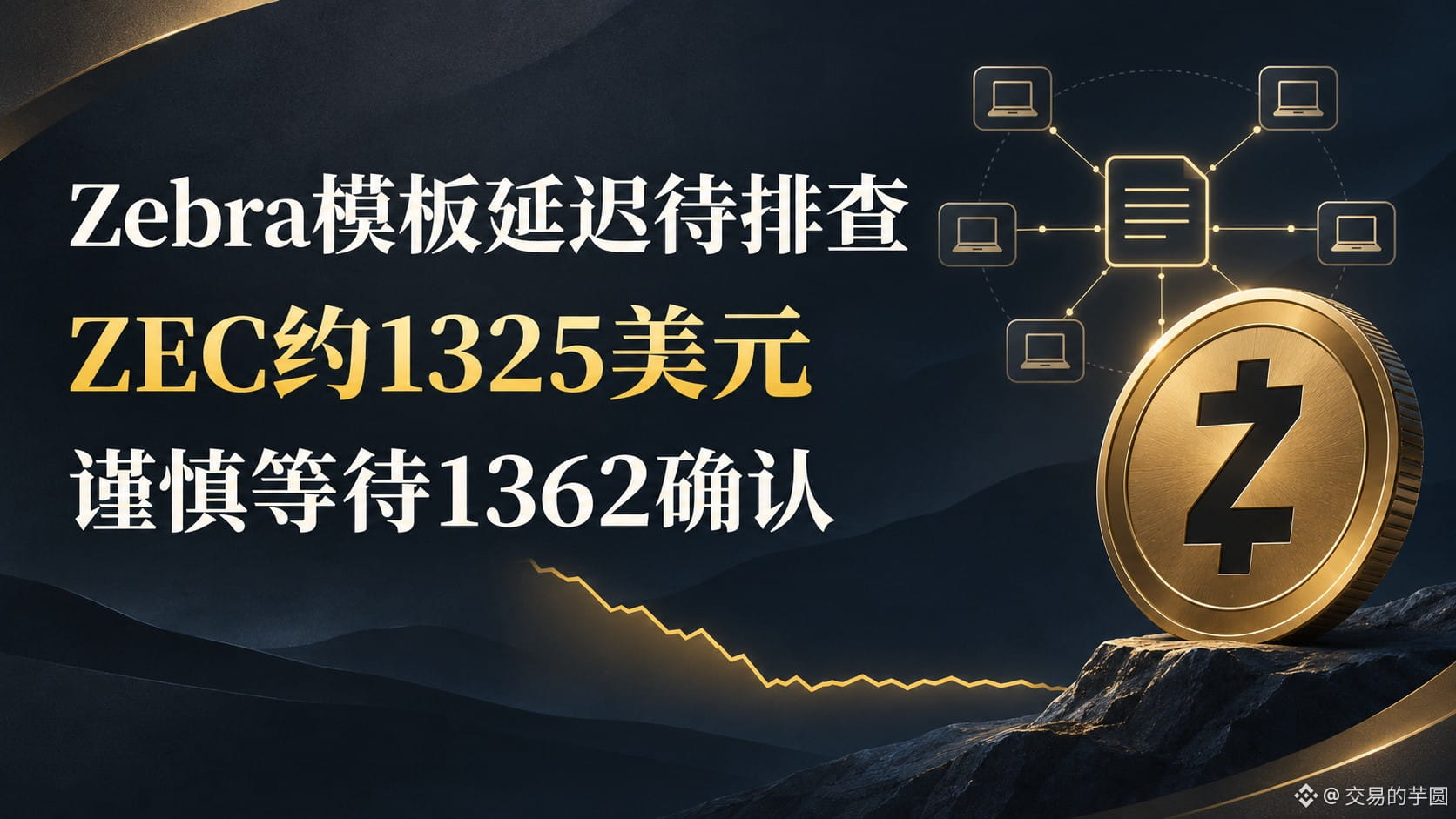
Zebra block template delay under investigation | ZEC falls back to $1,325 | I’ll wait for trade confirmation
My stance is to wait and see, especially rather than dressing up an unresolved issue in an engineering repository as a “Zcash network failure.” On November 6, a new issue, #12262, was opened in the Zebra node repository under the Zcash Foundation. The reporter says that each time the mempool changes, the template updater waits a fixed one second before rebuilding. If transactions continue to arrive, the template available to miners may not include transactions accepted during the preceding second. The report suggests shortening the delay to tens of milliseconds under steady traffic, while still batching updates during traffic spikes to prevent rebuild tasks from growing without bound. The issue is Open and self-assigned; there is no linked fix PR yet, and nothing in this report confirms that all nodes or mining pools are affected.
This is an issue with the timeliness of transactions entering candidate blocks. It is not equivalent to transaction loss, double spending, the chain stopping block production, or user privacy failing. If the issue is reproduced and fixed, the potential benefit would first be more timely miner templates and more efficient use of the transaction pool under stable load. It would not automatically change ZEC’s issuance, nor does it mean that transfer fees have already fallen today. Zebra 7.0.0 is an existing official release, and the Foundation announced Ándale performance experiments on October 31, but this November 6 issue has not been announced as a new official upgrade. I’ll wait for maintainers to confirm the cause, add tests, and merge a fix before giving this technical assessment more weight.
As for the market impact, I’m more concerned about not conflating project development signals with short-term fund flows. The Farside table shows net inflows of $1.8 million into the U.S. ZCSH product on November 6, following $11 million in net outflows the previous day. This only shows that flows went in different directions over those two days; it does not prove that the node issue drove fund trading. At the time of writing, Kraken ZEC/USD is around $1,324.61, with today’s open at $1,321.10, an intraday low of $1,318.96, and a high of $1,361.60; the rolling 24-hour low is $1,246.46 and the high is $1,388.63. The price is slightly above the open, but well below the 24-hour high and also below the roughly $1,349 level I observed last time. This describes verifiable price movements; I am not claiming that I sold at $1,349 or profited from the pullback.
I’m treating $1,318.96 as the near-term support level to watch, $1,361.60 as the intraday ceiling, and $1,388.63 as the next higher confirmation level. If the price falls below $1,318 and then fails to reclaim it on a rebound, short-term buying support would look insufficient. If it breaks above $1,361 without follow-through in trading volume, that could just be a false breakout within a trading range. What would overturn my cautious view is simultaneous improvement in price and trading volume, along with verifiable progress on a fix for the project issue. I won’t increase my position based only on technical discussion or one day of modest fund inflows.
If I were trading myself, I wouldn’t enter now. My position would be 0%, with only a small spot long as a possible option. I’d place a trial trade using no more than 0.25% of my total capital, with no leverage, only if two consecutive one-hour candles close above $1,361.60, the price holds $1,355 on a retest, and volume increases. The first target would be $1,378, where I’d take half off; the second would be $1,388, and I’d close the remaining position if the price failed to break through. I’d set a hard stop at $1,345. If the price first loses $1,318.96, I’d cancel the plan outright. If the issue is later shown to be merely a localized configuration problem, I should also revise how I describe the technical risk, rather than presenting a plan that has not been triggered as a completed trade.
#ZEC
The above is solely my personal market observation and does not constitute investment advice.
3
Log in to explore more content
Join global crypto users on Binance Square
⚡️ Get latest and useful information about crypto.
💬 Trusted by the world’s largest crypto exchange.
👍 Discover real insights from verified creators.
Email / Phone number
Trending Topics
1
#JobsReportRaisesHikeOdds
173,953 views
1,489 Discussing
2
#CPITestsDecemberRateOutlook
0 views
14 Discussing
3
#BitcoinRebounds$75KAsChipsLead
15,144 views
184 Discussing
4
#US Data Center Rules May Constrain AI Expansion
28,233 views
137 Discussing
5
#WillAnthropicListOnTime
38,685 views
527 Discussing
6
#BitcoinETFsSee$412MNetOutflows
205 views
31 Discussing
7
#HKSFCPlansToRestrictCryptoAndExchangeTerms
2,736 views
112 Discussing
8
#AnthropicStillPlansPreThanksgivingIPO
12,877 views
187 Discussing
9
#FinCENAndFedWithdraw$250CryptoTransferProposal
3,890 views
13 Discussing
10
#TradFiForBeginners
26,998 views
440 Discussing