
Bitcoin.org
3k Posts

Bitcoin.org
Bitcoin is an open source censorship-resistant peer-to-peer immutable network. Trackable digital gold. Don't trust; verify. Not your keys; not your coins.
0 Following
10.5K+ Followers
3.8K+ Liked
Posts
Not just the week—$ZEC was impeccable throughout the bearish market. It’s almost as if it didn’t experience a bear market at all. Because overall, even when Bitcoin and the major altcoins were down—when the whole market was in decline—ZEC had a much more bullish overall move. So I don’t know whether it’s that the ecosystem has completely decoupled from the broader market, token-wise or in terms of activity. It’s currently the top of all privacy coins that are absolutely focused on confidentiality, or at least have it as the central philosophical layer above Bitcoin.
#Macro Insights# #Altcoin Season# #BTC Price Analysis#
#Macro Insights# #Altcoin Season# #BTC Price Analysis#
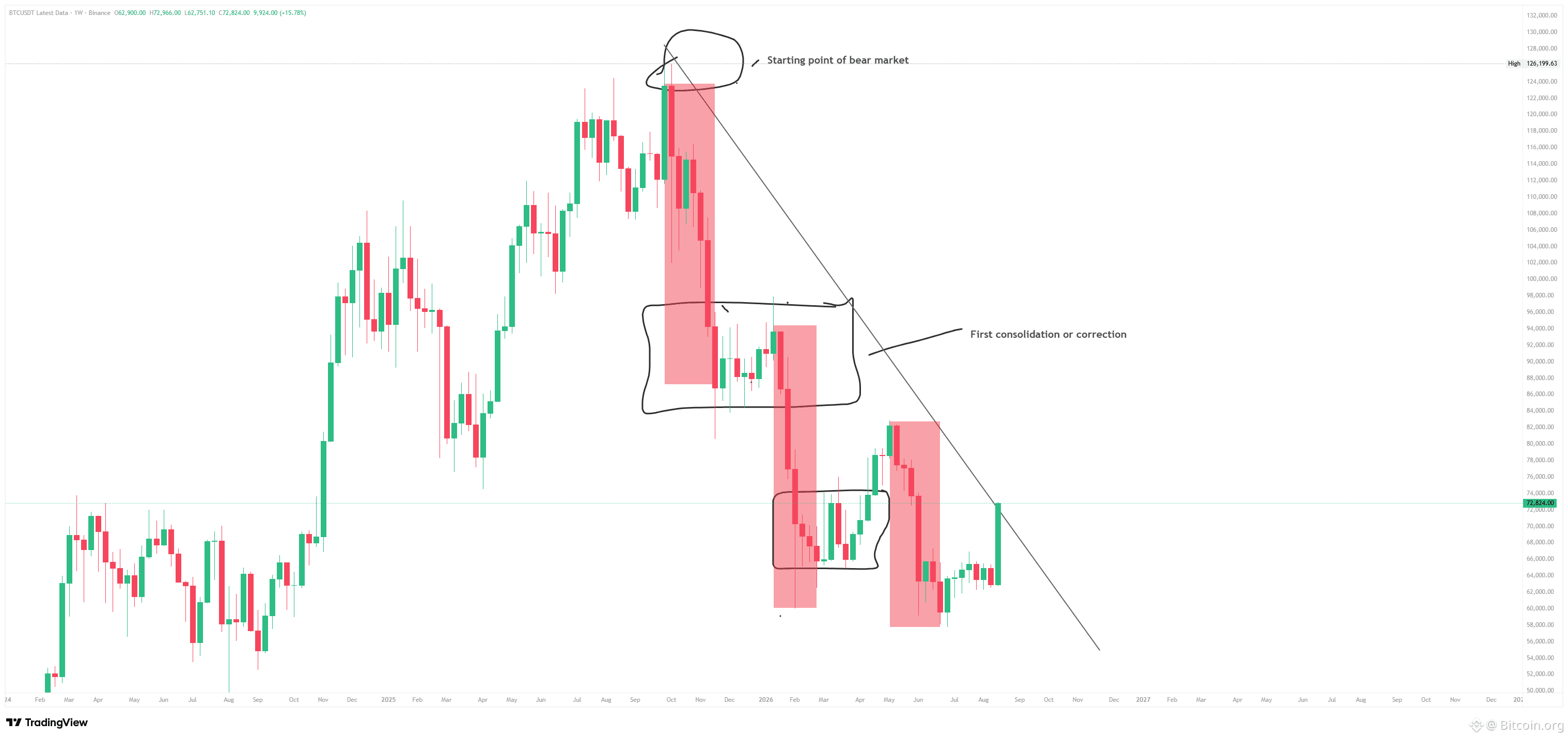
Since the beginning of the bear market, Bitcoin’s consolidation phases have repeatedly followed a similar pattern: a W-shaped structure, followed by a sharp bearish expansion that triggered another distribution phase. The current consolidation appears to be developing a comparable structure, with the market now entering what could be the final leg of that pattern. This is the key segment I’m watching. If the current move fails to produce another significant bearish expansion and instead stabilizes or reverses, it would challenge the pattern we’ve seen throughout this bear market. At that point, the probability that the broader downtrend has already ended would increase significantly if nt certain, lmao For me, this is one of the key confirmations I’m waiting for before declaring the beginning of the next bull market. $BTC $ETH $BNB #BTC Price Analysis# #Macro Insights# #Altcoin Season#
No matter how beautiful the theory is, execution is just as important.
The idea is interesting and relates to one of the current MegaTrends, but capturing attention isn’t enough.
Promises of massive returns can certainly spark curiosity and push the community to lock funds into smart contracts, just to farm a token that we’re not even sure will actually hold.
Because if there are lots of distributions, it can also create strong sell pressure. We’ve already seen plenty of projects make impressive launches without the price holding.
For those who want to invest in the token, what matters to me most is the tokenomics: it’s what governs the transfer of value from the project to the token.
Not just the hype, not just the promises, not just the thesis. For now, the thesis is still theoretical.
$ETH #Altcoin Season#
The idea is interesting and relates to one of the current MegaTrends, but capturing attention isn’t enough.
Promises of massive returns can certainly spark curiosity and push the community to lock funds into smart contracts, just to farm a token that we’re not even sure will actually hold.
Because if there are lots of distributions, it can also create strong sell pressure. We’ve already seen plenty of projects make impressive launches without the price holding.
For those who want to invest in the token, what matters to me most is the tokenomics: it’s what governs the transfer of value from the project to the token.
Not just the hype, not just the promises, not just the thesis. For now, the thesis is still theoretical.
$ETH #Altcoin Season#
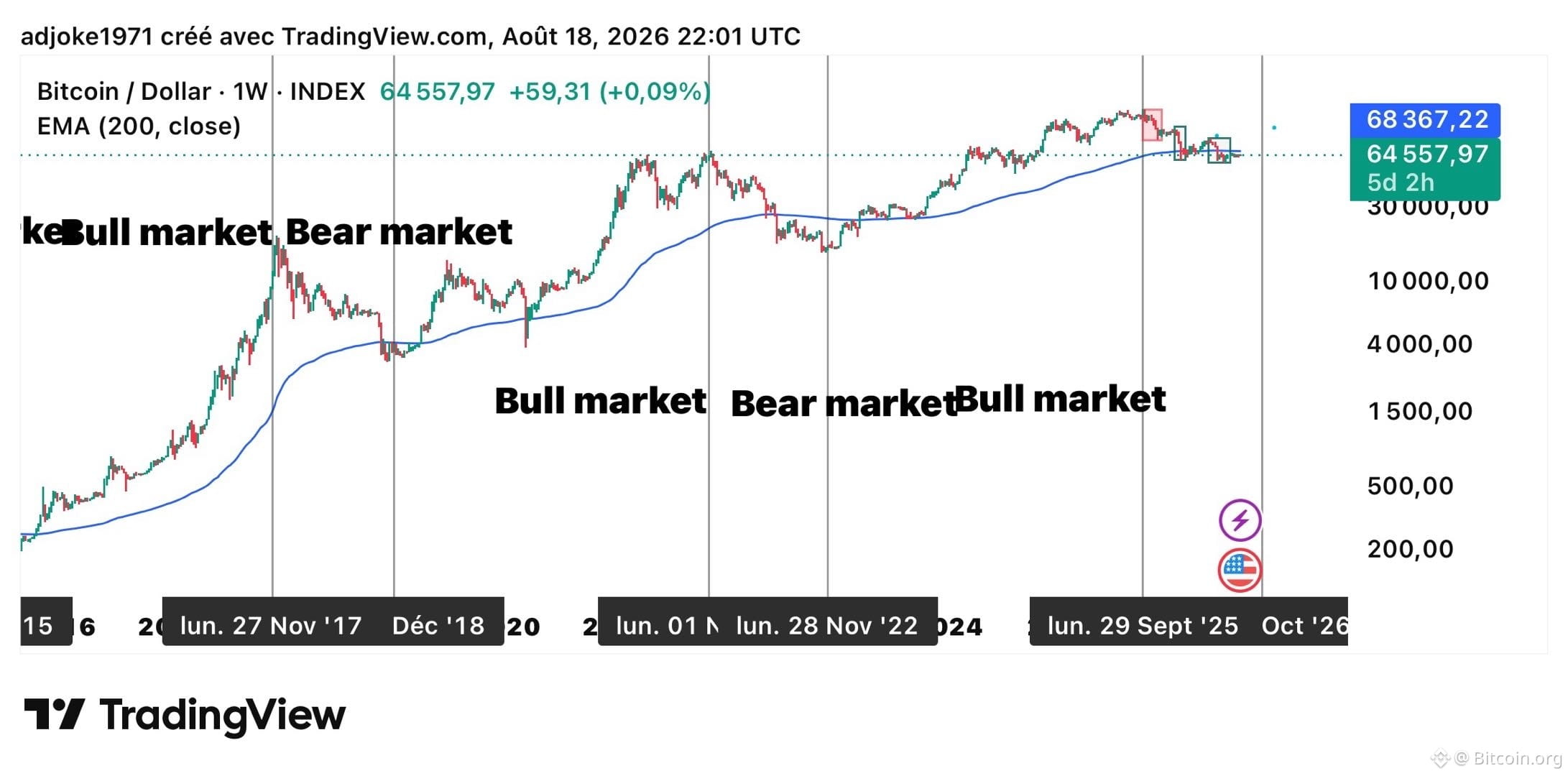
$BTC , first of all, the interpretation is that, with 200-week candles as the unit, all its variation since its creation—or at least all the available history on TradingView—would probably represent a huge bullish impulse. In short: aligned green candles and a very clear upward direction.
As for the current behavior, you mainly need to see it as an analogy based on the historical price action, and not as a direct conclusion similar to using a classic support or resistance.
Because here, we are not talking about a specific price level or a round number. We’re talking about a moving average.
So you need to incorporate more of a “moving average” logic into the analysis.
Yes, the 200W can act as support. But in my opinion, it’s even more sensible to understand how price behaves around that moving average rather than treating the moving average itself as an absolute key level.
#BTC Price Analysis# #Macro Insights#
As for the current behavior, you mainly need to see it as an analogy based on the historical price action, and not as a direct conclusion similar to using a classic support or resistance.
Because here, we are not talking about a specific price level or a round number. We’re talking about a moving average.
So you need to incorporate more of a “moving average” logic into the analysis.
Yes, the 200W can act as support. But in my opinion, it’s even more sensible to understand how price behaves around that moving average rather than treating the moving average itself as an absolute key level.
#BTC Price Analysis# #Macro Insights#
First of all, there’s nothing surprising about that since the market is in a bear market. So it is completely normal for down months to be more frequent than up months.
As for the question of whether Bitcoin could reverse the trend this month, I think it’s plausible, and even structurally very likely.
The market’s downward trend hasn’t been reversed yet, but many signs and indicators (the historical duration of bear markets and other factors) are pointing toward an increasingly probable end to the bear cycle, in my opinion.
I even think the bottom may already have been reached.
And if that’s the case, then even if BTC doesn’t fully reverse the trend this month, I believe a red candle could at the very least turn into a consolidation candle, or even a relatively neutral one.
And it’s likely that next month could follow the same logic.
Of course, this is only my personal opinion.
$BTC #BTC Price Analysis# #Macro Insights#
As for the question of whether Bitcoin could reverse the trend this month, I think it’s plausible, and even structurally very likely.
The market’s downward trend hasn’t been reversed yet, but many signs and indicators (the historical duration of bear markets and other factors) are pointing toward an increasingly probable end to the bear cycle, in my opinion.
I even think the bottom may already have been reached.
And if that’s the case, then even if BTC doesn’t fully reverse the trend this month, I believe a red candle could at the very least turn into a consolidation candle, or even a relatively neutral one.
And it’s likely that next month could follow the same logic.
Of course, this is only my personal opinion.
$BTC #BTC Price Analysis# #Macro Insights#
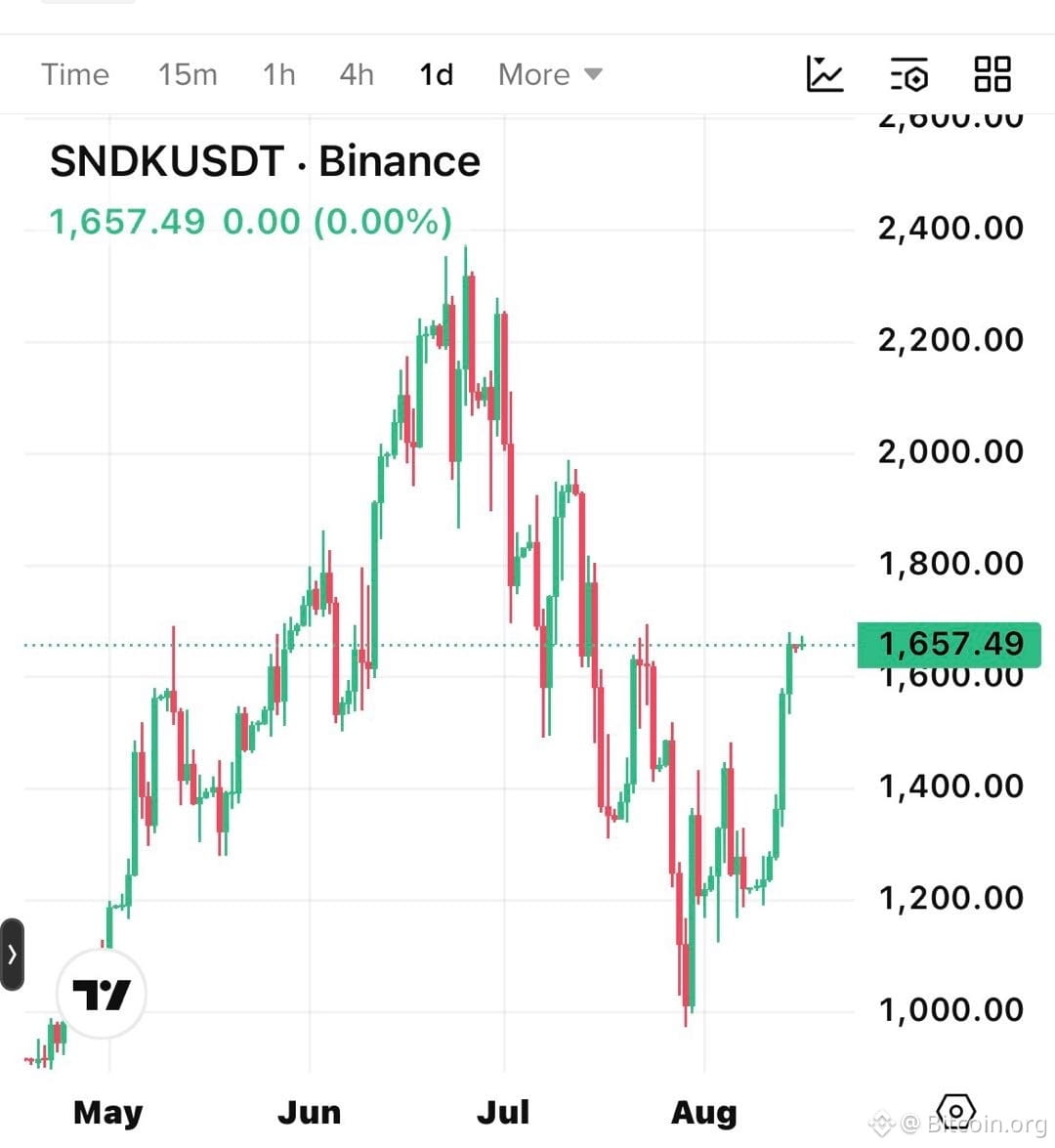
$SNDK : structurally, the correction from $2,400 to $1,000 hasn’t changed the broader trend.
The daily structure remained intact throughout the move and had basically been unchanged since June — at least until last week.
Last week’s momentum recovery was the first clear signal that the correction was losing strength and the previous trend was resuming.
I’m pretty bullish on $SNDK over the next few weeks.
I just entered through the tokenized stocks market since Nasdaq isn’t open yet. 😂
I’ll share later why I decided to enter now instead of waiting another hour. #Macro Insights#
The daily structure remained intact throughout the move and had basically been unchanged since June — at least until last week.
Last week’s momentum recovery was the first clear signal that the correction was losing strength and the previous trend was resuming.
I’m pretty bullish on $SNDK over the next few weeks.
I just entered through the tokenized stocks market since Nasdaq isn’t open yet. 😂
I’ll share later why I decided to enter now instead of waiting another hour. #Macro Insights#
Bitcoin dumping again? Totally fine.
It shouldn’t really be surprising at this point.
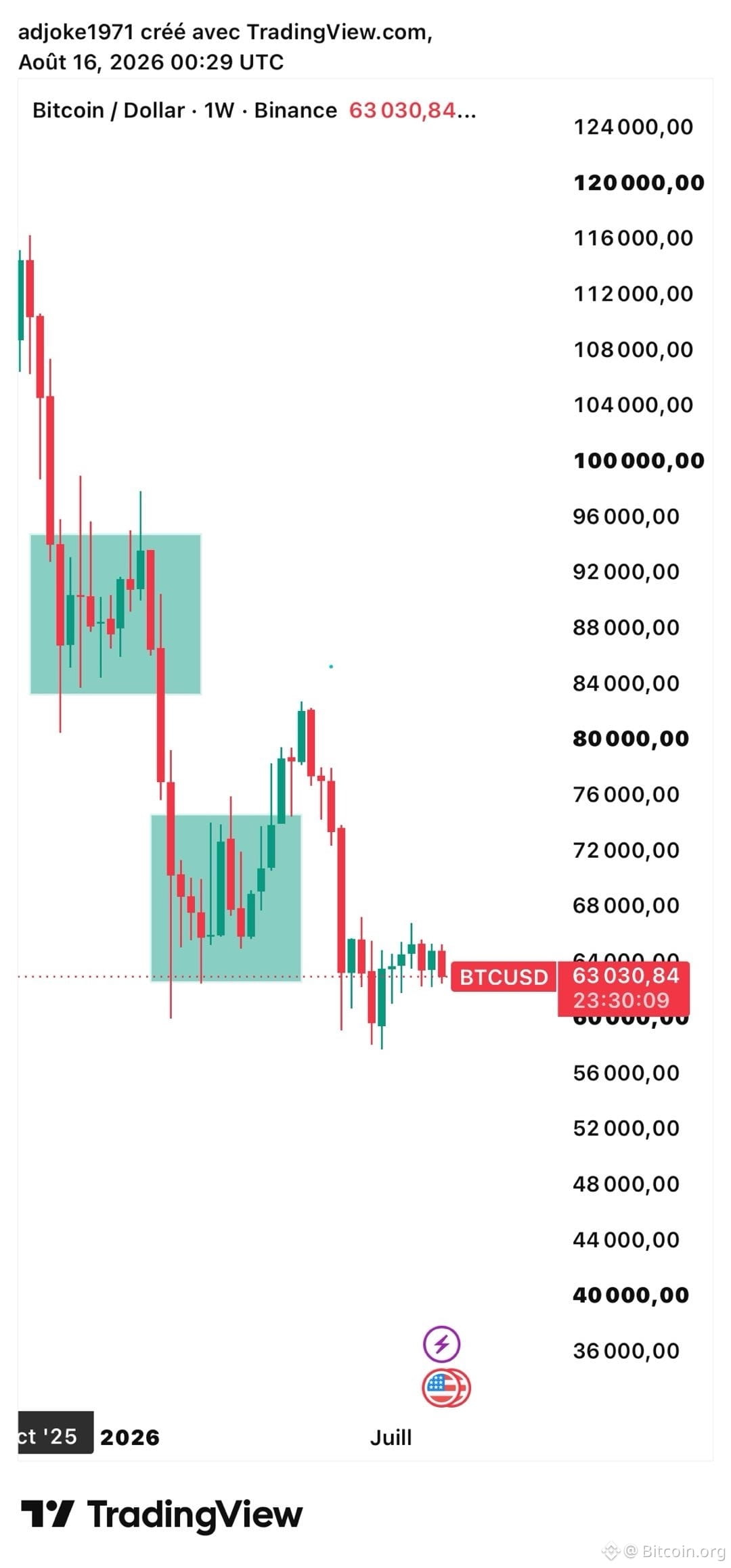
If you look at the previous cooling periods on $BTC since the beginning of the bear market, the price action has been forming a pattern that increasingly looks like a “W.”
The first two legs are already in. This current dump could be the third.
If the pattern holds, this could be an interesting zone to watch for accumulation - especially if this turns out to be the bottom.
#BTC Price Analysis# #Macro Insights#
It shouldn’t really be surprising at this point.
If you look at the previous cooling periods on $BTC since the beginning of the bear market, the price action has been forming a pattern that increasingly looks like a “W.”
The first two legs are already in. This current dump could be the third.
If the pattern holds, this could be an interesting zone to watch for accumulation - especially if this turns out to be the bottom.
#BTC Price Analysis# #Macro Insights#
Actually, does Bitcoin really need a drop in interest rates to perform?
Isn’t it solid enough to generate demand?
The market may be bearish, but there’s enough money looking to be invested, or to be invested somewhere. Although lower interest rates will benefit the market—or at least in terms of pricing relative to the dollar—the real hedge remains the appeal of crypto.
$BTC
#BTC Price Analysis# #Macro Insights# #Altcoin Season#
Isn’t it solid enough to generate demand?
The market may be bearish, but there’s enough money looking to be invested, or to be invested somewhere. Although lower interest rates will benefit the market—or at least in terms of pricing relative to the dollar—the real hedge remains the appeal of crypto.
$BTC
#BTC Price Analysis# #Macro Insights# #Altcoin Season#
Whether for Harmony or for Ethereum, these are products and services, and within that, the question is the protection of users.
Who cares about decentralization or immutability when it’s about recovering stolen funds?
Even Bitcoin has been hacked in the past. User protection is essential and should be considered as such in the case of Harmony.
$ONE $ETH
#Altcoin Season# #Meme Alpha#
Who cares about decentralization or immutability when it’s about recovering stolen funds?
Even Bitcoin has been hacked in the past. User protection is essential and should be considered as such in the case of Harmony.
$ONE $ETH
#Altcoin Season# #Meme Alpha#
This hasn’t even started recently, and reports from Binance Research claim that, in fact, over the year 2026, I believe retail investors have clearly sold, while institutions have accumulated. The share held by public companies has increased a lot over the year, and that’s normal because the institutions that want to enter took advantage of the bearish pressure resulting from panic to accumulate at a price that’s quite reasonable—on the cheap. Anyway, I think it’s not necessarily a matter of who it is, but rather opportunities for those who already know something; they know they want to buy Bitcoin, and they found the opportunity to do so at a reduced, bargain price—so they simply profited. $BTC
#BTC Price Analysis# #Macro Insights# #Altcoin Season#
#BTC Price Analysis# #Macro Insights# #Altcoin Season#
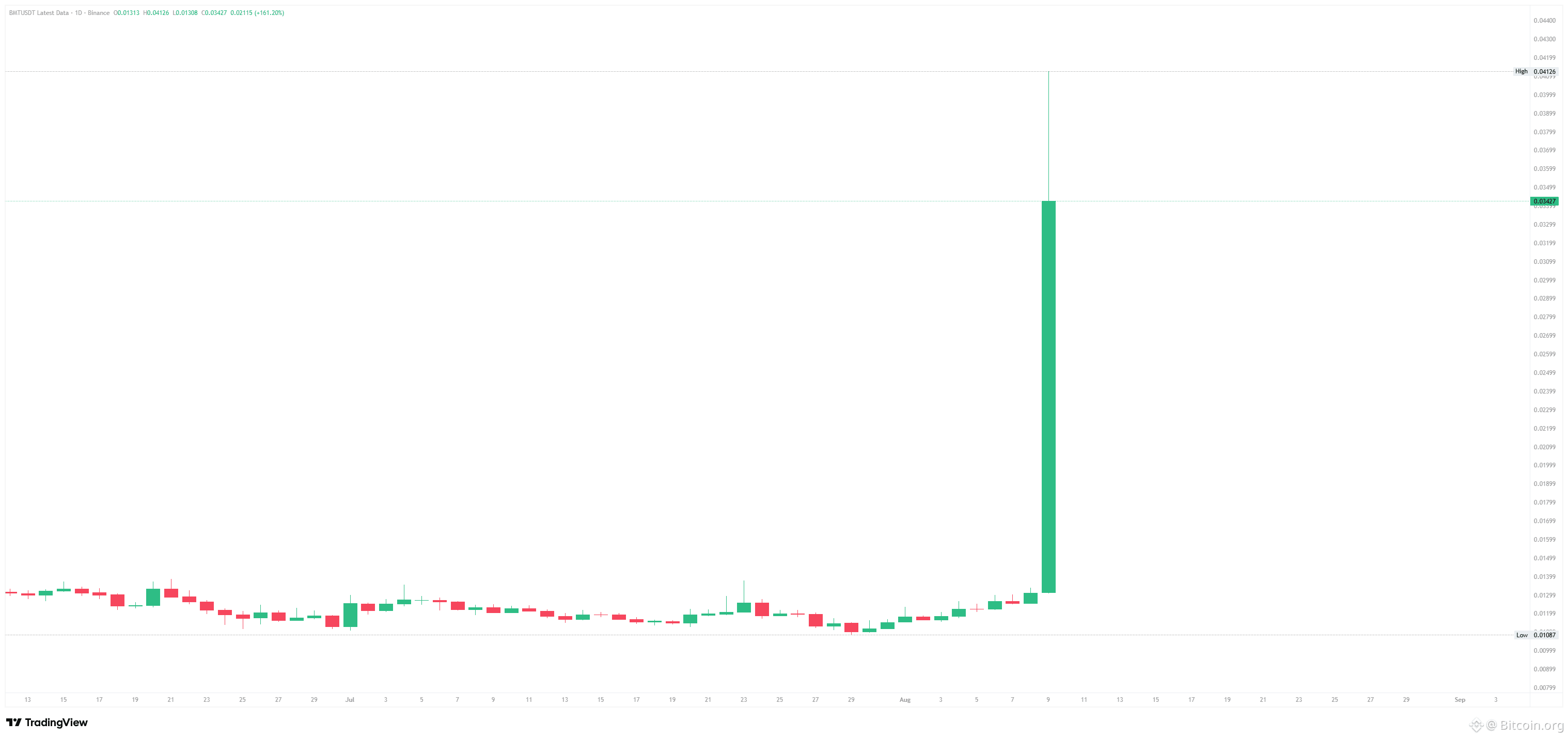
$BMT pumped out +200% daily move accompanied by an 8,000%+ increase in volume, wft !!! It had been in a prolonged downtrend since launch, with little indication of sustained demand. The sudden, it does this. What makes the case particularly interesting is that the project publicly monitors and flags potential pump-and-dump activity across other tokens. That makes the possibility of similar activity involving its own token particularly difficult to reconcile. The tokenomics also show allocations across different categories, including the team and investors, so the available data doesn’t immediately indicate that the team alone controls the majority of the supply. None of this proves manipulation. But the combination of a prolonged downtrend, a sudden +200% move and an 8,000%+ volume expansion makes the current price action a high-risk setup. Btw, be cautious about extrapolating the rally. A sharp retracement could happen at any time! #Altcoin Season# #BNBChain# #Meme Alpha#
$BTC
This weekend, Bitcoin is facing a consensus test.
At block 961,632, nodes enforcing BIP-110 began rejecting blocks that don’t signal support for the proposal.
The debate itself isn’t new: should Bitcoin be used strictly for monetary transactions, or should the network also allow arbitrary data such as inscriptions, image or text?
BIP-110 proposes restricting this type of data for one year. The controversial part isn’t necessarily the proposal itself, but how it is being enforced.
The activation threshold was set at 55% of miner signaling, far below the traditional thresholds historically used for major Bitcoin soft forks. Yet actual support has remained below 3%.
So what happens now?
Nodes enforcing BIP-110 can reject blocks that don’t comply, potentially creating a minority chain while the overwhelming majority of miners continue building the existing chain.
That’s why I think headlines about “Bitcoin splitting” need some context. A chain with little hashpower behind it can exist, but its ability to compete with the main chain is another question entirely. The current situation is already showing a significant divergence in chain progress.
Bitcoin doesn’t change simply because someone proposes a new rule. The change has to gain enough economic and technical consensus across the network.
Less than 3% miner signaling doesn’t look like consensus.
It looks like a disagreement becoming a network experiment.
#BTC Price Analysis# #Macro Insights#
This weekend, Bitcoin is facing a consensus test.
At block 961,632, nodes enforcing BIP-110 began rejecting blocks that don’t signal support for the proposal.
The debate itself isn’t new: should Bitcoin be used strictly for monetary transactions, or should the network also allow arbitrary data such as inscriptions, image or text?
BIP-110 proposes restricting this type of data for one year. The controversial part isn’t necessarily the proposal itself, but how it is being enforced.
The activation threshold was set at 55% of miner signaling, far below the traditional thresholds historically used for major Bitcoin soft forks. Yet actual support has remained below 3%.
So what happens now?
Nodes enforcing BIP-110 can reject blocks that don’t comply, potentially creating a minority chain while the overwhelming majority of miners continue building the existing chain.
That’s why I think headlines about “Bitcoin splitting” need some context. A chain with little hashpower behind it can exist, but its ability to compete with the main chain is another question entirely. The current situation is already showing a significant divergence in chain progress.
Bitcoin doesn’t change simply because someone proposes a new rule. The change has to gain enough economic and technical consensus across the network.
Less than 3% miner signaling doesn’t look like consensus.
It looks like a disagreement becoming a network experiment.
#BTC Price Analysis# #Macro Insights#
Even if these whales decided to sell everything today, the price could indeed plunge in the short term. But, in my opinion, it would only be a matter of time before this liquidity is absorbed by the market and it regains its equilibrium. Yes!
I also believe that many of the moves triggered by U.S. employment figures or other macro announcements are amplified by leveraged positions and derivative contracts.
For a long-term investor, if the fundamentals don’t change, a massive sell-off by the whales represents more of an opportunity to accumulate than a challenge to Bitcoin.
The technology doesn’t change, Bitcoin’s value proposition doesn’t disappear: it’s mainly the market’s emotions that change.
I also believe that many of the moves triggered by U.S. employment figures or other macro announcements are amplified by leveraged positions and derivative contracts.
For a long-term investor, if the fundamentals don’t change, a massive sell-off by the whales represents more of an opportunity to accumulate than a challenge to Bitcoin.
The technology doesn’t change, Bitcoin’s value proposition doesn’t disappear: it’s mainly the market’s emotions that change.
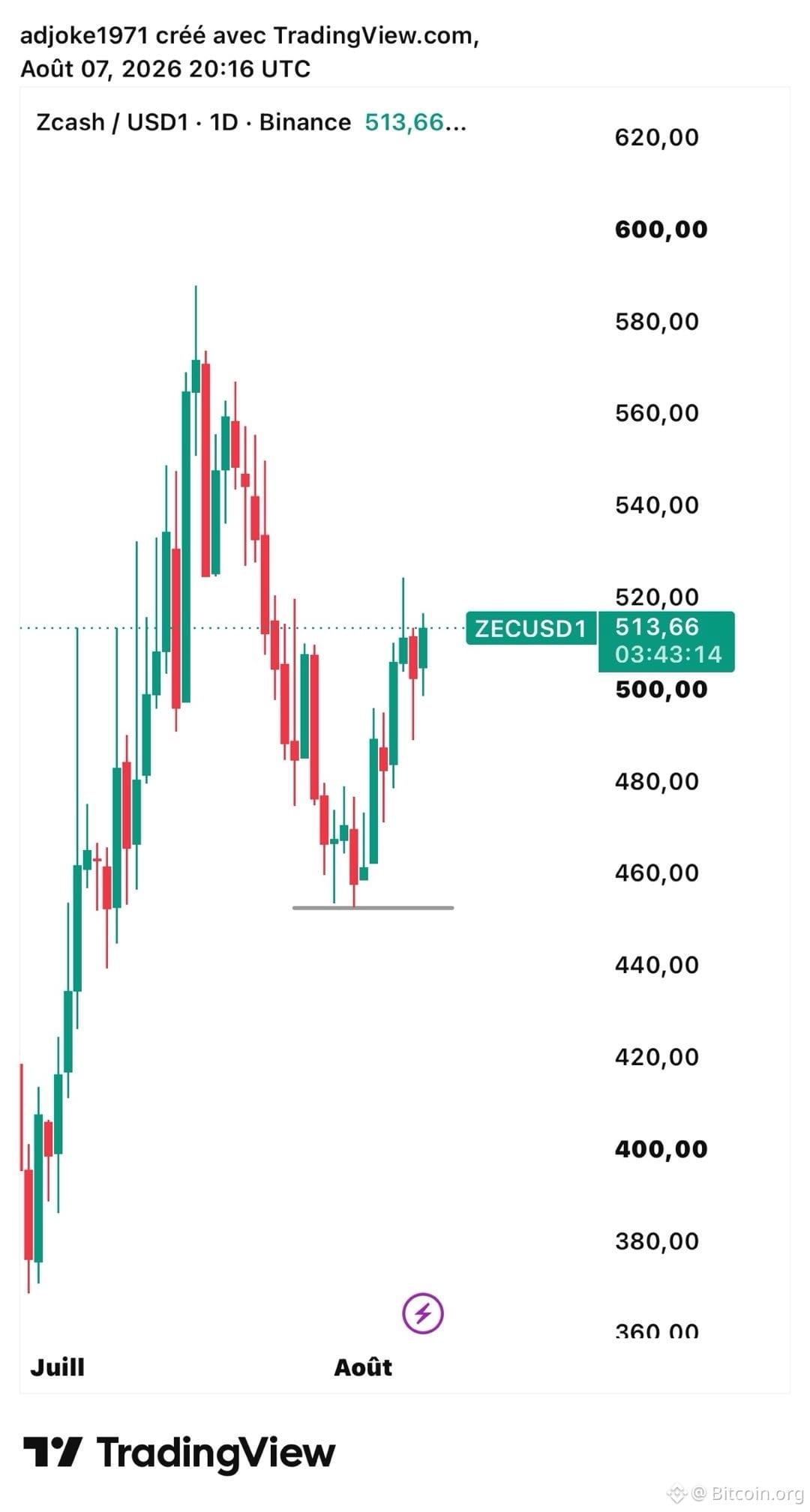
$ZEC has quietly been one of the strongest performers of this bear market.
I have to admit, I was genuinely surprised. At times, it almost feels like it’s already running its own pre-bull market. Like it’s front-running the next cycle. 😄
From a technical perspective, the weekly structure has remained remarkably strong over the past few weeks and appears to be building for another leg higher.
The daily chart, however, has not confirmed the move yet. A structural trend reversal on the daily timeframe is still needed structurally before the bullish thesis gains stronger confirmation.
For now, the higher-timeframe momentum remains constructive.
Definitely a chart worth keeping on your watchlist.
#Altcoin Season#
I have to admit, I was genuinely surprised. At times, it almost feels like it’s already running its own pre-bull market. Like it’s front-running the next cycle. 😄
From a technical perspective, the weekly structure has remained remarkably strong over the past few weeks and appears to be building for another leg higher.
The daily chart, however, has not confirmed the move yet. A structural trend reversal on the daily timeframe is still needed structurally before the bullish thesis gains stronger confirmation.
For now, the higher-timeframe momentum remains constructive.
Definitely a chart worth keeping on your watchlist.
#Altcoin Season#
The point that intrigues me the most isn’t even the applications themselves, because they’ve already been externally audited and will certainly also be audited internally. So, the use of AI in audits will become much more frequent, or even the minimum norm at least. But the real question is: what will audit firms become? Because if AI is capable of a high level of intelligence and robotic efficiency—doing all this work—then what will coding audit firms be like?
First, this reminds us that “Not your keys, not your coins” is not an exclusively security rule. It’s rather primarily a sovereignty principle.
Security is relative. It depends on the individual, their setup, and their ability to manage risk.
Even without the issue that reportedly made some seed phrases predictable, they’re still fragile by design. You don’t want someone else getting access to them. You don’t want to lose them without having a backup. And you certainly don’t want an attacker to obtain them.
This is why Vitalik Buterin has argued for more programmable wallets.
Features like social recovery, where trusted contacts can help recover access, or daily spending limits, which prevent an attacker from draining an entire wallet in a single transaction, are examples of improvements that could make self-custody much more resilient.
There are many other proposals it, and I hope this episode will accelerate the conversations.
Security is relative. It depends on the individual, their setup, and their ability to manage risk.
Even without the issue that reportedly made some seed phrases predictable, they’re still fragile by design. You don’t want someone else getting access to them. You don’t want to lose them without having a backup. And you certainly don’t want an attacker to obtain them.
This is why Vitalik Buterin has argued for more programmable wallets.
Features like social recovery, where trusted contacts can help recover access, or daily spending limits, which prevent an attacker from draining an entire wallet in a single transaction, are examples of improvements that could make self-custody much more resilient.
There are many other proposals it, and I hope this episode will accelerate the conversations.
$AKE
Even after all the discussions we’ve had over the past few days, I still received comment explaining why $AKE is supposedly well positioned to capture the GTA narrative and why the current rally is “legitimate.”
My take is different.
I think one of the reasons these tokens keep going through repeated pump-and-dump cycles is simple: there is still enough capital willing to buy the narrative.
Too many people are still anchored to the story projects are selling. Personally, I prefer to start with market structure.
Forget the pitch for a moment. Look at the on-chain data.
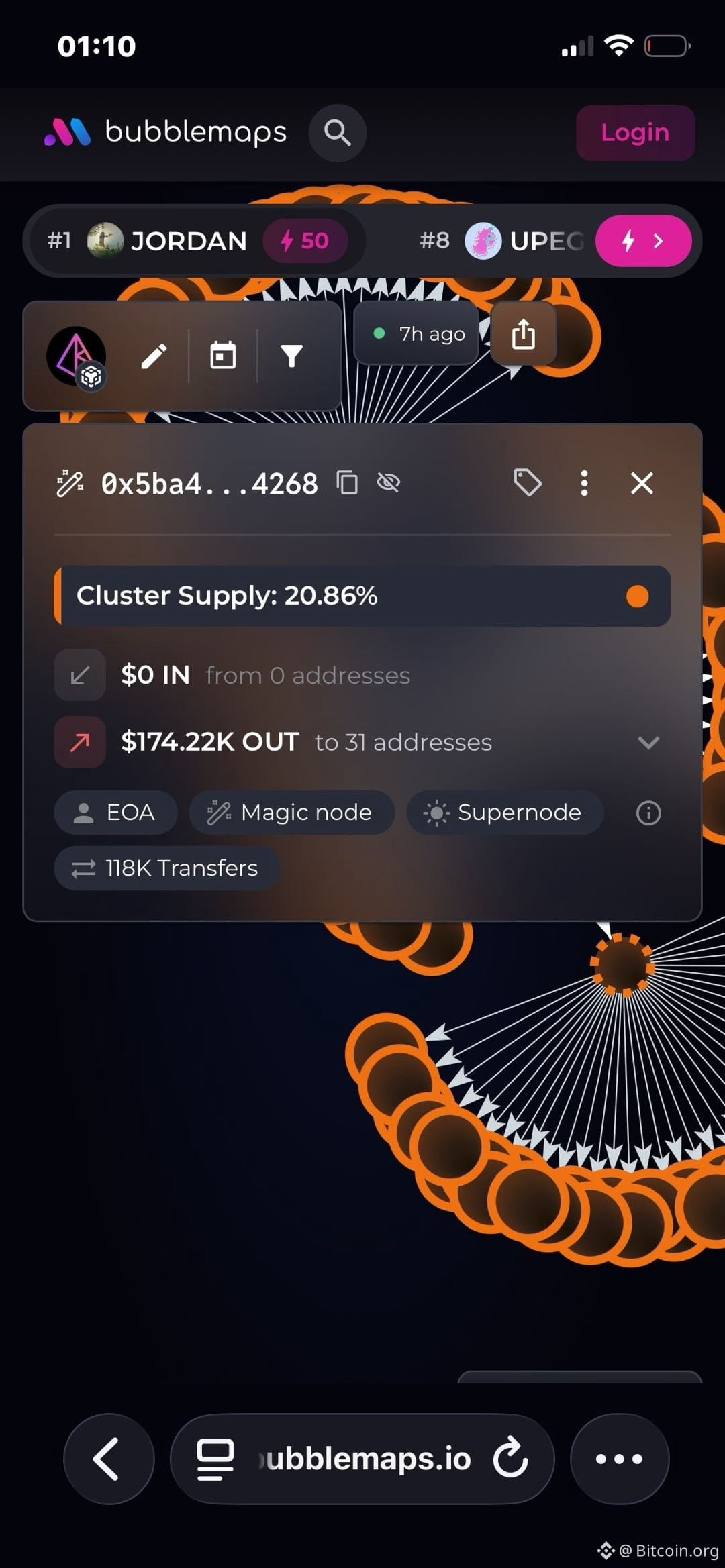
According to the BubbleMaps data attached, more than 40% of the circulating supply is clustered around just two entities (possibly even one, depending on the relationships between the wallets).
At the same time, you have a token that has appreciated more than 3,000% with no obvious fundamental catalyst.
Does that automatically make the move illegitimate? Not necessarily.
But that’s not even the question I’m asking.
The real question is risk.
When such a large portion of the supply is concentrated, the downside risk becomes asymmetric. If those dominant holders decide to distribute, the price can reverse extremely quickly. Conversely, as long as they retain control and liquidity remains available, sustaining the rally becomes considerably easier.
In the end, you’re free to trust the narrative-or to trust the market structure. My preference is to analyze both before taking the risk.
#Altcoin Season# #Meme Alpha# #BNBChain#
Even after all the discussions we’ve had over the past few days, I still received comment explaining why $AKE is supposedly well positioned to capture the GTA narrative and why the current rally is “legitimate.”
My take is different.
I think one of the reasons these tokens keep going through repeated pump-and-dump cycles is simple: there is still enough capital willing to buy the narrative.
Too many people are still anchored to the story projects are selling. Personally, I prefer to start with market structure.
Forget the pitch for a moment. Look at the on-chain data.
According to the BubbleMaps data attached, more than 40% of the circulating supply is clustered around just two entities (possibly even one, depending on the relationships between the wallets).
At the same time, you have a token that has appreciated more than 3,000% with no obvious fundamental catalyst.
Does that automatically make the move illegitimate? Not necessarily.
But that’s not even the question I’m asking.
The real question is risk.
When such a large portion of the supply is concentrated, the downside risk becomes asymmetric. If those dominant holders decide to distribute, the price can reverse extremely quickly. Conversely, as long as they retain control and liquidity remains available, sustaining the rally becomes considerably easier.
In the end, you’re free to trust the narrative-or to trust the market structure. My preference is to analyze both before taking the risk.
#Altcoin Season# #Meme Alpha# #BNBChain#

Have you been following what’s happening in the Middle East?
I sincerely hope it doesn’t escalate into a broader regional conflict.
A U.S. tanker was reportedly attacked by a drone near Egypt. On its own, that may not seem exceptional given the current geopolitical environment. But what caught my attention is where it happened.
Egypt has largely stayed out of the conflict. Yet it controls the Suez Canal, one of the last major export routes available to Gulf producers after disruptions around the Strait of Hormuz and security risks near the Bab el-Mandeb.
For several Gulf exporters, rerouting through Suez is already significantly more expensive than their traditional routes. Some countries also remain heavily dependent on Hormuz due to limited alternative export infrastructure.
If risks around Suez were to increase as well, the market would have to reassess the resilience of global oil supply chains.
I remember someone here suggesting that I should go long oil ($CL) because of the geopolitical setup. At the time, I wasn’t convinced.
Given the latest developments, I think that scenario has become much more credible.
Let’s see how the market prices the geopolitical risk over the coming days.
$BTC $CL
#BTC Price Analysis# #Macro Insights# #
I sincerely hope it doesn’t escalate into a broader regional conflict.
A U.S. tanker was reportedly attacked by a drone near Egypt. On its own, that may not seem exceptional given the current geopolitical environment. But what caught my attention is where it happened.
Egypt has largely stayed out of the conflict. Yet it controls the Suez Canal, one of the last major export routes available to Gulf producers after disruptions around the Strait of Hormuz and security risks near the Bab el-Mandeb.
For several Gulf exporters, rerouting through Suez is already significantly more expensive than their traditional routes. Some countries also remain heavily dependent on Hormuz due to limited alternative export infrastructure.
If risks around Suez were to increase as well, the market would have to reassess the resilience of global oil supply chains.
I remember someone here suggesting that I should go long oil ($CL) because of the geopolitical setup. At the time, I wasn’t convinced.
Given the latest developments, I think that scenario has become much more credible.
Let’s see how the market prices the geopolitical risk over the coming days.
$BTC $CL
#BTC Price Analysis# #Macro Insights# #
So it’s starting again?
$GIGGLE is up more than 50%, and suddenly the narrative is: “Go all in, it’s CZ’s project. It’s going to do what BNB did.”
if you decide to buy based on that assumption, you’re responsible for your own decision.
As of today, $GIGGLE is a community-launched memecoin. It is not an official CZ project, nor an official Giggle Academy token. The only connection is that the trading fees is directed to the public donation wallet associated with the Giggle Academy initiative.
The recent rally appears to have been driven largely by speculation following CZ’s statement:
“I support all meme coins. I might even buy (or sell) one or two in the next few weeks to test a few new things. May the best memes win!”
Since then, the market has started trying to price in which memecoins CZ could potentially buy, and $GIGGLE has become one of those speculative candidates.
Whether that speculation is justified is another question entirely. Manage your risks btw !
#Meme Alpha# #BNB Chain#
$GIGGLE is up more than 50%, and suddenly the narrative is: “Go all in, it’s CZ’s project. It’s going to do what BNB did.”
if you decide to buy based on that assumption, you’re responsible for your own decision.
As of today, $GIGGLE is a community-launched memecoin. It is not an official CZ project, nor an official Giggle Academy token. The only connection is that the trading fees is directed to the public donation wallet associated with the Giggle Academy initiative.
The recent rally appears to have been driven largely by speculation following CZ’s statement:
“I support all meme coins. I might even buy (or sell) one or two in the next few weeks to test a few new things. May the best memes win!”
Since then, the market has started trying to price in which memecoins CZ could potentially buy, and $GIGGLE has become one of those speculative candidates.
Whether that speculation is justified is another question entirely. Manage your risks btw !
#Meme Alpha# #BNB Chain#
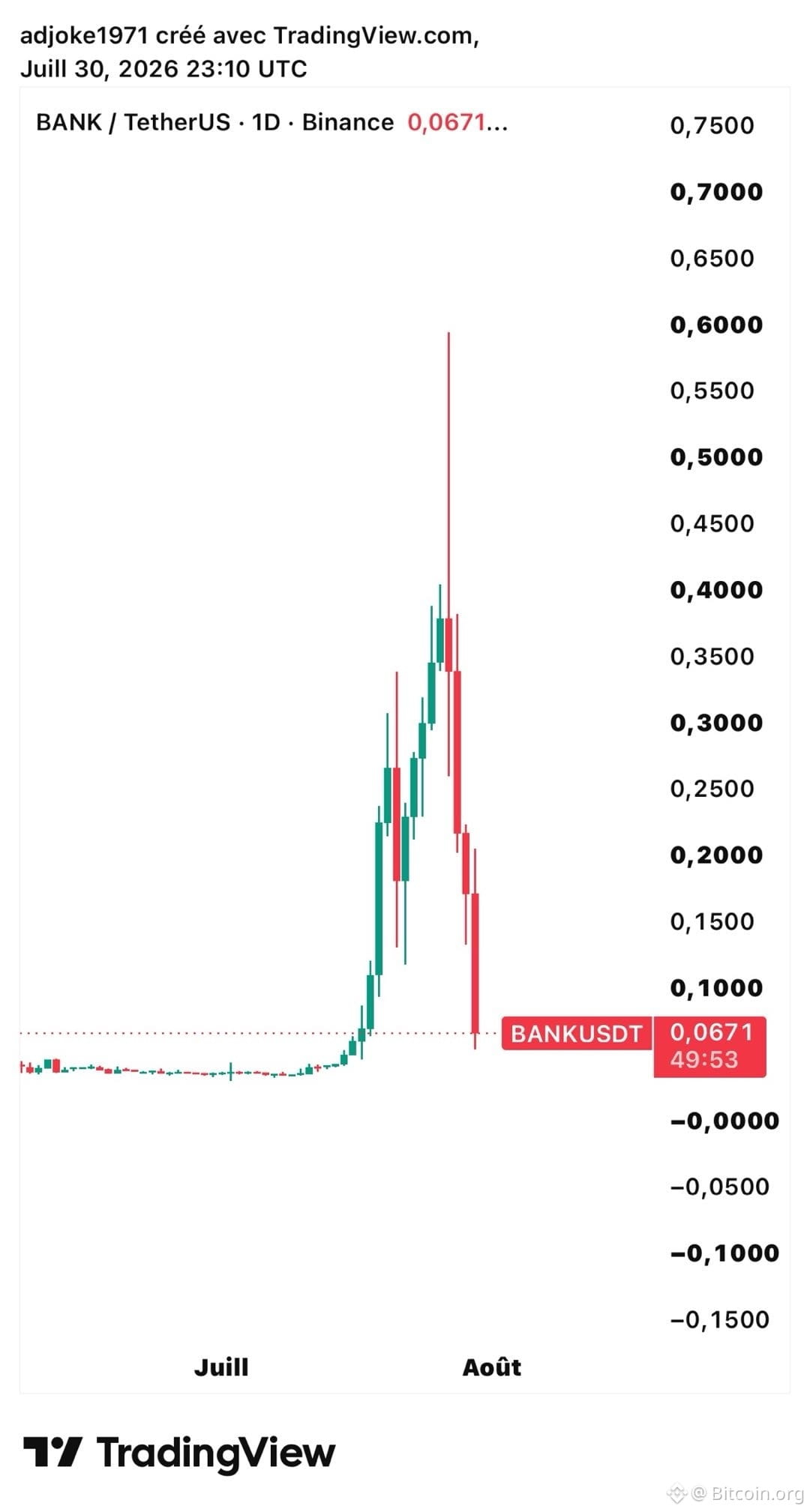
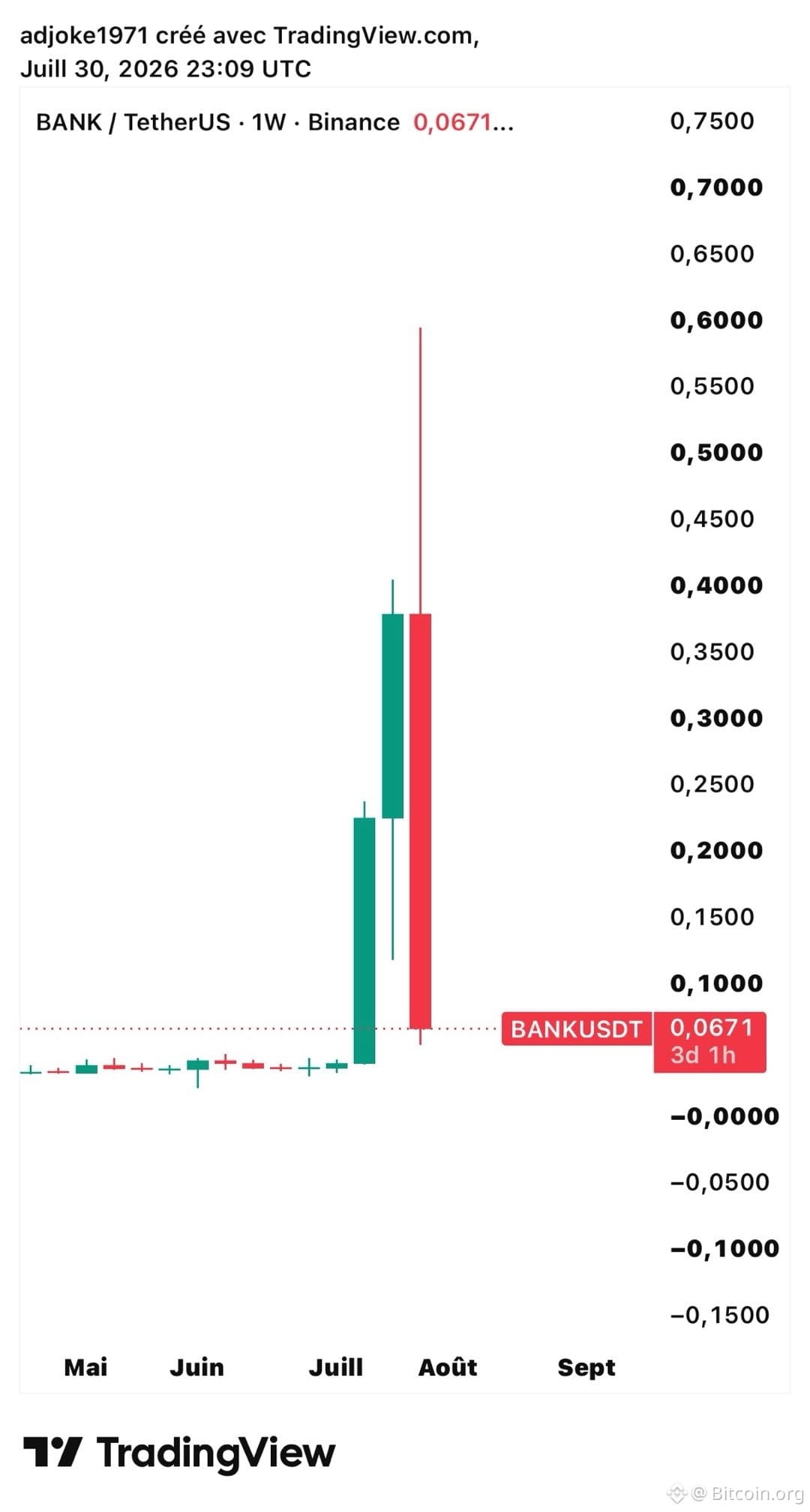
$BANK
What did I tell you? It’s now confirmed.
I had that feeling from the beginning, and I knew it was likely to follow the same path as its predecessor, $DEXE .
Wondering why I didn’t short it even though I expected it to collapse? Here’s the answer.
Knowing a token is likely to collapse isn’t enough.
The more control dominant holders have over the circulating supply, the more patient they can afford to be. If too many traders start anticipating the dump, don’t be surprised to see another push higher first. That’s exactly why I said it could pump again before the real move down.
The objective isn’t simply to find exit liquidity. It’s to extract as much value as possible from both sides of the market.
That’s why predicting the final direction isn’t the hard part. Understanding the scheme and anticipating the behavior of the dominant players is.
A classic game theory setup.
And thanks, $BANK, for giving the community another real-world case study.
#Altcoin Season# #Meme Alpha# #BNBChain#
What did I tell you? It’s now confirmed.
I had that feeling from the beginning, and I knew it was likely to follow the same path as its predecessor, $DEXE .
Wondering why I didn’t short it even though I expected it to collapse? Here’s the answer.
Knowing a token is likely to collapse isn’t enough.
The more control dominant holders have over the circulating supply, the more patient they can afford to be. If too many traders start anticipating the dump, don’t be surprised to see another push higher first. That’s exactly why I said it could pump again before the real move down.
The objective isn’t simply to find exit liquidity. It’s to extract as much value as possible from both sides of the market.
That’s why predicting the final direction isn’t the hard part. Understanding the scheme and anticipating the behavior of the dominant players is.
A classic game theory setup.
And thanks, $BANK, for giving the community another real-world case study.
#Altcoin Season# #Meme Alpha# #BNBChain#
Log in to explore more content