


Web3 has made one thing very clear over the years: transparency alone is not enough to build real financial systems. While public blockchains have proven that value can move without intermediaries, they have also exposed a critical weakness — everything is visible to everyone. For speculation, this may be acceptable. For real markets, it is not.
Financial systems depend on confidentiality. Trades, balances, counterparties, and settlement details are rarely public in traditional finance. This is not about hiding wrongdoing; it is about protecting market participants and maintaining fair execution. Dusk exists because Web3 needs this same financial logic if it wants to move beyond experimentation and into real-world adoption.
The Problem With Fully Public Blockchains
On most blockchains, every transaction reveals who sent funds, how much was sent, and where it went. Smart contract logic is visible, execution paths are traceable, and trading strategies can be copied in real time. This creates serious issues.
Traders are exposed to front-running and MEV. Institutions cannot deploy capital without revealing positions. Tokenized assets leak sensitive ownership data. Even simple financial operations become risky when competitors and bots can observe everything.
These limitations are not bugs — they are consequences of blockchains that were never designed for regulated or institutional use. Dusk approaches this problem differently by asking a simple question: what if privacy was a core feature, not an afterthought?
Privacy as Control, Not Obscurity
Dusk does not promote privacy as secrecy or anonymity for its own sake. Instead, privacy on Dusk is about control. Users decide what data remains confidential and what can be disclosed when required.
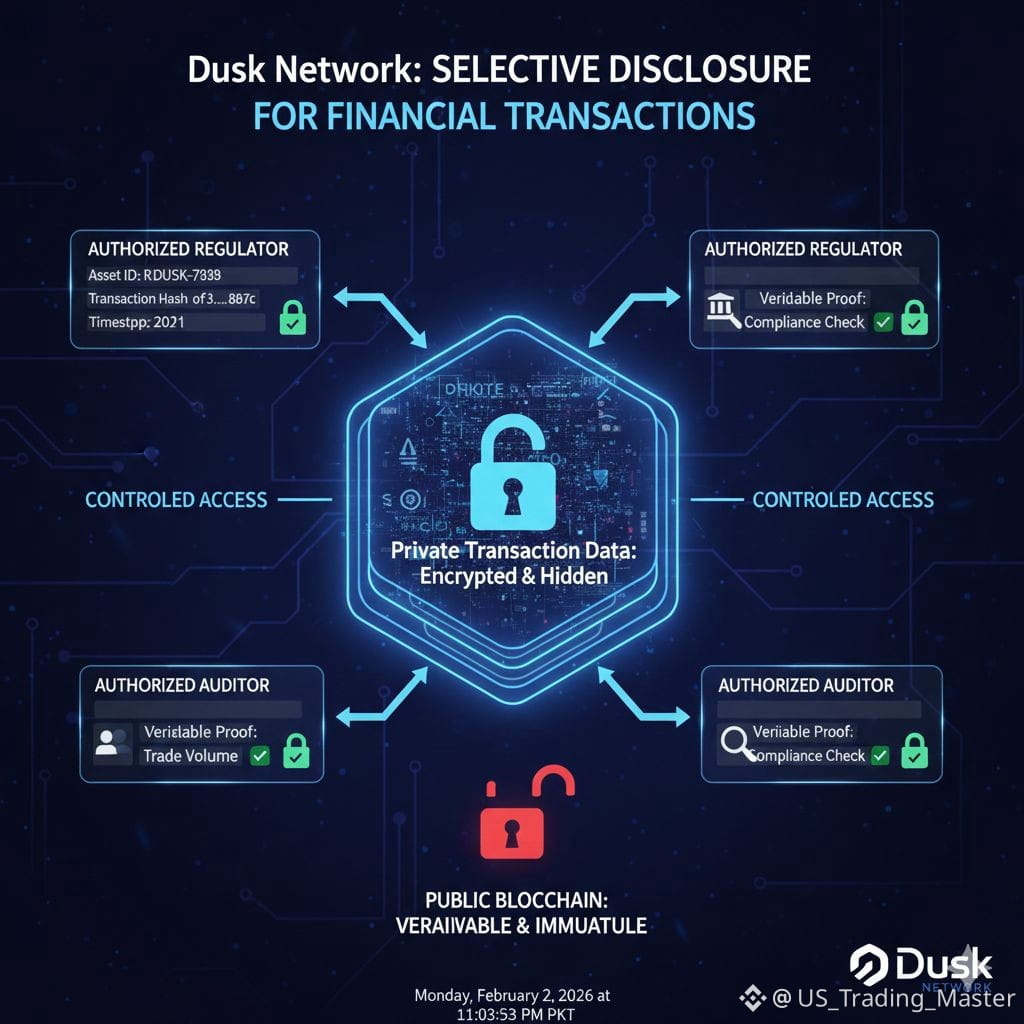
This concept is critical for financial applications. Markets need confidentiality during execution but accountability during audits. Dusk’s architecture supports this through confidential transactions and private smart contracts that still produce cryptographic proofs.
This means assets can move on-chain without exposing sensitive details, while regulators, auditors, or counterparties can verify compliance when necessary. It is not about avoiding oversight — it is about enforcing it correctly.
Selective Disclosure Changes Everything
Selective disclosure is one of Dusk’s most important innovations. Rather than choosing between full transparency or full secrecy, Dusk allows projects to operate privately by default and reveal information conditionally.
For example, a tokenized bond can trade confidentially between participants. Ownership records, transaction sizes, and settlement data remain private. If regulators need proof of compliance, cryptographic disclosures can be generated without exposing the entire transaction history.
This model mirrors how traditional finance actually works. Data is protected during normal operation and revealed only to authorized parties. By bringing this logic on-chain, Dusk makes Web3 usable for real financial products.
Built for Tokenized Real-World Assets
Tokenizing real-world assets is often discussed, but rarely implemented correctly. Putting assets on-chain without privacy creates more problems than it solves. Real estate shares, private equity, bonds, and invoices all carry sensitive information.
Dusk enables these assets to exist on-chain without compromising confidentiality. Ownership structures remain private. Transfers do not leak valuation data. Compliance checks can still be enforced through zero-knowledge proofs.
This allows RWAs to scale globally without forcing institutions to abandon their existing risk and compliance frameworks. Instead of bending finance to fit blockchain limitations, Dusk adapts blockchain to fit finance.
Private Smart Contracts for Real Markets
Public smart contracts work well for simple DeFi primitives, but they break down in complex financial environments. When logic is public, strategies can be exploited, contracts can be gamed, and execution becomes predictable.
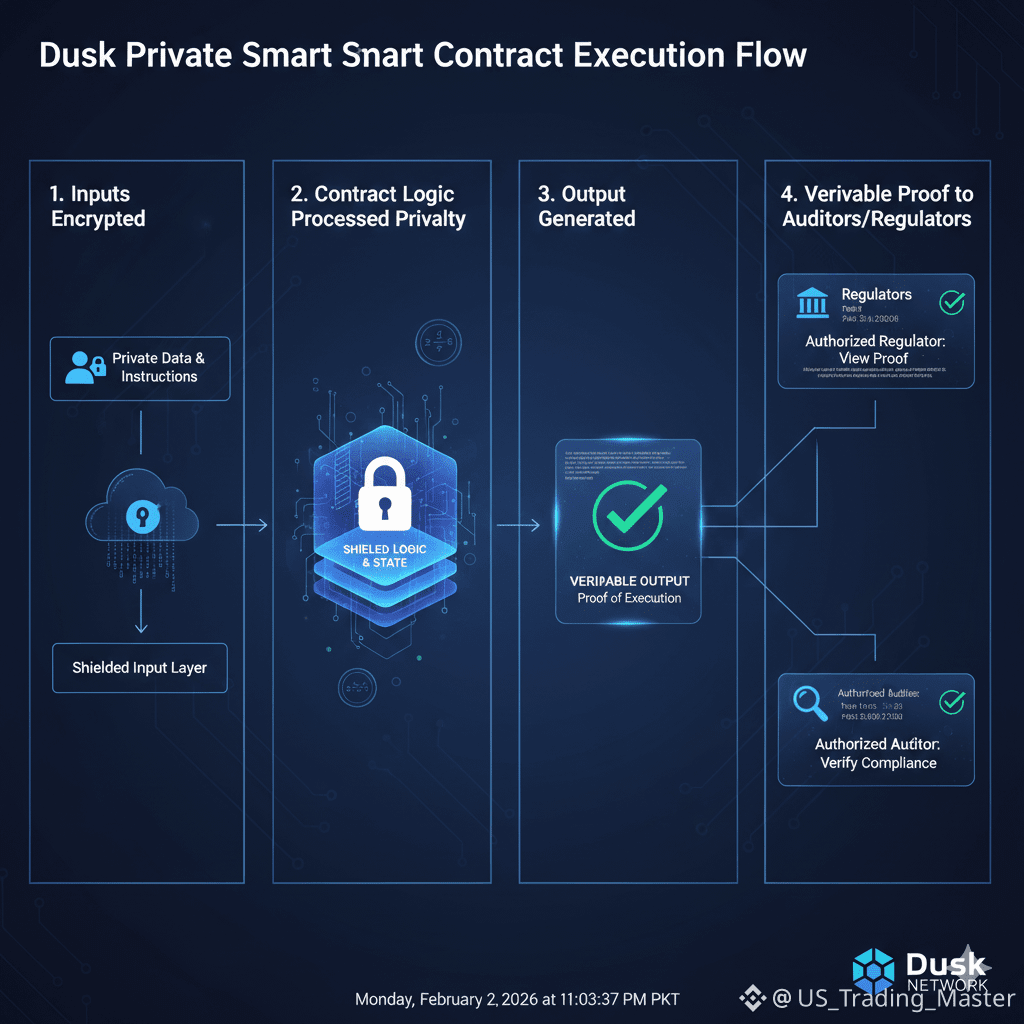
Dusk introduces private smart contracts that execute confidentially. Business logic, conditions, and outcomes are hidden from the public while remaining verifiable. This enables new classes of applications such as private lending, confidential auctions, regulated exchanges, and institutional DeFi.
Builders are no longer forced to choose between decentralization and confidentiality. Dusk allows both.
Complementing, Not Competing
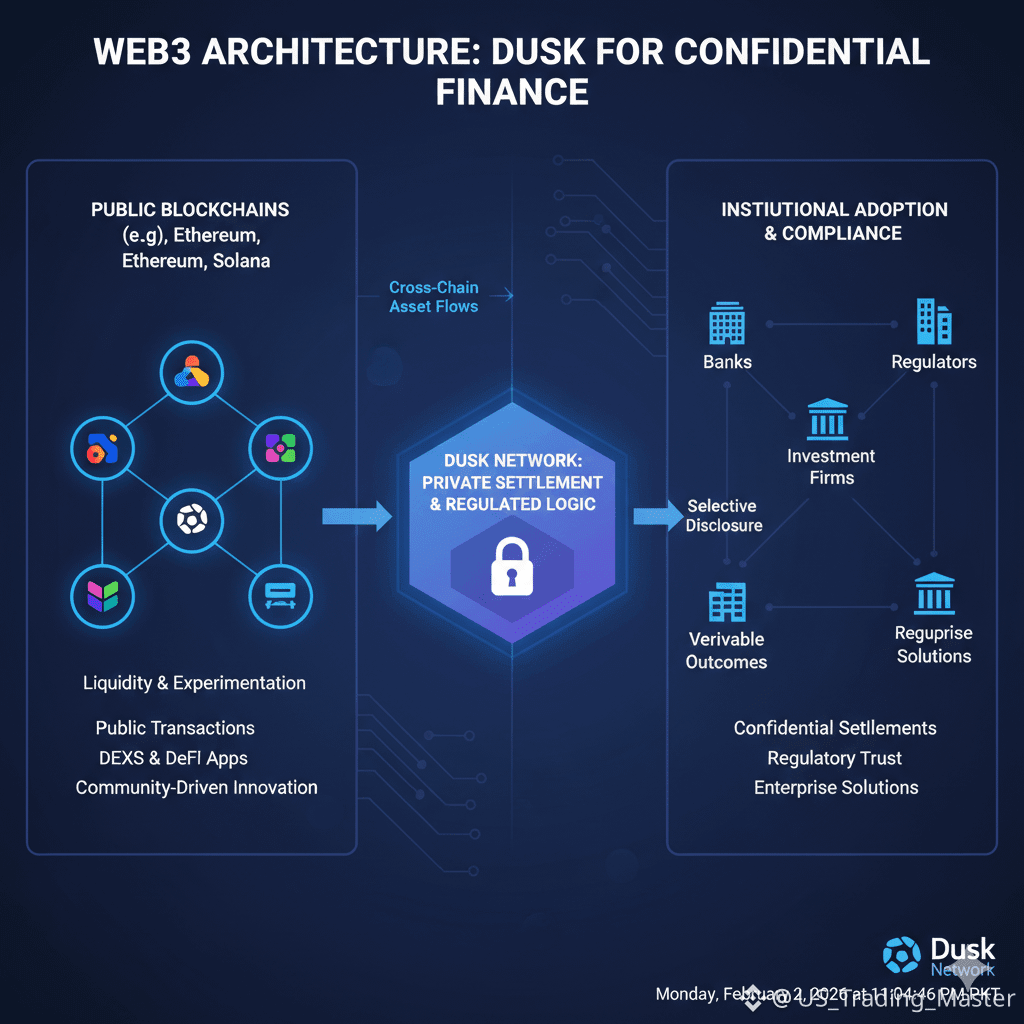
Dusk is not trying to replace existing Layer 1s. Instead, it complements the broader ecosystem by focusing on what others ignore. Public chains handle open liquidity and permissionless experimentation well. Dusk handles private settlement and regulated financial logic.
This makes Dusk a strong candidate for interoperability-driven futures, where assets originate on one chain and settle confidentially on another. As Web3 matures, specialization becomes a strength — and Dusk is positioned exactly where demand is growing.
Why Long-Term Adoption Favors Dusk
Short-term narratives in crypto often reward visibility, hype, and rapid experimentation. Long-term adoption rewards stability, compliance, and usability. Institutions, governments, and serious financial players will not deploy capital on infrastructure that exposes everything.
Dusk’s design choices reflect this reality. It is built for longevity, not speculation. Its technology aligns with how markets actually function, not how crypto narratives trend.
As regulation increases and tokenization accelerates, networks that understand confidentiality will matter more than those that ignore it. Dusk is not loud, but it is deliberate — and that may be its greatest advantage.
Final Thought
Web3 does not fail because it lacks transparency. It fails when it cannot protect sensitive financial logic. Dusk addresses this gap directly by building privacy, compliance, and verifiability into the base layer.
That is why Dusk is not just another blockchain — it is infrastructure for markets that actually intend to last.
