

Disclaimer: This article is for informational purposes only and does not constitute financial advice. Cryptocurrency investments carry high risk, and readers should do their own research before making any investment decisions.
Latest Market Performance
As of January 17, 2026, Dusk (DUSK) has shown strong momentum with a 30.45% 24-hour gain and a 95.58% surge over the past week, trading at approximately €0.0976 (around $0.104 at current exchange rates) with a 24-hour trading volume of €81.21 million. On Binance, the token was priced at $0.065085 as of January 16, with a 30-day increase of 60.45% and a 90-day gain of 32.43%. Technical analysis from January 16 highlights a broadening wedge pattern on the 4-hour chart, with the token reclaiming its 100-period moving average and potentially targeting $0.0725 if it breaks above resistance.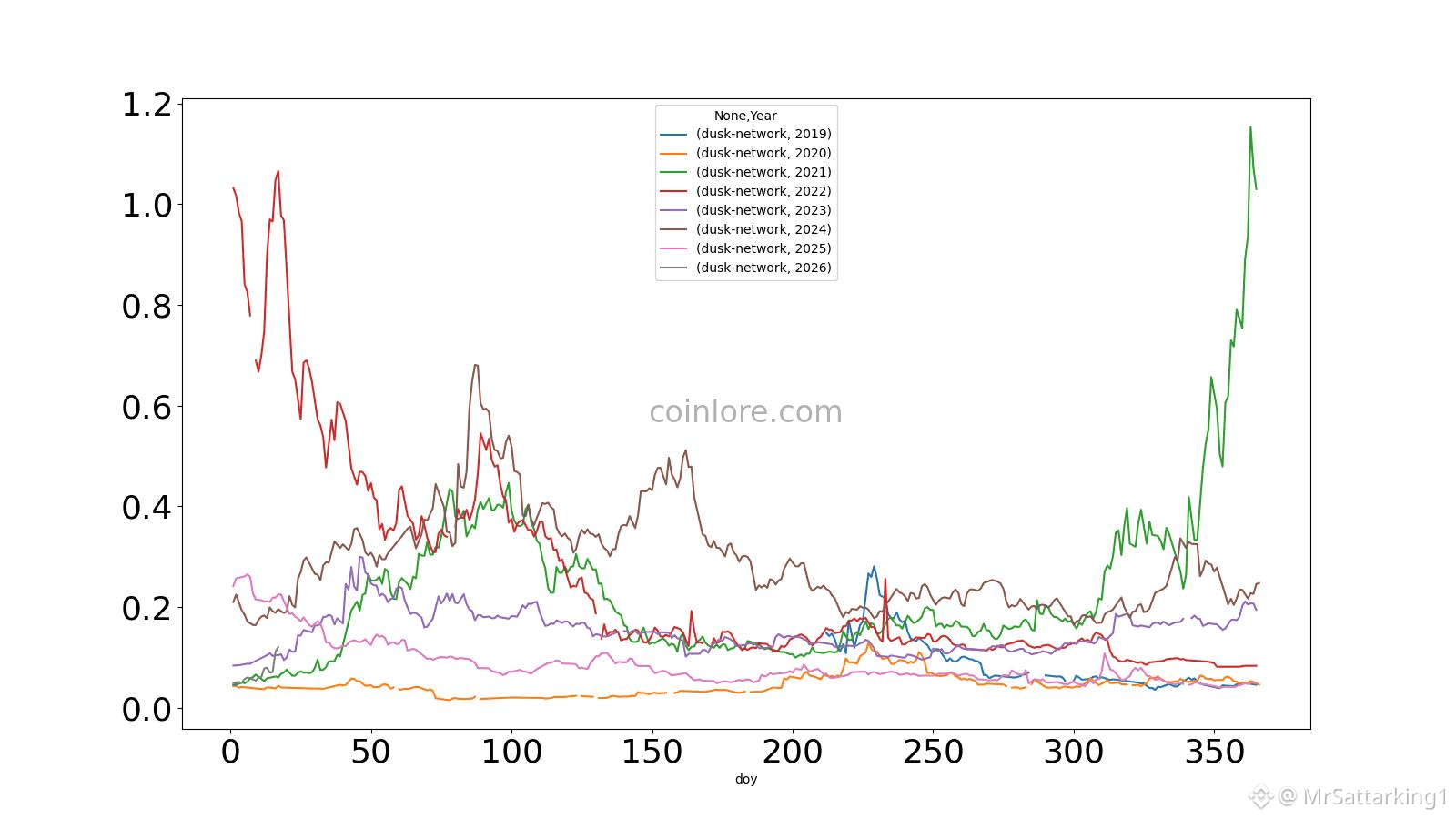
Key Technological Developments
In June 2025, Dusk introduced Hedger, a privacy engine built for its DuskEVM execution layer. Unlike previous solutions designed for UTXO-based layers, Hedger combines homomorphic encryption and zero-knowledge proofs to enable confidential yet compliant transactions for EVM-compatible applications. It supports obfuscated order books, regulated auditability, and fast in-browser proving (under 2 seconds), making it suitable for institutional trading and real-world asset (RWA) tokenization.
The modular DuskEVM, initially planned for late 2025, aims to attract DeFi developers by offering full EVM compatibility. While technical delays related to Proto-Danksy Harding integration were noted in May 2025, the shift from proprietary technology to EVM is expected to boost accessibility and liquidity. Additionally, bridging capabilities between ERC20 tokens and Dusk are in development for the web wallet, further enhancing interoperability.
Regulatory & Strategic Progress
Dusk’s integration with NPEX’s Multilateral Trading Facility (MTF) and broker licenses enables regulated trading of tokenized securities. The project is also pursuing a DLT-TS license in the EU, which would allow the issuance of native assets under the MiCA framework—critical for positioning Dusk as a leading compliant RWA platform in Europe. Though regulatory hurdles (such as meeting DORA requirements) have posed challenges, successful approval could unlock significant institutional adoption.
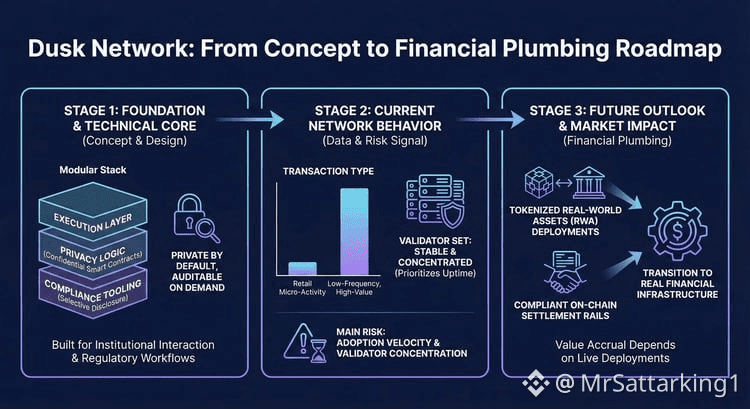
Strategic partnerships include collaborations with European DLT exchange 21X and QuantozPay, a MiCA-compliant digital euro initiative. In Q1 2025, Dusk launched Dusk Pay, a regulated payment network for businesses using stablecoins, and Hyperstaking to enhance network security and participation.
Use Cases for Regulated Finance
Dusk’s core focus remains on enabling institutional-grade financial applications, compliant DeFi, and tokenized RWAs. Its offerings include confidential smart contracts, the XSC standard for privacy-enabled security tokens, digital share registries, and on-chain proxy voting—all designed to balance privacy with regulatory auditability. These features make it well-suited for traditional financial institutions looking to leverage blockchain technology while adhering to global compliance standards.@Dusk
Would you like to learn more about how to trade DUSK on Binance or explore specific use cases like tokenized real-world assets on the Dusk network?
