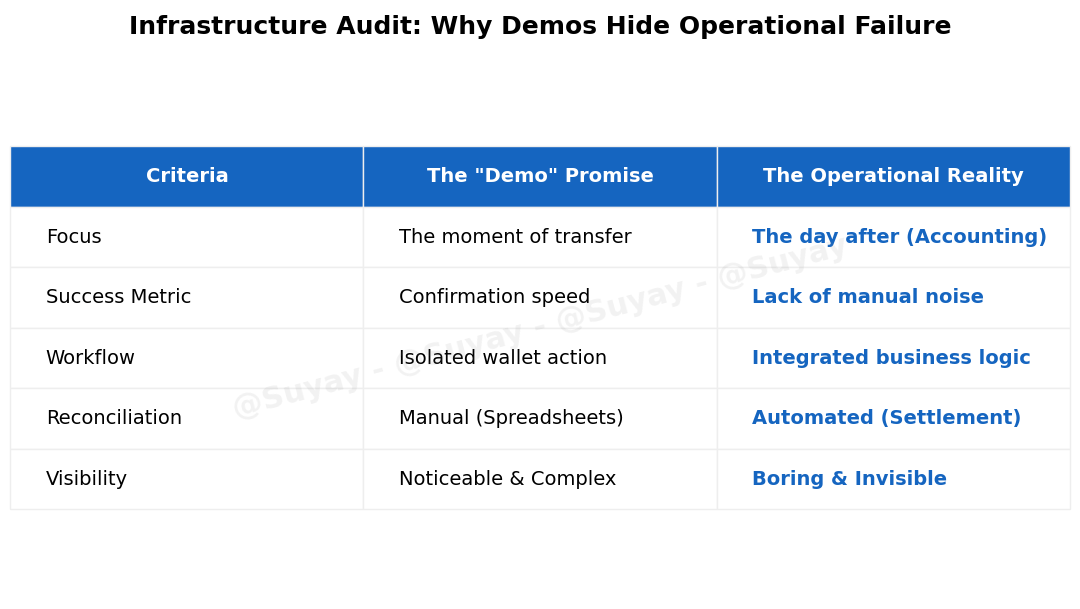
Most payment systems look reliable when you watch the transaction happen.
A confirmation appears.
Balances update.
The dashboard shows success.
Everything seems to work.
But real businesses do not measure payments by what happens on the screen.
They measure them by what happens the next morning, inside accounting.
Because that is where the real work begins.
Where finance teams start to feel the friction
After a payment is “successful”, someone still has to:
Match it to an invoice.
Verify the reference.
Update reports.
Check that balances align.
Confirm nothing needs manual correction.
If any of these steps require investigation, the problem is not the payment.
The problem is the system behind it.
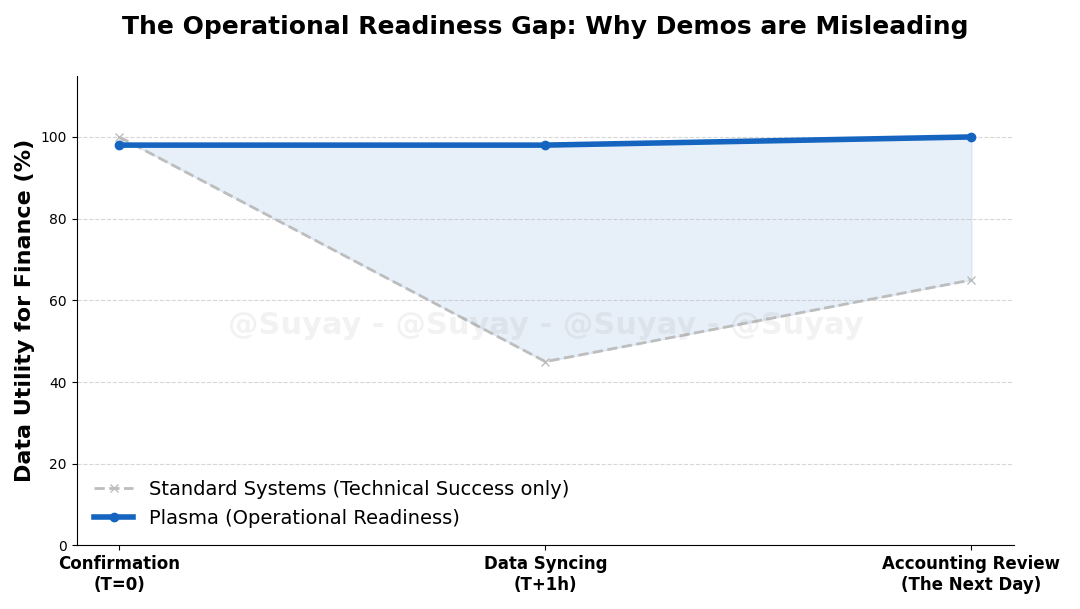
Payments rarely fail in obvious ways.
They fail quietly, inside spreadsheets.
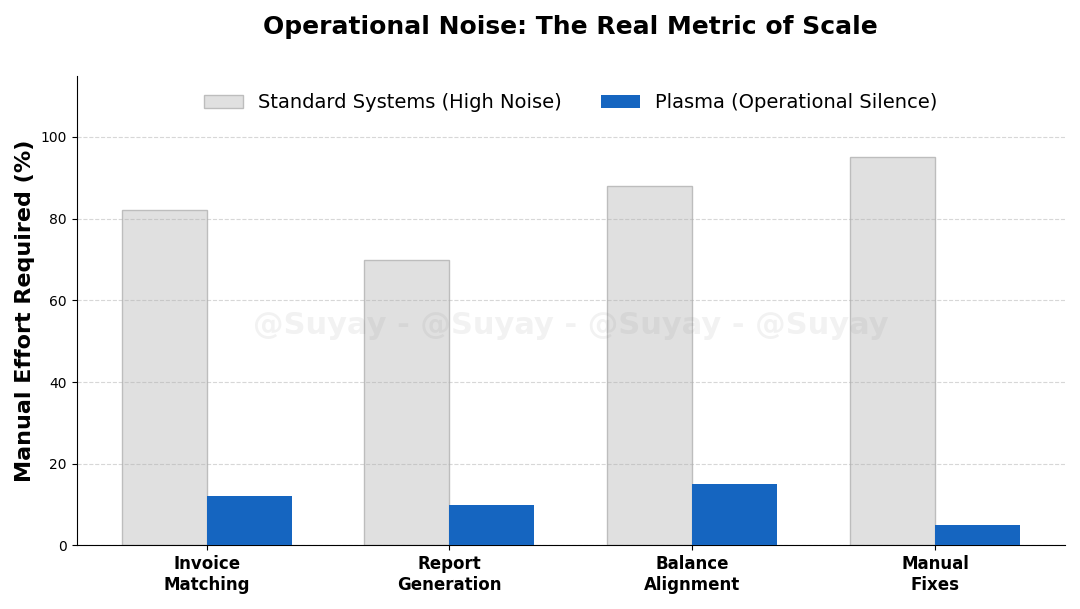
Operational noise is the real signal
Finance teams do not ask how fast money moves.
They ask:
How often do we need to double-check this?
Why doesn’t this match automatically?
Why do we have to fix this manually?
Reliability is not measured in seconds.
It is measured in how little noise a payment creates after it happens.
Why demos never show this
Demos end at confirmation.
Businesses start there.
Demos do not show approval flows.
They do not show payroll timing.
They do not show reporting cycles.
They do not show reconciliation.
But that is where payments actually live.
And if a payment system creates extra steps there, it is not usable at scale.
When payments stop creating extra work
This is where a different design philosophy becomes visible.
Some systems are built to make transactions look impressive.
Others are built to make payments disappear into existing workflows.
When payments integrate naturally into accounting tools, reporting software, payroll systems, and approval processes, they stop feeling like separate events.
They start feeling like part of the business itself.
Why Plasma is designed for this exact moment
Plasma approaches stablecoin payments from this operational perspective.
Instead of focusing on the transaction, it focuses on what happens after.
By removing the variables that usually create reconciliation effort, Plasma allows payments to fit directly into real financial workflows without creating downstream noise.
The goal is not to make payments noticeable.
It is to make them boring.
Because boring payments are the ones finance teams trust.
When a payment system becomes invisible
The most successful payment systems are not the ones people talk about.
They are the ones nobody notices.
Not because they are simple, but because they do not interfere with how businesses already operate.
This is where many payment rails fail.
And this is precisely where Plasma is built to work.