

Many cryptocurrency mining applications similar to Pi Network are being introduced again on Facebook and Telegram accounts in Vietnam.
Starting a business with 0 dong from Peace Network. Having an opportunity like Pi Network, why not try it?," an account named Ngoc Van posted on a Facebook group about blockchain with more than 100,000 members, with instructions to download an app with pronunciation like Pi Network. He also spammed comments on many other groups with similar content.
Ngoc Van said in the past month, he has "recruited" about 100 members to "mine" virtual currency.
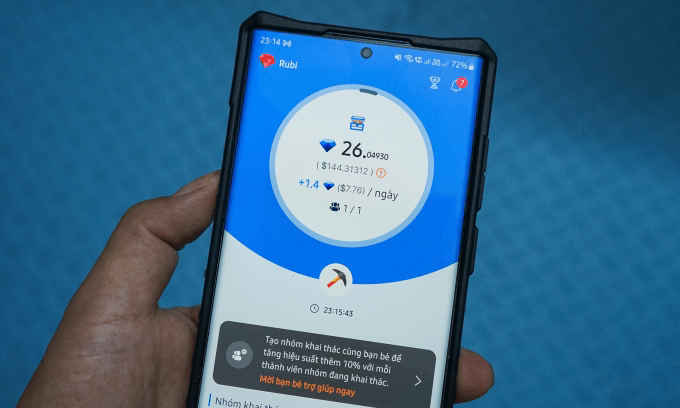
Not only Peace Network, he also installed a series of similar applications such as Rubi, StarCoin, LGBT Network, and BNP Network
As long as one or two of the projects go public, I can make some money. Otherwise, I have nothing to lose but a little time to spend every day," he added.
Cryptocurrency mining applications have appeared, disappeared and reappeared.
According to the administrator of a blockchain group with 200,000 members on Facebook, the number of spam posts about cryptocurrency mining applications has increased day by day over the past few months, and they have had to use filters to block similar content.
"Every day, dozens of such posts are submitted but not approved," the administrator said. Compared to the craze two years ago, the applications are now more diverse, showing the expected amount of money earned if cryptocurrency mining projects are listed on digital currency exchanges in the future, assigning more tasks for users besides taking attendance.
Some apps even have white papers and development roadmaps. The apps support web, iOS and Android operating systems.
However, apps are basically the same way the Pi Network works. Users need to download the apps, then register, enter the referral code and "take attendance" every 24 hours.
The Rubi app was released in May and now has over 100,000 downloads, a white paper but a vague development roadmap.
"New apps are made professionally and methodically, not as simple as before, making more people trust them," commented Giang Nam, a cryptocurrency player for more than five years.
"With the mentality of losing nothing and fear of missing out, hundreds of thousands of people still install the apps and take attendance every day," Giang Nam said.
Among 10 such apps, most of which have between 10,000 and hundreds of thousands of downloads.
When installing, apps require providing a lot of important information, such as accessing location, reading and modifying the contents of memory, reading contacts, and accessing the network.
Previously, apps needed only users’ names and email addresses or phone numbers.
Currently, users are required to complete KYC (identity verification) from the beginning, including providing personal information, a photo of ID cards or passports, a selfie portrait, in addition to a phone number and an email address.