


Each bull-bear cycle will have corresponding risk events as the prologue and curtain. For example, the "94" in 2017 and the "519" in 2021 were both market events caused by policies, and the trend after the policy events is often the last round of the bull market.
The start of each bull market is accompanied by the reshuffle and reorganization of the previous cycle. For example, the collapse of Luna, FTX and Three Arrows Capital were all market leaders in the previous bull market. Only when the market is fully reshuffled, fluctuated and fell, will the real new forces enter the market and start a new cycle.
2023 is the starting point of a new cycle, but it is by no means a big bull market cycle. In addition to the Bitcoin halving, a new bull market cycle also requires a core factor - marginal benefits from the macro environment, and our current environment is:
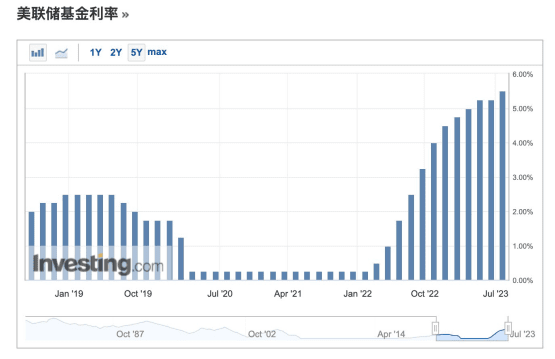
1. The Federal Reserve continues to raise interest rates, and the continued high interest rate level has led to a decrease in liquidity in the entire financial market.
2. The inverted long-term and short-term interest rates of US Treasury bonds have strengthened expectations of further economic recession in the future. At the same time, it may cause systemic risks to some banks. For example, in the SVB incident, some commercial banks borrowed short and bought long. Due to the inverted interest rate, commercial banks suffered losses, which caused bad expectations for users and led to bank runs.
3. SEC’s attitude towards Bitcoin spot ETFs applied for by some institutions and whether they will be approved in the end.
4. U.S. inflation and employment data: If inflation continues to be high and employment data remains good, the high interest rate environment will continue.
Everything has its own specific cyclical patterns, and this is especially true for the financial market.
Market Trends
At the beginning of 2023, BTC had a small positive trend at the beginning of the year, but began to pull back after April. After reaching the previous high in mid-June, it did not stabilize and continued to pull back. After June, the band market performance was similar to the same period in 2019, but overall it was far less strong than in 2019.
The most closely related to the market trend is the impact of the Bitcoin halving cycle. As of today, there are more than 200 days left until the fourth Bitcoin halving. Looking back at the history of Bitcoin halving, it seems that every halving is accompanied by a rise in Bitcoin prices:
Observing past Bitcoin bull and bear markets, the monetary policies and liquidity conditions of global central banks have had a significant impact on the Bitcoin market. Loose monetary policies and ample liquidity tend to drive up Bitcoin prices, while tightening monetary policies and tightening liquidity may exert downward pressure on Bitcoin prices.
Current status of crypto market and industry development
(1) Market value increased slightly
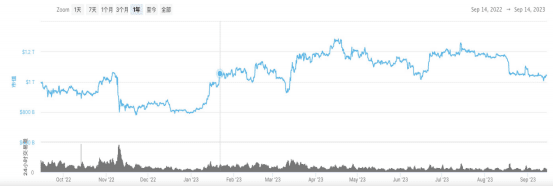
As of September 14, 2023, the total market value of cryptocurrencies is $1.045 trillion, up 4.9% from $0.996 trillion in the same period last year. The current macroeconomic uncertainty has caused the cryptocurrency industry to fluctuate widely.
(2) Differentiation of price increases and decreases: Price increases and decreases of cryptocurrencies in the past six months
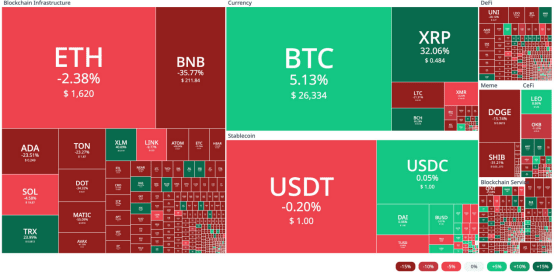
The cryptocurrency market has been like a roller coaster in the past six months, with most large projects performing poorly, mainly due to SEC and trading platform lawsuits, which have affected many of the top 100 tokens. Among them, Bitcoin, along with other digital currencies (BCH, LTC, etc.), showed a short-term strong trend in the second quarter, driven by news about ETFs and other institutional listings. Overall, wide fluctuations and no clear trend are still the main theme.
(3) Declining trading activity
Liquidity, volatility, and trading volume continue to compress across the digital asset market, with many indicators falling back to levels before the 2020 bull run. All major stablecoin assets, except Tether (USDT), are retreating, and stablecoin supply is experiencing a continuous decline. Due to unusual calm both on-chain and off-chain, the supply held by long-term holders reached an all-time high of 14.74 million BTC. In contrast, the supply of the short-term group, which represents the more active part of the market, has fallen to the lowest level since 2011. The long-term holder group is firmly holding positions with almost no asset outflows. Short-term holders are hovering on the edge of profitability, and most of their digital assets were purchased above the current price range. The digital asset market has experienced volatility compression and unusually low trading volume, and has now fallen back to an extremely narrow trading range.
(4) Bitcoin Spot ETF Progress
The loudest and most important story in the cryptocurrency market this year was the filing for a Bitcoin ETF by BlackRock, the world’s largest asset manager. The main beneficiary of this news was Bitcoin, which saw significant growth and set a new all-time high for 2023. As the world's largest asset manager, BlackRock is subject to intense scrutiny and only makes decisions after careful consideration. Even amid regulatory fog and the current market environment, BlackRock's choice to continue to increase its investment in the digital asset industry can be considered a signal to investors that cryptocurrency is a legitimate asset class with a lasting future.
Second, ETFs will increase exposure to and demand for this asset class faster than most expect. The latest news is that a U.S. Court of Appeals sided with Grayscale in last year’s lawsuit against the SEC for rejecting its application for a spot Bitcoin ETF. This greatly increases the chances that spot Bitcoin ETF applications from companies like BlackRock, Fidelity and others will be approved, possibly as early as mid-October. Notable among them is the Grayscale Bitcoin Trust, which has become significantly less undervalued relative to AUM and has seen strong price appreciation for its token (GBTC).
From the perspective of crypto market and industry development, the primary and secondary markets of cryptocurrencies in 2023 (from the beginning of the year to date), including market capitalization, trading activities, investment and financing, generally performed weaker than in 2019. The aspect that showed more potential in 2023 was that the application environment and approval progress of Bitcoin ETFs were significantly better than in 2019; in addition, Ethereum has grown into the world's largest blockchain platform through major upgrades and iterations, and its future development potential is still unlimited.
A bull market requires unexpected positive factors, which are mainly reflected in ample capital inflows, unexpected interest rate cuts, loose regulatory approvals, and major innovations in the industry. These will all be factors that contribute to a super bull market. But on the other hand, black swan events are often unpredictable. No one could have predicted the global COVID-19 pandemic in 2020. Moreover, the global money injection to save the market is basically accompanied by a financial crisis or a major economic recession. The volatility of risky assets usually increases, and risks and opportunities coexist. The darkness before dawn is often the most difficult stage.
Later, I will bring you analysis of leading projects in other tracks. If you are interested, you can click to follow. I will also organize some cutting-edge consulting and project reviews from time to time. Welcome all like-minded people in the cryptocurrency circle to explore together. If you have any questions, you can comment or send a private message