Crypto4light Indicators Set I spent a lot of time with backtesting and coding to create this set. 6 indicators which can cut all noise on your charts and bring more light in your trading strategy.๐ณ Trade ON indicator โก๏ธ Buy/Sell The signal appears when you can open a position for buying or selling. Stop Loss can be set according to your risk management. Entry into the position can be at the appearance of the Buy/Sell signal and the closing of the candle. Stop Loss by the body or wick of this candle. Another entry option is to wait for the closing of 40-50% of the body of the candle on which you saw the Buy/Sell signal. Stop Loss by the body or wick of the candle on which you saw the Buy/Sell signal. On example you can see 35% profit on spot, 4H timeframe trade. Sometimes you can see signal just blinking, so wait until signal confirmed or try go to lower timeframe to see confirmation for entry by your risk management and strategy. โก๏ธ Red or Green triangles Once a Buy/Sell signal appears and you enter a position, you have several options. It all depends on your trading style and risk management. The first option - If, for example, you entered on the Buy signal, you can close the purchase at the appearance of the Take Profit signal, or at the appearance of the Sell signal, and open a position in another direction.The second option, after opening a position when triangles appear, this is a signal to close a certain percentage of the position in the plus. With each new triangle, you can close % of your position and move the Stop Loss to breakeven.The third option, after opening a position at the appearance of triangles, closing a full position and looking for a possible option to open a position in the other direction, closing the position after the triangles should take place at the appearance of the main Buy/Sell signal. โก๏ธ Take Profit โก๏ธ Two identical signals in a row ๐ณ Direction indicator Circles will appear from above or below. The circles will signal that the main market makers are starting to reduce or gain their position. Big players always need liquidity, so they can build or reduce a position for quite a long time. Round dots are not the main signal for tradingA red or green triangle signals a final change in the local or global trend, depending on your timeframe. Market Makers or players with large positions have exited the market, or conversely gained enough position to change the direction of price movement.The green and red solid lines are the levels where the trend is most likely to end The green and red dashed lines are the levels where the big players are more likely to start gradually selling off or gaining a position to change the trend before the momentum. In the style settings, you can change the input positions of each of the lines, for yourself or for a specific asset. But the settings are already set in the most optimal way. ๐ณ ADZ (Accumulation/Distribution Zones) The red solid zone shows the zone where the big players will complete the sale of their position.The solid green area shows where the big players will accumulate their positions.The middle blue zone shows where medium and small players start to accumulate or sell off their positions.The yellow zone inside the blue zone shows a trend change and this means that most likely the big players have already gained a position to start selling or gaining it depending on the timeframe in which you are trading. ๐ณ Take Profit indicator The first lower "Buy" line, when the price drops to this line is a good point to enter a position or gradually build a position.The bottom green line "Fundamental price" is the real value of the asset. Sometimes when the media background about the asset is negative and buyers are not interested in the asset, the price can fall below its fundamental price. Then this is the best time to buy the asset.The first upper Take Profit line is a line where you can lock part of the profit or close the entire position. There is a possibility of opening a short position if you trade on the futures market The very top Exit line is the line where you need to close 100% of the trade position. If you are an investor, you do not need to close the entire position and exit the asset, because all lines are dynamic and change depending on the cycle in which the asset is located. ๐ณ Market Mood Indicator On different timeframes, you can view the mood that is currently present in the market. Trend, euphoria, position selection, or lack of interest. Red and orange color - fear and overbought in the market Green - Accumulation and purchases on the market Yellow - Gradual set of position White - purchases and lack of interest from small investors Blue - Neutral mood in the market I rename color zones so you can turn on alerts and easier understand notifications. Some colors got 2 alerts because of gradation based on input data, so you can choose any. You should understand on downtrend for example orange zone can be still be a belief sentiment because traders belief price will not drop. Dark red - Euphoria Light red - Thrill Orange (light and dark) - Belief / Strong Belief Yellow - Optimism Green - Hope Light blue - Disbelief Dark blue - Capitulation White - Depression ๐ณ Money Power Indicator When the asset reaches one of the zones, it can serve as a good signal to close a part of the position or to start a gradual acquisition of the position according to your trading timeframe. An almost ideal signal for deciding whether to enter or exit a position would be a divergence on the price chart and the curve on the Money Power indicator. If you are in a long position, for example, and you see that the price on the chart continues to rise, but in the overbought zone, the lines of the Money Power indicator show lower highs, this is a signal that a large player has almost completely sold out his position on this timeframe. Of course, the price may continue to grow for some time depending on the timeframe, but such indicators usually indicate the outflow of money from large investors and small players will not be able to keep the asset from falling for a long time. Everything is the same but in a different direction in the oversold zone. When a big player gradually gains a position and we see that the money flow curve goes up, and the price on the chart and candles show lower minimums. This will be a great signal to enter a position. You can enter or close a position by analyzing older timeframes W, 3D 1D depending on your trading style. In new version you also can find a new signals (explanation with default colors, but you can modify it to your theme) Yellow block - Whales sell or close % of position Yellow block with arrow down - Whales strong sell Blue block - Whales buy Blue block with arrow up - Whales strong buy Triangle down - Bearish RSI divergency Triangle Up - Bullish RSI divergency Red Circle - Bearish MACD divergency Green Circle - Bullish MACD divergency I am not a financial advisor. All indicators created with my own personal experience. Do NOT trade or invest based only on indicators. Always do your own research and due diligence before investing. All indicators can be used on different timeframes. The higher timeframe, the stronger signal. Your entry or exit point should be base on several indicators from the set, your trading strategy and your risk management. Indicators cannot predict or analyze future events in the world, the release of data in economic reports, statements in the media by public figures, so always follow your risk management when you open trades. โ๏ธ Always follow risk management and this set of indicators will help you. I wish you successful trading. #trading #crypto
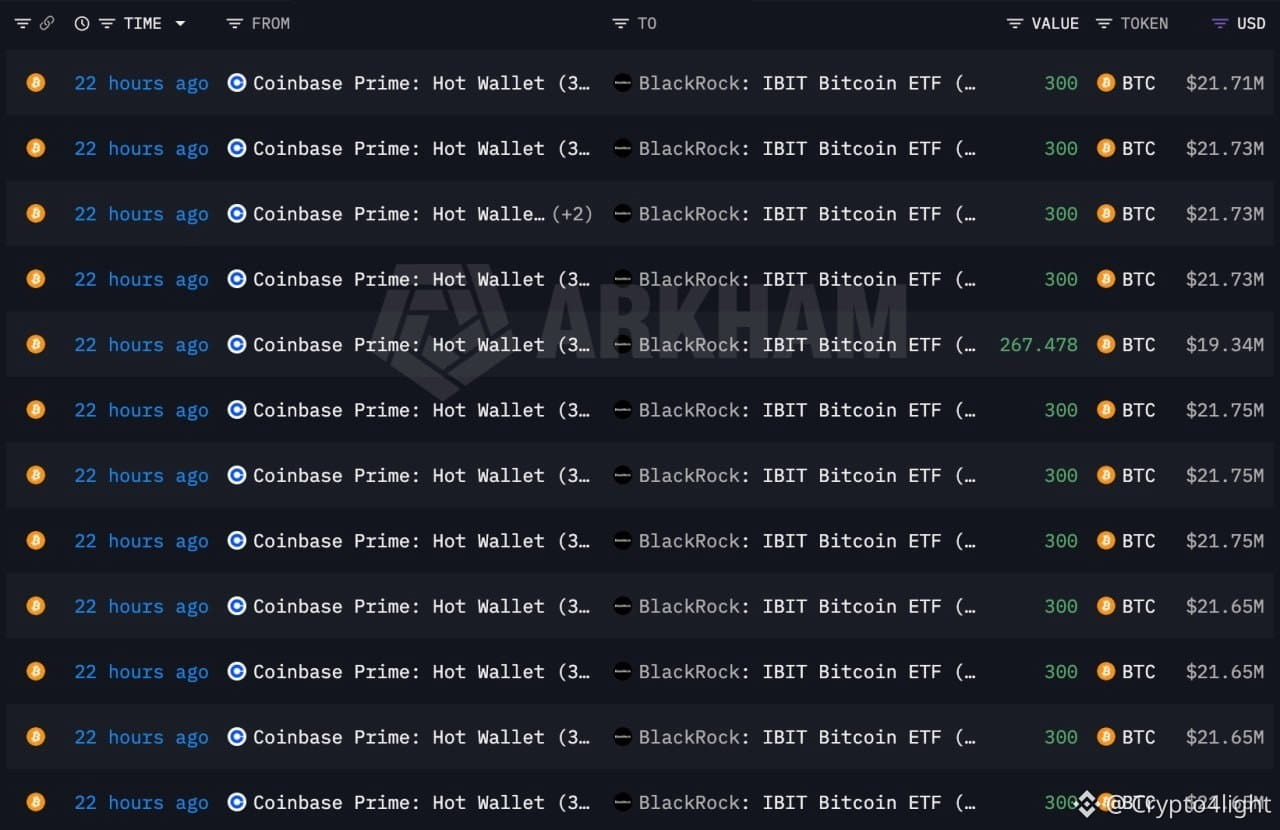
Want to see the magic of crypto? โญ๏ธ Money is flowing out of Bitcoin. Bitcoin has been been falling Money is flowing into Bitcoin ETFs. Bitcoin is falling too! $BTC
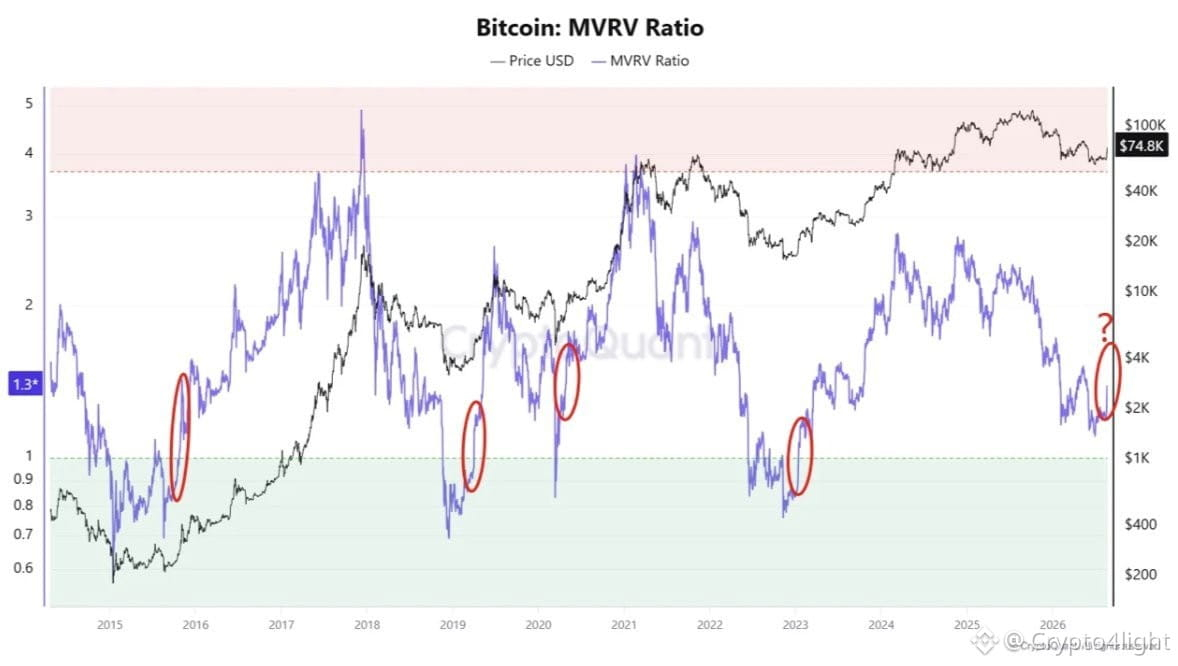
By now, it should be obviousโeven to the most stubborn people still trying to compare every Bitcoin cycle since 2009โthat every cycle is different, both in terms of percentage gains and percentage corrections. The question isn't whether this is the bottom or not. The real question is: how many more months, weeks, days, or even years will we remain stuck in this sideways range? Because uncertaintyโwhen the market keeps everyone on edge, whipsaws both bulls and bears, and simply collects liquidity from both sidesโis the worst environment imaginable. We can't control the market, so all we can do is watch and wait. $BTC
When will truly strict regulation finally come to the crypto market? As painful as it would be, I think it's necessary for 90%โor maybe even 99%โof crypto projects to be shut down and removed, with exchanges being placed under much stricter oversight as well. Here's a typical example of a so-called "fundamental" $TAC project on TON. Just read its descriptionโit looks like something genuinely interesting. The token is listed on centralized exchanges, so it's not just another meme coin that can only be bought on DEXs. Then the price is deliberately pumped by 1,900%, only to crash in a single candle in one day.
Based on my personal observations and the overall sentiment on social media, the market feels even worse now than it did during the COVID crash or the summer of 2022. During the COVID crash, the market collapsed because of the pandemic, but it also recovered relatively quickly. People were in shock, but there was a clear reason behind the sell-off.
In 2022, the decline also made sense. After all, 2021 brought an incredible rally for altcoins and a new all-time high for Bitcoin. But now, for the fifth year in a row, altcoins have continued to decline in a coordinated way, regardless of whether Bitcoin is down 50% or making new all-time highs. Projects are shutting down, exchanges are delisting trading pairs in batches, and every 3โ5% recovery in Bitcoin brings renewed hope for the altcoin marketโonly to be followed by another 10โ20% decline.
I've never seen a market this psychologically exhausting, and I'm talking specifically about spot positions. This is a brutal environment where investors in these largely unproven startups are being worn down not only by price action, but also by time. $ETH
While Saylor keeps selling everyone the Bitcoin dream and posting AI-generated images, teasing that Strategy is "about to buy more Bitcoin"... Retail investors and the Saylor/Bitcoin cult keep praying for another pump... Meanwhile, he goes ahead and sells more than 3,500 BTC on the open market. =) Remember this quote: "Do not make idols for yourselves." $BTC
Bitcoin closed June down more than 20%. The last time it had a worse monthly performance was in June 2022. Here's another interesting fact: even during the global pandemic, Bitcoin dropped 24% in March 2020. And now, this so-called "speculative coin" has fallen almost as much without any truly extraordinary catalyst. Pretty surprising, isn't it? $BTC
"The current correction is one of the mildest in history. For example, in 2011, holders experienced a 5-month decline of -93%."
Posts like this never stop amazing me. People are comparing Bitcoin's behavior from 15 years ago to today's market. Back then, Bitcoin had a market cap of just a few million dollars. Today, it's worth over a trillion. Not to mention how dramatically the world has changed over the past 15 years.
The most misleading part is the implication behind these posts: "See? Bitcoin fell 93% back then, then went from $2 to $64,000. So if it drops 70โ80% now, we'll all become incredibly rich when it eventually reaches $5โ10 million per coin."
That's simply not how markets evolve. I'll say it again: with every year and every cycleโcall it whatever you wantโBitcoin behaves less and less like it did in previous cycles. As the asset matures and grows in size, both its upside and downside become more limited. We've already been seeing this trend for years. Expecting Bitcoin to repeat the exact same patterns from a tiny, illiquid market 15 years ago is, in my opinion, one of the biggest mistakes investors can make. $BTC
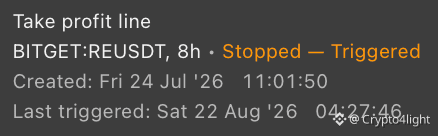
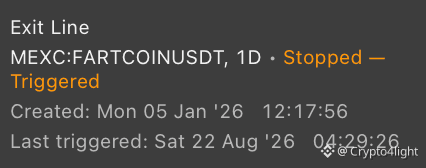
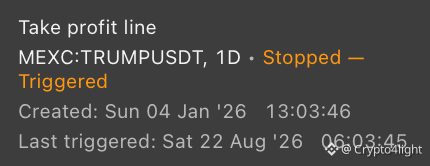
I think you also noticed how in June the top gainers were mostly junkโeither random meme tokens or almost all coins that are under monitoring and close to being delisted.
This is another side of the crypto market that nobody really talks about.
You almost never see random pumps in top-tier projects, because exchanges know itโs not easy to pump something like AVAX without retail immediately taking profits at breakeven or slightly above.
Itโs much easier to pump low-cap shitcoins, trap people with green candles, and then dump them later. Low-cap tokens are easy to manipulate up and down, and then everything gets rotated into more โrisk-onโ assets. In this way, they accumulate more stablecoins, because later they need liquidity to buy those same top-tier tokensโwhich are also, in essence, scams. The only difference is that the first group is an obvious scam, while the second is a slower, stretched-out version of the same thing. Then this liquidity is used to flow into tokens again, backed by paid narratives about fundamentals, upgrades, market recovery, and institutions finally โdiscoveringโ the potential of these technologies.
But thereโs another catch: with small caps, they can easily exit after +500โ1000% moves (projects like Portal, Syn, Rave, HEI, EDU, etc.). With large caps, that doesnโt work the same way. They usually start distributing around +100%, which you can clearly see with certain indicators like MP. Then, during the news-driven phase of the rally, they gradually sell the remaining 50% and effectively extract โfree moneyโ from the market. Genius. $SYN $AVAX
The number of unprofitable UTXOs has fallen to a minimum of the current bearish cycle and reflects the beginning of a widespread capitulation. The last time the indicator dropped so low was in the middle of 2023 $BTC
All the fans of the 4-year cycle and Bitcoin patterns are going to hate this, come up with excuses, and in the end they'll still be proven wrong. Remember the long-standing myth that many people treated as an absolute truthโthat Bitcoin never falls below the previous cycle's all-time high during a bear market? That narrative was broken in 2022. Back then, people rushed to find excuses: "It was FTX," "It was Binance," and countless other explanations.
Well... Bitcoin has now done it for the second time.
Yes, during Bitcoin's early years this pattern held. But back then Bitcoin was still in its infancy, behaving more like a high-growth speculative asset and exploding in value every cycle. Today, the rules of the game have changed. Yet many followers of the 4-year cycle and other historical patterns still can't accept that old models eventually stop working. The reason is simple: the human brain is constantly searching for structure and predictability. It hates chaos. A clean, repetitive Bitcoin cycle felt like a cheat code. People loved the idea that the market always behaved according to the same script because it made the future feel predictable. But once that structure starts breaking down, many Bitcoin maximalists and cycle believers become frustrated. They expect the model to keep working because it's the only framework they've ever trusted. They struggle to adapt when the market evolves. Bitcoin's next moves are going to surprise a lot more people. $BTC