
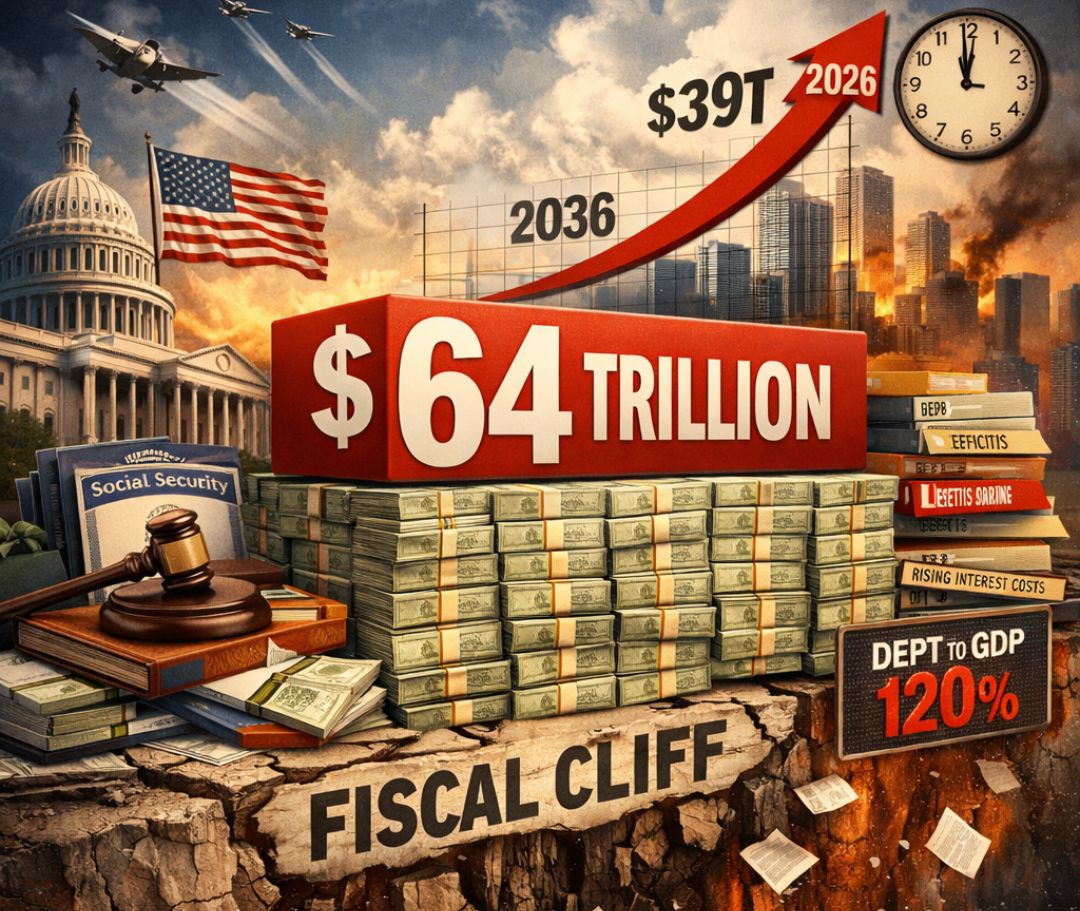
 According to the Congressional Budget Office (CBO), U.S. national debt is expected to surge from $39 Trillion in 2026 to nearly $64 Trillion by 2036 — marking a massive $25 Trillion increase in just one decade.
📉 DEFICITS CONTINUE TO WIDEN
The U.S. government is projected to consistently spend more than it earns.
• 2026 Estimated Deficit: ~$1.9 Trillion
• 2036 Projected Deficit: ~$3.1 Trillion
This implies an average yearly addition of $2.4T–$2.5T in debt — even in the absence of recession, war, or emergency fiscal stimulus.
💰 INTEREST PAYMENTS BECOMING A MAJOR BURDEN
With elevated interest rates:
• Annual interest payments are expected to exceed $1 Trillion shortly
• Could surpass $2 Trillion annually by 2036
A growing share of federal tax revenue may soon be directed solely toward servicing legacy debt.
👴 AUTOMATIC SPENDING PROGRAMS ON THE RISE
Expenditures on entitlement programs are expanding due to demographic shifts:
• Social Security
• Medicare
• Federal Healthcare Programs
These are structurally embedded spending items — not subject to annual budgetary discretion — and are politically difficult to reform.
📊 DEBT-TO-GDP RATIO SET TO EXCEED WWII ERA RECORDS
Debt held by the public is forecasted to rise from:
• 101% of GDP in 2026
• To 120% by 2036
This would surpass levels last observed during the post-WWII period — despite current projections being based on peacetime economic conditions.
⚠️ STRUCTURAL FISCAL RISK EMERGING
If interest expenses begin to grow faster than GDP:
• Borrowing may be required to service existing obligations
• Compounding interest accelerates debt expansion
• Deficits persist even without increased spending
At this stage, debt accumulation transitions from a policy-driven outcome to a self-reinforcing structural cycle.
📌 OUTLOOK
The projected path toward $64 Trillion in national debt reflects not just long-term estimates — but an accelerating fiscal trajectory where liabilities may begin to outpace the economy's capacity to sustain them.