
Why SAFU Exists in the First Place
In crypto, security is not optional — it is foundational. Markets are volatile, infrastructure evolves quickly, and trust must be reinforced continuously. That is where Binance’s SAFU fund comes in.
SAFU stands for Secure Asset Fund for Users. It was created as an emergency reserve designed to protect users in extreme situations such as security breaches or unforeseen operational failures.
It is not a feature.
It is not a yield product.
It is a structural layer of risk management.
What Exactly Is SAFU?
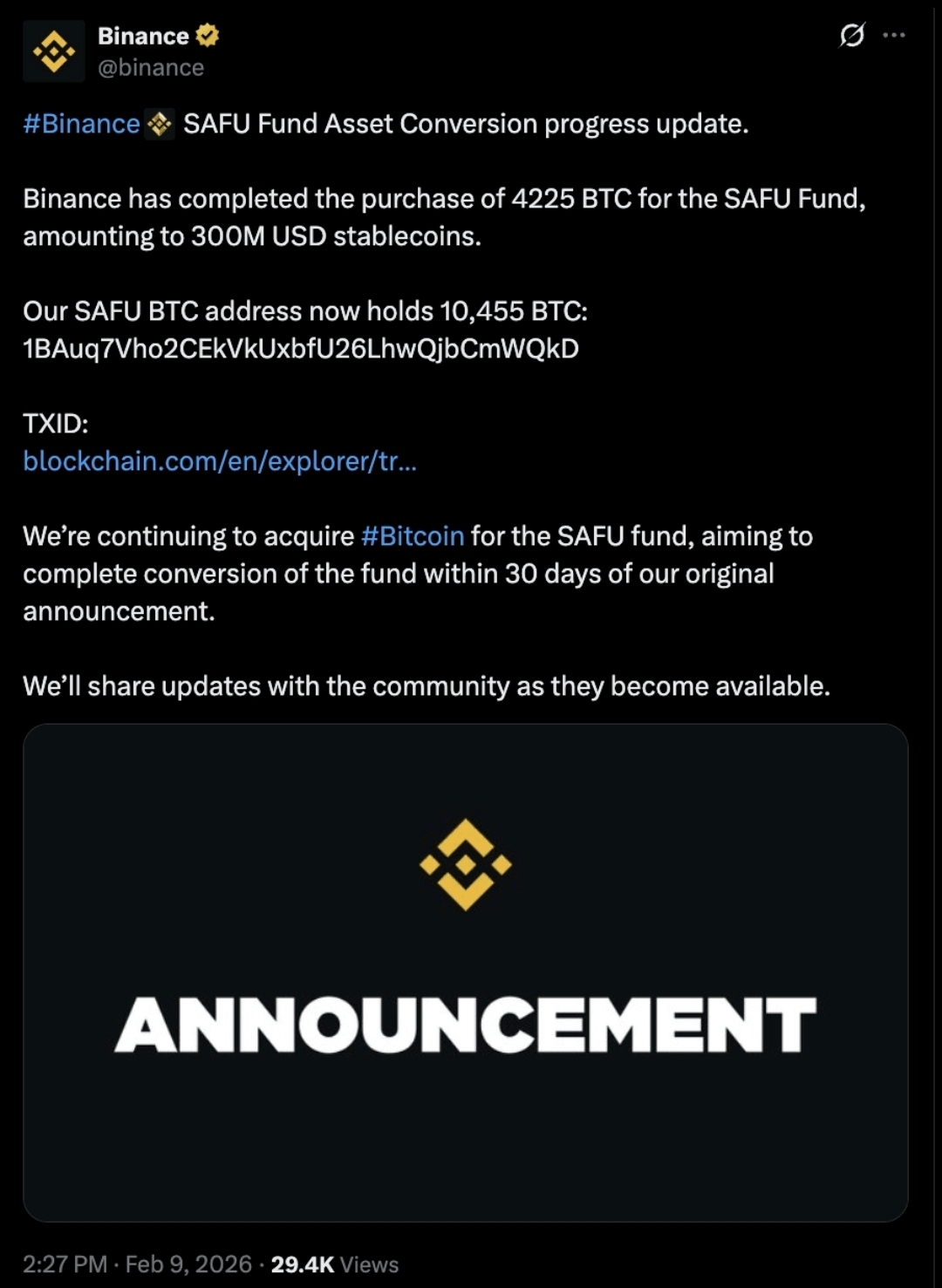
SAFU is an emergency reserve established by Binance in 2018. A portion of trading fees collected on the platform is allocated to this fund over time.
The purpose is straightforward:
If a significant exchange-level security incident affects user assets, SAFU is intended to serve as a protective buffer.
It exists as a contingency mechanism — not as a speculative vehicle.
How SAFU Is Funded

Originally, SAFU was funded through allocations from Binance’s trading revenue. Over time, the reserve accumulated into a substantial emergency pool designed to support user protection if needed.
In 2026, Binance announced a major structural change: the SAFU reserve would be held primarily in Bitcoin rather than stablecoins. This marked a shift in reserve composition, aligning the fund with Bitcoin as the dominant asset within the crypto ecosystem.
The strategy reflects long-term reserve positioning rather than short-term allocation decisions.
Why the Shift to Bitcoin Matters
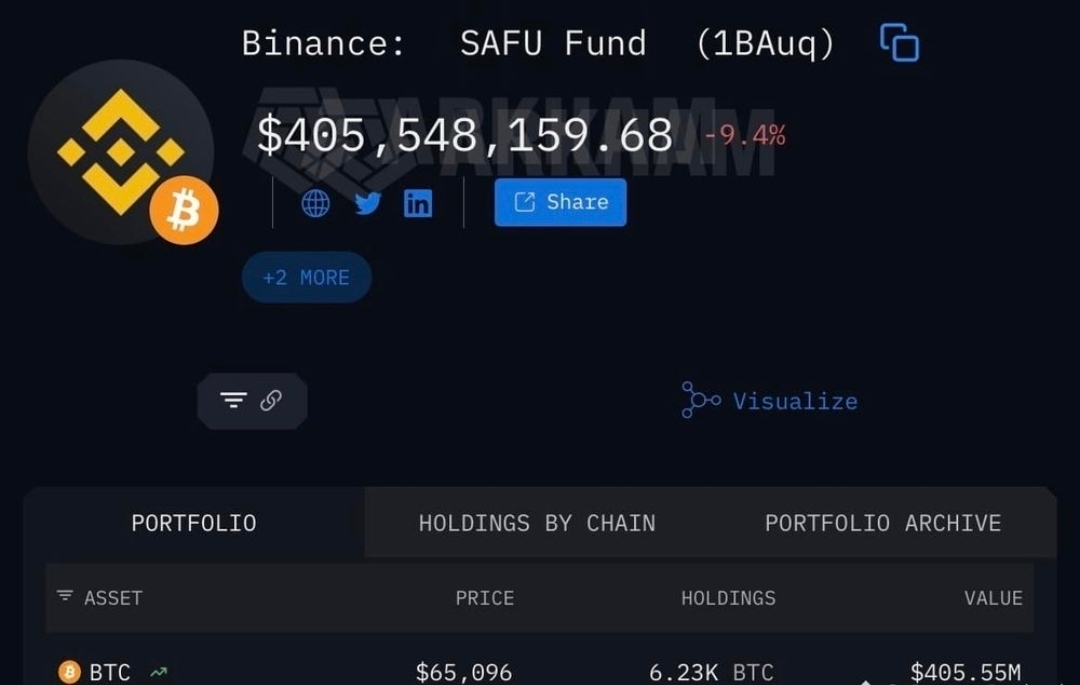
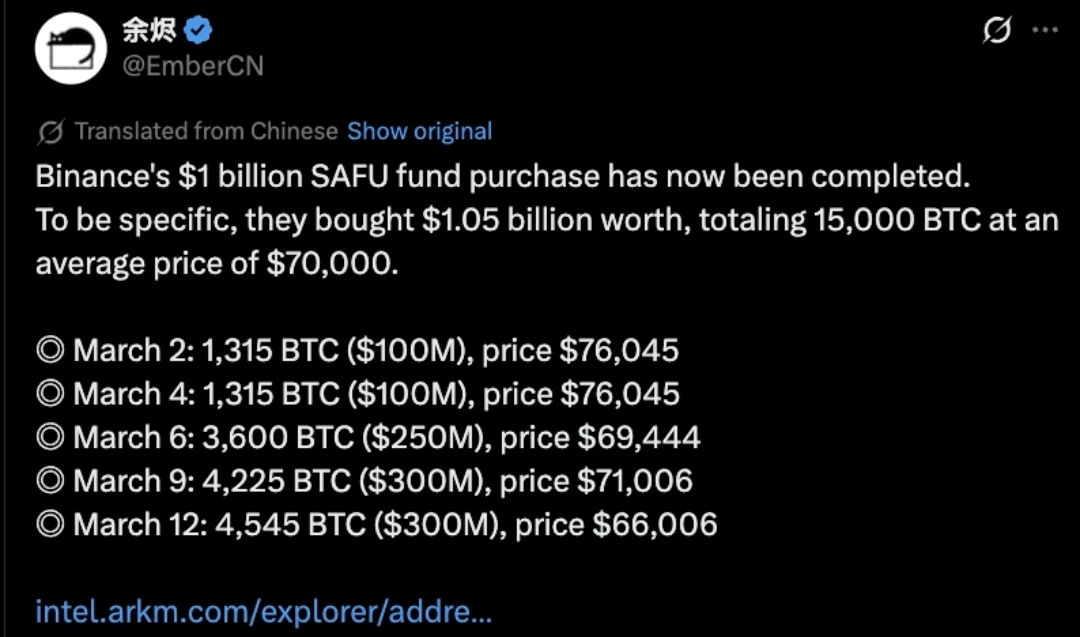
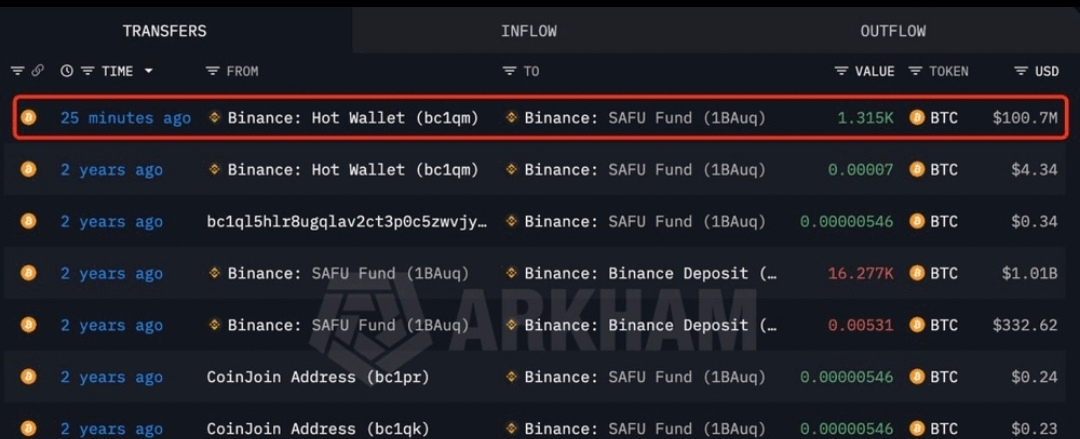
Recent on-chain activity shows significant Bitcoin transfers into the SAFU reserve wallet.
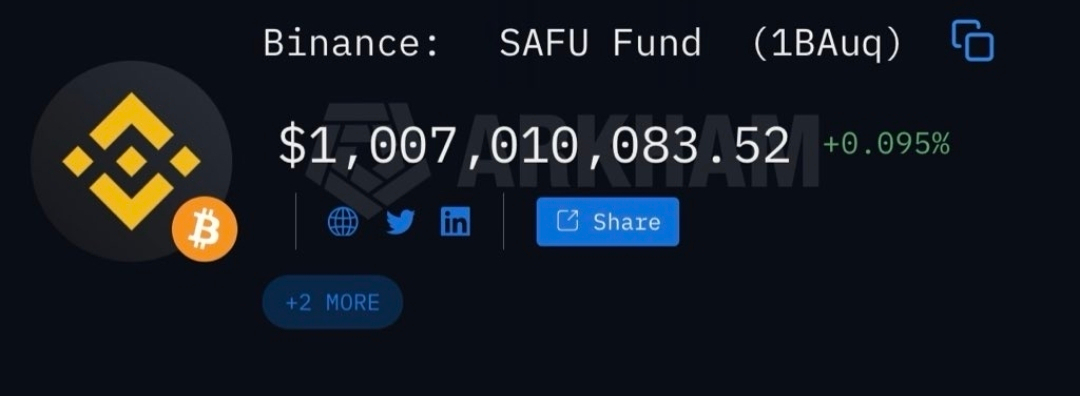
According to publicly tracked data, Binance allocated approximately $304 million in BTC in a recent transfer, bringing the SAFU reserve to roughly 15,000 BTC, valued around $1 billion at current market levels.
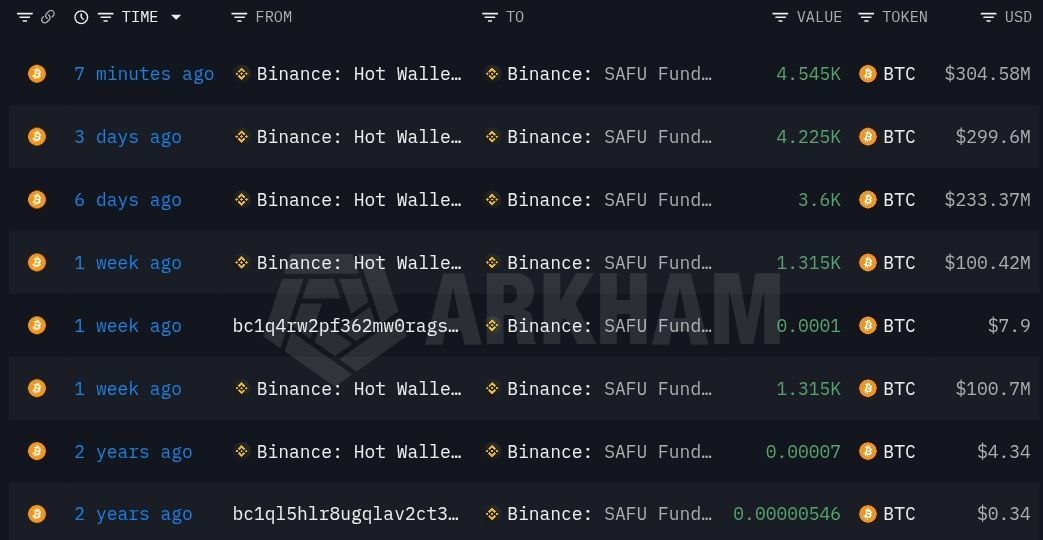
The fund is now fully deployed in Bitcoin.
On-chain tracking platforms have identified multiple transfers from Binance hot wallets to the designated SAFU reserve address, reinforcing the transparency of the reserve strategy.
This shift signals several things:
Commitment to maintaining a dedicated user protection reserve
Alignment of the reserve with a long-term crypto-native asset
Transparency through verifiable blockchain activity
While holding BTC introduces natural market volatility exposure, the reserve structure is designed around maintaining a target value threshold, with adjustments if necessary.
The objective remains stability — not speculation.
What SAFU Actually Covers
It is important to clarify what SAFU is designed to protect against.
SAFU is intended to support users in cases involving:
Exchange-level security breaches
Infrastructure failures directly impacting user assets
Extreme operational incidents
It does not cover:
Market losses
Incorrect trades
Personal wallet errors
External phishing incidents
Understanding this distinction helps set realistic expectations about the scope of protection.
SAFU and User Confidence
In traditional finance, reserve requirements and insurance frameworks are standard risk-mitigation tools. Crypto infrastructure has evolved differently, but mechanisms like SAFU introduce a comparable protective layer.
For traders and long-term participants, the presence of SAFU contributes to:
Structural confidence
Reduced systemic uncertainty
Clear contingency planning
Even if rarely used, a standing reserve mechanism provides reassurance during periods of heightened volatility.
Why SAFU Still Matters in 2026
The crypto industry has matured significantly, but risk has not disappeared. Infrastructure continues to improve, yet black swan events remain possible in any financial system.
A pre-allocated reserve such as SAFU reflects proactive risk planning rather than reactive crisis management.
In volatile environments, preparation often matters more than prediction.
Final Thoughts
SAFU is not designed to influence daily price movements or generate attention. It exists as a structural safeguard in an industry where volatility is constant and certainty is rare. While traders focus on momentum and opportunity, long-term confidence is built on preparation.
Protection may not move markets, but it determines which platforms survive them.
