
The Buzzing Bee
7.1k පෝස්ටු

The Buzzing Bee
 Binance චතුරශ්ර සත්යාපිත+
වාර්තා කරන්න
පරිශීලක අවහිර කරන්න
Words matter!🔥 Facts matter! Truths matter!🔥 Crypto news from all over the world 👩💻 Twitter: @Aby71721

#BinanceTurns7 task 2

#BinanceTurns7

Creator of the Year
විවෘත වෙළෙඳාම
ඉඳහිට වෙළෙන්දා
{වේලාව} වසර
8 හඹා යමින්
144.1K+ හඹා යන්නන්
214.3K+ කැමති විය
6 ලාංජනය
පෝස්ටු
ආයෝජන කළඹ
සියල්ල
උපුටා දැක්වීම්
වීඩියෝ
සජීවි
අමුණා ඇත
හිතවත් මිතුරන්ට 😊
මගේ කාසි විශ්ලේෂණය පිළිබඳ ලබා දී ඇති සියලුම අන්තර්ගතය අධ්යාපනික අරමුණු සඳහා පමණක් වන අතර කරුණාකර එය අනුගමනය නොකරන්න. කරුණාකර සැමවිටම #dyor
හිතවත් මිතුරන්ට 😊
මගේ කාසි විශ්ලේෂණය පිළිබඳ ලබා දී ඇති සියලුම අන්තර්ගතය අධ්යාපනික අරමුණු සඳහා පමණක් වන අතර කරුණාකර එය අනුගමනය නොකරන්න. කරුණාකර සැමවිටම #dyor
මගේ කාසි විශ්ලේෂණය පිළිබඳ ලබා දී ඇති සියලුම අන්තර්ගතය අධ්යාපනික අරමුණු සඳහා පමණක් වන අතර කරුණාකර එය අනුගමනය නොකරන්න. කරුණාකර සැමවිටම #dyor
226
15
583
1.8k
පරිවර්තනය බලන්න
Longing #BTC here
Long (20x-30x)
Entry: $81,332.4
Reason: Chart looks bullish for it. Worth a long for short-mid term quick profits too.
Targets: $83,773, $86,236, $89,487,
Stop-loss: $77,200.1
$BTC
{future}(BTCUSDT)
Longing #BTC here
Long (20x-30x)
Entry: $81,332.4
Reason: Chart looks bullish for it. Worth a long for short-mid term quick profits too.
Targets: $83,773, $86,236, $89,487,
Stop-loss: $77,200.1
$BTC
Long (20x-30x)
Entry: $81,332.4
Reason: Chart looks bullish for it. Worth a long for short-mid term quick profits too.
Targets: $83,773, $86,236, $89,487,
Stop-loss: $77,200.1
$BTC
154
පරිවර්තනය බලන්න
🚨🚨 Longing #SUI here
Long (10x-20x)
Entry: $0.8231
Reason: Chart looks bullish for it. Worth a long for short-mid term quick profits too.
Targets: $0.8643, $0.9058, $0.9469, $0.9878, $1.0706
Stop-loss: $0.7664
$SUI
{future}(SUIUSDT)
🚨🚨 Longing #SUI here
Long (10x-20x)
Entry: $0.8231
Reason: Chart looks bullish for it. Worth a long for short-mid term quick profits too.
Targets: $0.8643, $0.9058, $0.9469, $0.9878, $1.0706
Stop-loss: $0.7664
$SUI
Long (10x-20x)
Entry: $0.8231
Reason: Chart looks bullish for it. Worth a long for short-mid term quick profits too.
Targets: $0.8643, $0.9058, $0.9469, $0.9878, $1.0706
Stop-loss: $0.7664
$SUI
230
$XRP නැවත සුවවීමේ ලකුණු පෙන්වමින් පවතින අතර, මෙම සතියේ මුලදී $1.27 දක්වා පහත වැටීමෙන් පසු දැන් $1.41 පමණේ වෙළඳාම කරයි.
වෙළඳපොළට නාට්ය (narratives) වෙනස් කළ හැකි වේගයෙන් වෙනස් කළ හැක.
Memecoins අවධානය දිනාගනියි, රන් (gold) චලනය වීමට පටන් ගනියි, එයත් එක්කම විදේශ විනිමය (forex) හදිසියේම තමන්ගේම කතාවක් ගෙන එයි.
තවමත්, එක් වෙළඳපොළක් අවධානයට ගන්නා විට BTC ද නිහඬව සිටිය හැක.
$XRP
{future}(XRPUSDT)
$ZEC
{future}(ZECUSDT)
$ETH
{future}(ETHUSDT)
$XRP නැවත සුවවීමේ ලකුණු පෙන්වමින් පවතින අතර, මෙම සතියේ මුලදී $1.27 දක්වා පහත වැටීමෙන් පසු දැන් $1.41 පමණේ වෙළඳාම කරයි.
වෙළඳපොළට නාට්ය (narratives) වෙනස් කළ හැකි වේගයෙන් වෙනස් කළ හැක.
Memecoins අවධානය දිනාගනියි, රන් (gold) චලනය වීමට පටන් ගනියි, එයත් එක්කම විදේශ විනිමය (forex) හදිසියේම තමන්ගේම කතාවක් ගෙන එයි.
තවමත්, එක් වෙළඳපොළක් අවධානයට ගන්නා විට BTC ද නිහඬව සිටිය හැක.
$XRP
$ZEC
$ETH
වෙළඳපොළට නාට්ය (narratives) වෙනස් කළ හැකි වේගයෙන් වෙනස් කළ හැක.
Memecoins අවධානය දිනාගනියි, රන් (gold) චලනය වීමට පටන් ගනියි, එයත් එක්කම විදේශ විනිමය (forex) හදිසියේම තමන්ගේම කතාවක් ගෙන එයි.
තවමත්, එක් වෙළඳපොළක් අවධානයට ගන්නා විට BTC ද නිහඬව සිටිය හැක.
$XRP
$ZEC
$ETH

1
514
නොස්කම #DOT මෙහි
දිගු (5x - 10x)
ප්රවේශය: $1.0670 - $1.0400
හේතුව: චාර්ට් එක ඒ සඳහා බුලිෂ් ලෙස පෙනේ. කෙටි කාලීන වේගවත් ලාභ සඳහාත් මිලදී ගැනීමට වටිනවා. ප්රතිරෝධක කලාපයෙන් දැනටමත් බිඳ දමා ඇත.
ඉලක්ක: $1.0900, $1.1150, $1.1400, $1.1650, $1.2000
නවතා දැමීම: $1.0200
$DOT
{future}(DOTUSDT)
නොස්කම #DOT මෙහි
දිගු (5x - 10x)
ප්රවේශය: $1.0670 - $1.0400
හේතුව: චාර්ට් එක ඒ සඳහා බුලිෂ් ලෙස පෙනේ. කෙටි කාලීන වේගවත් ලාභ සඳහාත් මිලදී ගැනීමට වටිනවා. ප්රතිරෝධක කලාපයෙන් දැනටමත් බිඳ දමා ඇත.
ඉලක්ක: $1.0900, $1.1150, $1.1400, $1.1650, $1.2000
නවතා දැමීම: $1.0200
$DOT
දිගු (5x - 10x)
ප්රවේශය: $1.0670 - $1.0400
හේතුව: චාර්ට් එක ඒ සඳහා බුලිෂ් ලෙස පෙනේ. කෙටි කාලීන වේගවත් ලාභ සඳහාත් මිලදී ගැනීමට වටිනවා. ප්රතිරෝධක කලාපයෙන් දැනටමත් බිඳ දමා ඇත.
ඉලක්ක: $1.0900, $1.1150, $1.1400, $1.1650, $1.2000
නවතා දැමීම: $1.0200
$DOT
1
2
953
SOL - ත්රිකෝණ සම්පීඩන ඉලක්කය
SOL දැනට කුඩා වෙලාවේ
සමාමිතික ත්රිකෝණ රටාවකට දමා ඇති අතර, මිල උච්චමනයට ළං වන විට ඉතා කැළඹීමක්/අනిశචිතතාවක් පෙන්නුම් කරයි. මෑත මිල ක්රියාමාර්ගය පහළ ට්රෙන්ඩ්ලයින් එක සාර්ථකව ආරක්ෂා කරගෙන ඇති බව පෙන්වයි; එය පහළ සිට වැටෙන ප්රතිරෝධය දෙසට දේශීය චලනයක් ආරම්භ කරමින් තිබේ. මෙම උඩිගැසෙන ට්රෙන්ඩ්ලයින් එකට ඉහළින් තීරණාත්මක බිඳීමක් සිදුවුවහොත්, ඒක ප්රවණතාවේ වෙනසක් තහවුරු කරමින්, $107 ප්රතිරෝධ කලාපය වෙත යා හැකි අපේක්ෂිත මාර්ගයක් අරඹනු ඇත. 4
FAKTs - Deutsche Bank ආයතනික ක්රිප්ටෝ භාරකාරත්වය සඳහා නියාමන අනුමැතියට ඉතා ළඟා වෙමින් සිටී; එය දිගුකාලීන හැඟීම් ශක්තිමත් කරයි.
බුලීෂ් ව්යුහය තහවුරු කිරීම සඳහා බිඳීමෙන් පසු පරිමාව (volume) වැඩිවීම ගැන අවධානය යොමු කරන්න.
🔑 ප්රධාන මට්ටම්
🚧 ප්රතිරෝධය: $107
🛡️ සහය: $97
$SOL
{future}(SOLUSDT)
$ADA
{future}(ADAUSDT)
$ZEC
{future}(ZECUSDT)
SOL - ත්රිකෝණ සම්පීඩන ඉලක්කය
SOL දැනට කුඩා වෙලාවේ
සමාමිතික ත්රිකෝණ රටාවකට දමා ඇති අතර, මිල උච්චමනයට ළං වන විට ඉතා කැළඹීමක්/අනిశචිතතාවක් පෙන්නුම් කරයි. මෑත මිල ක්රියාමාර්ගය පහළ ට්රෙන්ඩ්ලයින් එක සාර්ථකව ආරක්ෂා කරගෙන ඇති බව පෙන්වයි; එය පහළ සිට වැටෙන ප්රතිරෝධය දෙසට දේශීය චලනයක් ආරම්භ කරමින් තිබේ. මෙම උඩිගැසෙන ට්රෙන්ඩ්ලයින් එකට ඉහළින් තීරණාත්මක බිඳීමක් සිදුවුවහොත්, ඒක ප්රවණතාවේ වෙනසක් තහවුරු කරමින්, $107 ප්රතිරෝධ කලාපය වෙත යා හැකි අපේක්ෂිත මාර්ගයක් අරඹනු ඇත. 4
FAKTs - Deutsche Bank ආයතනික ක්රිප්ටෝ භාරකාරත්වය සඳහා නියාමන අනුමැතියට ඉතා ළඟා වෙමින් සිටී; එය දිගුකාලීන හැඟීම් ශක්තිමත් කරයි.
බුලීෂ් ව්යුහය තහවුරු කිරීම සඳහා බිඳීමෙන් පසු පරිමාව (volume) වැඩිවීම ගැන අවධානය යොමු කරන්න.
🔑 ප්රධාන මට්ටම්
🚧 ප්රතිරෝධය: $107
🛡️ සහය: $97
$SOL
$ADA
$ZEC
SOL දැනට කුඩා වෙලාවේ
සමාමිතික ත්රිකෝණ රටාවකට දමා ඇති අතර, මිල උච්චමනයට ළං වන විට ඉතා කැළඹීමක්/අනిశචිතතාවක් පෙන්නුම් කරයි. මෑත මිල ක්රියාමාර්ගය පහළ ට්රෙන්ඩ්ලයින් එක සාර්ථකව ආරක්ෂා කරගෙන ඇති බව පෙන්වයි; එය පහළ සිට වැටෙන ප්රතිරෝධය දෙසට දේශීය චලනයක් ආරම්භ කරමින් තිබේ. මෙම උඩිගැසෙන ට්රෙන්ඩ්ලයින් එකට ඉහළින් තීරණාත්මක බිඳීමක් සිදුවුවහොත්, ඒක ප්රවණතාවේ වෙනසක් තහවුරු කරමින්, $107 ප්රතිරෝධ කලාපය වෙත යා හැකි අපේක්ෂිත මාර්ගයක් අරඹනු ඇත. 4
FAKTs - Deutsche Bank ආයතනික ක්රිප්ටෝ භාරකාරත්වය සඳහා නියාමන අනුමැතියට ඉතා ළඟා වෙමින් සිටී; එය දිගුකාලීන හැඟීම් ශක්තිමත් කරයි.
බුලීෂ් ව්යුහය තහවුරු කිරීම සඳහා බිඳීමෙන් පසු පරිමාව (volume) වැඩිවීම ගැන අවධානය යොමු කරන්න.
🔑 ප්රධාන මට්ටම්
🚧 ප්රතිරෝධය: $107
🛡️ සහය: $97
$SOL
$ADA
$ZEC
2
557
கடந்த 24 மணி நேரத்தில் $610M ETF மாற்றம்—செனட் CLARITY-ஐ ஒதுக்கிய அதே வாரத்தில்.
- திங்கட்கிழமை: Bitcoin ETF-களில் $159.9M நுழைந்தது.
- செவ்வாய்க்கிழமை: $450.4M வெளியேறியது.
ஜூன் 24 முதல் மோசமான ஒற்றை நாள்.
வெளியேறுதலை யார் முன்னெடுத்தார்கள் பாருங்கள்;
- FBTC: -$214.8M
- IBIT: -$161.7M
BlackRock-ஐ விட Fidelity கடுமையாக விற்றது. சாதாரணமாக IBIT தான் அதிர்ச்சியை உறிஞ்சும். இந்த முறை இல்லை.
GBTC, ARKB, BITB ஆகியவை ஒப்பிடுகையில் சிறிதாகவே ரத்தமானது: -$44.1M, -$17.4M, -$12.4M.
அளவு ஒரு அல்லது இரண்டு “புத்தகங்களில்” இருந்தது; சில்லறையில் பரவி இல்லை.
அதே நாளில், BTC 2.5% வீழ்ச்சி அடைந்து $75.7K ஆக இருந்தது. அதே நாளில், CLARITY Act முன்னேறுவதற்கான முயற்சி தோல்வியடைந்தது.
ஒரே மசோதா, ஒரே நிதி, ஒரு மோசமான நாள். சம்பவமா அல்லது தொடர்பா.
இந்த ஓட்டங்கள் Bitcoin-ஐ விலைமைக்கிறதா, அல்லது செனட்டையே விலைமைக்கிறதா?
$BTC
{future}(BTCUSDT)
கடந்த 24 மணி நேரத்தில் $610M ETF மாற்றம்—செனட் CLARITY-ஐ ஒதுக்கிய அதே வாரத்தில்.
- திங்கட்கிழமை: Bitcoin ETF-களில் $159.9M நுழைந்தது.
- செவ்வாய்க்கிழமை: $450.4M வெளியேறியது.
ஜூன் 24 முதல் மோசமான ஒற்றை நாள்.
வெளியேறுதலை யார் முன்னெடுத்தார்கள் பாருங்கள்;
- FBTC: -$214.8M
- IBIT: -$161.7M
BlackRock-ஐ விட Fidelity கடுமையாக விற்றது. சாதாரணமாக IBIT தான் அதிர்ச்சியை உறிஞ்சும். இந்த முறை இல்லை.
GBTC, ARKB, BITB ஆகியவை ஒப்பிடுகையில் சிறிதாகவே ரத்தமானது: -$44.1M, -$17.4M, -$12.4M.
அளவு ஒரு அல்லது இரண்டு “புத்தகங்களில்” இருந்தது; சில்லறையில் பரவி இல்லை.
அதே நாளில், BTC 2.5% வீழ்ச்சி அடைந்து $75.7K ஆக இருந்தது. அதே நாளில், CLARITY Act முன்னேறுவதற்கான முயற்சி தோல்வியடைந்தது.
ஒரே மசோதா, ஒரே நிதி, ஒரு மோசமான நாள். சம்பவமா அல்லது தொடர்பா.
இந்த ஓட்டங்கள் Bitcoin-ஐ விலைமைக்கிறதா, அல்லது செனட்டையே விலைமைக்கிறதா?
$BTC
- திங்கட்கிழமை: Bitcoin ETF-களில் $159.9M நுழைந்தது.
- செவ்வாய்க்கிழமை: $450.4M வெளியேறியது.
ஜூன் 24 முதல் மோசமான ஒற்றை நாள்.
வெளியேறுதலை யார் முன்னெடுத்தார்கள் பாருங்கள்;
- FBTC: -$214.8M
- IBIT: -$161.7M
BlackRock-ஐ விட Fidelity கடுமையாக விற்றது. சாதாரணமாக IBIT தான் அதிர்ச்சியை உறிஞ்சும். இந்த முறை இல்லை.
GBTC, ARKB, BITB ஆகியவை ஒப்பிடுகையில் சிறிதாகவே ரத்தமானது: -$44.1M, -$17.4M, -$12.4M.
அளவு ஒரு அல்லது இரண்டு “புத்தகங்களில்” இருந்தது; சில்லறையில் பரவி இல்லை.
அதே நாளில், BTC 2.5% வீழ்ச்சி அடைந்து $75.7K ஆக இருந்தது. அதே நாளில், CLARITY Act முன்னேறுவதற்கான முயற்சி தோல்வியடைந்தது.
ஒரே மசோதா, ஒரே நிதி, ஒரு மோசமான நாள். சம்பவமா அல்லது தொடர்பா.
இந்த ஓட்டங்கள் Bitcoin-ஐ விலைமைக்கிறதா, அல்லது செனட்டையே விலைமைக்கிறதா?
$BTC
1
3
531
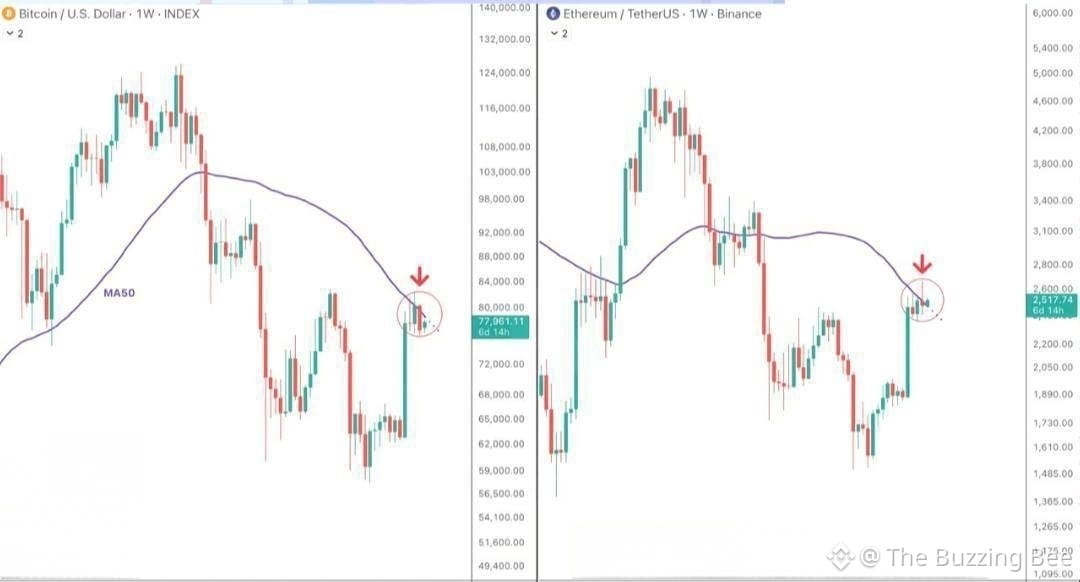
🚨 BTC සහ ETH තවමත් සති 50-ක චලනය වන සාමාන්යය (50-week moving average) නැවත අල්ලාගැනීමට අරගල කරමින් සිටියි.
ඒ නිසා මෙම සතිය ප්රධාන මැක්රෝ පරීක්ෂා ලක්ෂ්යයක් (macro checkpoint) වේ:
• සැප්තැම්බර් 15 — Clarity Act ඡන්දය
• සැප්තැම්බර් 16 — FOMC අනුපාත තීරණය
• සැප්තැම්බර් 18 — ජපාන බැංකුව (Bank of Japan) අනුපාත තීරණය
සිදුවීම් තුනකි. එක් වෙළඳපොලක්.
මම ප්රවෘත්ති හඹා නොයා, මිල 50W MA වටා ප්රතික්රියා කරන ආකාරය බලා සිටිනවා. පැහැදිලි ලෙස නැවත අල්ලාගැනීමෙන් ව්යුහය වෙනස් විය හැක; තවදුරටත් ප්රතික්ෂේප වීම දිගටම පීඩනය තබාගනී.
ඉවසිලිමත් වන්න. මිල තහවුරු කරගන්න ඉඩ දෙන්න.
$BTC
{future}(BTCUSDT)
$ETH
{future}(ETHUSDT)
🚨 BTC සහ ETH තවමත් සති 50-ක චලනය වන සාමාන්යය (50-week moving average) නැවත අල්ලාගැනීමට අරගල කරමින් සිටියි.
ඒ නිසා මෙම සතිය ප්රධාන මැක්රෝ පරීක්ෂා ලක්ෂ්යයක් (macro checkpoint) වේ:
• සැප්තැම්බර් 15 — Clarity Act ඡන්දය
• සැප්තැම්බර් 16 — FOMC අනුපාත තීරණය
• සැප්තැම්බර් 18 — ජපාන බැංකුව (Bank of Japan) අනුපාත තීරණය
සිදුවීම් තුනකි. එක් වෙළඳපොලක්.
මම ප්රවෘත්ති හඹා නොයා, මිල 50W MA වටා ප්රතික්රියා කරන ආකාරය බලා සිටිනවා. පැහැදිලි ලෙස නැවත අල්ලාගැනීමෙන් ව්යුහය වෙනස් විය හැක; තවදුරටත් ප්රතික්ෂේප වීම දිගටම පීඩනය තබාගනී.
ඉවසිලිමත් වන්න. මිල තහවුරු කරගන්න ඉඩ දෙන්න.
$BTC
$ETH
ඒ නිසා මෙම සතිය ප්රධාන මැක්රෝ පරීක්ෂා ලක්ෂ්යයක් (macro checkpoint) වේ:
• සැප්තැම්බර් 15 — Clarity Act ඡන්දය
• සැප්තැම්බර් 16 — FOMC අනුපාත තීරණය
• සැප්තැම්බර් 18 — ජපාන බැංකුව (Bank of Japan) අනුපාත තීරණය
සිදුවීම් තුනකි. එක් වෙළඳපොලක්.
මම ප්රවෘත්ති හඹා නොයා, මිල 50W MA වටා ප්රතික්රියා කරන ආකාරය බලා සිටිනවා. පැහැදිලි ලෙස නැවත අල්ලාගැනීමෙන් ව්යුහය වෙනස් විය හැක; තවදුරටත් ප්රතික්ෂේප වීම දිගටම පීඩනය තබාගනී.
ඉවසිලිමත් වන්න. මිල තහවුරු කරගන්න ඉඩ දෙන්න.
$BTC
$ETH
218
BTC FOMC රැස්වීම පිළිබඳ යාවත්කාලීන කිරීම! 🔥📊
ඉදිරියේ එන එක්සත් ජනපද පොලී අනුපාත තීරණය ක්රිප්ටෝ වෙළඳපොළෙහි විශාල දිශාමය වෙනසක් ඇති කළ හැක.
📈 පම්ප් තත්වය (බුලිෂ්):
පොලී අනුපාත අඩු කරන්නේ නම් හෝ වෙළඳපොළට ධනාත්මක සංඥා ලැබෙන්නේ නම්, BTC ප්රධාන ප්රතිරෝධ මට්ටම් බිඳ දමා නව උච්චස්ථාන දක්වා පම්ප් විය හැක.
📉 ඩම්ප් තත්වය (බෙයරිෂ්):
පොලී අනුපාත වෙනස් නොවන්නේ නම් හෝ ඍණාත්මක පුවත් පැමිණෙන්නේ නම්, හදිසි භීතියෙන් ඇතිවෙන විකිණුම් හේතුවෙන් ඩම්ප් වීමට ඉඩ ඇත.
💡 උපදෙස: ඕනෑම ගනුදෙනුවකට ඇතුළත් වීමට පෙර නිසි Stop-Loss (SL) යොදන්න සහ ඉහළ ලීවර භාවිතා කිරීමෙන් වළකින්න.
ඔබේ අනාවැකිය පම්ප් ද ඩම්ප් ද?
පහළට අදහස් දක්වන්න! 👇
$BTC
{future}(BTCUSDT)
$ETH
{future}(ETHUSDT)
BTC FOMC රැස්වීම පිළිබඳ යාවත්කාලීන කිරීම! 🔥📊
ඉදිරියේ එන එක්සත් ජනපද පොලී අනුපාත තීරණය ක්රිප්ටෝ වෙළඳපොළෙහි විශාල දිශාමය වෙනසක් ඇති කළ හැක.
📈 පම්ප් තත්වය (බුලිෂ්):
පොලී අනුපාත අඩු කරන්නේ නම් හෝ වෙළඳපොළට ධනාත්මක සංඥා ලැබෙන්නේ නම්, BTC ප්රධාන ප්රතිරෝධ මට්ටම් බිඳ දමා නව උච්චස්ථාන දක්වා පම්ප් විය හැක.
📉 ඩම්ප් තත්වය (බෙයරිෂ්):
පොලී අනුපාත වෙනස් නොවන්නේ නම් හෝ ඍණාත්මක පුවත් පැමිණෙන්නේ නම්, හදිසි භීතියෙන් ඇතිවෙන විකිණුම් හේතුවෙන් ඩම්ප් වීමට ඉඩ ඇත.
💡 උපදෙස: ඕනෑම ගනුදෙනුවකට ඇතුළත් වීමට පෙර නිසි Stop-Loss (SL) යොදන්න සහ ඉහළ ලීවර භාවිතා කිරීමෙන් වළකින්න.
ඔබේ අනාවැකිය පම්ප් ද ඩම්ප් ද?
පහළට අදහස් දක්වන්න! 👇
$BTC
$ETH
ඉදිරියේ එන එක්සත් ජනපද පොලී අනුපාත තීරණය ක්රිප්ටෝ වෙළඳපොළෙහි විශාල දිශාමය වෙනසක් ඇති කළ හැක.
📈 පම්ප් තත්වය (බුලිෂ්):
පොලී අනුපාත අඩු කරන්නේ නම් හෝ වෙළඳපොළට ධනාත්මක සංඥා ලැබෙන්නේ නම්, BTC ප්රධාන ප්රතිරෝධ මට්ටම් බිඳ දමා නව උච්චස්ථාන දක්වා පම්ප් විය හැක.
📉 ඩම්ප් තත්වය (බෙයරිෂ්):
පොලී අනුපාත වෙනස් නොවන්නේ නම් හෝ ඍණාත්මක පුවත් පැමිණෙන්නේ නම්, හදිසි භීතියෙන් ඇතිවෙන විකිණුම් හේතුවෙන් ඩම්ප් වීමට ඉඩ ඇත.
💡 උපදෙස: ඕනෑම ගනුදෙනුවකට ඇතුළත් වීමට පෙර නිසි Stop-Loss (SL) යොදන්න සහ ඉහළ ලීවර භාවිතා කිරීමෙන් වළකින්න.
ඔබේ අනාවැකිය පම්ප් ද ඩම්ප් ද?
පහළට අදහස් දක්වන්න! 👇
$BTC
$ETH
1
242
පරිවර්තනය බලන්න
🚨 CLARITY Act vs. The Fed: Which Catalyst Matters More for Crypto?
The CLARITY Act is quickly becoming a real crypto market catalyst, but I still wouldn't put it above the Fed just yet.
After Senate Republicans released the revised final draft, Polymarket odds for the bill becoming law in 2026 climbed from roughly 22% to around 32%. The latest version includes major changes requested by Democrats, while President Trump has agreed to key ethics provisions that were previously a major roadblock.
Now comes the important part.
The Senate's September 15 cloture vote requires 60 votes. Republicans hold 53 seats, meaning they still need meaningful Democratic or independent support to move the bill forward.
For Bitcoin, successful progress on CLARITY could be a significant crypto-specific catalyst. Clearer U.S. regulation could reduce uncertainty and make the market more attractive to institutions.
But the Fed remains the bigger macro variable.
Markets are now heavily expecting a 25 bp rate hike at the September 15–16 meeting, following August CPI at 3.4% and continued pressure from elevated oil prices.
So I'm watching how these two catalysts interact.
CLARITY momentum + a Fed hike that's already priced in could allow crypto to absorb the macro pressure better than expected.
But if the Fed comes across more hawkish while CLARITY loses momentum toward the 60-vote threshold, the setup becomes much more challenging for BTC and the broader market.
CLARITY can improve Bitcoin's regulatory story.
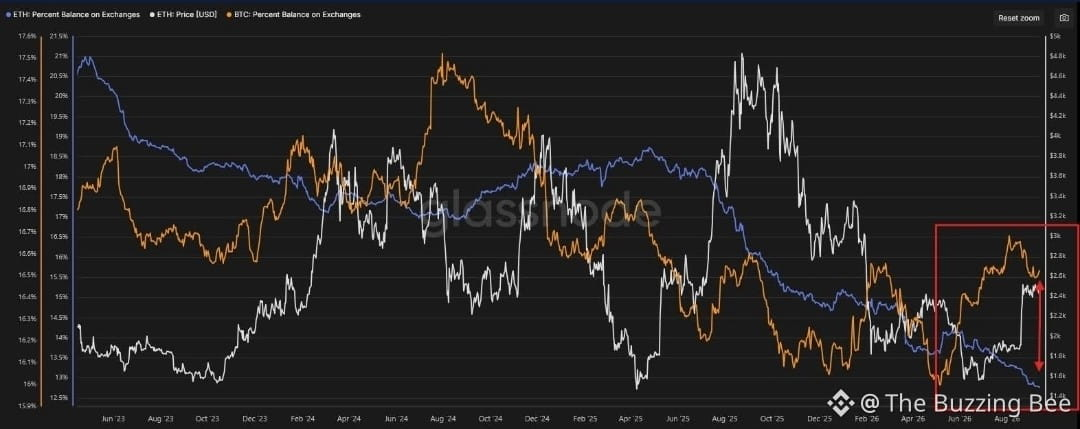
ETH vs BTC exchange supply is diverging hard.
BTC: 16.5% of supply on exchanges
ETH: below 12.7%
Gap: nearly 4 percentage points
BTC supply is stable, while $ETH keeps moving off exchanges.
Ethereum’s liquid supply is getting tighter.
The Fed still controls the liquidity story.
The interesting question this week is which one the market ultimately cares about more.
$BTC
{future}(BTCUSDT)
$ETH
{future}(ETHUSDT)
$link
🚨 CLARITY Act vs. The Fed: Which Catalyst Matters More for Crypto?
The CLARITY Act is quickly becoming a real crypto market catalyst, but I still wouldn't put it above the Fed just yet.
After Senate Republicans released the revised final draft, Polymarket odds for the bill becoming law in 2026 climbed from roughly 22% to around 32%. The latest version includes major changes requested by Democrats, while President Trump has agreed to key ethics provisions that were previously a major roadblock.
Now comes the important part.
The Senate's September 15 cloture vote requires 60 votes. Republicans hold 53 seats, meaning they still need meaningful Democratic or independent support to move the bill forward.
For Bitcoin, successful progress on CLARITY could be a significant crypto-specific catalyst. Clearer U.S. regulation could reduce uncertainty and make the market more attractive to institutions.
But the Fed remains the bigger macro variable.
Markets are now heavily expecting a 25 bp rate hike at the September 15–16 meeting, following August CPI at 3.4% and continued pressure from elevated oil prices.
So I'm watching how these two catalysts interact.
CLARITY momentum + a Fed hike that's already priced in could allow crypto to absorb the macro pressure better than expected.
But if the Fed comes across more hawkish while CLARITY loses momentum toward the 60-vote threshold, the setup becomes much more challenging for BTC and the broader market.
CLARITY can improve Bitcoin's regulatory story.
ETH vs BTC exchange supply is diverging hard.
BTC: 16.5% of supply on exchanges
ETH: below 12.7%
Gap: nearly 4 percentage points
BTC supply is stable, while $ETH keeps moving off exchanges.
Ethereum’s liquid supply is getting tighter.
The Fed still controls the liquidity story.
The interesting question this week is which one the market ultimately cares about more.
$BTC
$ETH
$link
The CLARITY Act is quickly becoming a real crypto market catalyst, but I still wouldn't put it above the Fed just yet.
After Senate Republicans released the revised final draft, Polymarket odds for the bill becoming law in 2026 climbed from roughly 22% to around 32%. The latest version includes major changes requested by Democrats, while President Trump has agreed to key ethics provisions that were previously a major roadblock.
Now comes the important part.
The Senate's September 15 cloture vote requires 60 votes. Republicans hold 53 seats, meaning they still need meaningful Democratic or independent support to move the bill forward.
For Bitcoin, successful progress on CLARITY could be a significant crypto-specific catalyst. Clearer U.S. regulation could reduce uncertainty and make the market more attractive to institutions.
But the Fed remains the bigger macro variable.
Markets are now heavily expecting a 25 bp rate hike at the September 15–16 meeting, following August CPI at 3.4% and continued pressure from elevated oil prices.
So I'm watching how these two catalysts interact.
CLARITY momentum + a Fed hike that's already priced in could allow crypto to absorb the macro pressure better than expected.
But if the Fed comes across more hawkish while CLARITY loses momentum toward the 60-vote threshold, the setup becomes much more challenging for BTC and the broader market.
CLARITY can improve Bitcoin's regulatory story.
ETH vs BTC exchange supply is diverging hard.
BTC: 16.5% of supply on exchanges
ETH: below 12.7%
Gap: nearly 4 percentage points
BTC supply is stable, while $ETH keeps moving off exchanges.
Ethereum’s liquid supply is getting tighter.
The Fed still controls the liquidity story.
The interesting question this week is which one the market ultimately cares about more.
$BTC
$ETH
$link
3
411
✨️Ethereum خزانه شرکتಗಳ累计 holdings 7.7 million ETH ዓመታዊ ከፍተኛ ደረጃ ላይ ደርሷል።
የእነሱ ባለቤትነት በቀጣይ እየጨመረ በመሄድ ላይ ነው፣ በመረጋጋት በሚደረጉ ግዢዎች ምክንያት።
$ETH
{future}(ETHUSDT)
✨️Ethereum خزانه شرکتಗಳ累计 holdings 7.7 million ETH ዓመታዊ ከፍተኛ ደረጃ ላይ ደርሷል።
የእነሱ ባለቤትነት በቀጣይ እየጨመረ በመሄድ ላይ ነው፣ በመረጋጋት በሚደረጉ ግዢዎች ምክንያት።
$ETH
የእነሱ ባለቤትነት በቀጣይ እየጨመረ በመሄድ ላይ ነው፣ በመረጋጋት በሚደረጉ ግዢዎች ምክንያት።
$ETH
297
ETH සහ BTC අතර විනිමය මත පවතින සැපයුම දැඩි ලෙස වෙනස් වෙමින් පවතී.
BTC: හුවමාරු මත පවතින සැපයුමෙන් 16.5%
ETH: 12.7%ට පහළින්
ගැප් එක: ආසන්න වශයෙන් ප්රතිශත ලකුණු 4ක්
Btc සැපයුම ස්ථාවරයි, නමුත් ETH හුවමාරු වලින් ඉවතට දිගටම යමින් පවතී.
Ethereum හි ද්රව සැපයුම දැඩි වෙමින් පවතී.
$BTC
{future}(BTCUSDT)
$ETH
{future}(ETHUSDT)
ETH සහ BTC අතර විනිමය මත පවතින සැපයුම දැඩි ලෙස වෙනස් වෙමින් පවතී.
BTC: හුවමාරු මත පවතින සැපයුමෙන් 16.5%
ETH: 12.7%ට පහළින්
ගැප් එක: ආසන්න වශයෙන් ප්රතිශත ලකුණු 4ක්
Btc සැපයුම ස්ථාවරයි, නමුත් ETH හුවමාරු වලින් ඉවතට දිගටම යමින් පවතී.
Ethereum හි ද්රව සැපයුම දැඩි වෙමින් පවතී.
$BTC
$ETH
BTC: හුවමාරු මත පවතින සැපයුමෙන් 16.5%
ETH: 12.7%ට පහළින්
ගැප් එක: ආසන්න වශයෙන් ප්රතිශත ලකුණු 4ක්
Btc සැපයුම ස්ථාවරයි, නමුත් ETH හුවමාරු වලින් ඉවතට දිගටම යමින් පවතී.
Ethereum හි ද්රව සැපයුම දැඩි වෙමින් පවතී.
$BTC
$ETH
359
✨️ ෆෙඩරල් දැඩි පරීක්ෂණයක් හමුවේ ක්රිප්ටෝව මුහුණ දෙයි; වෝල් ස්ට්රීට් hawkish වෙමින්
ගෝල්ඩ්මන් සැක්ස් සහ JPMorgan මෙම සතියේ 25 bps ක ෆෙඩරල් පොලී අනුපාත ඉහළ දැමීමක් අපේක්ෂා කරන අතර, ඒ සමඟම $BTC, ETH සහ XRP සැප්තැම්බර් මාසයේ වඩාත්ම මැක්රෝ-බර සතියෙන් එකකට ඇතුල් වෙමින් සිටී.
දැඩි වූ අගෝස්තු උද්ධමනය සහ $100 ඉක්මවා තෙල් මිල ඉහළ යාමෙන් පසුව මෙම මාරුව සිදු විය. දැන් අගෝස්තු 15-16 ෆෙඩරල් රැස්වීමේදී ඉහළ දැමීමක් සඳහා ආසන්න වශයෙන් 90% ක ඉඩක් වෙළෙඳපොළ වශයෙන් මිල කරමින් පවතී.
වෙළෙඳුන් බලන එකම දෙය ෆෙඩරලය පමණක් නොවේ. මේ සතියට CLARITY පනත් කෙටුම්පතේ ඡන්දයද ඇතුළත්ය; මෙන්ම එංගලන්ත බැංකුව සහ ජපාන බැංකුවෙන් පොලී තීරණද ඇත.
ක්රිප්ටෝවට නම් පීඩනය බොහෝ පැහැදිලිය:
• ඉහළ පොලී අනුපාත = වඩා තද ද්රවශීලතාව
• ශක්තිමත් ඩොලරය = අවදානම් වත්කම් කෙරෙහි වැඩි පීඩනය
• ඉහළ ට්රෙෂරි අස්වැන්න = වඩා දුෂ්කර තත්ත්වයන්
• මැදපෙරදිග ආතතීන් = තෙල් හරහා වැඩි අස්ථාවරතාව
ඒ නිසා මේ සතිය ඇත්තටම එක තනි හේතුවකට පමණක් නොවේ. ක්රිප්ටෝව එකවරම ඒවා කිහිපයකට මුහුණ දෙමින් සිටින අතර, බදාදා දින ෆෙඩරල් තීරණය බිට්කොයින්, ඉතේරියම් සහ XRP සඳහා සැප්තැම්බර් ඉතිරි කාලය දක්වා මනෝභාවය සකස් කළ හැකි තරම්ය.
වෝල් ස්ට්රීට් හදිසියේම තවත් ඉහළ දැමීමක් අපේක්ෂා කරන නිසා, සන්සුන් මිල ක්රියාකාරිත්වය එහි මූලික තත්ත්වය ලෙස ගන්න එක නියම කර නොගත යුතුය. මෙය ඉතා ඉක්මනින්ත් කැකෑරෙන (choppy) තත්ත්වයක් බවට පත් විය හැක.
$BTC
{future}(BTCUSDT)
✨️ ෆෙඩරල් දැඩි පරීක්ෂණයක් හමුවේ ක්රිප්ටෝව මුහුණ දෙයි; වෝල් ස්ට්රීට් hawkish වෙමින්
ගෝල්ඩ්මන් සැක්ස් සහ JPMorgan මෙම සතියේ 25 bps ක ෆෙඩරල් පොලී අනුපාත ඉහළ දැමීමක් අපේක්ෂා කරන අතර, ඒ සමඟම $BTC , ETH සහ XRP සැප්තැම්බර් මාසයේ වඩාත්ම මැක්රෝ-බර සතියෙන් එකකට ඇතුල් වෙමින් සිටී.
දැඩි වූ අගෝස්තු උද්ධමනය සහ $100 ඉක්මවා තෙල් මිල ඉහළ යාමෙන් පසුව මෙම මාරුව සිදු විය. දැන් අගෝස්තු 15-16 ෆෙඩරල් රැස්වීමේදී ඉහළ දැමීමක් සඳහා ආසන්න වශයෙන් 90% ක ඉඩක් වෙළෙඳපොළ වශයෙන් මිල කරමින් පවතී.
වෙළෙඳුන් බලන එකම දෙය ෆෙඩරලය පමණක් නොවේ. මේ සතියට CLARITY පනත් කෙටුම්පතේ ඡන්දයද ඇතුළත්ය; මෙන්ම එංගලන්ත බැංකුව සහ ජපාන බැංකුවෙන් පොලී තීරණද ඇත.
ක්රිප්ටෝවට නම් පීඩනය බොහෝ පැහැදිලිය:
• ඉහළ පොලී අනුපාත = වඩා තද ද්රවශීලතාව
• ශක්තිමත් ඩොලරය = අවදානම් වත්කම් කෙරෙහි වැඩි පීඩනය
• ඉහළ ට්රෙෂරි අස්වැන්න = වඩා දුෂ්කර තත්ත්වයන්
• මැදපෙරදිග ආතතීන් = තෙල් හරහා වැඩි අස්ථාවරතාව
ඒ නිසා මේ සතිය ඇත්තටම එක තනි හේතුවකට පමණක් නොවේ. ක්රිප්ටෝව එකවරම ඒවා කිහිපයකට මුහුණ දෙමින් සිටින අතර, බදාදා දින ෆෙඩරල් තීරණය බිට්කොයින්, ඉතේරියම් සහ XRP සඳහා සැප්තැම්බර් ඉතිරි කාලය දක්වා මනෝභාවය සකස් කළ හැකි තරම්ය.
වෝල් ස්ට්රීට් හදිසියේම තවත් ඉහළ දැමීමක් අපේක්ෂා කරන නිසා, සන්සුන් මිල ක්රියාකාරිත්වය එහි මූලික තත්ත්වය ලෙස ගන්න එක නියම කර නොගත යුතුය. මෙය ඉතා ඉක්මනින්ත් කැකෑරෙන (choppy) තත්ත්වයක් බවට පත් විය හැක.
$BTC
ගෝල්ඩ්මන් සැක්ස් සහ JPMorgan මෙම සතියේ 25 bps ක ෆෙඩරල් පොලී අනුපාත ඉහළ දැමීමක් අපේක්ෂා කරන අතර, ඒ සමඟම $BTC , ETH සහ XRP සැප්තැම්බර් මාසයේ වඩාත්ම මැක්රෝ-බර සතියෙන් එකකට ඇතුල් වෙමින් සිටී.
දැඩි වූ අගෝස්තු උද්ධමනය සහ $100 ඉක්මවා තෙල් මිල ඉහළ යාමෙන් පසුව මෙම මාරුව සිදු විය. දැන් අගෝස්තු 15-16 ෆෙඩරල් රැස්වීමේදී ඉහළ දැමීමක් සඳහා ආසන්න වශයෙන් 90% ක ඉඩක් වෙළෙඳපොළ වශයෙන් මිල කරමින් පවතී.
වෙළෙඳුන් බලන එකම දෙය ෆෙඩරලය පමණක් නොවේ. මේ සතියට CLARITY පනත් කෙටුම්පතේ ඡන්දයද ඇතුළත්ය; මෙන්ම එංගලන්ත බැංකුව සහ ජපාන බැංකුවෙන් පොලී තීරණද ඇත.
ක්රිප්ටෝවට නම් පීඩනය බොහෝ පැහැදිලිය:
• ඉහළ පොලී අනුපාත = වඩා තද ද්රවශීලතාව
• ශක්තිමත් ඩොලරය = අවදානම් වත්කම් කෙරෙහි වැඩි පීඩනය
• ඉහළ ට්රෙෂරි අස්වැන්න = වඩා දුෂ්කර තත්ත්වයන්
• මැදපෙරදිග ආතතීන් = තෙල් හරහා වැඩි අස්ථාවරතාව
ඒ නිසා මේ සතිය ඇත්තටම එක තනි හේතුවකට පමණක් නොවේ. ක්රිප්ටෝව එකවරම ඒවා කිහිපයකට මුහුණ දෙමින් සිටින අතර, බදාදා දින ෆෙඩරල් තීරණය බිට්කොයින්, ඉතේරියම් සහ XRP සඳහා සැප්තැම්බර් ඉතිරි කාලය දක්වා මනෝභාවය සකස් කළ හැකි තරම්ය.
වෝල් ස්ට්රීට් හදිසියේම තවත් ඉහළ දැමීමක් අපේක්ෂා කරන නිසා, සන්සුන් මිල ක්රියාකාරිත්වය එහි මූලික තත්ත්වය ලෙස ගන්න එක නියම කර නොගත යුතුය. මෙය ඉතා ඉක්මනින්ත් කැකෑරෙන (choppy) තත්ත්වයක් බවට පත් විය හැක.
$BTC
1
200
📰මෙම සතියේ ප්රධාන සිදුවීම්📰
US 20Y බොන්ඩ් වෙන්දේසිය - අඟහරුවාදා
අගෝස්තු සිල්ලර විකුණුම් දත්ත - බදාදා🚨
ෆෙඩ් පොලී අනුපාත තීරණය - බදාදා 🚨
සැප්තැම්බර් ෆිලි ෆෙඩ් නිෂ්පාදන දර්ශකය - බ්රහස්පතින්දා
අගෝස්තු Pending Home Sales දත්ත - බ්රහස්පතින්දා
අගෝස්තු කාර්මික නිෂ්පාදන දත්ත - සිකුරාදා
• WTI සතිඅන්තයේ ඩ්රෝන් ප්රහාර හේතුවෙන් සෞදි අරාබිය තම ප්රධාන නැගෙනහිර-බටහිර නළ මාර්ගය වසා දැමීමෙන් පසුව, එය සි.ම. 3%ක් පමණ ඉහළ ගොස් ආසන්න වශයෙන් ඩොලර් $103 දක්වාත් Brent ඩොලර් $107 ඉක්මවාත් ගියේය; එමඟින් සිකුරාදා විකිණීම් අවලංගු විය. ඔමානය සමඟ ඇති අක්රමිකතාව අඩු කිරීමේ රැස්වීම කල් දමා ඇති අතර නළ මාර්ගය සඳහා අලුත්වැඩියා කාලසටහනක් නොමැති බැවින් වෙළඳුන් WTI හි $104.46 සහ Brent හි $109.97 අසල ප්රතිරෝධ ඉලක්ක සමඟ බූලිෂ් (ඉහළ යාමේ) ආකල්පය තබාගෙන සිටී.
$BTC දිනය තුළ දළ වශයෙන් 1-3% පමණ පහළ ගොස් ඩොලර් $76,400 සිට $77,700 අතර ගනුදෙනු කළේය; FOMC රැස්වීමට පෙර හෝකිෂ් (තද) මැක්රෝ ප්රතිමිලනය සහ වැඩිවෙමින් පවතින භාණ්ඩාගාර අස්වැටුම් (Treasury yields) හේතුවෙන් පීඩනයක් ඇති විය. ස්පොට් බිට්කොයින් ETF වල ශුද්ධ පිටතට ගලායාම් (net outflows) දක්නට ලැබුණේ, ෆියුචර්ස් වෙළඳපොල දැන් 25-basis-point සඳහා 85-87% සම්භාවිතාවක් මිලකරණය කර ඇති බැවිනි
$EUR/USD ආසන්න වශයෙන් 0.4%ක් පහළ ගොස් $1.16 දක්වා ගියේය; මන්ද දේශීය ඩොලර් දර්ශකය මෑත ඉහළ මට්ටම් අසල රැඳී සිටීම හේතුවෙන්, ඉහළ යන බොන්ඩ් අස්වැටුම් සහ මැද පෙරදිග ආතතීන්ට සම්බන්ධ ආරක්ෂිත ආකර්ෂණ (safe-haven) ඉල්ලුම වැඩි වූ නිසාය. ඉහළ තෙල් මිල සහ උණුසුම් US උද්ධමන දත්ත ෆෙඩ් ප්රතිපත්තිය තද කිරීමට ඇති අපේක්ෂාවන් තවදුරටත් තහවුරු කර තිබේ; ඒ නිසා ග්රීන්බැක් එක පුළුල් ලෙස ශක්තිමත් වෙමින් පවතින අතර, ආසියාවේ තවදුරටත් පෙසෝ අගය ද දුර්වල වීමක් (peso weakness) ද ඇතුළත්ව පවතී.
📰මෙම සතියේ ප්රධාන සිදුවීම්📰
US 20Y බොන්ඩ් වෙන්දේසිය - අඟහරුවාදා
අගෝස්තු සිල්ලර විකුණුම් දත්ත - බදාදා🚨
ෆෙඩ් පොලී අනුපාත තීරණය - බදාදා 🚨
සැප්තැම්බර් ෆිලි ෆෙඩ් නිෂ්පාදන දර්ශකය - බ්රහස්පතින්දා
අගෝස්තු Pending Home Sales දත්ත - බ්රහස්පතින්දා
අගෝස්තු කාර්මික නිෂ්පාදන දත්ත - සිකුරාදා
• WTI සතිඅන්තයේ ඩ්රෝන් ප්රහාර හේතුවෙන් සෞදි අරාබිය තම ප්රධාන නැගෙනහිර-බටහිර නළ මාර්ගය වසා දැමීමෙන් පසුව, එය සි.ම. 3%ක් පමණ ඉහළ ගොස් ආසන්න වශයෙන් ඩොලර් $103 දක්වාත් Brent ඩොලර් $107 ඉක්මවාත් ගියේය; එමඟින් සිකුරාදා විකිණීම් අවලංගු විය. ඔමානය සමඟ ඇති අක්රමිකතාව අඩු කිරීමේ රැස්වීම කල් දමා ඇති අතර නළ මාර්ගය සඳහා අලුත්වැඩියා කාලසටහනක් නොමැති බැවින් වෙළඳුන් WTI හි $104.46 සහ Brent හි $109.97 අසල ප්රතිරෝධ ඉලක්ක සමඟ බූලිෂ් (ඉහළ යාමේ) ආකල්පය තබාගෙන සිටී.
$BTC දිනය තුළ දළ වශයෙන් 1-3% පමණ පහළ ගොස් ඩොලර් $76,400 සිට $77,700 අතර ගනුදෙනු කළේය; FOMC රැස්වීමට පෙර හෝකිෂ් (තද) මැක්රෝ ප්රතිමිලනය සහ වැඩිවෙමින් පවතින භාණ්ඩාගාර අස්වැටුම් (Treasury yields) හේතුවෙන් පීඩනයක් ඇති විය. ස්පොට් බිට්කොයින් ETF වල ශුද්ධ පිටතට ගලායාම් (net outflows) දක්නට ලැබුණේ, ෆියුචර්ස් වෙළඳපොල දැන් 25-basis-point සඳහා 85-87% සම්භාවිතාවක් මිලකරණය කර ඇති බැවිනි
$EUR/USD ආසන්න වශයෙන් 0.4%ක් පහළ ගොස් $1.16 දක්වා ගියේය; මන්ද දේශීය ඩොලර් දර්ශකය මෑත ඉහළ මට්ටම් අසල රැඳී සිටීම හේතුවෙන්, ඉහළ යන බොන්ඩ් අස්වැටුම් සහ මැද පෙරදිග ආතතීන්ට සම්බන්ධ ආරක්ෂිත ආකර්ෂණ (safe-haven) ඉල්ලුම වැඩි වූ නිසාය. ඉහළ තෙල් මිල සහ උණුසුම් US උද්ධමන දත්ත ෆෙඩ් ප්රතිපත්තිය තද කිරීමට ඇති අපේක්ෂාවන් තවදුරටත් තහවුරු කර තිබේ; ඒ නිසා ග්රීන්බැක් එක පුළුල් ලෙස ශක්තිමත් වෙමින් පවතින අතර, ආසියාවේ තවදුරටත් පෙසෝ අගය ද දුර්වල වීමක් (peso weakness) ද ඇතුළත්ව පවතී.
US 20Y බොන්ඩ් වෙන්දේසිය - අඟහරුවාදා
අගෝස්තු සිල්ලර විකුණුම් දත්ත - බදාදා🚨
ෆෙඩ් පොලී අනුපාත තීරණය - බදාදා 🚨
සැප්තැම්බර් ෆිලි ෆෙඩ් නිෂ්පාදන දර්ශකය - බ්රහස්පතින්දා
අගෝස්තු Pending Home Sales දත්ත - බ්රහස්පතින්දා
අගෝස්තු කාර්මික නිෂ්පාදන දත්ත - සිකුරාදා
• WTI සතිඅන්තයේ ඩ්රෝන් ප්රහාර හේතුවෙන් සෞදි අරාබිය තම ප්රධාන නැගෙනහිර-බටහිර නළ මාර්ගය වසා දැමීමෙන් පසුව, එය සි.ම. 3%ක් පමණ ඉහළ ගොස් ආසන්න වශයෙන් ඩොලර් $103 දක්වාත් Brent ඩොලර් $107 ඉක්මවාත් ගියේය; එමඟින් සිකුරාදා විකිණීම් අවලංගු විය. ඔමානය සමඟ ඇති අක්රමිකතාව අඩු කිරීමේ රැස්වීම කල් දමා ඇති අතර නළ මාර්ගය සඳහා අලුත්වැඩියා කාලසටහනක් නොමැති බැවින් වෙළඳුන් WTI හි $104.46 සහ Brent හි $109.97 අසල ප්රතිරෝධ ඉලක්ක සමඟ බූලිෂ් (ඉහළ යාමේ) ආකල්පය තබාගෙන සිටී.
$BTC දිනය තුළ දළ වශයෙන් 1-3% පමණ පහළ ගොස් ඩොලර් $76,400 සිට $77,700 අතර ගනුදෙනු කළේය; FOMC රැස්වීමට පෙර හෝකිෂ් (තද) මැක්රෝ ප්රතිමිලනය සහ වැඩිවෙමින් පවතින භාණ්ඩාගාර අස්වැටුම් (Treasury yields) හේතුවෙන් පීඩනයක් ඇති විය. ස්පොට් බිට්කොයින් ETF වල ශුද්ධ පිටතට ගලායාම් (net outflows) දක්නට ලැබුණේ, ෆියුචර්ස් වෙළඳපොල දැන් 25-basis-point සඳහා 85-87% සම්භාවිතාවක් මිලකරණය කර ඇති බැවිනි
$EUR/USD ආසන්න වශයෙන් 0.4%ක් පහළ ගොස් $1.16 දක්වා ගියේය; මන්ද දේශීය ඩොලර් දර්ශකය මෑත ඉහළ මට්ටම් අසල රැඳී සිටීම හේතුවෙන්, ඉහළ යන බොන්ඩ් අස්වැටුම් සහ මැද පෙරදිග ආතතීන්ට සම්බන්ධ ආරක්ෂිත ආකර්ෂණ (safe-haven) ඉල්ලුම වැඩි වූ නිසාය. ඉහළ තෙල් මිල සහ උණුසුම් US උද්ධමන දත්ත ෆෙඩ් ප්රතිපත්තිය තද කිරීමට ඇති අපේක්ෂාවන් තවදුරටත් තහවුරු කර තිබේ; ඒ නිසා ග්රීන්බැක් එක පුළුල් ලෙස ශක්තිමත් වෙමින් පවතින අතර, ආසියාවේ තවදුරටත් පෙසෝ අගය ද දුර්වල වීමක් (peso weakness) ද ඇතුළත්ව පවතී.
249
පරිවර්තනය බලන්න
CLARITY Act enters its final stage before the September 15 vote
The U.S. Senate has added 126 Democratic amendments to the CLARITY Act, including one of the most debated proposals: limiting crypto-related earnings for senior government officials.
Under the proposed rules, the President, Vice President, members of Congress, federal judges and their spouses could face restrictions on holding major stakes in crypto companies or making money from launching or promoting tokens.
The bill would also clarify that miners, validators and software developers are not required to register as financial intermediaries, while giving the CFTC stronger oversight of parts of the crypto market.
$BTC
{future}(BTCUSDT)
CLARITY Act enters its final stage before the September 15 vote
The U.S. Senate has added 126 Democratic amendments to the CLARITY Act, including one of the most debated proposals: limiting crypto-related earnings for senior government officials.
Under the proposed rules, the President, Vice President, members of Congress, federal judges and their spouses could face restrictions on holding major stakes in crypto companies or making money from launching or promoting tokens.
The bill would also clarify that miners, validators and software developers are not required to register as financial intermediaries, while giving the CFTC stronger oversight of parts of the crypto market.
$BTC
The U.S. Senate has added 126 Democratic amendments to the CLARITY Act, including one of the most debated proposals: limiting crypto-related earnings for senior government officials.
Under the proposed rules, the President, Vice President, members of Congress, federal judges and their spouses could face restrictions on holding major stakes in crypto companies or making money from launching or promoting tokens.
The bill would also clarify that miners, validators and software developers are not required to register as financial intermediaries, while giving the CFTC stronger oversight of parts of the crypto market.
$BTC
252
පරිවර්තනය බලන්න
💥 BTC PRICE ANALYSIS: IS BITCOIN HEADING TOWARD $50K?
Bitcoin’s 1D market structure remains bearish, following the LL → LH SMC pattern.
🔴 If BTC fails to reclaim the $83K CHoCH level, further downside toward the $68K–$69K FVG, $62K–$64K demand zone, and potentially $50K remains possible.
🟢 A confirmed daily breakout above $83K could invalidate this bearish setup.
Is Bitcoin preparing for another major correction?
$BTC
{future}(BTCUSDT)
$ETH
{future}(ETHUSDT)
$SOL
{future}(SOLUSDT)
💥 BTC PRICE ANALYSIS: IS BITCOIN HEADING TOWARD $50K?
Bitcoin’s 1D market structure remains bearish, following the LL → LH SMC pattern.
🔴 If BTC fails to reclaim the $83K CHoCH level, further downside toward the $68K–$69K FVG, $62K–$64K demand zone, and potentially $50K remains possible.
🟢 A confirmed daily breakout above $83K could invalidate this bearish setup.
Is Bitcoin preparing for another major correction?
$BTC
$ETH
$SOL
Bitcoin’s 1D market structure remains bearish, following the LL → LH SMC pattern.
🔴 If BTC fails to reclaim the $83K CHoCH level, further downside toward the $68K–$69K FVG, $62K–$64K demand zone, and potentially $50K remains possible.
🟢 A confirmed daily breakout above $83K could invalidate this bearish setup.
Is Bitcoin preparing for another major correction?
$BTC
$ETH
$SOL
1
2
340
💥🔹️ BTC ETF-වලට ජනවාරි මාසයෙන් පසු මෙතෙක් තිබූ ශක්තිමත්ම එක් දිනයේ පසුබෑම (inflows) ලැබුණා.
පසුගිය බ්රහස්පතින්දා එම අරමුදල් ඩොලර් මිලියන 643ක් ඇතුල් කරගත් අතර, එය 2026 වසරේ ඔවුන්ගේ ශක්තිමත්ම මාසය පසු වූම දිගටමයි.
එය සිත්ගන්නා කාරණයක්, මන්ද ETF flows වලට අනුව සාම්ප්රදායික ප්රාග්ධනය ඇත්තටම බිට්කොයින් වෙත නැවත පියනෙන්නෙද කියලා බැලීමට වඩාත් පැහැදිලි මාර්ගවලින් එකක්.
මිල ලීවරය (leverage) සහ කෙටි විකිණීම (short covering) නිසා ඉහළට නැගෙන්න පුළුවන්.
නමුත් සාර්ථක ලෙස දිගටම පවතින ETF ඉල්ලුම (demand) වෙනස් දෙයක්.
මේ inflows දිගටම තිබුණොත්, එය ඊළඟ ඉහළට යාමේ (next leg higher) සඳහා බිට්කොයින්ට වඩා ශක්තිමත් පදනමක් ලබා දෙන්න පුළුවන්.
දැන් ඇති ප්රශ්නය නම් ඩොලර් මිලියන 643ක් කියන්නේ එක් දිනේ විශේෂ spike එකක්ද, නැත්තම් ආයතනික මිලදී ගැනීමේ තවත් බරපතළ රැල්ලක් ආරම්භ වෙලාද කියන එක.
$BTC
{future}(BTCUSDT)
💥🔹️ BTC ETF-වලට ජනවාරි මාසයෙන් පසු මෙතෙක් තිබූ ශක්තිමත්ම එක් දිනයේ පසුබෑම (inflows) ලැබුණා.
පසුගිය බ්රහස්පතින්දා එම අරමුදල් ඩොලර් මිලියන 643ක් ඇතුල් කරගත් අතර, එය 2026 වසරේ ඔවුන්ගේ ශක්තිමත්ම මාසය පසු වූම දිගටමයි.
එය සිත්ගන්නා කාරණයක්, මන්ද ETF flows වලට අනුව සාම්ප්රදායික ප්රාග්ධනය ඇත්තටම බිට්කොයින් වෙත නැවත පියනෙන්නෙද කියලා බැලීමට වඩාත් පැහැදිලි මාර්ගවලින් එකක්.
මිල ලීවරය (leverage) සහ කෙටි විකිණීම (short covering) නිසා ඉහළට නැගෙන්න පුළුවන්.
නමුත් සාර්ථක ලෙස දිගටම පවතින ETF ඉල්ලුම (demand) වෙනස් දෙයක්.
මේ inflows දිගටම තිබුණොත්, එය ඊළඟ ඉහළට යාමේ (next leg higher) සඳහා බිට්කොයින්ට වඩා ශක්තිමත් පදනමක් ලබා දෙන්න පුළුවන්.
දැන් ඇති ප්රශ්නය නම් ඩොලර් මිලියන 643ක් කියන්නේ එක් දිනේ විශේෂ spike එකක්ද, නැත්තම් ආයතනික මිලදී ගැනීමේ තවත් බරපතළ රැල්ලක් ආරම්භ වෙලාද කියන එක.
$BTC
පසුගිය බ්රහස්පතින්දා එම අරමුදල් ඩොලර් මිලියන 643ක් ඇතුල් කරගත් අතර, එය 2026 වසරේ ඔවුන්ගේ ශක්තිමත්ම මාසය පසු වූම දිගටමයි.
එය සිත්ගන්නා කාරණයක්, මන්ද ETF flows වලට අනුව සාම්ප්රදායික ප්රාග්ධනය ඇත්තටම බිට්කොයින් වෙත නැවත පියනෙන්නෙද කියලා බැලීමට වඩාත් පැහැදිලි මාර්ගවලින් එකක්.
මිල ලීවරය (leverage) සහ කෙටි විකිණීම (short covering) නිසා ඉහළට නැගෙන්න පුළුවන්.
නමුත් සාර්ථක ලෙස දිගටම පවතින ETF ඉල්ලුම (demand) වෙනස් දෙයක්.
මේ inflows දිගටම තිබුණොත්, එය ඊළඟ ඉහළට යාමේ (next leg higher) සඳහා බිට්කොයින්ට වඩා ශක්තිමත් පදනමක් ලබා දෙන්න පුළුවන්.
දැන් ඇති ප්රශ්නය නම් ඩොලර් මිලියන 643ක් කියන්නේ එක් දිනේ විශේෂ spike එකක්ද, නැත්තම් ආයතනික මිලදී ගැනීමේ තවත් බරපතළ රැල්ලක් ආරම්භ වෙලාද කියන එක.
$BTC
1
635
SOL සතුව එහි මීළඟ පියවර තීරණය කළ හැකි ප්රධාන උත්ප්රේරක කිහිපයක් තිබේ. 👀🔥
Solana නැවත අවධානයට ගැනීමට කරුණු තුනක් බලපාමින් තිබේ:
⚡ Alpenglow Upgrade
වේගවත් අවසන්කරණයක් (finality) ඉලක්ක කරන ප්රධාන ජාල උත්ශ්රේණියක් මඟින් කාර්යසාධනය වැඩිදියුණු කර දරුමය පිළිගැනීම (adoption) ශක්තිමත් කළ හැක.
🔥 Tokenomics Changes
අඩු උද්ධමනය (inflation) සහ ගාස්තු දැවීම (fee burns) වටා නව යෝජනා මඟින් වඩාත් හිතකර දිගුකාලීන සැපයුම් ව්යුහයක් නිර්මාණය විය හැක.
🏦 ETF Potential
ඇමරිකාවේ U.S. spot Solana ETF සම්බන්ධ තීරණ මඟින් නැවුම් ආයතනික අවධානයක් සහ නව ද්රවතාවක් (liquidity) ගෙන ඒමට හැක.
SOL සඳහා මීළඟ අදියර මෙම උත්ප්රේරක ක්රියාත්මක වන ආකාරය මත රඳා පවතිනු ඇත.
Solana, ක්රිප්ටෝවේ ශක්තිමත්ම පරිසර පද්ධති (ecosystems) වලින් එකක් ලෙස ඉදිරියට තල්ලු කරගෙන යාවිද?
පහතින් අදහස් දක්වන්න 👇✅️
$SOL
{future}(SOLUSDT)
$XRP
{future}(XRPUSDT)
SOL සතුව එහි මීළඟ පියවර තීරණය කළ හැකි ප්රධාන උත්ප්රේරක කිහිපයක් තිබේ. 👀🔥
Solana නැවත අවධානයට ගැනීමට කරුණු තුනක් බලපාමින් තිබේ:
⚡ Alpenglow Upgrade
වේගවත් අවසන්කරණයක් (finality) ඉලක්ක කරන ප්රධාන ජාල උත්ශ්රේණියක් මඟින් කාර්යසාධනය වැඩිදියුණු කර දරුමය පිළිගැනීම (adoption) ශක්තිමත් කළ හැක.
🔥 Tokenomics Changes
අඩු උද්ධමනය (inflation) සහ ගාස්තු දැවීම (fee burns) වටා නව යෝජනා මඟින් වඩාත් හිතකර දිගුකාලීන සැපයුම් ව්යුහයක් නිර්මාණය විය හැක.
🏦 ETF Potential
ඇමරිකාවේ U.S. spot Solana ETF සම්බන්ධ තීරණ මඟින් නැවුම් ආයතනික අවධානයක් සහ නව ද්රවතාවක් (liquidity) ගෙන ඒමට හැක.
SOL සඳහා මීළඟ අදියර මෙම උත්ප්රේරක ක්රියාත්මක වන ආකාරය මත රඳා පවතිනු ඇත.
Solana, ක්රිප්ටෝවේ ශක්තිමත්ම පරිසර පද්ධති (ecosystems) වලින් එකක් ලෙස ඉදිරියට තල්ලු කරගෙන යාවිද?
පහතින් අදහස් දක්වන්න 👇✅️
$SOL
$XRP
Solana නැවත අවධානයට ගැනීමට කරුණු තුනක් බලපාමින් තිබේ:
⚡ Alpenglow Upgrade
වේගවත් අවසන්කරණයක් (finality) ඉලක්ක කරන ප්රධාන ජාල උත්ශ්රේණියක් මඟින් කාර්යසාධනය වැඩිදියුණු කර දරුමය පිළිගැනීම (adoption) ශක්තිමත් කළ හැක.
🔥 Tokenomics Changes
අඩු උද්ධමනය (inflation) සහ ගාස්තු දැවීම (fee burns) වටා නව යෝජනා මඟින් වඩාත් හිතකර දිගුකාලීන සැපයුම් ව්යුහයක් නිර්මාණය විය හැක.
🏦 ETF Potential
ඇමරිකාවේ U.S. spot Solana ETF සම්බන්ධ තීරණ මඟින් නැවුම් ආයතනික අවධානයක් සහ නව ද්රවතාවක් (liquidity) ගෙන ඒමට හැක.
SOL සඳහා මීළඟ අදියර මෙම උත්ප්රේරක ක්රියාත්මක වන ආකාරය මත රඳා පවතිනු ඇත.
Solana, ක්රිප්ටෝවේ ශක්තිමත්ම පරිසර පද්ධති (ecosystems) වලින් එකක් ලෙස ඉදිරියට තල්ලු කරගෙන යාවිද?
පහතින් අදහස් දක්වන්න 👇✅️
$SOL
$XRP
1
559
පරිවර්තනය බලන්න
BlackRock's ETH fund really has scooped up about $251 million in ETH over the last 20 trading days with zero outflows, which is solid institutional buying even while the price chops around.
That doesn't mean Wall Street is ditching BTC for ETH though, Bitcoin ETFs still dwarf the ETH ones in total size and remain the core "digital gold" allocation for most big players. I think they're just adding ETH exposure for the staking yields and its role as the actual settlement layer for tokenization stuff BlackRock itself is pushing. Smart money is treating them as complementary, not choosing one over the other.
$BTC
{future}(BTCUSDT)
$ETH
{future}(ETHUSDT)
BlackRock's ETH fund really has scooped up about $251 million in ETH over the last 20 trading days with zero outflows, which is solid institutional buying even while the price chops around.
That doesn't mean Wall Street is ditching BTC for ETH though, Bitcoin ETFs still dwarf the ETH ones in total size and remain the core "digital gold" allocation for most big players. I think they're just adding ETH exposure for the staking yields and its role as the actual settlement layer for tokenization stuff BlackRock itself is pushing. Smart money is treating them as complementary, not choosing one over the other.
$BTC
$ETH
That doesn't mean Wall Street is ditching BTC for ETH though, Bitcoin ETFs still dwarf the ETH ones in total size and remain the core "digital gold" allocation for most big players. I think they're just adding ETH exposure for the staking yields and its role as the actual settlement layer for tokenization stuff BlackRock itself is pushing. Smart money is treating them as complementary, not choosing one over the other.
$BTC
$ETH
2
371
පරිවර්තනය බලන්න
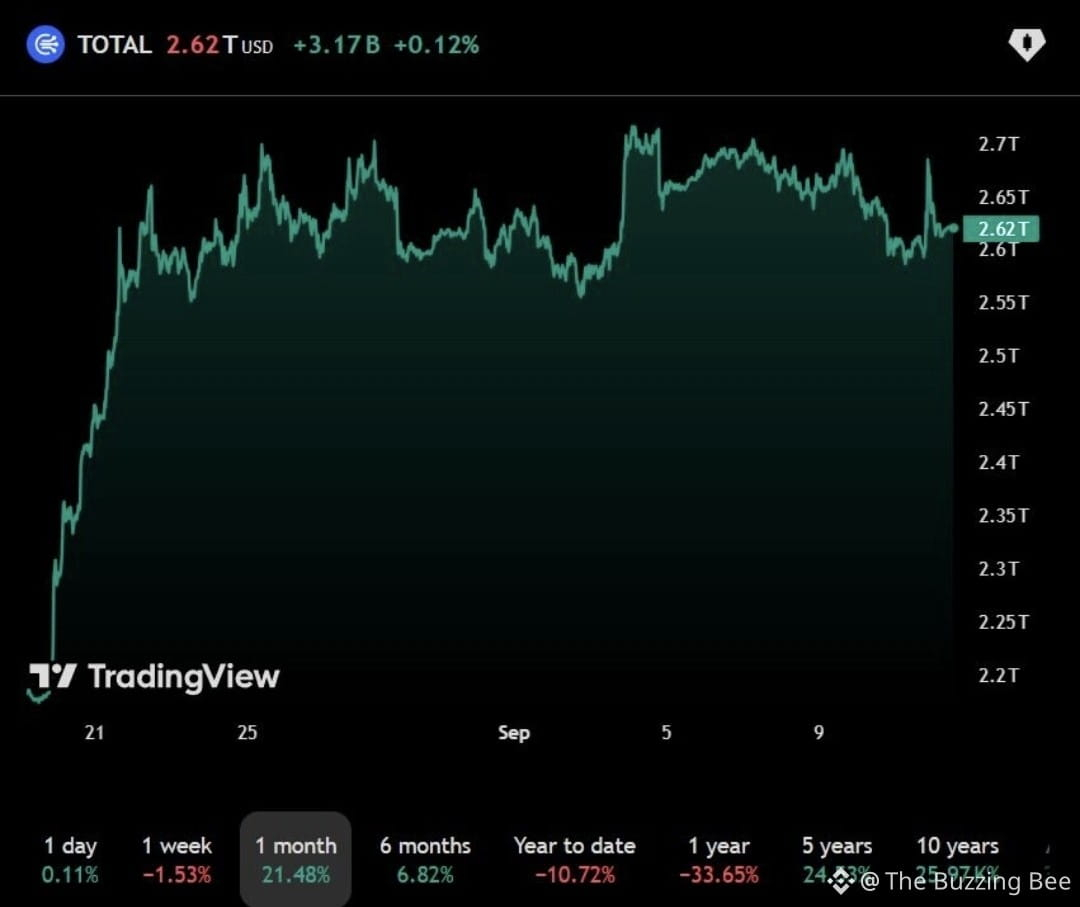
The total crypto market has added roughly $460B in value over the past month.
That’s a pretty significant recovery considering how much pressure the market faced earlier in the cycle.
Total crypto market cap is now around $2.6T, with Bitcoin still accounting for nearly 59% of the market.
The interesting part is what happens next.
A strong monthly recovery is encouraging, but BTC is still facing resistance and macro conditions remain uncertain after the latest CPI volatility.
$460B has come back into the market. Now we need to see if buyers can keep it there.
✅️ FOLLOW FOR MORE ✅️
$BTC
{future}(BTCUSDT)
$ETH
{future}(ETHUSDT)
The total crypto market has added roughly $460B in value over the past month.
That’s a pretty significant recovery considering how much pressure the market faced earlier in the cycle.
Total crypto market cap is now around $2.6T, with Bitcoin still accounting for nearly 59% of the market.
The interesting part is what happens next.
A strong monthly recovery is encouraging, but BTC is still facing resistance and macro conditions remain uncertain after the latest CPI volatility.
$460B has come back into the market. Now we need to see if buyers can keep it there.
✅️ FOLLOW FOR MORE ✅️
$BTC
$ETH
That’s a pretty significant recovery considering how much pressure the market faced earlier in the cycle.
Total crypto market cap is now around $2.6T, with Bitcoin still accounting for nearly 59% of the market.
The interesting part is what happens next.
A strong monthly recovery is encouraging, but BTC is still facing resistance and macro conditions remain uncertain after the latest CPI volatility.
$460B has come back into the market. Now we need to see if buyers can keep it there.
✅️ FOLLOW FOR MORE ✅️
$BTC
$ETH
3
224
තවත් අන්තර්ගතයන් ගවේෂණය කිරීමට ඇතුල් වන්න
Binance චතුරශ්රය හි ගෝලීය ක්රිප්ටෝ පරිශීලකයින් හා එක්වන්න
⚡️ ක්රිප්ටෝ පිළිබඳ නවතම සහ ප්රයෝජනවත් තොරතුරු ලබා ගන්න.
💬 ලොව විශාලතම ක්රිප්ටෝ හුවමාරුව මගින් විශ්වාස කෙරේ.
👍 සත්යායනය කරන ලද නිර්මාණකරුවන්ගෙන් සැබෑ විදසුන් සොයා ගන්න.
විද්යුත් තැපෑල / දුරකථන අංකය
නැගී එන මාතෘකා
HKCompletesFirstHKDStablecoinUseCase
1,139 views
101 සාකච්ඡා කරමින්
#HKCompletesFirstHKDStablecoinUseCase
ဟောင်ကောင်၏ stablecoin အကြောင်းအရာသည် စည်းမျဉ်းမှနေ၍ လက်တွေ့အသုံးပြုမှုဘက်သို့ စတင်ရွေ့လျားလာနေပြီဖြစ်သည်။
စည်းမျဉ်းသတ်မှတ်ထားသော HKD stablecoin တစ်မျိုးဖြစ်သည့် HKDAP ကို ယခုအချိန်တွင် ဒစ်ဂျစ်တယ်ငွေရေးကြေးရေးဈေးကွက်ရန်ပုံငွေ (digital money market fund) တစ်ခု၏ ငွေပေးငွေယူလုပ်ငန်းတွင် အသုံးပြုခဲ့ပြီး၊ လိုင်စင်ရ ဒစ်ဂျစ်တယ်-ပိုင်ဆိုင်မှု ပလက်ဖောင်းမှတစ်ဆင့် ရင်းနှီးမြှုပ်နှံသူများအနေဖြင့် ရန်ပုံငွေယူနစ်များကို စာရင်းသွင်းနိုင်ပြီး ပြန်လည်ကင်းလွတ် (redeem) လုပ်နိုင်စေခဲ့သည်။ ChinaAMC (HK)၊ Standard Chartered နှင့် OSL တို့သည် ယင်းငွေပေးငွေယူလုပ်ငန်းတွင် ပါဝင်ခဲ့ကြသည်။
ကျွန်တော့်ကို သတိထားမိစေတဲ့အချက်ကတော့ ဒါဟာ stablecoin ကြေညာချက်တစ်ခုတည်းထက်ပိုပါတယ်။ စည်းမျဉ်းသတ်မှတ်ထားသော ဒစ်ဂျစ်တယ်ငွေနှင့် တိုကင်နည်းသော ငွေကြေးဆိုင်ရာ ထုတ်ကုန်များအကြား လက်တွေ့ကျကျ ဆက်နွယ်မှုကို ပြသနေခြင်းဖြစ်သည်။
ဟောင်ကောင်က Stablecoins Ordinance စတင်အာဏာသက်ရောက်လာကတည်းက ၎င်း၏ stablecoin ဖွဲ့စည်းတည်ဆောက်ပုံကို တည်ဆောက်နေခဲ့ပြီး၊ HKMA က ၂၀၂၆ ခုနှစ် ဧပြီလတွင် ၎င်း၏ ပထမဆုံး stablecoin လိုင်စင် နှစ်ခုကို ထုတ်ပေးခဲ့သည်။
ကျွန်တော့်အတွက် စိတ်ဝင်စားစရာကတော့ အခုအစောပိုင်းအသုံးချမှုကိစ္စတွေက ပိုမိုကျယ်ပြန့်တဲ့ နေ့စဉ်အသုံးပြုနိုင်မယ့် ငွေကြေးဆိုင်ရာ အသုံးချမှုတွေအဖြစ် တိုးတက်လာနိုင်မလားဆိုတာကို ကြည့်ရခြင်းဖြစ်သည်။
stablecoins တွေအားလုံးကို ချက်ချင်းပြောင်းလဲစေမယ်လို့ ကျွန်တော် မယူဆထားပါဘူး။ ဒါက အစောပိုင်းအဆင့်တစ်ခုသာဖြစ်ပြီး၊ လက်ခံမှုက စည်းမျဉ်းသတ်မှတ်ချက်များ၊ လိုက်လျောမှု (liquidity)၊ အခြေခံအဆောက်အအုံနှင့် လက်ရှိအသုံးပြုသူလိုအပ်ချက်အပေါ် မူတည်ပါလိမ့်မယ်။
#HKDStablecoin #HKDAP #Stablecoin #HongKong #Crypto #DigitalAssets #BinanceSquare
Zakria_Ahmad-f7888
·2 කැමත්ත දැක්වීම්
·108 views
VietnamPlansFirstCryptoLicensesIn2026
793 views
62 සාකච්ඡා කරමින්
BTCBreaks80K
192,238 views
3,129 සාකච්ඡා කරමින්