
AFx_Crypto
7.1k පෝස්ටු

AFx_Crypto
 Binance චතුරශ්ර සත්යාපිත+
වාර්තා කරන්න
පරිශීලක අවහිර කරන්න
Top Crypto Degen || Web3 Ambassador || Binance Creator || Hype Master || X..@AFx_Crypto
2.1K+ හඹා යමින්
37.8K+ හඹා යන්නන්
22.7K+ කැමති විය
පෝස්ටු
සියල්ල
උපුටා දැක්වීම්
සජීවි
·
--
පරිවර්තනය බලන්න
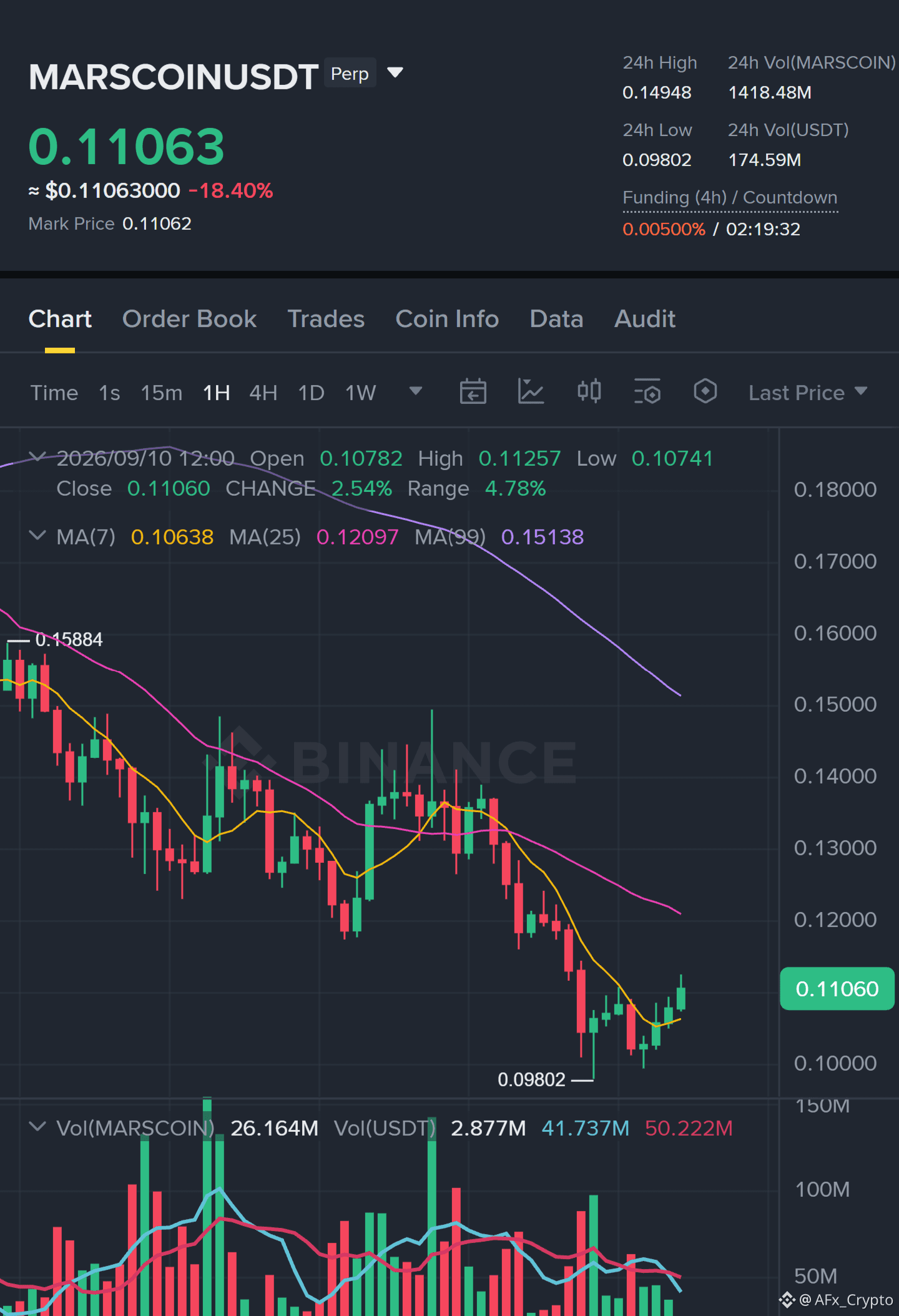
$MARSCOIN / USDT is sitting at an interesting point as price consolidates around $0.120.
The short-term structure still looks under pressure, with the 15m RSI near 35 showing weak buying momentum. At the same time, the 1h ATR suggests that volatility remains high enough for a meaningful move if the current range breaks.
The key levels I’m watching:
→ $0.119–$0.121: current decision area
→ $0.095: first major downside level
→ $0.079: deeper support zone
→ $0.054: extended downside area
→ $0.153: important invalidation level
The bigger picture matters here. The daily structure is still range-bound, so any move lower would be better viewed as a rejection from the upper part of the range rather than a confirmed long-term downtrend.
That also leaves room for another possibility: a downside sweep followed by a reclaim and range breakout.
The real question is whether sellers can push MARSCOIN toward the lower range levels, or whether this weakness becomes a liquidity sweep before buyers step back in.
DYOR. NFA.
$MARSCOIN / USDT is sitting at an interesting point as price consolidates around $0.120.
The short-term structure still looks under pressure, with the 15m RSI near 35 showing weak buying momentum. At the same time, the 1h ATR suggests that volatility remains high enough for a meaningful move if the current range breaks.
The key levels I’m watching:
→ $0.119–$0.121: current decision area
→ $0.095: first major downside level
→ $0.079: deeper support zone
→ $0.054: extended downside area
→ $0.153: important invalidation level
The bigger picture matters here. The daily structure is still range-bound, so any move lower would be better viewed as a rejection from the upper part of the range rather than a confirmed long-term downtrend.
That also leaves room for another possibility: a downside sweep followed by a reclaim and range breakout.
The real question is whether sellers can push MARSCOIN toward the lower range levels, or whether this weakness becomes a liquidity sweep before buyers step back in.
DYOR. NFA.
The short-term structure still looks under pressure, with the 15m RSI near 35 showing weak buying momentum. At the same time, the 1h ATR suggests that volatility remains high enough for a meaningful move if the current range breaks.
The key levels I’m watching:
→ $0.119–$0.121: current decision area
→ $0.095: first major downside level
→ $0.079: deeper support zone
→ $0.054: extended downside area
→ $0.153: important invalidation level
The bigger picture matters here. The daily structure is still range-bound, so any move lower would be better viewed as a rejection from the upper part of the range rather than a confirmed long-term downtrend.
That also leaves room for another possibility: a downside sweep followed by a reclaim and range breakout.
The real question is whether sellers can push MARSCOIN toward the lower range levels, or whether this weakness becomes a liquidity sweep before buyers step back in.
DYOR. NFA.
1
265
·
--
පරිවර්තනය බලන්න
Citadel Securities is challenging how part of the prediction-market industry should be regulated.
The firm is urging regulators to put prediction contracts linked to publicly traded companies under the SEC rather than the CFTC.
The argument focuses on contracts tied to company performance metrics, such as sales or passenger numbers. Citadel says these products can qualify as security-based swaps and should therefore fall under SEC oversight.
Why does this matter?
Prediction markets are expanding quickly, and their products are increasingly moving closer to traditional financial markets.
Citadel also raised concerns around insider trading and market fragmentation, arguing that the SEC and equity exchanges already have established cross-market surveillance systems.
The bigger question is where regulators draw the line.
Are company-linked prediction contracts closer to traditional derivatives, or do they belong within the securities framework?
There is no final answer yet, but this debate could shape how the next generation of prediction markets develops in the U.S.
For now, this is a regulatory proposal not a final SEC or CFTC decision.
Worth watching as the boundaries between prediction markets and traditional finance continue to evolve.
#AppleDebutsFoldablePhone
DYOR.
Citadel Securities is challenging how part of the prediction-market industry should be regulated.
The firm is urging regulators to put prediction contracts linked to publicly traded companies under the SEC rather than the CFTC.
The argument focuses on contracts tied to company performance metrics, such as sales or passenger numbers. Citadel says these products can qualify as security-based swaps and should therefore fall under SEC oversight.
Why does this matter?
Prediction markets are expanding quickly, and their products are increasingly moving closer to traditional financial markets.
Citadel also raised concerns around insider trading and market fragmentation, arguing that the SEC and equity exchanges already have established cross-market surveillance systems.
The bigger question is where regulators draw the line.
Are company-linked prediction contracts closer to traditional derivatives, or do they belong within the securities framework?
There is no final answer yet, but this debate could shape how the next generation of prediction markets develops in the U.S.
For now, this is a regulatory proposal not a final SEC or CFTC decision.
Worth watching as the boundaries between prediction markets and traditional finance continue to evolve.
#AppleDebutsFoldablePhone
DYOR.
The firm is urging regulators to put prediction contracts linked to publicly traded companies under the SEC rather than the CFTC.
The argument focuses on contracts tied to company performance metrics, such as sales or passenger numbers. Citadel says these products can qualify as security-based swaps and should therefore fall under SEC oversight.
Why does this matter?
Prediction markets are expanding quickly, and their products are increasingly moving closer to traditional financial markets.
Citadel also raised concerns around insider trading and market fragmentation, arguing that the SEC and equity exchanges already have established cross-market surveillance systems.
The bigger question is where regulators draw the line.
Are company-linked prediction contracts closer to traditional derivatives, or do they belong within the securities framework?
There is no final answer yet, but this debate could shape how the next generation of prediction markets develops in the U.S.
For now, this is a regulatory proposal not a final SEC or CFTC decision.
Worth watching as the boundaries between prediction markets and traditional finance continue to evolve.
#AppleDebutsFoldablePhone
DYOR.
1
92
·
--
පරිවර්තනය බලන්න
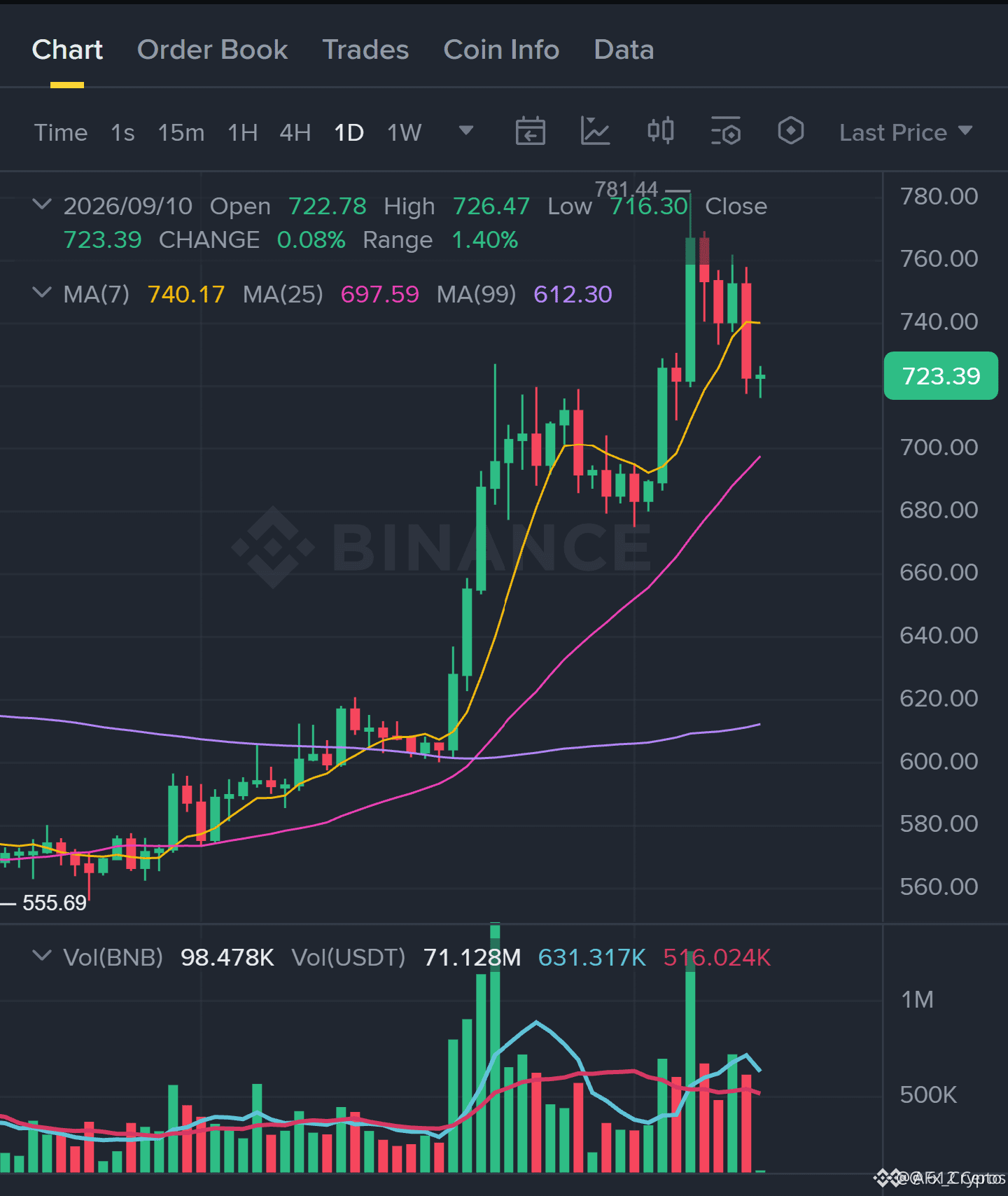
$BNB is at an interesting point after the recent drop.
The price moved sharply lower from the $750+ area and recently tested around $718, making this zone important for the next move.
The area around $740–742 is now worth watching as a key reaction zone.
If BNB continues struggling below this region, the market could revisit $727 and potentially the $718 area again.
But there’s another side to the chart.
If buyers reclaim the $740–742 zone and build strength above it, the recent breakdown could start looking more like a temporary pullback rather than a continuation.
So the real question isn't simply up or down.
It’s whether BNB can recover the lost range or whether the lower levels become the next area of interest.
For me, $718–727 and $740–742 are the key zones to watch from here.
Which scenario do you think plays out first?
DYOR. NFA.
$BNB
{spot}(BNBUSDT)
$BNB is at an interesting point after the recent drop.
The price moved sharply lower from the $750+ area and recently tested around $718, making this zone important for the next move.
The area around $740–742 is now worth watching as a key reaction zone.
If BNB continues struggling below this region, the market could revisit $727 and potentially the $718 area again.
But there’s another side to the chart.
If buyers reclaim the $740–742 zone and build strength above it, the recent breakdown could start looking more like a temporary pullback rather than a continuation.
So the real question isn't simply up or down.
It’s whether BNB can recover the lost range or whether the lower levels become the next area of interest.
For me, $718–727 and $740–742 are the key zones to watch from here.
Which scenario do you think plays out first?
DYOR. NFA.
$BNB
The price moved sharply lower from the $750+ area and recently tested around $718, making this zone important for the next move.
The area around $740–742 is now worth watching as a key reaction zone.
If BNB continues struggling below this region, the market could revisit $727 and potentially the $718 area again.
But there’s another side to the chart.
If buyers reclaim the $740–742 zone and build strength above it, the recent breakdown could start looking more like a temporary pullback rather than a continuation.
So the real question isn't simply up or down.
It’s whether BNB can recover the lost range or whether the lower levels become the next area of interest.
For me, $718–727 and $740–742 are the key zones to watch from here.
Which scenario do you think plays out first?
DYOR. NFA.
$BNB
148
·
--
පරිවර්තනය බලන්න
Nvidia’s $17B Groq deal is facing a new layer of scrutiny.
The U.S. Department of Justice is reportedly investigating whether Nvidia structured its deal with AI-chip startup Groq in a way that avoided antitrust review.
The deal was announced as a non-exclusive licensing agreement for Groq’s chip technology. Nvidia also brought several key Groq executives into the company, including founder Jonathan Ross.
That structure is what makes the story interesting.
It wasn’t a traditional acquisition, but Nvidia still gained access to Groq’s technology and key talent. The DOJ has reportedly sent Nvidia a formal request for information about the transaction.
Importantly, this is an investigation not a finding that Nvidia broke antitrust law. The probe could ultimately end without enforcement action. If regulators do find problems, reports suggest a financial penalty is more likely than forcing the deal to be reversed.
For the AI industry, the bigger question is where regulators draw the line between:
Technology licensing
Talent hiring
Strategic partnerships
and acquisitions that reduce competition.
Nvidia already holds enormous influence across the AI-chip market, so deals involving valuable AI startups are likely to receive more attention from regulators.
For NVDA investors, this is worth monitoring, but it is still too early to judge the final impact.
The next important signals will be any formal DOJ action, Nvidia’s response, and whether regulators start applying similar scrutiny to other AI deals.
No panic, no conclusion yet just a regulatory development worth watching.
#AppleDebutsFoldablePhone
DYOR. NFA.
Nvidia’s $17B Groq deal is facing a new layer of scrutiny.
The U.S. Department of Justice is reportedly investigating whether Nvidia structured its deal with AI-chip startup Groq in a way that avoided antitrust review.
The deal was announced as a non-exclusive licensing agreement for Groq’s chip technology. Nvidia also brought several key Groq executives into the company, including founder Jonathan Ross.
That structure is what makes the story interesting.
It wasn’t a traditional acquisition, but Nvidia still gained access to Groq’s technology and key talent. The DOJ has reportedly sent Nvidia a formal request for information about the transaction.
Importantly, this is an investigation not a finding that Nvidia broke antitrust law. The probe could ultimately end without enforcement action. If regulators do find problems, reports suggest a financial penalty is more likely than forcing the deal to be reversed.
For the AI industry, the bigger question is where regulators draw the line between:
Technology licensing
Talent hiring
Strategic partnerships
and acquisitions that reduce competition.
Nvidia already holds enormous influence across the AI-chip market, so deals involving valuable AI startups are likely to receive more attention from regulators.
For NVDA investors, this is worth monitoring, but it is still too early to judge the final impact.
The next important signals will be any formal DOJ action, Nvidia’s response, and whether regulators start applying similar scrutiny to other AI deals.
No panic, no conclusion yet just a regulatory development worth watching.
#AppleDebutsFoldablePhone
DYOR. NFA.
The U.S. Department of Justice is reportedly investigating whether Nvidia structured its deal with AI-chip startup Groq in a way that avoided antitrust review.
The deal was announced as a non-exclusive licensing agreement for Groq’s chip technology. Nvidia also brought several key Groq executives into the company, including founder Jonathan Ross.
That structure is what makes the story interesting.
It wasn’t a traditional acquisition, but Nvidia still gained access to Groq’s technology and key talent. The DOJ has reportedly sent Nvidia a formal request for information about the transaction.
Importantly, this is an investigation not a finding that Nvidia broke antitrust law. The probe could ultimately end without enforcement action. If regulators do find problems, reports suggest a financial penalty is more likely than forcing the deal to be reversed.
For the AI industry, the bigger question is where regulators draw the line between:
Technology licensing
Talent hiring
Strategic partnerships
and acquisitions that reduce competition.
Nvidia already holds enormous influence across the AI-chip market, so deals involving valuable AI startups are likely to receive more attention from regulators.
For NVDA investors, this is worth monitoring, but it is still too early to judge the final impact.
The next important signals will be any formal DOJ action, Nvidia’s response, and whether regulators start applying similar scrutiny to other AI deals.
No panic, no conclusion yet just a regulatory development worth watching.
#AppleDebutsFoldablePhone
DYOR. NFA.
157
·
--
ලිපිය
පරිවර්තනය බලන්න
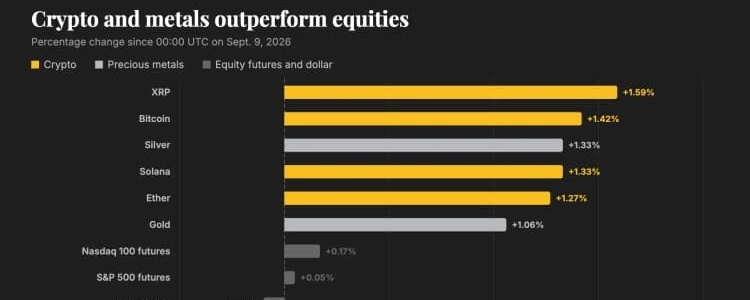
Bitcoin Rises as Oil Crosses $100 Amid Iran TensionsGlobal markets are reacting sharply to the latest escalation around Iran, with oil prices moving higher while European equities came under pressure.
Brent crude moved above the $100 per barrel level, highlighting growing concerns about energy supply and the potential economic impact of a wider Middle East conflict.
At the same time, Bitcoin moved as high as around $79,700, showing surprising resilience despite weakness across traditional equity markets.
Why Is This Important for Bitcoin?
Normally, geopolitical tension can push investors toward safer assets such as gold and the U.S. dollar. But this time, Bitcoin’s price action has been somewhat different.
While European stocks declined, Bitcoin managed to hold relatively strong levels. This has raised an interesting question about whether crypto is beginning to respond more independently to traditional risk assets.
However, one move is not enough to confirm a new correlation.
Bitcoin can still trade like a risk asset, especially when liquidity conditions tighten. The current market could simply be reacting to several factors at the same time, including geopolitical uncertainty, oil prices, expectations around interest rates and positioning in crypto.
Oil Above $100 Adds Another Risk
The bigger concern may actually be the oil market.
A sustained rise in crude prices can increase inflationary pressure by raising transportation, production and energy costs. If inflation remains elevated, central banks could face less room to ease monetary policy.
That could become important for Bitcoin because liquidity and interest-rate expectations remain major drivers of crypto markets.
For now, Bitcoin’s ability to remain near the $79K area while equities weaken is worth watching.
The key question is whether this strength continues if geopolitical tensions remain elevated or whether Bitcoin eventually follows the broader risk-off move.
In my view, the next few sessions could be important for understanding whether Bitcoin is becoming more resilient to traditional market stress or simply experiencing a temporary divergence.
#USStrikesTargetsNearHormuzAndJask $BTC
{spot}(BTCUSDT)
Bitcoin Rises as Oil Crosses $100 Amid Iran Tensions
Global markets are reacting sharply to the latest escalation around Iran, with oil prices moving higher while European equities came under pressure.
Brent crude moved above the $100 per barrel level, highlighting growing concerns about energy supply and the potential economic impact of a wider Middle East conflict.
At the same time, Bitcoin moved as high as around $79,700, showing surprising resilience despite weakness across traditional equity markets.
Why Is This Important for Bitcoin?
Normally, geopolitical tension can push investors toward safer assets such as gold and the U.S. dollar. But this time, Bitcoin’s price action has been somewhat different.
While European stocks declined, Bitcoin managed to hold relatively strong levels. This has raised an interesting question about whether crypto is beginning to respond more independently to traditional risk assets.
However, one move is not enough to confirm a new correlation.
Bitcoin can still trade like a risk asset, especially when liquidity conditions tighten. The current market could simply be reacting to several factors at the same time, including geopolitical uncertainty, oil prices, expectations around interest rates and positioning in crypto.
Oil Above $100 Adds Another Risk
The bigger concern may actually be the oil market.
A sustained rise in crude prices can increase inflationary pressure by raising transportation, production and energy costs. If inflation remains elevated, central banks could face less room to ease monetary policy.
That could become important for Bitcoin because liquidity and interest-rate expectations remain major drivers of crypto markets.
For now, Bitcoin’s ability to remain near the $79K area while equities weaken is worth watching.
The key question is whether this strength continues if geopolitical tensions remain elevated or whether Bitcoin eventually follows the broader risk-off move.
In my view, the next few sessions could be important for understanding whether Bitcoin is becoming more resilient to traditional market stress or simply experiencing a temporary divergence.
#USStrikesTargetsNearHormuzAndJask $BTC
Brent crude moved above the $100 per barrel level, highlighting growing concerns about energy supply and the potential economic impact of a wider Middle East conflict.
At the same time, Bitcoin moved as high as around $79,700, showing surprising resilience despite weakness across traditional equity markets.
Why Is This Important for Bitcoin?
Normally, geopolitical tension can push investors toward safer assets such as gold and the U.S. dollar. But this time, Bitcoin’s price action has been somewhat different.
While European stocks declined, Bitcoin managed to hold relatively strong levels. This has raised an interesting question about whether crypto is beginning to respond more independently to traditional risk assets.
However, one move is not enough to confirm a new correlation.
Bitcoin can still trade like a risk asset, especially when liquidity conditions tighten. The current market could simply be reacting to several factors at the same time, including geopolitical uncertainty, oil prices, expectations around interest rates and positioning in crypto.
Oil Above $100 Adds Another Risk
The bigger concern may actually be the oil market.
A sustained rise in crude prices can increase inflationary pressure by raising transportation, production and energy costs. If inflation remains elevated, central banks could face less room to ease monetary policy.
That could become important for Bitcoin because liquidity and interest-rate expectations remain major drivers of crypto markets.
For now, Bitcoin’s ability to remain near the $79K area while equities weaken is worth watching.
The key question is whether this strength continues if geopolitical tensions remain elevated or whether Bitcoin eventually follows the broader risk-off move.
In my view, the next few sessions could be important for understanding whether Bitcoin is becoming more resilient to traditional market stress or simply experiencing a temporary divergence.
#USStrikesTargetsNearHormuzAndJask $BTC
1
1
312
·
--
පරිවර්තනය බලන්න
ETF flows are showing an interesting shift in market sentiment.
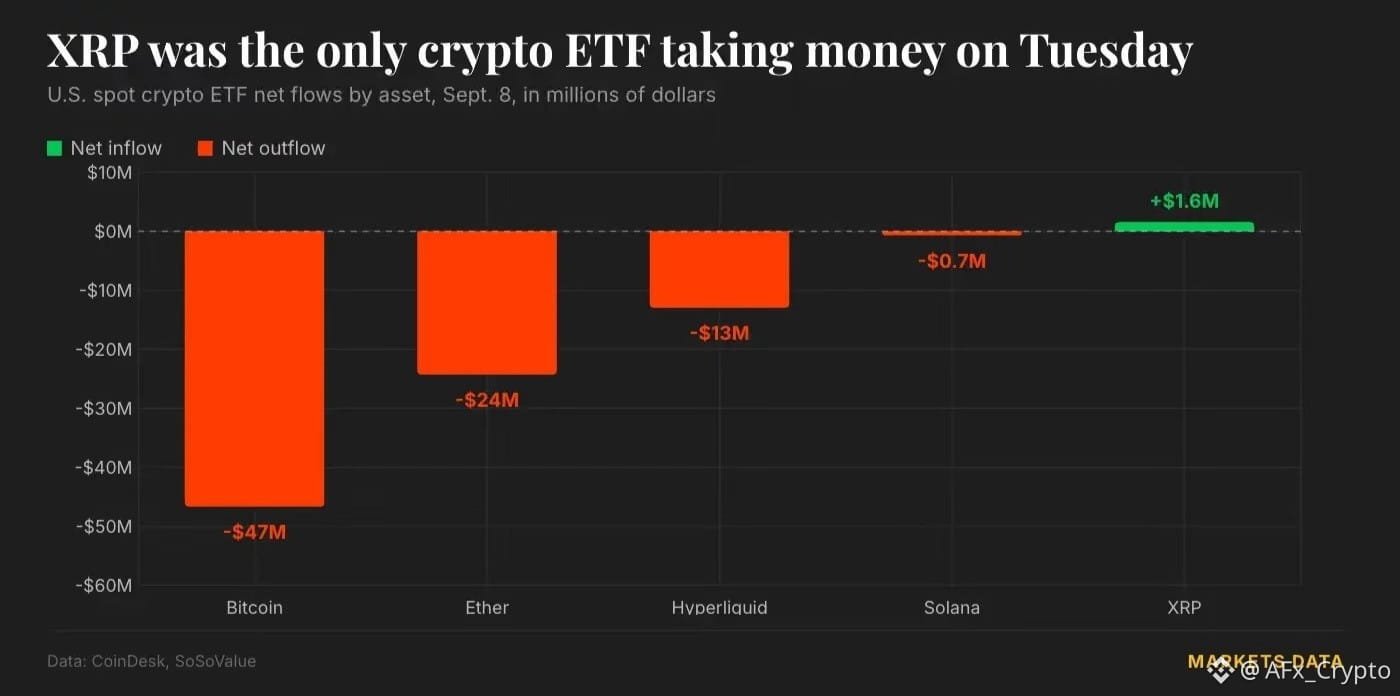
Reportedly, XRP ETFs attracted nearly $2M on Tuesday, while BTC, ETH, SOL and HYPE funds recorded outflows.
What stands out is the divergence. While capital moved away from several major crypto ETFs, XRP continued to see positive demand.
One day of flows doesn’t confirm a trend, but it’s definitely worth watching.
Is XRP starting to attract more institutional attention?
#USStrikesTargetsNearHormuzAndJask
$BTC
{spot}(BTCUSDT)
$ETH
{spot}(ETHUSDT)
$XRP
{spot}(XRPUSDT)
ETF flows are showing an interesting shift in market sentiment.
Reportedly, XRP ETFs attracted nearly $2M on Tuesday, while BTC, ETH, SOL and HYPE funds recorded outflows.
What stands out is the divergence. While capital moved away from several major crypto ETFs, XRP continued to see positive demand.
One day of flows doesn’t confirm a trend, but it’s definitely worth watching.
Is XRP starting to attract more institutional attention?
#USStrikesTargetsNearHormuzAndJask
$BTC
$ETH
$XRP
Reportedly, XRP ETFs attracted nearly $2M on Tuesday, while BTC, ETH, SOL and HYPE funds recorded outflows.
What stands out is the divergence. While capital moved away from several major crypto ETFs, XRP continued to see positive demand.
One day of flows doesn’t confirm a trend, but it’s definitely worth watching.
Is XRP starting to attract more institutional attention?
#USStrikesTargetsNearHormuzAndJask
$BTC
$ETH
$XRP
696
·
--
පරිවර්තනය බලන්න
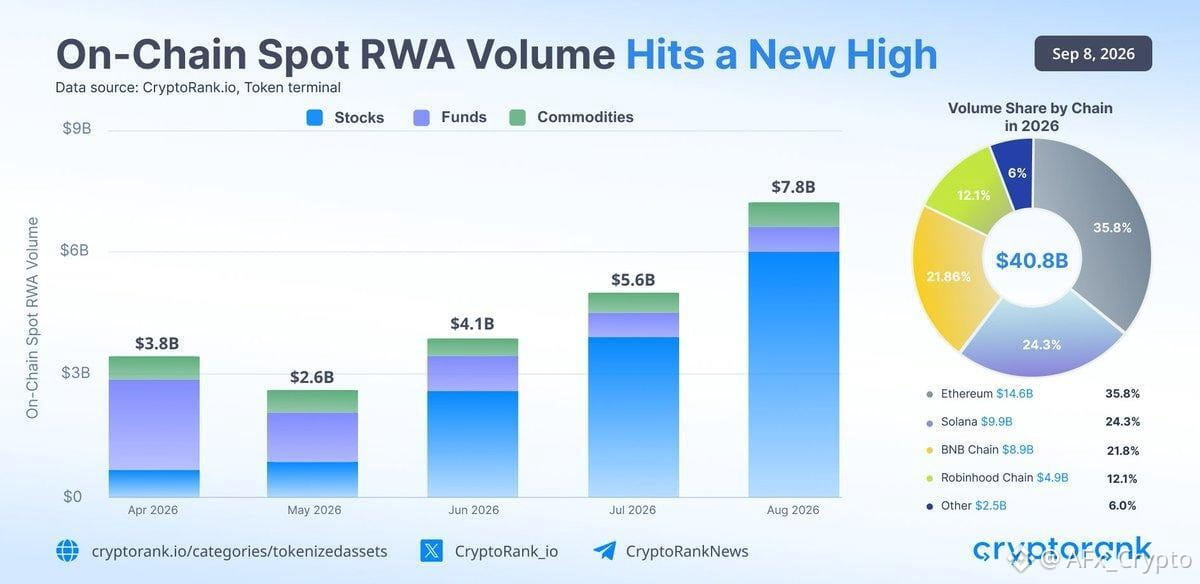
RWA trading is starting to look less like a niche crypto narrative.
On-chain spot RWA trading volume reached a record $7.82B in August, according to CryptoRank.
What stands out to me is the growing activity around tokenized real-world assets, especially tokenized equities.
This shows that the RWA sector isn’t only about putting traditional assets on-chain anymore. There is real trading activity developing around them.
If this trend continues, RWA could become one of the key bridges between traditional markets and crypto.
The next question is: how much bigger can on-chain RWA markets become?
#USStrikesTargetsNearHormuzAndJask
RWA trading is starting to look less like a niche crypto narrative.
On-chain spot RWA trading volume reached a record $7.82B in August, according to CryptoRank.
What stands out to me is the growing activity around tokenized real-world assets, especially tokenized equities.
This shows that the RWA sector isn’t only about putting traditional assets on-chain anymore. There is real trading activity developing around them.
If this trend continues, RWA could become one of the key bridges between traditional markets and crypto.
The next question is: how much bigger can on-chain RWA markets become?
#USStrikesTargetsNearHormuzAndJask
On-chain spot RWA trading volume reached a record $7.82B in August, according to CryptoRank.
What stands out to me is the growing activity around tokenized real-world assets, especially tokenized equities.
This shows that the RWA sector isn’t only about putting traditional assets on-chain anymore. There is real trading activity developing around them.
If this trend continues, RWA could become one of the key bridges between traditional markets and crypto.
The next question is: how much bigger can on-chain RWA markets become?
#USStrikesTargetsNearHormuzAndJask
1
149
·
--
පරිවර්තනය බලන්න
🔥 UNI Burn Rate Hits $250M+ Annualized
Uniswap founder Hayden Adams says the protocol’s 7-day annualized UNI burn rate has now surpassed $250M/year, up from around $200M/year just days earlier.
That’s a notable increase in recent network activity and fee-driven value capture.
Important: this is an annualized run rate, not $250M of UNI already burned.
#USStocksCloseLowerIntelRises9%
🔥 UNI Burn Rate Hits $250M+ Annualized
Uniswap founder Hayden Adams says the protocol’s 7-day annualized UNI burn rate has now surpassed $250M/year, up from around $200M/year just days earlier.
That’s a notable increase in recent network activity and fee-driven value capture.
Important: this is an annualized run rate, not $250M of UNI already burned.
#USStocksCloseLowerIntelRises9%
Uniswap founder Hayden Adams says the protocol’s 7-day annualized UNI burn rate has now surpassed $250M/year, up from around $200M/year just days earlier.
That’s a notable increase in recent network activity and fee-driven value capture.
Important: this is an annualized run rate, not $250M of UNI already burned.
#USStocksCloseLowerIntelRises9%
94
·
--
සත්යායනය කළ
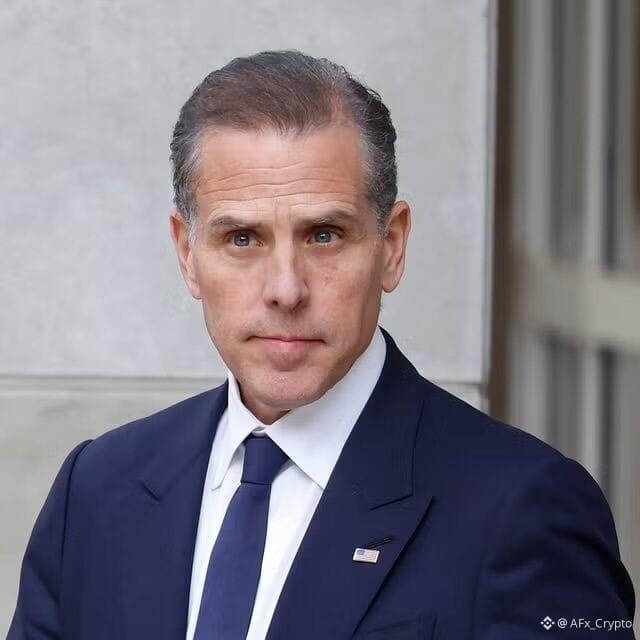
⚡️ Hunter Biden reportedly plans to launch a new meme coin, $LAPTOP, with 20% of the token supply allocated for a community airdrop.
The reported allocation may include eligible wallets affected by losses on $TRUMP, along with other community groups.
The news has already attracted attention across the crypto community.
As always, verify the official token contract and airdrop details before interacting with any LAPTOP-related link or token.
#SaudiHaltsSouthernEnergySitesAfterAttacks
DYOR. ⚠️
⚡️ Hunter Biden reportedly plans to launch a new meme coin, $LAPTOP, with 20% of the token supply allocated for a community airdrop.
The reported allocation may include eligible wallets affected by losses on $TRUMP, along with other community groups.
The news has already attracted attention across the crypto community.
As always, verify the official token contract and airdrop details before interacting with any LAPTOP-related link or token.
#SaudiHaltsSouthernEnergySitesAfterAttacks
DYOR. ⚠️
The reported allocation may include eligible wallets affected by losses on $TRUMP, along with other community groups.
The news has already attracted attention across the crypto community.
As always, verify the official token contract and airdrop details before interacting with any LAPTOP-related link or token.
#SaudiHaltsSouthernEnergySitesAfterAttacks
DYOR. ⚠️
3
17
24.8k
·
--
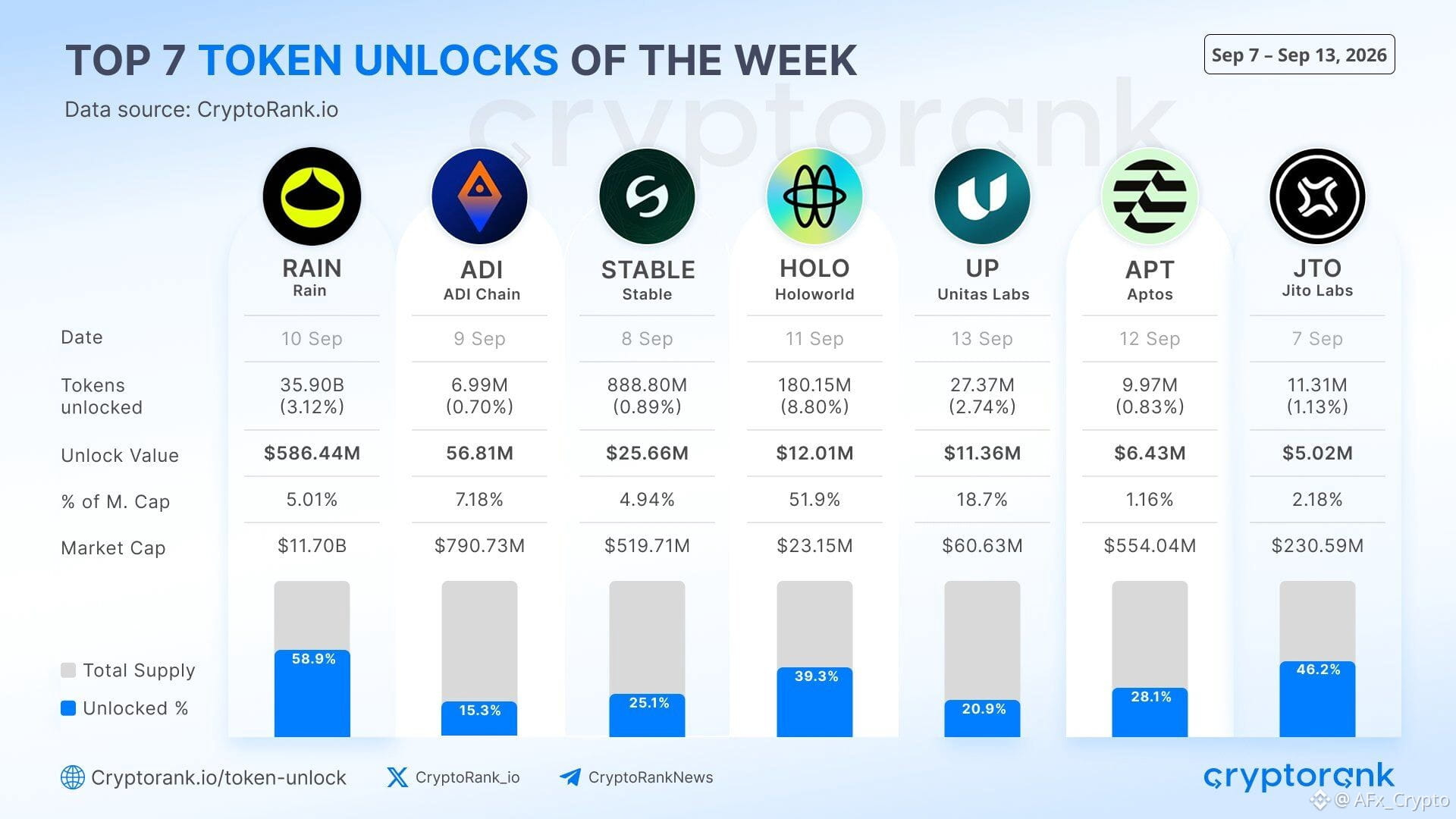
මෙම සතියේ ටෝකන් අගුළු හැරීම් වලින් ඩොලර් $703M+
මෙම සතියේ ඉහළම ටෝකන් අගුළු හැරීම් 7 සඳහා එකතුව ඩොලර් $703.73Mක් වේ.
ලැයිස්තුවට පෙර වන්නේ $RAIN වන අතර, විශාල ඩොලර් $586.44Mක් අගුළු හැරීම මුළු එකතුවෙන් 80%කට වඩා වැඩියෙන් දායක වේ.
විශාල අගුළු හැරීම් මඟින් සංසරණය වන සැපයුම වැඩිවිය හැකි අතර, අමතර විකිණුම් පීඩනයක් ඇතිවීමටත් හැකියාවක් ඇත. එබැවින් වෙළෙන්දන් ටෝකන් අගුළු හැරීම් කාලසටහන් පිළිබඳව අවධානයෙන් සිටිය යුතුය.
සැපයුම වැදගත් වේ. වෙළෙඳපොළ බලපෑම ඉල්ලුම මත රඳා පවතී.
#IMFSaysElSalvadorBTCNoPublicFunds
මෙම සතියේ ටෝකන් අගුළු හැරීම් වලින් ඩොලර් $703M+
මෙම සතියේ ඉහළම ටෝකන් අගුළු හැරීම් 7 සඳහා එකතුව ඩොලර් $703.73Mක් වේ.
ලැයිස්තුවට පෙර වන්නේ $RAIN වන අතර, විශාල ඩොලර් $586.44Mක් අගුළු හැරීම මුළු එකතුවෙන් 80%කට වඩා වැඩියෙන් දායක වේ.
විශාල අගුළු හැරීම් මඟින් සංසරණය වන සැපයුම වැඩිවිය හැකි අතර, අමතර විකිණුම් පීඩනයක් ඇතිවීමටත් හැකියාවක් ඇත. එබැවින් වෙළෙන්දන් ටෝකන් අගුළු හැරීම් කාලසටහන් පිළිබඳව අවධානයෙන් සිටිය යුතුය.
සැපයුම වැදගත් වේ. වෙළෙඳපොළ බලපෑම ඉල්ලුම මත රඳා පවතී.
#IMFSaysElSalvadorBTCNoPublicFunds
මෙම සතියේ ඉහළම ටෝකන් අගුළු හැරීම් 7 සඳහා එකතුව ඩොලර් $703.73Mක් වේ.
ලැයිස්තුවට පෙර වන්නේ $RAIN වන අතර, විශාල ඩොලර් $586.44Mක් අගුළු හැරීම මුළු එකතුවෙන් 80%කට වඩා වැඩියෙන් දායක වේ.
විශාල අගුළු හැරීම් මඟින් සංසරණය වන සැපයුම වැඩිවිය හැකි අතර, අමතර විකිණුම් පීඩනයක් ඇතිවීමටත් හැකියාවක් ඇත. එබැවින් වෙළෙන්දන් ටෝකන් අගුළු හැරීම් කාලසටහන් පිළිබඳව අවධානයෙන් සිටිය යුතුය.
සැපයුම වැදගත් වේ. වෙළෙඳපොළ බලපෑම ඉල්ලුම මත රඳා පවතී.
#IMFSaysElSalvadorBTCNoPublicFunds
1
293
·
--
CZ: IPO මාර්ගගතව (on-chain) වෙත මාරු වනු ඇත.
Changpeng Zhao විශ්වාස කරන්නේ IPO වල අනාගතය බ්ලොක්චේන් මත පදනම් වූ යටිතල පහසුකම් වෙත මාරු විය හැකි බවයි.
සම්පූර්ණයෙන්ම සාම්ප්රදායික පද්ධති මත රඳා නොසිට, ටෝකනීකරණය කළ කොටස් හිමිකාරිත්වය, ගෙවීම් (settlement) සහ ප්රවේශය වඩාත් කාර්යක්ෂම කිරීමට හැකියාව ඇත.
ප්රධාන ප්රවණතාව පැහැදිලියි: සාම්ප්රදායික මූල්යය බ්ලොක්චේන් වෙතට කිට්ටු වෙමින් පවතී.
ප්රශ්නය ‘ඔව්ද නැද්ද’ නොවෙයි—ඒ කොතරම් වේගයෙන්ද යන්නයි.
#IranSaysItHit3USShips3Tankers #CZBİNANCE
CZ: IPO මාර්ගගතව (on-chain) වෙත මාරු වනු ඇත.
Changpeng Zhao විශ්වාස කරන්නේ IPO වල අනාගතය බ්ලොක්චේන් මත පදනම් වූ යටිතල පහසුකම් වෙත මාරු විය හැකි බවයි.
සම්පූර්ණයෙන්ම සාම්ප්රදායික පද්ධති මත රඳා නොසිට, ටෝකනීකරණය කළ කොටස් හිමිකාරිත්වය, ගෙවීම් (settlement) සහ ප්රවේශය වඩාත් කාර්යක්ෂම කිරීමට හැකියාව ඇත.
ප්රධාන ප්රවණතාව පැහැදිලියි: සාම්ප්රදායික මූල්යය බ්ලොක්චේන් වෙතට කිට්ටු වෙමින් පවතී.
ප්රශ්නය ‘ඔව්ද නැද්ද’ නොවෙයි—ඒ කොතරම් වේගයෙන්ද යන්නයි.
#IranSaysItHit3USShips3Tankers #CZBİNANCE
Changpeng Zhao විශ්වාස කරන්නේ IPO වල අනාගතය බ්ලොක්චේන් මත පදනම් වූ යටිතල පහසුකම් වෙත මාරු විය හැකි බවයි.
සම්පූර්ණයෙන්ම සාම්ප්රදායික පද්ධති මත රඳා නොසිට, ටෝකනීකරණය කළ කොටස් හිමිකාරිත්වය, ගෙවීම් (settlement) සහ ප්රවේශය වඩාත් කාර්යක්ෂම කිරීමට හැකියාව ඇත.
ප්රධාන ප්රවණතාව පැහැදිලියි: සාම්ප්රදායික මූල්යය බ්ලොක්චේන් වෙතට කිට්ටු වෙමින් පවතී.
ප්රශ්නය ‘ඔව්ද නැද්ද’ නොවෙයි—ඒ කොතරම් වේගයෙන්ද යන්නයි.
#IranSaysItHit3USShips3Tankers #CZBİNANCE

220
·
--
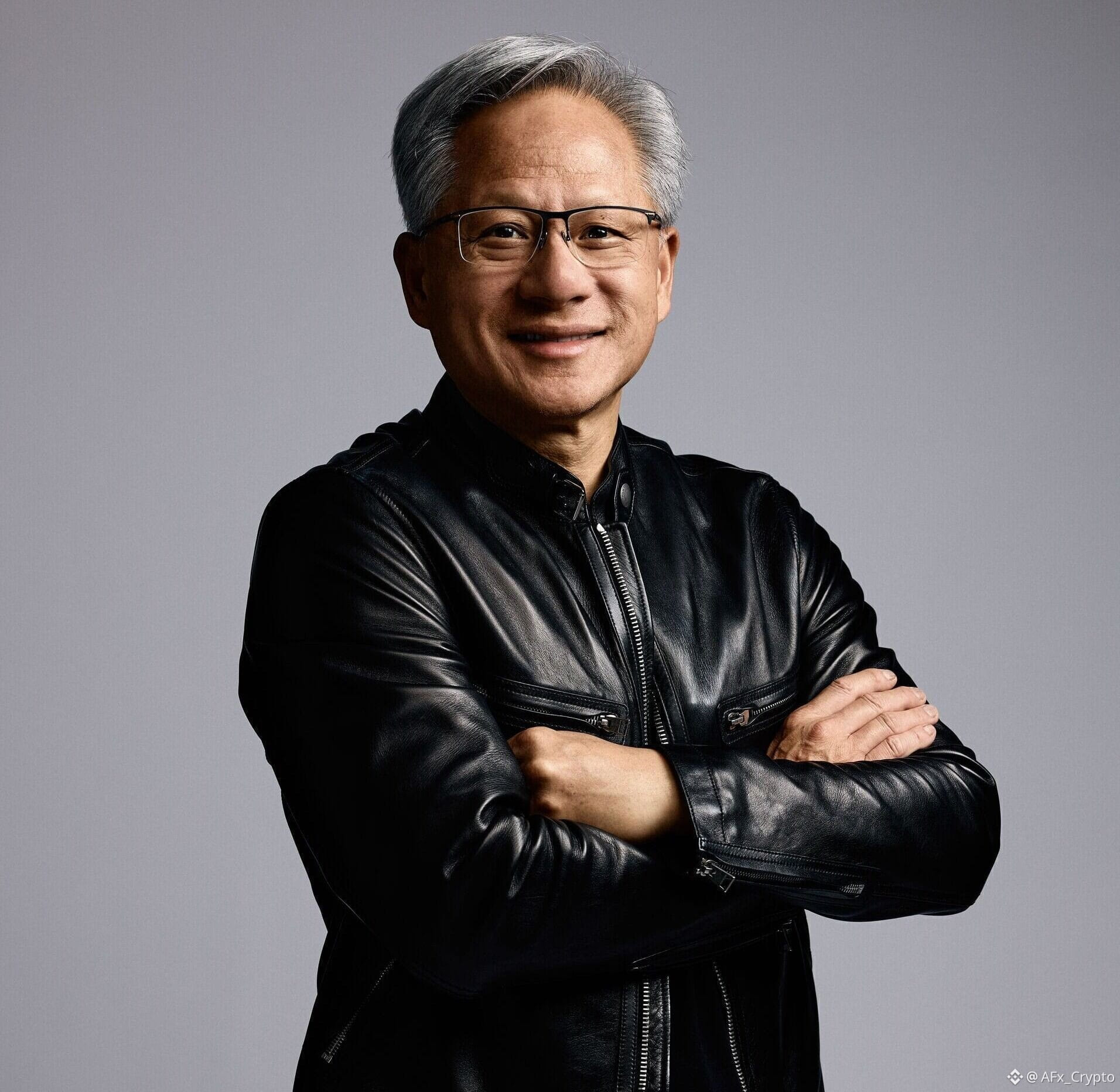
NVIDIA Compute පිළිබඳ Jensen Huang
NVIDIA හි ප්රධාන විධායක Jensen Huang පවසන්නේ AI compute යනු හුදෙක් hardware පමණක් නොව එය ලාභ උත්පාදනය කරමින් ඵලදායී අස්වැසිල්ලක් (asset) විය හැකි බවයි.
ඔහු ප්රධාන ගුණාංග තුනක් උද්දීපනය කළේය:
• Fungible විවිධ AI workload වලට භාවිත කළ හැකි
• Durable එහි ප්රයෝජනවත් ජීවිත කාලය තුළත් වටිනාකම රඳවාගන්නා
• Rentable දිගටම පවතින ඉල්ලුම හරහා ආදායමක් උත්පාදනය කළ හැකි
AI යටිතල පහසුකම් සඳහා ඇති ඉල්ලුම තවමත් වර්ධනය වෙමින් පවතින අතර, NVIDIA දැන් compute එක “කාලයත් සමඟ ක්ෂය වීමට” පමණක් නොව ප්රතිලාභ (returns) උත්පාදනය කළ හැකි අස්වැසිල්ලක් ලෙස වඩා වැඩියෙන් ස්ථානගත කරමින් සිටී.
#IranSaysItHit3USShips3Tankers
$NVDAB
{spot}(NVDABUSDT)
NVIDIA Compute පිළිබඳ Jensen Huang
NVIDIA හි ප්රධාන විධායක Jensen Huang පවසන්නේ AI compute යනු හුදෙක් hardware පමණක් නොව එය ලාභ උත්පාදනය කරමින් ඵලදායී අස්වැසිල්ලක් (asset) විය හැකි බවයි.
ඔහු ප්රධාන ගුණාංග තුනක් උද්දීපනය කළේය:
• Fungible විවිධ AI workload වලට භාවිත කළ හැකි
• Durable එහි ප්රයෝජනවත් ජීවිත කාලය තුළත් වටිනාකම රඳවාගන්නා
• Rentable දිගටම පවතින ඉල්ලුම හරහා ආදායමක් උත්පාදනය කළ හැකි
AI යටිතල පහසුකම් සඳහා ඇති ඉල්ලුම තවමත් වර්ධනය වෙමින් පවතින අතර, NVIDIA දැන් compute එක “කාලයත් සමඟ ක්ෂය වීමට” පමණක් නොව ප්රතිලාභ (returns) උත්පාදනය කළ හැකි අස්වැසිල්ලක් ලෙස වඩා වැඩියෙන් ස්ථානගත කරමින් සිටී.
#IranSaysItHit3USShips3Tankers
$NVDAB
NVIDIA හි ප්රධාන විධායක Jensen Huang පවසන්නේ AI compute යනු හුදෙක් hardware පමණක් නොව එය ලාභ උත්පාදනය කරමින් ඵලදායී අස්වැසිල්ලක් (asset) විය හැකි බවයි.
ඔහු ප්රධාන ගුණාංග තුනක් උද්දීපනය කළේය:
• Fungible විවිධ AI workload වලට භාවිත කළ හැකි
• Durable එහි ප්රයෝජනවත් ජීවිත කාලය තුළත් වටිනාකම රඳවාගන්නා
• Rentable දිගටම පවතින ඉල්ලුම හරහා ආදායමක් උත්පාදනය කළ හැකි
AI යටිතල පහසුකම් සඳහා ඇති ඉල්ලුම තවමත් වර්ධනය වෙමින් පවතින අතර, NVIDIA දැන් compute එක “කාලයත් සමඟ ක්ෂය වීමට” පමණක් නොව ප්රතිලාභ (returns) උත්පාදනය කළ හැකි අස්වැසිල්ලක් ලෙස වඩා වැඩියෙන් ස්ථානගත කරමින් සිටී.
#IranSaysItHit3USShips3Tankers
$NVDAB
1
404
·
--
🇫🇷 Capital B သည် ၎င်း၏ Bitcoin Treasury ကို တိုးချဲ့သည်
ပြင်သစ် Bitcoin Treasury ကုမ္ပဏီ Capital B သည် အကြမ်းအားဖြင့် €25.3M တန်ဖိုးရှိ BTC 376 ထပ်မံထည့်သွင်းခဲ့သည်။
အဆိုပါ ဝယ်ယူမှုကြောင့် ကုမ္ပဏီ၏ စုစုပေါင်း Bitcoin ပိုင်ဆိုင်မှုသည် BTC 3,521 အထိ ရောက်ရှိခဲ့ပြီး ဥရောပအတွင်း အဓိက ကော်ပိုရိတ် BTC ကိုင်ဆောင်သူအဖြစ် ၎င်း၏ ရာထူးကို ခိုင်မာစေသည်။
ထိုဝယ်ယူမှုကို €28.7M တန်ဖိုးရှိ ပုဂ္ဂလိကနေရာချမှု (private placement) မှ ထောက်ပံ့ခဲ့ပြီး Capital B ၏ ရန်ပုံငွေထောက်ပံ့မှုတွင် ရင်းနှီးမြှုပ်နှံသူများထဲမှ Adam Back ပါဝင်ခဲ့သည်။
ကော်ပိုရိတ် Bitcoin စုဆောင်းမှုသည် ဆက်လက် ကြီးထွားနေသည်။ 🟠
#USIranTradeTankerStrikesEscalate $BTC
{spot}(BTCUSDT)
🇫🇷 Capital B သည် ၎င်း၏ Bitcoin Treasury ကို တိုးချဲ့သည်
ပြင်သစ် Bitcoin Treasury ကုမ္ပဏီ Capital B သည် အကြမ်းအားဖြင့် €25.3M တန်ဖိုးရှိ BTC 376 ထပ်မံထည့်သွင်းခဲ့သည်။
အဆိုပါ ဝယ်ယူမှုကြောင့် ကုမ္ပဏီ၏ စုစုပေါင်း Bitcoin ပိုင်ဆိုင်မှုသည် BTC 3,521 အထိ ရောက်ရှိခဲ့ပြီး ဥရောပအတွင်း အဓိက ကော်ပိုရိတ် BTC ကိုင်ဆောင်သူအဖြစ် ၎င်း၏ ရာထူးကို ခိုင်မာစေသည်။
ထိုဝယ်ယူမှုကို €28.7M တန်ဖိုးရှိ ပုဂ္ဂလိကနေရာချမှု (private placement) မှ ထောက်ပံ့ခဲ့ပြီး Capital B ၏ ရန်ပုံငွေထောက်ပံ့မှုတွင် ရင်းနှီးမြှုပ်နှံသူများထဲမှ Adam Back ပါဝင်ခဲ့သည်။
ကော်ပိုရိတ် Bitcoin စုဆောင်းမှုသည် ဆက်လက် ကြီးထွားနေသည်။ 🟠
#USIranTradeTankerStrikesEscalate $BTC
ပြင်သစ် Bitcoin Treasury ကုမ္ပဏီ Capital B သည် အကြမ်းအားဖြင့် €25.3M တန်ဖိုးရှိ BTC 376 ထပ်မံထည့်သွင်းခဲ့သည်။
အဆိုပါ ဝယ်ယူမှုကြောင့် ကုမ္ပဏီ၏ စုစုပေါင်း Bitcoin ပိုင်ဆိုင်မှုသည် BTC 3,521 အထိ ရောက်ရှိခဲ့ပြီး ဥရောပအတွင်း အဓိက ကော်ပိုရိတ် BTC ကိုင်ဆောင်သူအဖြစ် ၎င်း၏ ရာထူးကို ခိုင်မာစေသည်။
ထိုဝယ်ယူမှုကို €28.7M တန်ဖိုးရှိ ပုဂ္ဂလိကနေရာချမှု (private placement) မှ ထောက်ပံ့ခဲ့ပြီး Capital B ၏ ရန်ပုံငွေထောက်ပံ့မှုတွင် ရင်းနှီးမြှုပ်နှံသူများထဲမှ Adam Back ပါဝင်ခဲ့သည်။
ကော်ပိုရိတ် Bitcoin စုဆောင်းမှုသည် ဆက်လက် ကြီးထွားနေသည်။ 🟠
#USIranTradeTankerStrikesEscalate $BTC
2
1
190
·
--
Bitcoin OGs තවදුරටත් BTC වැඩි වැඩියෙන් ගෙන යමින් සිටියි
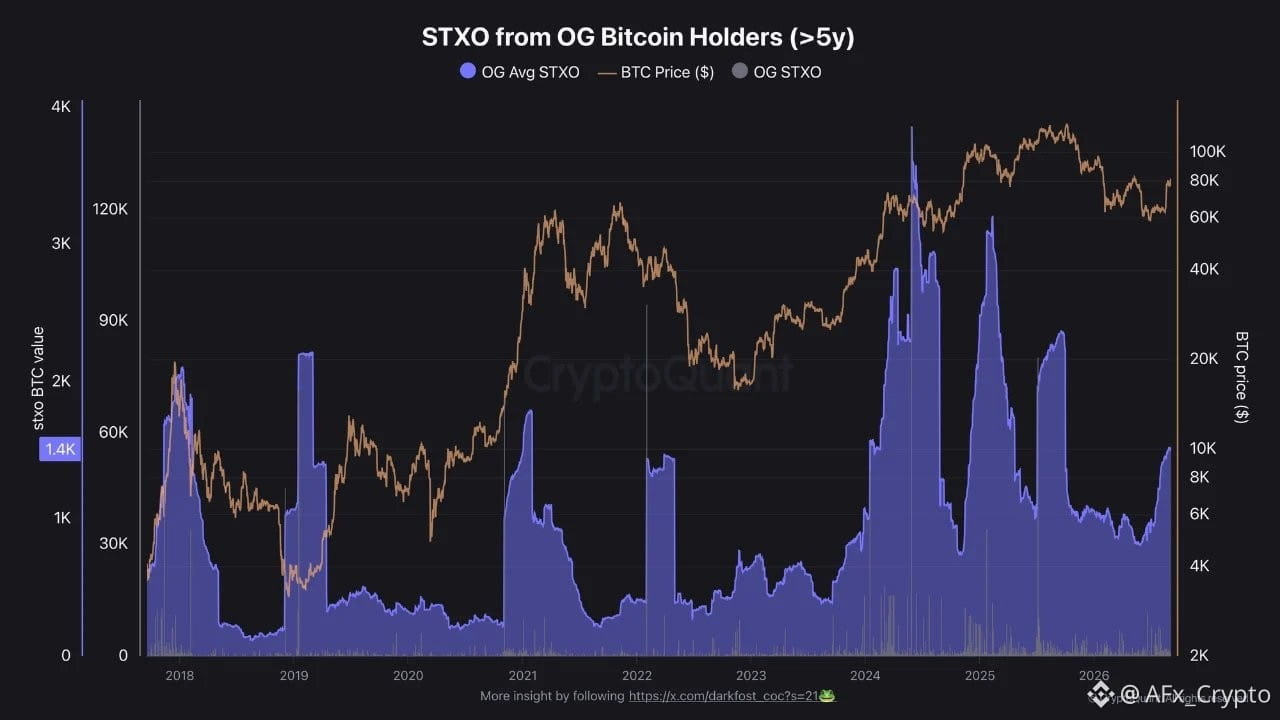
වසර 5+ ක් සිය කාසි තබාගෙන සිටි #Bitcoin දෙනා වැඩිවෙන ක්රියාකාරීත්වයක් පෙන්වයි.
CryptoQuant විශ්ලේෂක Darkfost පවසන පරිදි, මෙම දිගුකාලීන හිමිකරුවන්ගෙන් “වියදම් කළ” BTC ප්රමාණයේ දින 90ක සාමාන්යය ආසන්න වශයෙන් 1,500 BTC දක්වා ඉහළ ගොස් ඇත.
මෙය අනිවාර්යයෙන්ම විකිණීම අදහස් කරනවායැයි කියන්න බෑ. කාසි වෙනස් වීමට හේතු බොහොමයක් ඇත—උදාහරණ ලෙස වොලට් වෙනස් කිරීම හෝ ගබඩා මාරුකිරීම්.
එසේ වුවත්, OG ක්රියාකාරීත්වය ඉහළ යාම නිරීක්ෂණය කර බැලිය යුතු මිනුමක්. 👀
#IMFSaysElSalvadorBTCNoPublicFunds $BTC
{spot}(BTCUSDT)
Bitcoin OGs තවදුරටත් BTC වැඩි වැඩියෙන් ගෙන යමින් සිටියි
වසර 5+ ක් සිය කාසි තබාගෙන සිටි #Bitcoin දෙනා වැඩිවෙන ක්රියාකාරීත්වයක් පෙන්වයි.
CryptoQuant විශ්ලේෂක Darkfost පවසන පරිදි, මෙම දිගුකාලීන හිමිකරුවන්ගෙන් “වියදම් කළ” BTC ප්රමාණයේ දින 90ක සාමාන්යය ආසන්න වශයෙන් 1,500 BTC දක්වා ඉහළ ගොස් ඇත.
මෙය අනිවාර්යයෙන්ම විකිණීම අදහස් කරනවායැයි කියන්න බෑ. කාසි වෙනස් වීමට හේතු බොහොමයක් ඇත—උදාහරණ ලෙස වොලට් වෙනස් කිරීම හෝ ගබඩා මාරුකිරීම්.
එසේ වුවත්, OG ක්රියාකාරීත්වය ඉහළ යාම නිරීක්ෂණය කර බැලිය යුතු මිනුමක්. 👀
#IMFSaysElSalvadorBTCNoPublicFunds $BTC
වසර 5+ ක් සිය කාසි තබාගෙන සිටි #Bitcoin දෙනා වැඩිවෙන ක්රියාකාරීත්වයක් පෙන්වයි.
CryptoQuant විශ්ලේෂක Darkfost පවසන පරිදි, මෙම දිගුකාලීන හිමිකරුවන්ගෙන් “වියදම් කළ” BTC ප්රමාණයේ දින 90ක සාමාන්යය ආසන්න වශයෙන් 1,500 BTC දක්වා ඉහළ ගොස් ඇත.
මෙය අනිවාර්යයෙන්ම විකිණීම අදහස් කරනවායැයි කියන්න බෑ. කාසි වෙනස් වීමට හේතු බොහොමයක් ඇත—උදාහරණ ලෙස වොලට් වෙනස් කිරීම හෝ ගබඩා මාරුකිරීම්.
එසේ වුවත්, OG ක්රියාකාරීත්වය ඉහළ යාම නිරීක්ෂණය කර බැලිය යුතු මිනුමක්. 👀
#IMFSaysElSalvadorBTCNoPublicFunds $BTC
2
1
251
·
--
ටෝකනීකරණය කළ කොටස් විශාල වර්ධනයක් දක්නට ලැබේ
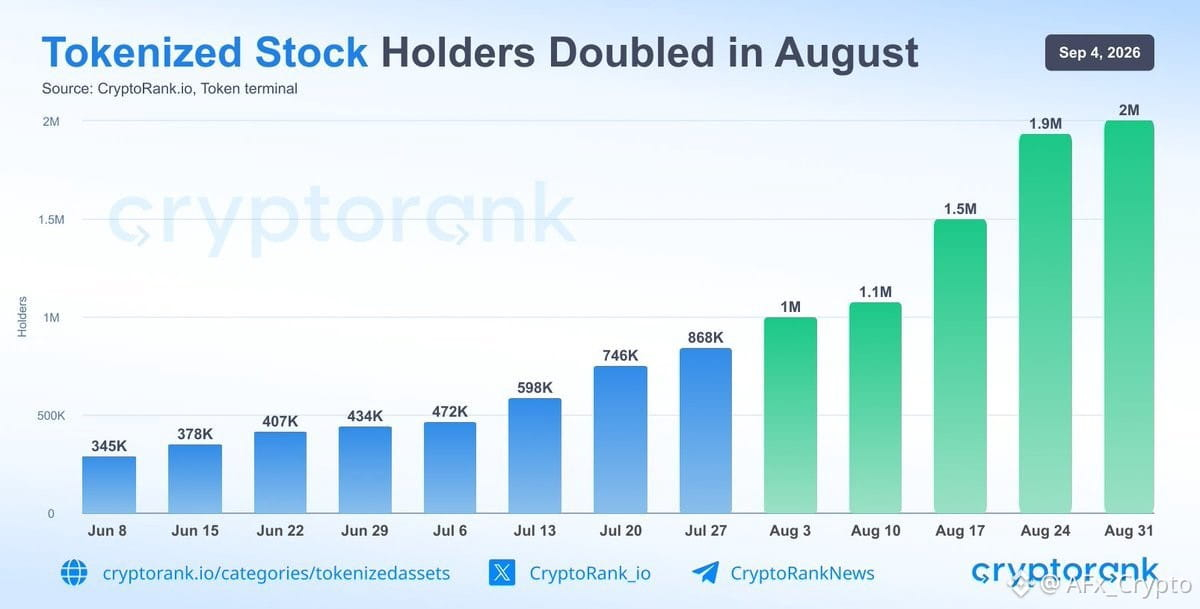
ටෝකනීකරණය කළ කොටස් භාවිතය වේගයෙන් ඉහළ යමින් පවතී.
CryptoRank අනුව, අගෝස්තු මාසයේදී ටෝකනීකරණය කළ කොටස් හිමියන්ගේ සංඛ්යාව ආසන්න වශයෙන් දෙගුණ විය—හිමියන් මීට අධිකව 2 මිලියන දක්වා ළඟා විය.
තවත් වැදගත් කරුණක්: Robinhood Chain, BNB Chain, සහ Solana මුළු හිමිකරු පදනමෙන් ආසන්න වශයෙන් 95% ක් දරයි.
ටෝකනීකරණය කළ කොටස් පැහැදිලිවම on-chain වෙළෙඳපොළේ වැඩි කොටසක් බවට පත්වෙමින් සිටී.
#IranSaysItHit3USShips3Tankers
ටෝකනීකරණය කළ කොටස් විශාල වර්ධනයක් දක්නට ලැබේ
ටෝකනීකරණය කළ කොටස් භාවිතය වේගයෙන් ඉහළ යමින් පවතී.
CryptoRank අනුව, අගෝස්තු මාසයේදී ටෝකනීකරණය කළ කොටස් හිමියන්ගේ සංඛ්යාව ආසන්න වශයෙන් දෙගුණ විය—හිමියන් මීට අධිකව 2 මිලියන දක්වා ළඟා විය.
තවත් වැදගත් කරුණක්: Robinhood Chain, BNB Chain, සහ Solana මුළු හිමිකරු පදනමෙන් ආසන්න වශයෙන් 95% ක් දරයි.
ටෝකනීකරණය කළ කොටස් පැහැදිලිවම on-chain වෙළෙඳපොළේ වැඩි කොටසක් බවට පත්වෙමින් සිටී.
#IranSaysItHit3USShips3Tankers
ටෝකනීකරණය කළ කොටස් භාවිතය වේගයෙන් ඉහළ යමින් පවතී.
CryptoRank අනුව, අගෝස්තු මාසයේදී ටෝකනීකරණය කළ කොටස් හිමියන්ගේ සංඛ්යාව ආසන්න වශයෙන් දෙගුණ විය—හිමියන් මීට අධිකව 2 මිලියන දක්වා ළඟා විය.
තවත් වැදගත් කරුණක්: Robinhood Chain, BNB Chain, සහ Solana මුළු හිමිකරු පදනමෙන් ආසන්න වශයෙන් 95% ක් දරයි.
ටෝකනීකරණය කළ කොටස් පැහැදිලිවම on-chain වෙළෙඳපොළේ වැඩි කොටසක් බවට පත්වෙමින් සිටී.
#IranSaysItHit3USShips3Tankers
100
·
--
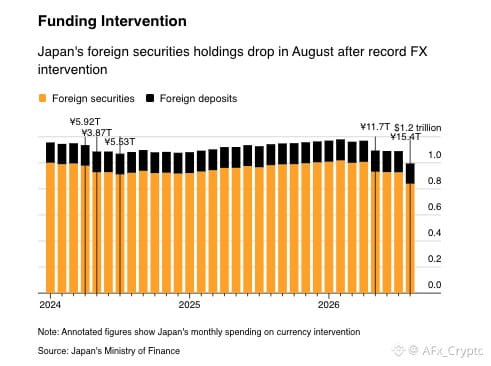
ජපානයේ දැවැන්ත යෙන් මැදිහත්වීම
වාර්තාවලට අනුව ජපානය වාර්තාගත යෙන් මැදිහත්වීමක් සඳහා සుమානය ¥15.4T ($98.6B) පාවිච්චි කර ඇත.
එම අවස්ථාවේම, අගෝස්තු මාසයේදී එහි විදේශීය වටිනාකම් ආයෝජන (foreign securities holdings) ආසන්න වශයෙන් $87.8B කින් පහත වැටුණු අතර, එම ක්රියාවට අරමුදල් සපයීම සඳහා U.S. Treasuries විකුණා ඇති බවට අනුමාන ඇති කර තිබේ.
සම්පූර්ණ $87.8B ප්රමාණයම Treasuries බව තහවුරු වී නැතත්, ප්රමාණය සැලකිය යුතුය.
#IranSaysItHit3USShips3Tankers
ජපානයේ දැවැන්ත යෙන් මැදිහත්වීම
වාර්තාවලට අනුව ජපානය වාර්තාගත යෙන් මැදිහත්වීමක් සඳහා සుమානය ¥15.4T ($98.6B) පාවිච්චි කර ඇත.
එම අවස්ථාවේම, අගෝස්තු මාසයේදී එහි විදේශීය වටිනාකම් ආයෝජන (foreign securities holdings) ආසන්න වශයෙන් $87.8B කින් පහත වැටුණු අතර, එම ක්රියාවට අරමුදල් සපයීම සඳහා U.S. Treasuries විකුණා ඇති බවට අනුමාන ඇති කර තිබේ.
සම්පූර්ණ $87.8B ප්රමාණයම Treasuries බව තහවුරු වී නැතත්, ප්රමාණය සැලකිය යුතුය.
#IranSaysItHit3USShips3Tankers
වාර්තාවලට අනුව ජපානය වාර්තාගත යෙන් මැදිහත්වීමක් සඳහා සుమානය ¥15.4T ($98.6B) පාවිච්චි කර ඇත.
එම අවස්ථාවේම, අගෝස්තු මාසයේදී එහි විදේශීය වටිනාකම් ආයෝජන (foreign securities holdings) ආසන්න වශයෙන් $87.8B කින් පහත වැටුණු අතර, එම ක්රියාවට අරමුදල් සපයීම සඳහා U.S. Treasuries විකුණා ඇති බවට අනුමාන ඇති කර තිබේ.
සම්පූර්ණ $87.8B ප්රමාණයම Treasuries බව තහවුරු වී නැතත්, ප්රමාණය සැලකිය යුතුය.
#IranSaysItHit3USShips3Tankers
1
174
·
--
AI සහ බිට්කොයින් පිළිබඳ Vitalik Buterin
AI මඟින් ඇතිවන තර්ජන බිට්කොයින්ගේ ආරක්ෂාව ස්වයංක්රීයව විනාශ කරනු ඇති බවට ඇති අදහසට Vitalik ප්රතිචාර දක්වා ඇත.
අපූරු ලෙසින්, ඔහුගේ ශුද්ධ වත්කමෙන් ආසන්න වශයෙන් 90%ක් ETH හි තබා ඇති බව වාර්තා වේ. නමුත් ඒක බිට්කොයින්ට එරෙහි සෘජු ඔට්ටුවක් ලෙස විස්තර කළ යුතු නැත.
AI එදිරිව ක්රිප්ටෝ ආරක්ෂාව පිළිබඳ විවාදය තවමත් අවසන් නැහැ. 👀
#USStrikesIranTankersTehranRestrictsHormuz
$BTC
{spot}(BTCUSDT)
AI සහ බිට්කොයින් පිළිබඳ Vitalik Buterin
AI මඟින් ඇතිවන තර්ජන බිට්කොයින්ගේ ආරක්ෂාව ස්වයංක්රීයව විනාශ කරනු ඇති බවට ඇති අදහසට Vitalik ප්රතිචාර දක්වා ඇත.
අපූරු ලෙසින්, ඔහුගේ ශුද්ධ වත්කමෙන් ආසන්න වශයෙන් 90%ක් ETH හි තබා ඇති බව වාර්තා වේ. නමුත් ඒක බිට්කොයින්ට එරෙහි සෘජු ඔට්ටුවක් ලෙස විස්තර කළ යුතු නැත.
AI එදිරිව ක්රිප්ටෝ ආරක්ෂාව පිළිබඳ විවාදය තවමත් අවසන් නැහැ. 👀
#USStrikesIranTankersTehranRestrictsHormuz
$BTC
AI මඟින් ඇතිවන තර්ජන බිට්කොයින්ගේ ආරක්ෂාව ස්වයංක්රීයව විනාශ කරනු ඇති බවට ඇති අදහසට Vitalik ප්රතිචාර දක්වා ඇත.
අපූරු ලෙසින්, ඔහුගේ ශුද්ධ වත්කමෙන් ආසන්න වශයෙන් 90%ක් ETH හි තබා ඇති බව වාර්තා වේ. නමුත් ඒක බිට්කොයින්ට එරෙහි සෘජු ඔට්ටුවක් ලෙස විස්තර කළ යුතු නැත.
AI එදිරිව ක්රිප්ටෝ ආරක්ෂාව පිළිබඳ විවාදය තවමත් අවසන් නැහැ. 👀
#USStrikesIranTankersTehranRestrictsHormuz
$BTC

1
210
·
--
ආයතනික ඉල්ලුම තවමත් ශක්තිමත්ව පවතී.
පසුගිය සතියේ, ස්ථානික ETF (spot ETFs) ප්රධාන ක්රිප්ටෝ වත්කම් හරහා ශුද්ධ ප්රවේශයන් වාර්තා කළේය:
BTC: $986.85M
ETH: $218.41M
XRP: $18.96M
SOL: $6.18M
බිට්කොයින් විශාල අගයකින් ප්රවාහයන් මෙහෙයවූ අතර, ETH ද වැදගත් ප්රාග්ධනයක් ආකර්ෂණය කරගත්තේය.
ක්රිප්ටෝ කෙරෙහි ආයතනික උනන්දුව තවමත් සක්රීය බවට ශක්තිමත් සංඥාවක්.
#IranSaysItHit3USShips3Tankers
$BTC
{spot}(BTCUSDT)
$ETH
{spot}(ETHUSDT)
$SOL
{spot}(SOLUSDT)
ආයතනික ඉල්ලුම තවමත් ශක්තිමත්ව පවතී.
පසුගිය සතියේ, ස්ථානික ETF (spot ETFs) ප්රධාන ක්රිප්ටෝ වත්කම් හරහා ශුද්ධ ප්රවේශයන් වාර්තා කළේය:
BTC: $986.85M
ETH: $218.41M
XRP: $18.96M
SOL: $6.18M
බිට්කොයින් විශාල අගයකින් ප්රවාහයන් මෙහෙයවූ අතර, ETH ද වැදගත් ප්රාග්ධනයක් ආකර්ෂණය කරගත්තේය.
ක්රිප්ටෝ කෙරෙහි ආයතනික උනන්දුව තවමත් සක්රීය බවට ශක්තිමත් සංඥාවක්.
#IranSaysItHit3USShips3Tankers
$BTC
$ETH
$SOL
පසුගිය සතියේ, ස්ථානික ETF (spot ETFs) ප්රධාන ක්රිප්ටෝ වත්කම් හරහා ශුද්ධ ප්රවේශයන් වාර්තා කළේය:
BTC: $986.85M
ETH: $218.41M
XRP: $18.96M
SOL: $6.18M
බිට්කොයින් විශාල අගයකින් ප්රවාහයන් මෙහෙයවූ අතර, ETH ද වැදගත් ප්රාග්ධනයක් ආකර්ෂණය කරගත්තේය.
ක්රිප්ටෝ කෙරෙහි ආයතනික උනන්දුව තවමත් සක්රීය බවට ශක්තිමත් සංඥාවක්.
#IranSaysItHit3USShips3Tankers
$BTC
$ETH
$SOL
213
·
--
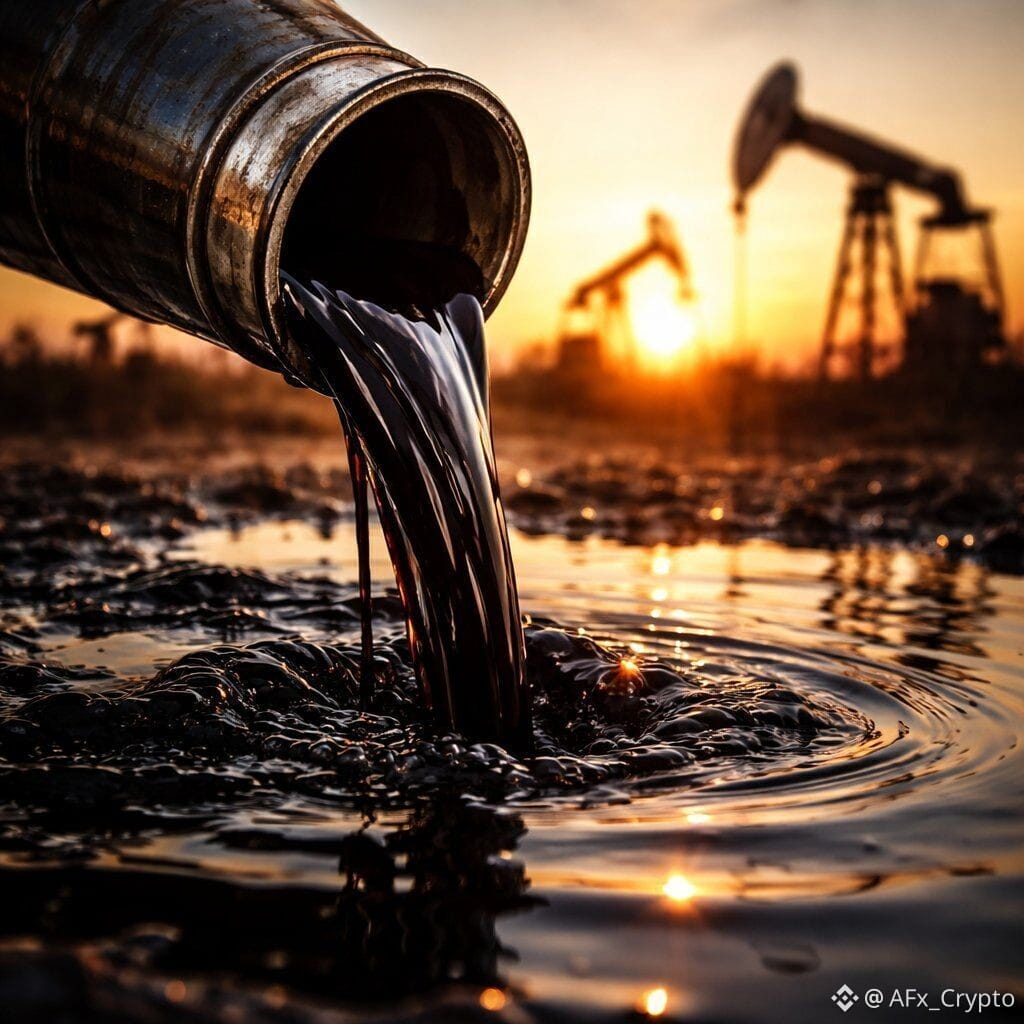
ඇමරිකා එක්සත් ජනපදය හා ඉරානය අතර ඇතිවන උත්සන්නත්වය උත්සන්න වීමත් සමඟ තෙල් මිල ගණන් ඉහළ යමින් පවතී.
WTI 0.8% කින් ඉහළ ගොස් $92.18 වෙත පැමිණි අතර, එක්සත් ජනපදය ඉරාන ටැංකි නැව් තුනක් වෙත එල්ල කළ ප්රහාර සහ එක්සත් ජනපද නාවික හමුදා නෞකාවන් සම්බන්ධ මිසයිල ප්රහාරයන්ගෙන් පසුව Brent $96.82 දක්වා ළඟා විය.
⚠️ ඉහළ යන භූ-දේශපාලන උත්සන්නත්වය ලෝක මට්ටමේ වෙළඳපොලවල දැඩි අස්ථිරතාවය ඉහළ මට්ටමක තබා ගත හැක.
#USIranTradeTankerStrikesEscalate #IranToSetRestrictedZoneNearHormuz
ඇමරිකා එක්සත් ජනපදය හා ඉරානය අතර ඇතිවන උත්සන්නත්වය උත්සන්න වීමත් සමඟ තෙල් මිල ගණන් ඉහළ යමින් පවතී.
WTI 0.8% කින් ඉහළ ගොස් $92.18 වෙත පැමිණි අතර, එක්සත් ජනපදය ඉරාන ටැංකි නැව් තුනක් වෙත එල්ල කළ ප්රහාර සහ එක්සත් ජනපද නාවික හමුදා නෞකාවන් සම්බන්ධ මිසයිල ප්රහාරයන්ගෙන් පසුව Brent $96.82 දක්වා ළඟා විය.
⚠️ ඉහළ යන භූ-දේශපාලන උත්සන්නත්වය ලෝක මට්ටමේ වෙළඳපොලවල දැඩි අස්ථිරතාවය ඉහළ මට්ටමක තබා ගත හැක.
#USIranTradeTankerStrikesEscalate #IranToSetRestrictedZoneNearHormuz
WTI 0.8% කින් ඉහළ ගොස් $92.18 වෙත පැමිණි අතර, එක්සත් ජනපදය ඉරාන ටැංකි නැව් තුනක් වෙත එල්ල කළ ප්රහාර සහ එක්සත් ජනපද නාවික හමුදා නෞකාවන් සම්බන්ධ මිසයිල ප්රහාරයන්ගෙන් පසුව Brent $96.82 දක්වා ළඟා විය.
⚠️ ඉහළ යන භූ-දේශපාලන උත්සන්නත්වය ලෝක මට්ටමේ වෙළඳපොලවල දැඩි අස්ථිරතාවය ඉහළ මට්ටමක තබා ගත හැක.
#USIranTradeTankerStrikesEscalate #IranToSetRestrictedZoneNearHormuz
469
·
--
විටාලික් බුටේරින් ක්රිප්ටෝග්රැෆි සඳහා ඇති වශයෙන් රසවත් දිගුකාලීන දෘෂ්ටියක් බෙදාගෙන තිබේ.
SNARKs, FHE සහ iO යන ප්රධාන තාක්ෂණ තුනටම අවසානයේදී ගණනය කිරීම්වල අතිරික්ත පිරිවැය 10xට වඩා අඩු මට්ටමකට ළඟා විය හැකි බවට ඔහු 60% ක ඉඩක් පවතින බව අනුමාන කරයි.
තවමත් ඉතා සමීප හැකියාව නම් SNARKsය. වයිටාලික් පවසන්නේ මේ දශකය අවසන් වීමට පෙර ඒවාට තනි-අංක (single-digit) අතිරික්ත පිරිවැයක් දක්වා ළඟා විය හැකි යැයි හොඳ අවස්ථාවක් තිබෙන බවයි.
එසේ වුවහොත්, ලාභදායී ක්රිප්ටෝග්රැෆි ගණනය කිරීම්වලට බ්ලොක්චේන් පරිමාණකරණය, පෞද්ගලිකත්වය සහ තහවුරු කිරීම සඳහා ප්රබල බලපෑම් ඇති විය හැක.
මෙය සතුටුදායක පුරෝකථනයක් වන අතර අනිවාර්ය කාලරාමුවක් නොවේ—නමුත් අනිවාර්යයෙන්ම නැරඹීමට රසවත් වර්ධනයක්.
#CNPYAirdropOnBinanceAlpha $ETH
{spot}(ETHUSDT)
විටාලික් බුටේරින් ක්රිප්ටෝග්රැෆි සඳහා ඇති වශයෙන් රසවත් දිගුකාලීන දෘෂ්ටියක් බෙදාගෙන තිබේ.
SNARKs, FHE සහ iO යන ප්රධාන තාක්ෂණ තුනටම අවසානයේදී ගණනය කිරීම්වල අතිරික්ත පිරිවැය 10xට වඩා අඩු මට්ටමකට ළඟා විය හැකි බවට ඔහු 60% ක ඉඩක් පවතින බව අනුමාන කරයි.
තවමත් ඉතා සමීප හැකියාව නම් SNARKsය. වයිටාලික් පවසන්නේ මේ දශකය අවසන් වීමට පෙර ඒවාට තනි-අංක (single-digit) අතිරික්ත පිරිවැයක් දක්වා ළඟා විය හැකි යැයි හොඳ අවස්ථාවක් තිබෙන බවයි.
එසේ වුවහොත්, ලාභදායී ක්රිප්ටෝග්රැෆි ගණනය කිරීම්වලට බ්ලොක්චේන් පරිමාණකරණය, පෞද්ගලිකත්වය සහ තහවුරු කිරීම සඳහා ප්රබල බලපෑම් ඇති විය හැක.
මෙය සතුටුදායක පුරෝකථනයක් වන අතර අනිවාර්ය කාලරාමුවක් නොවේ—නමුත් අනිවාර්යයෙන්ම නැරඹීමට රසවත් වර්ධනයක්.
#CNPYAirdropOnBinanceAlpha $ETH
SNARKs, FHE සහ iO යන ප්රධාන තාක්ෂණ තුනටම අවසානයේදී ගණනය කිරීම්වල අතිරික්ත පිරිවැය 10xට වඩා අඩු මට්ටමකට ළඟා විය හැකි බවට ඔහු 60% ක ඉඩක් පවතින බව අනුමාන කරයි.
තවමත් ඉතා සමීප හැකියාව නම් SNARKsය. වයිටාලික් පවසන්නේ මේ දශකය අවසන් වීමට පෙර ඒවාට තනි-අංක (single-digit) අතිරික්ත පිරිවැයක් දක්වා ළඟා විය හැකි යැයි හොඳ අවස්ථාවක් තිබෙන බවයි.
එසේ වුවහොත්, ලාභදායී ක්රිප්ටෝග්රැෆි ගණනය කිරීම්වලට බ්ලොක්චේන් පරිමාණකරණය, පෞද්ගලිකත්වය සහ තහවුරු කිරීම සඳහා ප්රබල බලපෑම් ඇති විය හැක.
මෙය සතුටුදායක පුරෝකථනයක් වන අතර අනිවාර්ය කාලරාමුවක් නොවේ—නමුත් අනිවාර්යයෙන්ම නැරඹීමට රසවත් වර්ධනයක්.
#CNPYAirdropOnBinanceAlpha $ETH

1
243
තවත් අන්තර්ගතයන් ගවේෂණය කිරීමට ඇතුල් වන්න
Binance චතුරශ්රය හි ගෝලීය ක්රිප්ටෝ පරිශීලකයින් හා එක්වන්න
⚡️ ක්රිප්ටෝ පිළිබඳ නවතම සහ ප්රයෝජනවත් තොරතුරු ලබා ගන්න.
💬 ලොව විශාලතම ක්රිප්ටෝ හුවමාරුව මගින් විශ්වාස කෙරේ.
👍 සත්යායනය කරන ලද නිර්මාණකරුවන්ගෙන් සැබෑ විදසුන් සොයා ගන්න.
විද්යුත් තැපෑල / දුරකථන අංකය
නැගී එන මාතෘකා
AppleDebutsFoldablePhone
18,090 views
371 සාකච්ඡා කරමින්
$BTC
Apple က ခေါက်မျက်နှာပြင်ပါတဲ့ဖုန်းတစ်မျိုး ထုတ်လိုက်ပြီ
iPhone ပရိသတ်တွေက ခွဲသွင်းပေးငွေကို တွက်နေကြ
အဟောင်းဘက်အမြတ်ဟောင်းတွေက BTC ဘယ်နှစ်လုံးလိုမလဲကို တွက်နေကြ
ညီအစ်ကိုတို့
Apple က နောက်ဆုံးတော့ တကယ်ကို ဖိမရလောက်အောင် ထုတ်လိုက်ပြီ
ပထမဆုံး ခေါက်လို့ရတဲ့ မိုဘိုင်းလ်ဖုန်း
iPhone Duo
ပြည်တွင်း(တရုတ်)မှာ 15999 ယွမ်ကနေ စ
အမြင့်ဆုံးဗားရှင်းကိုတော့ 26499 အထိ တန်းတက်
ငါ ဒီစျေးကို ကြည့်ပြီး
စျေးကြီးတယ်လို့ မတွေးတာမဟုတ်ဘူး
အစား အလျင်ဆုံး အရောင်းအဝယ်ဘုတ်(交易所)ကို ဖွင့်ပြီး တွက်လိုက်တာ
အခု ဖြစ်နေတဲ့ ကရင်စီစျေးနှုန်းအတိုင်း
ဒီဖုန်းက ခန့်မှန်းခြေအားဖြင့် 0.025 BTC လောက်ပါ
0.025 BTC
အဲဒါ များမများလားဆိုတော့ များမဟုတ်သလိုထင်မယ်နော်
ဒါပေမယ့် မင်း သမိုင်းကို ပြန်ဖွင့်ကြည့်
အဲဒီတုန်းက iPhone 4s ထုတ်ပြန်တော့
စျေးနှုန်းကို BTC အဖြစ် ပြောင်းတွက်ကြည့်ရင် 162 BTC
iPhone 6 က 1.7 BTC
iPhone 13 က 0.018 BTC
iPhone 17 က 0.007 BTC
ဒီ trend ကို နားလည်မိပြီလား
မင်းလက်ထဲက ပိုက်ဆံတွေ တိုးလာတာမဟုတ်
Bitcoin က Apple ရဲ့ စျေးနှုန်းကို မင်းအတွက် ဖျော့ပေးနေသလိုဖြစ်တယ်
စိတ်ဝင်စားဖို့ကတော့ ပွဲအခမ်းအနားအတွင်းမှာ
Apple ရဲ့ ရှယ်ယာစျေးက တောင်ပေါ်ကနေ ကျသလို၊ ပြန်တက်သလို လုပ်သွားတယ်
စတင်ဖွင့်တော့ အရင် ချလိုက်
နောက်ပိုင်းပြန်ဆွဲတင်
ပိတ်ချိန်မှာတော့ အနည်းငယ် ကျ
ဈေးကြီးတဲ့ ခေါက်ဖုန်းကများများရောင်းနိုင်မလားဆိုတာ
အမြင်ကွဲမှုက မနည်းဘူး 😂😂
ဒါပေမယ့် ညီအစ်ကိုတို့
Apple က ဖုန်းအသစ်ထုတ်တာနဲ့ နည်းပညာအောင်မြင်မှုတွေ အခုတင်ပဲ တက်လာမယ်ဆိုပြီး စိတ်ကူးမထည့်နဲ့
大饼(ဘီနသဘော/Bitcoin) ကလည်း လိုက်တက်ရမယ်ဆိုတာ မဟုတ်ဘူး
Apple နဲ့ crypto လောကကြားမှာ တိုက်ရိုက် ငွေဝင်-ထွက် လမ်းကြောင်းမရှိဘူး
ဖုန်းဘယ်လောက်ပဲ ရောင်းရောင်း
အချိန်မရွေး တစ်ပြားတစ်ချပ်မှ အလိုအလျောက် crypto စျေးကွက်ထဲကို စီးဝင်လာမှာမဟုတ်
ဒါက သုံးစွဲရေးဘက် hardware အကျိုးကျေးဇူးပဲ
大饼 ကို တိုက်ရိုက် စျေးတင်ပေးမယ့် လော့ဂစ်(အဓိကအကြောင်း) မဟုတ်ဘူး
大饼 ရဲ့ စျေးနှုန်းကို ထိန်းချုပ်တဲ့ အဓိကလမ်းကြောင်းကတော့
အမေရိကန် ဗဟိုဘဏ်(Fed) အတိုးနှုန်းလျှော့မလား
အမေရိကန် အစိုးရကြွေးမြီ(美债) အထွက်နှုန်း
ဒီလိုပဲ ဖြစ်နေတုန်းပဲ
Apple ရဲ့ နောက်ဆုံးထုတ် အသစ်ကတော့ စက်မှုကဏ္ဍအတွက် အနည်းငယ် စိတ်ဝင်စားစရာ(小热点) ပဲ
အချိန်တိုအတွင်းမှာသာ အပိုင်းလိုက် စိတ်ဓာတ်ကို လှုံ့ဆော်နိုင်
ကြီးမားတဲ့ စျေးကွက်အလားအလာ(大趋势) ကို မပြောင်းလဲနိုင်ဘူး
မင်းက ဖုန်းအသစ်လဲလှယ်ဖို့ ရှိပြီးသားဆိုရင်
ပြီးတော့ မင်းလက်ထဲမှာ 0.025 BTC လောက်ဆိုတဲ့ အပိုငွေရှိနေတယ်ဆိုရင်
မင်း ဝယ်မလား?
#appledebutsfoldablephone
孔大锤
·3 කැමත්ත දැක්වීම්
·2.4k views
IranSaysReadyToEscalateWarWithUS
35 views
12 සාකච්ඡා කරමින්
EUExtendsCentralContactPointToCASPs
3,360 views
113 සාකච්ඡා කරමින්