Falcon Finance Turns On Chain Treasuries Into Working Balance Sheets
For a long time, most on chain treasuries existed in a strange limbo. They were rich in tokens but poor in flexibility. Funds sat still for safety reasons, yet when urgency hit, teams had only two choices. Either sell into weakness or gamble on aggressive strategies. Falcon Finance quietly alters that uncomfortable equation. It gives treasuries a way to stay solvent, flexible, and strategically patient at the same time. What makes this shift important is not how dramatic it looks on a chart but how it changes daily behavior inside real teams.
From Idle Reserves to Controlled Financial Motion
A treasury that cannot move without self harm is not truly liquid. Falcon allows treasuries to unlock spending power without sacrificing long term exposure. By minting USDf against assets they already hold, teams access operational capital while preserving their core positions. This transforms reserves from static security blankets into controlled financial engines.
USDf as the Backbone of Treasury Continuity
USDf does not behave like a speculative instrument inside treasury workflows. It behaves like a ledger unit that keeps operations smooth. Payroll stays regular. Vendor contracts stay predictable. Grant programs stay consistent. The pressure to liquidate tokens during stressful moments drops sharply. That single behavioral shift alone prevents many long term strategic mistakes.
sUSDf Introduces Sustainable Offset to Operating Burn
Every treasury faces the same quiet enemy over time. Burn. sUSDf gives teams a way to soften that pressure without chasing risky returns. Yield grows in the background while the base reserve stays intact. Over months, this slows dilution. Over years, it reshapes how often teams need to return to the market for funding.
Multi Asset Collateral Preserves Natural Treasury Diversity
Most treasuries already hold a mix of assets. Some are volatile. Some are stable. Some reflect real world exposure. Falcon allows that natural diversity to express itself without forcing everything into one blunt risk profile. Each asset keeps its character while contributing to a unified liquidity engine.
Operational Budgeting Becomes Predictable Instead of Reactive
When liquidity can be accessed without selling, forecasting becomes easier. Budgets stretch across quarters instead of weeks. Teams stop building emergency contingency plans for every market dip. Financial management becomes a process instead of a reflex.
Treasury Fear Cycles Begin to Weaken
Fear has destroyed more treasuries than poor strategy. Panic selling during downturns locks in losses that never needed to exist. USDf changes that emotional pattern. When there is another option besides liquidation, decision making regains balance. Teams respond with planning instead of reflex.
Insurance Stops Being Abstract and Becomes Strategic
Falcon treats insurance as an active balance sheet function. For treasuries, this creates a layer of comfort that does not rely on hope or narrative. Knowing that protection is continuously funded changes how risk is perceived at a management level.
Payments Turn Treasury Theory Into Daily Reality
With direct payment rails, treasury capital stops being theoretical. It pays staff. It settles contracts. It covers infrastructure. When a treasury can operate entirely on chain without banks or wrappers, it moves from experimental to functional.
Governance Gains Real Financial Gravity
When treasuries gain real tools, governance stops being philosophical debate. Emissions, lock durations, insurance routing, and reserve strategy become true financial policy decisions. Falcon quietly transforms voting into treasury stewardship.
Treasuries Begin to Think Like Risk Desks
As liquidity becomes programmable, treasury teams start modeling stress the way professional risk desks do. Macroeconomic shifts. Legal jurisdiction exposure. Currency instability. Systemic drawdowns. Falcon gives them the structure to think in layers instead of reacting in isolation.
Token Emissions Shift From Survival Tool to Design Lever
Many DAOs once depended on emissions just to keep the lights on. With yield and working liquidity in place, emissions become a strategic choice instead of a survival reflex. Long term token health improves quietly under that shift.
Regional Treasuries Access Sovereign Grade Stability
Sovereign backed collateral introduces a form of stability that most crypto-native treasuries never had access to. Regional DAOs can now hold exposure to government yield without abandoning the on chain environment. This changes how community economies can anchor themselves.
Time Discipline Reenters Treasury Behavior
Long duration governance locks discourage short term thinking at every level. Six month timeframes encourage planning cycles instead of reaction cycles. Signal overtakes noise when time discipline returns.
Transparency Rebuilds Community Trust in Reserves
Public reserve dashboards and frequent attestations turn treasury management into a visible practice instead of a blind promise. Contributors trust treasuries they can verify. Falcon builds that trust quietly through structure, not slogans.
A New Treasury Metric Quietly Takes Shape
Balance sheet velocity is beginning to matter. Not just what is held, but how fast value can be mobilized without destruction. This new metric may shape how DAOs evaluate financial health in the years ahead.
Why This Shift Matters for the Next Phase of DeFi
Speculation alone cannot sustain digital economies. Operations, payroll, infrastructure, and long term funding require stable balance sheet tools. Falcon is building those tools without turning treasuries into casinos.
Treasuries Become the Anchors of Durable On Chain Economies
When treasuries stop depending on panic decisions, they become anchors. Builders stay longer. Contributors commit deeper. Economies stabilize from the center outward.
The Long Transformation Happens Quietly Through Use
Falcon does not need dramatic headlines to reshape treasury behavior. Every payroll processed without liquidation. Every grant paid without dilution. Every budget executed without panic is proof that the transformation is already underway.
Falcon Finance Turns On Chain Treasuries Into Working Balance Sheets
For a long time, most on chain treasuries existed in a strange limbo. They were rich in tokens but poor in flexibility. Funds sat still for safety reasons, yet when urgency hit, teams had only two choices. Either sell into weakness or gamble on aggressive strategies. Falcon Finance quietly alters that uncomfortable equation. It gives treasuries a way to stay solvent, flexible, and strategically patient at the same time. What makes this shift important is not how dramatic it looks on a chart but how it changes daily behavior inside real teams.
From Idle Reserves to Controlled Financial Motion
A treasury that cannot move without self harm is not truly liquid. Falcon allows treasuries to unlock spending power without sacrificing long term exposure. By minting USDf against assets they already hold, teams access operational capital while preserving their core positions. This transforms reserves from static security blankets into controlled financial engines.
USDf as the Backbone of Treasury Continuity
USDf does not behave like a speculative instrument inside treasury workflows. It behaves like a ledger unit that keeps operations smooth. Payroll stays regular. Vendor contracts stay predictable. Grant programs stay consistent. The pressure to liquidate tokens during stressful moments drops sharply. That single behavioral shift alone prevents many long term strategic mistakes.
sUSDf Introduces Sustainable Offset to Operating Burn
Every treasury faces the same quiet enemy over time. Burn. sUSDf gives teams a way to soften that pressure without chasing risky returns. Yield grows in the background while the base reserve stays intact. Over months, this slows dilution. Over years, it reshapes how often teams need to return to the market for funding.
Multi Asset Collateral Preserves Natural Treasury Diversity
Most treasuries already hold a mix of assets. Some are volatile. Some are stable. Some reflect real world exposure. Falcon allows that natural diversity to express itself without forcing everything into one blunt risk profile. Each asset keeps its character while contributing to a unified liquidity engine.
Operational Budgeting Becomes Predictable Instead of Reactive
When liquidity can be accessed without selling, forecasting becomes easier. Budgets stretch across quarters instead of weeks. Teams stop building emergency contingency plans for every market dip. Financial management becomes a process instead of a reflex.
Treasury Fear Cycles Begin to Weaken
Fear has destroyed more treasuries than poor strategy. Panic selling during downturns locks in losses that never needed to exist. USDf changes that emotional pattern. When there is another option besides liquidation, decision making regains balance. Teams respond with planning instead of reflex.
Insurance Stops Being Abstract and Becomes Strategic
Falcon treats insurance as an active balance sheet function. For treasuries, this creates a layer of comfort that does not rely on hope or narrative. Knowing that protection is continuously funded changes how risk is perceived at a management level.
Payments Turn Treasury Theory Into Daily Reality
With direct payment rails, treasury capital stops being theoretical. It pays staff. It settles contracts. It covers infrastructure. When a treasury can operate entirely on chain without banks or wrappers, it moves from experimental to functional.
Governance Gains Real Financial Gravity
When treasuries gain real tools, governance stops being philosophical debate. Emissions, lock durations, insurance routing, and reserve strategy become true financial policy decisions. Falcon quietly transforms voting into treasury stewardship.
Treasuries Begin to Think Like Risk Desks
As liquidity becomes programmable, treasury teams start modeling stress the way professional risk desks do. Macroeconomic shifts. Legal jurisdiction exposure. Currency instability. Systemic drawdowns. Falcon gives them the structure to think in layers instead of reacting in isolation.
Token Emissions Shift From Survival Tool to Design Lever
Many DAOs once depended on emissions just to keep the lights on. With yield and working liquidity in place, emissions become a strategic choice instead of a survival reflex. Long term token health improves quietly under that shift.
Regional Treasuries Access Sovereign Grade Stability
Sovereign backed collateral introduces a form of stability that most crypto-native treasuries never had access to. Regional DAOs can now hold exposure to government yield without abandoning the on chain environment. This changes how community economies can anchor themselves.
Time Discipline Reenters Treasury Behavior
Long duration governance locks discourage short term thinking at every level. Six month timeframes encourage planning cycles instead of reaction cycles. Signal overtakes noise when time discipline returns.
Transparency Rebuilds Community Trust in Reserves
Public reserve dashboards and frequent attestations turn treasury management into a visible practice instead of a blind promise. Contributors trust treasuries they can verify. Falcon builds that trust quietly through structure, not slogans.
A New Treasury Metric Quietly Takes Shape
Balance sheet velocity is beginning to matter. Not just what is held, but how fast value can be mobilized without destruction. This new metric may shape how DAOs evaluate financial health in the years ahead.
Why This Shift Matters for the Next Phase of DeFi
Speculation alone cannot sustain digital economies. Operations, payroll, infrastructure, and long term funding require stable balance sheet tools. Falcon is building those tools without turning treasuries into casinos.
Treasuries Become the Anchors of Durable On Chain Economies
When treasuries stop depending on panic decisions, they become anchors. Builders stay longer. Contributors commit deeper. Economies stabilize from the center outward.
The Long Transformation Happens Quietly Through Use
Falcon does not need dramatic headlines to reshape treasury behavior. Every payroll processed without liquidation. Every grant paid without dilution. Every budget executed without panic is proof that the transformation is already underway.
Injective Is Quietly Becoming the Execution Layer Serious Markets Depend On
Most blockchains are judged by how loudly they perform during moments of excitement. Very few are judged by how they behave after excitement fades. Injective is drifting into that second category. It is not chasing daily trends or viral attention. It is aligning itself with something far more difficult to earn: structural dependence. The kind that only reveals its value when markets tighten, fear rises, and capital starts looking for stability instead of speed. Why Dependable Financial Systems Never Try to Impress During Chaos
In traditional finance, reliability is boring by design. The moment volatility explodes, the best systems are the ones that behave exactly as they did the day before. If clearing slows, if rules become discretionary, or if settlement pauses without explanation, confidence vanishes instantly. Injective is being shaped around that same demand onchain. It does not try to look dynamic when stress arrives. It tries to feel unchanged. How Public Settlement Infrastructure Changes the Meaning of Trust
Legacy markets operate behind closed walls. Participants trust institutions to tell them what happened after the fact. Injective operates in open view. Anyone can watch how trades settle, how margin updates, how liquidations trigger, and how governance adjusts risk parameters. Trust is no longer placed in people or institutions. It is placed in visible mechanics that cannot disguise their behavior. Why Programmable Enforcement Removes Emotional Interference From Finance
Traditional systems depend on human discretion at the worst possible moments. Meetings get called. Exceptions are negotiated. Rules bend under pressure. Injective removes that emotional layer entirely. Enforcement is programmable. Liquidations trigger by strict conditions. Settlement follows defined logic. There is no hesitation layer where damage can compound. How Deterministic Finality Reshapes How Traders Experience Exposure
On many networks, exposure can remain unresolved for seconds or minutes after a trade appears complete. That invisible window creates hidden risk. Injective closes that window. Once execution confirms, exposure no longer exists in the background. The state becomes final immediately. Traders are no longer managing shadow positions. They are only managing reality. Why Visible Rules Slowly Change Trader Psychology
When systems are opaque, traders assume exceptions will exist. Risk becomes negotiable in their minds. When systems are visible, behavior shifts. Injective exposes leverage limits, collateral requirements, liquidation thresholds, and oracle behavior directly through the protocol. Nothing is implied. Everything is enforced as written. Over time, this visibility forces traders to respect consequence instead of gambling on leniency. Standardized Settlement Creating Predictable Behavior Across All Applications
In fragmented ecosystems, every protocol behaves differently. Liquidation rules vary. Oracle logic varies. Settlement reliability varies. Injective removes that fragmentation. Applications inherit the same settlement engine and margin backbone. This uniformity reduces operational risk and eliminates uncertainty when capital moves across platforms. Why Leverage Only Becomes Sustainable Under Strict Mechanical Liquidation
Leverage itself is not destructive. Weak liquidation is. When forced selling becomes chaotic, markets implode faster than liquidity can respond. Injective treats liquidation as a mechanical unwind, not an auction panic. Positions resolve through predefined logic, preventing disorder from emptying order books during sudden moves. Validator Reliability Becoming Part of Market Integrity
On Injective, validator behavior influences more than block production. It affects ordering, oracle timing, and liquidation execution. When validators drift, markets feel friction immediately. Economic penalties enforce uptime, pushing validator operation from passive participation into direct responsibility for financial stability. Governance Operating as a True Risk Control Mechanism
Injective governance is not cosmetic. It directly adjusts the amount of risk the system allows. Leverage ceilings, oracle permissions, collateral standards, and market approvals all change through governance. These are live controls over real capital. As participation matures, voting naturally shifts from expansion toward preservation. Cross Chain Assets Obeying One Unified Risk Rulebook
Multi chain finance becomes unstable when assets travel freely but rules remain local. Injective removes that inconsistency. Once assets enter its environment, they obey the same margin, settlement, and liquidation logic regardless of origin. This consistency stops hidden risk from quietly stacking up as assets move between different ecosystems. Real World Assets Forcing Crypto Markets to Mature Faster
Tokenized equities, treasuries, and commodities bring demands that crypto markets have historically avoided. These markets require predictable settlement, strict margining, and clean liquidations. Injective integrates them into its core enforcement systems instead of treating them as novelty products. This forces the entire environment to evolve toward institutional discipline. Machine Driven Finance Emerging From Deterministic Settlement Behavior
As automation accelerates, systems begin operating without constant human approval. Treasury bots rebalance continuously. Hedge engines adjust exposure in real time. Risk managers operate algorithmically. These machines require deterministic settlement to function safely. Injective provides that foundation for autonomous capital flows. Why Retail Traders Feel Infrastructure Improvements Without Seeing Them
Retail traders rarely track oracle latency or validator coordination, yet they feel the effects through tighter spreads, faster confirmations, smoother liquidations, and fewer violent price distortions. Infrastructure discipline expresses itself in execution long before it ever becomes a narrative. Why Infrastructure Reputation Compounds Slower Than Narrative Hype
Narratives explode quickly and collapse just as fast. Infrastructure reputation builds through repeated stress events resolved cleanly. Each crisis that does not break a system adds silent credibility. Injective is accumulating that credibility through behavior rather than promotion. Dependable Systems Growing Slower but Lasting Longer
Speculative platforms expand rapidly during optimism and shrink just as rapidly during fear. Systems built to last rarely grow fast, but they always grow necessary. Once markets depend on a platform for execution rather than experimentation, usage becomes structural. Injective is building toward necessity, not popularity. How the Next Phase of Onchain Finance Separates Utilities From Experiments
As decentralized finance matures, two classes of platforms will coexist. Those built to test new ideas and those built to execute real capital safely. Injective is clearly aligning itself with execution by embedding enforcement at the protocol level rather than outsourcing it to applications. Why Patience at the Infrastructure Layer Outperforms Speed Over Cycles
Infrastructure rewards consistency more than velocity. Injective has spent years reinforcing settlement, liquidation, governance, and risk visibility rather than chasing attention. That patience rarely looks impressive during hype cycles. It becomes decisive across multiple market cycles. What Ultimately Proves Whether Injective Becomes Permanent Financial Infrastructure
The final test will never be marketing success or short-term adoption. It will be whether markets continue resolving exposure cleanly during systemic stress. If Injective keeps passing that test, it will no longer be viewed as a project. It will be viewed as part of the backbone of onchain finance itself.
Why Lorenzo’s Hybrid Structure Quietly Changes Who Controls Financial Reality
Crypto spent years teaching people that everything meaningful had to live fully inside smart contracts or it didn’t belong at all. That belief created powerful tools, but it also created a kind of tunnel vision. Some of the strongest financial activities in the world still live outside blockchains. Large futures markets. Institutional liquidity engines. Treasury yield systems. Structured credit desks. Lorenzo does not pretend those systems disappeared. It accepts their existence and designs a framework that can absorb their results without surrendering on-chain visibility.
Pure On-Chain Design Looks Clean But It Also Walls Off Entire Toolsets
Smart contracts excel at certain tasks. They hold assets precisely. They execute rules without hesitation. They enforce balances without emotion. What they do not do well is operate across fragmented markets, dynamic execution venues, and institutional settlement infrastructure. Those systems were not built for public blockchains. Lorenzo does not try to force them inside a box they do not fit into. It allows strategy execution to live where it already works while keeping outcomes anchored on chain.
Hybrid Does Not Ask For Blind Trust It Enforces Observable Behavior
Off-chain execution sounds dangerous only when results remain hidden. Lorenzo does not hide results. Capital enters visible vaults. Strategies follow defined mandates. Outcomes return through measurable pricing. Governance reviews what is allowed to scale. No single party owns the entire loop. What users rely on is not a promise. It is a sequence of steps that can be watched, measured, and challenged over time.
In This Model There Is Nowhere For Stories To Hide
Many systems survive on announcements. Partnerships. Narratives. Roadmaps. Lorenzo strips most of that theater away. If a strategy performs, the token reflects it. If it fails, the price reveals it. The vault grows or it does not. There is no alternative channel where failure can be disguised as progress. This makes outcomes louder than any marketing effort could ever be.
Strategies Once Locked Inside Institutions Become Legible To The Public
Institutional trading systems were never secret because they were magical. They were inaccessible because they were structurally gated. Lorenzo removes those walls without pretending the complexity disappeared. Users do not suddenly run futures desks. They gain visibility into how those results behave when routed through transparent accounting. That difference creates access without illusion.
Trust Slowly Drifts Away From People And Toward Process
Traditional finance trains investors to trust institutions. Early DeFi trained users to trust code. Lorenzo shifts trust toward process. Assets flow into vaults. Execution flows through approved routes. Reporting flows into price. Governance flows through veBANK. No single layer holds absolute authority. Every layer depends on the others to remain credible.
Risk Stops Living In One Place
On-chain only systems concentrate risk in smart contracts and liquidity mechanics. Off-chain systems concentrate risk in counterparties and operations. Lorenzo spreads risk across multiple domains instead of letting it collapse into a single failure point. A code issue does not guarantee strategy failure. A strategy failure does not guarantee vault collapse. Risk becomes distributed rather than absolute.
Reporting Quietly Becomes The Real Security Mechanism
Most users think security ends with audits. In hybrid finance, time becomes the audit. Clean reporting over weeks and months becomes the proof of integrity. When pricing aligns with disclosed activity repeatedly, confidence builds without anyone needing to explain why things still work.
Redemptions Become A Process Instead Of A Reflex
Instant exits define most DeFi behavior. Hybrid systems introduce time back into capital movement. Settlement windows. Processing periods. Redemption cycles. These do not weaken trust. They weaken panic. When capital must move through steps, users think in phases instead of impulses.
Why Institutions Feel Comfortable Here Without Owning Control
Institutions are accustomed to layered operations. Custody desks. Execution desks. Reporting desks. Oversight committees. Lorenzo mirrors this structure without granting privileged access. Institutions recognize the logic. Retail users retain the access. That overlap rarely exists in financial systems.
Retail Gains Sophistication Without Losing Sovereignty
Users do not gain the ability to run external trading engines. What they gain instead is custody, transparency, and governance participation over outcomes they could never personally execute. They do not need insider status. They only need a wallet and patience.
veBANK Quietly Becomes The Filter For Expansion
As more external strategies are proposed, governance becomes the gate. veBANK holders decide which partnerships enter. Which execution standards are sufficient. Which risks are acceptable. Hybrid finance without governance becomes centralized finance in disguise.
Growth Slows To The Speed Of Oversight
Every strategy adds relationships and operational weight. Lorenzo cannot expand faster than it can supervise. That friction prevents reckless scaling. It forces discipline into expansion rather than allowing expansion to dictate discipline.
DeFi Moves From Experiment To System Through Structures Like This
Early DeFi existed to prove permissionless finance was possible. Hybrid designs exist to prove permissionless finance can behave responsibly. Lorenzo sits directly inside that transition without advertising it as ideology.
Hybrid Is Not A Compromise It Is The Shape Of Reality
Custody, settlement, and governance belong naturally on chain. Deep execution, institutional liquidity, and structured credit naturally live outside it. The future is not choosing between them. It is forcing them to share transparency.
Lorenzo Does Not Try To Destroy The Old World It Strips It Of Its Darkness
Instead of pretending institutions never mattered, Lorenzo absorbs their strongest tools and removes their opacity. What remains is execution that can be watched. Results that cannot hide. And governance that decides what survives.
Why Kite Machine Memory May Become the Brain of Agent Economies
Most people think of AI as something that reacts in the present. A prompt goes in. A response comes out. Even in automated systems, decisions often feel disposable, as if each action starts from zero. That approach works for simple tools. It breaks down when machines begin running economies. An economy without memory cannot evolve. Kite is quietly addressing this through an emerging layer that turns past machine behavior into active economic intelligence. Not memory as storage, but memory as a living economic signal.
Why Stateless Intelligence Fails at Economic Scale
Stateless systems treat every decision as isolated. An agent evaluates a condition. It executes. The event passes. No long term behavioral weight accumulates unless a human manually analyzes logs later. At economic scale, this creates three problems. Mistakes repeat because nothing internal remembers them. Good performance does not naturally compound into advantage. And coordination never improves structurally because every interaction resets to zero trust. Kite’s machine memory layer exists because these problems eventually make large agent systems unstable.
Machine Memory as a Behavioral Accumulator
On Kite, machine memory is not just data storage. It is the accumulation of verified behavior across time. Each successful session strengthens future selection probability. Each failure reshapes risk assessment. Memory becomes an economic force that influences routing, pricing, and access. Instead of agents being judged only by what they claim they can do, they are increasingly judged by what they have already proven they can do under real conditions. This shifts intelligence from reactive to adaptive.
Why Memory Changes Decision Quality Without Changing Code
One of the most powerful effects of machine memory is that it improves systems even when code remains unchanged. An agent running the same strategy under the same logic becomes more reliable simply because the network learns when and how to trust it. Poorly performing agents do not need to be manually disabled. They are gradually deprioritized as memory reflects risk. Strong agents are not artificially promoted. They are naturally favored through accumulated behavioral weight. The network becomes self correcting without constant upgrades.
How Memory Feeds Directly Into Economic Selection
In human economies, memory shapes reputation. In machine economies, memory shapes routing. An agent selecting a service provider does not rely on branding. It queries memory. It evaluates how often verified output was delivered. It checks how often sessions terminated cleanly. It chooses accordingly. This makes selection immune to cosmetic manipulation. Visibility loses power. History gains power. Long term discipline quietly beats short term hype.
Why Machine Memory Is Not the Same as Data Logging
Data logs store what happened. Memory changes what happens next. This is the key distinction. A log is passive. Memory is active. On Kite, memory directly affects how value moves. It affects which agents receive work. Which validators receive routing weight. Which compute providers see consistent demand. This is not archival bookkeeping. It is live economic influence driven by the past.
How Memory Works With Proof of AI
Proof of AI judges correctness at the moment of execution. Machine memory judges consistency across many executions. One governs the present. The other governs the future. An agent might pass verification today and fail tomorrow. Proof of AI handles each event. Memory integrates those events into an evolving trust profile. This combination allows neither single success nor single failure to dominate permanently. What matters is the long arc of behavior.
Why Memory Reduces Noise Across the Entire System
In early networks, selection is noisy. Bad actors slip through. Good actors struggle for visibility. Reputation takes time to form because everything is manual. With machine memory, noise decays automatically. Unreliable agents are gradually filtered out. Edge case failures are absorbed without destabilizing the whole system. The signal to noise ratio improves without centralized curation.
How Memory Shifts Builder Incentives
Builders quickly learn that throwing new agents into the network without care is expensive. Agents with no memory must work harder to earn trust. Agents with negative memory face rising friction. This pushes builders toward fewer, better maintained agents rather than many disposable ones. Maintenance becomes as important as deployment. Stability becomes a competitive edge. The culture shifts from volume to longevity.
Why Machine Memory Is Essential for Institutional Comfort
Institutions do not trust systems that forget their own past. Risk assessment is impossible without behavioral history. Machine memory provides institutions with what they already require internally. Track records. Drift analysis. Stress performance. With memory in place, institutions no longer evaluate agents as theoretical systems. They evaluate them as operational entities with measurable behavior across time. This transforms blind technical risk into visible operational risk.
How Memory Enables True Agent Learning at Network Level
Individual agents can train models. But network level learning requires shared memory. The network learns which patterns of behavior are sustainable. Which fail under pressure. Which scale safely. This creates a form of collective intelligence where the market itself becomes a learning system. Code does not change. Selection does. Over time, the entire ecosystem drifts toward safer, more reliable structures.
Why Memory Prevents Infinite Exploitation Loops
Many early economic exploits persist because systems do not remember how they were abused. The same pattern repeats with minor variations. With machine memory, exploit patterns leave scars. Routing shifts. Trust decays. Access tightens automatically. Attackers cannot endlessly recycle the same strategy under new identities without encountering rising friction. Memory introduces a natural immunization effect.
How Memory Interacts With Session Control
Sessions define how long an agent can act. Memory defines how future sessions are shaped. If an agent behaves poorly in one session, future sessions may become shorter, smaller, or more restricted. This creates a behavioral feedback loop. Good behavior expands opportunity. Bad behavior compresses it. Authority becomes elastic rather than binary.
Why Machine Memory Makes Agent Economies Self Policing
Instead of relying on bans, blacklists, or centralized moderation, Kite allows behavior itself to regulate access. Agents that act responsibly gain scale. Agents that act irresponsibly contract until they become economically irrelevant. This is not moral enforcement. It is structural pressure created by cumulative history. No committee is required. The economy itself performs the policing.
The Shift From Reactive Systems to Remembering Systems
Reactive systems respond. Remembering systems evolve. The difference is subtle but transformative. Kite is not just teaching machines how to act. It is teaching the network how to remember which actions deserve to shape the future. Once memory becomes part of the economic core, growth stops being blind and starts becoming directional.
Why Machine Memory May Become the Most Copied Layer of All
Payments can be cloned. Identity models can be mimicked. Compute markets can be recreated. Collective machine memory is far harder to replicate because it requires time, behavior, and accumulated consequence. Once a network builds a deep memory of its own economy, that memory becomes a moat that cannot be rushed. Kite is laying the groundwork for that moat quietly. But history, once it starts accumulating at economic scale, tends to become the most defensible asset of all.
YGG and the Transformation of Guild Treasuries into Intergenerational Capital
In most Web3 projects, treasuries behave like fuel tanks. They are filled, burned, and forgotten as each cycle ends. Yield Guild Games has quietly moved in a very different direction. Its treasury no longer behaves like disposable fuel. It behaves like intergenerational capital. Capital that is expected to survive multiple market eras, multiple game generations, and multiple waves of participant turnover. This change is not cosmetic. It alters how every decision inside YGG is interpreted.
From Spending Power to Time Bearing Capital
Early guild treasuries were designed for speed. Capital was deployed aggressively to capture momentum. Success was measured by how quickly assets could be converted into short term participation. YGG learned through experience that speed without endurance leads to exhaustion. Over time, its treasury behavior shifted from spending power to time bearing capital. Assets are now expected not only to perform, but to remain structurally useful across long horizons.
Why Longevity Changed the Meaning of Risk
Short term treasuries assume that risk must be taken quickly or opportunity is lost. Intergenerational treasuries assume that opportunity will return in new forms. Inside YGG, this changed how risk is evaluated. Instead of asking how much upside can be captured in one season, decisions increasingly ask what kind of damage can echo across multiple ones. This does not eliminate boldness. It contextualizes it.
How SubDAOs Became the Filters of Treasury Aging
SubDAOs now act as aging filters for capital. Assets that prove durable remain in long circulation. Assets that deteriorate under stress are rotated out rather than defended by narrative. Over time, this creates a treasury that becomes more refined with each cycle. Not through design theory, but through survival testing. Capital ages the way living systems do. What lasts stays. What fails is quietly removed.
Why Yield Is Now Treated as a Byproduct Not the Goal
In early stages, yield defined success. High numbers justified aggressive behavior. Today inside YGG, yield is increasingly treated as a byproduct of correct structure. If capital is deployed into healthy environments, yield follows. If structure is weak, yield is considered untrustworthy regardless of headline figures. This inversion changes what people optimize for. Stability becomes the new profit model.
Treasury Behavior as a Cultural Signal
How a treasury behaves teaches participants how to behave. When capital is reckless, people become reckless. When capital is patient, people become patient. YGG treasury discipline now quietly signals that endurance matters more than spectacle. Participants absorb that signal without needing to be instructed. Over time this reshapes the entire tone of participation.
Why Treasury Memory Protects Against Repeating Financial Trauma
Every major drawdown leaves psychological scars on participants. Inside YGG, treasury memory reduces the chance of repeating the same trauma. People remember which expansions overreached. Which asset classes collapsed under stress. Which reward models hollowed out communities. These memories now shape future allocation decisions. Capital does not forget even when headlines do.
Intergenerational Thinking in a Normally Disposable Industry
Crypto as an industry is still dominated by disposable thinking. Launch fast. Extract fast. Migrate fast. YGG treasury practice violates that cultural norm. It plans for participants who are not yet present. For games that are not yet built. For downturns that are not yet visible. This type of thinking is rare precisely because it requires the discipline to resist maximum short term expression.
Why Players Begin To Treat Treasury as Shared Legacy
When people expect a system to continue long after they have rotated roles, their relationship to that system shifts. Inside YGG, many contributors now treat the treasury as a shared legacy rather than a payout source. They care about what condition they leave it in for the next generation of participants. That sense of inheritance is one of the quiet markers of institutional maturity.
How This Changes Governance Temperament
Governance in short lived systems is emotional. Votes swing with sentiment. Governance in time bearing systems becomes steadier. Inside YGG, this shift is visible. Proposals are argued with reference to years, not weeks. People ask what a decision does to cohorts that are not yet active. That question alone changes the entire temperament of governance.
Why Intergenerational Capital Attracts Different Participants
Short term treasuries attract speculators. Intergenerational treasuries attract stewards. YGG is now increasingly populated by the second group. These are people who derive meaning from maintaining systems rather than only extracting from them. They become the backbone during periods when excitement thins.
The Compounding Effect of Surviving Multiple Cycles
Every cycle that YGG treasury survives increases its authority. Survival itself becomes proof of structure. As many short lived treasuries disappear, the ones that remain gain disproportionate gravitational pull. People begin to trust longevity more than narratives. That trust compounds in quiet ways that no campaign can manufacture.
Why This Treasury Model Points Beyond Gaming
What YGG is practicing with intergenerational capital is not limited to gaming. The same principles can govern creator economies, digital production networks, and cooperative virtual infrastructures. Capital that is designed to outlast individual products becomes a base layer for entire digital civilizations.
The Silent Difference Between Wealth and Inheritance
Wealth is what you spend. Inheritance is what you preserve. YGG no longer operates like an organization managing wealth alone. It is steadily becoming one that manages inheritance. And that quiet transformation may be one of the most important shifts taking place inside the entire Web3 gaming sector.
APRO Oracle and the Thin Signal That Decides Whether Markets Act or Hesitate
Decentralized finance appears automatic on the surface, but nothing inside it truly moves until information arrives. Contracts wait. Leverage waits. Liquidation engines wait. The moment data is accepted, hesitation disappears and execution begins. APRO Oracle exists at this narrow crossing where uncertainty becomes obligation and probability becomes outcome. Why Smart Contracts Cannot Distinguish Between Confidence and Truth
Humans hesitate when something feels wrong. Machines do not. A contract executes the moment its conditions are met with total confidence. It does not evaluate credibility. It does not sense abnormal context. If the input is wrong, the execution is still flawless. APRO is built on the understanding that flawless execution guided by distorted truth is the most efficient form of financial damage. Why Market Breakdown Always Starts Before It Is Visible
By the time price crashes appear on charts, the damage has already been shaped quietly. The data layer feels the pressure first. Feeds accelerate. Latency tightens. Attack incentives align with volatility. Small distortions enter at the worst possible moment. APRO is designed for this silent pre crash phase where outcomes are still being decided off screen. Why One Trusted Feed Eventually Becomes the Weakest Link
A single data provider may appear reliable for long stretches. Over time, failure always arrives. Infrastructure ages. Human error intrudes. External stress overwhelms assumptions. When thousands of protocols depend on one source, that source stops being infrastructure and becomes concentrated risk. APRO dissolves this fragility by forcing truth to emerge through multiple independent confirmations instead of one authority. Why High Speed Without Verification Is Just Organized Chaos
Speed feels empowering during volatility. In practice, fast incorrect data is the most destructive force in automated markets. One rapid misprice can trigger cascading liquidations across the entire stack before awareness even forms. APRO enforces verification without freezing execution so that urgency never outruns accuracy. What AT Really Represents Inside the Network
AT is not designed for spectacle. It is designed for consequence. Operators stake AT to publish values that trigger irreversible financial events. Accuracy protects their capital. Error erodes it. Governance through AT defines validation rules and response thresholds. AT transforms correctness into a continuously enforced discipline. Why Traders Only Discover the Oracle After Their Position Is Gone
Traders see liquidation notices and assume volatility was the cause. In reality, the decision was finalized moments earlier when the oracle committed a value to the chain. Everything after that is mechanical follow through. APRO operates at that silent decision layer where loss stops being theoretical and becomes final. Why Distributed Validation Turns Disaster Into Containment
Centralized failure spreads instantly and completely. Distributed failure fractures into smaller pieces. One reporter may fail while others remain accurate. APRO ensures that error becomes isolated rather than contagious. Markets bend instead of breaking all at once. Why Cross Chain Capital Cannot Survive on Conflicting Perception
Assets move between blockchains continuously. If one chain interprets an asset as collapsing while another interprets it as stable, liquidation logic becomes contradictory and arbitrage turns artificial. APRO synchronizes external reality across ecosystems so that decentralized markets operate on one shared interpretation of price. Why Data Feels Cheap Only in Calm Conditions
During quiet markets, oracle costs feel insignificant. During stress, their true value becomes visible instantly. One distorted update can erase weeks of stability across dozens of protocols in seconds. APRO is built on the principle that data is not background plumbing. It is structural protection. Why DeFi Can Only Mature as Fast as Its Oracles
New protocols appear rapidly. New narratives spread instantly. Oracle reliability moves at a slower pace because it is forged through repeated stress. APRO positions itself for long term infrastructure maturity rather than short term speculative velocity. How Automation Converts Data Accuracy Into Either Stability or Collapse
Automation removes human delay. It also removes human mercy. If data is correct, discipline compounds at machine speed. If data is flawed, destruction compounds at the same speed. APRO ensures that acceleration magnifies protection rather than multiplying fragility. Why Oracle Networks Grow Heavier With Success
Scale does not reduce responsibility. It multiplies it. Each new asset adds validation burden. Each new integration widens attack surface. Oracle networks carry increasing weight with every step forward. APRO is designed to survive under that permanent pressure. Final Perspective
APRO Oracle stands at the only layer in decentralized finance where information becomes irreversible command. In a system where contracts obey instantly and capital moves without hesitation, truth is the final form of protection. Through distributed validation, real time delivery, and economic accountability enforced through AT, APRO exists to ensure that automation never outruns reality. As DeFi continues to grow from experiments into financial infrastructure, the systems that protect truth will quietly decide which markets endure. APRO_Oracle was built for that responsibility.
APRO Oracle And The Data Layer Quietly Holding Web3 Together In December 2025
I stopped trusting most oracle systems after watching good positions get wiped out by nothing more than delayed pricing and noisy inputs. The collapse cycles of the last few years exposed a simple truth. Smart contracts are only as reliable as the data they ingest. APRO Oracle is the first oracle I have monitored where data integrity is treated as a primary system function rather than a statistical afterthought. After weeks of watching live node activity and feed behavior through real volatility, the conclusion is straightforward. This is no longer just a price oracle. It is a verifiable data infrastructure layer already underpinning a meaningful share of on-chain real world assets. As of early December 2025, AT trades around $0.127 with roughly $100 million in daily volume and a market cap near $32 million on 250 million circulating supply. That pricing sits in sharp contrast to the scale of value already secured through its feeds. More than $300 million in RWAs rely on APRO for ongoing settlement validation. With extreme fear still dominating sentiment across DeFi, APRO has quietly recorded some of the most consistent uptime and performance metrics in the entire oracle sector. Why Oracle Failure Has Become The Hidden Systemic Risk In DeFi
Most users still think oracle risk is limited to flash manipulation during extreme moves. The more dangerous failure mode is subtler. Off-chain data noise. API downtime. Latency mismatches across regions. These do not always produce obvious exploits. They produce gradual drift that eventually manifests as liquidation cascades and mispriced collateral. Traditional aggregation methods smooth averages after bad data has already entered the system. APRO flips that order of operations. Data is screened before it ever touches the aggregation layer. That single architectural decision changes how failures propagate. Instead of corruption spreading forward through the system, it is isolated at the intake layer. How Oracle 3.0 Filters Reality Before It Reaches The Chain
Every external input entering APRO is passed through off-chain AI models that score probability, deviation, and anomaly behavior against historical bands. Only data that clears a strict confidence threshold is allowed to broadcast. If confidence collapses, the feed does not fail forward. It stalls and reroutes. This mechanism proved itself in November when bond market pricing feeds began producing conflicting quotes during a temporary outage. Nearly a quarter of all candidate inputs were rejected automatically while the final aggregate stayed within fractions of real spot pricing. Several RWA vaults that would have triggered liquidations on other oracle stacks never saw any event at all. That is what pre-validation looks like in practice. Why Decentralization At The Node Level Now Matters More Than Ever
APRO operates with 127 independent nodes spread across 29 countries. No single operator controls meaningful consensus weight. The largest participant holds under nine percent of the network. This matters because markets no longer fail only from manipulation. They fail from infrastructure concentration. As DeFi moves deeper into RWAs, governance capture and data cartels become existential risks. APRO’s operator distribution already exceeds the decentralization profile of many Layer 1 validator sets. This is why RWA issuers are increasingly comfortable settling real world instruments on top of it. How $300 Million In RWAs Quietly Became Dependent On APRO
Tokenized credit, BTC wrappers, structured products, and prediction markets now consume APRO feeds continuously. Falcon Finance relies on it for USDf collateral pricing. Lorenzo Protocol relies on it for OTF NAV computation. Yield Guild Games integrates it for vault settlement and agent reward calculations. What matters is not the brand logos. It is the fact that these products execute final accounting against APRO feeds. That makes the oracle economically entangled with their solvency. As those ecosystems scale, oracle risk becomes balance sheet risk. APRO already sits inside that loop. Why AT No Longer Trades Like A Typical Emissions Token
AT staking yields are sourced entirely from protocol fees. There is no inflationary padding keeping rewards artificial. Every update query, every feed pull, every validation cycle generates revenue that flows directly to stakers. Quarterly burns reduce supply mechanically rather than narratively. Just over one million AT is scheduled for removal this quarter alone. At a time when many tokens are still suppressing sell pressure through vesting schedules, AT is constricting organically through utility. Why AI And RWAs Are Converging On The Oracle Layer First
As RWAs move on-chain, data types expand beyond price. Coupon verification. Invoice settlement. Carbon credit validation. Logistics data. These are not numerical tickers. They require interpretation. That is where AI shifts from optimization tool to trust engine. APRO is not merely streaming numbers. It is validating documents, reconciling off-chain events, and transforming unstructured inputs into enforceable on-chain triggers. That is what allows AI agents and RWA contracts to operate without constant human arbitration. Why APRO’s Market Position Is Still Widely Misunderstood
Most traders still bucket APRO alongside traditional price oracle competitors. That framing misses the point. The product surface is closer to a decentralized data integrity network than a simple feed provider. As RWAs expand, dispute resolution, document verification, and compliance validation will occupy more on-chain bandwidth than spot pricing ever did. APRO is already purpose-built for that environment. The market is still pricing it like a price oracle. Systemic Risk Is Now Being Absorbed Rather Than Exported
In prior cycles, oracle failures exported risk outward into users and protocols. With pre-validation, anomaly rejection, and slashing integrated at the data layer, much of that risk is now absorbed before it ever touches execution logic. This is why recent market stress produced fewer disorderly liquidations inside APRO-secured systems. The shock was filtered before propagation. How I Am Positioned And Why I Am Not Trading Noise
The bulk of my AT exposure is locked long term. Not because I expect short term volatility to vanish, but because the protocol sits one layer below speculation. Data infrastructure compounds invisibly while narratives churn above it. As RWAs continue migrating on-chain, the value of deterministic data validation grows regardless of market direction. AT reflects that function more than it reflects hype cycles. APRO is no longer trying to prove that AI and crypto can safely coexist. It is proving that settlement itself changes once AI becomes the gatekeeper rather than the afterthought. When markets finally reprice trust instead of volatility, oracle layers like this will not be reclassified overnight. They will already be embedded everywhere that matters. @APRO_Oracle #APRO #apro $AT
Lorenzo Protocol And The Quiet Rise Of On-Chain Asset Management At Scale
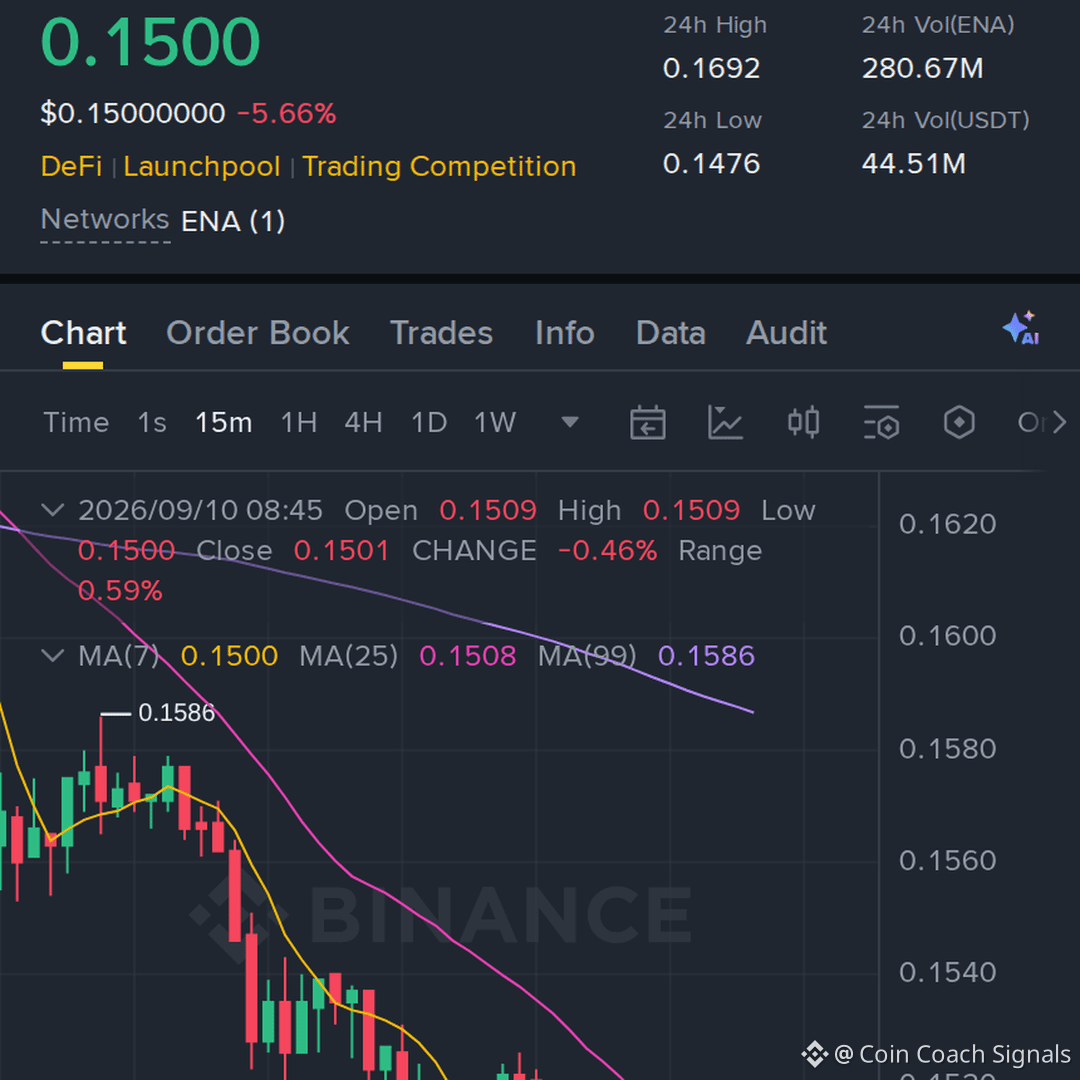
I started taking on-chain asset management seriously after watching one too many tokenized RWA products unravel during volatility because risk controls lived off-chain. Great yield in calm conditions meant nothing the moment liquidity tightened. Lorenzo Protocol was the first system I reviewed this year that felt structurally different rather than cosmetically innovative. After walking through its attestations, wrapper mechanics, and capital flows into USD1+ and BTC vaults, the shift became obvious. This is no longer experimental yield tooling. It is full-scale financial abstraction moving institutional strategies on-chain with live redemption. As of December 2025, over one billion dollars sits inside Lorenzo vaults across stables and BTC wrappers. That number alone would have been unthinkable for a new protocol one year ago. With $BANK trading around $0.149 on roughly $45 million in daily volume and a market cap near $63 million, the valuation disconnect versus deployed capital is still wide. Circulating supply remains near 425 million out of a 2.1 billion maximum, and most emissions now flow through usage rather than hype. In a market still pricing fear everywhere else, Lorenzo is growing precisely because it abstracts fear out of execution. Why Financial Abstraction Changed How Yield Is Deployed On-Chain
The core breakthrough at Lorenzo is not any single vault. It is the Financial Abstraction Layer itself. Instead of users choosing between dozens of fragmented strategies, FAL packages professional trading logic, RWA exposure, and volatility controls into tokenized funds that behave like liquid on-chain securities. The user holds a simple ERC-20 position while the protocol manages the complexity behind it. USD1+ became the proof of concept. Capital flows into tokenized T-bills, lending markets, and basis trades simultaneously. NAV updates in real time. Users redeem without lockups. During the November downturn when alt liquidity thinned across the board, USD1+ slipped barely over one percent before recovering, entirely because its defensive allocation absorbed the shock. That was the moment the abstraction thesis stopped being theoretical. How BTC Liquidity Quietly Became The Second Engine
What many missed during the stable vault growth phase is how aggressively BTC participation expanded underneath it. stBTC turned idle holdings into productive capital without forcing price exposure off balance sheet. enzoBTC bridged that productivity into the broader DeFi ecosystem without sacrificing redemption guarantees. Capital that normally sits dormant through bear markets is now compounding quietly inside hedged wrappers. Institutional participation accelerated this shift. Fireblocks linked custody flows to Lorenzo structures. Insurance layers expanded to cover hundreds of millions. By the time BTC wrappers crossed $180 million in TVL again this winter, the protocol already looked less like a DeFi experiment and more like a regulated asset manager wearing on-chain rails. Why $BANK Now Behaves Like A Business Token Instead Of A Farming Token
Early in its life cycle, $BANK traded like most protocol tokens. Speculation led narrative. That transition is now fading as fee capture and burn mechanics scale with real usage. Thirty five percent of monthly revenue is permanently retired from supply. Governance influence grows in proportion to staked exposure. veBANK voting already determines which strategies reach the abstraction layer and how risk parameters adjust as liquidity shifts. This changes supply dynamics in a subtle but important way. Instead of emissions defining market pressure, operational revenue now does. As USD1+ volumes expand and BTC wrappers continue to scale, $BANK reflects balance sheet growth rather than campaign rotations. Why The One Billion TVL Threshold Matters Structurally
Crossing one billion in TVL is not just a marketing milestone. It is the threshold where internal execution liquidity starts to rival external market liquidity. At that level, abstraction becomes self reinforcing. The protocol routes capital internally with lower slippage, tighter execution, and stronger hedging because flows are constant rather than episodic. This is the point where professional allocators begin treating the system as infrastructure instead of opportunity. At Lorenzo’s current scale, sudden inflows no longer distort yield. They reinforce it. Why Neobanks And PayFi Apps Are Now Routing Capital Through Lorenzo
Retail users rarely interact directly with FAL. Instead, they encounter Lorenzo through deposit yields embedded inside financial front ends. Neobanks push fifteen percent yield through OTF wrappers. PayFi apps integrate stable vaults that auto compound in the background. The user experiences simple yield. The protocol handles basis, hedging, and capital routing invisibly. This front end adoption is what quietly pushed TVL from under six hundred million to over one billion in a matter of weeks. The growth did not come from yield chasers. It came from embedded finance flows. Why The Market Still Has Not Repriced This Category Correctly
Yield abstraction is difficult to narrative trade because its success looks boring. No fireworks. No viral APY spikes. No daily influencer battles. Capital enters. It compounds. It remains. That behavior rarely generates immediate social hype, but it generates the most durable TVL anyone can ask for. At roughly half a times revenue with fee-driven burns and a rising institutional balance sheet, Lorenzo remains priced like a speculative vault protocol rather than a financial middleware layer. That mismatch will not persist forever. Risks Are Present But They Now Sit In Risk Management Not Liquidity
Macro rate shifts will always affect RWA yields. Off-chain execution introduces systemic complexity. Competition in structured products is increasing. Those risks are real. The difference at Lorenzo is that they are now actively managed variables rather than existential threats. Cooling periods, insurance layers, and live attestations ensure that even adverse environments degrade gradually rather than catastrophically. How I Am Positioned And Why I Am Staying Long Term
The majority of my $BANK position remains staked with governance exposure. I also maintain direct USD1+ allocations as my stable core. I am not trading Lorenzo around weekly volatility. I am treating it as a yield backend that compounds while the rest of the market reverts between fear and euphoria. Lorenzo is no longer trying to prove that structured yields belong on-chain. It is proving that they scale when built correctly. When yield abstraction becomes the default rather than the edge case, the protocols that solved it early will not be competing on marketing. They will be competing on balance sheet depth. Lorenzo is already far ahead on that curve.
Yield Guild Games And The Publishing Model Quietly Reshaping Web3 Gaming
I entered Web3 gaming during the Axie era when guilds were everywhere, scholarships were endless, and almost nobody questioned where the money ultimately came from. When prices collapsed, most of that structure dissolved overnight. What surprised me is not how fast guilds fell, but how deliberately Yield Guild Games rebuilt afterward. Over the past two months I walked through their treasury contracts, revenue-share streams, and Launchpad activity flow by flow. What emerged is not a guild chasing yield cycles anymore. It is a decentralized publisher already operating with recurring royalty economics across dozens of active titles. As of early December 2025, YGG trades around $0.0706 on roughly $21.5 million in daily volume with a market cap near $48 million and 681 million tokens circulating out of a 1 billion maximum. That circulation ratio matters. Most dilution is already absorbed. Unlike most gaming tokens, supply pressure is no longer the defining force. Revenue is. With a $30.4 million annualized USD run rate and verifiable on-chain distribution, YGG now trades at barely 1.6 times sales in an industry where gaming publishers routinely command far higher multiples. How YGG Replaced Scholarships With Royalty Infrastructure
The scholarship model was fragile because it depended on token price appreciation to function. YGG replaced it with something structurally stronger. Today, studios and SubDAOs deploy assets with revenue-share contracts embedded at the protocol level. When players spend inside those games, a fixed percentage of that spending flows on-chain as royalties. No speculation. No token dependency. Just pure commercial activity. As of December, roughly sixty eight percent of YGG revenue now comes directly from royalties rather than token emissions or temporary incentives. Over the last ninety days alone, the leading SubDAOs generated close to nineteen million dollars in realized profit. Thousands of small revenue streams settle daily into the treasury automatically. Buybacks sourced directly from that revenue removed over one hundred thousand YGG tokens in November without touching incentive pools. SubDAOs Became Operating Businesses Not Farming Vehicles
The SubDAO system quietly evolved into a franchise network of specialized operating entities. Each focuses on a specific region or game cluster and routes the majority of its profit back to the core treasury. The result is geographic and genre diversification at the protocol level rather than at the wallet level. Pixels in Southeast Asia now manages tens of thousands of active players generating millions in quarterly revenue from in-game economies. Ronin Guild Rush drew hundreds of guilds into Cambria’s seasonal structure within days of deployment. Newer liquidity focused SubDAOs like Fishing Frenzy are pairing game mechanics with fee based yield and tokenized rewards. The common thread across all of them is that profitability no longer relies on token inflation. It relies on player spending. The Launchpad Shifted Discovery Power Back To The Guild
YGG Play did not launch as another token farming portal. It launched as a controlled discovery funnel where games integrate directly with YGG’s revenue structure from day one. Developers gain access to an audience that actively plays. Players gain early access and reward alignment. The treasury gains perpetual revenue rights. Since its October launch, the platform has onboarded tens of thousands of unique users into quests tied directly to publishing pipelines. The Illuvium Alliance agreement alone is structured to yield both land sale revenue and permanent transaction fees. That is how a DAO becomes a publisher instead of a sponsor. Why The Treasury Structure Now Changes Risk For Holders
The YGG treasury no longer behaves like a swing trading account dominated by volatile tokens. The majority of assets now generate revenue rather than simply represent speculative exposure. Stablecash flows, revenue producing NFTs, and protocol-owned liquidity form the backbone. That materially changes downside behavior. Even in broad market drawdowns, treasury income continues. This is the reason price can disconnect from revenue for extended periods without threatening operational integrity. When a DAO continues earning during bearish conditions, time shifts from enemy to ally. Token Utility Now Tied Directly To Business Growth
YGG staking is no longer just a yield product. It gates access to publishing campaigns, quest allocations, early game releases, and future revenue participation. As buybacks compress supply and more revenue flows through the system, the token increasingly reflects business ownership rather than speculative momentum. With most vesting complete and treasury now seeding liquidity directly, market pressure from emissions has faded. What remains is distribution from long-term participants rather than short-term unlock cycles. Why The Market Is Still Treating YGG Like A 2021 Relic
Most traders still associate YGG with the scholarship boom and collapse. That association masks the fact that the business model no longer resembles its prior form. What once looked like a guild now operates like a modular publishing network with global player acquisition built directly into its protocol. Price reflects memory. Revenue reflects reality. Those two signals rarely realign without a repricing window. Risks Still Exist But They Are Now Commercial Instead Of Structural
Web3 gaming remains volatile. Individual titles will succeed and fail. Player retention fluctuates. What has changed is that YGG no longer carries existential dependency on any single hit. Revenue distributes across dozens of pipelines rather than one flagship. That diversification lowers systemic risk even if sector beta remains high. My Positioning And Why I Continue To Hold
I continue to stake the majority of my YGG through long locks while selectively farming new SubDAO liquidity as it spins up. This is not a short-term rotation. It is a position on publishing being the permanent upgrade path for Web3 gaming. Yield Guild Games is no longer the face of play to earn speculation. It is becoming the distribution layer for gamer owned studios. When that recognition finally enters the broader market, valuation will not be anchored to ghost memories from 2021. It will be anchored to revenue that has already been compounding quietly through the winter. #YGGPlay #yggplay @Yield Guild Games $YGG
Injective And The Architecture Behind DeFi’s Institutional Turn
I started deploying real size on-chain back when most so-called high performance Layer 1s collapsed the moment volatility arrived. Everyone talked about speed. Nobody talked about what happens when billions all try to exit at once. Order books froze. Liquidations cascaded. Bridges stalled. That cycle burned enough people to permanently rewire how serious capital evaluates crypto infrastructure. Injective is the first chain I have used that meaningfully passes that stress test from a market structure standpoint rather than from a marketing standpoint. After following the on-chain flow through the last volatility window and watching real-world asset products push past six billion dollars in perpetuals volume year to date, the conclusion is simple. This network is not just alive in the bear. It is compounding structural usage while sentiment stays frozen. As of early December 2025, INJ trades near $5.59 with roughly $42 million moving through the market daily and nearly the entire 100 million token supply already circulating. That matters more than people realize. There are no future unlocks waiting to dilute upside. There is only demand, burn pressure, and usage growth feeding the system. With fear extreme, momentum shifting in derivatives, and burn velocity accelerating, the risk asymmetry has quietly flipped. Stablecoins Did Not Just Add Liquidity They Rewired It
Injective’s stablecoin launch did not simply add another asset type to the chain. It unified liquidity across every major financial primitive at once. Spot markets, perpetuals, lending layers, and tokenized real-world assets now all settle from the same native balances without wrappers, without bridges, and without delayed accounting. That change sounds subtle until you watch how it compresses friction across the entire system. Once stablecoins became native, capital stopped bouncing between apps. It started stacking depth inside the core order flow. That is the real reason real-world asset perpetuals accelerated so fast. Over six billion dollars in RWA derivatives volume did not arrive because of narrative. It arrived because capital could finally move and settle inside one coherent execution layer. When traders realize their collateral, profits, and hedges all resolve against the same state instantly, behavior changes. Liquidity stays deployed. MultiVM Quietly Turned Injective Into A Cross Execution Hub
MultiVM is one of those upgrades the market underestimates because it does not produce fireworks on release day. By allowing multiple execution environments to share the same settlement core, Injective removed the artificial barrier between Cosmos-native finance and EVM-native development. What followed was predictable in hindsight. Teams that once treated Injective as a specialized trading chain began treating it as a general financial base layer. What matters is not how many contracts were deployed. What matters is that they all now inherit the same order books, the same oracle layer, and the same liquidation engine. This is how fragmentation dies at the infrastructure level rather than at the UX level. Burn Mechanics That Scale With Stress Instead Of Narrative
Most token burn systems collapse when activity falls. Injective behaves in the opposite way. Sixty percent of all fees route into weekly auction burns. As volatility increases, so does fee generation. As fee generation increases, supply destruction accelerates. November alone removed over six million INJ from circulation. That is not speculative burn. That is usage-fed contraction. The result is a market where downside volatility mechanically tightens supply while upside speculation benefits from prior contraction. This is why multi-month accumulation phases on Injective tend to compress harder than they appear on price charts alone. Settlement Is The Real Product Institutions Care About
The most overlooked advantage Injective holds is not speed. It is certainty. When a position closes on Injective, the exposure is gone at a protocol level. There is no app-layer dependency deciding whether liquidation actually finalized. There is no asynchronous oracle catch-up determining margin state after the fact. Settlement resolves inside the chain itself. Institutional capital does not chase UI. It chases exposure certainty. This is why real-world asset markets gravitate toward execution environments where liquidation, margin enforcement, and oracle alignment are not outsourced to third-party smart contracts with independent failure risk. Validators And Governance Now Directly Shape Market Stability
Injective validators are not passive block producers. Their performance directly impacts oracle update cadence, transaction ordering, and liquidation flow. When validators underperform, markets feel it immediately. That creates economic discipline that hobbyist chains never achieve. Governance carries the same weight. Votes directly adjust leverage caps, liquidation thresholds, oracle references, and market permissions. These are not abstract protocol knobs. They change how tomorrow’s positions behave. As larger capital pools gain influence, governance naturally shifts toward risk containment instead of headline growth. When Real World Assets Entered, Weak Chains Were Exposed
Tokenized equities, bonds, and commodities do not tolerate sloppy settlement. They collapse instantly when liquidation logic lags or oracle synchronization breaks. Injective integrated RWAs into the same execution engine used for crypto perpetuals. That mechanical consistency is why RWA products scaled here while remaining niche on less disciplined chains. Once collateral origin stops mattering and only enforcement matters, financial abstraction begins to look real instead of cosmetic. Why The Market Is Still Mispricing What Is Already Happening
INJ trades like a high beta alt while behaving like a high stress financial system. That mismatch creates the current opportunity window. Network usage is not waiting for price. Developers are not waiting for narratives. Builders are shipping into settled liquidity instead of speculative liquidity. Those dynamics usually only become obvious after price reacts. With circulating supply already maxed, burn velocity active, and real volume flowing through RWAs and perpetuals simultaneously, the usual inflationary drag that crushes post-cycle tokens is absent here. Risk Still Exists But It Is Now Mechanical Instead Of Speculative
Regulatory shifts can slow derivatives expansion. Macro drawdowns can pressure all risk assets. But Injective’s primary downside risk no longer comes from token emissions or liquidity fragmentation. It now comes from market-wide credit contraction. That is the sign of a protocol transitioning from experimental tech into financial plumbing. My Current Positioning
I continue to stake the majority of my INJ through long-duration locks. I scale exposure on weakness below recent accumulation ranges. This is not a trade on sentiment recovery. It is a position on market structure compounding under stress. Injective is not building for the next hype phase. It is building for the phase after hype stops working. When execution discipline replaces growth-at-any-cost, this is the kind of chain capital migrates toward quietly and permanently. @Injective #Injective #injective $INJ
GoKiteAI And The Chain That Finally Gave AI Real Money
I started experimenting with autonomous agents long before the word agentic became fashionable. For most of that time, the promise always ran ahead of the reality. Bots could analyze. They could predict. Some could even trade. But the moment money entered the picture, everything broke. Fees were too slow, settlement too uncertain, identity too fragile. One compromised key could wipe out an entire strategy. That changed for me when I deployed my first live agents on GoKiteAI. Within hours, they were sourcing data, negotiating access, settling payments, and reallocating profits without intervention. No relayers. No custody risk gymnastics. Just clean autonomous flow. That was the first moment the machine economy felt real instead of theoretical. As of early December 2025, those same agents are now part of a network pushing over 1.2 million x402 micropayments every single week. At the same time, $KITE trades near $0.0856 with a $154 million market cap and 1.8 billion tokens circulating out of a 10 billion maximum. In an environment where fear dominates headlines and liquidity rotates defensively, this is not the profile of a speculative toy chain. It is the footprint of infrastructure quietly absorbing real machine activity at scale. I increased my stake right under $0.09 because this is the first chain where agents are not simulated users. They are economic participants. Why Micropayments Decide Whether The Agent Economy Is Real Or Fiction
Autonomous systems do not operate on large infrequent transfers. They survive on tiny, continuous settlements. Data costs cents. Compute costs fractions. Collaboration revenue is split dozens of ways at once. Traditional blockchains choke under that load. Even low fees become unusable when volume reaches machine scale.
GoKiteAI solved this at the protocol level instead of patching around it. The x402 payment layer allows agents to broadcast signed spending intents that settle in under a second at negligible cost. This is not an optimization. It is the difference between machines being customers and machines being first class economic actors. When over a million of these transactions clear weekly without congestion, the system stops being an experiment and starts behaving like infrastructure. Identity Is The Real Security Layer Nobody Else Solved
Most agent exploits do not come from malicious code. They come from stolen credentials. When identity is flat, compromise is catastrophic. GoKiteAI built identity the way software should always have been built. Root control stays with the human or DAO. Agents receive scoped permissions. Sessions are temporary and revocable. The moment a session is revoked, its economic authority dies immediately on-chain.
That design flips the entire risk profile of autonomous systems. Instead of one key controlling everything forever, authority becomes granular, time-limited, and fully observable. The scale of Passport issuance shows how fast this model is being adopted. Hundreds of thousands of identities already serve machine workflows rather than human wallets. That alone signals where the next demand curve is forming. Proof Of Attributed Intelligence Changed How Value Is Measured
Most blockchains measure contribution through capital or hashes. GoKiteAI measures it through behavior. Proof of Attributed Intelligence rewards compute, clean data delivery, and verifiable execution. Validators do not simply produce blocks. They attest to the quality of machine output. If the output is sloppy, dishonest, or manipulated, the economic penalty is immediate.
This shifts the incentive structure of AI infrastructure entirely. Instead of raw scale winning, integrity wins. That shift is why institutions exploring autonomous systems are testing here first rather than on general-purpose chains. Why $KITE is Not A Typical Utility Token
The majority of infrastructure tokens struggle because activity does not translate cleanly into economic pressure. On GoKiteAI, payment volume, staking demand, and burn mechanics all interact directly. As agents transact more, more fees are generated. As more fees are generated, more KITE is removed from supply. As more KITE is staked, the security and credibility of attribution increases.
This closes a flywheel that many AI projects talk about but fail to execute. Participation is not abstract. It reshapes supply dynamics continuously. That is why the token remains resilient even as speculative sectors weaken. What The Testnet Proved Before Mainnet Arrived
GoKiteAI did not enter the market quietly. The testnet recorded hundreds of millions of calls and tens of millions of transactions long before real value was at stake. Those interactions validated the throughput, the latency, and the identity stack under realistic strain. By the time mainnet went live, the system had already experienced traffic levels that most experimental chains never reach in their entire lifecycle.
Mainnet adoption did not begin at zero. It began at velocity. That matters more than any launch-day chart. Where Machine Commerce Is Already Going Live
The most interesting part of GoKiteAI is not speculation. It is where machine transactions already touch the real economy. Autonomous agents distribute in-game rewards. They rebalance vaults. They pay for data feeds. They execute automated compliance checks. All of this now happens without custodial gaps or manual overrides.
When agents begin to transact across chains through verifiable delegation, the boundary between DeFi, gaming, data markets, and enterprise automation dissolves. That is not a narrative shift. It is a workflow shift. Why Scaling To One Million Transactions Per Second Matters
People often misunderstand what high throughput means for finance. It is not about how many humans click buttons. It is about how many independent systems can operate at once without stepping on each other. When machine agents begin operating in real-time markets, latency becomes existential. GoKiteAI scaling targets are not marketing. They are prerequisites for autonomous coordination at population scale. Risk Exists But The Floor Is Now Activity
Validator concentration will continue to normalize as the node set expands. Regulatory clarity around autonomous payments will evolve. Emissions will taper through the vesting cycle. None of that erases the fact that over a million machine-to-machine payments already clear weekly. Usage now anchors valuation in a way whitepapers never can. The Agent Economy No Longer Looks Like A Bet
For most of crypto, the future stays theoretical until after price moves. GoKiteAI inverted that sequence. The behavior arrived first. The speculation is arriving late. When machines gain economic independence, the rails that enable that independence become the deepest layer of infrastructure in the system.
This is not just another AI token. This is what it looks like when software graduates from being a passive tool to becoming an economic participant. I am not positioning here for a hype cycle. I am positioning for a structural shift in how value moves when humans are no longer required to move it. #kite @KITE AI $KITE
Falcon Finance And The Rise Of Universal Collateral In A Fear Driven Market
I have been cycling capital through synthetic stablecoin systems since the earliest overcollateralized models promised safety without forced liquidations. Most of those systems looked solid during calm markets and unraveled the moment volatility arrived. Yields vanished. Pegs wavered. Liquidity fled. Falcon Finance is the first stablecoin system in years where the structure holds when fear takes control instead of collapsing under it. As of December 8, 2025, USDf supply continues to sit above the $2 billion mark while the broader market bleeds. That alone says more than any marketing campaign ever could.
With the Fear and Greed Index pinned near extreme fear, altcoins sliding weekly, and Bitcoin dominance pressing higher, Falcon’s total value locked pushing beyond $2.4 billion is not a coincidence. It is a signal. Capital is not rushing into speculative farms. It is migrating into systems that preserve liquidity, maintain peg discipline, and continue producing yield while the rest of the market de-risks. At a market cap near $266 million, Falcon now operates as one of the rare protocols where protocol revenue, real asset backing, and stable growth all intersect in the middle of a downturn. Universal Collateral Is Quietly Rewriting Stablecoin Risk Profiles
Falcon’s core mechanical advantage is simple in design and powerful in execution. Almost any liquid asset can be deposited as collateral to mint USDf. Stablecoins, blue chips, mid-cap altcoins, and now tokenized real world assets all sit inside the same minting engine with risk adjusted ratios. Stable collateral mints nearly one to one. Crypto assets require higher buffers. Tokenized bonds now enter with far lower volatility than any digital asset ever could.
That flexibility is what allows USDf supply to hold steady above $2 billion even as speculative leverage unwinds elsewhere. Capital does not need to exit in panic. It can rotate inside the system instead. The addition of CETES bonds and tokenized private credit into reserve backing has quietly reshaped the entire risk profile of USDf. These instruments do not oscillate with crypto sentiment. They respond to interest rates and macro policy. That difference is now visible in how Falcon absorbs market stress without triggering liquidation cascades. Why The RWA Reserve Layer Is The Real Anchor
Roughly one eighth of Falcon’s reserves now sit in tokenized bonds and credit instruments. That share continues to climb. These assets introduce predictable income streams that do not depend on perpetual funding rates, liquidity incentives, or speculative behavior. When crypto volatility rises, fixed income does not amplify the shock. It dampens it.
This was proven clearly during the recent drawdown. Price swings hit crypto collateral. Liquidations stayed muted. The USDf peg remained stable. The protocol insurance pool absorbed stress without emergency measures. The presence of non crypto correlated yield inside the reserve stack is quietly changing how onchain stablecoins behave during macro turbulence. sUSDf Is Becoming A Yield Instrument Instead Of A Farming Token
Staked USDf is no longer a tool for chasing temporary incentive spikes. It is evolving into a structured yield product that rebalances across several non correlated strategies. Funding spreads, decentralized liquidity, and real world income now operate inside the same yield engine.
For users, this changes the relationship with yield entirely. Instead of racing between farms, capital compounds quietly while remaining fully liquid. Yields are no longer sourced from emissions. They come from transaction activity, hedged trading strategies, and external income flowing in from tokenized assets. That distinction matters because it detaches long term returns from token dilution. Payment Rails Are Turning Yield Into Daily Utility
The integration of AEON Pay pushed Falcon beyond the boundaries of yield systems and into daily transactional infrastructure. USDf and FF are no longer confined to vaults and dashboards. They now move through merchant rails and retail payments. That introduces a new demand vector that is not tied to trading cycles at all.
When stablecoins become payment instruments, base demand stabilizes. People transact regardless of market conditions. That behavioral layer anchors usage far more reliably than speculative volume ever could. The recent surge in merchant settlement volume reflects that shift beginning to take hold. FF Is Transitioning From Incentive Token To Scarcity Asset
The FF token is moving through its most important identity transformation. Emissions continue to taper. Staking locks increase. Fee based buybacks and burns now operate from real revenue rather than artificial inflation. As usage rises, supply quietly tightens.
This is the opposite of how most DeFi tokens behave in downturns. Instead of dilution accelerating under stress, FF supply compression strengthens as activity persists. Governance power, staking multipliers, and fee exposure consolidate inside longer duration holders. Why Institutional Capital Is Rotating Toward Structured Stability
Institutions do not chase the loudest yields. They allocate where plumbing works during stress. Falcon’s custody clarity, transparent reserves, and predictable redemption behavior put it into a different category than purely crypto collateral systems. That difference explains why inflows remain elevated even as the broader market de-risks.
The protocol no longer competes for speculative attention. It competes for balance sheet confidence. That is a far more durable battleground. Where Falcon Is Quietly Heading Next
Layer scaling, sovereign bond pilots, and expanded commodity redemption are not growth stunts. They are structural reinforcements. Each new layer increases the share of stable external income inside the system. Each expansion reduces dependence on volatile crypto flows.
If the path continues as it is forming now, Falcon becomes less of a DeFi experiment and more of an onchain financial base layer for yield, payments, and capital preservation. Final Perspective From Inside The System
In cycles past, fear flushed everything. This time, fear is filtering where capital is allowed to survive. Falcon is not surviving by accident. It is surviving because universal collateral, real world income, transparent reserves, and programmable liquidity now work together as one system instead of separate narratives.
This is not a short term rebound trade. It is a slow structural rotation toward durability. And durability is the asset class the market has forgotten how to price.
Why Injective’s Native EVM Launch Reshaped DeFi Infrastructure in 2025
I still remember the exact week in November when everything clicked. Injective went live with native EVM, and the constant whining about “Ethereum tools or real speed” just faded away. Developers finally had both in one place, no excuses left. Most chains that claim EVM compatibility end up leaning on bridges or some half-baked layer that breaks the moment traffic picks up. Injective didn’t play that game. They built the EVM right into the heart of their Layer 1. You take your regular Solidity code, deploy it, and it runs on a chain that confirms blocks in 0.64 seconds for basically nothing. I’ve been around long enough to know that kind of move changes trajectories. The testnet numbers were ridiculous in a good way: five billion transactions, hundreds of thousands of wallets pounding on it, no crashes. Mainnet launched and over forty teams dropped their apps in the first few days. That’s the sound of pent-up demand finally getting released. The MultiVM Reality Hits Mainnet Injective had already carved out its niche with WebAssembly while the rest of the market fought EVM holy wars. Adding native EVM didn’t feel like catching up; it felt like ending the argument altogether. Same chain, same tokens, two completely different execution environments living side by side. The MultiVM Token Standard was the part nobody saw coming but everyone needed. Your token is the same damn token whether it’s getting traded on a WASM perps engine running at warp speed or sitting in an EVM lending market. No wrapped versions splitting liquidity, no bridge risks, just one asset moving freely. Atomic composability across environments stopped being a buzzword and became the day-to-day. All of a sudden you could have a WASM derivatives platform sharing the exact same depth as an EVM options desk. Same pool, instant fills. Stuff I used to sketch on whiteboards started going live in weeks.
Performance That Held Up Under Pressure Anybody can throw out a big TPS number in a pitch deck. Injective put up 320 to 800 real Ethereum-style transactions per second once the chain started getting hammered, and nothing buckled. Blocks stayed at 0.64 seconds, fees never crept above $0.00008. You could fire off complicated arbitrage runs and still walk away with profit. That native orderbook with MEV protection baked in gave market makers something they almost never get: peace of mind. Quote tight spreads without watching searchers steal every fill. While most chains still treat AMMs like the pinnacle of DeFi design, Injective handed serious traders a proper venue.
Real-World Assets Found Their Home By the close of 2025 Injective owned the RWA conversation, north of $6 billion traded across tokenized stocks, forex, commodities, and those wild pre-IPO perps. OpenAI, SpaceX, Anthropic: names that used to be locked in private cap tables were suddenly tradable round the clock by anyone with a wallet. Chainlink kept the oracles honest, execution beat most centralized exchanges on speed. VanEck’s AUSD landing on chain brought real institutional dollar liquidity, fully backed and custodied the old-school way. When firms that have been around since before crypto existed decide your chain is where they park regulated money, you’ve graduated.
Tools That Opened the Floodgates iBuild kept blowing minds: tell it what you want in regular English, get clean deployable code back. I watched hackathons crank out dozens of working apps in a single weekend, a handful of which shipped to mainnet shortly after. They never sacrificed security; audited modules and sandboxing made sure speed didn’t come at the cost of exploits. Old-school devs didn’t have to learn anything new. Hardhat, Foundry, Remix, all the usual suspects worked perfectly, just with finality that actually feels instant and costs that don’t hurt.
Tokenomics Rewarded Real Activity INJ continued burning 60% of weekly fees in open auctions anyone could watch. Supply kept shrinking because people were actually using the chain, not because of some story. Institutional staking grew month after month, locking tokens for security and driving real deflation. Tying burn rates to staking participation created this beautiful loop: more security meant faster supply reduction. No fancy narratives required. Competition Stayed Fierce, Differentiation Proved Deeper Fast-EVM hopefuls kept swinging: Avalanche with subnets, Sei iterating hard, Sonic going live, Monad building hype. Injective’s response was simple: look at what’s already shipping. Native CLOB, production derivatives tools, fully fleshed-out RWA markets. Most competitors would need years to match that stack. The backers, Binance Labs, Pantera, Jump, Mark Cuban, Google Cloud validating blocks, those aren’t tourists. Price spent the year stuck in the mud, bouncing around $5-6 after the long bleed from 2024 into 2025. Fundamentals never took the hit; macro winds and altcoin fatigue did the damage. Walking into 2026 the chart looks a lot like other assets that went on to have monster runs: cheap, hated, delivering relentlessly. The ETF Filing That Raised Eyebrows Canary Capital’s staked-INJ ETF application sat in SEC limbo through most of 2025. No approval by year-end, but the Bitcoin and Ethereum precedents kept the door cracked open. One yes from regulators and traditional money gets a clean on-ramp to native yield. That’s the sort of thing that flips sentiment overnight. What 2025 Actually Proved Forget the price chart; here’s what mattered: EVM teams kept choosing native deployment over bridges TVL spread naturally across WASM and EVM worlds Daily users hit new consistent levels RWA volumes stayed elevated all year Solana VM work progressed toward 2026 testnets without drama The results spoke for themselves. Injective stopped being a specialized finance chain and started looking like the default layer for anything that wants to feel like real markets on-chain. The native EVM launch didn’t just add a checkbox. It killed the last good reason anyone had for building serious finance on slow, expensive infrastructure. 2025 showed the builders got the message loud and clear. Now it’s just a question of how fast everyone else catches up. From everything I’ve seen, it’s already happening quicker than people think.
APRO Oracle (AT): The AI Oracle Powering Secure Web3 Data
I started wiring oracles into trading bots and prediction models back in 2021, and for a long time it felt like building on glass. Feeds lagged during volatility, random outliers slipped through, and I watched more than one solid position get wiped out by bad data rather than bad strategy. APRO Oracle was the first system that made me stop babysitting my data layer. I switched one of my volatility bots over in mid-2025, mostly out of curiosity, and the difference was immediate. False signals dropped hard, execution stabilized, and for the first time in years I stopped worrying about whether the oracle itself was the weakest link. As of December 8, 2025, AT is changing hands near $0.1275, backed by about $100 million in daily trading volume. Market cap sits near $31.9 million with about 250 million tokens circulating out of a one billion max supply. Price is soft with the rest of altcoins as Bitcoin dominance presses higher, but the underlying usage tells a very different story. More than 1,400 live feeds are active, query volume continues to climb, and over $600 million in tokenized real-world assets are now directly secured by APRO data. That is not speculative usage. That is infrastructure quietly moving real value. What makes APRO different is not just speed or multi-chain support. It is how data is handled before it ever touches the blockchain. Most oracles accept inputs first and try to fix the mess later through averaging or committee filtering. APRO flips that model. Raw information like news, financial documents, trade records, and sentiment is first processed by AI models off-chain. Those models score the data for anomalies, manipulation patterns, and structural inconsistencies. Only inputs that pass those confidence thresholds are forwarded to validators, who then stake AT to confirm and finalize the feed. Bad data does not get corrected after the fact. It simply never enters the system. That upstream filtering is what changed the reliability of my own systems. When I routed sentiment and volatility triggers through APRO, I saw noise drop off almost immediately. Positions stopped reacting to social media spikes or malformed news scrapes. That is the unglamorous kind of improvement that never trends on crypto timelines, but it is exactly what keeps capital alive over time. APRO launched in the second quarter of 2025 with backing from large funds, but the product focus has stayed technical rather than narrative-driven. It went multi-chain from the start, now supporting over a dozen networks with both numeric price feeds and more complex real-world data streams. Beyond DeFi liquidations, APRO is being used for things like RWA title verification, structured product settlement, and even collectible authenticity. These are use cases where bad data does not just create losses, it breaks trust entirely. The AT token is wired directly into this data economy. It is used for query payments, staking by validators, and governance through veAT locks. Stakers earn real yield from usage fees rather than inflation alone, and slashing enforces honest work at the network level. A fixed portion of protocol revenue is routed to regular buybacks and burns, tying token supply to actual demand for data. I locked my position last month after a governance vote passed on a sentiment model upgrade. Yield has been steady, and more importantly, it is backed by activity rather than idle emissions. From a chart perspective, AT has already lived through the full crypto emotional spectrum in a short time. It surged on launch, collapsed during the November washout, and then stabilized into a wide base. It is still far below its early highs, but it is also orders of magnitude above its panic low. That kind of profile usually scares off late momentum traders and leaves behind builders, validators, and long-horizon holders. The risk profile is clear. Emissions continue for a few more years as the network expands. Regulation around AI-processed financial data is still evolving. The oracle space is competitive. None of that disappears. What matters is whether APRO keeps converting integrations into sustained query volume. So far, that flywheel is turning in the right direction. The community around APRO feels more like a builder hub than a trading pit. Developers talk about integrations and performance rather than targets and memes. Governance proposals focus on data categories, validator incentives, and model upgrades. That culture tends to form around infrastructure that is being used for work, not just speculation. Getting involved is straightforward. You can simply hold and stake AT for veAT rewards, or go deeper by running a node if you meet the staking threshold. On the user side, integrating feeds takes minutes through the SDK. That accessibility is part of why adoption has crept up so quickly without a hype cycle attached to it. Looking into 2026, the roadmap leans heavily into AI agents, private RWA data modules, and more specialized feed categories. If tokenized real-world assets continue moving on-chain at the current pace, the demand for verifiable, manipulation-resistant data will not be optional. It will be mandatory. This is not the kind of project that explodes overnight on slogans. It is the kind that earns relevance quietly by doing one job exceptionally well. After years of watching oracles fail at the worst possible moment, APRO is the first one I actually trust to be there when markets get ugly. That alone makes AT worth paying attention to.
Lorenzo Protocol (BANK): Putting Wall Street-Style Strategies Directly On-Chain
I have been around DeFi long enough to remember when every new protocol promised triple-digit APYs and delivered either a rug, a hack, or a slow bleed through emissions. Back in 2020 and 2021, yield farming felt like sprinting across a minefield. You moved fast, you got lucky, or you got wiped. Most of the time you just kept rotating because standing still meant losing ground. @Lorenzo Protocol changed how I think about on-chain yield in mid-2025, not because the numbers were louder, but because the structure finally made sense. Instead of chasing incentives, I was suddenly parking capital inside strategies that behaved like real asset management. As of December 8, 2025, BANK is trading near $0.044 with roughly $8 million in daily volume. The market cap sits just under $20 million with about 425 million tokens circulating out of a 2.1 billion max supply. Price wise, it has been dragged down with the rest of the alt market, off sharply on the week while Bitcoin dominates flows. But while price bled, Lorenzo’s total value locked quietly pushed beyond the billion-dollar mark. That disconnect is exactly why I added under five cents. The market is pricing BANK like a low-tier farm token while the protocol is operating like a boutique on-chain asset manager. What Lorenzo actually built is not another yield aggregator. It is an abstraction layer for financial strategies. The core engine is the Financial Abstraction Layer, or FAL. Instead of users manually hopping between pools, protocols, and hedges, Lorenzo wraps entire strategies into On-Chain Traded Funds. These OTFs behave like tokens, but behind each one sits a defined mix of positions that rebalance automatically. You can mint them, hold them, use them as collateral, or exit them without waiting for lockups to expire like in most CeFi products. The first product that pulled me in was stBTC. I had BTC sitting idle, doing nothing except tracking price. With Lorenzo, I deposited that BTC and minted a liquid wrapper that remains freely tradable while quietly earning yield through basis trades, funding arbitrage, and hedged exposures. I never had to sell my underlying BTC, and I never lost liquidity. Through the chop in Q3, my position stayed within a three percent drawdown while spot BTC swung far wider. That alone told me the risk engine was doing real work. On the stablecoin side, USD1+ has become the flagship. It blends tokenized real-world assets, on-chain lending, and algorithmic trading into a single yield-bearing stable. Instead of moving capital between half a dozen platforms, you sit in one token that accrues returns in the background. Yields fluctuate with conditions, but they remain grounded in activity, not emissions. Everything is verifiable on-chain. You are not trusting a PDF or a dashboard screenshot. You are watching positions rebalance live. Risk control is what separates Lorenzo from most DeFi yield games. Collateral ratios are dynamic, not fixed. During calmer periods, leverage loosens. During volatile phases, it tightens automatically. A dedicated insurance pool stands behind the system, funded directly by fees. Governance is not cosmetic either. veBANK holders vote on which strategies go live, how risk bands shift, and how fees are allocated between stakers, insurance, and buybacks. Bad behavior is slashed at the protocol level. There are real consequences for mismanagement. BANK itself is not just a speculative governance badge. It is wired directly into protocol cash flow. Management fees and performance fees route through the system and a defined portion is used for regular buybacks and burns. Emissions still exist because the network is young, but value capture is already active. That is a very different setup from protocols that promise utility “later” while draining supply in the present. I locked BANK shortly after launch and participated in early vault votes. My blended yield across staking and strategy rewards has stayed in the mid-teens even through this drawdown. From a market perspective, BANK has been crushed alongside everything else. It is still down heavily from its October highs and trades deep in fear territory. The weekly chart looks ugly on the surface. But structurally, this is exactly how early infrastructure tokens often behave. Price runs before fundamentals mature. Then price collapses while the system quietly finishes building. That second phase is where people usually stop paying attention. That is also where asymmetric bets get formed. The biggest long-term driver for Lorenzo is not DeFi natives. It is tokenized traditional finance. Equity-linked products. Interest-rate strategies. Structured yield that institutions already understand, but now settled on-chain. As those products move into DeFi execution rails, someone has to package them into usable primitives. That is the niche Lorenzo is carving out. Not by promising wild returns, but by making boring, boringly reliable. The risks are real. Emissions will remain a headwind until supply fully matures. Regulatory frameworks around tokenized funds are still forming. Smart contract risk never disappears completely. But unlike most protocols, Lorenzo is not pretending those risks do not exist. It is actively designing around them. At a sub-$20 million market cap with over a billion dollars in live capital already routed through its system, BANK is misaligned in both directions. Either the TVL is overstated and fades, or the token eventually has to reprice upward to reflect the infrastructure it governs. I am betting on the second. Not financial advice. Just the perspective of someone who has watched too many yield systems die from their own incentives, and sees Lorenzo doing something fundamentally different. #LorenzoProtocol #lorenzoprotocol @Lorenzo Protocol $BANK
Yield Guild Games rebuilds Web3 gaming through players not speculation
Yield Guild Games (YGG): The Guild That's Quietly Rebuilding Web3 Gaming
I came up in Web3 gaming the hard way in 2021. Scholarships were everywhere, and for a while they worked. You borrowed NFTs, ran daily quests, split rewards with the guild, and if you stayed disciplined you could actually pay real-world bills with in-game income. When the 2022 crash hit, most of that illusion collapsed overnight. Token prices died. Yields vanished. Many guilds simply disappeared. Yield Guild Games did not. Instead of clinging to a broken model, they tore it down and rebuilt from the inside. Today, December 8, 2025, YGG trades around $0.0706 on roughly $21.5 million in daily volume. Market cap sits near $48 million with about 682 million tokens circulating out of a 1 billion max supply. It is down hard on the week along with most altcoins, but that drawdown is taking place while buybacks from actual game revenue are now live. I have been averaging under $0.08 because this no longer trades like a broken P2E token. It trades like a publisher in rebuild mode.
From scholarship machine to gaming publisher
YGG began in 2020 as a DAO founded by Gabby Dizon in the Philippines, built around a simple but powerful idea. The guild buys the assets. Players who cannot afford them get access. Earnings are split. That model scaled globally faster than anyone expected, especially across Southeast Asia and Latin America. At its peak, YGG touched dozens of major titles and created income streams where no formal jobs existed. When that economy broke in 2022, the weakest guilds folded instantly. YGG instead pivoted its treasury, its structure, and its long-term purpose. By 2025, the organization is no longer defined by rentals. It now acts as a decentralized gaming publisher that funds development, distributes players, and captures recurring revenue instead of hoping for token pumps.
LOL Land proved casual Web3 gaming can monetize
The real turning point was LOL Land. It launched quietly in May and delivered something the sector had struggled to produce for years: a casual mobile Web3 game that did not feel like work. No brutal grind. No complex token economy. Just fast sessions with light speculation layered on top. Within months it generated roughly $4.5 million in revenue. That income flowed back into the ecosystem instead of vaporizing through emissions. For the first time since 2021, YGG had proof that sustainable, non-grindy Web3 gaming could actually scale.
YGG Play Launchpad reshaped discovery and rewards
The YGG Play Launchpad went live in October and unified discovery, early access, and rewards into one clean platform. Instead of bouncing between Discords and scattered sites, players now enter through a single dashboard. They test upcoming titles through quests. They earn points and token allocations for contributing feedback and activity. For developers, this solves the hardest problem in Web3 gaming: getting real users instead of bots. For players, it restores the feeling that participation itself has value again, not just speculation.
Token mechanics have finally stabilized
YGG token economics have matured through brute survival. Governance votes now shape treasury deployments. Staking ties directly into quests, rentals, and launchpad allocations. Community ownership was front-loaded over multiple years, investors and founders are largely vested, and inflation has collapsed compared to the early cycles. What changed most is the introduction of direct buybacks funded by actual game revenue. In August alone, over $1.5 million worth of YGG was repurchased from LOL Land profits, including a meaningful burn. That is not emission-driven yield. That is business-driven support.
GAP evolved into reputation not just rewards
The Guild Advancement Program started as a simple quest system. By late 2025 it evolved into Superquests that now track player reputation across multiple games. What you earn in one title begins to influence eligibility, access, and rewards in other titles. Skill now compounds. Behavior now matters. That shift quietly transforms YGG from a reward faucet into a reputation network for Web3 gaming labor.
Ecosystem momentum is quietly stacking
The YGG Play hub launched at the end of November and consolidated game discovery, quests, and rewards into one flow. Ronin Guild Rush injected fresh capital into competitive play through Cambria. The Sui Builder Program expanded developer education in Asia. PublicAI integrations are starting to feed dynamic quests. None of these were marketed as hype events. They were deployed as infrastructure upgrades. That is the difference between a guild chasing trends and a publisher building distribution.
Community remains the real asset
Across Asia, LatAm, and Europe, YGG still has one of the most active player bases in Web3. Campaigns tied to launchpad content continue to drive organic discovery instead of mercenary liquidity. The same people who earned through scholarships in 2021 now show up as sub-guild leaders, community managers, testers, and educators. That human capital did not disappear in the bear market. It reorganized.
Price looks destroyed but structure is forming
From an $11 peak in 2021 to an ATL near $0.07 this week, the drawdown is brutal on paper. But the structure underneath that price is no longer hollow. Buybacks now exist. A functioning publishing model exists. A live discovery and quest engine exists. RSI sits deeply oversold. Momentum is flattening instead of accelerating downward. This is not a solved chart, but it is no longer freefall.
Risks still exist and they are real
Web3 gaming still carries regulatory risk in several jurisdictions. Token unlock overhangs are lower but not fully gone. Competition among guilds and publishers is rising again. The difference this cycle is diversification. YGG is no longer a one-model organization. It now blends publishing, distribution, reputation, rentals, and training.
My position and long-term view
I still quest. I still stake. I still follow the launches. I am not here for a quick flip. At roughly a $48 million market cap with active products, recurring revenue, and one of the largest Web3 gaming communities still intact, YGG is mispriced if Web3 gaming survives at all. I continue averaging below $0.08 because this feels like a second foundation, not a final chapter.
Not financial advice. Just the perspective of someone who earned through the boom, survived the bust, and now watches the rebuild from inside the guild. #YGGPlay #yggplay @Yield Guild Games $YGG
Injective (INJ): The Finance-First Layer-1 That’s Built to Last
I’ve traded through enough cycles to know when infrastructure actually works and when it only looks good in bull markets. I started in 2017, back when sending a simple transaction could cost more than the trade itself. Every wave promised cheaper fees, faster blocks, and better UX. Most delivered some version of the same chaos with a new coat of paint. I found Injective in late 2021 almost by accident, and it immediately felt different. Orders filled when they were supposed to. Fees stopped hurting. The system behaved like an exchange, not a science experiment. That alone kept me around. Fast forward to December 8, 2025. INJ trades around $5.59 on roughly $42.5 million in daily volume. Market cap sits near $559 million with essentially the entire 100 million supply now circulating. Price is down on the week while the broader market has held steadier, but that gap doesn’t scare me. TVL is now above $1 billion, up massively on the year, and the burn engine is still chewing through supply. There are no unlock narratives left. Everything from here forward is adoption, volume, and fee-driven deflation. I’ve been adding below $6 since the November pullback because this is the first Layer-1 where DeFi actually feels like professional financial infrastructure instead of a hobbyist experiment. What pulled me in was simple utility. Injective was built by Eric Chen and Albert Chon, two former trad fi operators who clearly understood how markets actually behave. Mainnet went live in 2021 on a custom Cosmos stack with Tendermint under the hood. Finality lands in well under a second and average fees stay beneath a cent even during volatility. I’ve traded perps through violent moves and never had execution lag decide the outcome for me. That alone separates it from most chains. The core is the onchain central limit order book. Spot, perpetuals, prediction markets, RWAs, all execute through true order flow instead of curves. No slippage games. No sandwich risk. No guessing where you’ll fill. Real bids meet real asks. That matters once size increases. Tokenized equities are already live. I’ve traded synthetic NVDA exposure in the middle of the night and filled instantly. No broker. No KYC. No closing bell. Liquidity moves fast because interoperability is native. Assets bridge in and out without the usual multi-day waits or wrapper risk. The EVM mainnet went live in November and lit a fire under developer growth. Solidity teams can deploy natively with gas that feels almost free compared to base layers. Over thirty projects moved into the ecosystem almost immediately. Shared order books across VM environments is not something most chains can even attempt. It is already live here. The token economics are where Injective quietly becomes brutal. Sixty percent of protocol fees are used in weekly buyback and burn auctions. Those are not symbolic burns. October alone removed over $39 million worth of INJ. November matched it again. At current rates, roughly three percent of total supply disappears every year purely from usage. Staking continues to pay in the mid-teens while supply shrinks underneath it. That compounding effect gets more powerful the longer it runs. Governance is fully onchain and actually matters. Recent proposals around oracle upgrades and market parameters passed with massive participation. Holders actively decide how this system evolves. Development momentum has not slowed. The EVM launch pushed activity sharply higher. MultiVM is scheduled for early 2026 and will allow additional virtual machine environments to plug directly into the same liquidity base. Partnerships continue stacking. Aethir’s GPU network opened the door for AI-focused DeFi strategies. Pineapple Financial placed part of a nine-figure treasury allocation into staked INJ earlier this year to generate yield while financing onchain mortgages. Canary Capital has already filed for a staked INJ ETF. Whether it launches this year or next hardly matters. The precedent alone signals where institutional interest is drifting. Even Mark Cuban’s recent comments around fair onchain financial rails landed squarely in Injective’s lane. From a price structure perspective, INJ took a savage drawdown from the 2024 highs. It fell from above fifty dollars into the low fours before stabilizing. That reset was painful but necessary. Since then, price has been carving out a base between the low fives and mid fives while activity underneath steadily grows. Momentum indicators remain oversold on higher timeframes. Fear data sits near neutral. I do not treat that as a hype signal. I treat it as a patience signal. The community reflects the same posture. It is builders sharing migration guides, traders comparing RWA strategies, and developers pulling apart burn data. Incentive campaigns are structured around actual usage, not shallow engagement. It feels like an ecosystem forming habits instead of chasing attention. There are obvious risks. Derivatives regulation always looms. Layer-2 rotations steal narratives in speculative phases. Bugs can still happen even with solid audits. None of that invalidates the structural setup. Fixed supply. Real revenue. Aggressive buybacks. Institutional participation. Deep RWAs. Those ingredients do not usually coexist at sub-billion valuations for long. Getting involved is straightforward. Wallet connect. Bridge once. Stake with a reliable validator. Trade perps without gas shock. Farm RWAs without trust games. The Research Hub tracks burns in real time, which makes timing additions much less emotional. Looking ahead into 2026, MultiVM expansion, further AI tooling through iBuild, ETF developments, and a growing RWA push into commodities and structured products all reinforce the same flywheel. Volume increases. Fees rise. Burns accelerate. Supply contracts. Governance influence deepens. This is not a moonshot narrative for me. It is a compounding infrastructure position. At roughly a $559 million market cap with real usage, real revenue, and a functioning deflation engine, INJ remains mispriced relative to what it already delivers. I continue accumulating below six while the system quietly does what it was designed to do. Volume grows. Fees burn. Supply shrinks. The rest is noise. @Injective #Injective #injective $INJ
GoKiteAI (KITE): The Chain Where AI Agents Come Alive
I started experimenting with AI agents at the beginning of 2024, back when they were impressive at generating ideas but completely helpless when it came to acting in the real world. They could talk. They could analyze. They could not pay, negotiate, verify, or operate on their own. Every real action still required a human behind the keyboard. That changed the first week I touched GoKiteAI’s Ozone testnet. I launched a simple trading agent just to see what would happen. It scanned onchain trends, negotiated with another agent for premium data, paid for it in stablecoins, executed the strategy, and returned profit to my wallet. No browser extensions. No offchain scripting. No human approvals halfway through. That moment flipped a switch for me. I moved serious capital into KITE shortly after, because for the first time the agent economy felt real instead of theoretical. As of December 8, 2025, KITE trades around $0.0856 with roughly $38.7 million in daily volume and a market cap near $154 million. Circulating supply sits at about 1.8 billion out of a 10 billion maximum. Yes, price is down on the day and soft on the week as altcoins bleed while Bitcoin holds its highs. That weakness does not bother me much when the network itself is printing usage. Ozone is already processing over one million daily agent interactions and more than 17.8 million agent passports have been minted. FDV sits near $856 million. For a chain that is already running live agent commerce, that still looks mispriced. GoKiteAI is not a generic Layer 1 trying to retrofit AI into smart contracts. It was designed from the ground up for autonomous software to operate like economic actors. The team raised $33 million in September 2025 from groups like PayPal Ventures and General Catalyst to build what they openly describe as the “agentic internet.” Ozone has now logged over 1.7 billion transactions with no major downtime. Agents are already being used for automated shopping, travel bookings, data arbitration, and service execution. Everything settles onchain with verifiable proofs instead of trust-based agreements. The core building blocks make that possible. Agent Passports form the identity layer. Each agent receives a soulbound cryptographic ID tied to permissions, reputation, and history. Humans, models, datasets, and services can all be issued distinct identities. If something goes wrong, access is revoked instantly. No waiting. No cleanup. No ambiguity. Over 17.8 million of these are already live. Programmable governance sits on top of that identity system. You define what your agents are allowed to do before they ever interact with capital. Spend limits. Counterparty controls. Behavioral constraints. If an agent violates its rules, execution dies immediately. This is how you let software operate freely without letting it operate recklessly. Payments run through the x402 protocol. This is where most chains fall apart. AI economies are not built on large transactions. They live on millions of tiny ones. Fractions of a dollar for data, compute, routing, execution, and settlement. x402 enables these micropayments to clear in roughly one second with near-zero cost using stablecoins. That opens the door for agents to transact continuously instead of batching actions around high fees. Over one hundred Kite Modules already plug into this system. Analytics, e-commerce, data feeds, media, financial execution, identity tools. Developers do not have to rebuild the stack from scratch. They deploy logic through SDKs and let the chain handle identity, payment, and enforcement. Underneath all of it runs Proof of Attributed Intelligence. This is where compute, data, and agent contributions get verified and rewarded onchain. Validators stake KITE to attest that an agent behaved correctly or that a dataset was used honestly. High-confidence validation earns boosted rewards. Bad behavior gets slashed. It replaces opaque AI value capture with financial accountability. Private subnets add another dimension. Sensitive strategies can run with encrypted state without leaking information to public actors. Front-running becomes dramatically harder. Internal testing has already pushed throughput toward the high hundreds of thousands of transactions per second. Mainnet upgrades are targeting seven figures in raw capacity. Whether it fully hits that is less important than the direction of travel. The chain is being built for machine-scale commerce, not human-scale interactions. KITE sits at the center of that entire economy. Supply is capped at ten billion with roughly eighteen percent currently circulating. The allocation heavily favors ecosystem usage rather than insiders. Forty percent flows to agent rewards and liquidity incentives. Twenty percent to the team on long vesting schedules. Fifteen percent to early backers. The rest sits with the community and treasury. Phase one focuses on bootstrapping activity through staking and module access. Phase two, planned for early 2026, turns veKITE into the core governance rail for subnet approvals, fee structures, and protocol revenues. Once fee thresholds are met, buybacks and burns activate. That is when agent growth begins to directly compress supply. I personally locked my first KITE position shortly after launch. Governance votes already shifted payment routing improvements that directly impacted execution costs. My own blended staking yield now sits near fifteen percent while the network is still in heavy growth mode. From a chart perspective, KITE looks beaten up. It launched into volatility, printed a spike to $0.193, bled into the low $0.06 range, and has been carving a base since. At current levels, momentum indicators remain oversold. Sentiment across AI tokens is cautious even as usage expands. That disconnect between network activity and market confidence is usually where long-term positions are built. Community activity is not speculative noise either. Builders share live agent scripts. Security updates get dissected. Private execution frameworks, state channels, and zero-knowledge permissioning are active discussion topics. Over fifty thousand users sit across the main channels. AMAs focus more on execution details than price. Using GoKiteAI is simple. Connect a wallet, mint a passport, deploy an agent through the SDK. Gas is negligible. Permissions are explicit. Everything leaves a verifiable trail. My own research bot has produced roughly five percent quarterly ROI without human micromanagement. For more advanced setups, private subnets already support yields north of twenty percent with proper risk controls. Looking into 2026, the roadmap is heavy on scale. Full mainnet rollout with PoAI enforcement. Cross-chain agent routing. A public agent marketplace for service discovery. If even a fraction of projected agent commerce moves onchain, network volumes could make today’s metrics look tiny. This is not a hype bet for me. It is an infrastructure position. At roughly a $154 million market cap with nearly two billion recorded agent interactions already on the books, the asymmetry is obvious. I continue stacking below $0.09 while execution proves itself in silence. The agent economy is not coming someday. It has already started. KITE is where those agents actually get to act.