
bigking007
4.1k පෝස්ටු

bigking007
වාර්තා කරන්න
පරිශීලක අවහිර කරන්න
Rd packed
විවෘත වෙළෙඳාම
අධි-සංඛ්යාත වෙළෙන්දා
{වේලාව} වසර
1.3K+ හඹා යමින්
1.7K+ හඹා යන්නන්
286 කැමති විය
පෝස්ටු
ආයෝජන කළඹ
සියල්ල
උපුටා දැක්වීම්
සජීවි
අමුණා ඇත
·
--
උසබ තත්ත්වය
🧧🧧🧧$SOL
Why I’m Holding SOL for the Long Term 🚀
I believe Solana has strong potential in the future. Its ecosystem, fast transactions, and growing adoption make it an interesting project to watch.
I’m holding SOL with a long-term mindset. My personal target is $109.
I’m not here for quick profits. I believe patience and proper research matter more than short-term market noise.
💬 What’s your long-term target for SOL?
Do you believe SOL can reach $109?
#SOL #Solana #Crypto #BinanceSquare #LongTermInvestment

361
2
23
525
අමුණා ඇත
·
--
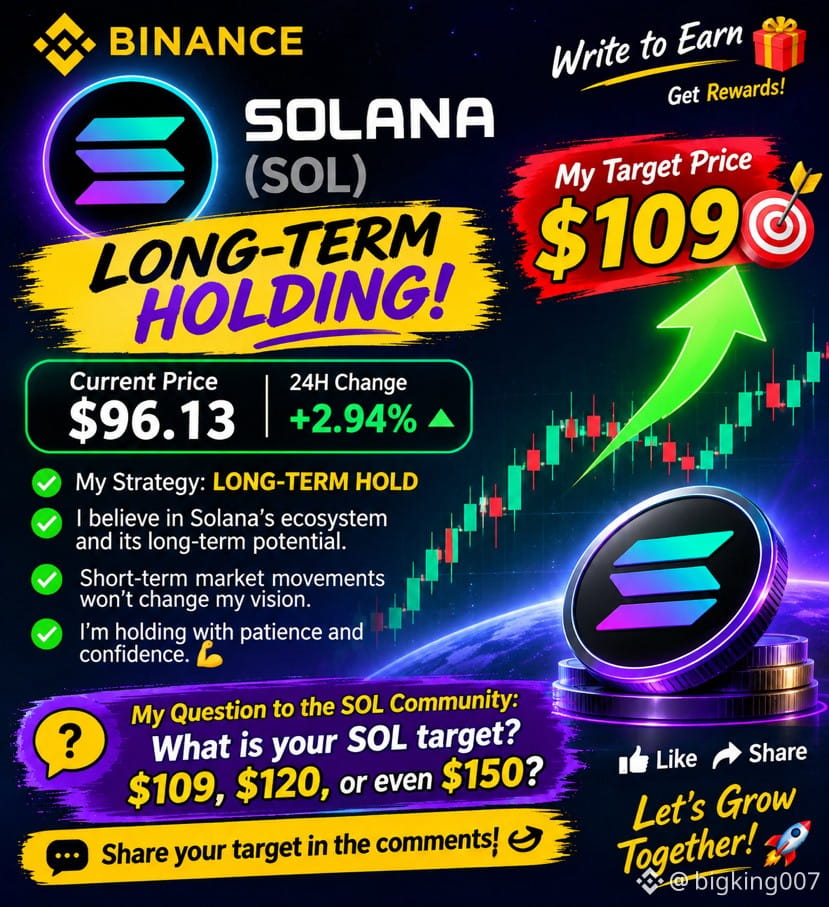
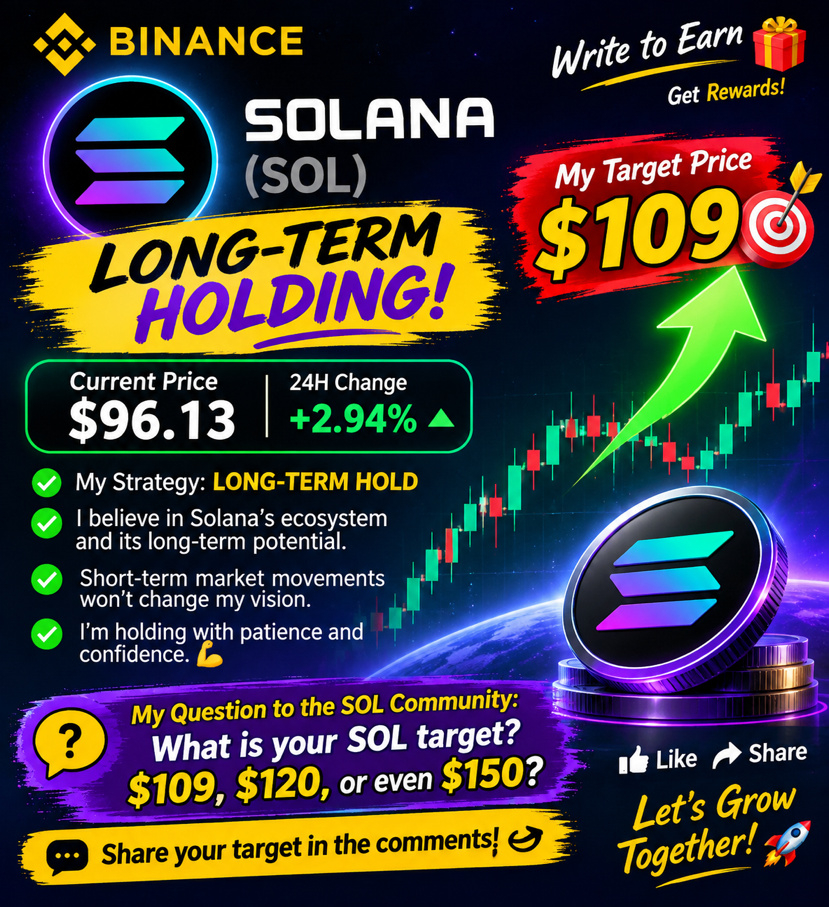
🚀 SOLANA LONG-TERM HOLDING! 💎
I’m not here for quick profits. I’m here for the long-term journey with Solana! 🟣
📊 Current Price: $96.13
🎯 My Target Price: $109
💎 Strategy: LONG-TERM HOLD
I believe in Solana’s ecosystem and its long-term potential. Short-term market movements won’t change my vision.
I’m holding with patience, confidence, and a long-term mindset.
🔥 My question to the SOL community:
What is your SOL target?
$109, $120, or even $150?
👇 Share your target in the comments!
❤️ Like, share, and let’s grow together!
#SOL #Solana #LongTermHolding #CryptoCommunity #BinanceSquare$SOL $NEAR $HBAR
{spot}(SOLUSDT)
{spot}(BTCUSDT)
{spot}(ETHUSDT)
🚀 SOLANA LONG-TERM HOLDING! 💎
I’m not here for quick profits. I’m here for the long-term journey with Solana! 🟣
📊 Current Price: $96.13
🎯 My Target Price: $109
💎 Strategy: LONG-TERM HOLD
I believe in Solana’s ecosystem and its long-term potential. Short-term market movements won’t change my vision.
I’m holding with patience, confidence, and a long-term mindset.
🔥 My question to the SOL community:
What is your SOL target?
$109, $120, or even $150?
👇 Share your target in the comments!
❤️ Like, share, and let’s grow together!
#SOL #Solana #LongTermHolding #CryptoCommunity #BinanceSquare$SOL $NEAR $HBAR
313
2
18
313
·
--
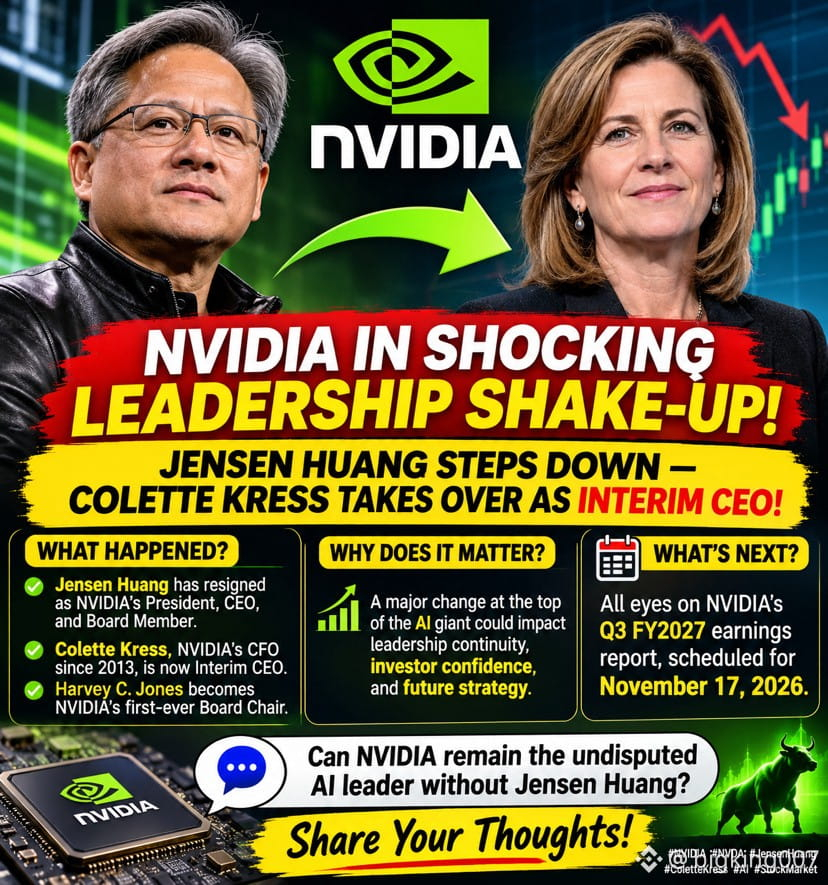
🚨🔥 NVIDIA IN SHOCKING LEADERSHIP SHAKE-UP!
JENSEN HUANG STEPS DOWN — COLETTE KRESS TAKES OVER AS INTERIM CEO!
A historic leadership transition has hit one of the world’s most influential AI companies!
📢 WHAT HAPPENED?
🔴 Jensen Huang has resigned as NVIDIA’s President, CEO, and Board Member, effective immediately.
🔵 Colette Kress, NVIDIA’s CFO since September 2013, has been appointed Interim CEO while continuing her CFO responsibilities.
⚡ Harvey C. Jones has also become NVIDIA’s first-ever Board Chair.
📊 WHY DOES THIS MATTER?
NVIDIA is at the center of the global AI revolution. A sudden change at the top could raise important questions about leadership continuity, investor confidence, and the company’s long-term strategy.
👀 WHAT’S NEXT?
All eyes are now on NVIDIA’s upcoming Q3 FY2027 earnings report scheduled for November 17.
💬 YOUR TAKE:
Can NVIDIA remain the undisputed AI leader without Jensen Huang at the helm?
Is this a new chapter of opportunity or a major risk for $NVDA?
👇 Let’s discuss!
#NVIDIA #NVDA #JensenHuang #ColetteKress #ArtificialIntelligence #StockMarket #AI$NVDAB $NVDA
{spot}(NVDABUSDT)
{stock_us}(NVDA.US)
🚨🔥 NVIDIA IN SHOCKING LEADERSHIP SHAKE-UP!
JENSEN HUANG STEPS DOWN — COLETTE KRESS TAKES OVER AS INTERIM CEO!
A historic leadership transition has hit one of the world’s most influential AI companies!
📢 WHAT HAPPENED?
🔴 Jensen Huang has resigned as NVIDIA’s President, CEO, and Board Member, effective immediately.
🔵 Colette Kress, NVIDIA’s CFO since September 2013, has been appointed Interim CEO while continuing her CFO responsibilities.
⚡ Harvey C. Jones has also become NVIDIA’s first-ever Board Chair.
📊 WHY DOES THIS MATTER?
NVIDIA is at the center of the global AI revolution. A sudden change at the top could raise important questions about leadership continuity, investor confidence, and the company’s long-term strategy.
👀 WHAT’S NEXT?
All eyes are now on NVIDIA’s upcoming Q3 FY2027 earnings report scheduled for November 17.
💬 YOUR TAKE:
Can NVIDIA remain the undisputed AI leader without Jensen Huang at the helm?
Is this a new chapter of opportunity or a major risk for $NVDA ?
👇 Let’s discuss!
#NVIDIA #NVDA #JensenHuang #ColetteKress #ArtificialIntelligence #StockMarket #AI$NVDAB $NVDA
NVDAB+0.93%
NVDAUS-5.96%
1
158
·
--
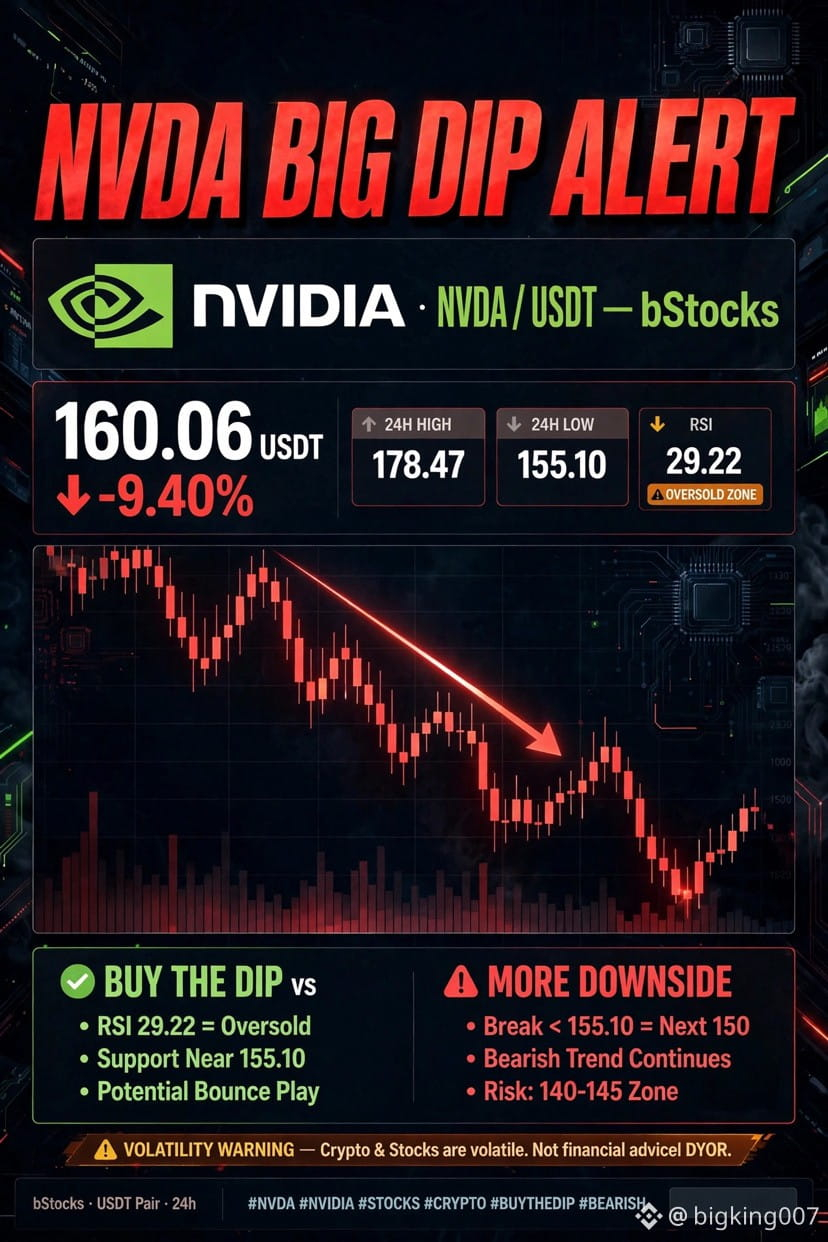
🔴 NVDA / USDT - BIG DIP ALERT!
 (bStocks) is under heavy pressure!
💰 Current Price: $160.06
📉 24h Change: -9.40% (Stock: $159.82 / -8.07%)
📊 24h Range:
High: $178.47
Low: $155.10
📈 24h Volume:
795,004.26 NVDAB / 131.68M USDT
📉 Technicals:
MA(7): 160.64 | MA(25): 160.89 | MA(99): 170.44
RSI(6): 29.22 - Oversold Zone! 👀
RSI(12): 35.10 | RSI(24): 35.20
RSI at 29 means sellers dominated, now the big question is — bounce or more dip?
What's your call?
🐂 Buy the Dip - Bounce incoming?
🐻 More downside coming?
Drop your prediction below! 👇
#NVDA # NVIDIA #NVDAB #USDT #bStocks #Binance #Crypto #Stocks #Trading
{spot}(NVDABUSDT)
$NVDAB $NVDA
🔴 NVDA / USDT - BIG DIP ALERT!
 (bStocks) is under heavy pressure!
💰 Current Price: $160.06
📉 24h Change: -9.40% (Stock: $159.82 / -8.07%)
📊 24h Range:
High: $178.47
Low: $155.10
📈 24h Volume:
795,004.26 NVDAB / 131.68M USDT
📉 Technicals:
MA(7): 160.64 | MA(25): 160.89 | MA(99): 170.44
RSI(6): 29.22 - Oversold Zone! 👀
RSI(12): 35.10 | RSI(24): 35.20
RSI at 29 means sellers dominated, now the big question is — bounce or more dip?
What's your call?
🐂 Buy the Dip - Bounce incoming?
🐻 More downside coming?
Drop your prediction below! 👇
#NVDA # NVIDIA #NVDAB #USDT #bStocks #Binance #Crypto #Stocks #Trading
$NVDAB $NVDA
1
118
·
--
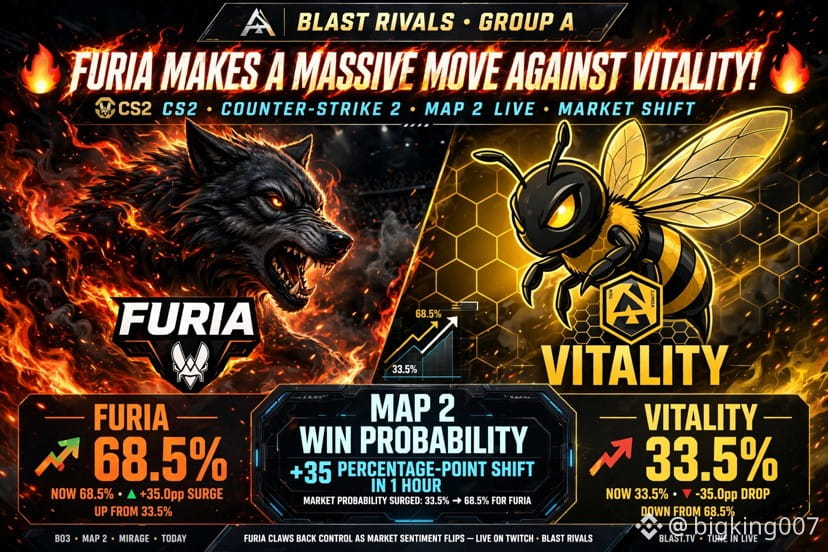
🔥 FURIA MAKES A MASSIVE MOVE AGAINST VITALITY!
FURIA’s Map 2 win probability in the BLAST Rivals Group A market has surged to 68.5%, up from just 33.5% in the previous hour.
That’s a huge 35 percentage-point shift in market sentiment! 📈
The big question is whether FURIA can turn this momentum into an actual victory or if Vitality will make a comeback.
🎯 What’s your prediction?
🐺 FURIA WIN or 🐝 VITALITY WIN?
Drop your prediction below! 👇
#FURIA #Vitality #CS2 #CounterStrike #Esports #BLASTRivals #BinanceSquare $BTC $ETH $TRX
1
79
·
--
සත්යායනය කළ
ලිපිය
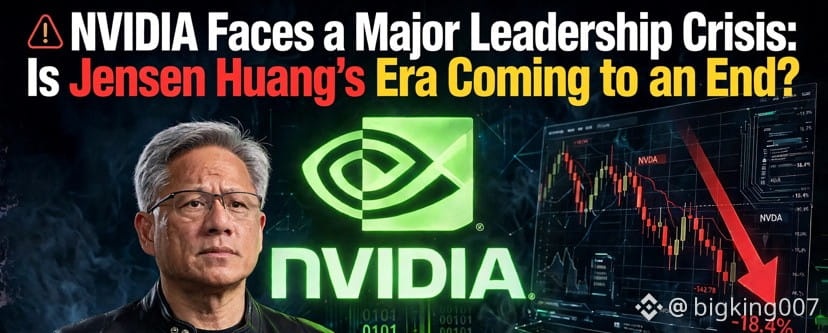
NVIDIA Faces a Major Leadership Crisis: Is Jensen Huang’s Era Coming to an End?NVIDIA Faces a Major Leadership Crisis: Is Jensen Huang’s Era Coming to an End?
Nvidia, the world’s leading AI chipmaker, is reportedly facing growing uncertainty over the future of its longtime CEO and co-founder, Jensen Huang. Reports of an emergency board meeting to discuss his leadership have raised serious questions about the company’s future, corporate governance, and investor confidence.
According to reports attributed to Reuters, Nvidia’s board met on Wednesday night to discuss Huang’s position amid growing controversy surrounding the company’s leadership. Nvidia has 11 board members, and a majority of directors can reportedly remove the CEO under the company’s bylaws.
Market Reaction: Investors Become Nervous
The news has already attracted significant attention from financial markets. Nvidia shares reportedly fell more than 8% in extended trading following reports that the company was considering a leadership change.
If those losses continue, Nvidia could face an estimated $600 billion reduction in market capitalization.
The uncertainty has also affected sentiment across the broader technology sector, with companies connected to AI infrastructure and semiconductor manufacturing facing increased market attention.
Why Is Jensen Huang Under Pressure?
The reported crisis involves several issues, including questions about corporate governance, investigations into alleged chip shipments to Chinese companies, and media reports concerning Huang’s personal relationships.
These reports have created additional scrutiny around Nvidia’s leadership. However, some allegations remain unverified and should not be treated as established facts.
The situation highlights how leadership controversies can become significant risks for even the world’s largest technology companies.
Who Could Replace Jensen Huang?
One of the biggest challenges facing Nvidia is identifying a successor capable of maintaining its technological leadership.
Chief Financial Officer Colette Kress has reportedly been discussed as a potential interim leader. Ian Buck has also been mentioned in discussions about possible successors.
However, replacing Huang would be a major challenge. He has spent more than three decades building Nvidia into a central player in the global artificial intelligence industry.
His leadership has been closely associated with the company’s AI strategy, GPU development, and expansion into data-center infrastructure.
What Does This Mean for the AI Industry?
Nvidia is not simply another semiconductor company. Its graphics processing units and AI computing platforms are essential to many of the world’s largest AI development projects.
A major leadership transition could create uncertainty around:
Future AI chip development.
Strategic partnerships with technology companies.
Investor confidence in the semiconductor sector.
Competition from AMD and other chipmakers.
The long-term direction of the global AI industry.
Meanwhile, investors are also watching Nvidia’s upcoming quarterly results, reportedly scheduled for November 17.
The Bigger Picture
The central question is whether Nvidia’s success is primarily driven by its technology, its business ecosystem, or Jensen Huang’s leadership.
The company has built a powerful position in the AI market, but a sudden change at the top could test its ability to maintain that momentum.
For investors, the coming developments could be especially important. Rather than reacting emotionally to headlines, market participants will need to watch official company statements, board decisions, financial results, and developments in the semiconductor industry.
What do you think? Can Nvidia maintain its dominance in the global AI market without Jensen Huang, or is his leadership essential to the company’s future?
#Nvidia #JensenHuang #ArtificialIntelligence #AI #Technology #StockMarket #Semiconductors #BinanceSquare
$NVDA
{stock_us}(NVDA.US)
{stock_us}(MU.US)
{stock_us}(AMD.US)
NVIDIA Faces a Major Leadership Crisis: Is Jensen Huang’s Era Coming to an End?
NVIDIA Faces a Major Leadership Crisis: Is Jensen Huang’s Era Coming to an End?
Nvidia, the world’s leading AI chipmaker, is reportedly facing growing uncertainty over the future of its longtime CEO and co-founder, Jensen Huang. Reports of an emergency board meeting to discuss his leadership have raised serious questions about the company’s future, corporate governance, and investor confidence.
According to reports attributed to Reuters, Nvidia’s board met on Wednesday night to discuss Huang’s position amid growing controversy surrounding the company’s leadership. Nvidia has 11 board members, and a majority of directors can reportedly remove the CEO under the company’s bylaws.
Market Reaction: Investors Become Nervous
The news has already attracted significant attention from financial markets. Nvidia shares reportedly fell more than 8% in extended trading following reports that the company was considering a leadership change.
If those losses continue, Nvidia could face an estimated $600 billion reduction in market capitalization.
The uncertainty has also affected sentiment across the broader technology sector, with companies connected to AI infrastructure and semiconductor manufacturing facing increased market attention.
Why Is Jensen Huang Under Pressure?
The reported crisis involves several issues, including questions about corporate governance, investigations into alleged chip shipments to Chinese companies, and media reports concerning Huang’s personal relationships.
These reports have created additional scrutiny around Nvidia’s leadership. However, some allegations remain unverified and should not be treated as established facts.
The situation highlights how leadership controversies can become significant risks for even the world’s largest technology companies.
Who Could Replace Jensen Huang?
One of the biggest challenges facing Nvidia is identifying a successor capable of maintaining its technological leadership.
Chief Financial Officer Colette Kress has reportedly been discussed as a potential interim leader. Ian Buck has also been mentioned in discussions about possible successors.
However, replacing Huang would be a major challenge. He has spent more than three decades building Nvidia into a central player in the global artificial intelligence industry.
His leadership has been closely associated with the company’s AI strategy, GPU development, and expansion into data-center infrastructure.
What Does This Mean for the AI Industry?
Nvidia is not simply another semiconductor company. Its graphics processing units and AI computing platforms are essential to many of the world’s largest AI development projects.
A major leadership transition could create uncertainty around:
Future AI chip development.
Strategic partnerships with technology companies.
Investor confidence in the semiconductor sector.
Competition from AMD and other chipmakers.
The long-term direction of the global AI industry.
Meanwhile, investors are also watching Nvidia’s upcoming quarterly results, reportedly scheduled for November 17.
The Bigger Picture
The central question is whether Nvidia’s success is primarily driven by its technology, its business ecosystem, or Jensen Huang’s leadership.
The company has built a powerful position in the AI market, but a sudden change at the top could test its ability to maintain that momentum.
For investors, the coming developments could be especially important. Rather than reacting emotionally to headlines, market participants will need to watch official company statements, board decisions, financial results, and developments in the semiconductor industry.
What do you think? Can Nvidia maintain its dominance in the global AI market without Jensen Huang, or is his leadership essential to the company’s future?
#Nvidia #JensenHuang #ArtificialIntelligence #AI #Technology #StockMarket #Semiconductors #BinanceSquare
$NVDA
NVDA+1.01%
NVDAUS-5.96%
2
2.9k
·
--
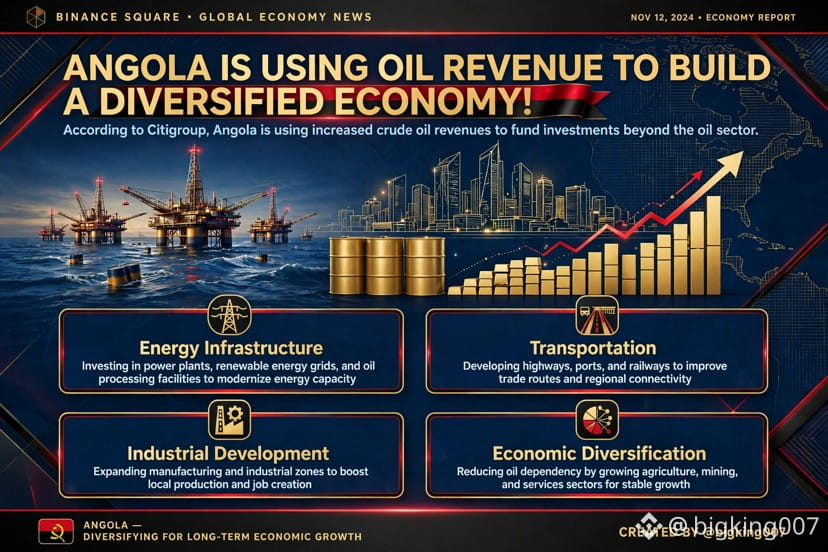
🌍 ANGOLA IS USING OIL REVENUE TO BUILD A DIVERSIFIED ECONOMY!
According to Citigroup, Angola is using increased crude oil revenues to fund investments beyond the oil sector.
Key areas include:
🔹 Energy infrastructure
🔹 Transportation
🔹 Industrial development
🔹 Economic diversification
The big question is:
Can Angola turn its oil wealth into long-term economic growth?
💬 What’s your take? Can resource-rich countries build sustainable economies beyond oil?
#Angola #Oil #GlobalEconomy #Energy #Investment #Economy$CL $BZ
{future}(CLUSDT)
{future}(BZUSDT)
🌍 ANGOLA IS USING OIL REVENUE TO BUILD A DIVERSIFIED ECONOMY!
According to Citigroup, Angola is using increased crude oil revenues to fund investments beyond the oil sector.
Key areas include:
🔹 Energy infrastructure
🔹 Transportation
🔹 Industrial development
🔹 Economic diversification
The big question is:
Can Angola turn its oil wealth into long-term economic growth?
💬 What’s your take? Can resource-rich countries build sustainable economies beyond oil?
#Angola #Oil #GlobalEconomy #Energy #Investment #Economy$CL $BZ
1
358
·
--
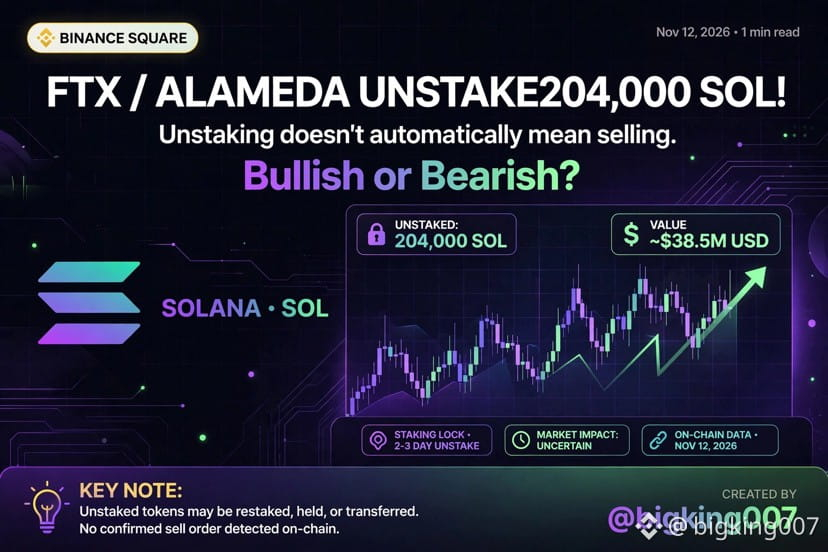
🚨 FTX / ALAMEDA UNSTAKES 204,000 SOL!
A major on-chain development has caught the crypto market’s attention.
FTX/Alameda has reportedly unstaked approximately 204,000 SOL.
What could happen next?
🔹 Will these SOL tokens move to exchanges?
🔹 Could selling pressure increase?
🔹 Or is this simply another custody-related transfer?
Unstaking doesn’t automatically mean selling.
What’s your prediction for SOL? 📊
🐂 Bullish or 🐻 Bearish?
#SOL #Solana #FTX #CryptoNews #BinanceSquare$SOL
{spot}(SOLUSDT)
🚨 FTX / ALAMEDA UNSTAKES 204,000 SOL!
A major on-chain development has caught the crypto market’s attention.
FTX/Alameda has reportedly unstaked approximately 204,000 SOL.
What could happen next?
🔹 Will these SOL tokens move to exchanges?
🔹 Could selling pressure increase?
🔹 Or is this simply another custody-related transfer?
Unstaking doesn’t automatically mean selling.
What’s your prediction for SOL? 📊
🐂 Bullish or 🐻 Bearish?
#SOL #Solana #FTX #CryptoNews #BinanceSquare$SOL
1
105
·
--
බෙයාරිෂ්
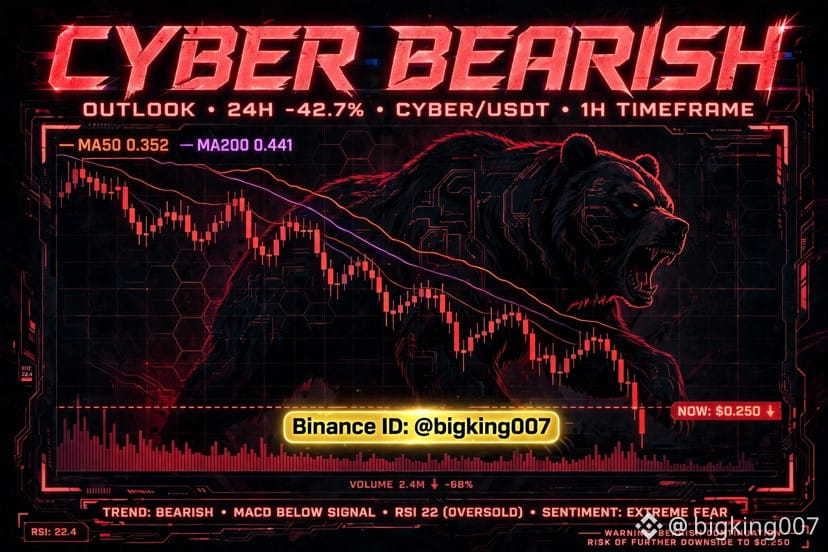
📉 CYBER (Cyber) | BEARISH OUTLOOK 🐻
CYBER is struggling to find its strength!
💰 Current Price: $0.254
📉 24h Change: -3.42%
📊 24h High: $0.277
📊 24h Low: $0.250
The price is trading below MA(7), MA(25), and MA(99). That’s not exactly a bullish picture!
⚠️ Key Levels:
Support: $0.250 / $0.245
Resistance: $0.258–$0.260
If $0.250 breaks, sellers could gain more control. A strong recovery above $0.260 is needed to improve the short-term outlook.
I’m not chasing falling prices. Patience is better than becoming exit liquidity for someone else. 😏
👇 YOUR TURN:
What happens next?
1️⃣ Breakdown below $0.250 📉
2️⃣ Bounce from support 🚀
3️⃣ More sideways movement 😴
Drop your prediction in the comments and explain WHY!
#CYBER #CyberConnect #Bearish #CryptoAnalysis #BinanceSquare$CYBER
{spot}(CYBERUSDT)
📉 CYBER (Cyber) | BEARISH OUTLOOK 🐻
CYBER is struggling to find its strength!
💰 Current Price: $0.254
📉 24h Change: -3.42%
📊 24h High: $0.277
📊 24h Low: $0.250
The price is trading below MA(7), MA(25), and MA(99). That’s not exactly a bullish picture!
⚠️ Key Levels:
Support: $0.250 / $0.245
Resistance: $0.258–$0.260
If $0.250 breaks, sellers could gain more control. A strong recovery above $0.260 is needed to improve the short-term outlook.
I’m not chasing falling prices. Patience is better than becoming exit liquidity for someone else. 😏
👇 YOUR TURN:
What happens next?
1️⃣ Breakdown below $0.250 📉
2️⃣ Bounce from support 🚀
3️⃣ More sideways movement 😴
Drop your prediction in the comments and explain WHY!
#CYBER #CyberConnect #Bearish #CryptoAnalysis #BinanceSquare$CYBER
1
482
·
--
බෙයාරිෂ්
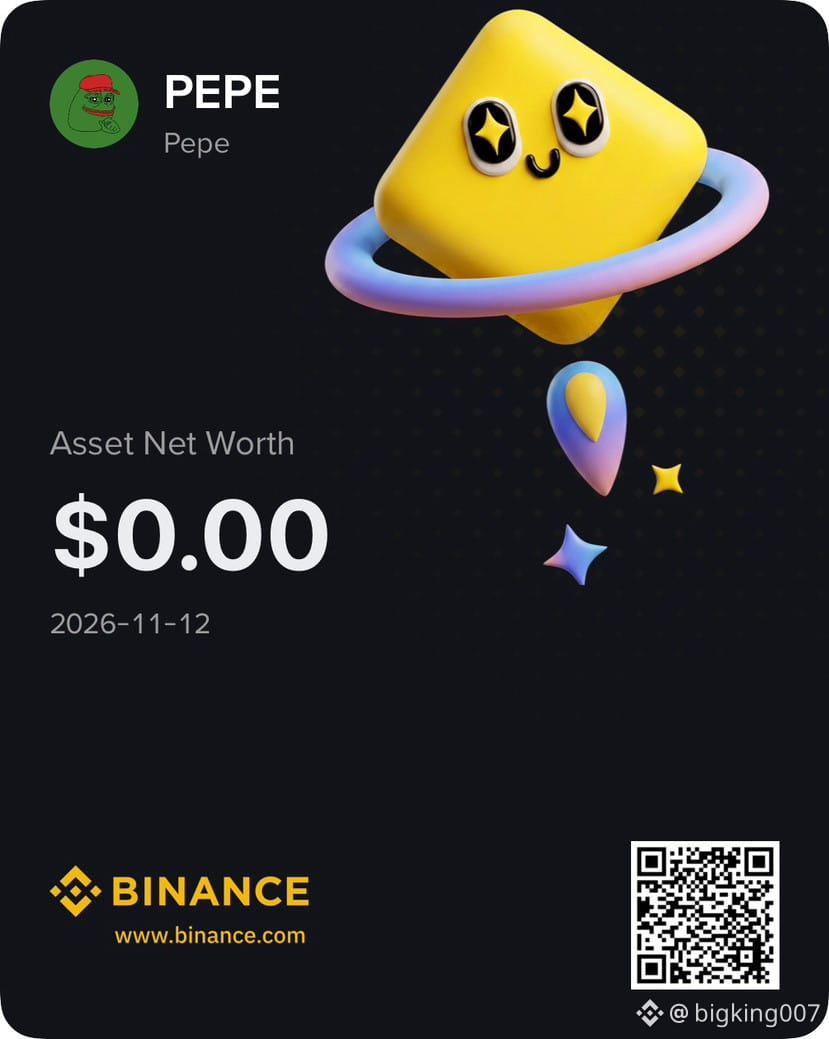
🐸 PEPE | TIME TO WAKE UP FROM THE $1 DREAM! 📉
Let’s talk about reality, not hype.
Some people keep spreading rumors that PEPE will reach $1. Seriously? That’s a dream, not a realistic price target under the current token supply. 😂
Let’s do some simple math:
💰 Current Market Cap: $1.9 Billion
🪙 Circulating Supply: 413.77 Trillion PEPE
🎯 Dream Price: $1
At $1 per PEPE:
Market Cap = $413.77 TRILLION! 🤯
That’s the reality behind the $1 prediction.
PEPE’s current ATH is only $0.000028247. Reaching $1 would require approximately 35,402x growth from that ATH.
To everyone spreading the $1 hype and rumors: WAKE UP AND LOOK AT THE NUMBERS!
I’m not saying PEPE can never pump. Meme coins can surprise us. But there’s a huge difference between a possible price rally and an unrealistic fantasy.
🐸 Enjoy the memes, but don’t let the hype replace mathematics.
👇 LET’S DISCUSS:
Do you genuinely believe PEPE can reach $1 with its current supply?
1️⃣ YES – I believe in the dream.
2️⃣ NO – The market cap math doesn’t make sense.
3️⃣ MAYBE – Only after massive supply reduction.
What’s your honest opinion? Let’s hear the arguments, not just the hype!
#PEPE #Bearish #CryptoReality #Tokenomics #BinanceSquare$PEPE
{spot}(PEPEUSDT)
🐸 PEPE | TIME TO WAKE UP FROM THE $1 DREAM! 📉
Let’s talk about reality, not hype.
Some people keep spreading rumors that PEPE will reach $1. Seriously? That’s a dream, not a realistic price target under the current token supply. 😂
Let’s do some simple math:
💰 Current Market Cap: $1.9 Billion
🪙 Circulating Supply: 413.77 Trillion PEPE
🎯 Dream Price: $1
At $1 per PEPE:
Market Cap = $413.77 TRILLION! 🤯
That’s the reality behind the $1 prediction.
PEPE’s current ATH is only $0.000028247. Reaching $1 would require approximately 35,402x growth from that ATH.
To everyone spreading the $1 hype and rumors: WAKE UP AND LOOK AT THE NUMBERS!
I’m not saying PEPE can never pump. Meme coins can surprise us. But there’s a huge difference between a possible price rally and an unrealistic fantasy.
🐸 Enjoy the memes, but don’t let the hype replace mathematics.
👇 LET’S DISCUSS:
Do you genuinely believe PEPE can reach $1 with its current supply?
1️⃣ YES – I believe in the dream.
2️⃣ NO – The market cap math doesn’t make sense.
3️⃣ MAYBE – Only after massive supply reduction.
What’s your honest opinion? Let’s hear the arguments, not just the hype!
#PEPE #Bearish #CryptoReality #Tokenomics #BinanceSquare$PEPE
1
206
·
--
උසබ තත්ත්වය
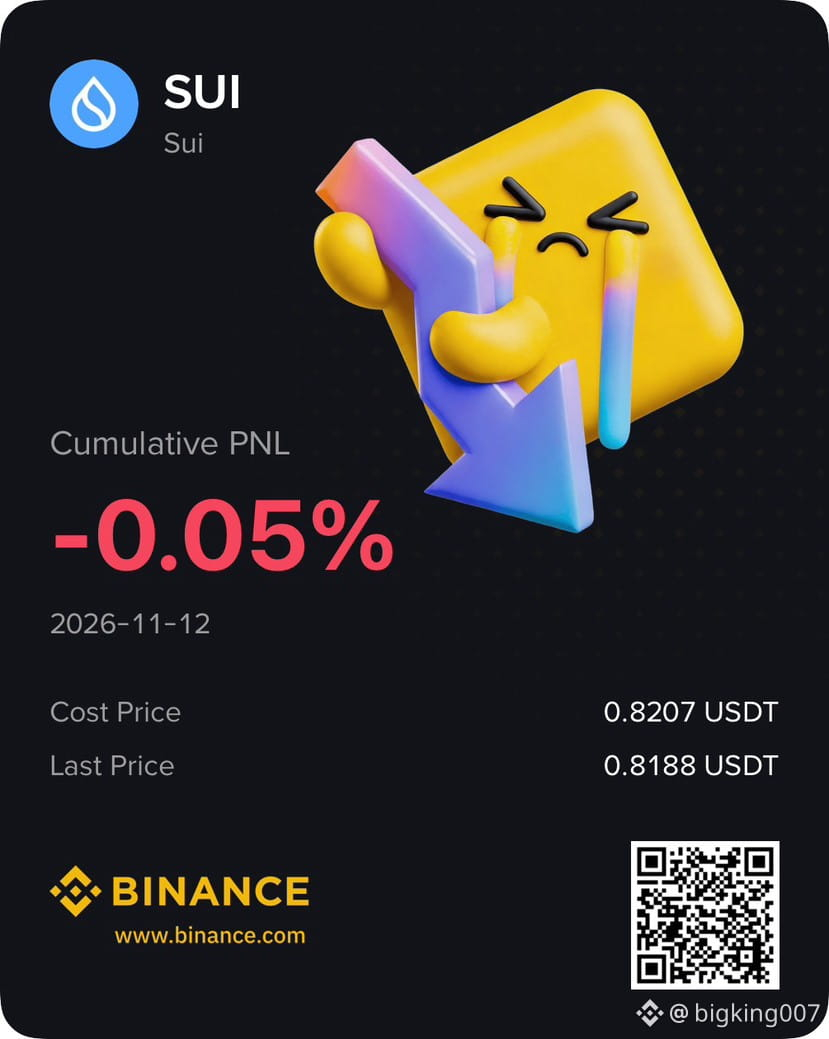
📊 SUI (Sui) | LONG-TERM HOLD 💎
Buy Price: $0.8207
Current Price: $0.8188
Cumulative PNL: -0.05% 🔴
I’m not worried about short-term price drops. I believe in patience and a long-term vision. I’ll continue holding my SUI for the long term without panic selling.
🎯 My Long-Term Target: $2.00
Small market fluctuations won’t change my long-term mindset. 💎
What’s your SUI strategy?
HOLD or SELL? 👇
#SUI #SuiNetwork #Crypto #LongTermHold #BinanceSquare$SUI
{spot}(SUIUSDT)
$SUI
📊 SUI (Sui) | LONG-TERM HOLD 💎
Buy Price: $0.8207
Current Price: $0.8188
Cumulative PNL: -0.05% 🔴
I’m not worried about short-term price drops. I believe in patience and a long-term vision. I’ll continue holding my SUI for the long term without panic selling.
🎯 My Long-Term Target: $2.00
Small market fluctuations won’t change my long-term mindset. 💎
What’s your SUI strategy?
HOLD or SELL? 👇
#SUI #SuiNetwork #Crypto #LongTermHold #BinanceSquare$SUI
$SUI
2
692
·
--
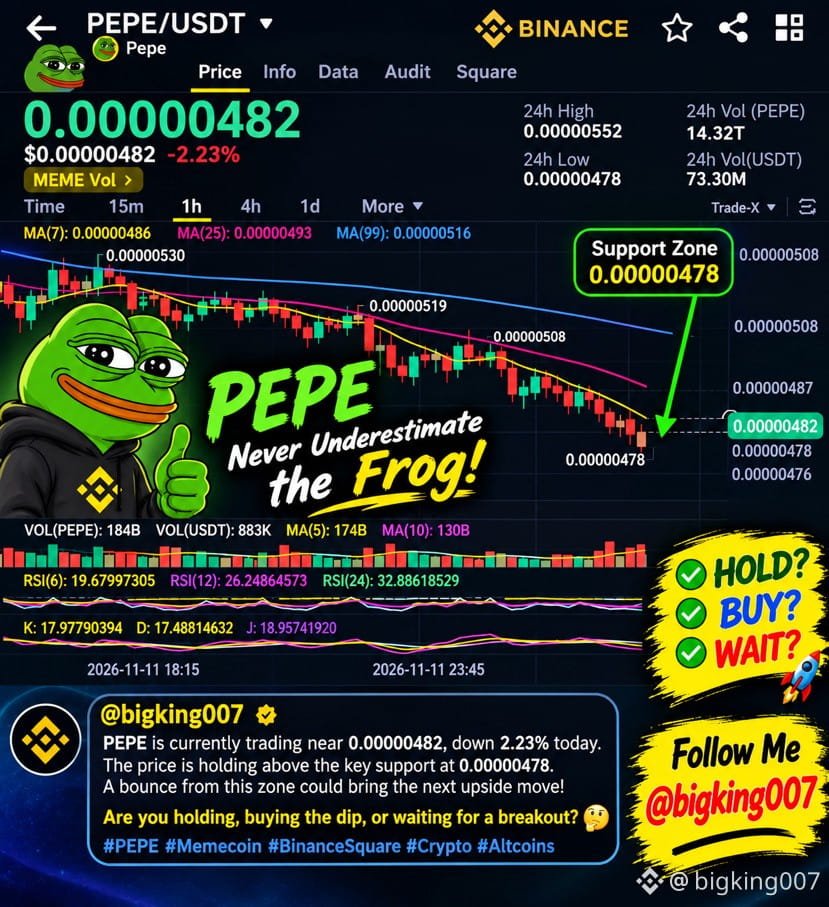
🐸 The Frog Is Not Done Yet!
PEPE is back in the spotlight! After a strong bounce, all eyes are now on the next resistance level.
Is this the beginning of another meme coin rally, or just a temporary bounce?
In crypto, patience and timing matter. Let’s see what the frog has planned next! 🐸
What’s your move — HOLD, BUY, or WAIT?
#PEPE #BinanceSquare #Memecoins #CryptoCommunity $PEPE $BTC
3
381

·
--
උසබ තත්ත්වය
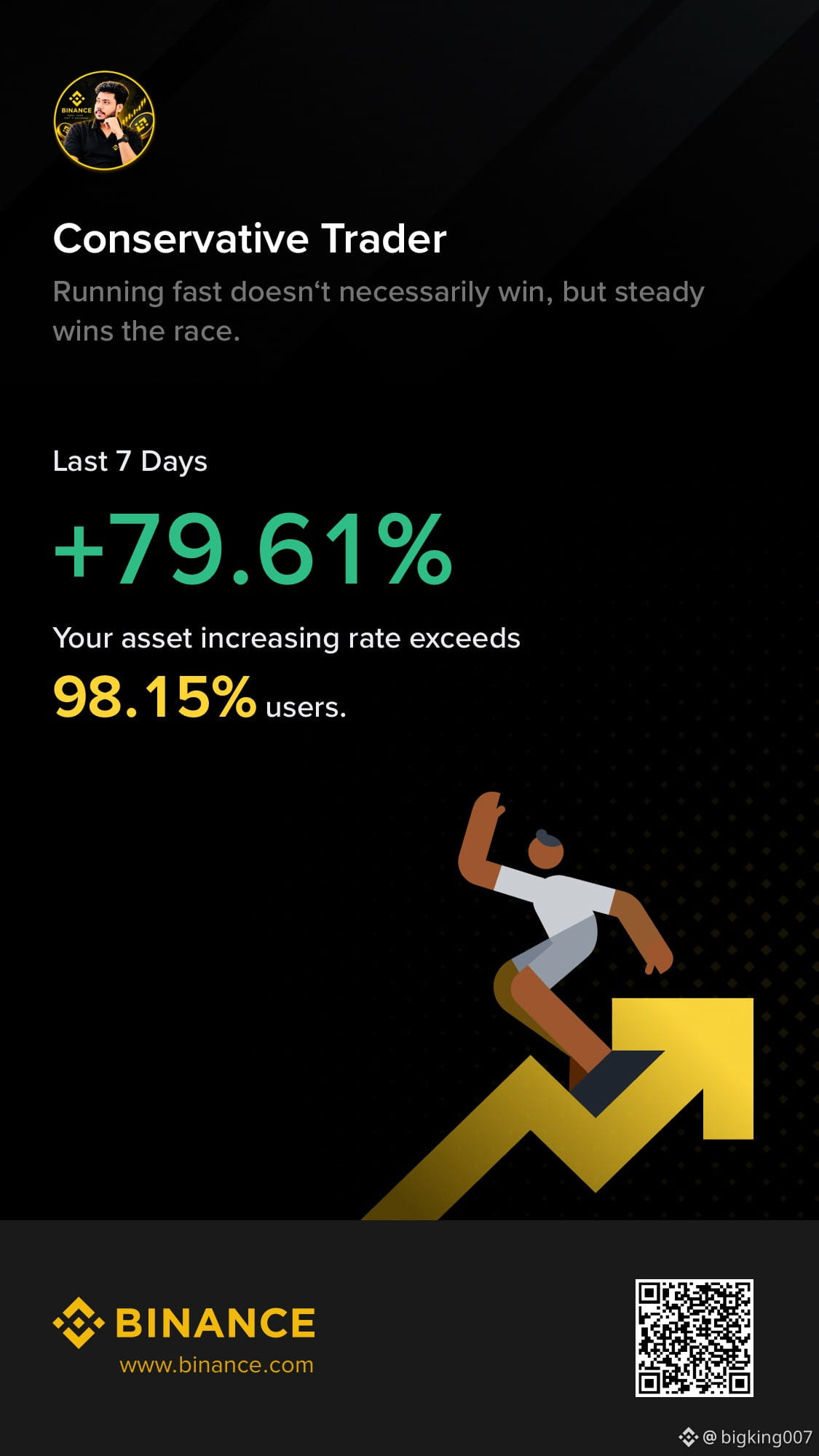
🏆 CONSERVATIVE TRADER | STEADY WINS!
“Running fast doesn’t necessarily win, but steady wins the race.”
Alhamdulillah! 📈
My Binance portfolio has grown +79.61% over the last 7 days, exceeding the asset growth rate of 98.15% of Binance users.
No need to rush. No need to chase every opportunity.
Stay patient, stay disciplined, manage risk, and keep learning.
Slow and steady, one step at a time. 💎
How’s your 7-day performance?
#Binance #ConservativeTrader #CryptoJourney #PortfolioGrowth $SOL
1
165
·
--
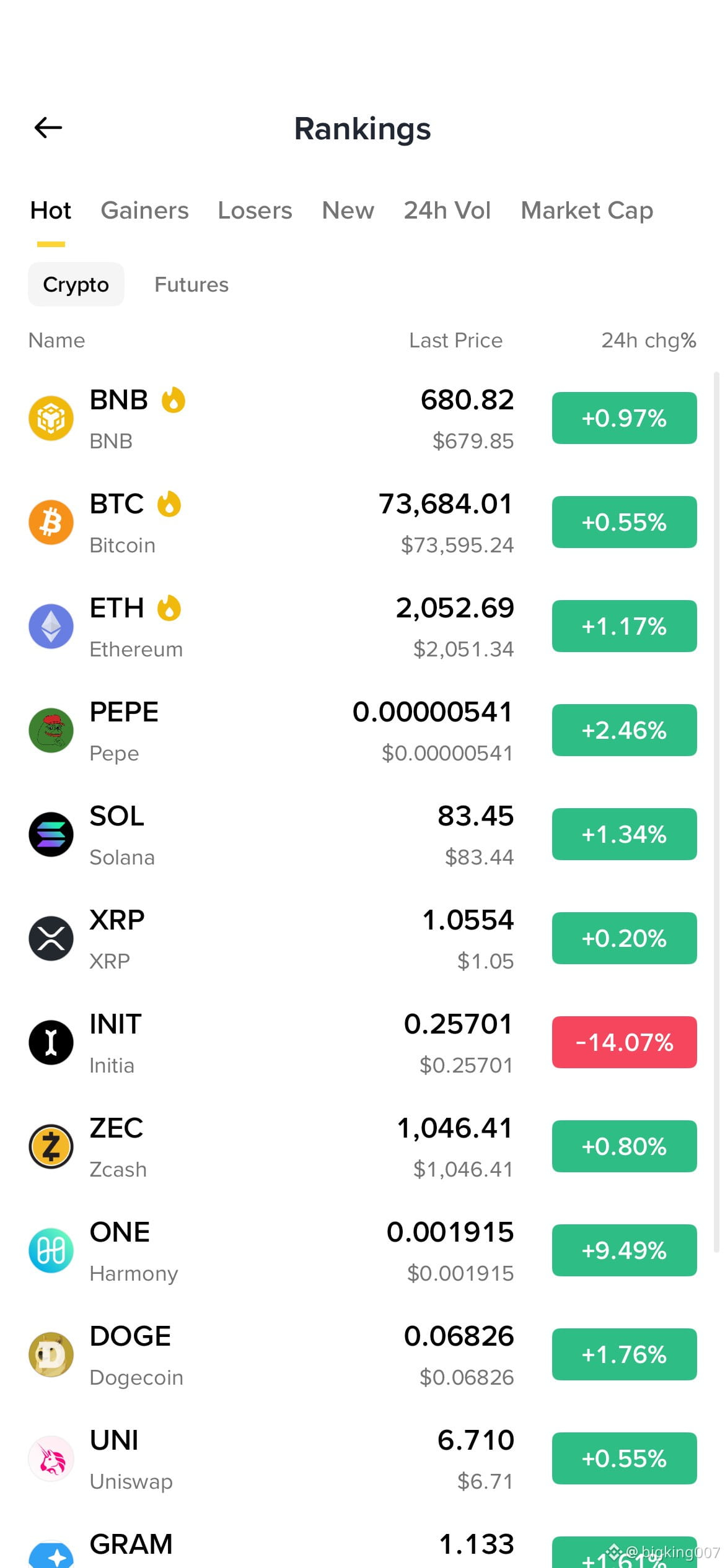
有时候,投资市场最考验人的不是上涨时的兴奋,而是下跌时还能不能保持冷静。
每天打开行情,BTC 的走势总能影响整个市场的情绪。BTC 一旦调整,BNB、SUI 以及其他主流币也很难独善其身。
在币圈待得越久,越明白一个道理:短期涨跌只是市场的一部分,真正重要的是项目本身有没有长期发展的潜力。
我更愿意把时间花在研究项目、观察生态和寻找机会,而不是每天追逐每一根 K 线。
BTC 是市场的核心,BNB 有自己的生态价值,SUI 也值得持续关注。
当然,看好不代表盲目买入。控制风险、合理分配资金、保持耐心,才是长期参与市场的重要原则。
市场不会因为我们的期待而上涨,但机会往往留给那些有准备的人。
你认为下一轮市场行情,谁会有更好的表现?BTC、BNB 还是 SUI?
#BTC #BNB #SUI #Crypto #BinanceSquare$BTC $BNB
{spot}(SUIUSDT)
{spot}(BTCUSDT)
{spot}(BNBUSDT)
有时候,投资市场最考验人的不是上涨时的兴奋,而是下跌时还能不能保持冷静。
每天打开行情,BTC 的走势总能影响整个市场的情绪。BTC 一旦调整,BNB、SUI 以及其他主流币也很难独善其身。
在币圈待得越久,越明白一个道理:短期涨跌只是市场的一部分,真正重要的是项目本身有没有长期发展的潜力。
我更愿意把时间花在研究项目、观察生态和寻找机会,而不是每天追逐每一根 K 线。
BTC 是市场的核心,BNB 有自己的生态价值,SUI 也值得持续关注。
当然,看好不代表盲目买入。控制风险、合理分配资金、保持耐心,才是长期参与市场的重要原则。
市场不会因为我们的期待而上涨,但机会往往留给那些有准备的人。
你认为下一轮市场行情,谁会有更好的表现?BTC、BNB 还是 SUI?
#BTC #BNB #SUI #Crypto #BinanceSquare$BTC $BNB
1
466
·
--
උසබ තත්ත්වය
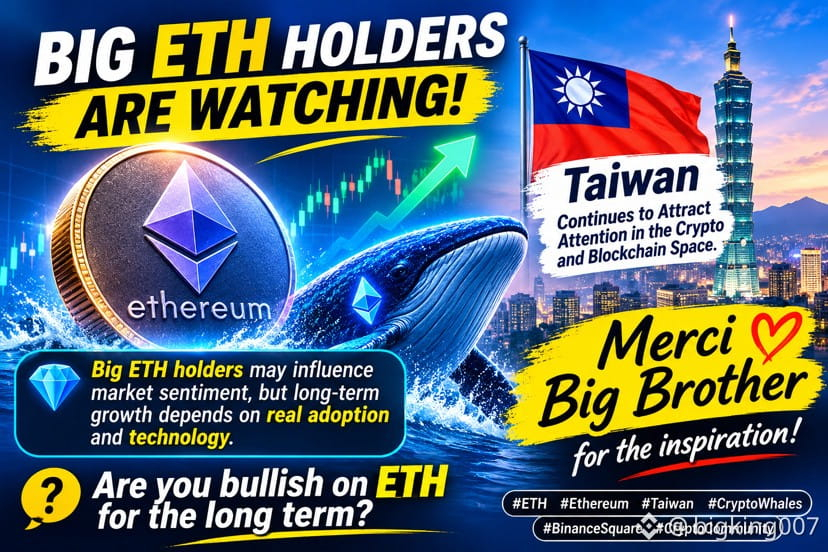
🐋 BIG ETH HOLDERS ARE WATCHING!
Ethereum is more than just a cryptocurrency. It’s a growing ecosystem powered by innovation, smart contracts, and global adoption.
🇹🇼 Taiwan continues to attract attention in the crypto and blockchain space.
🐋 Big ETH holders may influence market sentiment, but long-term growth depends on real adoption and technology.
💎 Are you bullish on ETH for the long term?
Big respect to Merci Big Brother for the inspiration!
#ETH #Ethereum #Taiwan #CryptoWhales #BinanceSquare #CryptoCommunity $ETH
{spot}(ETHUSDT)
🐋 BIG ETH HOLDERS ARE WATCHING!
Ethereum is more than just a cryptocurrency. It’s a growing ecosystem powered by innovation, smart contracts, and global adoption.
🇹🇼 Taiwan continues to attract attention in the crypto and blockchain space.
🐋 Big ETH holders may influence market sentiment, but long-term growth depends on real adoption and technology.
💎 Are you bullish on ETH for the long term?
Big respect to Merci Big Brother for the inspiration!
#ETH #Ethereum #Taiwan #CryptoWhales #BinanceSquare #CryptoCommunity $ETH
1
268
·
--
උසබ තත්ත්වය
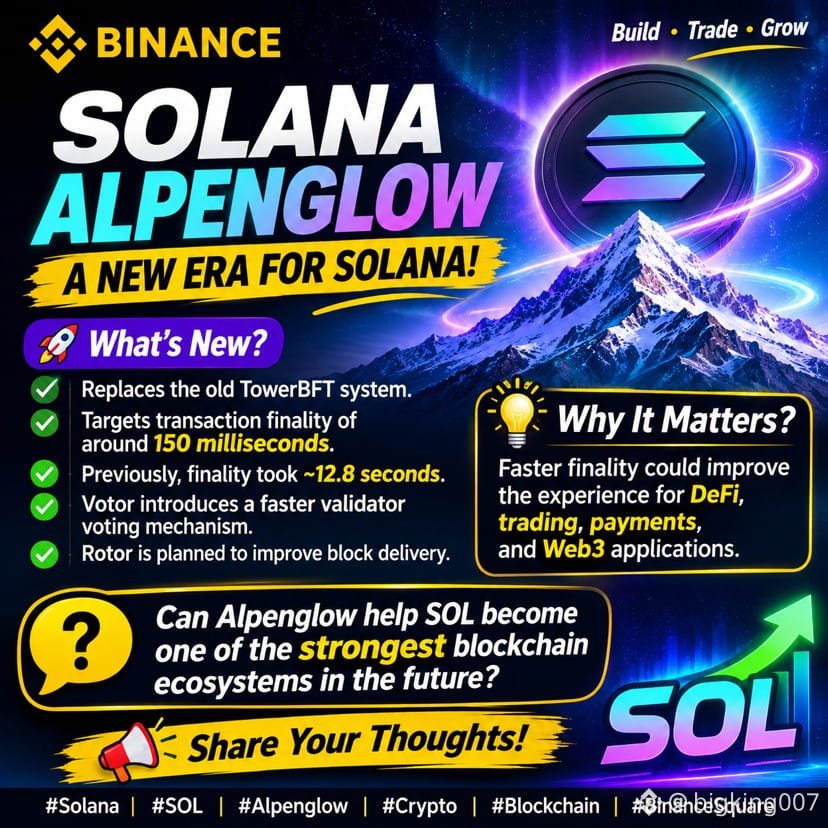
🚀 SOLANA ALPENGLOW: A NEW ERA FOR SOLANA!
Solana is taking blockchain speed to another level! ⚡
The Alpenglow upgrade is now LIVE on Solana Mainnet.
🔥 What’s new?
🔹 Replaces the old TowerBFT consensus system.
🔹 Targets transaction finality of around 150 milliseconds.
🔹 Previously, finality took approximately 12.8 seconds.
🔹 Votor introduces a faster validator voting mechanism.
🔹 Rotor is planned as the next phase to improve block delivery.
💡 Why does this matter?
Faster finality could improve the experience for DeFi, trading, payments, and Web3 applications.
I believe Alpenglow is an important milestone in Solana’s long-term development.
My question to the community:
Can Alpenglow help SOL become one of the strongest blockchain ecosystems in the future? 👀
👇 Share your thoughts!
#Solana #SOL #Alpenglow #Crypto #Blockchain #BinanceSquare$SOL
{spot}(SOLUSDT)
🚀 SOLANA ALPENGLOW: A NEW ERA FOR SOLANA!
Solana is taking blockchain speed to another level! ⚡
The Alpenglow upgrade is now LIVE on Solana Mainnet.
🔥 What’s new?
🔹 Replaces the old TowerBFT consensus system.
🔹 Targets transaction finality of around 150 milliseconds.
🔹 Previously, finality took approximately 12.8 seconds.
🔹 Votor introduces a faster validator voting mechanism.
🔹 Rotor is planned as the next phase to improve block delivery.
💡 Why does this matter?
Faster finality could improve the experience for DeFi, trading, payments, and Web3 applications.
I believe Alpenglow is an important milestone in Solana’s long-term development.
My question to the community:
Can Alpenglow help SOL become one of the strongest blockchain ecosystems in the future? 👀
👇 Share your thoughts!
#Solana #SOL #Alpenglow #Crypto #Blockchain #BinanceSquare$SOL
1
209
·
--
go
go
bigking007
·
--
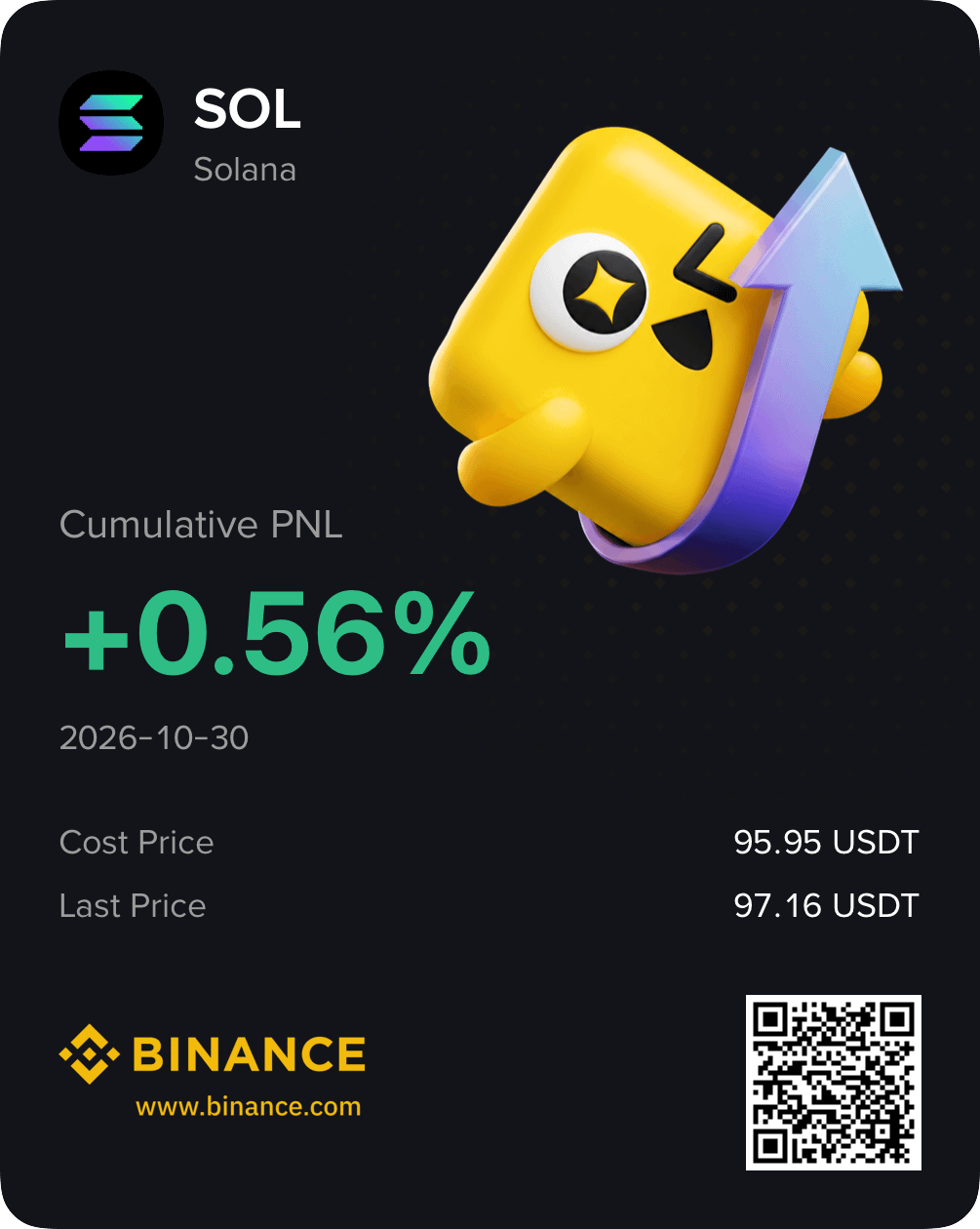
උසබ තත්ත්වය📈 SOLANA (SOL) | LONG-TERM HOLD 🚀
Bought at: $95.95
Current Price: $97.23
Cumulative PNL: +0.56% 🟢
Small steps, long-term vision. 💎
I’m holding my SOL with patience. No panic selling, no FOMO — just focusing on the long-term journey.
🎯 Next Price Alert: $101
What’s your SOL strategy?
HOLD or SELL? 👇
#SOL #Solana #Crypto #LongTermHold #Binance
$SOL
133
·
--
❤️ 红包警报(RED PACKET ALERT)
🇨🇳 中国一场婚礼,竟然来了超过1万名陌生人!
想象一下:一位年轻人担心自己的婚礼没有足够的宾客,于是邀请了陌生人来参加婚礼……
没想到,成千上万的人真的来了!
他们带来了食物、礼物和满满的祝福。❤️
这位中国年轻人的婚礼成为了一个温暖人心的故事。
有时候,陌生人的善意,真的会超出我们的想象。
如果一个陌生人邀请你参加他的婚礼,你会去吗?
💬 评论告诉我你的答案!
🔁 分享这个温暖的故事,让更多人看到善意的力量!
#中国 #婚礼 #感动 #人间温暖 #善良 #BinanceSquare #红包
{spot}(SOLUSDT)
{spot}(NEARUSDT)
❤️ 红包警报(RED PACKET ALERT)
🇨🇳 中国一场婚礼,竟然来了超过1万名陌生人!
想象一下:一位年轻人担心自己的婚礼没有足够的宾客,于是邀请了陌生人来参加婚礼……
没想到,成千上万的人真的来了!
他们带来了食物、礼物和满满的祝福。❤️
这位中国年轻人的婚礼成为了一个温暖人心的故事。
有时候,陌生人的善意,真的会超出我们的想象。
如果一个陌生人邀请你参加他的婚礼,你会去吗?
💬 评论告诉我你的答案!
🔁 分享这个温暖的故事,让更多人看到善意的力量!
#中国 #婚礼 #感动 #人间温暖 #善良 #BinanceSquare #红包
🇨🇳 中国一场婚礼,竟然来了超过1万名陌生人!
想象一下:一位年轻人担心自己的婚礼没有足够的宾客,于是邀请了陌生人来参加婚礼……
没想到,成千上万的人真的来了!
他们带来了食物、礼物和满满的祝福。❤️
这位中国年轻人的婚礼成为了一个温暖人心的故事。
有时候,陌生人的善意,真的会超出我们的想象。
如果一个陌生人邀请你参加他的婚礼,你会去吗?
💬 评论告诉我你的答案!
🔁 分享这个温暖的故事,让更多人看到善意的力量!
#中国 #婚礼 #感动 #人间温暖 #善良 #BinanceSquare #红包

614
6
35
614
තවත් අන්තර්ගතයන් ගවේෂණය කිරීමට ඇතුල් වන්න
Binance චතුරශ්රය හි ගෝලීය ක්රිප්ටෝ පරිශීලකයින් හා එක්වන්න
⚡️ ක්රිප්ටෝ පිළිබඳ නවතම සහ ප්රයෝජනවත් තොරතුරු ලබා ගන්න.
💬 ලොව විශාලතම ක්රිප්ටෝ හුවමාරුව මගින් විශ්වාස කෙරේ.
👍 සත්යායනය කරන ලද නිර්මාණකරුවන්ගෙන් සැබෑ විදසුන් සොයා ගන්න.
විද්යුත් තැපෑල / දුරකථන අංකය
නැගී එන මාතෘකා
WhatWillDriveCryptoandStocks’NextRebound?
13 නැරඹීම්
12 සාකච්ඡා කරමින්
Bitcoin Slips Below $70,000 as Dollar Index Hits 19-Month High
Binance News
·0 කැමත්ත දැක්වීම්
·367 නැරඹීම්
Anthropic’s6xIPODemandSignalsPotentialRecordRaise
2 නැරඹීම්
4 සාකච්ඡා කරමින්
HuangExitNvidiaStrategyInFocus
120,334 නැරඹීම්
1,269 සාකච්ඡා කරමින්