

#quantumsecurity
quantumsecurity
56,281 නැරඹීම්
215 සාකච්ඡා කරමින්
උණුසුම්
නවතම

·
--
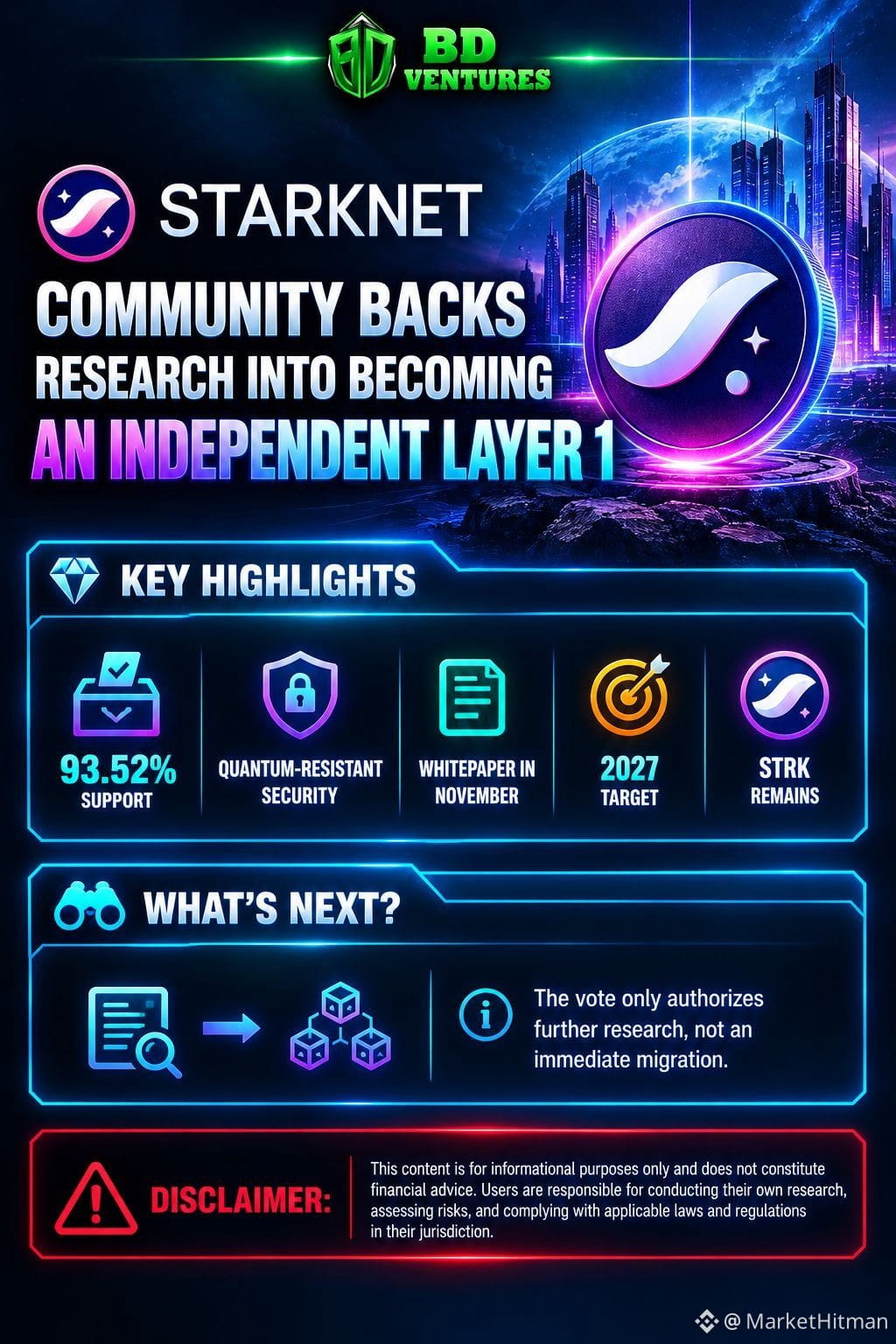
🚀🟢 $STRK SURGES TOWARD INDEPENDENCE WITH QUANTUM-RESISTANT PLAYBOOK!
The 93.5% community green‑light to research an independent Layer 1 is a classic smart‑money move – the whales are already eyeing a liquidity shift away from Ethereum’s L2 moat. 🦈📊
StarkWare’s 2027 quantum‑resistant target puts it three years ahead of the mainnet’s roadmap, creating a potential premium as post‑quantum demand spikes. ⚡
If the technical study clears, $STRK could ride a breakout wave while the token supply stays unchanged – a rare supply‑tight, upside‑only scenario. 📈
💬 Will you position now or wait for the formal governance vote?
⚠️ Not financial advice. Always manage your risk. 🛡️
🏷️ #STRK #Layer1 #QuantumSecurity #Crypto
🔥 💎
🚀🟢 $STRK SURGES TOWARD INDEPENDENCE WITH QUANTUM-RESISTANT PLAYBOOK!
The 93.5% community green‑light to research an independent Layer 1 is a classic smart‑money move – the whales are already eyeing a liquidity shift away from Ethereum’s L2 moat. 🦈📊
StarkWare’s 2027 quantum‑resistant target puts it three years ahead of the mainnet’s roadmap, creating a potential premium as post‑quantum demand spikes. ⚡
If the technical study clears, $STRK could ride a breakout wave while the token supply stays unchanged – a rare supply‑tight, upside‑only scenario. 📈
💬 Will you position now or wait for the formal governance vote?
⚠️ Not financial advice. Always manage your risk. 🛡️
🏷️ #STRK #Layer1 #QuantumSecurity #Crypto
🔥 💎
The 93.5% community green‑light to research an independent Layer 1 is a classic smart‑money move – the whales are already eyeing a liquidity shift away from Ethereum’s L2 moat. 🦈📊
StarkWare’s 2027 quantum‑resistant target puts it three years ahead of the mainnet’s roadmap, creating a potential premium as post‑quantum demand spikes. ⚡
If the technical study clears, $STRK could ride a breakout wave while the token supply stays unchanged – a rare supply‑tight, upside‑only scenario. 📈
💬 Will you position now or wait for the formal governance vote?
⚠️ Not financial advice. Always manage your risk. 🛡️
🏷️ #STRK #Layer1 #QuantumSecurity #Crypto
🔥 💎
17

🚨 $MUBARAK UNVEILS QUANTUM‑PROOF LIGHTNING LAYER – SECURITY REBOOT 🦈
📊 East Texas A&M researchers just embedded quantum‑resistant cryptography into Lightning channels, locking down payments without touching the base protocol. ⚡ This move could flip the risk calculus for traders, letting smart‑money flow through a shielded tunnel as quantum threats loom. 💡 Skeptics note real‑world rollout is still a test, but the buzz alone is already inflating confidence in Lightning‑linked tokens.
🤔 Will you hedge your exposure to $MARSCOIN and $MUBARAK now, or wait for the first on‑chain proof? 👇
⚠️ Not financial advice. Always manage your risk. 🛡️
🏷️ #MUBARAK #QuantumSecurity #Lightning #Crypto
🔥 💎
🚨 $MUBARAK UNVEILS QUANTUM‑PROOF LIGHTNING LAYER – SECURITY REBOOT 🦈
📊 East Texas A&M researchers just embedded quantum‑resistant cryptography into Lightning channels, locking down payments without touching the base protocol. ⚡ This move could flip the risk calculus for traders, letting smart‑money flow through a shielded tunnel as quantum threats loom. 💡 Skeptics note real‑world rollout is still a test, but the buzz alone is already inflating confidence in Lightning‑linked tokens.
🤔 Will you hedge your exposure to $MARSCOIN and $MUBARAK now, or wait for the first on‑chain proof? 👇
⚠️ Not financial advice. Always manage your risk. 🛡️
🏷️ #MUBARAK #QuantumSecurity #Lightning #Crypto
🔥 💎
📊 East Texas A&M researchers just embedded quantum‑resistant cryptography into Lightning channels, locking down payments without touching the base protocol. ⚡ This move could flip the risk calculus for traders, letting smart‑money flow through a shielded tunnel as quantum threats loom. 💡 Skeptics note real‑world rollout is still a test, but the buzz alone is already inflating confidence in Lightning‑linked tokens.
🤔 Will you hedge your exposure to $MARSCOIN and $MUBARAK now, or wait for the first on‑chain proof? 👇
⚠️ Not financial advice. Always manage your risk. 🛡️
🏷️ #MUBARAK #QuantumSecurity #Lightning #Crypto
🔥 💎
5

Justin Sun announced that Tron quantum resistance technology is live on testnet. The network is preparing for mainnet deployment to defend against future quantum computing threats.
#TronNetwork #QuantumSecurity
Justin Sun announced that Tron quantum resistance technology is live on testnet. The network is preparing for mainnet deployment to defend against future quantum computing threats.
#TronNetwork #QuantumSecurity
#TronNetwork #QuantumSecurity
17

·
--
#STRKRisesAbout20%In24Hours 🚀🚀🚀
STRK +31.65% TODAY - $0.07392 - 9 MONTH HIGH!
While BTC crashed to $80,393 (-0.54%) with $1.02B liquidations, STRK PUMPED +31%!
Why?
Oct 8 Starknet announced: "Actively considering becoming L1" to be first quantum-resistant network by 2027
CEO Eli Ben-Sasson: If Ethereum too slow, we become independent L1
This is HUGE:
- From L2 to L1 = controls own security, consensus, upgrades
- Quantum resistant by 2027 vs Ethereum 2029 = 2 years ahead
- STARK proofs already quantum-resistant
- v0.14.4 upgrade live Monday
Data:
Price: $0.07392 +31.65%
Vol: $1.24B futures + $178M spot = $1.4B total!
OI: $159M - $298M
MC: $515M
TVL: $345M
RSI: 78.2 Overbought
From $0.052 Oct 7 to $0.07392 Oct 9 = +42% in 2 days
ATH $4.41 - Now $0.073 = still -98% from ATH = room to $0.50?
Are you buying STRK at $0.073 or waiting pullback to $0.065?#Starknet #QuantumSecurity #BinanceSquareBTC #TopGainer
#STRKRisesAbout20%In24Hours 🚀🚀🚀
STRK +31.65% TODAY - $0.07392 - 9 MONTH HIGH!
While BTC crashed to $80,393 (-0.54%) with $1.02B liquidations, STRK PUMPED +31%!
Why?
Oct 8 Starknet announced: "Actively considering becoming L1" to be first quantum-resistant network by 2027
CEO Eli Ben-Sasson: If Ethereum too slow, we become independent L1
This is HUGE:
- From L2 to L1 = controls own security, consensus, upgrades
- Quantum resistant by 2027 vs Ethereum 2029 = 2 years ahead
- STARK proofs already quantum-resistant
- v0.14.4 upgrade live Monday
Data:
Price: $0.07392 +31.65%
Vol: $1.24B futures + $178M spot = $1.4B total!
OI: $159M - $298M
MC: $515M
TVL: $345M
RSI: 78.2 Overbought
From $0.052 Oct 7 to $0.07392 Oct 9 = +42% in 2 days
ATH $4.41 - Now $0.073 = still -98% from ATH = room to $0.50?
Are you buying STRK at $0.073 or waiting pullback to $0.065?#Starknet #QuantumSecurity #BinanceSquareBTC #TopGainer
STRK +31.65% TODAY - $0.07392 - 9 MONTH HIGH!
While BTC crashed to $80,393 (-0.54%) with $1.02B liquidations, STRK PUMPED +31%!
Why?
Oct 8 Starknet announced: "Actively considering becoming L1" to be first quantum-resistant network by 2027
CEO Eli Ben-Sasson: If Ethereum too slow, we become independent L1
This is HUGE:
- From L2 to L1 = controls own security, consensus, upgrades
- Quantum resistant by 2027 vs Ethereum 2029 = 2 years ahead
- STARK proofs already quantum-resistant
- v0.14.4 upgrade live Monday
Data:
Price: $0.07392 +31.65%
Vol: $1.24B futures + $178M spot = $1.4B total!
OI: $159M - $298M
MC: $515M
TVL: $345M
RSI: 78.2 Overbought
From $0.052 Oct 7 to $0.07392 Oct 9 = +42% in 2 days
ATH $4.41 - Now $0.073 = still -98% from ATH = room to $0.50?
Are you buying STRK at $0.073 or waiting pullback to $0.065?#Starknet #QuantumSecurity #BinanceSquareBTC #TopGainer
265

·
--
$TRX TESTNET REACHES QUANTUM-RESISTANT MILESTONE ⚡
The quantum-resistant signature feature is now live on TRON’s testnet, as confirmed by Justin Sun. This is a major infrastructure upgrade that could eventually set a new security standard for the network.
Market sentiment is split between bullish and neutral, but the technical implications are clear — this strengthens TRX’s position for long-term institutional adoption. What’s your read on the impact?
Not financial advice. Always manage your risk.
#TRX #QuantumSecurity #CryptoNews #Upgrade
⚡
$TRX TESTNET REACHES QUANTUM-RESISTANT MILESTONE ⚡
The quantum-resistant signature feature is now live on TRON’s testnet, as confirmed by Justin Sun. This is a major infrastructure upgrade that could eventually set a new security standard for the network.
Market sentiment is split between bullish and neutral, but the technical implications are clear — this strengthens TRX’s position for long-term institutional adoption. What’s your read on the impact?
Not financial advice. Always manage your risk.
#TRX #QuantumSecurity #CryptoNews #Upgrade
⚡
The quantum-resistant signature feature is now live on TRON’s testnet, as confirmed by Justin Sun. This is a major infrastructure upgrade that could eventually set a new security standard for the network.
Market sentiment is split between bullish and neutral, but the technical implications are clear — this strengthens TRX’s position for long-term institutional adoption. What’s your read on the impact?
Not financial advice. Always manage your risk.
#TRX #QuantumSecurity #CryptoNews #Upgrade
⚡

59

·
--
Quantum-proof blockchain: math, not machines, holds the key to quantum safety. MIT professor Muriel Médard (Optimum co-founder) argues blockchains don’t need quantum computers to be quantum-safe; classic math already provides the tools. Are you ready for a math-first post-quantum era? $BTC #QuantumSecurity #Blockchain #Crypto
Quantum-proof blockchain: math, not machines, holds the key to quantum safety. MIT professor Muriel Médard (Optimum co-founder) argues blockchains don’t need quantum computers to be quantum-safe; classic math already provides the tools. Are you ready for a math-first post-quantum era? $BTC #QuantumSecurity #Blockchain #Crypto
38
·
--
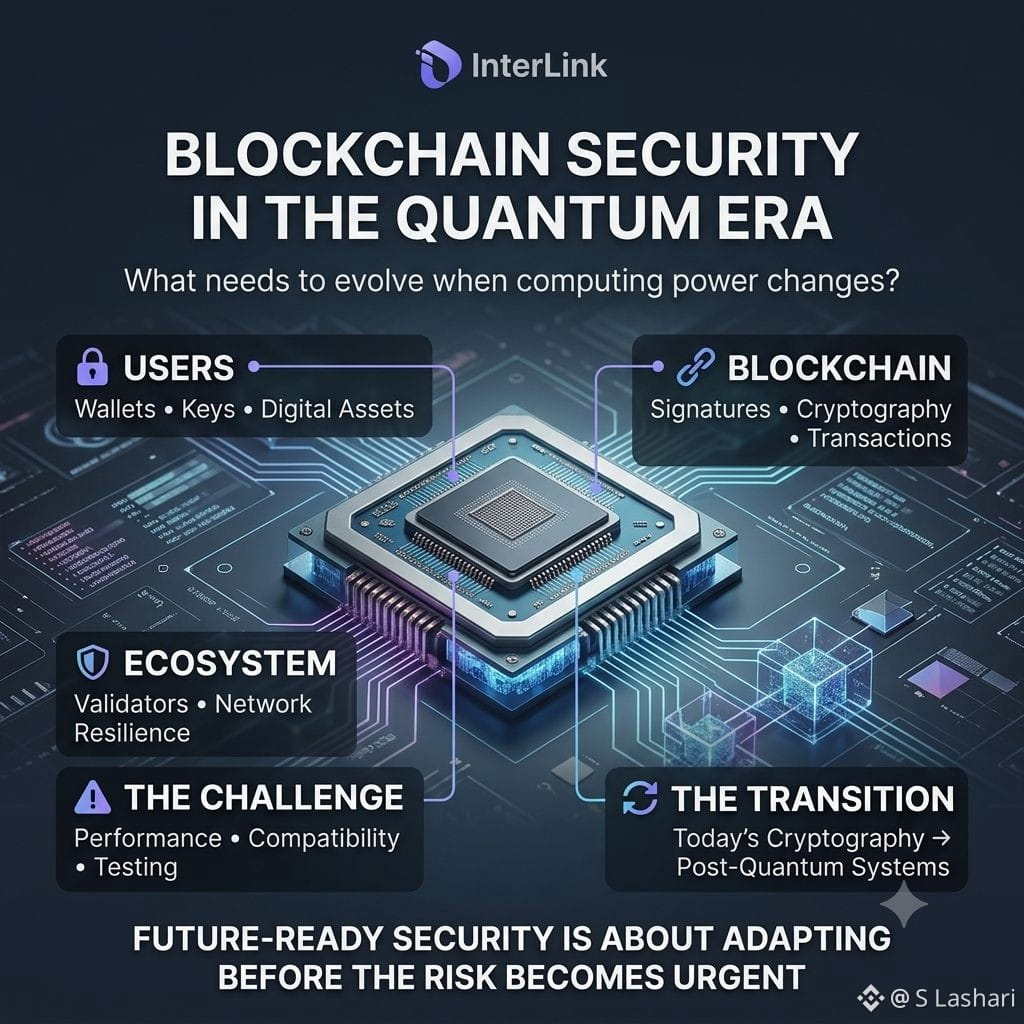
⚛️ Post-quantum security is bigger than preparing for one future threat.
If quantum computing eventually challenges today’s cryptography, the impact could reach wallets, digital signatures, transactions and even validator infrastructure. 🔐
That’s why InterLink’s post-quantum research matters. The goal isn’t simply stronger cryptography — it’s building long-term resilience across the network. 🛡️
The transition itself won’t be simple either. Performance, compatibility, implementation and proper testing all matter when moving toward post-quantum systems.
For users and businesses, the real benefit is simple: a network designed to keep adapting as technology changes. 🌐
#InterLink #ITL #ITLG #WeAreTheFirst10MLinkers #QuantumSecurity
⚛️ Post-quantum security is bigger than preparing for one future threat.
If quantum computing eventually challenges today’s cryptography, the impact could reach wallets, digital signatures, transactions and even validator infrastructure. 🔐
That’s why InterLink’s post-quantum research matters. The goal isn’t simply stronger cryptography — it’s building long-term resilience across the network. 🛡️
The transition itself won’t be simple either. Performance, compatibility, implementation and proper testing all matter when moving toward post-quantum systems.
For users and businesses, the real benefit is simple: a network designed to keep adapting as technology changes. 🌐
#InterLink #ITL #ITLG #WeAreTheFirst10MLinkers #QuantumSecurity
If quantum computing eventually challenges today’s cryptography, the impact could reach wallets, digital signatures, transactions and even validator infrastructure. 🔐
That’s why InterLink’s post-quantum research matters. The goal isn’t simply stronger cryptography — it’s building long-term resilience across the network. 🛡️
The transition itself won’t be simple either. Performance, compatibility, implementation and proper testing all matter when moving toward post-quantum systems.
For users and businesses, the real benefit is simple: a network designed to keep adapting as technology changes. 🌐
#InterLink #ITL #ITLG #WeAreTheFirst10MLinkers #QuantumSecurity
1
107
🚨 QUANTUM-PROOF $BTC IS HERE AS QUFI LAUNCHES POST-QUANTUM VERIFICATION LAYER! ⚡
Institutional eyes are quietly shifting toward long-term network security as QuFi rolls out a dedicated post-quantum verification layer. 🛡️ By validating transactions off-chain via post-quantum cryptography before settling on legacy chains, they are tackling future compute threats without choking chain bandwidth.
They have already deployed uBTC on Bitcoin Testnet4, demonstrating how collateralized $BTC can move across settlement environments securely using post-quantum standards. 💡 With major players and bank pilots moving toward quantum resistance, infrastructure that preserves scalability while upgrading defense is positioning itself ahead of the curve.
💬 Do you think quantum-proof security layers will become mandatory for institutional $BTC adoption, or is the market pricing this risk too early? 👇
⚠️ Not financial advice. Always manage your risk. 🛡️
🏷️ #BTC #QuantumSecurity #CryptoInfrastructure #Bitcoin
💎 ⚡
🚨 QUANTUM-PROOF $BTC IS HERE AS QUFI LAUNCHES POST-QUANTUM VERIFICATION LAYER! ⚡
Institutional eyes are quietly shifting toward long-term network security as QuFi rolls out a dedicated post-quantum verification layer. 🛡️ By validating transactions off-chain via post-quantum cryptography before settling on legacy chains, they are tackling future compute threats without choking chain bandwidth.
They have already deployed uBTC on Bitcoin Testnet4, demonstrating how collateralized $BTC can move across settlement environments securely using post-quantum standards. 💡 With major players and bank pilots moving toward quantum resistance, infrastructure that preserves scalability while upgrading defense is positioning itself ahead of the curve.
💬 Do you think quantum-proof security layers will become mandatory for institutional $BTC adoption, or is the market pricing this risk too early? 👇
⚠️ Not financial advice. Always manage your risk. 🛡️
🏷️ #BTC #QuantumSecurity #CryptoInfrastructure #Bitcoin
💎 ⚡
Institutional eyes are quietly shifting toward long-term network security as QuFi rolls out a dedicated post-quantum verification layer. 🛡️ By validating transactions off-chain via post-quantum cryptography before settling on legacy chains, they are tackling future compute threats without choking chain bandwidth.
They have already deployed uBTC on Bitcoin Testnet4, demonstrating how collateralized $BTC can move across settlement environments securely using post-quantum standards. 💡 With major players and bank pilots moving toward quantum resistance, infrastructure that preserves scalability while upgrading defense is positioning itself ahead of the curve.
💬 Do you think quantum-proof security layers will become mandatory for institutional $BTC adoption, or is the market pricing this risk too early? 👇
⚠️ Not financial advice. Always manage your risk. 🛡️
🏷️ #BTC #QuantumSecurity #CryptoInfrastructure #Bitcoin
💎 ⚡
46

QUANTUM SECURITY RACE HEATING UP: $NEAR LEADS THE PACK 🛡️
In just the past two weeks, TRON, NEAR, XRP, and ZEC all dropped quantum-resistant upgrades — NEAR’s 2.13 update specifically hardens the protocol against future threats. This isn't hype; it’s a silent race to protect the entire ecosystem before Q-Day arrives.
The projects acting now will likely be the first pick for institutional money when the real shift happens. That kind of forward thinking doesn't happen by accident.
Which blockchain do you think will set the quantum security standard first?
Not financial advice. Always manage your risk.
#NEAR #QuantumSecurity #CryptoRace #Blockchain
⚡
QUANTUM SECURITY RACE HEATING UP: $NEAR LEADS THE PACK 🛡️
In just the past two weeks, TRON, NEAR, XRP, and ZEC all dropped quantum-resistant upgrades — NEAR’s 2.13 update specifically hardens the protocol against future threats. This isn't hype; it’s a silent race to protect the entire ecosystem before Q-Day arrives.
The projects acting now will likely be the first pick for institutional money when the real shift happens. That kind of forward thinking doesn't happen by accident.
Which blockchain do you think will set the quantum security standard first?
Not financial advice. Always manage your risk.
#NEAR #QuantumSecurity #CryptoRace #Blockchain
⚡
In just the past two weeks, TRON, NEAR, XRP, and ZEC all dropped quantum-resistant upgrades — NEAR’s 2.13 update specifically hardens the protocol against future threats. This isn't hype; it’s a silent race to protect the entire ecosystem before Q-Day arrives.
The projects acting now will likely be the first pick for institutional money when the real shift happens. That kind of forward thinking doesn't happen by accident.
Which blockchain do you think will set the quantum security standard first?
Not financial advice. Always manage your risk.
#NEAR #QuantumSecurity #CryptoRace #Blockchain
⚡
178

·
--
Quantum security risks exposed.
ctrl/shift Summit 2026 to Feature Quantum Security Sessions in Naples
The ctrl/shift Summit 2026 will tackle quantum security threats to blockchain and digital assets. Leaders from AI, Web3, and finance will gather to discuss solutions. Sohil Tiwari, CEO of Quantum, will be a key speaker. Traders and holders should watch for takeaways on safeguarding their investments.
#Crypto #QuantumSecurity #Web3 #Blockchain #QuantumComputing
Quantum security risks exposed.
ctrl/shift Summit 2026 to Feature Quantum Security Sessions in Naples
The ctrl/shift Summit 2026 will tackle quantum security threats to blockchain and digital assets. Leaders from AI, Web3, and finance will gather to discuss solutions. Sohil Tiwari, CEO of Quantum, will be a key speaker. Traders and holders should watch for takeaways on safeguarding their investments.
#Crypto #QuantumSecurity #Web3 #Blockchain #QuantumComputing
ctrl/shift Summit 2026 to Feature Quantum Security Sessions in Naples
The ctrl/shift Summit 2026 will tackle quantum security threats to blockchain and digital assets. Leaders from AI, Web3, and finance will gather to discuss solutions. Sohil Tiwari, CEO of Quantum, will be a key speaker. Traders and holders should watch for takeaways on safeguarding their investments.
#Crypto #QuantumSecurity #Web3 #Blockchain #QuantumComputing
40

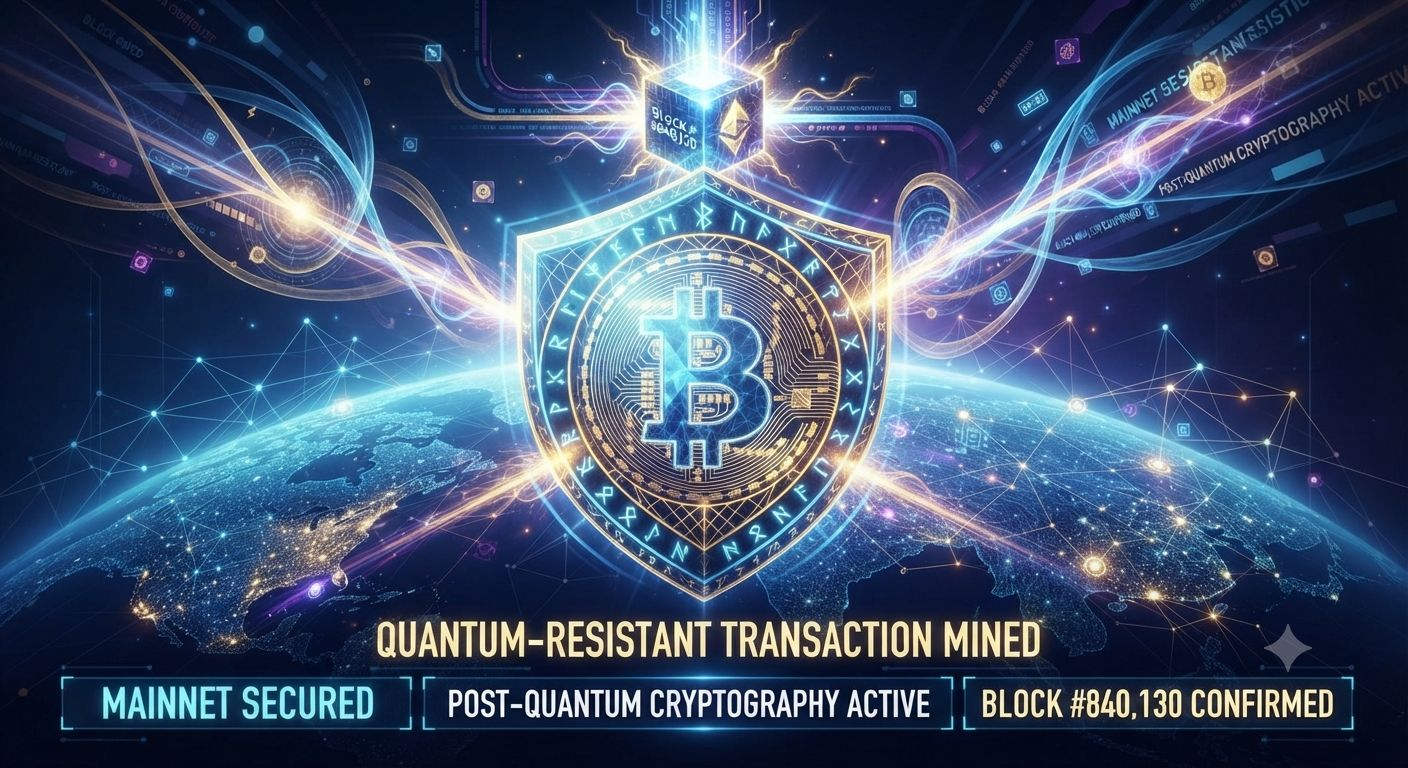
#AntiQuantumBitcoinTransactionMinedOnMainnet History was just made on the Bitcoin blockchain. The first quantum-safe transaction has officially been mined on the mainnet without requiring any soft or hard forks to the core protocol.
Utilizing an innovative approach called Quantum-Safe Bitcoin (QSB)—leveraging signature grinding and hash commitments rather than vulnerable elliptic curve signatures (ECDSA)—this milestone proves that holders can move funds into a layer of security that quantum computers cannot compromise.
While heavy off-chain computation costs and direct miner coordination mean this isn’t ready for everyday coffee purchases just yet, it marks a monumental leap forward. Bitcoin’s security evolution is officially underway, offering a viable emergency exit against future cryptographic threats.
#AntiQuantumBitcoinTransactionMinedOnMainnet #Bitcoin #CryptoNews #QuantumSecurity
$BTC
{spot}(BTCUSDT)
$BNB
{spot}(BNBUSDT)
$ETH
{spot}(ETHUSDT)
#AntiQuantumBitcoinTransactionMinedOnMainnet History was just made on the Bitcoin blockchain. The first quantum-safe transaction has officially been mined on the mainnet without requiring any soft or hard forks to the core protocol.
Utilizing an innovative approach called Quantum-Safe Bitcoin (QSB)—leveraging signature grinding and hash commitments rather than vulnerable elliptic curve signatures (ECDSA)—this milestone proves that holders can move funds into a layer of security that quantum computers cannot compromise.
While heavy off-chain computation costs and direct miner coordination mean this isn’t ready for everyday coffee purchases just yet, it marks a monumental leap forward. Bitcoin’s security evolution is officially underway, offering a viable emergency exit against future cryptographic threats.
#AntiQuantumBitcoinTransactionMinedOnMainnet #Bitcoin #CryptoNews #QuantumSecurity
$BTC
$BNB
$ETH
Utilizing an innovative approach called Quantum-Safe Bitcoin (QSB)—leveraging signature grinding and hash commitments rather than vulnerable elliptic curve signatures (ECDSA)—this milestone proves that holders can move funds into a layer of security that quantum computers cannot compromise.
While heavy off-chain computation costs and direct miner coordination mean this isn’t ready for everyday coffee purchases just yet, it marks a monumental leap forward. Bitcoin’s security evolution is officially underway, offering a viable emergency exit against future cryptographic threats.
#AntiQuantumBitcoinTransactionMinedOnMainnet #Bitcoin #CryptoNews #QuantumSecurity
$BTC
$BNB
$ETH
102

·
--
Quantum threat? A major group is stepping up to protect Bitcoin. A powerful group, including Strategy and BlackRock, just pledged $15 million to “quantum-proof” the Bitcoin network. This means they are investing in research and development to protect Bitcoin from potential attacks by super-advanced quantum computers in the future. Why this matters: Quantum computers could theoretically break current encryption methods, including those protecting Bitcoin. This pledge shows serious players are thinking long-term about Bitcoin's security and future resilience. It highlights the proactive efforts being made to ensure Bitcoin remains secure for generations. This move reinforces Bitcoin's foundational strength and commitment to future-proofing. It’s a vote of confidence that some of the biggest financial names see Bitcoin as a permanent fixture, worthy of significant defense. Could this bolster institutional trust even further? What are your thoughts on this long-term security play? Keep an eye on quantum tech developments and $BTC's response. #Bitcoin #QuantumSecurity #CryptoNews $BTC
Quantum threat? A major group is stepping up to protect Bitcoin. A powerful group, including Strategy and BlackRock, just pledged $15 million to “quantum-proof” the Bitcoin network. This means they are investing in research and development to protect Bitcoin from potential attacks by super-advanced quantum computers in the future. Why this matters: Quantum computers could theoretically break current encryption methods, including those protecting Bitcoin. This pledge shows serious players are thinking long-term about Bitcoin's security and future resilience. It highlights the proactive efforts being made to ensure Bitcoin remains secure for generations. This move reinforces Bitcoin's foundational strength and commitment to future-proofing. It’s a vote of confidence that some of the biggest financial names see Bitcoin as a permanent fixture, worthy of significant defense. Could this bolster institutional trust even further? What are your thoughts on this long-term security play? Keep an eye on quantum tech developments and $BTC 's response. #Bitcoin #QuantumSecurity #CryptoNews $BTC
50

·
--
Don't let headlines shake you out of your investments. Stay informed, not influenced
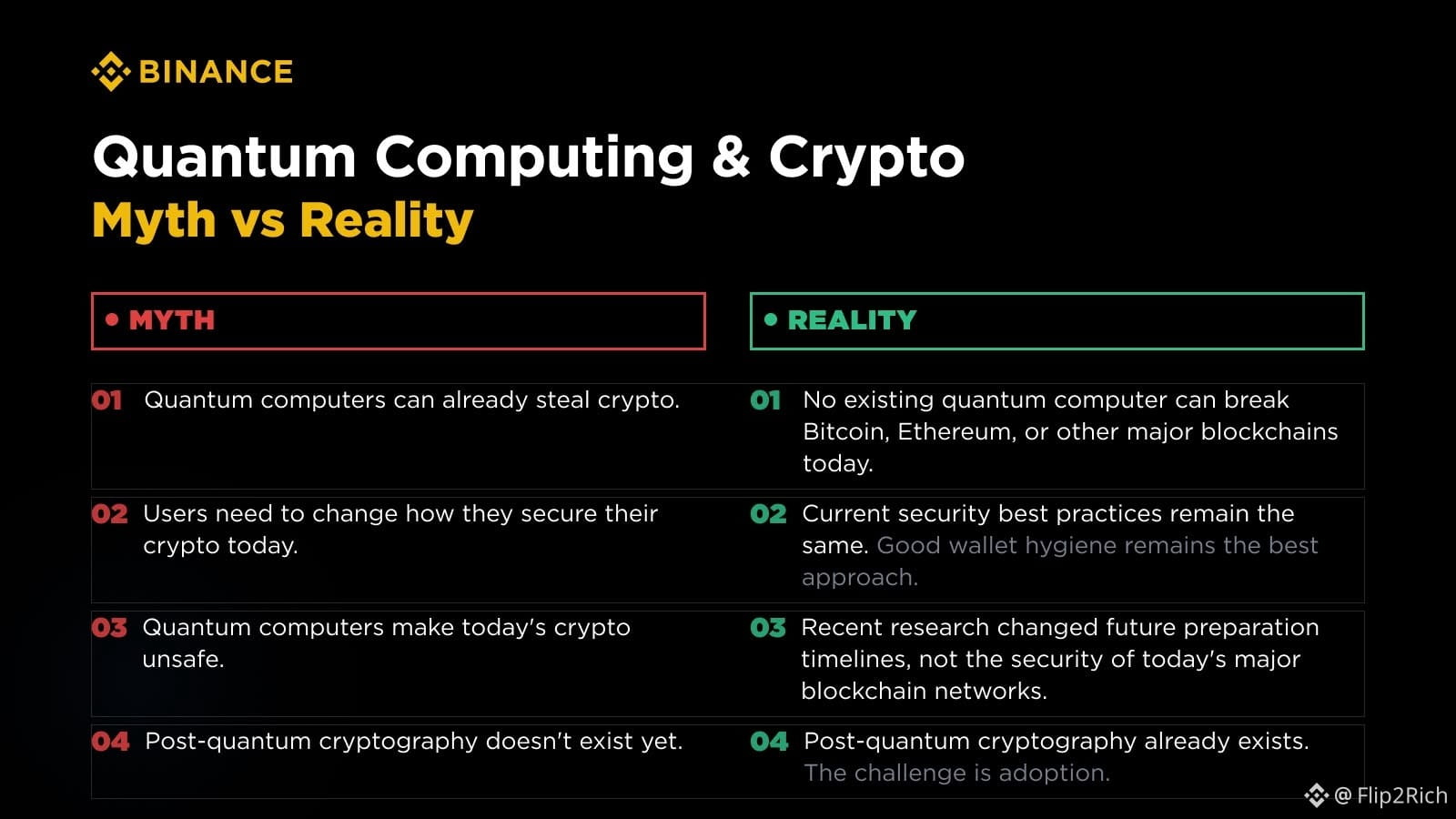
STOP Believing Everything You Read About Quantum & Crypto! ⚠️
Fear spreads faster than facts.
Here's the reality according to Binance:
✅ No existing quantum computer can break Bitcoin, Ethereum, or other major blockchains today.
✅ You don't need to change how you secure your crypto right now—good wallet security is still the best protection.
✅ Quantum research affects future preparation, not today's blockchain security.
✅ Post-quantum cryptography already exists—the challenge is adoption, not invention.
$BTC
#FearAboutQuantum
#QuantumSecurity
Don't let headlines shake you out of your investments. Stay informed, not influenced
STOP Believing Everything You Read About Quantum & Crypto! ⚠️
Fear spreads faster than facts.
Here's the reality according to Binance:
✅ No existing quantum computer can break Bitcoin, Ethereum, or other major blockchains today.
✅ You don't need to change how you secure your crypto right now—good wallet security is still the best protection.
✅ Quantum research affects future preparation, not today's blockchain security.
✅ Post-quantum cryptography already exists—the challenge is adoption, not invention.
$BTC
#FearAboutQuantum
#QuantumSecurity
STOP Believing Everything You Read About Quantum & Crypto! ⚠️
Fear spreads faster than facts.
Here's the reality according to Binance:
✅ No existing quantum computer can break Bitcoin, Ethereum, or other major blockchains today.
✅ You don't need to change how you secure your crypto right now—good wallet security is still the best protection.
✅ Quantum research affects future preparation, not today's blockchain security.
✅ Post-quantum cryptography already exists—the challenge is adoption, not invention.
$BTC
#FearAboutQuantum
#QuantumSecurity
53

⚛️ جالاكسي تخصص 5 ملايين دولار لتحصين البيتكوين ضد هجمات الكم!
تعهدت شركة جالاكسي بتقديم منح تصل إلى 5 ملايين دولار للمطورين الذين يعملون على تعزيز أمان البيتكوين ضد التهديدات المحتملة من الحوسبة الكمومية. كما شكلت الشركة مجلسًا من خبراء الاستشارات الكمومية لبحث حلول الهجرة المقاومة للكم، مما يؤكد التزامها بحماية مستقبل العملة الرقمية الرائدة.
━━━━━━━━━━━━━━
📊 التأثير: 🔥 مرتفع جداً
🏷️ BITCOIN
#Bitcoin #QuantumSecurity #Blockchain #CryptoGrants #FutureOfMoney
🔗 المصدر: https://cointelegraph.com/news/galaxy-pledges-5m-developers-quantum-proofing-bitcoin
⚛️ جالاكسي تخصص 5 ملايين دولار لتحصين البيتكوين ضد هجمات الكم!
تعهدت شركة جالاكسي بتقديم منح تصل إلى 5 ملايين دولار للمطورين الذين يعملون على تعزيز أمان البيتكوين ضد التهديدات المحتملة من الحوسبة الكمومية. كما شكلت الشركة مجلسًا من خبراء الاستشارات الكمومية لبحث حلول الهجرة المقاومة للكم، مما يؤكد التزامها بحماية مستقبل العملة الرقمية الرائدة.
━━━━━━━━━━━━━━
📊 التأثير: 🔥 مرتفع جداً
🏷️ BITCOIN
#Bitcoin #QuantumSecurity #Blockchain #CryptoGrants #FutureOfMoney
🔗 المصدر: https://cointelegraph.com/news/galaxy-pledges-5m-developers-quantum-proofing-bitcoin
تعهدت شركة جالاكسي بتقديم منح تصل إلى 5 ملايين دولار للمطورين الذين يعملون على تعزيز أمان البيتكوين ضد التهديدات المحتملة من الحوسبة الكمومية. كما شكلت الشركة مجلسًا من خبراء الاستشارات الكمومية لبحث حلول الهجرة المقاومة للكم، مما يؤكد التزامها بحماية مستقبل العملة الرقمية الرائدة.
━━━━━━━━━━━━━━
📊 التأثير: 🔥 مرتفع جداً
🏷️ BITCOIN
#Bitcoin #QuantumSecurity #Blockchain #CryptoGrants #FutureOfMoney
🔗 المصدر: https://cointelegraph.com/news/galaxy-pledges-5m-developers-quantum-proofing-bitcoin
47

·
--
🚨 香港银行量子安全备竭力 🧠
📊 | $BTC | $ETH | $BNB |
- 请关注、点赞和评论 📈
- 香港银行量子安全准备评分仅2.3分,远远低于预期
- 香港金融管理局目标是在2030年实现全面后量子准备
- 香港银行的量子安全漏洞可能会带来潜在风险
- 预计香港银行将或将在短期内面临较大压力 🔥
- 或许量子安全问题会影响市场走势,预计短期内可能会有波动
- 据悉,鲸鱼或将会进行抛盘或吸纳底仓
- 短期市场走势或将会较为波动,投资者需谨慎
- 预计后市可能会受到量子安全问题的影响
- 您认为香港银行的量子安全问题会如何影响市场走势?
- 请继续关注并评论您的看法
#Crypto #Blockchain #QuantumSecurity #Bitcoin #Whales
🚨 香港银行量子安全备竭力 🧠
📊 | $BTC | $ETH | $BNB |
- 请关注、点赞和评论 📈
- 香港银行量子安全准备评分仅2.3分,远远低于预期
- 香港金融管理局目标是在2030年实现全面后量子准备
- 香港银行的量子安全漏洞可能会带来潜在风险
- 预计香港银行将或将在短期内面临较大压力 🔥
- 或许量子安全问题会影响市场走势,预计短期内可能会有波动
- 据悉,鲸鱼或将会进行抛盘或吸纳底仓
- 短期市场走势或将会较为波动,投资者需谨慎
- 预计后市可能会受到量子安全问题的影响
- 您认为香港银行的量子安全问题会如何影响市场走势?
- 请继续关注并评论您的看法
#Crypto #Blockchain #QuantumSecurity #Bitcoin #Whales
📊 | $BTC | $ETH | $BNB |
- 请关注、点赞和评论 📈
- 香港银行量子安全准备评分仅2.3分,远远低于预期
- 香港金融管理局目标是在2030年实现全面后量子准备
- 香港银行的量子安全漏洞可能会带来潜在风险
- 预计香港银行将或将在短期内面临较大压力 🔥
- 或许量子安全问题会影响市场走势,预计短期内可能会有波动
- 据悉,鲸鱼或将会进行抛盘或吸纳底仓
- 短期市场走势或将会较为波动,投资者需谨慎
- 预计后市可能会受到量子安全问题的影响
- 您认为香港银行的量子安全问题会如何影响市场走势?
- 请继续关注并评论您的看法
#Crypto #Blockchain #QuantumSecurity #Bitcoin #Whales
10

SHRINCS BIP: Bitcoin An Toàn Lượng Xử
- BIP mới của SHRINCS đã được công bố nhằm nâng cấp Bitcoin lên mức an toàn trước lượng xâm nhập lượng tử
- Chiến lược ký hiệu mới giúp Bitcoin trở nên chống mạo danh lượng tử
- Nội dung cần biết từ SHRINCS BIP này
#BinanceSquare #CryptoNews #Bitcoin #QuantumSecurity
$btc #btc $shrincs shrincs
vlikevn Titanbot
Nguồn: CoinTelegraph
SHRINCS BIP: Bitcoin An Toàn Lượng Xử
- BIP mới của SHRINCS đã được công bố nhằm nâng cấp Bitcoin lên mức an toàn trước lượng xâm nhập lượng tử
- Chiến lược ký hiệu mới giúp Bitcoin trở nên chống mạo danh lượng tử
- Nội dung cần biết từ SHRINCS BIP này
#BinanceSquare #CryptoNews #Bitcoin #QuantumSecurity
$btc #btc $shrincs shrincs
vlikevn Titanbot
Nguồn: CoinTelegraph
- BIP mới của SHRINCS đã được công bố nhằm nâng cấp Bitcoin lên mức an toàn trước lượng xâm nhập lượng tử
- Chiến lược ký hiệu mới giúp Bitcoin trở nên chống mạo danh lượng tử
- Nội dung cần biết từ SHRINCS BIP này
#BinanceSquare #CryptoNews #Bitcoin #QuantumSecurity
$btc #btc $shrincs shrincs
vlikevn Titanbot
Nguồn: CoinTelegraph
158

·
--
🚨 NEW POST-QUANTUM ARCHITECTURE EMERGES TO SECURE $BTC LIQUIDITY FOR THE NEXT DECADE 💥
Institutional infrastructure is quietly shifting as QuFi introduces a post-quantum verification layer targeting legacy network vulnerabilities. 💡 By decoupling cryptographic validation from base settlement, this model insulates $BTC collateral pools without cluttering on-chain bandwidth or execution speed.
With testnet implementations like uBTC running ML-DSA-65 and ML-KEM-1024 encryption standards, smart money is watching how institutional rails protect long-term settlement efficiency. 📊 As capital demands future-proof security before deploying deep liquidity, external verification layers could redefine cross-chain architecture.
💬 Will external post-quantum verification become the standard for institutional custody, or will native network upgrades win out? 👇
⚠️ Not financial advice. Always manage your risk. 🛡️
🏷️ #BTC #QuantumSecurity #CryptoInfrastructure #Web3
⚡ 🛡️
🚨 NEW POST-QUANTUM ARCHITECTURE EMERGES TO SECURE $BTC LIQUIDITY FOR THE NEXT DECADE 💥
Institutional infrastructure is quietly shifting as QuFi introduces a post-quantum verification layer targeting legacy network vulnerabilities. 💡 By decoupling cryptographic validation from base settlement, this model insulates $BTC collateral pools without cluttering on-chain bandwidth or execution speed.
With testnet implementations like uBTC running ML-DSA-65 and ML-KEM-1024 encryption standards, smart money is watching how institutional rails protect long-term settlement efficiency. 📊 As capital demands future-proof security before deploying deep liquidity, external verification layers could redefine cross-chain architecture.
💬 Will external post-quantum verification become the standard for institutional custody, or will native network upgrades win out? 👇
⚠️ Not financial advice. Always manage your risk. 🛡️
🏷️ #BTC #QuantumSecurity #CryptoInfrastructure #Web3
⚡ 🛡️
Institutional infrastructure is quietly shifting as QuFi introduces a post-quantum verification layer targeting legacy network vulnerabilities. 💡 By decoupling cryptographic validation from base settlement, this model insulates $BTC collateral pools without cluttering on-chain bandwidth or execution speed.
With testnet implementations like uBTC running ML-DSA-65 and ML-KEM-1024 encryption standards, smart money is watching how institutional rails protect long-term settlement efficiency. 📊 As capital demands future-proof security before deploying deep liquidity, external verification layers could redefine cross-chain architecture.
💬 Will external post-quantum verification become the standard for institutional custody, or will native network upgrades win out? 👇
⚠️ Not financial advice. Always manage your risk. 🛡️
🏷️ #BTC #QuantumSecurity #CryptoInfrastructure #Web3
⚡ 🛡️
37
🚨 $BTC MAKES HISTORY WITH FIRST QUANTUM-RESISTANT TRANSACTION EVER PROCESSED! 💥
📌 Developers just routed 10,000 satoshis through a hash-preimage lock, proving Bitcoin can achieve quantum security without needing a network soft fork. 💡 Institutional allocators watching long-term tail risks get a major confidence boost as the core architecture proves its future-proof adaptability.
📊 Higher computational overhead and non-standard routing may introduce short-term friction before secondary layer tooling matures. ⚡ Nevertheless, removing an existential long-term threat changes the structural valuation framework entirely. 💬 Does this technological milestone spark immediate institutional bids or will implementation bottlenecks slow momentum? 👇
⚠️ Not financial advice. Always manage your risk. 🛡️
🏷️ #BTC #Bitcoin #Crypto #QuantumSecurity
🔥 💎
🚨 $BTC MAKES HISTORY WITH FIRST QUANTUM-RESISTANT TRANSACTION EVER PROCESSED! 💥
📌 Developers just routed 10,000 satoshis through a hash-preimage lock, proving Bitcoin can achieve quantum security without needing a network soft fork. 💡 Institutional allocators watching long-term tail risks get a major confidence boost as the core architecture proves its future-proof adaptability.
📊 Higher computational overhead and non-standard routing may introduce short-term friction before secondary layer tooling matures. ⚡ Nevertheless, removing an existential long-term threat changes the structural valuation framework entirely. 💬 Does this technological milestone spark immediate institutional bids or will implementation bottlenecks slow momentum? 👇
⚠️ Not financial advice. Always manage your risk. 🛡️
🏷️ #BTC #Bitcoin #Crypto #QuantumSecurity
🔥 💎
📌 Developers just routed 10,000 satoshis through a hash-preimage lock, proving Bitcoin can achieve quantum security without needing a network soft fork. 💡 Institutional allocators watching long-term tail risks get a major confidence boost as the core architecture proves its future-proof adaptability.
📊 Higher computational overhead and non-standard routing may introduce short-term friction before secondary layer tooling matures. ⚡ Nevertheless, removing an existential long-term threat changes the structural valuation framework entirely. 💬 Does this technological milestone spark immediate institutional bids or will implementation bottlenecks slow momentum? 👇
⚠️ Not financial advice. Always manage your risk. 🛡️
🏷️ #BTC #Bitcoin #Crypto #QuantumSecurity
🔥 💎
47

·
--
VOLCANIC
The proof is in: Coinbase's independent advisory board of cryptography experts just urged Bitcoin to begin migrating to quantum-resistant security, marking a historic shift in the blockchain landscape #BitcoinMigration #QuantumSecurity. According to their report, preparations for quantum-resistant security should begin immediately, citing the inevitability of quantum computing advancements that can potentially break current encryption methods.
The stakes for the market are clear: if we don't act now, our digital assets could be at risk of being hacked or compromised, leading to a catastrophic loss of trust in the blockchain. Meanwhile, forward-thinking investors are already positioning themselves for the future of cryptocurrency, and the flood has started.
What will you do while the rest of the market is sleeping on this trend? Get ahead of the game and start exploring the quantum-resistant coins of tomorrow. Will you be left behind, or will you take the first step towards a more secure cryptocurrency future?
VOLCANIC
The proof is in: Coinbase's independent advisory board of cryptography experts just urged Bitcoin to begin migrating to quantum-resistant security, marking a historic shift in the blockchain landscape #BitcoinMigration #QuantumSecurity. According to their report, preparations for quantum-resistant security should begin immediately, citing the inevitability of quantum computing advancements that can potentially break current encryption methods.
The stakes for the market are clear: if we don't act now, our digital assets could be at risk of being hacked or compromised, leading to a catastrophic loss of trust in the blockchain. Meanwhile, forward-thinking investors are already positioning themselves for the future of cryptocurrency, and the flood has started.
What will you do while the rest of the market is sleeping on this trend? Get ahead of the game and start exploring the quantum-resistant coins of tomorrow. Will you be left behind, or will you take the first step towards a more secure cryptocurrency future?
The proof is in: Coinbase's independent advisory board of cryptography experts just urged Bitcoin to begin migrating to quantum-resistant security, marking a historic shift in the blockchain landscape #BitcoinMigration #QuantumSecurity. According to their report, preparations for quantum-resistant security should begin immediately, citing the inevitability of quantum computing advancements that can potentially break current encryption methods.
The stakes for the market are clear: if we don't act now, our digital assets could be at risk of being hacked or compromised, leading to a catastrophic loss of trust in the blockchain. Meanwhile, forward-thinking investors are already positioning themselves for the future of cryptocurrency, and the flood has started.
What will you do while the rest of the market is sleeping on this trend? Get ahead of the game and start exploring the quantum-resistant coins of tomorrow. Will you be left behind, or will you take the first step towards a more secure cryptocurrency future?
39
🦈 MUSK FLIPS THE QUANTUM FUD SWITCH AS $BTC DEFENDS $78,000 WITH GRAVITATIONAL FORCE! ⚡
Physics just handed the bears another defeat. Elon Musk sparked heavy debate by endorsing a physics model capping usable qubits around 400, while cracking $BTC security requires at least 835. 📊 Meanwhile, StarkWare successfully tested quantum-resistant transactions directly on the mainnet without needing a soft fork.
💡 Smart money recognizes that existential tech FUD is being neutralized in real time while price holds firm above $78,000. 🔍 Sellers tried to engineer a narrative trap, but structural conviction remains unbreakable as institutional bids absorb every dip. 💬 Is quantum panic completely dead, or are you still hedging against theoretical tech risks? 👇
⚠️ Not financial advice. Always manage your risk. 🛡️
🏷️ #BTC #QuantumSecurity #Bitcoin #Crypto
🔥 💎
🦈 MUSK FLIPS THE QUANTUM FUD SWITCH AS $BTC DEFENDS $78,000 WITH GRAVITATIONAL FORCE! ⚡
Physics just handed the bears another defeat. Elon Musk sparked heavy debate by endorsing a physics model capping usable qubits around 400, while cracking $BTC security requires at least 835. 📊 Meanwhile, StarkWare successfully tested quantum-resistant transactions directly on the mainnet without needing a soft fork.
💡 Smart money recognizes that existential tech FUD is being neutralized in real time while price holds firm above $78,000. 🔍 Sellers tried to engineer a narrative trap, but structural conviction remains unbreakable as institutional bids absorb every dip. 💬 Is quantum panic completely dead, or are you still hedging against theoretical tech risks? 👇
⚠️ Not financial advice. Always manage your risk. 🛡️
🏷️ #BTC #QuantumSecurity #Bitcoin #Crypto
🔥 💎
Physics just handed the bears another defeat. Elon Musk sparked heavy debate by endorsing a physics model capping usable qubits around 400, while cracking $BTC security requires at least 835. 📊 Meanwhile, StarkWare successfully tested quantum-resistant transactions directly on the mainnet without needing a soft fork.
💡 Smart money recognizes that existential tech FUD is being neutralized in real time while price holds firm above $78,000. 🔍 Sellers tried to engineer a narrative trap, but structural conviction remains unbreakable as institutional bids absorb every dip. 💬 Is quantum panic completely dead, or are you still hedging against theoretical tech risks? 👇
⚠️ Not financial advice. Always manage your risk. 🛡️
🏷️ #BTC #QuantumSecurity #Bitcoin #Crypto
🔥 💎
58
තවත් අන්තර්ගතයන් ගවේෂණය කිරීමට ඇතුල් වන්න
Binance චතුරශ්රය හි ගෝලීය ක්රිප්ටෝ පරිශීලකයින් හා එක්වන්න
⚡️ ක්රිප්ටෝ පිළිබඳ නවතම සහ ප්රයෝජනවත් තොරතුරු ලබා ගන්න.
💬 ලොව විශාලතම ක්රිප්ටෝ හුවමාරුව මගින් විශ්වාස කෙරේ.
👍 සත්යායනය කරන ලද නිර්මාණකරුවන්ගෙන් සැබෑ විදසුන් සොයා ගන්න.
විද්යුත් තැපෑල / දුරකථන අංකය
නැගී එන මාතෘකා
1
#BinancePick
2.7M නැරඹීම්
145,857 සාකච්ඡා කරමින්
2
#EarningsSeason
5.1M නැරඹීම්
24,950 සාකච්ඡා කරමින්
3
#AnthropicTTMRevenueGrewAbout1200%
0 නැරඹීම්
3 සාකච්ඡා කරමින්
4
#AnthropicS1ExpectedToday
467 නැරඹීම්
32 සාකච්ඡා කරමින්
5
#SouthKoreaReportedlyWeighsFourthCryptoTaxDelay
7,802 නැරඹීම්
217 සාකච්ඡා කරමින්
6
#FranklinTempletonFilesForTwoDividendToBitcoinETFs
13,754 නැරඹීම්
332 සාකච්ඡා කරමින්
7
#StrategyMSTRSurpassesNasdaqInMarketCap
11,758 නැරඹීම්
271 සාකච්ඡා කරමින්
8
#CanadaProposesStablecoinRedemptionWithin3BusinessDays
503 නැරඹීම්
29 සාකච්ඡා කරමින්
9
#ElectrumWalletBugLetRogueServersStealFunds
16,692 නැරඹීම්
382 සාකච්ඡා කරමින්
10
#ArgentineCourtDismissesLIBRACaseAgainstMilei
26,903 නැරඹීම්
456 සාකච්ඡා කරමින්