
#mbeyaconsciouscomunity
mbeyaconsciouscomunity
4.3M views
633 සාකච්ඡා කරමින්
උණුසුම්
නවතම

·
--
බෙයාරිෂ්
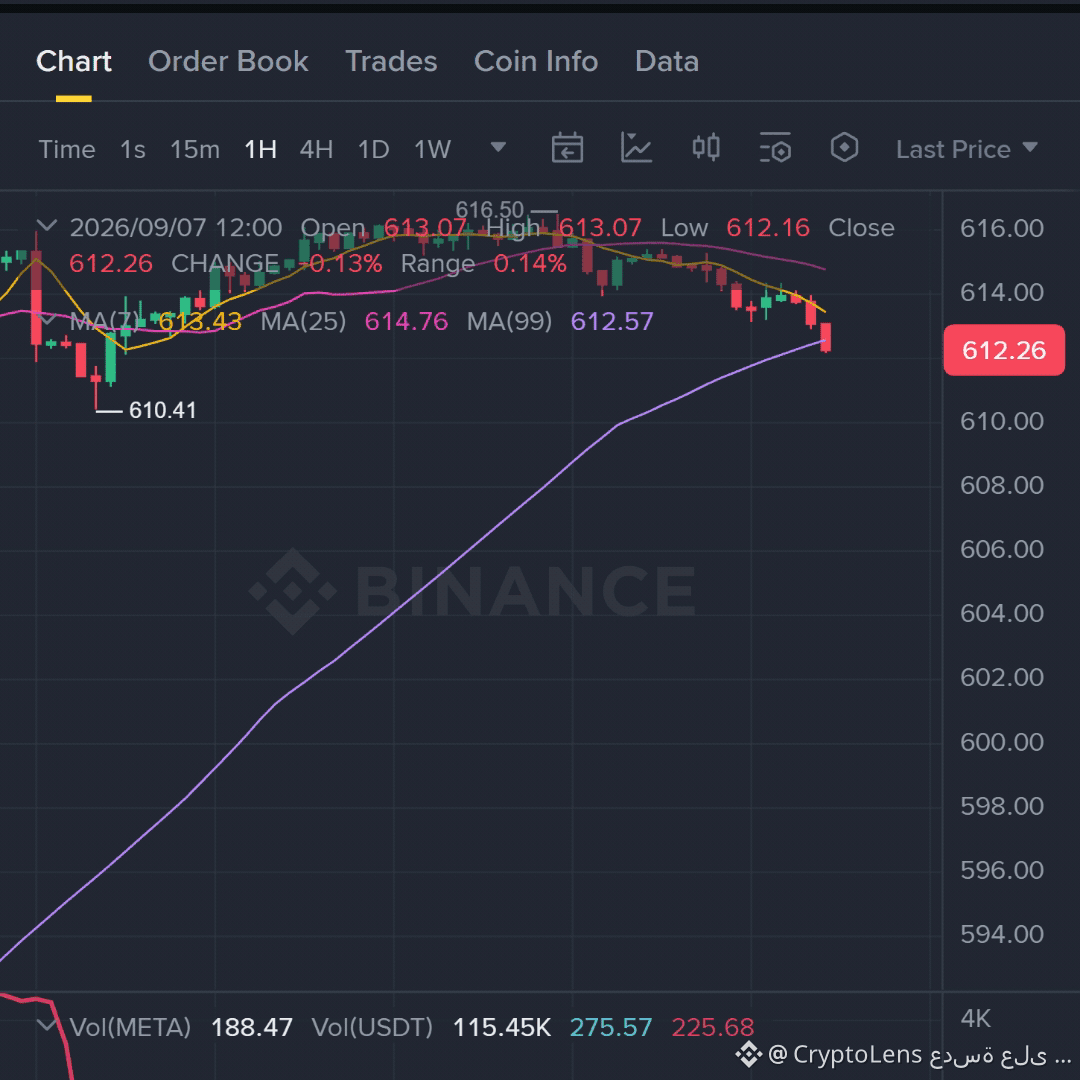
$META /USDT 🟢 SHORT
လူတိုင်းက ပြန်တက်လာမှုကို စောင့်ကြည့်နေကြပေမယ့် 15 မိနစ် timeframe ရဲ့ RSI ကတော့ တခြားအရာတွေ ပြောနေတယ် 👀
📍 ဝင်ရန်: 612.17 – 612.35
🛑 Stop: 614.87
🎯 TP1: 610.30
🎯 TP2: 608.99
🎯 TP3: 607.04
လက်ရှိစျေးနှုန်းက ဝင်ရမယ့်ဇုန်ထဲမှာရှိနေပြီး RSI က 25.82 ထိကျသွားတာကြောင့် ကျိုးပေါက်ရောင်းလွန် (oversold) ဖြစ်နေတဲ့ အထင်အမြင် ရှင်းလင်းတယ်—ဆင်းပြီးနောက်မှာ ပြန်တက်လာနိုင်တယ်၊ ဒါပေမယ့်...
ဒီနေရာက 👇
ရောင်းလွန်မှုက ပြန်တက်လာခြင်းရဲ့ အစ ဖြစ်နိုင်သလို၊ နောက်တစ်ကြိမ် ထပ်မံကျမယ့် အနားယူချိန် (rest) လည်း ဖြစ်နိုင်တယ်။
610.30 ကို ချိုးပြီး စျေးနှုန်းက အောက်မှာ တည်ငြိမ်နေမယ်ဆိုရင် 608.99 ကို လက်တွေ့ကျတဲ့ ပစ်မှတ်လို့ မြင်တယ်၊ ထို့နောက် ဖိအား ဆက်ရှိနေမယ်ဆို 607.04 ကိုပါ။
ဒါပေမယ့် စျေးက 612.35 အပေါ် ပြန်တက်ပြီး momentum တိုးတက်လာရင် Short က အားလျော့သွားမယ်။
614.87 အထက်သို့? 🚫 ကျွန်တော့်အတွက်တော့ အကြံက အဆုံးသတ်ပါပြီ။
👀 608.99 ကို သွားမလား၊ ဒါမှမဟုတ် RSI က ပြန်တက်တဲ့ surprise ပေးမလား?
NFA — မင်းရဲ့ risk ကို မသိဘဲ/မပြီးပြည့်စုံတဲ့ ကိုယ့်သုတေသန မလုပ်ဘဲ မဝင်ပါနဲ့။
#meta #MbeyaconsciousComunity #BinanceSquareTalks #stokemarket #SideSwapSuspendsLiquidServices
$META /USDT 🟢 SHORT
လူတိုင်းက ပြန်တက်လာမှုကို စောင့်ကြည့်နေကြပေမယ့် 15 မိနစ် timeframe ရဲ့ RSI ကတော့ တခြားအရာတွေ ပြောနေတယ် 👀
📍 ဝင်ရန်: 612.17 – 612.35
🛑 Stop: 614.87
🎯 TP1: 610.30
🎯 TP2: 608.99
🎯 TP3: 607.04
လက်ရှိစျေးနှုန်းက ဝင်ရမယ့်ဇုန်ထဲမှာရှိနေပြီး RSI က 25.82 ထိကျသွားတာကြောင့် ကျိုးပေါက်ရောင်းလွန် (oversold) ဖြစ်နေတဲ့ အထင်အမြင် ရှင်းလင်းတယ်—ဆင်းပြီးနောက်မှာ ပြန်တက်လာနိုင်တယ်၊ ဒါပေမယ့်...
ဒီနေရာက 👇
ရောင်းလွန်မှုက ပြန်တက်လာခြင်းရဲ့ အစ ဖြစ်နိုင်သလို၊ နောက်တစ်ကြိမ် ထပ်မံကျမယ့် အနားယူချိန် (rest) လည်း ဖြစ်နိုင်တယ်။
610.30 ကို ချိုးပြီး စျေးနှုန်းက အောက်မှာ တည်ငြိမ်နေမယ်ဆိုရင် 608.99 ကို လက်တွေ့ကျတဲ့ ပစ်မှတ်လို့ မြင်တယ်၊ ထို့နောက် ဖိအား ဆက်ရှိနေမယ်ဆို 607.04 ကိုပါ။
ဒါပေမယ့် စျေးက 612.35 အပေါ် ပြန်တက်ပြီး momentum တိုးတက်လာရင် Short က အားလျော့သွားမယ်။
614.87 အထက်သို့? 🚫 ကျွန်တော့်အတွက်တော့ အကြံက အဆုံးသတ်ပါပြီ။
👀 608.99 ကို သွားမလား၊ ဒါမှမဟုတ် RSI က ပြန်တက်တဲ့ surprise ပေးမလား?
NFA — မင်းရဲ့ risk ကို မသိဘဲ/မပြီးပြည့်စုံတဲ့ ကိုယ့်သုတေသန မလုပ်ဘဲ မဝင်ပါနဲ့။
#meta #MbeyaconsciousComunity #BinanceSquareTalks #stokemarket #SideSwapSuspendsLiquidServices
လူတိုင်းက ပြန်တက်လာမှုကို စောင့်ကြည့်နေကြပေမယ့် 15 မိနစ် timeframe ရဲ့ RSI ကတော့ တခြားအရာတွေ ပြောနေတယ် 👀
📍 ဝင်ရန်: 612.17 – 612.35
🛑 Stop: 614.87
🎯 TP1: 610.30
🎯 TP2: 608.99
🎯 TP3: 607.04
လက်ရှိစျေးနှုန်းက ဝင်ရမယ့်ဇုန်ထဲမှာရှိနေပြီး RSI က 25.82 ထိကျသွားတာကြောင့် ကျိုးပေါက်ရောင်းလွန် (oversold) ဖြစ်နေတဲ့ အထင်အမြင် ရှင်းလင်းတယ်—ဆင်းပြီးနောက်မှာ ပြန်တက်လာနိုင်တယ်၊ ဒါပေမယ့်...
ဒီနေရာက 👇
ရောင်းလွန်မှုက ပြန်တက်လာခြင်းရဲ့ အစ ဖြစ်နိုင်သလို၊ နောက်တစ်ကြိမ် ထပ်မံကျမယ့် အနားယူချိန် (rest) လည်း ဖြစ်နိုင်တယ်။
610.30 ကို ချိုးပြီး စျေးနှုန်းက အောက်မှာ တည်ငြိမ်နေမယ်ဆိုရင် 608.99 ကို လက်တွေ့ကျတဲ့ ပစ်မှတ်လို့ မြင်တယ်၊ ထို့နောက် ဖိအား ဆက်ရှိနေမယ်ဆို 607.04 ကိုပါ။
ဒါပေမယ့် စျေးက 612.35 အပေါ် ပြန်တက်ပြီး momentum တိုးတက်လာရင် Short က အားလျော့သွားမယ်။
614.87 အထက်သို့? 🚫 ကျွန်တော့်အတွက်တော့ အကြံက အဆုံးသတ်ပါပြီ။
👀 608.99 ကို သွားမလား၊ ဒါမှမဟုတ် RSI က ပြန်တက်တဲ့ surprise ပေးမလား?
NFA — မင်းရဲ့ risk ကို မသိဘဲ/မပြီးပြည့်စုံတဲ့ ကိုယ့်သုတေသန မလုပ်ဘဲ မဝင်ပါနဲ့။
#meta #MbeyaconsciousComunity #BinanceSquareTalks #stokemarket #SideSwapSuspendsLiquidServices
1
56
Lyn Alden: The Fed’s New Playbook Is Slow Money, Not Shock TherapyMorshad o kalk debo.ame phn decilm kalk tui bolish ba number ta desh bKash
Lyn Alden-এর গবেষণা নোট অনুযায়ী, যা রবিবার প্রকাশিত হয়েছে, ফেডের দীর্ঘমেয়াদি ব্যালান্স শীট কমানোর পথ থেকে সরে আসা আসলে অর্থনৈতিক উদ্ধার সম্পর্কে কম, বেশি about প্লাম্বিং তথা অবকাঠামো/পাইপলাইন। Alden ব্যাখ্যা করেন যে রাতারাতি অর্থায়ন বাজারে তারল্যের ঘাটতি ফেডকে রিজার্ভ ব্যবস্থাপনার ক্রয় আবার শুরু করতে বাধ্য করে, যাতে স্বল্পমেয়াদি সুদের হারের ওপর নিয়ন্ত্রণ বজায় থাকে।
Lyn Alden স্পষ্ট করে বলেন যে এটি ক্লাসিক্যাল পরিমাণগত সহজীকরণে (quantitative easing) ফিরে যাওয়া নয়। বরং, ফেড কম-মেয়াদের ট্রেজারি সিকিউরিটিজ কিনছে যাতে ব্যাংক রিজার্ভগুলো “প্রচুর/উদার” থাকে—এটি একটি প্রযুক্তিগত পার্থক্য, যা কাগজে যতটা গুরুত্বপূর্ণ, বাস্তবে ততটা নয়। Alden যেমন বলেছেন, শ্যাম্পেন হোক বা স্পার্কলিং ওয়াইন—যাই হোক না কেন, সেটি একই বোতল থেকেই আসে।
Lyn Alden: The Fed’s New Playbook Is Slow Money, Not Shock Therapy
Morshad o kalk debo.ame phn decilm kalk tui bolish ba number ta desh bKash
Lyn Alden-এর গবেষণা নোট অনুযায়ী, যা রবিবার প্রকাশিত হয়েছে, ফেডের দীর্ঘমেয়াদি ব্যালান্স শীট কমানোর পথ থেকে সরে আসা আসলে অর্থনৈতিক উদ্ধার সম্পর্কে কম, বেশি about প্লাম্বিং তথা অবকাঠামো/পাইপলাইন। Alden ব্যাখ্যা করেন যে রাতারাতি অর্থায়ন বাজারে তারল্যের ঘাটতি ফেডকে রিজার্ভ ব্যবস্থাপনার ক্রয় আবার শুরু করতে বাধ্য করে, যাতে স্বল্পমেয়াদি সুদের হারের ওপর নিয়ন্ত্রণ বজায় থাকে।
Lyn Alden স্পষ্ট করে বলেন যে এটি ক্লাসিক্যাল পরিমাণগত সহজীকরণে (quantitative easing) ফিরে যাওয়া নয়। বরং, ফেড কম-মেয়াদের ট্রেজারি সিকিউরিটিজ কিনছে যাতে ব্যাংক রিজার্ভগুলো “প্রচুর/উদার” থাকে—এটি একটি প্রযুক্তিগত পার্থক্য, যা কাগজে যতটা গুরুত্বপূর্ণ, বাস্তবে ততটা নয়। Alden যেমন বলেছেন, শ্যাম্পেন হোক বা স্পার্কলিং ওয়াইন—যাই হোক না কেন, সেটি একই বোতল থেকেই আসে।
Lyn Alden-এর গবেষণা নোট অনুযায়ী, যা রবিবার প্রকাশিত হয়েছে, ফেডের দীর্ঘমেয়াদি ব্যালান্স শীট কমানোর পথ থেকে সরে আসা আসলে অর্থনৈতিক উদ্ধার সম্পর্কে কম, বেশি about প্লাম্বিং তথা অবকাঠামো/পাইপলাইন। Alden ব্যাখ্যা করেন যে রাতারাতি অর্থায়ন বাজারে তারল্যের ঘাটতি ফেডকে রিজার্ভ ব্যবস্থাপনার ক্রয় আবার শুরু করতে বাধ্য করে, যাতে স্বল্পমেয়াদি সুদের হারের ওপর নিয়ন্ত্রণ বজায় থাকে।
Lyn Alden স্পষ্ট করে বলেন যে এটি ক্লাসিক্যাল পরিমাণগত সহজীকরণে (quantitative easing) ফিরে যাওয়া নয়। বরং, ফেড কম-মেয়াদের ট্রেজারি সিকিউরিটিজ কিনছে যাতে ব্যাংক রিজার্ভগুলো “প্রচুর/উদার” থাকে—এটি একটি প্রযুক্তিগত পার্থক্য, যা কাগজে যতটা গুরুত্বপূর্ণ, বাস্তবে ততটা নয়। Alden যেমন বলেছেন, শ্যাম্পেন হোক বা স্পার্কলিং ওয়াইন—যাই হোক না কেন, সেটি একই বোতল থেকেই আসে।
431
ලිපිය
පරිවර්තනය බලන්න
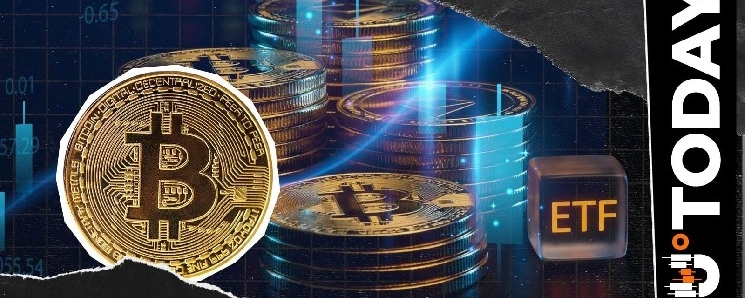
Bitcoin ETF Outflows Recede, $70,000 BTC NextBitcoin ETF outflows are receding, Galaxy Research said in a recent tweet. This is substantiated by Galaxy Research's US spot ETF net flows (30-day rolling) and cumulative total indicator, which saw a reversal after plunging deeply into negative territory.
The receding of Bitcoin ETF outflows is also substantiated by the 'Bitcoin ETF flows by issuer' indicator. According to the chart shared by Galaxy Research, U.S. spot Bitcoin ETF flows by issuer climbed higher from a deeply negative zone reached earlier in the year.
Bitcoin ETF inflows turned positive this week after two months of consistent outflows, marking the first net inflow period in the recent cycle. This shift suggests potential stabilization in institutional Bitcoin demand after a prolonged period of redemptions.
According to SoSoValue data, U.S. spot Bitcoin ETFs recorded total net inflows of $90.44 million on July 10, while U.S. spot Ethereum ETFs recorded total net inflows of $18.43 million on the same day.
Bitcoin is currently trading at $64,100 after recovering from a low of $61,453 on July 8. The next barrier for price to surmount is $65,136, coinciding with the daily MA 50, which once surpassed might open the pathway to the $70,000 psychological level.
The $70,000 level remains significant as it is the upper band of Bitcoin's current range, which analysts say is now the third longest period spent in any $10,000 price band in Bitcoin's history, behind only the $10,000–$20,000 and $20,000–$30,000 bands.
In the options market on Deribit, put skews continue to weaken as Bitcoin's recent price rebound eased downside concerns. Calls at $62,000, $65,000, and $67,000 are among the most-traded instruments, along with the $56,000 put.
The market is currently flashing mixed signals. Bitcoin ETFs still remain in the negative zone despite total net outflows easing. While continuous whale accumulation suggests positivity, a broad-based market bottom is yet to be confirmed.
#MbeyaconsciousComunity
#Notcoin
#btc70k
#gonnarich
#devcripto
Bitcoin ETF Outflows Recede, $70,000 BTC Next
Bitcoin ETF outflows are receding, Galaxy Research said in a recent tweet. This is substantiated by Galaxy Research's US spot ETF net flows (30-day rolling) and cumulative total indicator, which saw a reversal after plunging deeply into negative territory.
The receding of Bitcoin ETF outflows is also substantiated by the 'Bitcoin ETF flows by issuer' indicator. According to the chart shared by Galaxy Research, U.S. spot Bitcoin ETF flows by issuer climbed higher from a deeply negative zone reached earlier in the year.
Bitcoin ETF inflows turned positive this week after two months of consistent outflows, marking the first net inflow period in the recent cycle. This shift suggests potential stabilization in institutional Bitcoin demand after a prolonged period of redemptions.
According to SoSoValue data, U.S. spot Bitcoin ETFs recorded total net inflows of $90.44 million on July 10, while U.S. spot Ethereum ETFs recorded total net inflows of $18.43 million on the same day.
Bitcoin is currently trading at $64,100 after recovering from a low of $61,453 on July 8. The next barrier for price to surmount is $65,136, coinciding with the daily MA 50, which once surpassed might open the pathway to the $70,000 psychological level.
The $70,000 level remains significant as it is the upper band of Bitcoin's current range, which analysts say is now the third longest period spent in any $10,000 price band in Bitcoin's history, behind only the $10,000–$20,000 and $20,000–$30,000 bands.
In the options market on Deribit, put skews continue to weaken as Bitcoin's recent price rebound eased downside concerns. Calls at $62,000, $65,000, and $67,000 are among the most-traded instruments, along with the $56,000 put.
The market is currently flashing mixed signals. Bitcoin ETFs still remain in the negative zone despite total net outflows easing. While continuous whale accumulation suggests positivity, a broad-based market bottom is yet to be confirmed.
#MbeyaconsciousComunity
#Notcoin
#btc70k
#gonnarich
#devcripto
The receding of Bitcoin ETF outflows is also substantiated by the 'Bitcoin ETF flows by issuer' indicator. According to the chart shared by Galaxy Research, U.S. spot Bitcoin ETF flows by issuer climbed higher from a deeply negative zone reached earlier in the year.
Bitcoin ETF inflows turned positive this week after two months of consistent outflows, marking the first net inflow period in the recent cycle. This shift suggests potential stabilization in institutional Bitcoin demand after a prolonged period of redemptions.
According to SoSoValue data, U.S. spot Bitcoin ETFs recorded total net inflows of $90.44 million on July 10, while U.S. spot Ethereum ETFs recorded total net inflows of $18.43 million on the same day.
Bitcoin is currently trading at $64,100 after recovering from a low of $61,453 on July 8. The next barrier for price to surmount is $65,136, coinciding with the daily MA 50, which once surpassed might open the pathway to the $70,000 psychological level.
The $70,000 level remains significant as it is the upper band of Bitcoin's current range, which analysts say is now the third longest period spent in any $10,000 price band in Bitcoin's history, behind only the $10,000–$20,000 and $20,000–$30,000 bands.
In the options market on Deribit, put skews continue to weaken as Bitcoin's recent price rebound eased downside concerns. Calls at $62,000, $65,000, and $67,000 are among the most-traded instruments, along with the $56,000 put.
The market is currently flashing mixed signals. Bitcoin ETFs still remain in the negative zone despite total net outflows easing. While continuous whale accumulation suggests positivity, a broad-based market bottom is yet to be confirmed.
#MbeyaconsciousComunity
#Notcoin
#btc70k
#gonnarich
#devcripto
1
163
ලිපිය
පරිවර්තනය බලන්න
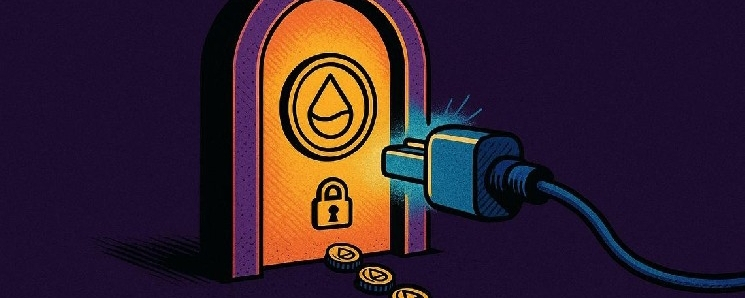
$4.2B Crypto Bank Brings ETH Liquid Staking to Institutions via LidoFor years, institutional investors have looked at Ethereum staking from a distance — attracted by the yields, but held back by the operational complexity and locked liquidity. Anchorage Digital is now directly targeting that gap. The federally chartered crypto bank has integrated Lido, Ethereum’s largest liquid staking protocol, giving institutional clients a compliant, seamless path to $ETH liquid staking without ever leaving its regulated custody environment.
The integration means institutional clients can now connect directly to Lido’s decentralized application from within Anchorage’s platform to mint wstETH by depositing Ether, or redeem it back into $ETH — all under institutional-grade custody and compliance controls. No asset movement to external services required.
That frictionless access matters more than it might first appear. Traditional Ethereum staking has always come with strings attached: long unbonding periods, the operational burden of running validator infrastructure, and capital that sits idle while locked. Lido’s liquid staking model solves this by issuing wstETH in exchange for staked $ETH, letting holders continue earning staking rewards while keeping a fully transferable token in hand. Now that token is accessible inside a regulated US banking environment for the first time at this scale.
Anchorage clients can mint and burn wstETH through the Lido dApp, all within Anchorage’s existing governance and custody framework. Clients retain full oversight of their positions without introducing new counterparties or fragmenting operational workflows — a critical point for compliance-driven allocators who can’t afford fragmented custody chains.
wstETH automatically accrues staking rewards from Ethereum’s proof-of-stake network while remaining fully liquid and transferable. That combination — yield plus liquidity — is exactly what institutional capital needs. It turns a staking position from a locked bet on Ethereum into a productive, flexible asset.
The Lido integration doesn’t stand alone. It slots into a broader strategy at Anchorage Digital to offer a complete suite of on-chain capabilities — staking, liquid staking, restaking, governance, and settlement — all under one regulated platform. The goal is to make advanced DeFi infrastructure genuinely institution-ready, rather than forcing large allocators to piece together services from multiple, unregulated providers.
This is where the strategic significance becomes clear. Institutions haven’t been absent from Ethereum staking because they lacked interest. They’ve been absent because the operational and compliance architecture wasn’t there. By consolidating these services under a federally chartered bank, Anchorage removes the friction that has historically kept large allocators on the sidelines.
The capital efficiency angle is arguably the most compelling part of this integration for professional allocators. wstETH can be used as collateral in lending markets, deployed on decentralized exchanges, or leveraged for cross-chain strategies — all without first unwinding a staking position. Sophisticated investors can generate yield from Ethereum staking while keeping those same assets productive across multiple DeFi protocols simultaneously.
That kind of composability was previously only accessible to crypto-native participants willing to manage self-custody and protocol risk directly. Packaging it inside a regulated custody environment changes the risk profile entirely for institutional compliance teams.
For Lido, the implications run in the other direction too. The protocol’s revenues fell over 20% in 2025 as users withdrew funds and staking yields declined, according to a March announcement from Lido. Gaining a direct institutional distribution channel through a major US-regulated bank could help reverse that trend by bringing in a segment of capital that wasn’t previously accessible to the protocol.
Anchorage Digital was founded in 2017 and is headquartered in San Francisco. It operates under a US federal banking charter and holds additional licenses in Singapore and New York, including a BitLicense — a combination that positions it as one of the most comprehensively licensed crypto custodians in the world.
Anchorage Digital operates under a US federal banking charter and holds a BitLicense in New York, alongside licenses in Singapore. This framework ensures institutional-grade custody and compliance controls for all on-chain services offered on the platform.
Liquid staking removes the core friction of traditional $ETH staking — long unbonding periods, validator operational burdens, and idle capital — while improving capital efficiency. It allows institutions to earn staking yield while keeping assets productive and accessible, making Ethereum staking compatible with institutional operational and compliance requirements.
#PEPE✈
#GoogleDocsMagic
#BuyTheDip
#MbeyaconsciousComunity
#INNOVATION
$4.2B Crypto Bank Brings ETH Liquid Staking to Institutions via Lido
For years, institutional investors have looked at Ethereum staking from a distance — attracted by the yields, but held back by the operational complexity and locked liquidity. Anchorage Digital is now directly targeting that gap. The federally chartered crypto bank has integrated Lido, Ethereum’s largest liquid staking protocol, giving institutional clients a compliant, seamless path to $ETH liquid staking without ever leaving its regulated custody environment.
The integration means institutional clients can now connect directly to Lido’s decentralized application from within Anchorage’s platform to mint wstETH by depositing Ether, or redeem it back into $ETH — all under institutional-grade custody and compliance controls. No asset movement to external services required.
That frictionless access matters more than it might first appear. Traditional Ethereum staking has always come with strings attached: long unbonding periods, the operational burden of running validator infrastructure, and capital that sits idle while locked. Lido’s liquid staking model solves this by issuing wstETH in exchange for staked $ETH, letting holders continue earning staking rewards while keeping a fully transferable token in hand. Now that token is accessible inside a regulated US banking environment for the first time at this scale.
Anchorage clients can mint and burn wstETH through the Lido dApp, all within Anchorage’s existing governance and custody framework. Clients retain full oversight of their positions without introducing new counterparties or fragmenting operational workflows — a critical point for compliance-driven allocators who can’t afford fragmented custody chains.
wstETH automatically accrues staking rewards from Ethereum’s proof-of-stake network while remaining fully liquid and transferable. That combination — yield plus liquidity — is exactly what institutional capital needs. It turns a staking position from a locked bet on Ethereum into a productive, flexible asset.
The Lido integration doesn’t stand alone. It slots into a broader strategy at Anchorage Digital to offer a complete suite of on-chain capabilities — staking, liquid staking, restaking, governance, and settlement — all under one regulated platform. The goal is to make advanced DeFi infrastructure genuinely institution-ready, rather than forcing large allocators to piece together services from multiple, unregulated providers.
This is where the strategic significance becomes clear. Institutions haven’t been absent from Ethereum staking because they lacked interest. They’ve been absent because the operational and compliance architecture wasn’t there. By consolidating these services under a federally chartered bank, Anchorage removes the friction that has historically kept large allocators on the sidelines.
The capital efficiency angle is arguably the most compelling part of this integration for professional allocators. wstETH can be used as collateral in lending markets, deployed on decentralized exchanges, or leveraged for cross-chain strategies — all without first unwinding a staking position. Sophisticated investors can generate yield from Ethereum staking while keeping those same assets productive across multiple DeFi protocols simultaneously.
That kind of composability was previously only accessible to crypto-native participants willing to manage self-custody and protocol risk directly. Packaging it inside a regulated custody environment changes the risk profile entirely for institutional compliance teams.
For Lido, the implications run in the other direction too. The protocol’s revenues fell over 20% in 2025 as users withdrew funds and staking yields declined, according to a March announcement from Lido. Gaining a direct institutional distribution channel through a major US-regulated bank could help reverse that trend by bringing in a segment of capital that wasn’t previously accessible to the protocol.
Anchorage Digital was founded in 2017 and is headquartered in San Francisco. It operates under a US federal banking charter and holds additional licenses in Singapore and New York, including a BitLicense — a combination that positions it as one of the most comprehensively licensed crypto custodians in the world.
Anchorage Digital operates under a US federal banking charter and holds a BitLicense in New York, alongside licenses in Singapore. This framework ensures institutional-grade custody and compliance controls for all on-chain services offered on the platform.
Liquid staking removes the core friction of traditional $ETH staking — long unbonding periods, validator operational burdens, and idle capital — while improving capital efficiency. It allows institutions to earn staking yield while keeping assets productive and accessible, making Ethereum staking compatible with institutional operational and compliance requirements.
#PEPE✈
#GoogleDocsMagic
#BuyTheDip
#MbeyaconsciousComunity
#INNOVATION
The integration means institutional clients can now connect directly to Lido’s decentralized application from within Anchorage’s platform to mint wstETH by depositing Ether, or redeem it back into $ETH — all under institutional-grade custody and compliance controls. No asset movement to external services required.
That frictionless access matters more than it might first appear. Traditional Ethereum staking has always come with strings attached: long unbonding periods, the operational burden of running validator infrastructure, and capital that sits idle while locked. Lido’s liquid staking model solves this by issuing wstETH in exchange for staked $ETH, letting holders continue earning staking rewards while keeping a fully transferable token in hand. Now that token is accessible inside a regulated US banking environment for the first time at this scale.
Anchorage clients can mint and burn wstETH through the Lido dApp, all within Anchorage’s existing governance and custody framework. Clients retain full oversight of their positions without introducing new counterparties or fragmenting operational workflows — a critical point for compliance-driven allocators who can’t afford fragmented custody chains.
wstETH automatically accrues staking rewards from Ethereum’s proof-of-stake network while remaining fully liquid and transferable. That combination — yield plus liquidity — is exactly what institutional capital needs. It turns a staking position from a locked bet on Ethereum into a productive, flexible asset.
The Lido integration doesn’t stand alone. It slots into a broader strategy at Anchorage Digital to offer a complete suite of on-chain capabilities — staking, liquid staking, restaking, governance, and settlement — all under one regulated platform. The goal is to make advanced DeFi infrastructure genuinely institution-ready, rather than forcing large allocators to piece together services from multiple, unregulated providers.
This is where the strategic significance becomes clear. Institutions haven’t been absent from Ethereum staking because they lacked interest. They’ve been absent because the operational and compliance architecture wasn’t there. By consolidating these services under a federally chartered bank, Anchorage removes the friction that has historically kept large allocators on the sidelines.
The capital efficiency angle is arguably the most compelling part of this integration for professional allocators. wstETH can be used as collateral in lending markets, deployed on decentralized exchanges, or leveraged for cross-chain strategies — all without first unwinding a staking position. Sophisticated investors can generate yield from Ethereum staking while keeping those same assets productive across multiple DeFi protocols simultaneously.
That kind of composability was previously only accessible to crypto-native participants willing to manage self-custody and protocol risk directly. Packaging it inside a regulated custody environment changes the risk profile entirely for institutional compliance teams.
For Lido, the implications run in the other direction too. The protocol’s revenues fell over 20% in 2025 as users withdrew funds and staking yields declined, according to a March announcement from Lido. Gaining a direct institutional distribution channel through a major US-regulated bank could help reverse that trend by bringing in a segment of capital that wasn’t previously accessible to the protocol.
Anchorage Digital was founded in 2017 and is headquartered in San Francisco. It operates under a US federal banking charter and holds additional licenses in Singapore and New York, including a BitLicense — a combination that positions it as one of the most comprehensively licensed crypto custodians in the world.
Anchorage Digital operates under a US federal banking charter and holds a BitLicense in New York, alongside licenses in Singapore. This framework ensures institutional-grade custody and compliance controls for all on-chain services offered on the platform.
Liquid staking removes the core friction of traditional $ETH staking — long unbonding periods, validator operational burdens, and idle capital — while improving capital efficiency. It allows institutions to earn staking yield while keeping assets productive and accessible, making Ethereum staking compatible with institutional operational and compliance requirements.
#PEPE✈
#GoogleDocsMagic
#BuyTheDip
#MbeyaconsciousComunity
#INNOVATION
28
පරිවර්තනය බලන්න
LatAm stocks, FX post weekly declines as Mideast talks stall; Peru faces election probeIran's foreign minister visits Islamabad, fueling speculation on renewed peace talks
Peru faces electoral uncertainty as probe targets ex-chief electoral official
Brazil's central bank expected to cut rates next week
LatAm assets broadly headed for weekly losses
April 24 (Reuters) - Currencies and stocks of Latin American economies dipped on Friday with investors awaiting updates on Middle East talks, while also monitoring electoral developments in Peru
Global markets have been fraught with volatility this week as initial hope that a peace deal could be reached between Iran and the U.S. did not materialize, even as the ceasefire between all adversaries was extended.
Iranian Foreign Minister Abbas Araqchi arrived in Islamabad on Friday, the venue for past peace talks with the United States, although there were no clear signs that he would meet with U.S. negotiators there.
Crude prices, a key driver for markets, wavered and were last at $105 a barrel as shipments through the strategic Strait of Hormuz remained thin.
In Latin America, Brazil's real led gains with a 0.4% rise, while Chile's peso firmed 0.2% and the pesos of Colombia and Mexico were steady.
MSCI's broader LatAm currencies index (.MILA00000CUS), opens new tab was on track for weekly declines - its first since the first week of March - as investors flocked to the safe-haven dollar.
A corresponding gauge for equities (.MILA00000PUS), opens new tab was down 0.6% at over two-week lows and set for weekly losses
Peru's former chief electoral official, who resigned this week amid mounting criticism over delays in counting votes from the April 12 general election, is now under investigation as part of a broader probe into alleged electoral irregularities, with police raiding his home to collect evidence.
The sol weakened 0.5% and was on track for its second straight week in the red, as investors weighed what the investigation could mean for the election results now expected in May.
Conservative candidate Keiko Fujimori currently leads, with left‑wing lawmaker Roberto Sanchez and former Lima mayor Rafael Lopez Aliaga in a tight race for second place. A run-off is anticipated in June.
MSCI's index tracking Peruvian equities (.MIPE00000PUS), opens new tab was little changed on Friday and was set for its second straight week of losses, while international bonds maturing next year were on track for their third straight week of declines.
We expect the U.S. to continue strengthening its ties in Latin America to bolster its geopolitical influence," said Gillian Edgeworth, fixed-income portfolio manager at Wellington Management, while also adding that some countries in the region could benefit from higher commodity prices due to the Middle East conflict.
Meanwhile, data showed that Mexico's economic activity expanded slightly in February but missed expectations, extending its rough patch since the start of the year.
Uncertainty prevails over the central bank's next policy move alongside the outcome of United States-Mexico-Canada Agreement negotiations expected to start next month.
There is progress in the review, but the process is unlikely to be smooth. Recent headlines suggest Mexico will continue facing unilateral tariffs in the auto, steel, and aluminum industries despite reaching a deal," Citigroup economists said in a note
The country's equities index (.MXX), opens new tab gained 0.9% on Friday, while benchmarks in Chile (.SPIPSA), opens new tab and Argentina (.MERV), opens new tab were up 1.6% and 0.3%, respectively
Meanwhile, Brazil's finance minister told Reuters that the country's planned critical mineral rules do not involve fresh tax breaks. He added that critical minerals would be a priority in a May or June auction for the Eco Invest program, which offers blended finance to lure foreign investment.
A key event next week will be an interest rate decision in Brazil, with economists projecting a cut by a quarter of a percentage point. The Bovespa index (.BVSP), opens new tab slipped 0.5% and is on track for weekly losses
#LISTAAirdrop
#KEEP_SUPPORT
#VeChainNodeMarketplace
#XRPRealityCheck
#MbeyaconsciousComunity
LatAm stocks, FX post weekly declines as Mideast talks stall; Peru faces election probe
Iran's foreign minister visits Islamabad, fueling speculation on renewed peace talks
Peru faces electoral uncertainty as probe targets ex-chief electoral official
Brazil's central bank expected to cut rates next week
LatAm assets broadly headed for weekly losses
April 24 (Reuters) - Currencies and stocks of Latin American economies dipped on Friday with investors awaiting updates on Middle East talks, while also monitoring electoral developments in Peru
Global markets have been fraught with volatility this week as initial hope that a peace deal could be reached between Iran and the U.S. did not materialize, even as the ceasefire between all adversaries was extended.
Iranian Foreign Minister Abbas Araqchi arrived in Islamabad on Friday, the venue for past peace talks with the United States, although there were no clear signs that he would meet with U.S. negotiators there.
Crude prices, a key driver for markets, wavered and were last at $105 a barrel as shipments through the strategic Strait of Hormuz remained thin.
In Latin America, Brazil's real led gains with a 0.4% rise, while Chile's peso firmed 0.2% and the pesos of Colombia and Mexico were steady.
MSCI's broader LatAm currencies index (.MILA00000CUS), opens new tab was on track for weekly declines - its first since the first week of March - as investors flocked to the safe-haven dollar.
A corresponding gauge for equities (.MILA00000PUS), opens new tab was down 0.6% at over two-week lows and set for weekly losses
Peru's former chief electoral official, who resigned this week amid mounting criticism over delays in counting votes from the April 12 general election, is now under investigation as part of a broader probe into alleged electoral irregularities, with police raiding his home to collect evidence.
The sol weakened 0.5% and was on track for its second straight week in the red, as investors weighed what the investigation could mean for the election results now expected in May.
Conservative candidate Keiko Fujimori currently leads, with left‑wing lawmaker Roberto Sanchez and former Lima mayor Rafael Lopez Aliaga in a tight race for second place. A run-off is anticipated in June.
MSCI's index tracking Peruvian equities (.MIPE00000PUS), opens new tab was little changed on Friday and was set for its second straight week of losses, while international bonds maturing next year were on track for their third straight week of declines.
We expect the U.S. to continue strengthening its ties in Latin America to bolster its geopolitical influence," said Gillian Edgeworth, fixed-income portfolio manager at Wellington Management, while also adding that some countries in the region could benefit from higher commodity prices due to the Middle East conflict.
Meanwhile, data showed that Mexico's economic activity expanded slightly in February but missed expectations, extending its rough patch since the start of the year.
Uncertainty prevails over the central bank's next policy move alongside the outcome of United States-Mexico-Canada Agreement negotiations expected to start next month.
There is progress in the review, but the process is unlikely to be smooth. Recent headlines suggest Mexico will continue facing unilateral tariffs in the auto, steel, and aluminum industries despite reaching a deal," Citigroup economists said in a note
The country's equities index (.MXX), opens new tab gained 0.9% on Friday, while benchmarks in Chile (.SPIPSA), opens new tab and Argentina (.MERV), opens new tab were up 1.6% and 0.3%, respectively
Meanwhile, Brazil's finance minister told Reuters that the country's planned critical mineral rules do not involve fresh tax breaks. He added that critical minerals would be a priority in a May or June auction for the Eco Invest program, which offers blended finance to lure foreign investment.
A key event next week will be an interest rate decision in Brazil, with economists projecting a cut by a quarter of a percentage point. The Bovespa index (.BVSP), opens new tab slipped 0.5% and is on track for weekly losses
#LISTAAirdrop
#KEEP_SUPPORT
#VeChainNodeMarketplace
#XRPRealityCheck
#MbeyaconsciousComunity
Peru faces electoral uncertainty as probe targets ex-chief electoral official
Brazil's central bank expected to cut rates next week
LatAm assets broadly headed for weekly losses
April 24 (Reuters) - Currencies and stocks of Latin American economies dipped on Friday with investors awaiting updates on Middle East talks, while also monitoring electoral developments in Peru
Global markets have been fraught with volatility this week as initial hope that a peace deal could be reached between Iran and the U.S. did not materialize, even as the ceasefire between all adversaries was extended.
Iranian Foreign Minister Abbas Araqchi arrived in Islamabad on Friday, the venue for past peace talks with the United States, although there were no clear signs that he would meet with U.S. negotiators there.
Crude prices, a key driver for markets, wavered and were last at $105 a barrel as shipments through the strategic Strait of Hormuz remained thin.
In Latin America, Brazil's real led gains with a 0.4% rise, while Chile's peso firmed 0.2% and the pesos of Colombia and Mexico were steady.
MSCI's broader LatAm currencies index (.MILA00000CUS), opens new tab was on track for weekly declines - its first since the first week of March - as investors flocked to the safe-haven dollar.
A corresponding gauge for equities (.MILA00000PUS), opens new tab was down 0.6% at over two-week lows and set for weekly losses
Peru's former chief electoral official, who resigned this week amid mounting criticism over delays in counting votes from the April 12 general election, is now under investigation as part of a broader probe into alleged electoral irregularities, with police raiding his home to collect evidence.
The sol weakened 0.5% and was on track for its second straight week in the red, as investors weighed what the investigation could mean for the election results now expected in May.
Conservative candidate Keiko Fujimori currently leads, with left‑wing lawmaker Roberto Sanchez and former Lima mayor Rafael Lopez Aliaga in a tight race for second place. A run-off is anticipated in June.
MSCI's index tracking Peruvian equities (.MIPE00000PUS), opens new tab was little changed on Friday and was set for its second straight week of losses, while international bonds maturing next year were on track for their third straight week of declines.
We expect the U.S. to continue strengthening its ties in Latin America to bolster its geopolitical influence," said Gillian Edgeworth, fixed-income portfolio manager at Wellington Management, while also adding that some countries in the region could benefit from higher commodity prices due to the Middle East conflict.
Meanwhile, data showed that Mexico's economic activity expanded slightly in February but missed expectations, extending its rough patch since the start of the year.
Uncertainty prevails over the central bank's next policy move alongside the outcome of United States-Mexico-Canada Agreement negotiations expected to start next month.
There is progress in the review, but the process is unlikely to be smooth. Recent headlines suggest Mexico will continue facing unilateral tariffs in the auto, steel, and aluminum industries despite reaching a deal," Citigroup economists said in a note
The country's equities index (.MXX), opens new tab gained 0.9% on Friday, while benchmarks in Chile (.SPIPSA), opens new tab and Argentina (.MERV), opens new tab were up 1.6% and 0.3%, respectively
Meanwhile, Brazil's finance minister told Reuters that the country's planned critical mineral rules do not involve fresh tax breaks. He added that critical minerals would be a priority in a May or June auction for the Eco Invest program, which offers blended finance to lure foreign investment.
A key event next week will be an interest rate decision in Brazil, with economists projecting a cut by a quarter of a percentage point. The Bovespa index (.BVSP), opens new tab slipped 0.5% and is on track for weekly losses
#LISTAAirdrop
#KEEP_SUPPORT
#VeChainNodeMarketplace
#XRPRealityCheck
#MbeyaconsciousComunity
113
පරිවර්තනය බලන්න
The $145 billion math: Why bitcoin’s quantum threat is manageable, not existentialQuantum fears focus on vulnerable early wallets, but market data suggests even a worst case sell-off would be large, not catastrophic.
Quantum doomsayers warn that this would unleash a flood of supply and crash the market. The numbers suggest otherwise.
The threat of quantum computing is not in question.
Roughly 1.7 million BTC sit in Satoshi-era addresses that could be vulnerable under such a scenario. That is about $145 billion at current prices in potential sell pressure, which sounds catastrophic, but is in fact manageable.
During bull markets, long-term holders (investors that have held bitcoin for at least 155 days) routinely distribute between 10,000 and 30,000 BTC per day. At that pace, the entire Satoshi-era supply equates to roughly two to three months of typical profit taking. In the most recent bear market, more than 2.3 million BTC changed hands in a single quarter, exceeding the full quantum “target,” with no systemic collapse.
In addition, monthly exchange inflows approach 850,000 BTC. Derivatives markets cycle through notional volumes equivalent to the entire Satoshi stash every few days. What appears massive in isolation becomes relatively ordinary when set against bitcoin’s existing liquidity and turnover
A sudden, concentrated release would still matter. It would likely drive volatility and could trigger a prolonged downturn, according to Check. But even that scenario assumes economically irrational behavior. Any actor capable of accessing such a trove would be incentivized to distribute gradually, likely hedging through derivatives to minimize slippage and maximize returns.
Bitcoin markets routinely absorb supply on the same order of magnitude as the P2PK era coins. The timeframe is measured in months, not years.
The real issue is not mechanical sell pressure. It is governance. The bigger issue is potentially freezing the Satoshi coins, through BIP-361, then letting everything play out as it should.
#xmucan
#satoshiNakamato
#ETHETFsApproved
#GoogleDocsMagic
#MbeyaconsciousComunity
The $145 billion math: Why bitcoin’s quantum threat is manageable, not existential
Quantum fears focus on vulnerable early wallets, but market data suggests even a worst case sell-off would be large, not catastrophic.
Quantum doomsayers warn that this would unleash a flood of supply and crash the market. The numbers suggest otherwise.
The threat of quantum computing is not in question.
Roughly 1.7 million BTC sit in Satoshi-era addresses that could be vulnerable under such a scenario. That is about $145 billion at current prices in potential sell pressure, which sounds catastrophic, but is in fact manageable.
During bull markets, long-term holders (investors that have held bitcoin for at least 155 days) routinely distribute between 10,000 and 30,000 BTC per day. At that pace, the entire Satoshi-era supply equates to roughly two to three months of typical profit taking. In the most recent bear market, more than 2.3 million BTC changed hands in a single quarter, exceeding the full quantum “target,” with no systemic collapse.
In addition, monthly exchange inflows approach 850,000 BTC. Derivatives markets cycle through notional volumes equivalent to the entire Satoshi stash every few days. What appears massive in isolation becomes relatively ordinary when set against bitcoin’s existing liquidity and turnover
A sudden, concentrated release would still matter. It would likely drive volatility and could trigger a prolonged downturn, according to Check. But even that scenario assumes economically irrational behavior. Any actor capable of accessing such a trove would be incentivized to distribute gradually, likely hedging through derivatives to minimize slippage and maximize returns.
Bitcoin markets routinely absorb supply on the same order of magnitude as the P2PK era coins. The timeframe is measured in months, not years.
The real issue is not mechanical sell pressure. It is governance. The bigger issue is potentially freezing the Satoshi coins, through BIP-361, then letting everything play out as it should.
#xmucan
#satoshiNakamato
#ETHETFsApproved
#GoogleDocsMagic
#MbeyaconsciousComunity
Quantum doomsayers warn that this would unleash a flood of supply and crash the market. The numbers suggest otherwise.
The threat of quantum computing is not in question.
Roughly 1.7 million BTC sit in Satoshi-era addresses that could be vulnerable under such a scenario. That is about $145 billion at current prices in potential sell pressure, which sounds catastrophic, but is in fact manageable.
During bull markets, long-term holders (investors that have held bitcoin for at least 155 days) routinely distribute between 10,000 and 30,000 BTC per day. At that pace, the entire Satoshi-era supply equates to roughly two to three months of typical profit taking. In the most recent bear market, more than 2.3 million BTC changed hands in a single quarter, exceeding the full quantum “target,” with no systemic collapse.
In addition, monthly exchange inflows approach 850,000 BTC. Derivatives markets cycle through notional volumes equivalent to the entire Satoshi stash every few days. What appears massive in isolation becomes relatively ordinary when set against bitcoin’s existing liquidity and turnover
A sudden, concentrated release would still matter. It would likely drive volatility and could trigger a prolonged downturn, according to Check. But even that scenario assumes economically irrational behavior. Any actor capable of accessing such a trove would be incentivized to distribute gradually, likely hedging through derivatives to minimize slippage and maximize returns.
Bitcoin markets routinely absorb supply on the same order of magnitude as the P2PK era coins. The timeframe is measured in months, not years.
The real issue is not mechanical sell pressure. It is governance. The bigger issue is potentially freezing the Satoshi coins, through BIP-361, then letting everything play out as it should.
#xmucan
#satoshiNakamato
#ETHETFsApproved
#GoogleDocsMagic
#MbeyaconsciousComunity
30

ලිපිය
HYPE- Hyperliquid Surges by 11% on SpaceX Perp CatalystHyperliquid (HYPE) හි මිල 11.44% කින් ඉහළ ගොස් $75.78 දක්වා පැමිණ ඇත; පුළුල් වෙළඳපොළට වඩා සැලකිය යුතු ලෙස ඉහළ ක්රියාකාරිත්වයක් පෙන්නුම් කරයි. මෙයට හේතු වී ඇත්තේ ශක්තිමත් ආයතනික ETF ආදාන සහ එහි වේදිකාවේ SpaceX pre-IPO perpetual කොන්ත්රාත්ට් ගනුදෙනු වර්ධනය වීමයි.
ස්පොට් ETF ඉල්ලුම සහ SpaceX perp උද්ඝෝෂණය—$17M ඉක්මවූ ශුද්ධ ETF ආදාන සහ SpaceX futures පරිමාව $1.2 billion වීම නිසා වේදිකා ක්රියාකාරිත්වය සහ ටෝකන් ඉල්ලුම ඉහළ ගොස් ඇත.
එම රැලියට පැහැදිලි උත්ප්රේරක දෙකක් මඟින් ආධාර ලැබේ. පළමුව, HYPE සඳහා නියාමනය කළ ස්පොට් ETF-වලින් පසුගිය පැය 24 තුළ ශුද්ධ ආදාන $17M ඉක්මවා ගොස්, සමස්ත ශුද්ධ ආදාන $171 milion දක්වා ඉහළ ගොස් ඇති අතර එය ශක්තිමත් ව්යුහාත්මක ඉල්ලුමක් පෙන්නුම් කරයි.
HYPE- Hyperliquid Surges by 11% on SpaceX Perp Catalyst
Hyperliquid (HYPE) හි මිල 11.44% කින් ඉහළ ගොස් $75.78 දක්වා පැමිණ ඇත; පුළුල් වෙළඳපොළට වඩා සැලකිය යුතු ලෙස ඉහළ ක්රියාකාරිත්වයක් පෙන්නුම් කරයි. මෙයට හේතු වී ඇත්තේ ශක්තිමත් ආයතනික ETF ආදාන සහ එහි වේදිකාවේ SpaceX pre-IPO perpetual කොන්ත්රාත්ට් ගනුදෙනු වර්ධනය වීමයි.
ස්පොට් ETF ඉල්ලුම සහ SpaceX perp උද්ඝෝෂණය—$17M ඉක්මවූ ශුද්ධ ETF ආදාන සහ SpaceX futures පරිමාව $1.2 billion වීම නිසා වේදිකා ක්රියාකාරිත්වය සහ ටෝකන් ඉල්ලුම ඉහළ ගොස් ඇත.
එම රැලියට පැහැදිලි උත්ප්රේරක දෙකක් මඟින් ආධාර ලැබේ. පළමුව, HYPE සඳහා නියාමනය කළ ස්පොට් ETF-වලින් පසුගිය පැය 24 තුළ ශුද්ධ ආදාන $17M ඉක්මවා ගොස්, සමස්ත ශුද්ධ ආදාන $171 milion දක්වා ඉහළ ගොස් ඇති අතර එය ශක්තිමත් ව්යුහාත්මක ඉල්ලුමක් පෙන්නුම් කරයි.
ස්පොට් ETF ඉල්ලුම සහ SpaceX perp උද්ඝෝෂණය—$17M ඉක්මවූ ශුද්ධ ETF ආදාන සහ SpaceX futures පරිමාව $1.2 billion වීම නිසා වේදිකා ක්රියාකාරිත්වය සහ ටෝකන් ඉල්ලුම ඉහළ ගොස් ඇත.
එම රැලියට පැහැදිලි උත්ප්රේරක දෙකක් මඟින් ආධාර ලැබේ. පළමුව, HYPE සඳහා නියාමනය කළ ස්පොට් ETF-වලින් පසුගිය පැය 24 තුළ ශුද්ධ ආදාන $17M ඉක්මවා ගොස්, සමස්ත ශුද්ධ ආදාන $171 milion දක්වා ඉහළ ගොස් ඇති අතර එය ශක්තිමත් ව්යුහාත්මක ඉල්ලුමක් පෙන්නුම් කරයි.
481
ලිපිය
පරිවර්තනය බලන්න
Cardano Price Prediction: Whales Buy 30M ADA As The Trendline That Killed Two Rallies Looms AgainCardano trades at $0.1738 on July 23, pressing against the descending trendline that rejected price in both June and mid-July, as whales quietly accumulated 30 million $ADA in a single week ahead of what may be the most important breakout test of the recovery.
The Bollinger upper band at $0.1881 is the first target if the trendline breaks, followed by the 50-day EMA at $0.1769 sitting just above current price. The 100-day EMA at $0.2033 is the next meaningful ceiling beyond that, and the 200-day at $0.2707 marks the longer-term recovery target. The lower Bollinger Band at $0.1526 and the June support zone near $0.1500 define the floor. LuckSide Crypto noted $ADA has bounced off the 20-day EMA both days it has retested it this week, which keeps the recovery structure intact as long as that level holds.
Ali Charts flagged that more than 30 million $ADA were accumulated by whale wallets over the past seven days, positioning ahead of what appears to be a critical breakout test. The accumulation mirrors what is happening at the Bitcoin level, where long-term holder supply just hit a new all-time high.
LuckSide Crypto connected that signal to historical cycle bottoms, noting the same pattern appeared in late 2022, late 2019, and late 2015 before each of Bitcoin’s major recoveries. If history holds, current price levels across crypto are an accumulation zone rather than a continuation of the bear trend.
Two macro variables are worth watching through the back half of the week. Brent crude is rising after the US confirmed 11 straight days of strikes on Iran, though CENTCOM stated the Strait of Hormuz remains open for commercial transit.
Oil markets appear skeptical of that claim given the price action, and any escalation would add risk-off pressure to crypto broadly. Separately, Japan’s central bank officials signaled openness to faster rate hikes as yen weakness fuels domestic inflation. Bank of Japan rate hikes have historically correlated with crypto selloffs, making the timing of any such move a variable worth monitoring heading into the FOMC meeting on July 29.
#LUNCDream
#MbeyaconsciousComunity
#ValentinesDay2024
#dogwifhat
#GoogleDocsMagic
Cardano Price Prediction: Whales Buy 30M ADA As The Trendline That Killed Two Rallies Looms Again
Cardano trades at $0.1738 on July 23, pressing against the descending trendline that rejected price in both June and mid-July, as whales quietly accumulated 30 million $ADA in a single week ahead of what may be the most important breakout test of the recovery.
The Bollinger upper band at $0.1881 is the first target if the trendline breaks, followed by the 50-day EMA at $0.1769 sitting just above current price. The 100-day EMA at $0.2033 is the next meaningful ceiling beyond that, and the 200-day at $0.2707 marks the longer-term recovery target. The lower Bollinger Band at $0.1526 and the June support zone near $0.1500 define the floor. LuckSide Crypto noted $ADA has bounced off the 20-day EMA both days it has retested it this week, which keeps the recovery structure intact as long as that level holds.
Ali Charts flagged that more than 30 million $ADA were accumulated by whale wallets over the past seven days, positioning ahead of what appears to be a critical breakout test. The accumulation mirrors what is happening at the Bitcoin level, where long-term holder supply just hit a new all-time high.
LuckSide Crypto connected that signal to historical cycle bottoms, noting the same pattern appeared in late 2022, late 2019, and late 2015 before each of Bitcoin’s major recoveries. If history holds, current price levels across crypto are an accumulation zone rather than a continuation of the bear trend.
Two macro variables are worth watching through the back half of the week. Brent crude is rising after the US confirmed 11 straight days of strikes on Iran, though CENTCOM stated the Strait of Hormuz remains open for commercial transit.
Oil markets appear skeptical of that claim given the price action, and any escalation would add risk-off pressure to crypto broadly. Separately, Japan’s central bank officials signaled openness to faster rate hikes as yen weakness fuels domestic inflation. Bank of Japan rate hikes have historically correlated with crypto selloffs, making the timing of any such move a variable worth monitoring heading into the FOMC meeting on July 29.
#LUNCDream
#MbeyaconsciousComunity
#ValentinesDay2024
#dogwifhat
#GoogleDocsMagic
The Bollinger upper band at $0.1881 is the first target if the trendline breaks, followed by the 50-day EMA at $0.1769 sitting just above current price. The 100-day EMA at $0.2033 is the next meaningful ceiling beyond that, and the 200-day at $0.2707 marks the longer-term recovery target. The lower Bollinger Band at $0.1526 and the June support zone near $0.1500 define the floor. LuckSide Crypto noted $ADA has bounced off the 20-day EMA both days it has retested it this week, which keeps the recovery structure intact as long as that level holds.
Ali Charts flagged that more than 30 million $ADA were accumulated by whale wallets over the past seven days, positioning ahead of what appears to be a critical breakout test. The accumulation mirrors what is happening at the Bitcoin level, where long-term holder supply just hit a new all-time high.
LuckSide Crypto connected that signal to historical cycle bottoms, noting the same pattern appeared in late 2022, late 2019, and late 2015 before each of Bitcoin’s major recoveries. If history holds, current price levels across crypto are an accumulation zone rather than a continuation of the bear trend.
Two macro variables are worth watching through the back half of the week. Brent crude is rising after the US confirmed 11 straight days of strikes on Iran, though CENTCOM stated the Strait of Hormuz remains open for commercial transit.
Oil markets appear skeptical of that claim given the price action, and any escalation would add risk-off pressure to crypto broadly. Separately, Japan’s central bank officials signaled openness to faster rate hikes as yen weakness fuels domestic inflation. Bank of Japan rate hikes have historically correlated with crypto selloffs, making the timing of any such move a variable worth monitoring heading into the FOMC meeting on July 29.
#LUNCDream
#MbeyaconsciousComunity
#ValentinesDay2024
#dogwifhat
#GoogleDocsMagic
1
564


පරිවර්තනය බලන්න
He Stole $600 Million. Then Returned Every Penny. The Reason Why Will Mess With Your Head.
August 2021. Poly Network opened their systems one morning and everything was gone.
$600 million. Drained across three blockchains simultaneously overnight. Ethereum. Binance. Polygon. All hit at exactly the same time by one person who knew exactly what they were doing.
Largest DeFi hack in history. Just like that.
The team posted a desperate public message begging the hacker to get in touch. Nobody expected a response. These things never end well.
Then he wrote back.
Not through lawyers. Not anonymously. He hid messages inside blockchain transactions for the entire world to read in real time.
Said he found the vulnerability by accident. Said he did it for fun. Said he never actually wanted the money.
Then said he was giving it all back.
Every single dollar. Returned over the following days without negotiation without lawyers without anything.
His real reason was actually kind of genius when you think about it. Keeping $600 million was impossible. Every government every exchange every blockchain analyst on earth would have been hunting that wallet forever. The money was too hot to ever spend.
So he gave it back and walked away clean.
Poly Network then did something nobody saw coming.
Thanked him publicly. Offered him a full time job as their chief security advisor. Then handed him $500,000 as a reward.
The man who committed the biggest DeFi robbery in history ended up with a career and half a million dollars.
For returning what he already had.
Was he a genius hacker or the most honest thief who ever lived? 👇
$BNB
{spot}(BNBUSDT)
$XRP
{spot}(XRPUSDT)
$ETH
{spot}(ETHUSDT)
#MbeyaconsciousComunity
He Stole $600 Million. Then Returned Every Penny. The Reason Why Will Mess With Your Head.
August 2021. Poly Network opened their systems one morning and everything was gone.
$600 million. Drained across three blockchains simultaneously overnight. Ethereum. Binance. Polygon. All hit at exactly the same time by one person who knew exactly what they were doing.
Largest DeFi hack in history. Just like that.
The team posted a desperate public message begging the hacker to get in touch. Nobody expected a response. These things never end well.
Then he wrote back.
Not through lawyers. Not anonymously. He hid messages inside blockchain transactions for the entire world to read in real time.
Said he found the vulnerability by accident. Said he did it for fun. Said he never actually wanted the money.
Then said he was giving it all back.
Every single dollar. Returned over the following days without negotiation without lawyers without anything.
His real reason was actually kind of genius when you think about it. Keeping $600 million was impossible. Every government every exchange every blockchain analyst on earth would have been hunting that wallet forever. The money was too hot to ever spend.
So he gave it back and walked away clean.
Poly Network then did something nobody saw coming.
Thanked him publicly. Offered him a full time job as their chief security advisor. Then handed him $500,000 as a reward.
The man who committed the biggest DeFi robbery in history ended up with a career and half a million dollars.
For returning what he already had.
Was he a genius hacker or the most honest thief who ever lived? 👇
$BNB
$XRP
$ETH
#MbeyaconsciousComunity
August 2021. Poly Network opened their systems one morning and everything was gone.
$600 million. Drained across three blockchains simultaneously overnight. Ethereum. Binance. Polygon. All hit at exactly the same time by one person who knew exactly what they were doing.
Largest DeFi hack in history. Just like that.
The team posted a desperate public message begging the hacker to get in touch. Nobody expected a response. These things never end well.
Then he wrote back.
Not through lawyers. Not anonymously. He hid messages inside blockchain transactions for the entire world to read in real time.
Said he found the vulnerability by accident. Said he did it for fun. Said he never actually wanted the money.
Then said he was giving it all back.
Every single dollar. Returned over the following days without negotiation without lawyers without anything.
His real reason was actually kind of genius when you think about it. Keeping $600 million was impossible. Every government every exchange every blockchain analyst on earth would have been hunting that wallet forever. The money was too hot to ever spend.
So he gave it back and walked away clean.
Poly Network then did something nobody saw coming.
Thanked him publicly. Offered him a full time job as their chief security advisor. Then handed him $500,000 as a reward.
The man who committed the biggest DeFi robbery in history ended up with a career and half a million dollars.
For returning what he already had.
Was he a genius hacker or the most honest thief who ever lived? 👇
$BNB
$XRP
$ETH
#MbeyaconsciousComunity

2
1
19
3.4k

ලිපිය
HYPE මිල $60ට පහළින්ම පවතී: නැවත ප්රකෘතියට දැනටමත් එහි වාසිය නැති වීද?අවසන් පැය 24 තුළ Hyperliquid හි $HYPE පමණක් 1%ට අඩුවෙන් ඉහළ ගොස් ඇති අතර ප්රධාන $60 ආධාර මට්ටමට පහළින්ම පවතී.
සුළු සහ ආයතනික ඉල්ලුම මන්දගාමීව පවතින අතර, දැනටමත් ඉදිරි කාලයේදී වලසුන් $54 ආධාර මට්ටම ඉලක්ක කරගෙන සිටී.
$HYPE/USD පැය 4 චිත්රය බෙයරිෂ් ලෙසම පවතින අතර Hyperliquid විසින් තීරණාත්මක උදාවන නැගී එන ආධාර ට්රෙන්ඩ්ලයින් එක බිඳ දැමීමෙන් පසු $60.00 මට්ටමට පහළින්ම පවතී; එමෙන්ම එය කාර්යක්ෂම (efficient) ලෙස පෙනේ.
මෙම ක්රියාව බෙයරිෂ් තාක්ෂණික දෘෂ්ටිය ශක්තිමත් කර ඇති අතර, වෙළඳපොළෙහි පාලනය විකුණන්නන් තදින්ම අල්ලාගෙන සිටින බවට එය යෝජනා කරයි.
මෙම ටෝකනය දිගුකාලීන දින 200 Exponential Moving Average (EMA)ට ඉහළින්ම වෙළඳාම් කරගෙන සිටියද, මෑත මිල ක්රියාකාරකම්වලින් පෙන්නුම් කරන්නේ බුලිෂ් ගම්යතාවය බෙහෙවින් දුර්වල වී ඇති බවයි.
HYPE මිල $60ට පහළින්ම පවතී: නැවත ප්රකෘතියට දැනටමත් එහි වාසිය නැති වීද?
අවසන් පැය 24 තුළ Hyperliquid හි $HYPE පමණක් 1%ට අඩුවෙන් ඉහළ ගොස් ඇති අතර ප්රධාන $60 ආධාර මට්ටමට පහළින්ම පවතී.
සුළු සහ ආයතනික ඉල්ලුම මන්දගාමීව පවතින අතර, දැනටමත් ඉදිරි කාලයේදී වලසුන් $54 ආධාර මට්ටම ඉලක්ක කරගෙන සිටී.
$HYPE/USD පැය 4 චිත්රය බෙයරිෂ් ලෙසම පවතින අතර Hyperliquid විසින් තීරණාත්මක උදාවන නැගී එන ආධාර ට්රෙන්ඩ්ලයින් එක බිඳ දැමීමෙන් පසු $60.00 මට්ටමට පහළින්ම පවතී; එමෙන්ම එය කාර්යක්ෂම (efficient) ලෙස පෙනේ.
මෙම ක්රියාව බෙයරිෂ් තාක්ෂණික දෘෂ්ටිය ශක්තිමත් කර ඇති අතර, වෙළඳපොළෙහි පාලනය විකුණන්නන් තදින්ම අල්ලාගෙන සිටින බවට එය යෝජනා කරයි.
මෙම ටෝකනය දිගුකාලීන දින 200 Exponential Moving Average (EMA)ට ඉහළින්ම වෙළඳාම් කරගෙන සිටියද, මෑත මිල ක්රියාකාරකම්වලින් පෙන්නුම් කරන්නේ බුලිෂ් ගම්යතාවය බෙහෙවින් දුර්වල වී ඇති බවයි.
සුළු සහ ආයතනික ඉල්ලුම මන්දගාමීව පවතින අතර, දැනටමත් ඉදිරි කාලයේදී වලසුන් $54 ආධාර මට්ටම ඉලක්ක කරගෙන සිටී.
$HYPE/USD පැය 4 චිත්රය බෙයරිෂ් ලෙසම පවතින අතර Hyperliquid විසින් තීරණාත්මක උදාවන නැගී එන ආධාර ට්රෙන්ඩ්ලයින් එක බිඳ දැමීමෙන් පසු $60.00 මට්ටමට පහළින්ම පවතී; එමෙන්ම එය කාර්යක්ෂම (efficient) ලෙස පෙනේ.
මෙම ක්රියාව බෙයරිෂ් තාක්ෂණික දෘෂ්ටිය ශක්තිමත් කර ඇති අතර, වෙළඳපොළෙහි පාලනය විකුණන්නන් තදින්ම අල්ලාගෙන සිටින බවට එය යෝජනා කරයි.
මෙම ටෝකනය දිගුකාලීන දින 200 Exponential Moving Average (EMA)ට ඉහළින්ම වෙළඳාම් කරගෙන සිටියද, මෑත මිල ක්රියාකාරකම්වලින් පෙන්නුම් කරන්නේ බුලිෂ් ගම්යතාවය බෙහෙවින් දුර්වල වී ඇති බවයි.
501
ලිපිය
පරිවර්තනය බලන්න
Raydium Launches Permissioned AMMs for KYC-Gated Tokenized AssetsRaydium has launched Permissioned AMMs, allowing issuers to create KYC-gated tokenized assets on the Solana blockchain. This significant development was highlighted by a recent tweet from SolanaFloor, which also noted Superstate as the first partner to integrate this infrastructure for tokenized equities. You can find more details in the original tweet here.
The broader crypto market continues to exhibit mixed signals, but Raydium’s latest announcement stands out as a notable advancement in decentralized finance. By launching Permissioned AMMs, Raydium aims to facilitate compliant on-chain secondary markets for tokenized assets. This move is particularly relevant as it aligns with increasing regulatory scrutiny in the crypto space, providing a framework for issuers to operate within legal boundaries. The integration of Superstate highlights the potential for collaborative efforts in creating a robust ecosystem for tokenized equities.
Currently, the market does not reflect specific trading volumes or prices for Raydium, as it focuses on the implications of this announcement rather than immediate price action. The introduction of KYC compliance in AMM operations may attract institutional interest, further supporting the Solana ecosystem’s growth. As developments unfold, market participants will be keen to monitor how this integration impacts trading dynamics and user engagement on the platform.
Raydium operates within the Solana ecosystem, which has gained increasing recognition for its speed and scalability. The launch of Permissioned AMMs comes at a time when the demand for compliant tokenized assets is rising, especially following recent regulatory discussions. This initiative aims to build trust and transparency within the crypto market, a critical factor for institutional adoption.
Traders are likely to keep a close watch on how Raydium’s Permissioned AMMs perform in attracting new issuers and users. The success of this initiative could pave the way for further developments in compliant tokenization, potentially influencing the broader DeFi landscape. Additionally, the response from the market regarding this partnership with Superstate may reveal insights into the appetite for KYC-compliant solutions in decentralized finance.
#SniperStrategy
#HODLStrategy
#MbeyaconsciousComunity
#Write2Earrn
#Kriptocutrader
Raydium Launches Permissioned AMMs for KYC-Gated Tokenized Assets
Raydium has launched Permissioned AMMs, allowing issuers to create KYC-gated tokenized assets on the Solana blockchain. This significant development was highlighted by a recent tweet from SolanaFloor, which also noted Superstate as the first partner to integrate this infrastructure for tokenized equities. You can find more details in the original tweet here.
The broader crypto market continues to exhibit mixed signals, but Raydium’s latest announcement stands out as a notable advancement in decentralized finance. By launching Permissioned AMMs, Raydium aims to facilitate compliant on-chain secondary markets for tokenized assets. This move is particularly relevant as it aligns with increasing regulatory scrutiny in the crypto space, providing a framework for issuers to operate within legal boundaries. The integration of Superstate highlights the potential for collaborative efforts in creating a robust ecosystem for tokenized equities.
Currently, the market does not reflect specific trading volumes or prices for Raydium, as it focuses on the implications of this announcement rather than immediate price action. The introduction of KYC compliance in AMM operations may attract institutional interest, further supporting the Solana ecosystem’s growth. As developments unfold, market participants will be keen to monitor how this integration impacts trading dynamics and user engagement on the platform.
Raydium operates within the Solana ecosystem, which has gained increasing recognition for its speed and scalability. The launch of Permissioned AMMs comes at a time when the demand for compliant tokenized assets is rising, especially following recent regulatory discussions. This initiative aims to build trust and transparency within the crypto market, a critical factor for institutional adoption.
Traders are likely to keep a close watch on how Raydium’s Permissioned AMMs perform in attracting new issuers and users. The success of this initiative could pave the way for further developments in compliant tokenization, potentially influencing the broader DeFi landscape. Additionally, the response from the market regarding this partnership with Superstate may reveal insights into the appetite for KYC-compliant solutions in decentralized finance.
#SniperStrategy
#HODLStrategy
#MbeyaconsciousComunity
#Write2Earrn
#Kriptocutrader
The broader crypto market continues to exhibit mixed signals, but Raydium’s latest announcement stands out as a notable advancement in decentralized finance. By launching Permissioned AMMs, Raydium aims to facilitate compliant on-chain secondary markets for tokenized assets. This move is particularly relevant as it aligns with increasing regulatory scrutiny in the crypto space, providing a framework for issuers to operate within legal boundaries. The integration of Superstate highlights the potential for collaborative efforts in creating a robust ecosystem for tokenized equities.
Currently, the market does not reflect specific trading volumes or prices for Raydium, as it focuses on the implications of this announcement rather than immediate price action. The introduction of KYC compliance in AMM operations may attract institutional interest, further supporting the Solana ecosystem’s growth. As developments unfold, market participants will be keen to monitor how this integration impacts trading dynamics and user engagement on the platform.
Raydium operates within the Solana ecosystem, which has gained increasing recognition for its speed and scalability. The launch of Permissioned AMMs comes at a time when the demand for compliant tokenized assets is rising, especially following recent regulatory discussions. This initiative aims to build trust and transparency within the crypto market, a critical factor for institutional adoption.
Traders are likely to keep a close watch on how Raydium’s Permissioned AMMs perform in attracting new issuers and users. The success of this initiative could pave the way for further developments in compliant tokenization, potentially influencing the broader DeFi landscape. Additionally, the response from the market regarding this partnership with Superstate may reveal insights into the appetite for KYC-compliant solutions in decentralized finance.
#SniperStrategy
#HODLStrategy
#MbeyaconsciousComunity
#Write2Earrn
#Kriptocutrader
137

·
--
පරිවර්තනය බලන්න
Can Upbit listing keep Dogwifhat’s WIF rally alive?
$DOGE #CryptoNewss
{spot}(DOGEUSDT)
$DOGS #MegadropLista
{spot}(DOGSUSDT)
$DOLO #Megadrop
{spot}(DOLOUSDT)
#MbeyaconsciousComunity South Korea’s Upbit has added Dogwifhat to its spot markets, giving the Solana-based memecoin access to Korean won, Bitcoin, and USDT trading pairs.
Summary
Upbit added WIF pairs in KRW, BTC and USDT, giving Dogwifhat Korean market access now.
WIF jumped after the listing, but memecoin volatility keeps short-term traders exposed to sharp pullbacks.
The listing adds liquidity for Dogwifhat as Solana memecoins continue attracting speculative retail interest globally.
The exchange notice, published on May 6, said WIF trading support would cover KRW, BTC, and USDT markets. The listing gives Dogwifhat wider access to one of Asia’s most active retail crypto markets.
Upbit said Dogwifhat deposits and withdrawals would use the Solana network only. Users were asked to check the network and token contract before sending funds.
The notice listed the supported WIF contract as EKpQGSJtjMFqKZ9KQanSqYXRcF8fBopzLHYxdM65zcjm. Upbit also said unsupported deposits may need a refund process, which could take time.
The exchange added normal early-trading controls. Buy orders were restricted for about five minutes after trading began. Upbit also limited some sell orders and restricted order types for about two hours.
These controls are common around new listings. They aim to reduce unstable order flow when liquidity is still forming.
WIF price rises after listing
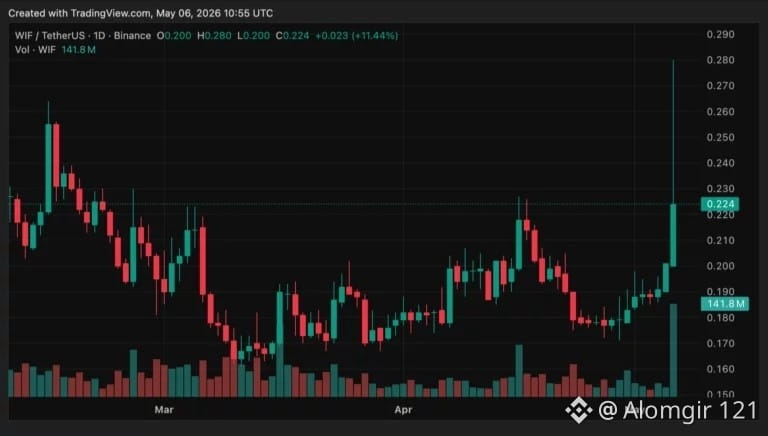
Dogwifhat wif13.6%dogwifhat traded higher after the Upbit announcement. Crypto.news price data showed WIF at $0.241142 on May 6, up 25.35% over 24 hours.
The same data showed WIF had a 24-hour trading volume of $217.36 million and a market cap of $240.9 million. The token also gained 33.73% over seven days.
The Upbit listing pushed WIF closer to that watched range. However, the token remains far below its 2024 peak. Crypto.news data showed Dogwifhat’s all-time high was $4.83 on March 31, 2024.
Can Upbit listing keep Dogwifhat’s WIF rally alive?
$DOGE #CryptoNewss
$DOGS #MegadropLista
$DOLO #Megadrop
#MbeyaconsciousComunity South Korea’s Upbit has added Dogwifhat to its spot markets, giving the Solana-based memecoin access to Korean won, Bitcoin, and USDT trading pairs.
Summary
Upbit added WIF pairs in KRW, BTC and USDT, giving Dogwifhat Korean market access now.
WIF jumped after the listing, but memecoin volatility keeps short-term traders exposed to sharp pullbacks.
The listing adds liquidity for Dogwifhat as Solana memecoins continue attracting speculative retail interest globally.
The exchange notice, published on May 6, said WIF trading support would cover KRW, BTC, and USDT markets. The listing gives Dogwifhat wider access to one of Asia’s most active retail crypto markets.
Upbit said Dogwifhat deposits and withdrawals would use the Solana network only. Users were asked to check the network and token contract before sending funds.
The notice listed the supported WIF contract as EKpQGSJtjMFqKZ9KQanSqYXRcF8fBopzLHYxdM65zcjm. Upbit also said unsupported deposits may need a refund process, which could take time.
The exchange added normal early-trading controls. Buy orders were restricted for about five minutes after trading began. Upbit also limited some sell orders and restricted order types for about two hours.
These controls are common around new listings. They aim to reduce unstable order flow when liquidity is still forming.
WIF price rises after listing
Dogwifhat wif13.6%dogwifhat traded higher after the Upbit announcement. Crypto.news price data showed WIF at $0.241142 on May 6, up 25.35% over 24 hours.
The same data showed WIF had a 24-hour trading volume of $217.36 million and a market cap of $240.9 million. The token also gained 33.73% over seven days.
The Upbit listing pushed WIF closer to that watched range. However, the token remains far below its 2024 peak. Crypto.news data showed Dogwifhat’s all-time high was $4.83 on March 31, 2024.
$DOGE #CryptoNewss
$DOGS #MegadropLista
$DOLO #Megadrop
#MbeyaconsciousComunity South Korea’s Upbit has added Dogwifhat to its spot markets, giving the Solana-based memecoin access to Korean won, Bitcoin, and USDT trading pairs.
Summary
Upbit added WIF pairs in KRW, BTC and USDT, giving Dogwifhat Korean market access now.
WIF jumped after the listing, but memecoin volatility keeps short-term traders exposed to sharp pullbacks.
The listing adds liquidity for Dogwifhat as Solana memecoins continue attracting speculative retail interest globally.
The exchange notice, published on May 6, said WIF trading support would cover KRW, BTC, and USDT markets. The listing gives Dogwifhat wider access to one of Asia’s most active retail crypto markets.
Upbit said Dogwifhat deposits and withdrawals would use the Solana network only. Users were asked to check the network and token contract before sending funds.
The notice listed the supported WIF contract as EKpQGSJtjMFqKZ9KQanSqYXRcF8fBopzLHYxdM65zcjm. Upbit also said unsupported deposits may need a refund process, which could take time.
The exchange added normal early-trading controls. Buy orders were restricted for about five minutes after trading began. Upbit also limited some sell orders and restricted order types for about two hours.
These controls are common around new listings. They aim to reduce unstable order flow when liquidity is still forming.
WIF price rises after listing
Dogwifhat wif13.6%dogwifhat traded higher after the Upbit announcement. Crypto.news price data showed WIF at $0.241142 on May 6, up 25.35% over 24 hours.
The same data showed WIF had a 24-hour trading volume of $217.36 million and a market cap of $240.9 million. The token also gained 33.73% over seven days.
The Upbit listing pushed WIF closer to that watched range. However, the token remains far below its 2024 peak. Crypto.news data showed Dogwifhat’s all-time high was $4.83 on March 31, 2024.

246

පරිවර්තනය බලන්න
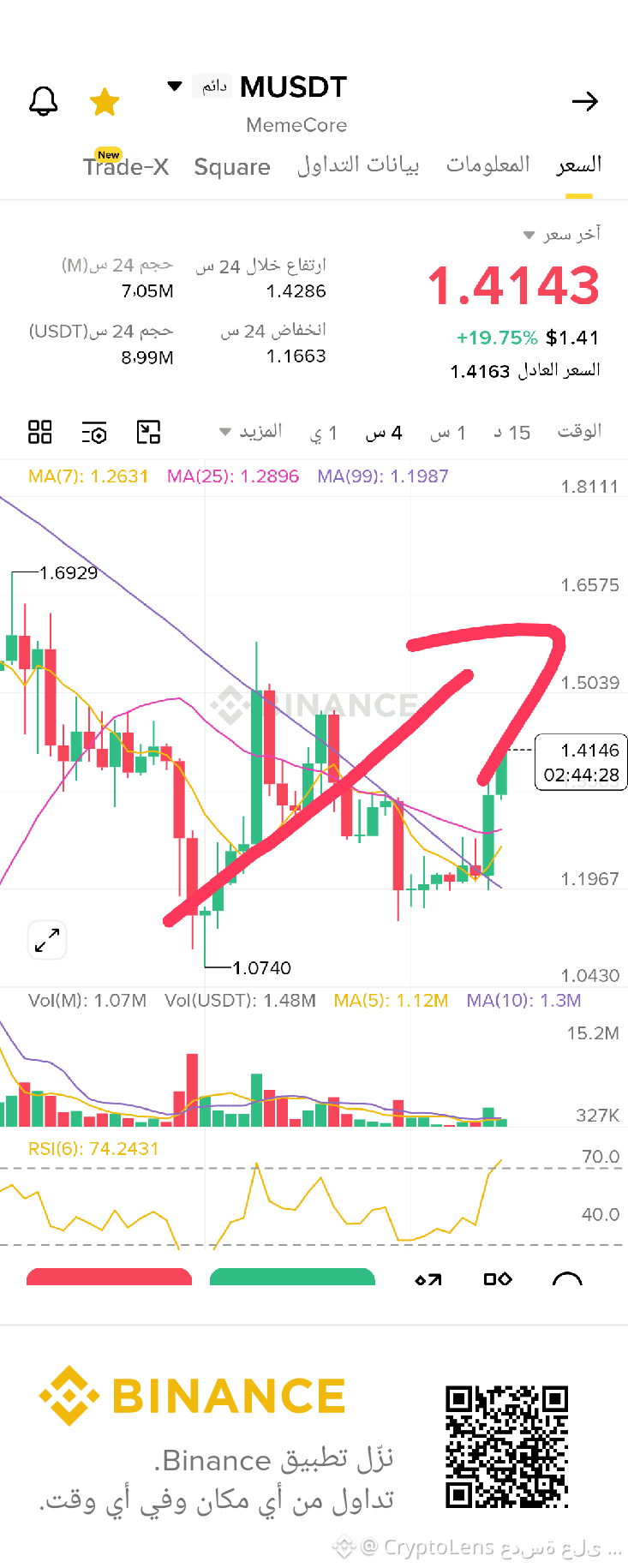
📊 $T continues to move toward my projected target. 🚀
The momentum is still worth watching, but the next move could be crucial.
Do you expect $T to push higher and reach the target, or is a short-term correction more likely?
👀 Also keeping a close watch on $LAB .
Share your thoughts below! 👇
#bearishmomentum #MbeyaconsciousComunity
{alpha}(560x7ec43cf65f1663f820427c62a5780b8f2e25593a)
📊 $T continues to move toward my projected target. 🚀
The momentum is still worth watching, but the next move could be crucial.
Do you expect $T to push higher and reach the target, or is a short-term correction more likely?
👀 Also keeping a close watch on $LAB .
Share your thoughts below! 👇
#bearishmomentum #MbeyaconsciousComunity
The momentum is still worth watching, but the next move could be crucial.
Do you expect $T to push higher and reach the target, or is a short-term correction more likely?
👀 Also keeping a close watch on $LAB .
Share your thoughts below! 👇
#bearishmomentum #MbeyaconsciousComunity
596
ලිපිය
පරිවර්තනය බලන්න
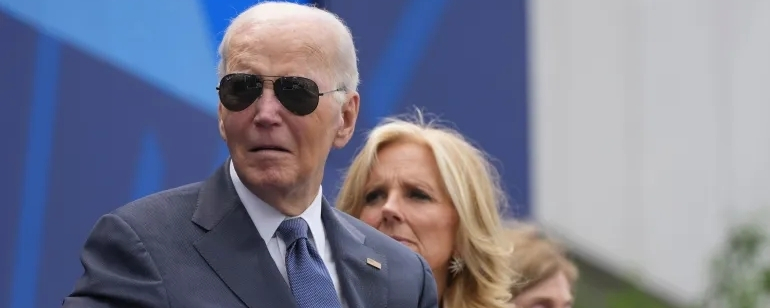
US judge rejects Joe Biden’s lawsuit asking to withhold memoir recordingsA United States judge has denied a petition from former Democratic President Joe Biden arguing his right to privacy would be violated should recordings he made for a memoir be made public.
On Friday, US District Judge Dabney Friedrich, an appointee of President Donald Trump, ruled that the recordings could be released to the Heritage Foundation, a right-wing think tank.
The Trump administration had already authorised the release of the recordings and transcripts, which Biden made while out of public office with his ghostwriter, Mark Zwonitzer
similar investigation, helmed by a second special counsel, Jack Smith, resulted in a short-lived criminal indictment against Trump. Hur, however, concluded that no criminal charges were “warranted” against Biden
Part of his rationale was “a shortage of evidence”. But another part of his reasoning was that, if any charges were brought to trial, jurors were likely to perceive Biden “as a sympathetic, well-meaning, elderly man with a poor memory
As part of his investigation, Hur had obtained Biden’s recordings and transcripts with Zwonitzer in order to evaluate whether the Democrat had misused information from his time as president for his memoir
But he also cited them as evidence to conclude that Biden “appeared to have significant limitations” in his memory
The scrutiny over Biden’s age increased substantially during his 2024 bid for re-election. At a June 2024 presidential debate against Trump, Biden appeared to drift off topic and make nonsensical statements
At one point, he issued the non sequitur, “We finally beat Medicare,” referencing a government health insurance programme for the elderly and those with disabilities
Biden subsequently dropped out of the race, and his replacement, then-Vice President Kamala Harris, lost to Trump after a curtailed campaign. The Democrat, however, has consistently denied that he was unable to perform his duties as president
The Republican-led House Judiciary Committee has also sought to obtain the Zwonitzer files for a similar investigation
Biden was 82 years old by the time he left office in January 2025, making him the oldest sitting president in US history. Trump will be slightly older by the end of his tenure, should he complete his second term
The Democrat is expected to appeal Friday’s decision to release the recordings
#MbeyaconsciousComunity
#NOTCOİN
#Kriptocutrader
#LISTAAirdrop
#Fatihcoşar
US judge rejects Joe Biden’s lawsuit asking to withhold memoir recordings
A United States judge has denied a petition from former Democratic President Joe Biden arguing his right to privacy would be violated should recordings he made for a memoir be made public.
On Friday, US District Judge Dabney Friedrich, an appointee of President Donald Trump, ruled that the recordings could be released to the Heritage Foundation, a right-wing think tank.
The Trump administration had already authorised the release of the recordings and transcripts, which Biden made while out of public office with his ghostwriter, Mark Zwonitzer
similar investigation, helmed by a second special counsel, Jack Smith, resulted in a short-lived criminal indictment against Trump. Hur, however, concluded that no criminal charges were “warranted” against Biden
Part of his rationale was “a shortage of evidence”. But another part of his reasoning was that, if any charges were brought to trial, jurors were likely to perceive Biden “as a sympathetic, well-meaning, elderly man with a poor memory
As part of his investigation, Hur had obtained Biden’s recordings and transcripts with Zwonitzer in order to evaluate whether the Democrat had misused information from his time as president for his memoir
But he also cited them as evidence to conclude that Biden “appeared to have significant limitations” in his memory
The scrutiny over Biden’s age increased substantially during his 2024 bid for re-election. At a June 2024 presidential debate against Trump, Biden appeared to drift off topic and make nonsensical statements
At one point, he issued the non sequitur, “We finally beat Medicare,” referencing a government health insurance programme for the elderly and those with disabilities
Biden subsequently dropped out of the race, and his replacement, then-Vice President Kamala Harris, lost to Trump after a curtailed campaign. The Democrat, however, has consistently denied that he was unable to perform his duties as president
The Republican-led House Judiciary Committee has also sought to obtain the Zwonitzer files for a similar investigation
Biden was 82 years old by the time he left office in January 2025, making him the oldest sitting president in US history. Trump will be slightly older by the end of his tenure, should he complete his second term
The Democrat is expected to appeal Friday’s decision to release the recordings
#MbeyaconsciousComunity
#NOTCOİN
#Kriptocutrader
#LISTAAirdrop
#Fatihcoşar
On Friday, US District Judge Dabney Friedrich, an appointee of President Donald Trump, ruled that the recordings could be released to the Heritage Foundation, a right-wing think tank.
The Trump administration had already authorised the release of the recordings and transcripts, which Biden made while out of public office with his ghostwriter, Mark Zwonitzer
similar investigation, helmed by a second special counsel, Jack Smith, resulted in a short-lived criminal indictment against Trump. Hur, however, concluded that no criminal charges were “warranted” against Biden
Part of his rationale was “a shortage of evidence”. But another part of his reasoning was that, if any charges were brought to trial, jurors were likely to perceive Biden “as a sympathetic, well-meaning, elderly man with a poor memory
As part of his investigation, Hur had obtained Biden’s recordings and transcripts with Zwonitzer in order to evaluate whether the Democrat had misused information from his time as president for his memoir
But he also cited them as evidence to conclude that Biden “appeared to have significant limitations” in his memory
The scrutiny over Biden’s age increased substantially during his 2024 bid for re-election. At a June 2024 presidential debate against Trump, Biden appeared to drift off topic and make nonsensical statements
At one point, he issued the non sequitur, “We finally beat Medicare,” referencing a government health insurance programme for the elderly and those with disabilities
Biden subsequently dropped out of the race, and his replacement, then-Vice President Kamala Harris, lost to Trump after a curtailed campaign. The Democrat, however, has consistently denied that he was unable to perform his duties as president
The Republican-led House Judiciary Committee has also sought to obtain the Zwonitzer files for a similar investigation
Biden was 82 years old by the time he left office in January 2025, making him the oldest sitting president in US history. Trump will be slightly older by the end of his tenure, should he complete his second term
The Democrat is expected to appeal Friday’s decision to release the recordings
#MbeyaconsciousComunity
#NOTCOİN
#Kriptocutrader
#LISTAAirdrop
#Fatihcoşar
194
පරිවර්තනය බලන්න
Emergency sickle cell help extended after campaignA specialised sickle cell emergency service at the Royal London Hospital in Whitechapel will continue following a campaign, it has been announced.
A trial run between September and January established a same‑day unit that provided an alternative to A&E admissions
Barts Health NHS Trust says that, with an additional £1m investment, it aims to continue this service, but as yet it is not known if this will be in the format of a same-day unit, as before.
Dr Raj Thuraisingham, the hospital's divisional director for medicine, said: "Improving services for people living with this lifelong condition is one of our priorities and we worked hard to improve our community outreach provision."
In a statement on the trust's website, Barts Health NHS said: "It's debilitating, dangerous, and a disease that disproportionately affects people from Black and Caribbean backgrounds
Those living with sickle cell disease need more than the very best medical treatment to manage this lifelong condition," it added
It said this was why £2m had been invested in boosting emergency services for sickle cell patients in September "in order to improve patient outcomes, reduce health inequalities, and prevent hospital admissions".
John James, its chief executive, told the BBC: "The evaluation of the pilot demonstrated clear positive outcomes for both patients and clinical teams, reinforcing the importance of specialist crisis pathways.
We would like to thank the patients and families who used the service and consistently highlighted its value. Their experiences have been central to our discussions with commissioners."
#MbeyaconsciousComunity
#NOTCOİN
#BinanceHerYerde
#ValentinesDay2024
#xmucanX
Emergency sickle cell help extended after campaign
A specialised sickle cell emergency service at the Royal London Hospital in Whitechapel will continue following a campaign, it has been announced.
A trial run between September and January established a same‑day unit that provided an alternative to A&E admissions
Barts Health NHS Trust says that, with an additional £1m investment, it aims to continue this service, but as yet it is not known if this will be in the format of a same-day unit, as before.
Dr Raj Thuraisingham, the hospital's divisional director for medicine, said: "Improving services for people living with this lifelong condition is one of our priorities and we worked hard to improve our community outreach provision."
In a statement on the trust's website, Barts Health NHS said: "It's debilitating, dangerous, and a disease that disproportionately affects people from Black and Caribbean backgrounds
Those living with sickle cell disease need more than the very best medical treatment to manage this lifelong condition," it added
It said this was why £2m had been invested in boosting emergency services for sickle cell patients in September "in order to improve patient outcomes, reduce health inequalities, and prevent hospital admissions".
John James, its chief executive, told the BBC: "The evaluation of the pilot demonstrated clear positive outcomes for both patients and clinical teams, reinforcing the importance of specialist crisis pathways.
We would like to thank the patients and families who used the service and consistently highlighted its value. Their experiences have been central to our discussions with commissioners."
#MbeyaconsciousComunity
#NOTCOİN
#BinanceHerYerde
#ValentinesDay2024
#xmucanX
A trial run between September and January established a same‑day unit that provided an alternative to A&E admissions
Barts Health NHS Trust says that, with an additional £1m investment, it aims to continue this service, but as yet it is not known if this will be in the format of a same-day unit, as before.
Dr Raj Thuraisingham, the hospital's divisional director for medicine, said: "Improving services for people living with this lifelong condition is one of our priorities and we worked hard to improve our community outreach provision."
In a statement on the trust's website, Barts Health NHS said: "It's debilitating, dangerous, and a disease that disproportionately affects people from Black and Caribbean backgrounds
Those living with sickle cell disease need more than the very best medical treatment to manage this lifelong condition," it added
It said this was why £2m had been invested in boosting emergency services for sickle cell patients in September "in order to improve patient outcomes, reduce health inequalities, and prevent hospital admissions".
John James, its chief executive, told the BBC: "The evaluation of the pilot demonstrated clear positive outcomes for both patients and clinical teams, reinforcing the importance of specialist crisis pathways.
We would like to thank the patients and families who used the service and consistently highlighted its value. Their experiences have been central to our discussions with commissioners."
#MbeyaconsciousComunity
#NOTCOİN
#BinanceHerYerde
#ValentinesDay2024
#xmucanX
37

ලිපිය
நம்பகமான உந்துவிசை காட்டி மூலம் பிட்காயினுக்கு பச்சை விளக்கு. கவனிக்க வேண்டிய முக்கிய நிலைகள் இவைமேலும் மென்மையான நீண்டகால MACD புதிதாக bullish நிலையில் மாறியுள்ளது; இதன் மூலம் அதிக உயர்வு சாத்தியம் இருப்பதை சுட்டுகிறது. நடைபெறும் இந்த bounce ஒரு முழுமையான uptrend-ஆக மாறுமா என்பதை தீர்மானிக்கும் முக்கிய நிலைகள் இங்கே.
இது நகரும் சராசரி சேர்க்கை வேறுபாடு (MACD) ஹிஸ்டோகிராம் எனப்படும் பிரபலமான தொழில்நுட்பக் குறியீட்டில் இருந்து வரும் செய்தியாகும். இது பூஜ்ய (zero) கோட்டின் அருகில் அலைந்து, சந்தை போக்கின் திசையையும் வலிமையையும் காட்டுகிறது. பூஜ்யத்திற்கு மேல் நிகழும் குறுக்கீடுகள் (crossovers) லாபகரமான/மேல்நோக்கிய உந்துவிசை மாற்றங்களை (bullish momentum shift) குறிக்க בעוד பூஜ்யத்திற்கு கீழ் நிகழும் குறுக்கீடுகள் அதற்கு மாறாக இருப்பதை சுட்டிக்காட்டுகின்றன.
MACD-க்கு நிலையான அமைப்புகள் 12 நாள் மற்றும் 26 நாள் சராசரிகளை பயன்படுத்தும்; மேலும் 9 நாள் signal line-னையும் சேர்க்கும். ஆனால், இந்த இயல்புநிலை அளவுருக்கள் பல நேரங்களில் குறுகிய கால “flip-flops” மற்றும் சத்தத்தை உருவாக்குகின்றன. அதை வடிகட்ட, பல வர்த்தகர்கள் 50 நாள், 100 நாள் மற்றும் 9 நாள் போன்ற நீளமான அளவுருகளுக்கு மாற்றுகின்றனர்.
நம்பகமான உந்துவிசை காட்டி மூலம் பிட்காயினுக்கு பச்சை விளக்கு. கவனிக்க வேண்டிய முக்கிய நிலைகள் இவை
மேலும் மென்மையான நீண்டகால MACD புதிதாக bullish நிலையில் மாறியுள்ளது; இதன் மூலம் அதிக உயர்வு சாத்தியம் இருப்பதை சுட்டுகிறது. நடைபெறும் இந்த bounce ஒரு முழுமையான uptrend-ஆக மாறுமா என்பதை தீர்மானிக்கும் முக்கிய நிலைகள் இங்கே.
இது நகரும் சராசரி சேர்க்கை வேறுபாடு (MACD) ஹிஸ்டோகிராம் எனப்படும் பிரபலமான தொழில்நுட்பக் குறியீட்டில் இருந்து வரும் செய்தியாகும். இது பூஜ்ய (zero) கோட்டின் அருகில் அலைந்து, சந்தை போக்கின் திசையையும் வலிமையையும் காட்டுகிறது. பூஜ்யத்திற்கு மேல் நிகழும் குறுக்கீடுகள் (crossovers) லாபகரமான/மேல்நோக்கிய உந்துவிசை மாற்றங்களை (bullish momentum shift) குறிக்க בעוד பூஜ்யத்திற்கு கீழ் நிகழும் குறுக்கீடுகள் அதற்கு மாறாக இருப்பதை சுட்டிக்காட்டுகின்றன.
MACD-க்கு நிலையான அமைப்புகள் 12 நாள் மற்றும் 26 நாள் சராசரிகளை பயன்படுத்தும்; மேலும் 9 நாள் signal line-னையும் சேர்க்கும். ஆனால், இந்த இயல்புநிலை அளவுருக்கள் பல நேரங்களில் குறுகிய கால “flip-flops” மற்றும் சத்தத்தை உருவாக்குகின்றன. அதை வடிகட்ட, பல வர்த்தகர்கள் 50 நாள், 100 நாள் மற்றும் 9 நாள் போன்ற நீளமான அளவுருகளுக்கு மாற்றுகின்றனர்.
இது நகரும் சராசரி சேர்க்கை வேறுபாடு (MACD) ஹிஸ்டோகிராம் எனப்படும் பிரபலமான தொழில்நுட்பக் குறியீட்டில் இருந்து வரும் செய்தியாகும். இது பூஜ்ய (zero) கோட்டின் அருகில் அலைந்து, சந்தை போக்கின் திசையையும் வலிமையையும் காட்டுகிறது. பூஜ்யத்திற்கு மேல் நிகழும் குறுக்கீடுகள் (crossovers) லாபகரமான/மேல்நோக்கிய உந்துவிசை மாற்றங்களை (bullish momentum shift) குறிக்க בעוד பூஜ்யத்திற்கு கீழ் நிகழும் குறுக்கீடுகள் அதற்கு மாறாக இருப்பதை சுட்டிக்காட்டுகின்றன.
MACD-க்கு நிலையான அமைப்புகள் 12 நாள் மற்றும் 26 நாள் சராசரிகளை பயன்படுத்தும்; மேலும் 9 நாள் signal line-னையும் சேர்க்கும். ஆனால், இந்த இயல்புநிலை அளவுருக்கள் பல நேரங்களில் குறுகிய கால “flip-flops” மற்றும் சத்தத்தை உருவாக்குகின்றன. அதை வடிகட்ட, பல வர்த்தகர்கள் 50 நாள், 100 நாள் மற்றும் 9 நாள் போன்ற நீளமான அளவுருகளுக்கு மாற்றுகின்றனர்.
66
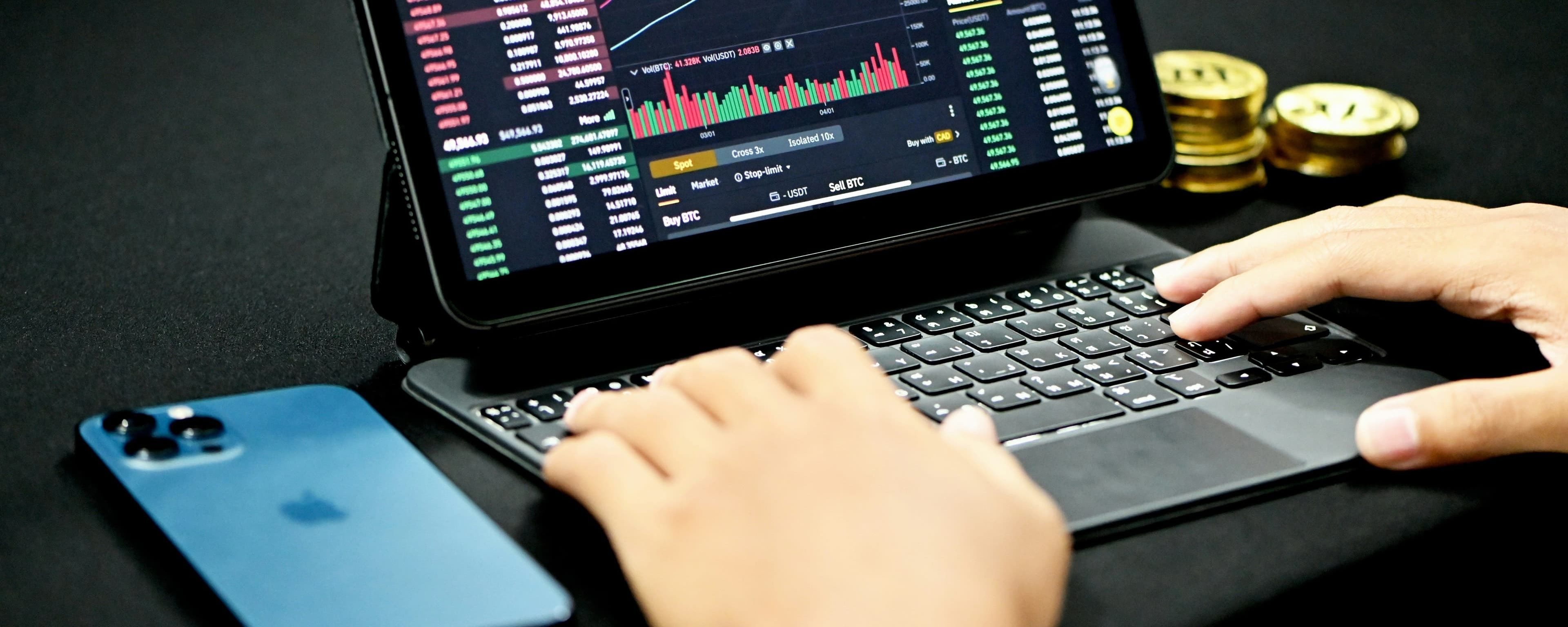
ලිපිය
පරිවර්තනය බලන්න
Polymarket seeks approval to bring margin trading to U.S. customersPolymarket's application to allow users to take positions that are not fully collateralized follows authorization granted to rival Kalshi in March.
rediction market Polymarket applied for a license to offer U.S. users margin trading, enabling them to place bets with less upfront capital, Bloomberg reported Thursday.
Polymarket's U.S. affiliate, Coming Home GBA LLC, filed for a futures commission merchant license with the National Futures Association, Bloomberg said, citing a company representative. Polymarket will also require authorization from the Commodity Futures Trading Commission (CFTC) for changes to its rulebook that would allow trading without fully collateralized positions.
Prediction market platforms like Polymarket and Kalshi offer yes-or-no wagers on the outcomes of events, such as weather, sports and elections. Margin trading lets investors open positions with less upfront capital, a practice common in traditional markets. Kalshi received clearance to offer margin trading in March.
Polymarket's application comes as prediction markets continue to grow. Volumes hit $51 billion last year and are on pace to reach about $240 billion in 2026. Wall Street broker Bernstein recently said it expects volume to rise to $1 trillion by 2030 as the sector evolves from niche wagering into wide-based “information markets” spanning sports, crypto, politics and the economy.
Polymarket’s application follows a marketing campaign it announced Wednesday to convince policymakers, regulators and potential users that it is trustworthy. Four years ago, the company agreed to stop serving U.S. customers as part of a $1.4 million settlement with the CFTC, which alleged it had offered unregistered event-based derivatives.
Polymarket did not respond to a CoinDesk request for comment.
#Write2Earrn
#UnicornChannel
#ZeusInCrypto
#MbeyaconsciousComunity
#TerraLabs
Polymarket seeks approval to bring margin trading to U.S. customers
Polymarket's application to allow users to take positions that are not fully collateralized follows authorization granted to rival Kalshi in March.
rediction market Polymarket applied for a license to offer U.S. users margin trading, enabling them to place bets with less upfront capital, Bloomberg reported Thursday.
Polymarket's U.S. affiliate, Coming Home GBA LLC, filed for a futures commission merchant license with the National Futures Association, Bloomberg said, citing a company representative. Polymarket will also require authorization from the Commodity Futures Trading Commission (CFTC) for changes to its rulebook that would allow trading without fully collateralized positions.
Prediction market platforms like Polymarket and Kalshi offer yes-or-no wagers on the outcomes of events, such as weather, sports and elections. Margin trading lets investors open positions with less upfront capital, a practice common in traditional markets. Kalshi received clearance to offer margin trading in March.
Polymarket's application comes as prediction markets continue to grow. Volumes hit $51 billion last year and are on pace to reach about $240 billion in 2026. Wall Street broker Bernstein recently said it expects volume to rise to $1 trillion by 2030 as the sector evolves from niche wagering into wide-based “information markets” spanning sports, crypto, politics and the economy.
Polymarket’s application follows a marketing campaign it announced Wednesday to convince policymakers, regulators and potential users that it is trustworthy. Four years ago, the company agreed to stop serving U.S. customers as part of a $1.4 million settlement with the CFTC, which alleged it had offered unregistered event-based derivatives.
Polymarket did not respond to a CoinDesk request for comment.
#Write2Earrn
#UnicornChannel
#ZeusInCrypto
#MbeyaconsciousComunity
#TerraLabs
rediction market Polymarket applied for a license to offer U.S. users margin trading, enabling them to place bets with less upfront capital, Bloomberg reported Thursday.
Polymarket's U.S. affiliate, Coming Home GBA LLC, filed for a futures commission merchant license with the National Futures Association, Bloomberg said, citing a company representative. Polymarket will also require authorization from the Commodity Futures Trading Commission (CFTC) for changes to its rulebook that would allow trading without fully collateralized positions.
Prediction market platforms like Polymarket and Kalshi offer yes-or-no wagers on the outcomes of events, such as weather, sports and elections. Margin trading lets investors open positions with less upfront capital, a practice common in traditional markets. Kalshi received clearance to offer margin trading in March.
Polymarket's application comes as prediction markets continue to grow. Volumes hit $51 billion last year and are on pace to reach about $240 billion in 2026. Wall Street broker Bernstein recently said it expects volume to rise to $1 trillion by 2030 as the sector evolves from niche wagering into wide-based “information markets” spanning sports, crypto, politics and the economy.
Polymarket’s application follows a marketing campaign it announced Wednesday to convince policymakers, regulators and potential users that it is trustworthy. Four years ago, the company agreed to stop serving U.S. customers as part of a $1.4 million settlement with the CFTC, which alleged it had offered unregistered event-based derivatives.
Polymarket did not respond to a CoinDesk request for comment.
#Write2Earrn
#UnicornChannel
#ZeusInCrypto
#MbeyaconsciousComunity
#TerraLabs
33

ලිපිය
පරිවර්තනය බලන්න
Abraxas Capital Deposits $140M in Crypto Into DeFi Lending Protocol SparkLondon-based asset management firm Abraxas Capital has deposited approximately $140 million worth of cryptocurrency into Spark, a decentralized finance (DeFi) lending protocol, according to data from blockchain analytics platform Onchain Lens. The deposit signals continued institutional appetite for DeFi yield-generating strategies.
Onchain Lens reported that the deposited assets include 26,500 Ether (ETH), valued at roughly $46.33 million, and 780 Coinbase Wrapped BTC (cbBTC), worth approximately $48.53 million. Additionally, the firm deposited $45.99 million in a combination of USDS and USDT stablecoins. The total value of the deposit is approximately $140 million.
The transaction was executed in a single batch, indicating a coordinated treasury management move rather than a series of smaller, independent deposits. Spark, a DeFi lending protocol built on the MakerDAO ecosystem, allows users to lend and borrow crypto assets, earning variable interest rates.
This move by Abraxas Capital is part of a broader trend of traditional financial institutions and asset managers exploring DeFi protocols for capital efficiency. Unlike centralized finance, DeFi platforms operate on smart contracts, offering automated lending and borrowing without intermediaries. For institutional players, this can mean higher yields compared to traditional money market funds, though it comes with smart contract and market risks.
Abraxas Capital, which manages a multi-strategy crypto fund, has been an active participant in the DeFi space. The firm’s decision to deploy a significant amount of capital into Spark suggests confidence in the protocol’s security and liquidity. The deposit also highlights the growing use of cbBTC, a wrapped Bitcoin token issued by Coinbase, as a bridge for Bitcoin holders to access Ethereum-based DeFi applications.
Large-scale deposits from institutional players like Abraxas Capital provide liquidity to DeFi protocols, which in turn supports the broader crypto lending market. For retail investors, such moves can signal that major financial players see value in DeFi yields, potentially increasing mainstream adoption. However, the crypto market remains volatile, and institutional participation does not eliminate the risks associated with smart contract vulnerabilities or sudden market downturns.
Abraxas Capital’s $140 million deposit into Spark underscores the growing intersection between traditional asset management and decentralized finance. As more institutions allocate capital to DeFi protocols, the sector may see increased liquidity and legitimacy, though careful risk assessment remains essential for all participants.
Spark is a decentralized finance (DeFi) lending protocol built on the MakerDAO ecosystem. It allows users to deposit crypto assets to earn interest or borrow against them, using smart contracts to automate lending without intermediaries.
Institutional investors often use DeFi protocols to earn higher yields on their crypto holdings compared to traditional financial products. DeFi lending rates can be more attractive, especially for stablecoins, and the automation reduces operational overhead.
cbBTC is a wrapped version of Bitcoin issued by Coinbase on the Ethereum blockchain. It represents Bitcoin at a 1:1 ratio but can be used in Ethereum-based DeFi applications. Unlike native Bitcoin, cbBTC can be used for lending, borrowing, and trading on Ethereum-compatible protocols.
#quickfarm
#GamingCoins
#InnovationAhead
#MbeyaconsciousComunity
#XRPRealityCheck
Abraxas Capital Deposits $140M in Crypto Into DeFi Lending Protocol Spark
London-based asset management firm Abraxas Capital has deposited approximately $140 million worth of cryptocurrency into Spark, a decentralized finance (DeFi) lending protocol, according to data from blockchain analytics platform Onchain Lens. The deposit signals continued institutional appetite for DeFi yield-generating strategies.
Onchain Lens reported that the deposited assets include 26,500 Ether (ETH), valued at roughly $46.33 million, and 780 Coinbase Wrapped BTC (cbBTC), worth approximately $48.53 million. Additionally, the firm deposited $45.99 million in a combination of USDS and USDT stablecoins. The total value of the deposit is approximately $140 million.
The transaction was executed in a single batch, indicating a coordinated treasury management move rather than a series of smaller, independent deposits. Spark, a DeFi lending protocol built on the MakerDAO ecosystem, allows users to lend and borrow crypto assets, earning variable interest rates.
This move by Abraxas Capital is part of a broader trend of traditional financial institutions and asset managers exploring DeFi protocols for capital efficiency. Unlike centralized finance, DeFi platforms operate on smart contracts, offering automated lending and borrowing without intermediaries. For institutional players, this can mean higher yields compared to traditional money market funds, though it comes with smart contract and market risks.
Abraxas Capital, which manages a multi-strategy crypto fund, has been an active participant in the DeFi space. The firm’s decision to deploy a significant amount of capital into Spark suggests confidence in the protocol’s security and liquidity. The deposit also highlights the growing use of cbBTC, a wrapped Bitcoin token issued by Coinbase, as a bridge for Bitcoin holders to access Ethereum-based DeFi applications.
Large-scale deposits from institutional players like Abraxas Capital provide liquidity to DeFi protocols, which in turn supports the broader crypto lending market. For retail investors, such moves can signal that major financial players see value in DeFi yields, potentially increasing mainstream adoption. However, the crypto market remains volatile, and institutional participation does not eliminate the risks associated with smart contract vulnerabilities or sudden market downturns.
Abraxas Capital’s $140 million deposit into Spark underscores the growing intersection between traditional asset management and decentralized finance. As more institutions allocate capital to DeFi protocols, the sector may see increased liquidity and legitimacy, though careful risk assessment remains essential for all participants.
Spark is a decentralized finance (DeFi) lending protocol built on the MakerDAO ecosystem. It allows users to deposit crypto assets to earn interest or borrow against them, using smart contracts to automate lending without intermediaries.
Institutional investors often use DeFi protocols to earn higher yields on their crypto holdings compared to traditional financial products. DeFi lending rates can be more attractive, especially for stablecoins, and the automation reduces operational overhead.
cbBTC is a wrapped version of Bitcoin issued by Coinbase on the Ethereum blockchain. It represents Bitcoin at a 1:1 ratio but can be used in Ethereum-based DeFi applications. Unlike native Bitcoin, cbBTC can be used for lending, borrowing, and trading on Ethereum-compatible protocols.
#quickfarm
#GamingCoins
#InnovationAhead
#MbeyaconsciousComunity
#XRPRealityCheck
Onchain Lens reported that the deposited assets include 26,500 Ether (ETH), valued at roughly $46.33 million, and 780 Coinbase Wrapped BTC (cbBTC), worth approximately $48.53 million. Additionally, the firm deposited $45.99 million in a combination of USDS and USDT stablecoins. The total value of the deposit is approximately $140 million.
The transaction was executed in a single batch, indicating a coordinated treasury management move rather than a series of smaller, independent deposits. Spark, a DeFi lending protocol built on the MakerDAO ecosystem, allows users to lend and borrow crypto assets, earning variable interest rates.
This move by Abraxas Capital is part of a broader trend of traditional financial institutions and asset managers exploring DeFi protocols for capital efficiency. Unlike centralized finance, DeFi platforms operate on smart contracts, offering automated lending and borrowing without intermediaries. For institutional players, this can mean higher yields compared to traditional money market funds, though it comes with smart contract and market risks.
Abraxas Capital, which manages a multi-strategy crypto fund, has been an active participant in the DeFi space. The firm’s decision to deploy a significant amount of capital into Spark suggests confidence in the protocol’s security and liquidity. The deposit also highlights the growing use of cbBTC, a wrapped Bitcoin token issued by Coinbase, as a bridge for Bitcoin holders to access Ethereum-based DeFi applications.
Large-scale deposits from institutional players like Abraxas Capital provide liquidity to DeFi protocols, which in turn supports the broader crypto lending market. For retail investors, such moves can signal that major financial players see value in DeFi yields, potentially increasing mainstream adoption. However, the crypto market remains volatile, and institutional participation does not eliminate the risks associated with smart contract vulnerabilities or sudden market downturns.
Abraxas Capital’s $140 million deposit into Spark underscores the growing intersection between traditional asset management and decentralized finance. As more institutions allocate capital to DeFi protocols, the sector may see increased liquidity and legitimacy, though careful risk assessment remains essential for all participants.
Spark is a decentralized finance (DeFi) lending protocol built on the MakerDAO ecosystem. It allows users to deposit crypto assets to earn interest or borrow against them, using smart contracts to automate lending without intermediaries.
Institutional investors often use DeFi protocols to earn higher yields on their crypto holdings compared to traditional financial products. DeFi lending rates can be more attractive, especially for stablecoins, and the automation reduces operational overhead.
cbBTC is a wrapped version of Bitcoin issued by Coinbase on the Ethereum blockchain. It represents Bitcoin at a 1:1 ratio but can be used in Ethereum-based DeFi applications. Unlike native Bitcoin, cbBTC can be used for lending, borrowing, and trading on Ethereum-compatible protocols.
#quickfarm
#GamingCoins
#InnovationAhead
#MbeyaconsciousComunity
#XRPRealityCheck
74
ලිපිය
පරිවර්තනය බලන්න
Yuga Labs recovers high-value NFTs in preemptive security operation after protocol flaw discoveredYuga Labs, the prominent $NFT development company behind the Bored Ape Yacht Club (BAYC) collection, announced it has preemptively recovered and secured a significant number of high-value non-fungible tokens after detecting a security vulnerability in the Flooring Protocol. The operation, led by Quit — Yuga Labs’ blockchain security division — successfully retrieved 29 BAYC tokens, along with four Mutant Ape Yacht Club (MAYC) NFTs, two CryptoPunks, one Azuki, and 26 Captainz.
Yuga Labs CEO Michael Figge confirmed the recovery on X, stating that the company acted swiftly after identifying a risk of further exploits targeting the Flooring Protocol, a decentralized platform that allows users to fractionalize and trade $NFT ownership. The vulnerability, which has not been publicly detailed, posed an imminent threat to assets held by Yuga Labs and potentially other users on the platform. Figge emphasized that the recovered assets will be returned to their rightful owners once the protocol’s security patch is fully implemented and tested.
The incident highlights ongoing security challenges within the $NFT ecosystem, where smart contract vulnerabilities and protocol-level flaws can expose high-value digital assets to theft. Flooring Protocol, which enables users to deposit NFTs and mint fractional tokens, has become a popular tool for liquidity and trading but also introduces complex attack surfaces. Yuga Labs’ proactive response sets a precedent for how major $NFT platforms can coordinate with security teams to mitigate risks before losses occur.
$NFT theft and hacking incidents have cost the industry hundreds of millions of dollars in recent years, with high-profile exploits targeting BAYC, CryptoPunks, and other top collections. The preemptive recovery by Yuga Labs is notable not only for the value of the assets — individual BAYC NFTs can trade for tens of thousands of dollars — but also for the collaborative approach between a major $NFT developer and a third-party protocol. The move may encourage other projects to adopt similar proactive security measures and could influence how platforms like Flooring Protocol handle vulnerability disclosures.
Yuga Labs’ swift recovery of 29 BAYC and other high-value NFTs demonstrates the growing importance of dedicated blockchain security operations within the $NFT industry. As the Flooring Protocol works to patch the identified vulnerability, the incident serves as a reminder that even established platforms remain vulnerable to technical flaws. For collectors and traders, the event underscores the value of proactive asset protection and the need for robust security practices across all layers of the $NFT ecosystem.
A: The specific details of the vulnerability have not been publicly disclosed by Yuga Labs or Flooring Protocol. It was identified as a security flaw that could allow attackers to exploit the protocol’s smart contracts to steal deposited NFTs. A patch is currently being developed.
Yes, Yuga Labs CEO Michael Figge confirmed that the assets will be returned to their rightful owners once the security patch is completed and the risk of further attacks is eliminated.
The incident highlights ongoing security risks in $NFT protocols and may lead to increased scrutiny of smart contract audits. It also demonstrates the value of proactive security operations, which could become a standard practice for major $NFT projects and platforms.
#quickfarm
#FactCheck
#satoshiNakamato
#DelistingAlert
#MbeyaconsciousComunity
Yuga Labs recovers high-value NFTs in preemptive security operation after protocol flaw discovered
Yuga Labs, the prominent $NFT development company behind the Bored Ape Yacht Club (BAYC) collection, announced it has preemptively recovered and secured a significant number of high-value non-fungible tokens after detecting a security vulnerability in the Flooring Protocol. The operation, led by Quit — Yuga Labs’ blockchain security division — successfully retrieved 29 BAYC tokens, along with four Mutant Ape Yacht Club (MAYC) NFTs, two CryptoPunks, one Azuki, and 26 Captainz.
Yuga Labs CEO Michael Figge confirmed the recovery on X, stating that the company acted swiftly after identifying a risk of further exploits targeting the Flooring Protocol, a decentralized platform that allows users to fractionalize and trade $NFT ownership. The vulnerability, which has not been publicly detailed, posed an imminent threat to assets held by Yuga Labs and potentially other users on the platform. Figge emphasized that the recovered assets will be returned to their rightful owners once the protocol’s security patch is fully implemented and tested.
The incident highlights ongoing security challenges within the $NFT ecosystem, where smart contract vulnerabilities and protocol-level flaws can expose high-value digital assets to theft. Flooring Protocol, which enables users to deposit NFTs and mint fractional tokens, has become a popular tool for liquidity and trading but also introduces complex attack surfaces. Yuga Labs’ proactive response sets a precedent for how major $NFT platforms can coordinate with security teams to mitigate risks before losses occur.
$NFT theft and hacking incidents have cost the industry hundreds of millions of dollars in recent years, with high-profile exploits targeting BAYC, CryptoPunks, and other top collections. The preemptive recovery by Yuga Labs is notable not only for the value of the assets — individual BAYC NFTs can trade for tens of thousands of dollars — but also for the collaborative approach between a major $NFT developer and a third-party protocol. The move may encourage other projects to adopt similar proactive security measures and could influence how platforms like Flooring Protocol handle vulnerability disclosures.
Yuga Labs’ swift recovery of 29 BAYC and other high-value NFTs demonstrates the growing importance of dedicated blockchain security operations within the $NFT industry. As the Flooring Protocol works to patch the identified vulnerability, the incident serves as a reminder that even established platforms remain vulnerable to technical flaws. For collectors and traders, the event underscores the value of proactive asset protection and the need for robust security practices across all layers of the $NFT ecosystem.
A: The specific details of the vulnerability have not been publicly disclosed by Yuga Labs or Flooring Protocol. It was identified as a security flaw that could allow attackers to exploit the protocol’s smart contracts to steal deposited NFTs. A patch is currently being developed.
Yes, Yuga Labs CEO Michael Figge confirmed that the assets will be returned to their rightful owners once the security patch is completed and the risk of further attacks is eliminated.
The incident highlights ongoing security risks in $NFT protocols and may lead to increased scrutiny of smart contract audits. It also demonstrates the value of proactive security operations, which could become a standard practice for major $NFT projects and platforms.
#quickfarm
#FactCheck
#satoshiNakamato
#DelistingAlert
#MbeyaconsciousComunity
Yuga Labs CEO Michael Figge confirmed the recovery on X, stating that the company acted swiftly after identifying a risk of further exploits targeting the Flooring Protocol, a decentralized platform that allows users to fractionalize and trade $NFT ownership. The vulnerability, which has not been publicly detailed, posed an imminent threat to assets held by Yuga Labs and potentially other users on the platform. Figge emphasized that the recovered assets will be returned to their rightful owners once the protocol’s security patch is fully implemented and tested.
The incident highlights ongoing security challenges within the $NFT ecosystem, where smart contract vulnerabilities and protocol-level flaws can expose high-value digital assets to theft. Flooring Protocol, which enables users to deposit NFTs and mint fractional tokens, has become a popular tool for liquidity and trading but also introduces complex attack surfaces. Yuga Labs’ proactive response sets a precedent for how major $NFT platforms can coordinate with security teams to mitigate risks before losses occur.
$NFT theft and hacking incidents have cost the industry hundreds of millions of dollars in recent years, with high-profile exploits targeting BAYC, CryptoPunks, and other top collections. The preemptive recovery by Yuga Labs is notable not only for the value of the assets — individual BAYC NFTs can trade for tens of thousands of dollars — but also for the collaborative approach between a major $NFT developer and a third-party protocol. The move may encourage other projects to adopt similar proactive security measures and could influence how platforms like Flooring Protocol handle vulnerability disclosures.
Yuga Labs’ swift recovery of 29 BAYC and other high-value NFTs demonstrates the growing importance of dedicated blockchain security operations within the $NFT industry. As the Flooring Protocol works to patch the identified vulnerability, the incident serves as a reminder that even established platforms remain vulnerable to technical flaws. For collectors and traders, the event underscores the value of proactive asset protection and the need for robust security practices across all layers of the $NFT ecosystem.
A: The specific details of the vulnerability have not been publicly disclosed by Yuga Labs or Flooring Protocol. It was identified as a security flaw that could allow attackers to exploit the protocol’s smart contracts to steal deposited NFTs. A patch is currently being developed.
Yes, Yuga Labs CEO Michael Figge confirmed that the assets will be returned to their rightful owners once the security patch is completed and the risk of further attacks is eliminated.
The incident highlights ongoing security risks in $NFT protocols and may lead to increased scrutiny of smart contract audits. It also demonstrates the value of proactive security operations, which could become a standard practice for major $NFT projects and platforms.
#quickfarm
#FactCheck
#satoshiNakamato
#DelistingAlert
#MbeyaconsciousComunity
36
තවත් අන්තර්ගතයන් ගවේෂණය කිරීමට ඇතුල් වන්න
Binance චතුරශ්රය හි ගෝලීය ක්රිප්ටෝ පරිශීලකයින් හා එක්වන්න
⚡️ ක්රිප්ටෝ පිළිබඳ නවතම සහ ප්රයෝජනවත් තොරතුරු ලබා ගන්න.
💬 ලොව විශාලතම ක්රිප්ටෝ හුවමාරුව මගින් විශ්වාස කෙරේ.
👍 සත්යායනය කරන ලද නිර්මාණකරුවන්ගෙන් සැබෑ විදසුන් සොයා ගන්න.
විද්යුත් තැපෑල / දුරකථන අංකය
නැගී එන මාතෘකා
1
#AppleDebutsFoldablePhone
36,173 views
754 සාකච්ඡා කරමින්
2
#TSMCAugustRevenueUp53.3%YoY
5,743 views
207 සාකච්ඡා කරමින්
3
#IranSaysReadyToEscalateWarWithUS
9,189 views
228 සාකච්ඡා කරමින්
4
#EUExtendsCentralContactPointToCASPs
11,043 views
295 සාකච්ඡා කරමින්
5
#US10YTreasuryYieldHitsHighestSinceNov2023
32,706 views
517 සාකච්ඡා කරමින්
6
#USTreasuryToBuyBackUpTo$6BLongDatedDebt
19,689 views
178 සාකච්ඡා කරමින්
7
#BitcoinSurpasses$79K
70,602 views
288 සාකච්ඡා කරමින්
8
#BrentCrudeTops$100
130,021 views
413 සාකච්ඡා කරමින්
9
#USADPWeeklyEmploymentRises12000
119,059 views
1,418 සාකච්ඡා කරමින්
10
#BankOfAmericaGroupPilotsUSBDCStablecoin
89,376 views
1,113 සාකච්ඡා කරමින්