

#futuretarding
futuretarding
16.6M නැරඹීම්
27,291 සාකච්ඡා කරමින්
උණුසුම්
නවතම

·
--
උසබ තත්ත්වය
🚨 TOP 3 "QUÁI VẬT" FUTURES DẪN ĐẦU SÓNG: BULLA, DOOD VÀ AIN KÍCH HOẠT BÃO SHORT SQUEEZE CỰC GẮT! 🔥📈
Bảng xếp hạng Top Gainer Futures hôm nay đang nóng hơn bao giờ hết với sự càn quét của 3 cái tên tâm điểm, đặc biệt tâm điểm dồn trọn vào màn "múa cột" điên cuồng của DOOD:
$BULLA (Bulla) – Dẫn đầu bảng xếp hạng:
Bứt phá mạnh mẽ +59,82%, giữ vững ngôi vương Top Gainer với giá giao dịch quanh 0,14077$! Lực mua gom khủng khiếp đã thổi bay mọi cản trở, càn quét sạch sẽ phe Short.
$DOOD (Doodles) – Tâm điểm thanh khoản bùng nổ: ⚠️
Vọt lên vị trí á quân với mức tăng +55,99% (giao dịch tại 0,002215$)! Đặc biệt, khối lượng giao dịch 24h của DOOD đang tăng cực kỳ mạnh mẽ, cho thấy dòng tiền lớn và các "cá voi" đang lật bài ngửa, bơm thanh khoản điên cuồng để tạo bẫy Short Squeeze cực gắt!
$AIN (Infinity Ground) – Ngựa ô bứt phá:
Ghi nhận mức tăng ấn tượng +23,52%, leo thẳng lên mốc 0,04769$ và đang thu hút dòng tiền lướt sóng cực tốt từ cộng đồng.
#FutureTarding
🚨 TOP 3 "QUÁI VẬT" FUTURES DẪN ĐẦU SÓNG: BULLA, DOOD VÀ AIN KÍCH HOẠT BÃO SHORT SQUEEZE CỰC GẮT! 🔥📈
Bảng xếp hạng Top Gainer Futures hôm nay đang nóng hơn bao giờ hết với sự càn quét của 3 cái tên tâm điểm, đặc biệt tâm điểm dồn trọn vào màn "múa cột" điên cuồng của DOOD:
$BULLA (Bulla) – Dẫn đầu bảng xếp hạng:
Bứt phá mạnh mẽ +59,82%, giữ vững ngôi vương Top Gainer với giá giao dịch quanh 0,14077$! Lực mua gom khủng khiếp đã thổi bay mọi cản trở, càn quét sạch sẽ phe Short.
$DOOD (Doodles) – Tâm điểm thanh khoản bùng nổ: ⚠️
Vọt lên vị trí á quân với mức tăng +55,99% (giao dịch tại 0,002215$)! Đặc biệt, khối lượng giao dịch 24h của DOOD đang tăng cực kỳ mạnh mẽ, cho thấy dòng tiền lớn và các "cá voi" đang lật bài ngửa, bơm thanh khoản điên cuồng để tạo bẫy Short Squeeze cực gắt!
$AIN (Infinity Ground) – Ngựa ô bứt phá:
Ghi nhận mức tăng ấn tượng +23,52%, leo thẳng lên mốc 0,04769$ và đang thu hút dòng tiền lướt sóng cực tốt từ cộng đồng.
#FutureTarding
Bảng xếp hạng Top Gainer Futures hôm nay đang nóng hơn bao giờ hết với sự càn quét của 3 cái tên tâm điểm, đặc biệt tâm điểm dồn trọn vào màn "múa cột" điên cuồng của DOOD:
$BULLA (Bulla) – Dẫn đầu bảng xếp hạng:
Bứt phá mạnh mẽ +59,82%, giữ vững ngôi vương Top Gainer với giá giao dịch quanh 0,14077$! Lực mua gom khủng khiếp đã thổi bay mọi cản trở, càn quét sạch sẽ phe Short.
$DOOD (Doodles) – Tâm điểm thanh khoản bùng nổ: ⚠️
Vọt lên vị trí á quân với mức tăng +55,99% (giao dịch tại 0,002215$)! Đặc biệt, khối lượng giao dịch 24h của DOOD đang tăng cực kỳ mạnh mẽ, cho thấy dòng tiền lớn và các "cá voi" đang lật bài ngửa, bơm thanh khoản điên cuồng để tạo bẫy Short Squeeze cực gắt!
$AIN (Infinity Ground) – Ngựa ô bứt phá:
Ghi nhận mức tăng ấn tượng +23,52%, leo thẳng lên mốc 0,04769$ và đang thu hút dòng tiền lướt sóng cực tốt từ cộng đồng.
#FutureTarding
696

·
--
උසබ තත්ත්වය
$BNB The breakout window may be short. Buyers are dominant, the 4H and daily structures show higher highs and higher lows, and the entry zone offers a defined risk point. Watch the volume and protect your capital if momentum fades.
$BNB Long setup.
Entry: 740.4085 – 741.3943
TP: 744.0559 – 746.8161 – 750.3649
SL: 737.6483
👇 Open Trade
{future}(BNBUSDT)
#FutureTarding
$BNB The breakout window may be short. Buyers are dominant, the 4H and daily structures show higher highs and higher lows, and the entry zone offers a defined risk point. Watch the volume and protect your capital if momentum fades.
$BNB Long setup.
Entry: 740.4085 – 741.3943
TP: 744.0559 – 746.8161 – 750.3649
SL: 737.6483
👇 Open Trade
#FutureTarding
$BNB Long setup.
Entry: 740.4085 – 741.3943
TP: 744.0559 – 746.8161 – 750.3649
SL: 737.6483
👇 Open Trade
#FutureTarding
1
37

·
--
උසබ තත්ත්වය
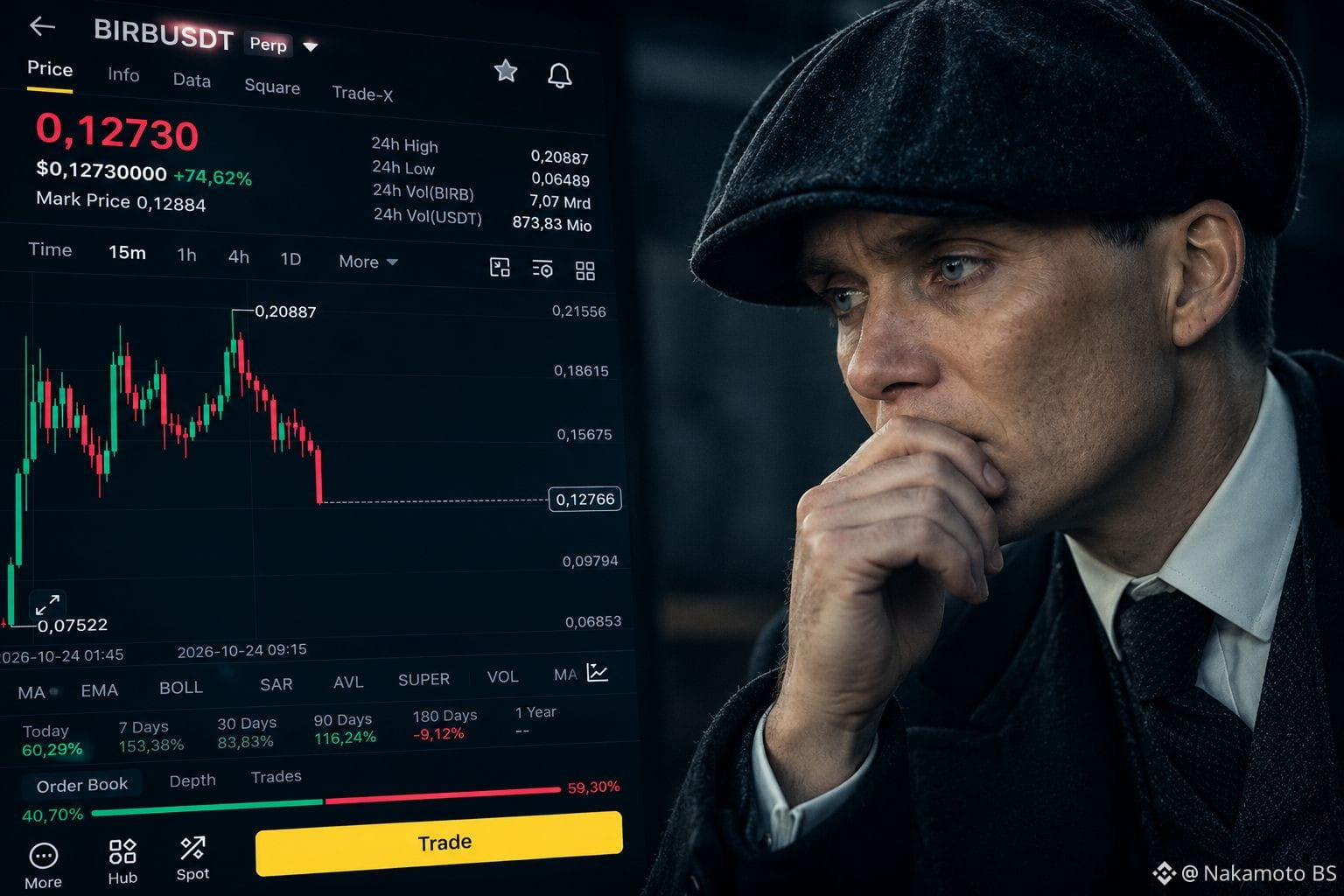
$BIRB USDT: Will the Downtrend Continue? Here's the Trading Plan
🔴 Trend: Short-term bearish.
📍 Trade Type: SHORT 💰 Entry Zone: $0.1270 – $0.1300 🎯 Take Profit 1 (TP1): $0.1150 🎯 Take Profit 2 (TP2): $0.1000 🛑 Stop Loss (SL): $0.1370$BIRB
⚠️ Risk Management: The coin has experienced sharp volatility, so only enter after confirming continued selling pressure, and use a small position size. This is a potential setup, not a guaranteed trade; if the price reclaims $0.1370, the bearish scenario may be invalidated.#FutureTarding
$BIRB USDT: Will the Downtrend Continue? Here's the Trading Plan
🔴 Trend: Short-term bearish.
📍 Trade Type: SHORT 💰 Entry Zone: $0.1270 – $0.1300 🎯 Take Profit 1 (TP1): $0.1150 🎯 Take Profit 2 (TP2): $0.1000 🛑 Stop Loss (SL): $0.1370$BIRB
⚠️ Risk Management: The coin has experienced sharp volatility, so only enter after confirming continued selling pressure, and use a small position size. This is a potential setup, not a guaranteed trade; if the price reclaims $0.1370, the bearish scenario may be invalidated.#FutureTarding
🔴 Trend: Short-term bearish.
📍 Trade Type: SHORT 💰 Entry Zone: $0.1270 – $0.1300 🎯 Take Profit 1 (TP1): $0.1150 🎯 Take Profit 2 (TP2): $0.1000 🛑 Stop Loss (SL): $0.1370$BIRB
⚠️ Risk Management: The coin has experienced sharp volatility, so only enter after confirming continued selling pressure, and use a small position size. This is a potential setup, not a guaranteed trade; if the price reclaims $0.1370, the bearish scenario may be invalidated.#FutureTarding
261
·
--
බෙයාරිෂ්
$NEAR — Folks, sellers are dominating across all three timeframes. Bears are pushing hard!
$NEAR Short setup.
Entry: 4.4340 — 4.4540
TP: 4.3798 – 4.3236 – 4.2514
SL: 4.5102
👇 Click here
{future}(NEARUSDT)
#FutureTarding
$NEAR — Folks, sellers are dominating across all three timeframes. Bears are pushing hard!
$NEAR Short setup.
Entry: 4.4340 — 4.4540
TP: 4.3798 – 4.3236 – 4.2514
SL: 4.5102
👇 Click here
#FutureTarding
$NEAR Short setup.
Entry: 4.4340 — 4.4540
TP: 4.3798 – 4.3236 – 4.2514
SL: 4.5102
👇 Click here
#FutureTarding
1
73


·
--
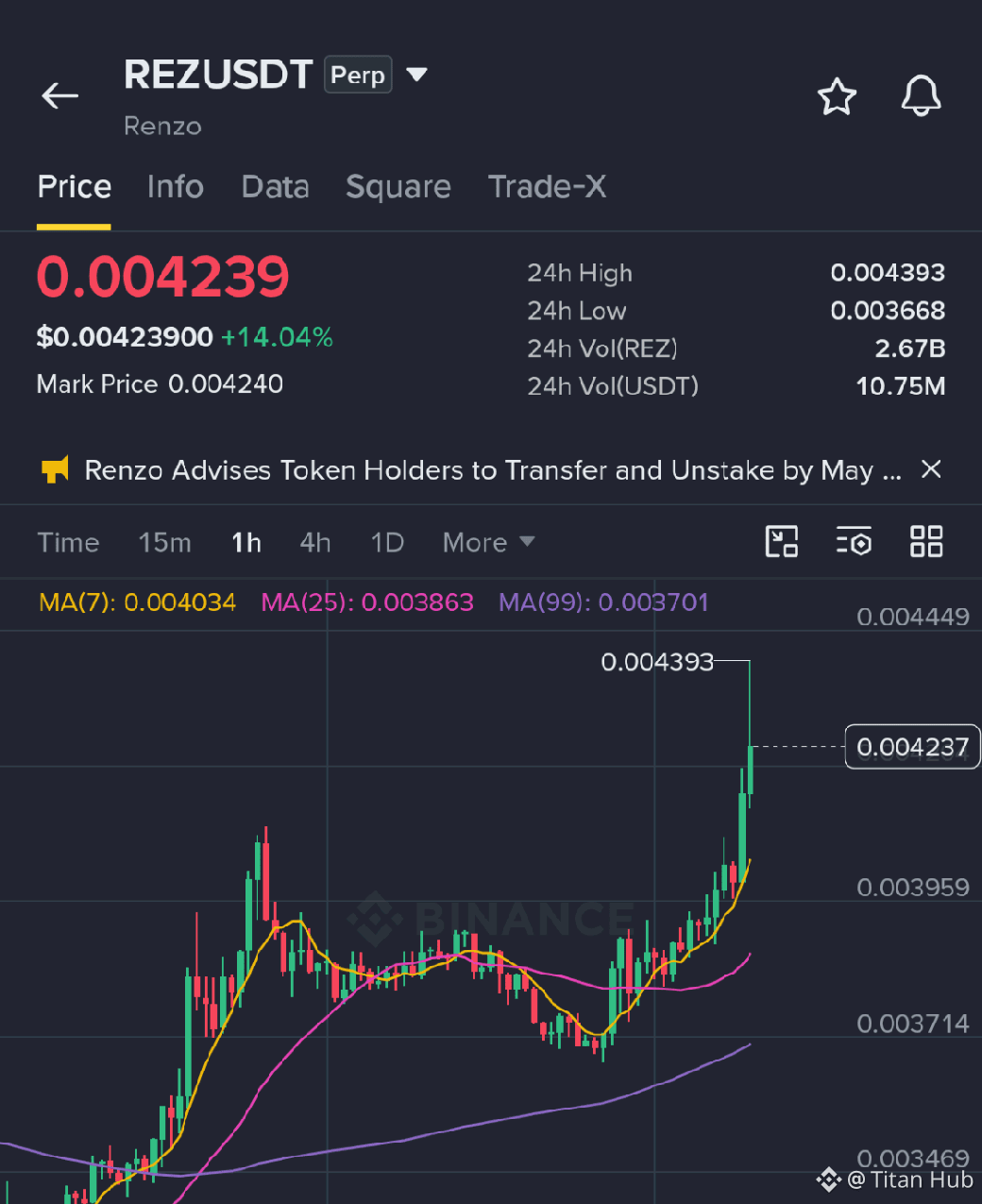
$REZ / USDT Future Signal
Position
🟢LONG
Entry: $0.00400 to $0.004200
1s TP: $0.004600
2nd TP0.004800
Stop Loss: 0.003900
Note: Please Use DYOR before trading.
#FutureTarding
{future}(REZUSDT)
$REZ / USDT Future Signal
Position
🟢LONG
Entry: $0.00400 to $0.004200
1s TP: $0.004600
2nd TP0.004800
Stop Loss: 0.003900
Note: Please Use DYOR before trading.
#FutureTarding
Position
🟢LONG
Entry: $0.00400 to $0.004200
1s TP: $0.004600
2nd TP0.004800
Stop Loss: 0.003900
Note: Please Use DYOR before trading.
#FutureTarding
169
·
--
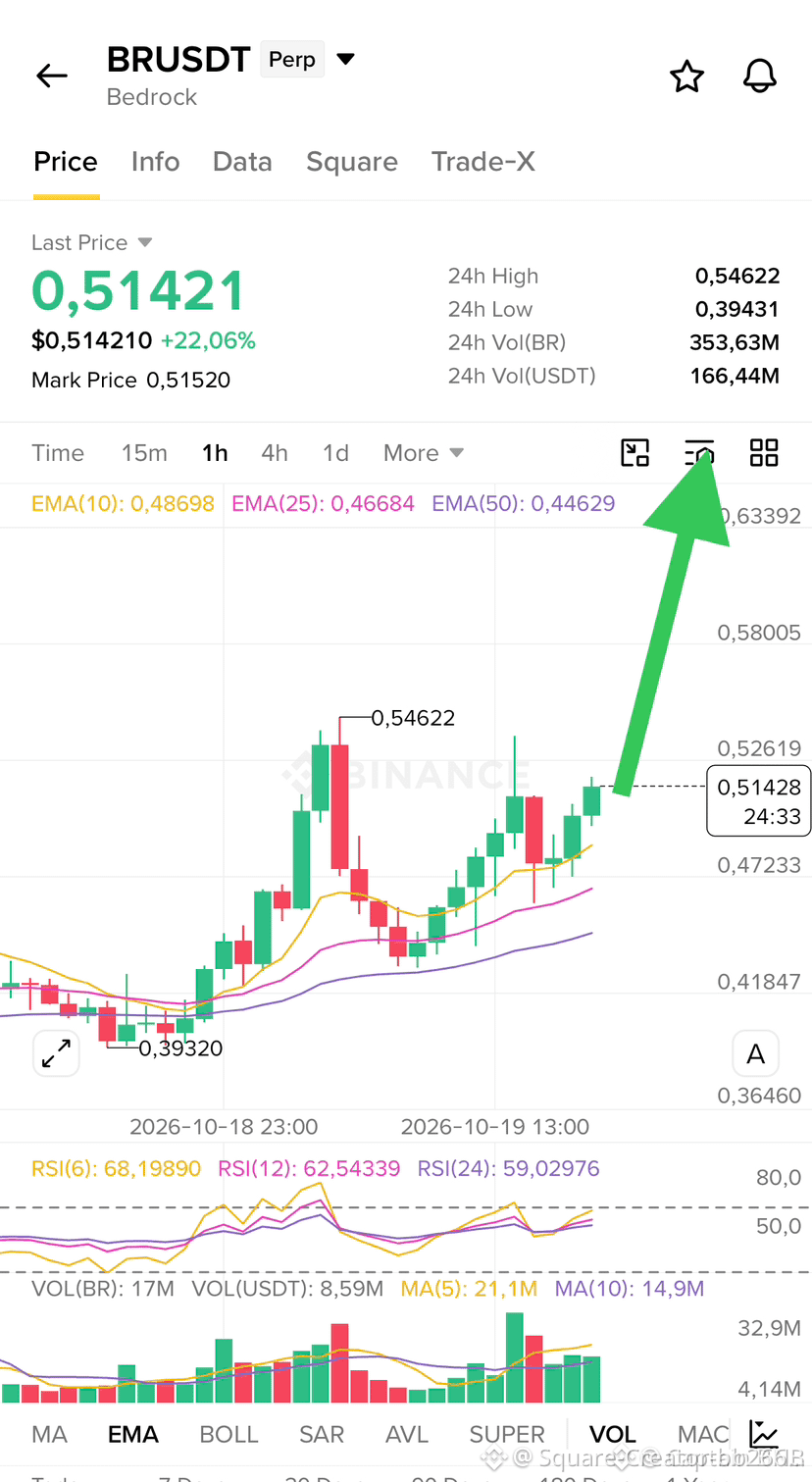
$BR Position longue.
Zone d’entrée : 0.5015 - 0.5215
Objectifs de prise de bénéfices :
🎯TP1 : 0.5395
🎯TP2 : 0.5605
🎯TP3 : 0.5895
Stop-loss : 0.4845
Tradez $BR ici👇
{future}(BRUSDT)
#FutureTarding
$BR Position longue.
Zone d’entrée : 0.5015 - 0.5215
Objectifs de prise de bénéfices :
🎯TP1 : 0.5395
🎯TP2 : 0.5605
🎯TP3 : 0.5895
Stop-loss : 0.4845
Tradez $BR ici👇
#FutureTarding
Zone d’entrée : 0.5015 - 0.5215
Objectifs de prise de bénéfices :
🎯TP1 : 0.5395
🎯TP2 : 0.5605
🎯TP3 : 0.5895
Stop-loss : 0.4845
Tradez $BR ici👇
#FutureTarding
40

·
--
බෙයාරිෂ්
FUTURE TOP 3 LOSERS 60MINT BINANCE
$CYS (Cysic) : ↓-10.58%
$BAT (Basic Attention Token) : ↓-8.71%
$BR (Bedrock) : ↓-7.96%
{future}(CYSUSDT)
{future}(BATUSDT)
{future}(BRUSDT)
#TradingSignal #cryptosignal #FutureTarding #futuresignal #CelestiaRises16%To2026High
FUTURE TOP 3 LOSERS 60MINT BINANCE
$CYS (Cysic) : ↓-10.58%
$BAT (Basic Attention Token) : ↓-8.71%
$BR (Bedrock) : ↓-7.96%
#TradingSignal #cryptosignal #FutureTarding #futuresignal #CelestiaRises16%To2026High
$CYS (Cysic) : ↓-10.58%
$BAT (Basic Attention Token) : ↓-8.71%
$BR (Bedrock) : ↓-7.96%
#TradingSignal #cryptosignal #FutureTarding #futuresignal #CelestiaRises16%To2026High
1
105
·
--
උසබ තත්ත්වය
Future Trade Top 3 Gainers Last 60mint in Binance
$ALT (AltLayer) : ↑4.17%
$Q (Quack AI) : ↑3.03%
$LSK (Lisk) : ↑3.0%
{future}(ALTUSDT)
{future}(LSKUSDT)
#FutureTarding #futuresignal #TradingSignal #crypto #CelestiaRises16%To2026High
Future Trade Top 3 Gainers Last 60mint in Binance
$ALT (AltLayer) : ↑4.17%
$Q (Quack AI) : ↑3.03%
$LSK (Lisk) : ↑3.0%
#FutureTarding #futuresignal #TradingSignal #crypto #CelestiaRises16%To2026High
$ALT (AltLayer) : ↑4.17%
$Q (Quack AI) : ↑3.03%
$LSK (Lisk) : ↑3.0%
#FutureTarding #futuresignal #TradingSignal #crypto #CelestiaRises16%To2026High
38
·
--
බෙයාරිෂ්
In Future Top 3 Losers last 60mint Binance
$CT : ↓-6.68%
$ICNT (Impossible Cloud Network) : ↓-6.08%
$FOLKS (Folks Finance) : ↓-4.19%
{future}(CTUSDT)
{future}(FOLKSUSDT)
{future}(ICNTUSDT)
#FutureTarding #futuresignal #crypto #trading #USPPIRises6.3%YearOverYear
In Future Top 3 Losers last 60mint Binance
$CT : ↓-6.68%
$ICNT (Impossible Cloud Network) : ↓-6.08%
$FOLKS (Folks Finance) : ↓-4.19%
#FutureTarding #futuresignal #crypto #trading #USPPIRises6.3%YearOverYear
$CT : ↓-6.68%
$ICNT (Impossible Cloud Network) : ↓-6.08%
$FOLKS (Folks Finance) : ↓-4.19%
#FutureTarding #futuresignal #crypto #trading #USPPIRises6.3%YearOverYear
127

·
--
උසබ තත්ත්වය
🧧 Claim 🎁
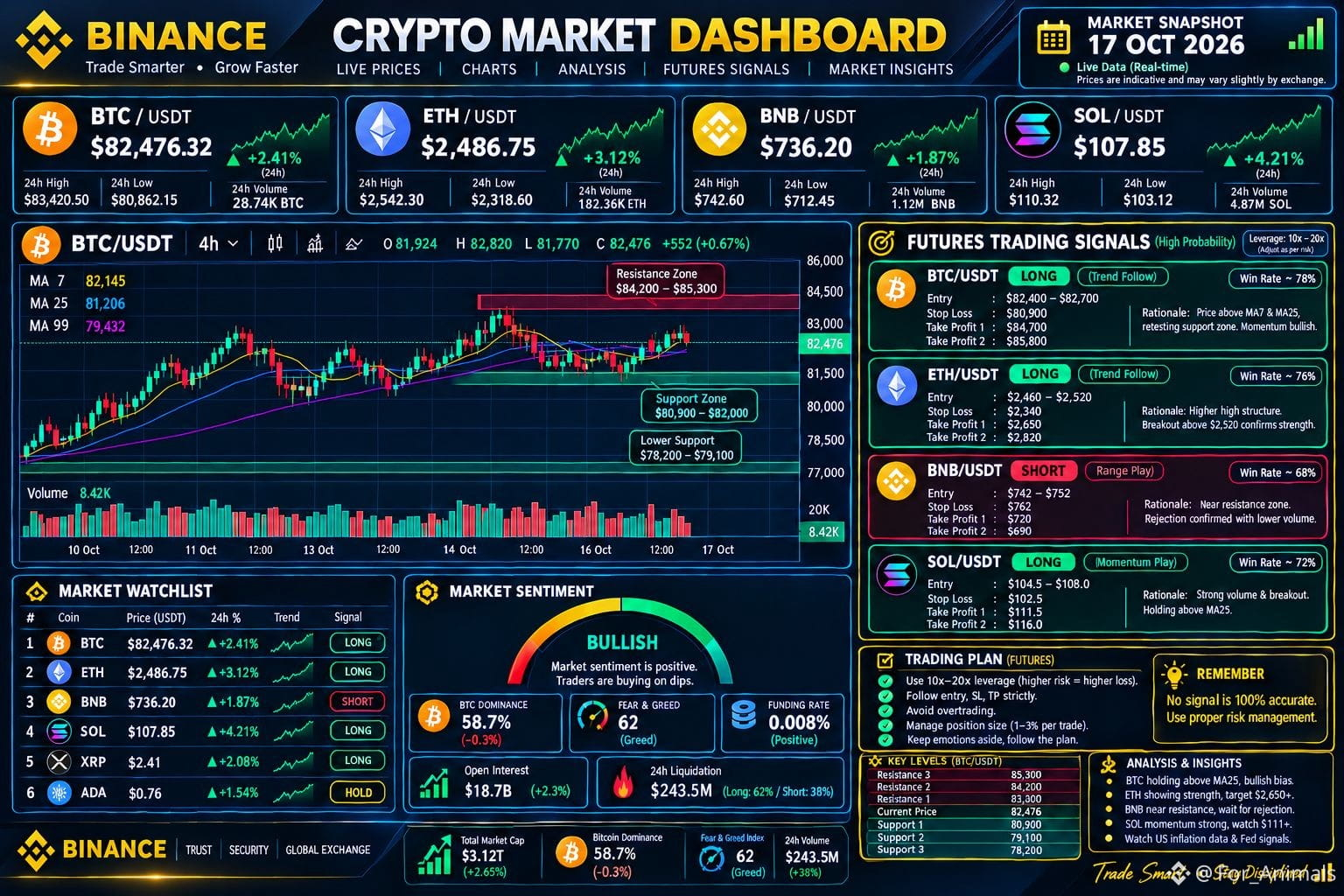
Today Crypto Market Dashboard With Future Signals 🚀
Like ❤️ Follow ❤️ Repost 🔁
BTC/USDT LONG
Entry: $82,400–$82,700
SL: $80,900
TP1: $84,700
TP2: $85,800
$BTC
{future}(BTCUSDT)
SOL/USDT LONG
Entry: $104.50–$108.00
SL: $102.50
TP1: $111.50
TP2: $116.00
$SOL
{future}(SOLUSDT)
ETH/USDT LONG
Entry: $2,460–$2,520
SL: $2,340
TP1: $2,650
TP2: $2,820
$ETH
{future}(ETHUSDT)
#cryptomarketdashboard #FutureTarding #Binance #CryptoMarketMoves
🧧 Claim 🎁
Today Crypto Market Dashboard With Future Signals 🚀
Like ❤️ Follow ❤️ Repost 🔁
BTC/USDT LONG
Entry: $82,400–$82,700
SL: $80,900
TP1: $84,700
TP2: $85,800
$BTC
SOL/USDT LONG
Entry: $104.50–$108.00
SL: $102.50
TP1: $111.50
TP2: $116.00
$SOL
ETH/USDT LONG
Entry: $2,460–$2,520
SL: $2,340
TP1: $2,650
TP2: $2,820
$ETH
#cryptomarketdashboard #FutureTarding #Binance #CryptoMarketMoves
Today Crypto Market Dashboard With Future Signals 🚀
Like ❤️ Follow ❤️ Repost 🔁
BTC/USDT LONG
Entry: $82,400–$82,700
SL: $80,900
TP1: $84,700
TP2: $85,800
$BTC
SOL/USDT LONG
Entry: $104.50–$108.00
SL: $102.50
TP1: $111.50
TP2: $116.00
$SOL
ETH/USDT LONG
Entry: $2,460–$2,520
SL: $2,340
TP1: $2,650
TP2: $2,820
$ETH
#cryptomarketdashboard #FutureTarding #Binance #CryptoMarketMoves
1
32

·
--
බෙයාරිෂ්
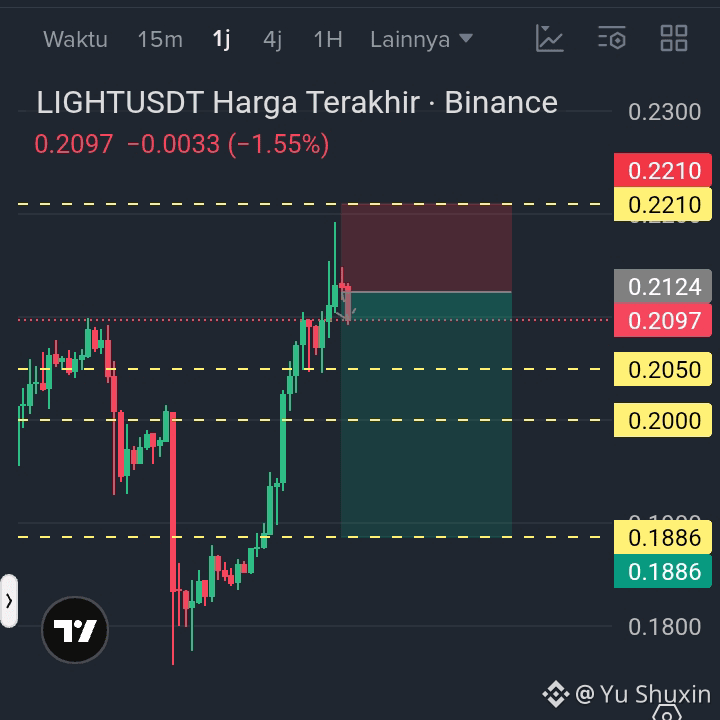
Teman-teman,saya membuka posisi Short $LIGHT karna harga gagal menembus resistance dan mulai menunjukkan potensi pembalikan arah ke bawah. 🔴📉
🔴 Set-up SHORT
Zona Entry Saya: 0,2100 – 0,2124
TP 1: 0,2050
TP 2: 0,2000
TP 3: 0,1886
SL: 0,2210
Klik di bawah untuk ikut trading bersama saya... 👇
{future}(LIGHTUSDT)
📊 Logika Setup:
· Zona entry 0,2100–0,2124 menjadi area yang perlu diperhatikan untuk mencari peluang SHORT.
· Harga mulai mengalami tekanan setelah naik cukup tajam. Jika gagal bertahan di area resistance, peluang koreksi bisa terbuka.
· Penurunan di bawah 0,2050 dapat membuka jalan menuju area 0,2000.
· Jika tekanan jual berlanjut dan support ditembus, harga berpotensi menguji area 0,1886.
· Namun, jika harga menembus 0,2210, skenario SHORT ini perlu dievaluasi kembali.
⚠️ Tips Risiko:
Jangan menggunakan leverage berlebihan atau trading untuk membalas kerugian. Selalu lindungi modal dan gunakan manajemen risiko yang disiplin. Pasar akan selalu memberikan peluang baru.#light #FutureTarding
Teman-teman,saya membuka posisi Short $LIGHT karna harga gagal menembus resistance dan mulai menunjukkan potensi pembalikan arah ke bawah. 🔴📉
🔴 Set-up SHORT
Zona Entry Saya: 0,2100 – 0,2124
TP 1: 0,2050
TP 2: 0,2000
TP 3: 0,1886
SL: 0,2210
Klik di bawah untuk ikut trading bersama saya... 👇
📊 Logika Setup:
· Zona entry 0,2100–0,2124 menjadi area yang perlu diperhatikan untuk mencari peluang SHORT.
· Harga mulai mengalami tekanan setelah naik cukup tajam. Jika gagal bertahan di area resistance, peluang koreksi bisa terbuka.
· Penurunan di bawah 0,2050 dapat membuka jalan menuju area 0,2000.
· Jika tekanan jual berlanjut dan support ditembus, harga berpotensi menguji area 0,1886.
· Namun, jika harga menembus 0,2210, skenario SHORT ini perlu dievaluasi kembali.
⚠️ Tips Risiko:
Jangan menggunakan leverage berlebihan atau trading untuk membalas kerugian. Selalu lindungi modal dan gunakan manajemen risiko yang disiplin. Pasar akan selalu memberikan peluang baru.#light #FutureTarding
🔴 Set-up SHORT
Zona Entry Saya: 0,2100 – 0,2124
TP 1: 0,2050
TP 2: 0,2000
TP 3: 0,1886
SL: 0,2210
Klik di bawah untuk ikut trading bersama saya... 👇
📊 Logika Setup:
· Zona entry 0,2100–0,2124 menjadi area yang perlu diperhatikan untuk mencari peluang SHORT.
· Harga mulai mengalami tekanan setelah naik cukup tajam. Jika gagal bertahan di area resistance, peluang koreksi bisa terbuka.
· Penurunan di bawah 0,2050 dapat membuka jalan menuju area 0,2000.
· Jika tekanan jual berlanjut dan support ditembus, harga berpotensi menguji area 0,1886.
· Namun, jika harga menembus 0,2210, skenario SHORT ini perlu dievaluasi kembali.
⚠️ Tips Risiko:
Jangan menggunakan leverage berlebihan atau trading untuk membalas kerugian. Selalu lindungi modal dan gunakan manajemen risiko yang disiplin. Pasar akan selalu memberikan peluang baru.#light #FutureTarding
1
1
25
·
--
බෙයාරිෂ්
$NIL : Bears, I'm watching for another dump! This short setup has some interesting downside levels, folks!!
$NIL Short setup.
Entry: $0.0860–$0.0880
TP: $0.0830 - $0.0800 - $0.0767
SL: $0.0922
👇 Click here
{future}(NILUSDT)
#FutureTarding
$NIL : Bears, I'm watching for another dump! This short setup has some interesting downside levels, folks!!
$NIL Short setup.
Entry: $0.0860–$0.0880
TP: $0.0830 - $0.0800 - $0.0767
SL: $0.0922
👇 Click here
#FutureTarding
$NIL Short setup.
Entry: $0.0860–$0.0880
TP: $0.0830 - $0.0800 - $0.0767
SL: $0.0922
👇 Click here
#FutureTarding
2
170

·
--
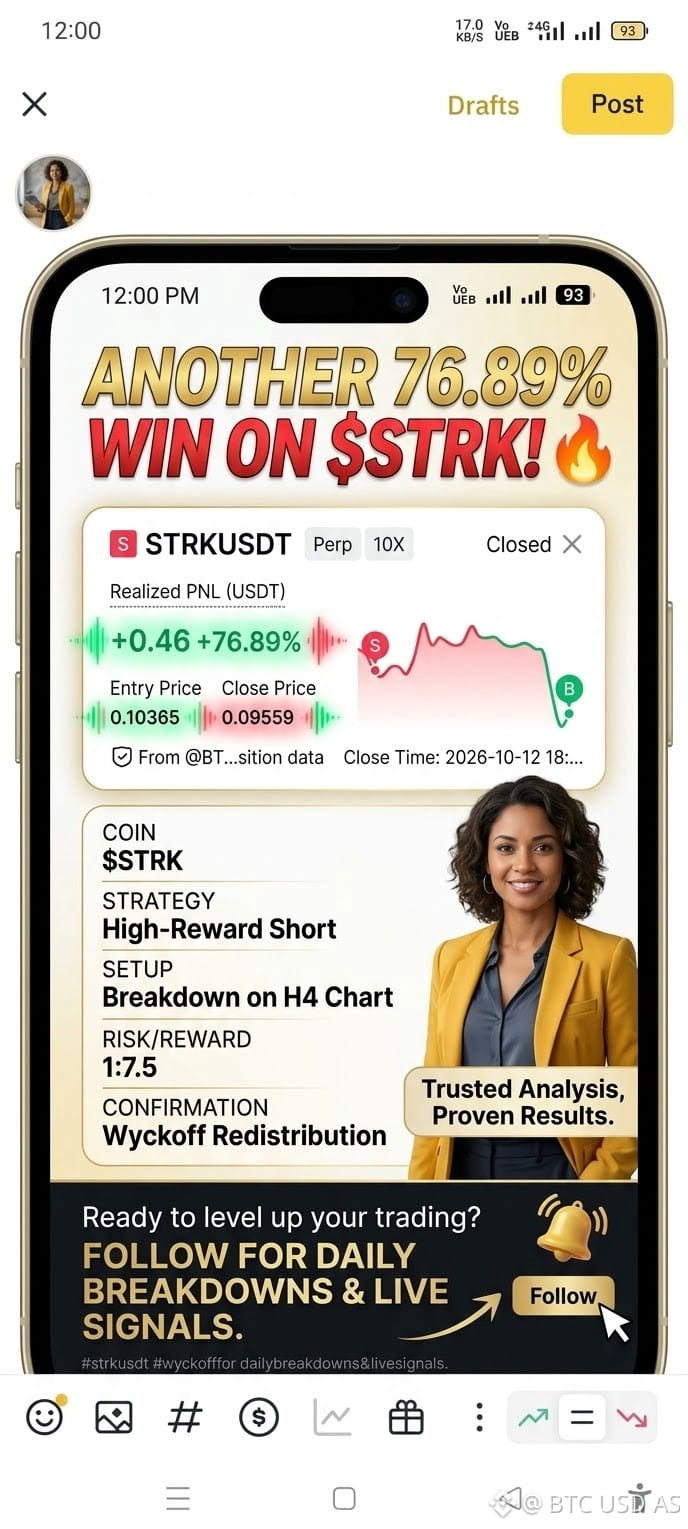
Secured a solid +76.89% PNL on this $STRK Short Position! 💰🚀
Trade Breakdown:
Pair: STRK/USDT (Futures - Short)
Entry: 0.10365
Close: 0.09559
Proper analysis, risk management, and waiting for the right entry key to consistency! 📊
$STRK
#CryptoWatchMay2024 #CryptoTaxReform #FutureTarding #TradingTales #Binance
Secured a solid +76.89% PNL on this $STRK Short Position! 💰🚀
Trade Breakdown:
Pair: STRK/USDT (Futures - Short)
Entry: 0.10365
Close: 0.09559
Proper analysis, risk management, and waiting for the right entry key to consistency! 📊
$STRK
#CryptoWatchMay2024 #CryptoTaxReform #FutureTarding #TradingTales #Binance
Trade Breakdown:
Pair: STRK/USDT (Futures - Short)
Entry: 0.10365
Close: 0.09559
Proper analysis, risk management, and waiting for the right entry key to consistency! 📊
$STRK
#CryptoWatchMay2024 #CryptoTaxReform #FutureTarding #TradingTales #Binance
358
·
--
උසබ තත්ත්වය
$HYPE - Fellow traders, this range looks interesting for a potential push higher. Bulls, keep an eye on it!
$HYPE Long setup.
Entry: 82.5001 – 82.8387
TP: 83.4275 – 85.3430 – 87.8473
SL: 82.0863
👇 Click here
{future}(HYPEUSDT)
#FutureTarding
$HYPE - Fellow traders, this range looks interesting for a potential push higher. Bulls, keep an eye on it!
$HYPE Long setup.
Entry: 82.5001 – 82.8387
TP: 83.4275 – 85.3430 – 87.8473
SL: 82.0863
👇 Click here
#FutureTarding
$HYPE Long setup.
Entry: 82.5001 – 82.8387
TP: 83.4275 – 85.3430 – 87.8473
SL: 82.0863
👇 Click here
#FutureTarding
1
56


ලිපිය
Master Futures Hedging: How to Protect Your Long and Short Trades in Volatile MarketsCryptocurrency markets move fast. A single high-impact news event or market sweep can erase days of profits in seconds. For professional traders, relying solely on single-direction trades (One-Way Mode) is a massive risk.
This is where Futures Hedging comes in. By utilizing Binance Futures Hedge Mode, you can open both Long and Short positions simultaneously on the same contract, neutralizing market volatility, locking in floating profits, and protecting your capital from liquidation.
Here is a full breakdown of how to use long and short hedging strategies effectively on Binance Futures.
What is Futures Hedge Mode?
By default, Binance Futures operates in One-Way Mode, where opening an opposing order automatically closes or reduces your existing position.
Switching to Hedge Mode allows you to:
Hold simultaneous Long & Short positions on the exact same pair (e.g., BTCUSDT Perpetual).Manage separate Stop-Loss (SL) and Take-Profit (TP) orders for each direction.Protect Spot holdings or floating futures profits during sudden pullbacks or fake outs.
How to enable Hedge Mode on Binance:Open your Futures trading interface on Binance.Click the 3 dots / Settings icon in the top right corner.Select Position Mode and switch from One-Way Mode to Hedge Mode.
1. Hedging a Long Position (Bullish Protection)
Scenario: You are long on a macro trend, but expect a short-term dip.
Imagine you bought BTC Futures at $60,000 with a target of $70,000. Price rises to $66,000, but major economic data or a key resistance level suggests a short-term correction to $62,000 before the rally continues.
Instead of closing your original Long (and giving up a great entry price), you execute a Short Hedge.
Strategy Steps:
Keep Your Core Long Position: Retain your Long position from $60,000.Open a Short Hedge: At $66,000 resistance, open a Short position (equal or smaller contract size).Outcome A (Price drops to $62,000): Close your Short position for profit. You now have locked-in gains from the Short, while your original Long position is still active and ready for the bounce toward $70,000.Outcome B (Price breaks out above $66,800): Your Short position triggers its Stop Loss, but your core Long continues gaining, offsetting the minor Short loss.
2. Hedging a Short Position (Bearish Protection)
Scenario: You are shorting a breakdown, but face a potential short-squeeze.
Suppose you opened a Short position on an altcoin or BTC at $65,000 during a clear breakdown. Price drops to $61,000, giving you floating profit. However, the asset approaches a strong daily demand zone where a violent short-squeeze bounce could occur.
Strategy Steps:
Maintain Your Core Short Position: Keep your Short from $65,000 active.Open a Counter-Long Hedge: At the $61,000 support level, open a smaller Long position to capture the bounce.Outcome A (Price squeezes up to $63,500): Your Long position generates profit during the relief rally. Close the Long at resistance and let the primary Short resume as the trend turns back down.Outcome B (Support fails and price breaks lower): The Long position hits its tight Stop Loss, but your primary Short gains far more value as price crashes further.
Key Risk Management Rules for Hedging
Watch Your Margin Usage: Running two active positions utilizes more total margin. Ensure your Cross or Isolated margin balances remain healthy to prevent liquidation on either side.Account for Funding Rates: In perpetual futures, funding fees apply to both open positions. Pay attention to whether holding both trades long-term incurs high funding costs.Always Set Independent Stop Losses: Never leave a hedge trade unmanaged. Use tight Stop-Loss orders on counter-trend hedge positions so they don't eat into your primary trade profits.
Final Thoughts
Mastering Hedge Mode shifts your trading mindset from reacting to price to strategically managing risk. Next time the market approaches major resistance or support, consider using a Long or Short hedge to protect your portfolio!
Disclaimer: Crypto futures trading involves substantial risk. Always exercise strict risk management and trade responsibly.
#FutureTarding #HedgingStrategies $BTC $ETH $XRP
{future}(XRPUSDT)
{future}(ETHUSDT)
{future}(BTCUSDT)
Master Futures Hedging: How to Protect Your Long and Short Trades in Volatile Markets
Cryptocurrency markets move fast. A single high-impact news event or market sweep can erase days of profits in seconds. For professional traders, relying solely on single-direction trades (One-Way Mode) is a massive risk.
This is where Futures Hedging comes in. By utilizing Binance Futures Hedge Mode, you can open both Long and Short positions simultaneously on the same contract, neutralizing market volatility, locking in floating profits, and protecting your capital from liquidation.
Here is a full breakdown of how to use long and short hedging strategies effectively on Binance Futures.
What is Futures Hedge Mode?
By default, Binance Futures operates in One-Way Mode, where opening an opposing order automatically closes or reduces your existing position.
Switching to Hedge Mode allows you to:
Hold simultaneous Long & Short positions on the exact same pair (e.g., BTCUSDT Perpetual).Manage separate Stop-Loss (SL) and Take-Profit (TP) orders for each direction.Protect Spot holdings or floating futures profits during sudden pullbacks or fake outs.
How to enable Hedge Mode on Binance:Open your Futures trading interface on Binance.Click the 3 dots / Settings icon in the top right corner.Select Position Mode and switch from One-Way Mode to Hedge Mode.
1. Hedging a Long Position (Bullish Protection)
Scenario: You are long on a macro trend, but expect a short-term dip.
Imagine you bought BTC Futures at $60,000 with a target of $70,000. Price rises to $66,000, but major economic data or a key resistance level suggests a short-term correction to $62,000 before the rally continues.
Instead of closing your original Long (and giving up a great entry price), you execute a Short Hedge.
Strategy Steps:
Keep Your Core Long Position: Retain your Long position from $60,000.Open a Short Hedge: At $66,000 resistance, open a Short position (equal or smaller contract size).Outcome A (Price drops to $62,000): Close your Short position for profit. You now have locked-in gains from the Short, while your original Long position is still active and ready for the bounce toward $70,000.Outcome B (Price breaks out above $66,800): Your Short position triggers its Stop Loss, but your core Long continues gaining, offsetting the minor Short loss.
2. Hedging a Short Position (Bearish Protection)
Scenario: You are shorting a breakdown, but face a potential short-squeeze.
Suppose you opened a Short position on an altcoin or BTC at $65,000 during a clear breakdown. Price drops to $61,000, giving you floating profit. However, the asset approaches a strong daily demand zone where a violent short-squeeze bounce could occur.
Strategy Steps:
Maintain Your Core Short Position: Keep your Short from $65,000 active.Open a Counter-Long Hedge: At the $61,000 support level, open a smaller Long position to capture the bounce.Outcome A (Price squeezes up to $63,500): Your Long position generates profit during the relief rally. Close the Long at resistance and let the primary Short resume as the trend turns back down.Outcome B (Support fails and price breaks lower): The Long position hits its tight Stop Loss, but your primary Short gains far more value as price crashes further.
Key Risk Management Rules for Hedging
Watch Your Margin Usage: Running two active positions utilizes more total margin. Ensure your Cross or Isolated margin balances remain healthy to prevent liquidation on either side.Account for Funding Rates: In perpetual futures, funding fees apply to both open positions. Pay attention to whether holding both trades long-term incurs high funding costs.Always Set Independent Stop Losses: Never leave a hedge trade unmanaged. Use tight Stop-Loss orders on counter-trend hedge positions so they don't eat into your primary trade profits.
Final Thoughts
Mastering Hedge Mode shifts your trading mindset from reacting to price to strategically managing risk. Next time the market approaches major resistance or support, consider using a Long or Short hedge to protect your portfolio!
Disclaimer: Crypto futures trading involves substantial risk. Always exercise strict risk management and trade responsibly.
#FutureTarding #HedgingStrategies $BTC $ETH $XRP
This is where Futures Hedging comes in. By utilizing Binance Futures Hedge Mode, you can open both Long and Short positions simultaneously on the same contract, neutralizing market volatility, locking in floating profits, and protecting your capital from liquidation.
Here is a full breakdown of how to use long and short hedging strategies effectively on Binance Futures.
What is Futures Hedge Mode?
By default, Binance Futures operates in One-Way Mode, where opening an opposing order automatically closes or reduces your existing position.
Switching to Hedge Mode allows you to:
Hold simultaneous Long & Short positions on the exact same pair (e.g., BTCUSDT Perpetual).Manage separate Stop-Loss (SL) and Take-Profit (TP) orders for each direction.Protect Spot holdings or floating futures profits during sudden pullbacks or fake outs.
How to enable Hedge Mode on Binance:Open your Futures trading interface on Binance.Click the 3 dots / Settings icon in the top right corner.Select Position Mode and switch from One-Way Mode to Hedge Mode.
1. Hedging a Long Position (Bullish Protection)
Scenario: You are long on a macro trend, but expect a short-term dip.
Imagine you bought BTC Futures at $60,000 with a target of $70,000. Price rises to $66,000, but major economic data or a key resistance level suggests a short-term correction to $62,000 before the rally continues.
Instead of closing your original Long (and giving up a great entry price), you execute a Short Hedge.
Strategy Steps:
Keep Your Core Long Position: Retain your Long position from $60,000.Open a Short Hedge: At $66,000 resistance, open a Short position (equal or smaller contract size).Outcome A (Price drops to $62,000): Close your Short position for profit. You now have locked-in gains from the Short, while your original Long position is still active and ready for the bounce toward $70,000.Outcome B (Price breaks out above $66,800): Your Short position triggers its Stop Loss, but your core Long continues gaining, offsetting the minor Short loss.
2. Hedging a Short Position (Bearish Protection)
Scenario: You are shorting a breakdown, but face a potential short-squeeze.
Suppose you opened a Short position on an altcoin or BTC at $65,000 during a clear breakdown. Price drops to $61,000, giving you floating profit. However, the asset approaches a strong daily demand zone where a violent short-squeeze bounce could occur.
Strategy Steps:
Maintain Your Core Short Position: Keep your Short from $65,000 active.Open a Counter-Long Hedge: At the $61,000 support level, open a smaller Long position to capture the bounce.Outcome A (Price squeezes up to $63,500): Your Long position generates profit during the relief rally. Close the Long at resistance and let the primary Short resume as the trend turns back down.Outcome B (Support fails and price breaks lower): The Long position hits its tight Stop Loss, but your primary Short gains far more value as price crashes further.
Key Risk Management Rules for Hedging
Watch Your Margin Usage: Running two active positions utilizes more total margin. Ensure your Cross or Isolated margin balances remain healthy to prevent liquidation on either side.Account for Funding Rates: In perpetual futures, funding fees apply to both open positions. Pay attention to whether holding both trades long-term incurs high funding costs.Always Set Independent Stop Losses: Never leave a hedge trade unmanaged. Use tight Stop-Loss orders on counter-trend hedge positions so they don't eat into your primary trade profits.
Final Thoughts
Mastering Hedge Mode shifts your trading mindset from reacting to price to strategically managing risk. Next time the market approaches major resistance or support, consider using a Long or Short hedge to protect your portfolio!
Disclaimer: Crypto futures trading involves substantial risk. Always exercise strict risk management and trade responsibly.
#FutureTarding #HedgingStrategies $BTC $ETH $XRP
113

📊 QQQUSDT – Futures Trading Update 🚀
🟢 Position: LONG
⚡ Leverage: 25x
🎯 Entry Price: 751.4 USDT
📉 Current PNL: -0.02 USDT
Every trade is a learning experience. Patience, discipline, and proper risk management are key to becoming a better trader. 📈
What do you think? Will QQQUSDT move up from here? 👇
💬 Share your analysis in the comments!
#Binance #CryptoTrading #FutureTarding uresTrading #QQQUSDT #TradingJourney #CryptoMarket
📊 QQQUSDT – Futures Trading Update 🚀
🟢 Position: LONG
⚡ Leverage: 25x
🎯 Entry Price: 751.4 USDT
📉 Current PNL: -0.02 USDT
Every trade is a learning experience. Patience, discipline, and proper risk management are key to becoming a better trader. 📈
What do you think? Will QQQUSDT move up from here? 👇
💬 Share your analysis in the comments!
#Binance #CryptoTrading #FutureTarding uresTrading #QQQUSDT #TradingJourney #CryptoMarket
🟢 Position: LONG
⚡ Leverage: 25x
🎯 Entry Price: 751.4 USDT
📉 Current PNL: -0.02 USDT
Every trade is a learning experience. Patience, discipline, and proper risk management are key to becoming a better trader. 📈
What do you think? Will QQQUSDT move up from here? 👇
💬 Share your analysis in the comments!
#Binance #CryptoTrading #FutureTarding uresTrading #QQQUSDT #TradingJourney #CryptoMarket
2
288
·
--
බෙයාරිෂ්
$XRP Short
Entry zone: 1.3987 – 1.4018
SL: 1.4185
TP: 1.3784 – 1.3547 – 1.3274
{future}(XRPUSDT)
#FutureTarding
DYOR as Well
$XRP Short
Entry zone: 1.3987 – 1.4018
SL: 1.4185
TP: 1.3784 – 1.3547 – 1.3274
#FutureTarding
DYOR as Well
Entry zone: 1.3987 – 1.4018
SL: 1.4185
TP: 1.3784 – 1.3547 – 1.3274
#FutureTarding
DYOR as Well
1
83
·
--
උසබ තත්ත්වය
$ONT - Retail is shorting $ONT. That is exactly why I am long.
Market structure is bullish, higher lows are stacking. Daily bias is bullish, all signs point one way.
Entry: 0.06117 - 0.06135
SL: 0.06047
TP: 0.06178 - 0.06218 - 0.06270
👉 Click $ONT to see the chart and Trade.
{future}(ONTUSDT)
Never chase TP or wait for SL to hit. After entering, monitor Volume and ADX closely. Whales and unexpected news can invalidate even strong setups. Protect your capital, never risk blindly, and always DYOR before entering any trade.
#FutureTarding
$ONT - Retail is shorting $ONT . That is exactly why I am long.
Market structure is bullish, higher lows are stacking. Daily bias is bullish, all signs point one way.
Entry: 0.06117 - 0.06135
SL: 0.06047
TP: 0.06178 - 0.06218 - 0.06270
👉 Click $ONT to see the chart and Trade.
Never chase TP or wait for SL to hit. After entering, monitor Volume and ADX closely. Whales and unexpected news can invalidate even strong setups. Protect your capital, never risk blindly, and always DYOR before entering any trade.
#FutureTarding
Market structure is bullish, higher lows are stacking. Daily bias is bullish, all signs point one way.
Entry: 0.06117 - 0.06135
SL: 0.06047
TP: 0.06178 - 0.06218 - 0.06270
👉 Click $ONT to see the chart and Trade.
Never chase TP or wait for SL to hit. After entering, monitor Volume and ADX closely. Whales and unexpected news can invalidate even strong setups. Protect your capital, never risk blindly, and always DYOR before entering any trade.
#FutureTarding
1
71

·
--
future signal swing trade
leverage 2x
direction short
#Signal. #FutureTarding #coin
coin zrousdt
entry near 2.25 - 2.27
sl 2.4
tp as you wish or 2.1
$ZRO
{future}(ZROUSDT)
future signal swing trade
leverage 2x
direction short
#Signal. #FutureTarding #coin
coin zrousdt
entry near 2.25 - 2.27
sl 2.4
tp as you wish or 2.1
$ZRO
leverage 2x
direction short
#Signal. #FutureTarding #coin
coin zrousdt
entry near 2.25 - 2.27
sl 2.4
tp as you wish or 2.1
$ZRO

follow profile
BullsVsBears වෙතින්
227
·
--
උසබ තත්ත්වය
$RENDER - Something quiet is happening on $RENDER. Wallets are loading while the crowd naps. 4h momentum and trend are both pointing the same way.
$RENDER Long setup.
Entry: 2.1725 - 2.1835
TP: 2.2635 – 2.3205 – 2.4060
SL: 2.1068
👇 Open Trade
{future}(RENDERUSDT)
#FutureTarding
$RENDER - Something quiet is happening on $RENDER . Wallets are loading while the crowd naps. 4h momentum and trend are both pointing the same way.
$RENDER Long setup.
Entry: 2.1725 - 2.1835
TP: 2.2635 – 2.3205 – 2.4060
SL: 2.1068
👇 Open Trade
#FutureTarding
$RENDER Long setup.
Entry: 2.1725 - 2.1835
TP: 2.2635 – 2.3205 – 2.4060
SL: 2.1068
👇 Open Trade
#FutureTarding
2
89
තවත් අන්තර්ගතයන් ගවේෂණය කිරීමට ඇතුල් වන්න
Binance චතුරශ්රය හි ගෝලීය ක්රිප්ටෝ පරිශීලකයින් හා එක්වන්න
⚡️ ක්රිප්ටෝ පිළිබඳ නවතම සහ ප්රයෝජනවත් තොරතුරු ලබා ගන්න.
💬 ලොව විශාලතම ක්රිප්ටෝ හුවමාරුව මගින් විශ්වාස කෙරේ.
👍 සත්යායනය කරන ලද නිර්මාණකරුවන්ගෙන් සැබෑ විදසුන් සොයා ගන්න.
විද්යුත් තැපෑල / දුරකථන අංකය
නැගී එන මාතෘකා
1
#CanMicrosoftDeliverOnAI
127,039 නැරඹීම්
975 සාකච්ඡා කරමින්
2
#CanGoogleDefindItsCore
62,003 නැරඹීම්
686 සාකච්ඡා කරමින්
3
#FOMCWatch
9.1M නැරඹීම්
28,240 සාකච්ඡා කරමින්
4
#OSMOPlansToBurn100MTokensFromCommunityPool
482 නැරඹීම්
34 සාකච්ඡා කරමින්
5
#EthereumDropsBelow$2300
12,228 නැරඹීම්
163 සාකච්ඡා කරමින්
6
#BitcoinSlipsBelow$80KAgain
34,334 නැරඹීම්
131 සාකච්ඡා කරමින්
7
#ThailandLaunchesWORPTStablecoinToQRPaymentApp
73,563 නැරඹීම්
876 සාකච්ඡා කරමින්
8
#StrategySkipsBitcoinPurchasesSpends$205MOnSTRCBuybacks
13,483 නැරඹීම්
99 සාකච්ඡා කරමින්
9
#BitmineAdds10452ETH
123,896 නැරඹීම්
1,298 සාකච්ඡා කරමින්
10
#SouthKoreaConsidersEducationTaxOnCryptoExchanges
79,360 නැරඹීම්
895 සාකච්ඡා කරමින්