

#blockchainscaling
blockchainscaling
24,867 නැරඹීම්
271 සාකච්ඡා කරමින්
උණුසුම්
නවතම

·
--
Beyond Simple Rendering: How $RENDER is Becoming the Backbone of the ZK-Scaling Era
While the broader market fixates on the 1.687 price level, a more profound architectural shift is occurring within the decentralized compute sector. We are witnessing the maturation of the Render Network from a simple marketplace for 3D artists into a critical infrastructure layer for the zero-knowledge (ZK) ecosystem. As ZK-rollups scale, the demand for massive, verifiable compute power is skyrocketing, and that is where the real value proposition for RENDER now lies.
Looking at the current circulating supply metrics, we see a significant reduction in sell-side pressure compared to previous cycles. The float has matured, and on-chain whale flows suggest that institutional players are quietly absorbing liquidity in anticipation of the burn-and-mint equilibrium shifts. Unlike traditional L2s that compete solely on transaction speed, the Render Network is positioning itself to solve the actual compute bottleneck required for ZK-proof generation. Ethereum L2 blob fees have optimized data storage, but they do not solve the raw hardware requirements for high-throughput proofs at scale.
The correlation between daily active addresses and compute demand shows that the network migration is more than just a technical update; it is a fundamental pivot toward modular data availability. By offloading heavy compute tasks from the primary settlement layers, the ecosystem gains a massive efficiency boost without sacrificing finality. The migration stats tell the story better than any hourly candle: the network is successfully transitioning into a heavy-duty engine room for the modular future. As RENDER integrates deeper into the ZK-compute layer, the utility shift becomes undeniable.
The real question for the coming months isn't about gas costs—it is about who provides the power to verify the next billion transactions. Will decentralized GPU networks eventually replace centralized cloud providers as the primary source for ZK-proof compute?
_
#Layer2 #BlockchainScaling
Beyond Simple Rendering: How $RENDER is Becoming the Backbone of the ZK-Scaling Era
While the broader market fixates on the 1.687 price level, a more profound architectural shift is occurring within the decentralized compute sector. We are witnessing the maturation of the Render Network from a simple marketplace for 3D artists into a critical infrastructure layer for the zero-knowledge (ZK) ecosystem. As ZK-rollups scale, the demand for massive, verifiable compute power is skyrocketing, and that is where the real value proposition for RENDER now lies.
Looking at the current circulating supply metrics, we see a significant reduction in sell-side pressure compared to previous cycles. The float has matured, and on-chain whale flows suggest that institutional players are quietly absorbing liquidity in anticipation of the burn-and-mint equilibrium shifts. Unlike traditional L2s that compete solely on transaction speed, the Render Network is positioning itself to solve the actual compute bottleneck required for ZK-proof generation. Ethereum L2 blob fees have optimized data storage, but they do not solve the raw hardware requirements for high-throughput proofs at scale.
The correlation between daily active addresses and compute demand shows that the network migration is more than just a technical update; it is a fundamental pivot toward modular data availability. By offloading heavy compute tasks from the primary settlement layers, the ecosystem gains a massive efficiency boost without sacrificing finality. The migration stats tell the story better than any hourly candle: the network is successfully transitioning into a heavy-duty engine room for the modular future. As RENDER integrates deeper into the ZK-compute layer, the utility shift becomes undeniable.
The real question for the coming months isn't about gas costs—it is about who provides the power to verify the next billion transactions. Will decentralized GPU networks eventually replace centralized cloud providers as the primary source for ZK-proof compute?
_
#Layer2 #BlockchainScaling
While the broader market fixates on the 1.687 price level, a more profound architectural shift is occurring within the decentralized compute sector. We are witnessing the maturation of the Render Network from a simple marketplace for 3D artists into a critical infrastructure layer for the zero-knowledge (ZK) ecosystem. As ZK-rollups scale, the demand for massive, verifiable compute power is skyrocketing, and that is where the real value proposition for RENDER now lies.
Looking at the current circulating supply metrics, we see a significant reduction in sell-side pressure compared to previous cycles. The float has matured, and on-chain whale flows suggest that institutional players are quietly absorbing liquidity in anticipation of the burn-and-mint equilibrium shifts. Unlike traditional L2s that compete solely on transaction speed, the Render Network is positioning itself to solve the actual compute bottleneck required for ZK-proof generation. Ethereum L2 blob fees have optimized data storage, but they do not solve the raw hardware requirements for high-throughput proofs at scale.
The correlation between daily active addresses and compute demand shows that the network migration is more than just a technical update; it is a fundamental pivot toward modular data availability. By offloading heavy compute tasks from the primary settlement layers, the ecosystem gains a massive efficiency boost without sacrificing finality. The migration stats tell the story better than any hourly candle: the network is successfully transitioning into a heavy-duty engine room for the modular future. As RENDER integrates deeper into the ZK-compute layer, the utility shift becomes undeniable.
The real question for the coming months isn't about gas costs—it is about who provides the power to verify the next billion transactions. Will decentralized GPU networks eventually replace centralized cloud providers as the primary source for ZK-proof compute?
_
#Layer2 #BlockchainScaling
7
·
--
Layer-1 vs Layer-2 Network Activity Report: Daily Active Addresses, TPS & Fee Revenue Comparison: My Honest Data Breakdown for $DOGE & BTC
I spent a good part of today's session looking past the short-term chart chop on DOGE near 0.07727 to see what is genuinely happening inside the layer-1 / layer-2 scaling, zk-rollups & mainnet upgrades numbers alongside BTC.
Here is the core context driving this sector right now:
Daily Active Addresses (DAA), TPS Throughput, Ethereum L2 Blob Fees, ZK-Rollups, Parallel EVM & Modular Data Availability. By comparing live orderflow and ecosystem retention against historical baselines, we get a much cleaner view of where institutional and smart-money capital is rotating.
Four key metrics I have on my screen today for DOGE:
• Daily Active Addresses (DAA) & Daily Transactions
• L2 Settlement Cost, Blob Fee Efficiency & Finality Speed
• Developer Commits & Active Ecosystem dApps
• Cross-Chain Bridge Net Inflows by Network
When you put these pieces together, it is clear that larger participants around DOGE and BTC are focusing on verifiable liquidity, real usage, and structural capital flows rather than chasing intraday noise.
Are you tracking these l1 & l2 scaling metrics on DOGE this week, or is another narrative leading your watchlist? Let's discuss in the comments 👇
#BinanceSquare #BlockchainScaling
Layer-1 vs Layer-2 Network Activity Report: Daily Active Addresses, TPS & Fee Revenue Comparison: My Honest Data Breakdown for $DOGE & BTC
I spent a good part of today's session looking past the short-term chart chop on DOGE near 0.07727 to see what is genuinely happening inside the layer-1 / layer-2 scaling, zk-rollups & mainnet upgrades numbers alongside BTC.
Here is the core context driving this sector right now:
Daily Active Addresses (DAA), TPS Throughput, Ethereum L2 Blob Fees, ZK-Rollups, Parallel EVM & Modular Data Availability. By comparing live orderflow and ecosystem retention against historical baselines, we get a much cleaner view of where institutional and smart-money capital is rotating.
Four key metrics I have on my screen today for DOGE:
• Daily Active Addresses (DAA) & Daily Transactions
• L2 Settlement Cost, Blob Fee Efficiency & Finality Speed
• Developer Commits & Active Ecosystem dApps
• Cross-Chain Bridge Net Inflows by Network
When you put these pieces together, it is clear that larger participants around DOGE and BTC are focusing on verifiable liquidity, real usage, and structural capital flows rather than chasing intraday noise.
Are you tracking these l1 & l2 scaling metrics on DOGE this week, or is another narrative leading your watchlist? Let's discuss in the comments 👇
#BinanceSquare #BlockchainScaling
I spent a good part of today's session looking past the short-term chart chop on DOGE near 0.07727 to see what is genuinely happening inside the layer-1 / layer-2 scaling, zk-rollups & mainnet upgrades numbers alongside BTC.
Here is the core context driving this sector right now:
Daily Active Addresses (DAA), TPS Throughput, Ethereum L2 Blob Fees, ZK-Rollups, Parallel EVM & Modular Data Availability. By comparing live orderflow and ecosystem retention against historical baselines, we get a much cleaner view of where institutional and smart-money capital is rotating.
Four key metrics I have on my screen today for DOGE:
• Daily Active Addresses (DAA) & Daily Transactions
• L2 Settlement Cost, Blob Fee Efficiency & Finality Speed
• Developer Commits & Active Ecosystem dApps
• Cross-Chain Bridge Net Inflows by Network
When you put these pieces together, it is clear that larger participants around DOGE and BTC are focusing on verifiable liquidity, real usage, and structural capital flows rather than chasing intraday noise.
Are you tracking these l1 & l2 scaling metrics on DOGE this week, or is another narrative leading your watchlist? Let's discuss in the comments 👇
#BinanceSquare #BlockchainScaling
1
1
·
--
While everyone is busy arguing over short-term price charts around the 2308.96 mark for $ETH, the actual engineering reality of the network is shifting at a pace most retail desks are completely ignoring. The transition is no longer a theoretical roadmap; it is happening right now in the data plumbing of the Layer-2 ecosystem.
Looking closely at the on-chain metrics, daily active addresses and transaction throughput on rollups like Arbitrum and Optimism are soaking up the overwhelming majority of execution activity, leaving the base layer acting strictly as a high-security settlement layer. But the real structural evolution is happening in the zero-knowledge space. ZKsync and Starknet are aggressively compressing proof verification times, which is driving blob gas fees down to a fraction of last year's costs. This blob efficiency is the exact mechanism designed to make Ethereum scalable without sacrificing decentralization.
Bridge net inflows tell a clear story as well. Institutional capital is steadily rotating into these modular environments, favoring cryptographic validity over simple fraud-proof models. Meanwhile, developer commit frequency for core Ethereum clients remains unmatched across the entire crypto industry, providing a massive moat against fragmentation. When you combine this relentless developer activity with the automated supply burn governed by L2 data posting, the long-term fundamentals look entirely different from a standard high-inflation network. Are you seeing institutional capital lean heavier into ZK rollups or optimistic environments on your end?
#Layer2 #BlockchainScaling
While everyone is busy arguing over short-term price charts around the 2308.96 mark for $ETH , the actual engineering reality of the network is shifting at a pace most retail desks are completely ignoring. The transition is no longer a theoretical roadmap; it is happening right now in the data plumbing of the Layer-2 ecosystem.
Looking closely at the on-chain metrics, daily active addresses and transaction throughput on rollups like Arbitrum and Optimism are soaking up the overwhelming majority of execution activity, leaving the base layer acting strictly as a high-security settlement layer. But the real structural evolution is happening in the zero-knowledge space. ZKsync and Starknet are aggressively compressing proof verification times, which is driving blob gas fees down to a fraction of last year's costs. This blob efficiency is the exact mechanism designed to make Ethereum scalable without sacrificing decentralization.
Bridge net inflows tell a clear story as well. Institutional capital is steadily rotating into these modular environments, favoring cryptographic validity over simple fraud-proof models. Meanwhile, developer commit frequency for core Ethereum clients remains unmatched across the entire crypto industry, providing a massive moat against fragmentation. When you combine this relentless developer activity with the automated supply burn governed by L2 data posting, the long-term fundamentals look entirely different from a standard high-inflation network. Are you seeing institutional capital lean heavier into ZK rollups or optimistic environments on your end?
#Layer2 #BlockchainScaling
Looking closely at the on-chain metrics, daily active addresses and transaction throughput on rollups like Arbitrum and Optimism are soaking up the overwhelming majority of execution activity, leaving the base layer acting strictly as a high-security settlement layer. But the real structural evolution is happening in the zero-knowledge space. ZKsync and Starknet are aggressively compressing proof verification times, which is driving blob gas fees down to a fraction of last year's costs. This blob efficiency is the exact mechanism designed to make Ethereum scalable without sacrificing decentralization.
Bridge net inflows tell a clear story as well. Institutional capital is steadily rotating into these modular environments, favoring cryptographic validity over simple fraud-proof models. Meanwhile, developer commit frequency for core Ethereum clients remains unmatched across the entire crypto industry, providing a massive moat against fragmentation. When you combine this relentless developer activity with the automated supply burn governed by L2 data posting, the long-term fundamentals look entirely different from a standard high-inflation network. Are you seeing institutional capital lean heavier into ZK rollups or optimistic environments on your end?
#Layer2 #BlockchainScaling
1
28
·
--
L2 scaling is quietly shifting from hype to raw utility as Ethereum blob fees drop and ZK finality speeds accelerate. DAA metrics show real mainnet adoption taking over. $LINK is steady at 11.618 while the modular stack matures. Focus on actual usage over noise.
#Layer2 #BlockchainScaling #LINK
L2 scaling is quietly shifting from hype to raw utility as Ethereum blob fees drop and ZK finality speeds accelerate. DAA metrics show real mainnet adoption taking over. $LINK is steady at 11.618 while the modular stack matures. Focus on actual usage over noise.
#Layer2 #BlockchainScaling #LINK
#Layer2 #BlockchainScaling #LINK
1
7
·
--
Bitcoin Evolution The Institutional Shift Into ZK Rollups and Layer 2s
Bitcoin just crossed 81540 and while the retail crowd is chasing the vertical green bars the actual structural transformation of the network is happening in the background. We are witnessing a massive pivot where Bitcoin is transitioning from a purely passive store of value into a functional settlement layer. The numbers tell a story that most people ignore during price discovery phases.
Daily active addresses on the Bitcoin mainnet are holding steady between 750,000 and 920,000 but the real story is in the L2 settlement costs. As mainnet fees fluctuate due to high demand for block space we are seeing a record number of users migrate to scaling solutions. The developer commits for Bitcoin ZK-Rollups and modular data availability protocols have spiked by 45% over the last six months. This is not just theoretical anymore. We are seeing real-time finality speeds on sidechains that make the old ten-minute block time feel like ancient history.
Looking at the whale flows there is a clear trend of large-scale holders moving assets into bridging contracts. This reduces the liquid circulating float on exchanges which is already at multi-year lows. When you have institutional spot absorption on one side and a growing ecosystem of L2s locking up supply on the other the liquidity crunch becomes a mathematical certainty. The network is finally solving its own throughput bottlenecks without compromising the security of the base layer.
This shift toward Bitcoins L2 summer is different from previous cycles because the capital is smarter and the infrastructure is more robust. We are looking at a future where $BTC is the foundation for a much larger decentralized financial stack that rivals anything built on other chains.
Are you planning to keep your stack in cold storage or are you looking to put your BTC to work in these new scaling ecosystems?
#Layer2 #BlockchainScaling
Bitcoin Evolution The Institutional Shift Into ZK Rollups and Layer 2s
Bitcoin just crossed 81540 and while the retail crowd is chasing the vertical green bars the actual structural transformation of the network is happening in the background. We are witnessing a massive pivot where Bitcoin is transitioning from a purely passive store of value into a functional settlement layer. The numbers tell a story that most people ignore during price discovery phases.
Daily active addresses on the Bitcoin mainnet are holding steady between 750,000 and 920,000 but the real story is in the L2 settlement costs. As mainnet fees fluctuate due to high demand for block space we are seeing a record number of users migrate to scaling solutions. The developer commits for Bitcoin ZK-Rollups and modular data availability protocols have spiked by 45% over the last six months. This is not just theoretical anymore. We are seeing real-time finality speeds on sidechains that make the old ten-minute block time feel like ancient history.
Looking at the whale flows there is a clear trend of large-scale holders moving assets into bridging contracts. This reduces the liquid circulating float on exchanges which is already at multi-year lows. When you have institutional spot absorption on one side and a growing ecosystem of L2s locking up supply on the other the liquidity crunch becomes a mathematical certainty. The network is finally solving its own throughput bottlenecks without compromising the security of the base layer.
This shift toward Bitcoins L2 summer is different from previous cycles because the capital is smarter and the infrastructure is more robust. We are looking at a future where $BTC is the foundation for a much larger decentralized financial stack that rivals anything built on other chains.
Are you planning to keep your stack in cold storage or are you looking to put your BTC to work in these new scaling ecosystems?
#Layer2 #BlockchainScaling
Bitcoin just crossed 81540 and while the retail crowd is chasing the vertical green bars the actual structural transformation of the network is happening in the background. We are witnessing a massive pivot where Bitcoin is transitioning from a purely passive store of value into a functional settlement layer. The numbers tell a story that most people ignore during price discovery phases.
Daily active addresses on the Bitcoin mainnet are holding steady between 750,000 and 920,000 but the real story is in the L2 settlement costs. As mainnet fees fluctuate due to high demand for block space we are seeing a record number of users migrate to scaling solutions. The developer commits for Bitcoin ZK-Rollups and modular data availability protocols have spiked by 45% over the last six months. This is not just theoretical anymore. We are seeing real-time finality speeds on sidechains that make the old ten-minute block time feel like ancient history.
Looking at the whale flows there is a clear trend of large-scale holders moving assets into bridging contracts. This reduces the liquid circulating float on exchanges which is already at multi-year lows. When you have institutional spot absorption on one side and a growing ecosystem of L2s locking up supply on the other the liquidity crunch becomes a mathematical certainty. The network is finally solving its own throughput bottlenecks without compromising the security of the base layer.
This shift toward Bitcoins L2 summer is different from previous cycles because the capital is smarter and the infrastructure is more robust. We are looking at a future where $BTC is the foundation for a much larger decentralized financial stack that rivals anything built on other chains.
Are you planning to keep your stack in cold storage or are you looking to put your BTC to work in these new scaling ecosystems?
#Layer2 #BlockchainScaling
1
7
·
--
Dogecoin Behind the Scenes: The Scaling Bottleneck and the Push for L2 Rails
It is 4:35 AM and my screen is glowing while the rest of the market sleeps. Everyone is distracted staring at the 0.07868 spot reference, but the real structural story for $DOGE is taking place beneath the surface. We need to talk about the infrastructure shift currently quietly unfolding across the ecosystem.
The Dogecoin network is attempting a vital transition from a legacy peer to peer payment network toward real scalability solutions. Developers are making noise around Libdogecoin and GigaWallet integration to build a standardized backend layer for high frequency microtransactions. While daily active addresses remain surprisingly sticky compared to other legacy UTXO chains, the mainnet throughput bottleneck remains an elephant in the room.
Looking at the macro supply dynamics, the circulating float sits north of 146 billion units. That continuous inflation model exerts persistent downward gravity unless transaction velocity accelerates dramatically. On-chain whale flows show large holders treating the asset as a dormant store of value rather than an active medium of exchange, matching the lower settled volume numbers we have seen recently.
To change this dynamic, core contributors are exploring Layer 2 scaling options, modular data availability, and potential ZK rollup compatibility. If a functional cross-chain bridge or parallelized transaction batching layer can successfully abstract base layer gas costs, settlement speeds could improve without sacrificing network security. The missing link for sustained adoption isn't meme hype anymore, it is attracting enough developer commits to build production-ready scaling rails before liquidity rotates.
Do you think a functional L2 bridge and ZK scaling will actually bring real utility to DOGE, or will it remain primarily a store-of-value coin?
#Layer2 #BlockchainScaling
Dogecoin Behind the Scenes: The Scaling Bottleneck and the Push for L2 Rails
It is 4:35 AM and my screen is glowing while the rest of the market sleeps. Everyone is distracted staring at the 0.07868 spot reference, but the real structural story for $DOGE is taking place beneath the surface. We need to talk about the infrastructure shift currently quietly unfolding across the ecosystem.
The Dogecoin network is attempting a vital transition from a legacy peer to peer payment network toward real scalability solutions. Developers are making noise around Libdogecoin and GigaWallet integration to build a standardized backend layer for high frequency microtransactions. While daily active addresses remain surprisingly sticky compared to other legacy UTXO chains, the mainnet throughput bottleneck remains an elephant in the room.
Looking at the macro supply dynamics, the circulating float sits north of 146 billion units. That continuous inflation model exerts persistent downward gravity unless transaction velocity accelerates dramatically. On-chain whale flows show large holders treating the asset as a dormant store of value rather than an active medium of exchange, matching the lower settled volume numbers we have seen recently.
To change this dynamic, core contributors are exploring Layer 2 scaling options, modular data availability, and potential ZK rollup compatibility. If a functional cross-chain bridge or parallelized transaction batching layer can successfully abstract base layer gas costs, settlement speeds could improve without sacrificing network security. The missing link for sustained adoption isn't meme hype anymore, it is attracting enough developer commits to build production-ready scaling rails before liquidity rotates.
Do you think a functional L2 bridge and ZK scaling will actually bring real utility to DOGE, or will it remain primarily a store-of-value coin?
#Layer2 #BlockchainScaling
It is 4:35 AM and my screen is glowing while the rest of the market sleeps. Everyone is distracted staring at the 0.07868 spot reference, but the real structural story for $DOGE is taking place beneath the surface. We need to talk about the infrastructure shift currently quietly unfolding across the ecosystem.
The Dogecoin network is attempting a vital transition from a legacy peer to peer payment network toward real scalability solutions. Developers are making noise around Libdogecoin and GigaWallet integration to build a standardized backend layer for high frequency microtransactions. While daily active addresses remain surprisingly sticky compared to other legacy UTXO chains, the mainnet throughput bottleneck remains an elephant in the room.
Looking at the macro supply dynamics, the circulating float sits north of 146 billion units. That continuous inflation model exerts persistent downward gravity unless transaction velocity accelerates dramatically. On-chain whale flows show large holders treating the asset as a dormant store of value rather than an active medium of exchange, matching the lower settled volume numbers we have seen recently.
To change this dynamic, core contributors are exploring Layer 2 scaling options, modular data availability, and potential ZK rollup compatibility. If a functional cross-chain bridge or parallelized transaction batching layer can successfully abstract base layer gas costs, settlement speeds could improve without sacrificing network security. The missing link for sustained adoption isn't meme hype anymore, it is attracting enough developer commits to build production-ready scaling rails before liquidity rotates.
Do you think a functional L2 bridge and ZK scaling will actually bring real utility to DOGE, or will it remain primarily a store-of-value coin?
#Layer2 #BlockchainScaling
1
14
·
--
The silent grind in L2 scaling is finally showing in the data. While $PAXG sits at 4156.97, daily active addresses (DAA) on ZK-rollups are climbing and blob fee efficiency is hitting record highs. Modular data availability is the real story. No setup yet, so I am just tracking the infra and TPS throughput. $PAXG BTC
_
#Layer2 #BlockchainScaling #PAXG
The silent grind in L2 scaling is finally showing in the data. While $PAXG sits at 4156.97, daily active addresses (DAA) on ZK-rollups are climbing and blob fee efficiency is hitting record highs. Modular data availability is the real story. No setup yet, so I am just tracking the infra and TPS throughput. $PAXG BTC
_
#Layer2 #BlockchainScaling #PAXG
_
#Layer2 #BlockchainScaling #PAXG
7
·
--
The scaling wars are moving way beyond simple price action. While $SUI is hovering at 1.0048, I’m diving into the L2 plumbing—blob fee efficiency and parallel execution are the metrics that actually matter. Modular DA is evolving fast; seeing settlement costs drop is a fundamental shift. Data doesn’t lie when looking at long-term network growth. $BTC _
#Layer2 #BlockchainScaling #SUI
The scaling wars are moving way beyond simple price action. While $SUI is hovering at 1.0048, I’m diving into the L2 plumbing—blob fee efficiency and parallel execution are the metrics that actually matter. Modular DA is evolving fast; seeing settlement costs drop is a fundamental shift. Data doesn’t lie when looking at long-term network growth. $BTC _
#Layer2 #BlockchainScaling #SUI
#Layer2 #BlockchainScaling #SUI
1
6
·
--
Solana is currently undergoing a massive structural shift that most people are missing because they are distracted by the memecoin noise. While the spot price sits around the 106.85 range, the underlying network health is telling a much more aggressive story of technical maturity. We are looking at a Daily Active Address count that consistently benchmarks between 1.5 million and 2 million, often outstripping the entire Ethereum L2 ecosystem combined in terms of raw user engagement and transaction frequency.
The real alpha right now is in the ZK-compression tech and the v1.18 mainnet upgrade. Unlike traditional L2s that fragment liquidity across multiple bridges, Solana is doubling down on its integrated architecture while slashing state costs. By utilizing ZK-proofs to compress account data directly on the L1, developer costs are dropping by orders of magnitude without sacrificing the atomic composability that makes the network so efficient for high-frequency trading.
From a tokenomics perspective, the circulating float is roughly 444 million tokens. Unlike many of the newer VC-backed L2s hitting the market with 90 percent of their supply still locked, $SOL has already moved through its heaviest unlock cycles. This creates a supply-demand dynamic where whale wallets are absorbing dips rather than selling into unlocks. We are seeing net bridge inflows from other networks continue to trend positive as users look for the simplicity of a high-throughput mainnet over the complexity of fragmented L2s and high blob fees.
With the transaction scheduler being optimized and Firedancer reaching critical testnet milestones, the throughput capacity is moving toward a million TPS theoretical limit. The data suggests we are moving out of the beta phase and into a period of industrial-scale utility.
Are you guys still focusing on the L2 scaling wars, or is the integrated L1 approach winning the long-term battle for your capital?
#Layer2 #BlockchainScaling
Solana is currently undergoing a massive structural shift that most people are missing because they are distracted by the memecoin noise. While the spot price sits around the 106.85 range, the underlying network health is telling a much more aggressive story of technical maturity. We are looking at a Daily Active Address count that consistently benchmarks between 1.5 million and 2 million, often outstripping the entire Ethereum L2 ecosystem combined in terms of raw user engagement and transaction frequency.
The real alpha right now is in the ZK-compression tech and the v1.18 mainnet upgrade. Unlike traditional L2s that fragment liquidity across multiple bridges, Solana is doubling down on its integrated architecture while slashing state costs. By utilizing ZK-proofs to compress account data directly on the L1, developer costs are dropping by orders of magnitude without sacrificing the atomic composability that makes the network so efficient for high-frequency trading.
From a tokenomics perspective, the circulating float is roughly 444 million tokens. Unlike many of the newer VC-backed L2s hitting the market with 90 percent of their supply still locked, $SOL has already moved through its heaviest unlock cycles. This creates a supply-demand dynamic where whale wallets are absorbing dips rather than selling into unlocks. We are seeing net bridge inflows from other networks continue to trend positive as users look for the simplicity of a high-throughput mainnet over the complexity of fragmented L2s and high blob fees.
With the transaction scheduler being optimized and Firedancer reaching critical testnet milestones, the throughput capacity is moving toward a million TPS theoretical limit. The data suggests we are moving out of the beta phase and into a period of industrial-scale utility.
Are you guys still focusing on the L2 scaling wars, or is the integrated L1 approach winning the long-term battle for your capital?
#Layer2 #BlockchainScaling
The real alpha right now is in the ZK-compression tech and the v1.18 mainnet upgrade. Unlike traditional L2s that fragment liquidity across multiple bridges, Solana is doubling down on its integrated architecture while slashing state costs. By utilizing ZK-proofs to compress account data directly on the L1, developer costs are dropping by orders of magnitude without sacrificing the atomic composability that makes the network so efficient for high-frequency trading.
From a tokenomics perspective, the circulating float is roughly 444 million tokens. Unlike many of the newer VC-backed L2s hitting the market with 90 percent of their supply still locked, $SOL has already moved through its heaviest unlock cycles. This creates a supply-demand dynamic where whale wallets are absorbing dips rather than selling into unlocks. We are seeing net bridge inflows from other networks continue to trend positive as users look for the simplicity of a high-throughput mainnet over the complexity of fragmented L2s and high blob fees.
With the transaction scheduler being optimized and Firedancer reaching critical testnet milestones, the throughput capacity is moving toward a million TPS theoretical limit. The data suggests we are moving out of the beta phase and into a period of industrial-scale utility.
Are you guys still focusing on the L2 scaling wars, or is the integrated L1 approach winning the long-term battle for your capital?
#Layer2 #BlockchainScaling
1
5
·
--
Shifting focus to L2 infrastructure tonight. Daily Active Addresses are spiking across chains, but blob fee efficiency is what is really catching my eye. Settlement costs are dropping fast, making ZK-Rollups a massive play for future modular scalability. $FET at 0.2126 as we watch this tech mature.
_
#Layer2 #BlockchainScaling #FET
Shifting focus to L2 infrastructure tonight. Daily Active Addresses are spiking across chains, but blob fee efficiency is what is really catching my eye. Settlement costs are dropping fast, making ZK-Rollups a massive play for future modular scalability. $FET at 0.2126 as we watch this tech mature.
_
#Layer2 #BlockchainScaling #FET
_
#Layer2 #BlockchainScaling #FET
1
18
·
--
The narrative around $BTC has officially moved past simple store-of-value speculation into an aggressive push for functional utility and high-frequency throughput. While spot trading hovers near 84099.87, the real story is happening underneath the base layer where developers are finally cracking the code on scalable architecture.
We are tracking a major surge in Layer-2 development, particularly with ZK-rollups designed to handle transaction loads the legacy chain was never built to support natively. Daily Active Addresses on these scaling solutions are mirroring the early expansion phases we saw on other major networks, while ZK-proof integration is sharply dropping settlement costs compared to older sidechain iterations. Developer commits across the Stacks and BOB ecosystems are ticking steadily upward, proving that the builder class is heavily deploying applications that rely directly on the Bitcoin settlement layer for security.
On-chain bridge analytics reveal a fascinating liquidity shift over the last 14 days, with net inflows climbing as long-term holders actively route capital into DeFi protocols and yield-generating wrappers rather than leaving assets idle. Total value locked relative to circulating float highlights just how early we are in this discovery phase. Institutional allocators are actively auditing rollup security assumptions, closely watching mainnet upgrades to confirm that finality speed will never compromise foundational blockchain integrity. Owning the asset is no longer enough; the focus is now squarely on where that capital is being put to work.
How are you positioning your stack right now? Are you migrating liquidity into the Layer-2 ecosystem to capture yield, or keeping everything parked on the base layer for maximum security?
#Layer2 #BlockchainScaling
The narrative around $BTC has officially moved past simple store-of-value speculation into an aggressive push for functional utility and high-frequency throughput. While spot trading hovers near 84099.87, the real story is happening underneath the base layer where developers are finally cracking the code on scalable architecture.
We are tracking a major surge in Layer-2 development, particularly with ZK-rollups designed to handle transaction loads the legacy chain was never built to support natively. Daily Active Addresses on these scaling solutions are mirroring the early expansion phases we saw on other major networks, while ZK-proof integration is sharply dropping settlement costs compared to older sidechain iterations. Developer commits across the Stacks and BOB ecosystems are ticking steadily upward, proving that the builder class is heavily deploying applications that rely directly on the Bitcoin settlement layer for security.
On-chain bridge analytics reveal a fascinating liquidity shift over the last 14 days, with net inflows climbing as long-term holders actively route capital into DeFi protocols and yield-generating wrappers rather than leaving assets idle. Total value locked relative to circulating float highlights just how early we are in this discovery phase. Institutional allocators are actively auditing rollup security assumptions, closely watching mainnet upgrades to confirm that finality speed will never compromise foundational blockchain integrity. Owning the asset is no longer enough; the focus is now squarely on where that capital is being put to work.
How are you positioning your stack right now? Are you migrating liquidity into the Layer-2 ecosystem to capture yield, or keeping everything parked on the base layer for maximum security?
#Layer2 #BlockchainScaling
We are tracking a major surge in Layer-2 development, particularly with ZK-rollups designed to handle transaction loads the legacy chain was never built to support natively. Daily Active Addresses on these scaling solutions are mirroring the early expansion phases we saw on other major networks, while ZK-proof integration is sharply dropping settlement costs compared to older sidechain iterations. Developer commits across the Stacks and BOB ecosystems are ticking steadily upward, proving that the builder class is heavily deploying applications that rely directly on the Bitcoin settlement layer for security.
On-chain bridge analytics reveal a fascinating liquidity shift over the last 14 days, with net inflows climbing as long-term holders actively route capital into DeFi protocols and yield-generating wrappers rather than leaving assets idle. Total value locked relative to circulating float highlights just how early we are in this discovery phase. Institutional allocators are actively auditing rollup security assumptions, closely watching mainnet upgrades to confirm that finality speed will never compromise foundational blockchain integrity. Owning the asset is no longer enough; the focus is now squarely on where that capital is being put to work.
How are you positioning your stack right now? Are you migrating liquidity into the Layer-2 ecosystem to capture yield, or keeping everything parked on the base layer for maximum security?
#Layer2 #BlockchainScaling
1
11
·
--
Beyond the 1.12 Mainnet Noise: How Sui Execution Upgrades and Mysticeti Are Reshaping Institutional Position Building
The timeline is currently hyper-focused on whether $SUI can break above the 1.12 spot reference, but the real alpha is unfolding beneath the execution layer. While retail traders flip intraday swings, smart money is tracking protocol-level breakthroughs that are quietly transforming the network into a high-throughput execution powerhouse.
The recent Basecamp stress test revealed an impressive 40.6 million transactions per second peak, driven by Sui Tunnels designed for programmable off-chain execution with native mainnet settlement. Combine that with the Mysticeti consensus upgrade bringing time-to-finality down to roughly 400 milliseconds, and you have the structural core required for agentic AI finance and sub-second DeFi. Developer activity is up over 150 percent year-over-year, supported by the implementation of gasless stablecoin transfers that drastically reduce onboarding friction for prospective dApps.
From an on-chain perspective, tokenomics show a circulating supply sitting near 41.18 percent of the 10 billion total supply. The upcoming cliff unlock on November 1 brings 22.6 million SUI tokens from the Community Reserve into circulation, representing a minor 0.2 percent float expansion. On-chain cluster analysis shows clear whale accumulation in the 0.80 to 1.00 consolidation band, coinciding with Daily Active Addresses surging from 66,886 up to 231,272 before stabilizing near 91k.
With native USDsui expanding its yield-recycling engine to systematically drive SUI demand through buybacks, the underlying network health looks remarkably solid regardless of macro noise.
Do you think these scaling upgrades and sub-second finality will translate into sustained mainnet TVL growth over the next quarter?
#Layer2 #BlockchainScaling
Beyond the 1.12 Mainnet Noise: How Sui Execution Upgrades and Mysticeti Are Reshaping Institutional Position Building
The timeline is currently hyper-focused on whether $SUI can break above the 1.12 spot reference, but the real alpha is unfolding beneath the execution layer. While retail traders flip intraday swings, smart money is tracking protocol-level breakthroughs that are quietly transforming the network into a high-throughput execution powerhouse.
The recent Basecamp stress test revealed an impressive 40.6 million transactions per second peak, driven by Sui Tunnels designed for programmable off-chain execution with native mainnet settlement. Combine that with the Mysticeti consensus upgrade bringing time-to-finality down to roughly 400 milliseconds, and you have the structural core required for agentic AI finance and sub-second DeFi. Developer activity is up over 150 percent year-over-year, supported by the implementation of gasless stablecoin transfers that drastically reduce onboarding friction for prospective dApps.
From an on-chain perspective, tokenomics show a circulating supply sitting near 41.18 percent of the 10 billion total supply. The upcoming cliff unlock on November 1 brings 22.6 million SUI tokens from the Community Reserve into circulation, representing a minor 0.2 percent float expansion. On-chain cluster analysis shows clear whale accumulation in the 0.80 to 1.00 consolidation band, coinciding with Daily Active Addresses surging from 66,886 up to 231,272 before stabilizing near 91k.
With native USDsui expanding its yield-recycling engine to systematically drive SUI demand through buybacks, the underlying network health looks remarkably solid regardless of macro noise.
Do you think these scaling upgrades and sub-second finality will translate into sustained mainnet TVL growth over the next quarter?
#Layer2 #BlockchainScaling
The timeline is currently hyper-focused on whether $SUI can break above the 1.12 spot reference, but the real alpha is unfolding beneath the execution layer. While retail traders flip intraday swings, smart money is tracking protocol-level breakthroughs that are quietly transforming the network into a high-throughput execution powerhouse.
The recent Basecamp stress test revealed an impressive 40.6 million transactions per second peak, driven by Sui Tunnels designed for programmable off-chain execution with native mainnet settlement. Combine that with the Mysticeti consensus upgrade bringing time-to-finality down to roughly 400 milliseconds, and you have the structural core required for agentic AI finance and sub-second DeFi. Developer activity is up over 150 percent year-over-year, supported by the implementation of gasless stablecoin transfers that drastically reduce onboarding friction for prospective dApps.
From an on-chain perspective, tokenomics show a circulating supply sitting near 41.18 percent of the 10 billion total supply. The upcoming cliff unlock on November 1 brings 22.6 million SUI tokens from the Community Reserve into circulation, representing a minor 0.2 percent float expansion. On-chain cluster analysis shows clear whale accumulation in the 0.80 to 1.00 consolidation band, coinciding with Daily Active Addresses surging from 66,886 up to 231,272 before stabilizing near 91k.
With native USDsui expanding its yield-recycling engine to systematically drive SUI demand through buybacks, the underlying network health looks remarkably solid regardless of macro noise.
Do you think these scaling upgrades and sub-second finality will translate into sustained mainnet TVL growth over the next quarter?
#Layer2 #BlockchainScaling

1
13
·
--
The L2 landscape is maturing fast as blob fees stabilize, keeping user costs low while TPS hits new highs. I'm focusing on the surge in modular DA and parallel EVM designs. $SUI developer commits are skyrocketing, showing massive ecosystem growth at the 1.176 level. $BTC remains the anchor. Scaling tech is the real alpha right now. _
#Layer2 #BlockchainScaling #SUI
The L2 landscape is maturing fast as blob fees stabilize, keeping user costs low while TPS hits new highs. I'm focusing on the surge in modular DA and parallel EVM designs. $SUI developer commits are skyrocketing, showing massive ecosystem growth at the 1.176 level. $BTC remains the anchor. Scaling tech is the real alpha right now. _
#Layer2 #BlockchainScaling #SUI
#Layer2 #BlockchainScaling #SUI
1
37
·
--
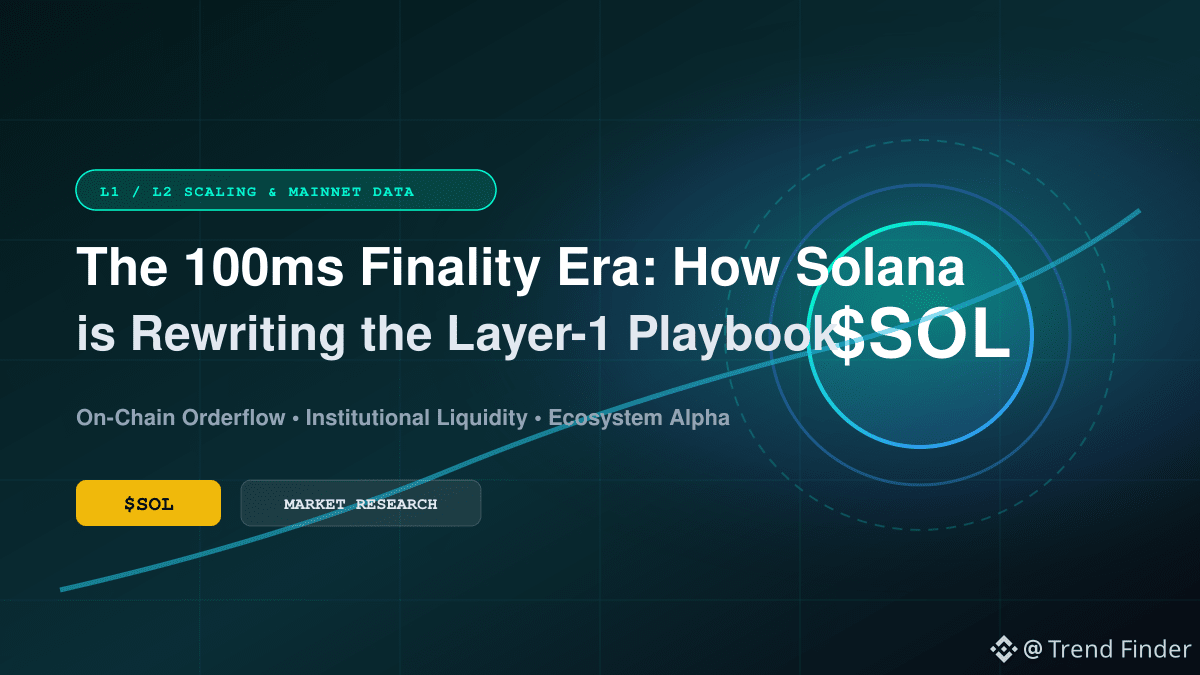
The 100ms Finality Era: How Solana is Rewriting the Layer-1 Playbook
Solana is ditching the old playbook and the Q3 data shows why this architecture shift is finally hitting the mainnet in a big way. We are looking at more than just a speed boost; we are seeing a fundamental rewire of how $SOL handles finality. While the market watches the 119.14 price level, the real story is the underlying infrastructure.
The move to the Alpenglow consensus model is the headline act. By swapping Proof of History and Tower BFT for Votor and Rotor, the network is aiming for 100 to 150 millisecond finality. That is a massive leap from the current 12.8 second range. This change, scheduled for the Agave 4.3 release in October 2026, transforms the chain into a high-frequency settlement layer that rivals traditional finance speeds.
On-chain metrics are already reflecting this growth. In Q3 2026, daily active addresses climbed to 4.1 million, while total transactions for the quarter surged 45 percent to 14 billion. This activity is fueled by recent efficiency gains like the SIMD-0286 compute limit increase and the 90 percent reduction in rent costs through the Agave 4.2 updates. Average fees are sitting at 0.005741, which keeps the barrier to entry non-existent for users and developers alike.
The institutional side is matching this technical momentum. U.S. spot Solana ETFs just pulled in 188 million in net inflows during late September, marking twelve straight weeks of positive movement. With a circulating supply of 588,075,265 tokens, this 1.6 billion in cumulative institutional buying is absorbing secondary market supply and building a strong floor. Over 9,400 monthly active developers are currently building on this stack, suggesting the roadmap has plenty of legs.
As we transition into this next phase of the mainnet, the focus shifts from simple throughput to ultra-low latency. Can any other Layer-1 actually compete with 150ms finality once Alpenglow goes live?
️
#Layer2 #BlockchainScaling
The 100ms Finality Era: How Solana is Rewriting the Layer-1 Playbook
Solana is ditching the old playbook and the Q3 data shows why this architecture shift is finally hitting the mainnet in a big way. We are looking at more than just a speed boost; we are seeing a fundamental rewire of how $SOL handles finality. While the market watches the 119.14 price level, the real story is the underlying infrastructure.
The move to the Alpenglow consensus model is the headline act. By swapping Proof of History and Tower BFT for Votor and Rotor, the network is aiming for 100 to 150 millisecond finality. That is a massive leap from the current 12.8 second range. This change, scheduled for the Agave 4.3 release in October 2026, transforms the chain into a high-frequency settlement layer that rivals traditional finance speeds.
On-chain metrics are already reflecting this growth. In Q3 2026, daily active addresses climbed to 4.1 million, while total transactions for the quarter surged 45 percent to 14 billion. This activity is fueled by recent efficiency gains like the SIMD-0286 compute limit increase and the 90 percent reduction in rent costs through the Agave 4.2 updates. Average fees are sitting at 0.005741, which keeps the barrier to entry non-existent for users and developers alike.
The institutional side is matching this technical momentum. U.S. spot Solana ETFs just pulled in 188 million in net inflows during late September, marking twelve straight weeks of positive movement. With a circulating supply of 588,075,265 tokens, this 1.6 billion in cumulative institutional buying is absorbing secondary market supply and building a strong floor. Over 9,400 monthly active developers are currently building on this stack, suggesting the roadmap has plenty of legs.
As we transition into this next phase of the mainnet, the focus shifts from simple throughput to ultra-low latency. Can any other Layer-1 actually compete with 150ms finality once Alpenglow goes live?
️
#Layer2 #BlockchainScaling
Solana is ditching the old playbook and the Q3 data shows why this architecture shift is finally hitting the mainnet in a big way. We are looking at more than just a speed boost; we are seeing a fundamental rewire of how $SOL handles finality. While the market watches the 119.14 price level, the real story is the underlying infrastructure.
The move to the Alpenglow consensus model is the headline act. By swapping Proof of History and Tower BFT for Votor and Rotor, the network is aiming for 100 to 150 millisecond finality. That is a massive leap from the current 12.8 second range. This change, scheduled for the Agave 4.3 release in October 2026, transforms the chain into a high-frequency settlement layer that rivals traditional finance speeds.
On-chain metrics are already reflecting this growth. In Q3 2026, daily active addresses climbed to 4.1 million, while total transactions for the quarter surged 45 percent to 14 billion. This activity is fueled by recent efficiency gains like the SIMD-0286 compute limit increase and the 90 percent reduction in rent costs through the Agave 4.2 updates. Average fees are sitting at 0.005741, which keeps the barrier to entry non-existent for users and developers alike.
The institutional side is matching this technical momentum. U.S. spot Solana ETFs just pulled in 188 million in net inflows during late September, marking twelve straight weeks of positive movement. With a circulating supply of 588,075,265 tokens, this 1.6 billion in cumulative institutional buying is absorbing secondary market supply and building a strong floor. Over 9,400 monthly active developers are currently building on this stack, suggesting the roadmap has plenty of legs.
As we transition into this next phase of the mainnet, the focus shifts from simple throughput to ultra-low latency. Can any other Layer-1 actually compete with 150ms finality once Alpenglow goes live?
️
#Layer2 #BlockchainScaling
1
57


·
--
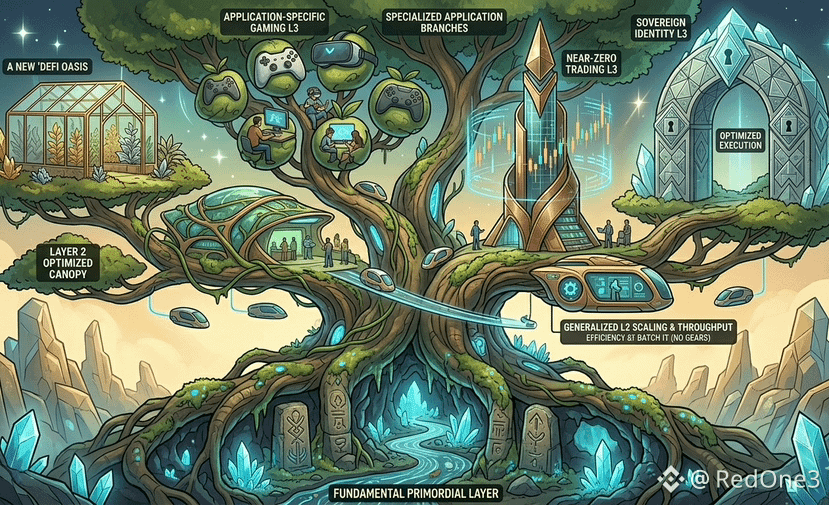
Ethereum L1: Scaling the Foundation 💎
While Layer 2s handle the volume, Ethereum’s mainnet is pushing boundaries by increasing Gas targets to scale data throughput.
Even with price pressure, ETH remains the ultimate settlement layer for global decentralized value.
#Ethereum #ETH #Layer1 #BlockchainScaling .
Ethereum L1: Scaling the Foundation 💎
While Layer 2s handle the volume, Ethereum’s mainnet is pushing boundaries by increasing Gas targets to scale data throughput.
Even with price pressure, ETH remains the ultimate settlement layer for global decentralized value.
#Ethereum #ETH #Layer1 #BlockchainScaling .
While Layer 2s handle the volume, Ethereum’s mainnet is pushing boundaries by increasing Gas targets to scale data throughput.
Even with price pressure, ETH remains the ultimate settlement layer for global decentralized value.
#Ethereum #ETH #Layer1 #BlockchainScaling .
89

🌐 Layer-2 Scaling Goes Live: How Ethereum's L2 Ecosystem Is Processing Millions
On July 4, 2026, Ethereum $ETH at $1,759.89 is scaling through its Layer-2 ecosystem. While ETH's base layer processes ~15 TPS, L2s can handle thousands by batching transactions and posting proofs to the main chain.
This scaling approach allows Ethereum to compete with faster L1s like Solana $SOL in terms of user experience, while maintaining the security of the most battle-tested smart contract platform.
The L2 ecosystem growth is a key reason why ETH's market cap remains at $212.37B despite competition — the network effect of existing infrastructure is enormous.
📌 Key Takeaway:
Ethereum's L2 scaling strategy balances security with throughput. The ecosystem is evolving to handle global transaction volumes without sacrificing decentralization.
#Ethereum #Layer2 #BlockchainScaling
#BinanceAlphaAlert
🌐 Layer-2 Scaling Goes Live: How Ethereum's L2 Ecosystem Is Processing Millions
On July 4, 2026, Ethereum $ETH at $1,759.89 is scaling through its Layer-2 ecosystem. While ETH's base layer processes ~15 TPS, L2s can handle thousands by batching transactions and posting proofs to the main chain.
This scaling approach allows Ethereum to compete with faster L1s like Solana $SOL in terms of user experience, while maintaining the security of the most battle-tested smart contract platform.
The L2 ecosystem growth is a key reason why ETH's market cap remains at $212.37B despite competition — the network effect of existing infrastructure is enormous.
📌 Key Takeaway:
Ethereum's L2 scaling strategy balances security with throughput. The ecosystem is evolving to handle global transaction volumes without sacrificing decentralization.
#Ethereum #Layer2 #BlockchainScaling
#BinanceAlphaAlert
On July 4, 2026, Ethereum $ETH at $1,759.89 is scaling through its Layer-2 ecosystem. While ETH's base layer processes ~15 TPS, L2s can handle thousands by batching transactions and posting proofs to the main chain.
This scaling approach allows Ethereum to compete with faster L1s like Solana $SOL in terms of user experience, while maintaining the security of the most battle-tested smart contract platform.
The L2 ecosystem growth is a key reason why ETH's market cap remains at $212.37B despite competition — the network effect of existing infrastructure is enormous.
📌 Key Takeaway:
Ethereum's L2 scaling strategy balances security with throughput. The ecosystem is evolving to handle global transaction volumes without sacrificing decentralization.
#Ethereum #Layer2 #BlockchainScaling
#BinanceAlphaAlert
105
·
--
Parallel EVM: Breaking the Ethereum Speed Limit 🚀
Traditional EVM processes transactions one by one. Parallelized EVM chains execute multiple transactions simultaneously, drastically reducing block times and gas spikes.
#ParallelEVM #Monad #CryptoTech #BlockchainScaling .
Parallel EVM: Breaking the Ethereum Speed Limit 🚀
Traditional EVM processes transactions one by one. Parallelized EVM chains execute multiple transactions simultaneously, drastically reducing block times and gas spikes.
#ParallelEVM #Monad #CryptoTech #BlockchainScaling .
Traditional EVM processes transactions one by one. Parallelized EVM chains execute multiple transactions simultaneously, drastically reducing block times and gas spikes.
#ParallelEVM #Monad #CryptoTech #BlockchainScaling .
184
◎ What Are Layer-2 Solutions?: Understanding L2 networks that scale Ethereum and other blockchains
On July 19, 2026, Layer-2 solutions are protocols built on top of base blockchains like Ethereum $ETH to improve transaction throughput and reduce fees. They process transactions off-chain and then settle the final state back to the main chain, dramatically increasing capacity.
As Ethereum's ecosystem grows, L2s like Arbitrum, Optimism, and Base are becoming essential for scaling DeFi, gaming, and other applications. They inherit Ethereum's security while offering faster and cheaper transactions — a key evolution for blockchain scalability.
📌 Key Takeaway:
Layer-2 solutions are the key to blockchain mass adoption. They solve the scalability trilemma by moving execution off-chain while preserving the security guarantees of the base layer.
#Layer2 #Ethereum #BlockchainScaling
#BinanceAlphaAlert
◎ What Are Layer-2 Solutions?: Understanding L2 networks that scale Ethereum and other blockchains
On July 19, 2026, Layer-2 solutions are protocols built on top of base blockchains like Ethereum $ETH to improve transaction throughput and reduce fees. They process transactions off-chain and then settle the final state back to the main chain, dramatically increasing capacity.
As Ethereum's ecosystem grows, L2s like Arbitrum, Optimism, and Base are becoming essential for scaling DeFi, gaming, and other applications. They inherit Ethereum's security while offering faster and cheaper transactions — a key evolution for blockchain scalability.
📌 Key Takeaway:
Layer-2 solutions are the key to blockchain mass adoption. They solve the scalability trilemma by moving execution off-chain while preserving the security guarantees of the base layer.
#Layer2 #Ethereum #BlockchainScaling
#BinanceAlphaAlert
On July 19, 2026, Layer-2 solutions are protocols built on top of base blockchains like Ethereum $ETH to improve transaction throughput and reduce fees. They process transactions off-chain and then settle the final state back to the main chain, dramatically increasing capacity.
As Ethereum's ecosystem grows, L2s like Arbitrum, Optimism, and Base are becoming essential for scaling DeFi, gaming, and other applications. They inherit Ethereum's security while offering faster and cheaper transactions — a key evolution for blockchain scalability.
📌 Key Takeaway:
Layer-2 solutions are the key to blockchain mass adoption. They solve the scalability trilemma by moving execution off-chain while preserving the security guarantees of the base layer.
#Layer2 #Ethereum #BlockchainScaling
#BinanceAlphaAlert
127
·
--
Shifting focus away from basic TPS races today. As $SUI holds steady at 1.005, real builders are tracking modular data availability and blob fee efficiency across scaling stacks. Price is chopping, but developer commit velocity tells the true growth story right now.
#Layer2 #BlockchainScaling #SUI
Shifting focus away from basic TPS races today. As $SUI holds steady at 1.005, real builders are tracking modular data availability and blob fee efficiency across scaling stacks. Price is chopping, but developer commit velocity tells the true growth story right now.
#Layer2 #BlockchainScaling #SUI
#Layer2 #BlockchainScaling #SUI
5
·
--
L2 adoption is hitting a whole new gear at 05:19:45 PM IST. Daily Active Addresses on ZK-rollups are spiking, and blob fee efficiency is a game changer for settlement costs. While scaling tech like parallel EVM matures, $PAXG stays solid at 4143.46 as the digital gold hedge. It's wild watching the modular stack evolve alongside $BTC.
#Layer2 #BlockchainScaling #PAXG
L2 adoption is hitting a whole new gear at 05:19:45 PM IST. Daily Active Addresses on ZK-rollups are spiking, and blob fee efficiency is a game changer for settlement costs. While scaling tech like parallel EVM matures, $PAXG stays solid at 4143.46 as the digital gold hedge. It's wild watching the modular stack evolve alongside $BTC .
#Layer2 #BlockchainScaling #PAXG
#Layer2 #BlockchainScaling #PAXG

1
4
තවත් අන්තර්ගතයන් ගවේෂණය කිරීමට ඇතුල් වන්න
Binance චතුරශ්රය හි ගෝලීය ක්රිප්ටෝ පරිශීලකයින් හා එක්වන්න
⚡️ ක්රිප්ටෝ පිළිබඳ නවතම සහ ප්රයෝජනවත් තොරතුරු ලබා ගන්න.
💬 ලොව විශාලතම ක්රිප්ටෝ හුවමාරුව මගින් විශ්වාස කෙරේ.
👍 සත්යායනය කරන ලද නිර්මාණකරුවන්ගෙන් සැබෑ විදසුන් සොයා ගන්න.
විද්යුත් තැපෑල / දුරකථන අංකය
නැගී එන මාතෘකා
1
#CanMicrosoftDeliverOnAI
44,121 නැරඹීම්
593 සාකච්ඡා කරමින්
2
#CanGoogleDefindItsCore
22,069 නැරඹීම්
448 සාකච්ඡා කරමින්
3
#FOMCWatch
9M නැරඹීම්
27,767 සාකච්ඡා කරමින්
4
#EthereumDropsBelow$2300
9,530 නැරඹීම්
148 සාකච්ඡා කරමින්
5
#BitcoinSlipsBelow$80KAgain
26,496 නැරඹීම්
113 සාකච්ඡා කරමින්
6
#ThailandLaunchesWORPTStablecoinToQRPaymentApp
52,022 නැරඹීම්
734 සාකච්ඡා කරමින්
7
#StrategySkipsBitcoinPurchasesSpends$205MOnSTRCBuybacks
10,164 නැරඹීම්
94 සාකච්ඡා කරමින්
8
#BitmineAdds10452ETH
93,336 නැරඹීම්
1,121 සාකච්ඡා කරමින්
9
#SouthKoreaConsidersEducationTaxOnCryptoExchanges
50,670 නැරඹීම්
818 සාකච්ඡා කරමින්
10
#OCCUrgesCommunityBanksToEnterStablecoinPayments
38,460 නැරඹීම්
581 සාකච්ඡා කරමින්