
#aichipslumpnasdaq
aichipslumpnasdaq
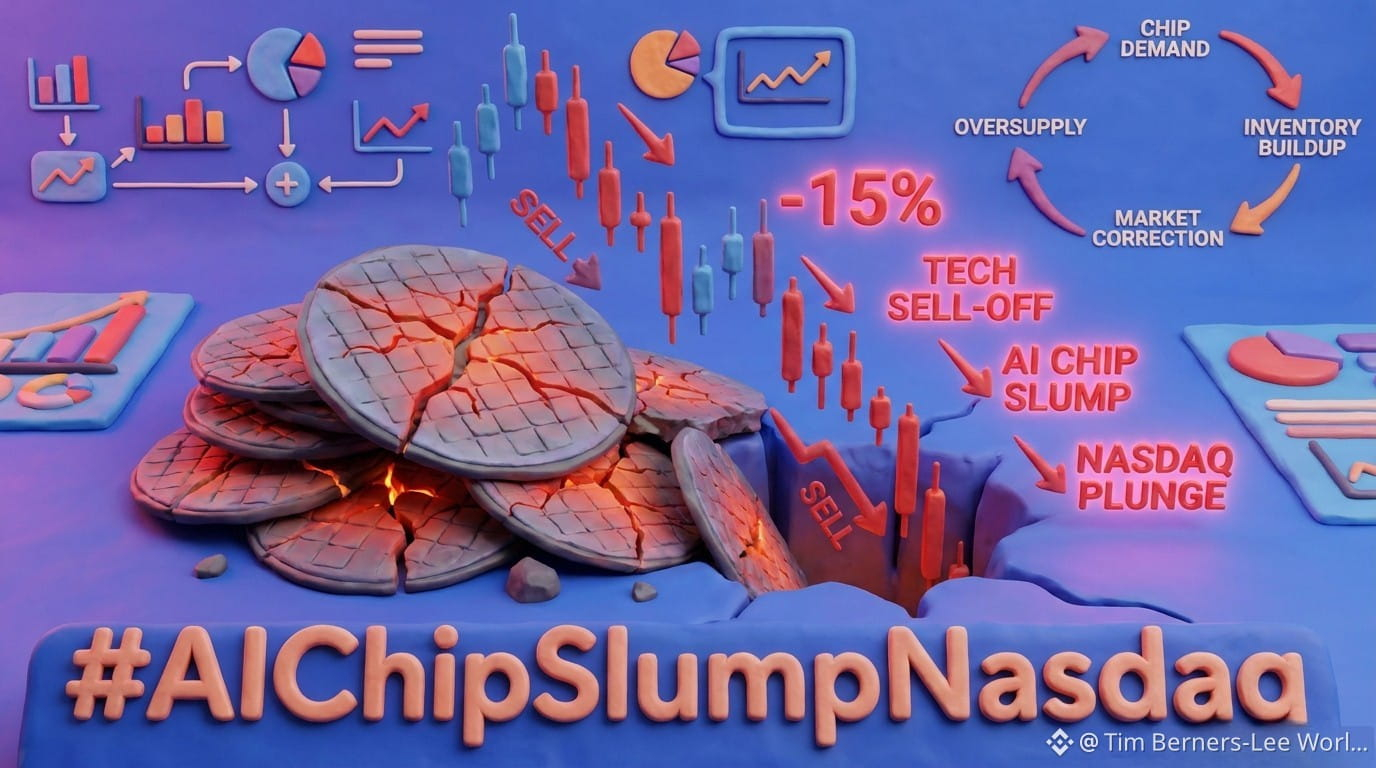
The Nasdaq fell 3.4% last week as AI chip stocks slumped: Sandisk -27.4%, Micron -22%, and the VanEck Semiconductor ETF -11.2%. Oil fell 12.8% and the 10-year yield hit a two-month low of 4.86%. Berkshire posted a record $9.6B Q3 buyback. Nvidia's board is probing reports that CEO Jensen Huang was targeted by a suspected spy operation. Is this a dip to buy or the start of a deeper slide? 👇
උණුසුම්
නවතම


·
--
සත්යායනය කළ
ලිපිය
TradFi News | Nasdaq Drops 3.4% in Week as AI Chip Stocks Slump; Berkshire Posts Record $9.6 Billion BuybackUS stock futures open Sunday evening after a damaging week for AI stocks. The Nasdaq Composite fell 3.4% in the week to November 6, the S&P 500 lost 2.7%, the Dow slipped 0.9% and the small-cap Russell 2000 shed 2.05%, according to Investor’s Business Daily.
Nasdaq 100 futures were indicated modestly lower after Nvidia’s board opened an investigation following reports that CEO Jensen Huang was targeted by a suspected Chinese espionage operation, according to IBD, CNBC and NBC News. Lawmakers from both parties have also raised questions about the reports, CNBC said.
AI Hardware Stocks Lead the Losses
After a post-election rally on Wednesday, when the Dow jumped 3%, AI infrastructure stocks fell sharply on Thursday and dragged down the wider market. Friday’s AI-led bounce faded into a mixed close.
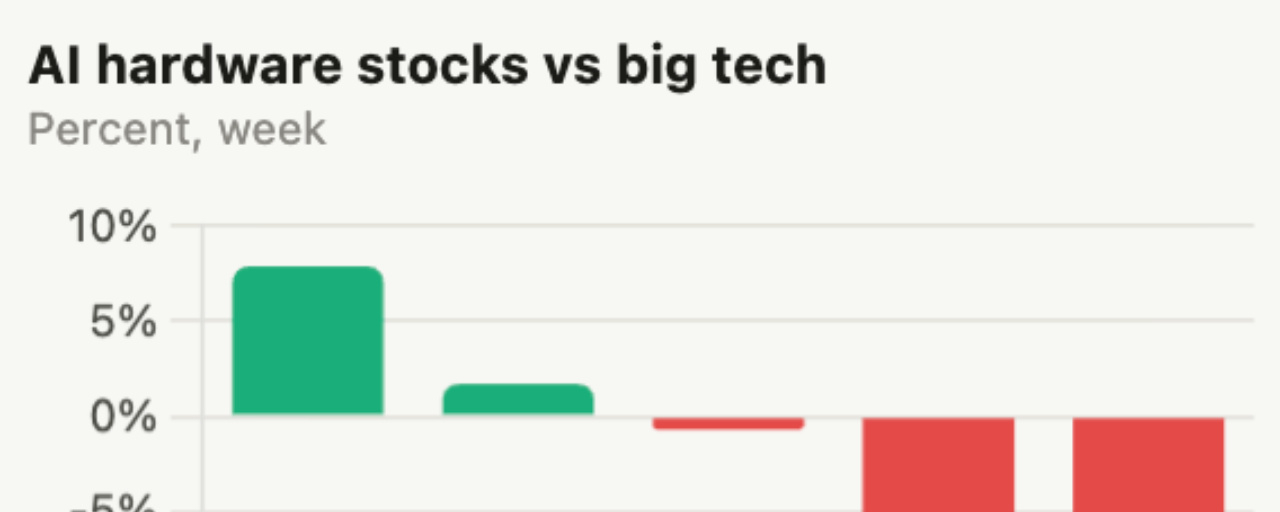
Sandisk (SNDK) rose 3.55% to $835.06 on Friday but fell 27.4% on the week. It is down 64.5% from its late-June peak, according to MarketSurge.Micron (MU) gained 5.1% to $690 on Friday but dropped 22% on the week and is 45% below its high.
The VanEck Semiconductor ETF (SMH) fell 11.2% on the week and the iShares Expanded Tech-Software ETF (IGV) lost 5.2%.
Apple, Microsoft and Amazon Hold Up
Big tech held up better than the rest of the sector:
Amazon (AMZN) jumped 7.9% on the week to $259.30.Microsoft (MSFT) rose 1.7% to $530.62.Apple (AAPL) slipped 0.7% to $342.37.
Microsoft and Amazon rallied Wednesday as investors bet that existing data center operators could gain if rivals’ projects are delayed, according to IBD.
Oil Falls 12.8% as Yields Hit Two-Month Low
US crude futures fell 12.8% on the week to $90.83 a barrel, pressured by hopes for US–Iran diplomacy, according to IBD. President Donald Trump told CNN that renewed US strikes on Iran are “highly unlikely” if talks progress. The Energy Select SPDR ETF (XLE) fell 12%.
The 10-year Treasury yield fell 7 basis points to 4.86%, a two-month low.
Some sectors gained. The US Global Jets ETF (JETS) rose 6.6%, homebuilders gained 1.3% and financials 1.15%.
Berkshire Posts Record Buyback
Berkshire Hathaway bought back $9.6 billion of its own shares in the third quarter, up from $4.5 billion in Q2. That beat its previous record of $9.3 billion, set in Q3 2020.
Operating earnings: fell 6% to $12.7 billion, roughly in line with estimates, as weaker insurance underwriting and investment income weighed. Railroad, utility and other operations improved.Revenue: rose 11% to $105.6 billion, above estimates of $100.96 billion.Cash: rose to $377.4 billion from $365.5 billion in Q2, but remains below Q1’s $397.4 billion.Stock portfolio: Berkshire sold a net $400 million or so of stocks in Q3, after net purchases of about $20 billion in Q2.
Berkshire stock has risen for five straight weeks and hit a record high on Thursday. Under new CEO Greg Abel, the company has largely kept Warren Buffett’s conglomerate-and-investment approach.
Indexes Below Key Moving Averages
All major indexes are below their 50-day moving averages, and the Nasdaq and Russell 2000 are also below their 200-day lines, according to IBD. IBD’s Ed Carson said one weak bounce is not enough to signal a market bottom, and that investors should be defensive and wait for clear evidence of a turnaround.
TradFi News | Nasdaq Drops 3.4% in Week as AI Chip Stocks Slump; Berkshire Posts Record $9.6 Billion Buyback
US stock futures open Sunday evening after a damaging week for AI stocks. The Nasdaq Composite fell 3.4% in the week to November 6, the S&P 500 lost 2.7%, the Dow slipped 0.9% and the small-cap Russell 2000 shed 2.05%, according to Investor’s Business Daily.
Nasdaq 100 futures were indicated modestly lower after Nvidia’s board opened an investigation following reports that CEO Jensen Huang was targeted by a suspected Chinese espionage operation, according to IBD, CNBC and NBC News. Lawmakers from both parties have also raised questions about the reports, CNBC said.
AI Hardware Stocks Lead the Losses
After a post-election rally on Wednesday, when the Dow jumped 3%, AI infrastructure stocks fell sharply on Thursday and dragged down the wider market. Friday’s AI-led bounce faded into a mixed close.
Sandisk (SNDK) rose 3.55% to $835.06 on Friday but fell 27.4% on the week. It is down 64.5% from its late-June peak, according to MarketSurge.Micron (MU) gained 5.1% to $690 on Friday but dropped 22% on the week and is 45% below its high.
The VanEck Semiconductor ETF (SMH) fell 11.2% on the week and the iShares Expanded Tech-Software ETF (IGV) lost 5.2%.
Apple, Microsoft and Amazon Hold Up
Big tech held up better than the rest of the sector:
Amazon (AMZN) jumped 7.9% on the week to $259.30.Microsoft (MSFT) rose 1.7% to $530.62.Apple (AAPL) slipped 0.7% to $342.37.
Microsoft and Amazon rallied Wednesday as investors bet that existing data center operators could gain if rivals’ projects are delayed, according to IBD.
Oil Falls 12.8% as Yields Hit Two-Month Low
US crude futures fell 12.8% on the week to $90.83 a barrel, pressured by hopes for US–Iran diplomacy, according to IBD. President Donald Trump told CNN that renewed US strikes on Iran are “highly unlikely” if talks progress. The Energy Select SPDR ETF (XLE) fell 12%.
The 10-year Treasury yield fell 7 basis points to 4.86%, a two-month low.
Some sectors gained. The US Global Jets ETF (JETS) rose 6.6%, homebuilders gained 1.3% and financials 1.15%.
Berkshire Posts Record Buyback
Berkshire Hathaway bought back $9.6 billion of its own shares in the third quarter, up from $4.5 billion in Q2. That beat its previous record of $9.3 billion, set in Q3 2020.
Operating earnings: fell 6% to $12.7 billion, roughly in line with estimates, as weaker insurance underwriting and investment income weighed. Railroad, utility and other operations improved.Revenue: rose 11% to $105.6 billion, above estimates of $100.96 billion.Cash: rose to $377.4 billion from $365.5 billion in Q2, but remains below Q1’s $397.4 billion.Stock portfolio: Berkshire sold a net $400 million or so of stocks in Q3, after net purchases of about $20 billion in Q2.
Berkshire stock has risen for five straight weeks and hit a record high on Thursday. Under new CEO Greg Abel, the company has largely kept Warren Buffett’s conglomerate-and-investment approach.
Indexes Below Key Moving Averages
All major indexes are below their 50-day moving averages, and the Nasdaq and Russell 2000 are also below their 200-day lines, according to IBD. IBD’s Ed Carson said one weak bounce is not enough to signal a market bottom, and that investors should be defensive and wait for clear evidence of a turnaround.
1
3
11
17.5k

·
--
#aichipslumpnasdaq
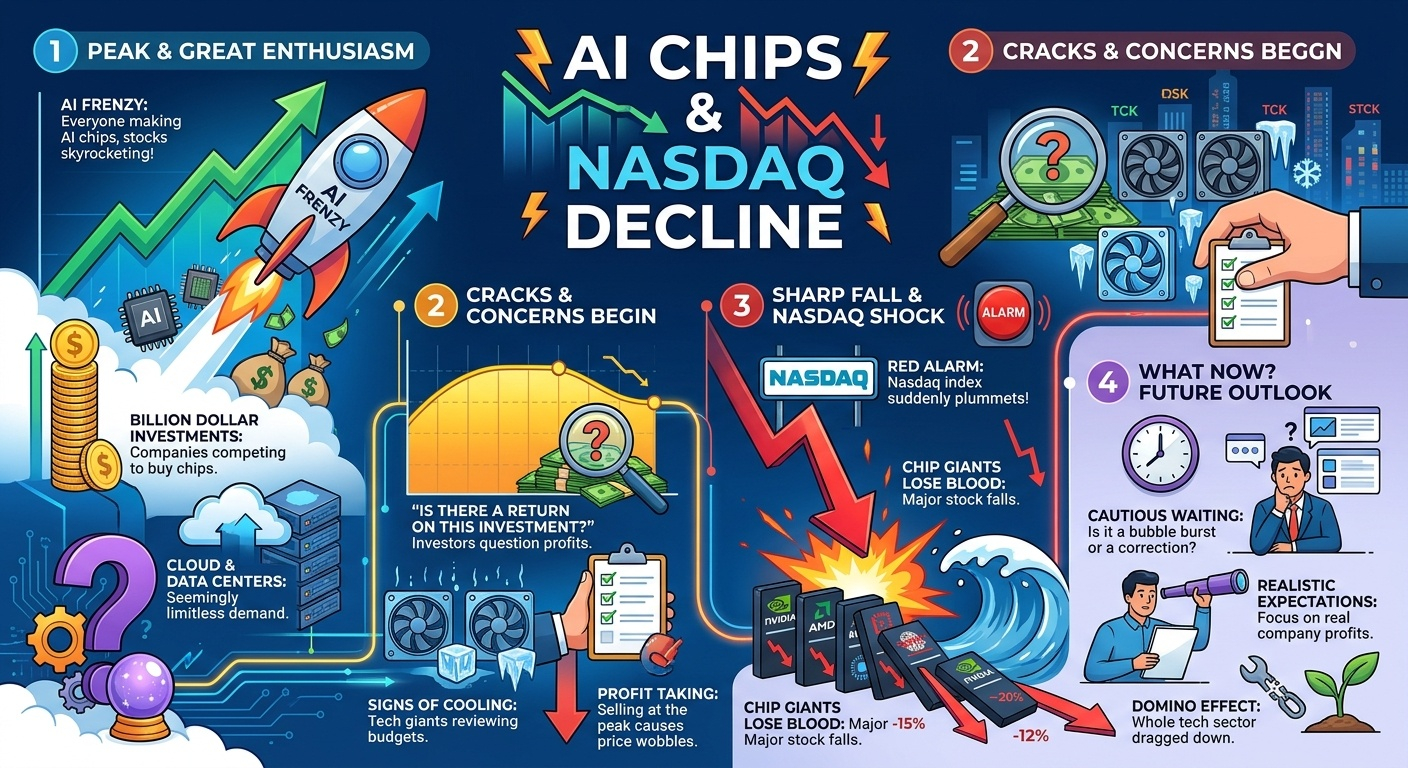
📉🤖💥 Yapay Zeka Çipleri ve Nasdaq Düşüşü 📉💻⚡
1. 🚀 Zirve ve Büyük Coşku
📈 Yapay Zeka Çılgınlığı: Herkes AI çipleri üretiyor, hisseler tavan yapıyordu!
💰 Milyar Dolarlık Yatırımlar: Şirketler çip almak için birbirleriyle yarışıyordu.
☁️ Bulut ve Veri Merkezleri: Sınırsız talep var sanılıyordu.
2. ⚠️ Çatlaklar ve Endişeler Başlıyor
💸 "Bu Kadar Yatırımın Karşılığı Gelecek mi?" sorusu sormaya başladı yatırımcılar.
🧊 Soğuma Sinyalleri: Büyük teknoloji devleri bütçelerini gözden geçirmeye başladı.
📉 Kâr Realizasyonları: "Zirveden satalım" diyenler artınca fiyatlar titredi.
3. 💥 Sert Düşüş ve Nasdaq Şoku
🔴 Kırmızı Alarm: Nasdaq endeksi bir anda çakılmaya başladı!
📉 Çip Devleri Kan Kaybediyor: NVIDIA, AMD, TSMC gibi devlerin hisseleri sert düştü.
🌊 Domino Etkisi: Tüm teknoloji sektörü bu dalgayla beraber aşağı çekildi.
4. 🔮 Şimdi Ne Olacak?
⏳ Temkinli Bekleyiş: Yatırımcılar artık "balon mu patladı, yoksa geçici bir düzeltme mi?" diye düşünüyor.
🛠️ Gerçekçi Beklentiler: Şirketlerin gerçekten kâr edip edemeyeceği artık daha sıkı takip ediliyor.
$GNS $AIOT $AIN
{future}(AINUSDT)
{future}(AIOTUSDT)
{spot}(GNSUSDT)
#aichipslumpnasdaq
📉🤖💥 Yapay Zeka Çipleri ve Nasdaq Düşüşü 📉💻⚡
1. 🚀 Zirve ve Büyük Coşku
📈 Yapay Zeka Çılgınlığı: Herkes AI çipleri üretiyor, hisseler tavan yapıyordu!
💰 Milyar Dolarlık Yatırımlar: Şirketler çip almak için birbirleriyle yarışıyordu.
☁️ Bulut ve Veri Merkezleri: Sınırsız talep var sanılıyordu.
2. ⚠️ Çatlaklar ve Endişeler Başlıyor
💸 "Bu Kadar Yatırımın Karşılığı Gelecek mi?" sorusu sormaya başladı yatırımcılar.
🧊 Soğuma Sinyalleri: Büyük teknoloji devleri bütçelerini gözden geçirmeye başladı.
📉 Kâr Realizasyonları: "Zirveden satalım" diyenler artınca fiyatlar titredi.
3. 💥 Sert Düşüş ve Nasdaq Şoku
🔴 Kırmızı Alarm: Nasdaq endeksi bir anda çakılmaya başladı!
📉 Çip Devleri Kan Kaybediyor: NVIDIA, AMD, TSMC gibi devlerin hisseleri sert düştü.
🌊 Domino Etkisi: Tüm teknoloji sektörü bu dalgayla beraber aşağı çekildi.
4. 🔮 Şimdi Ne Olacak?
⏳ Temkinli Bekleyiş: Yatırımcılar artık "balon mu patladı, yoksa geçici bir düzeltme mi?" diye düşünüyor.
🛠️ Gerçekçi Beklentiler: Şirketlerin gerçekten kâr edip edemeyeceği artık daha sıkı takip ediliyor.
$GNS $AIOT $AIN
844

ලිපිය
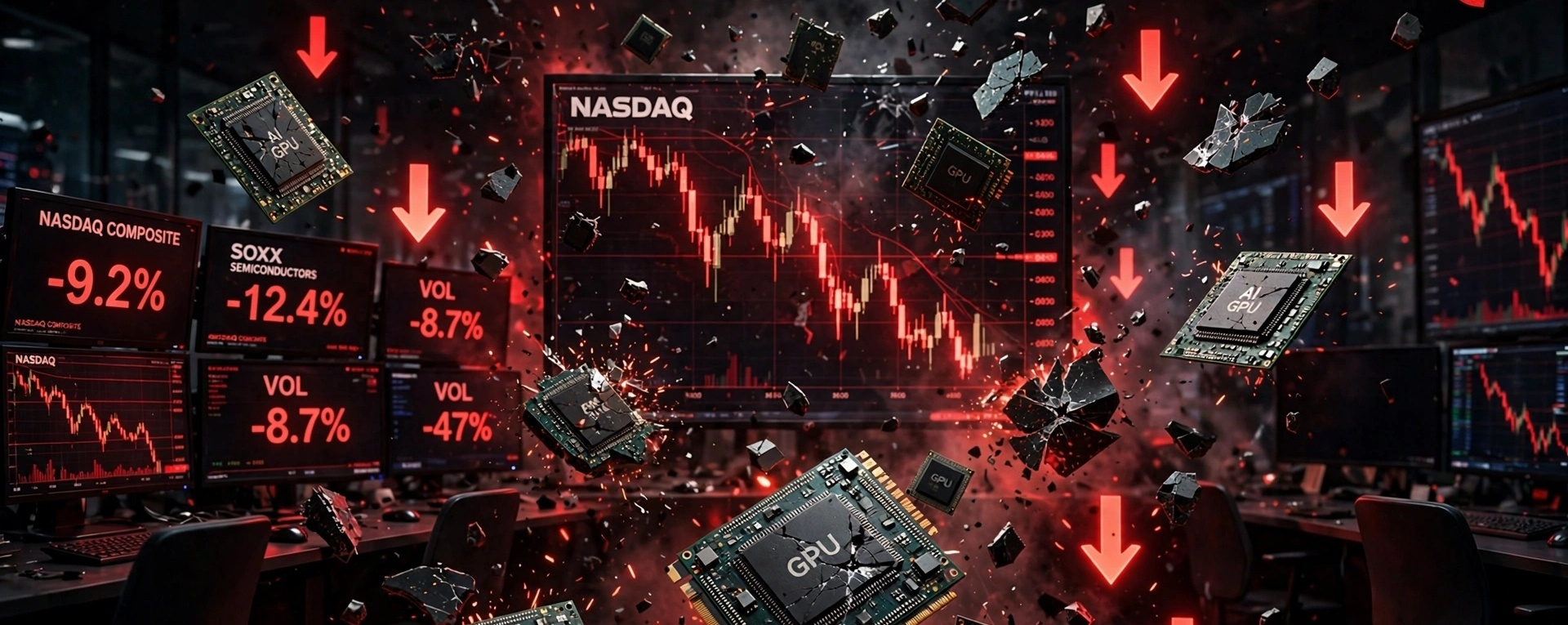
AIChipSlumpNasdaq#AIChipSlumpNasdaq $2.5 trillion lost in one day — Is the AI bubble bursting? If you went to bed early on November 5, you might have missed a significant decline in the Nasdaq, the largest since April 2025. The Nasdaq Composite fell 5.52% to 24,315 The Nasdaq-100 fell 6.36% The S&P 500 declined 4.36% The Dow dropped 3.44% The Nasdaq is now officially in correction territory, down over 10% from its record high on October 6. The primary cause of this decline was one sector: AI chips. Nvidia (NVDA): -9.26% — Lost over $400 billion in one day, closing at $181.60 AMD: -17.26% — Despite recording its best quarter ever, with $13.38 billion in revenue, a 44.7% year-over-year increase Micron: -17.46% SanDisk: -22.26% Broadcom: -10.43% Intel: -10.33% ARM: -13.08% Qualcomm: -9.49% The Philadelphia Semiconductor Index fell 12.3%, marking the worst day since the COVID crash in March 2020. All 30 chip stocks closed in negative territory. 1. **US Midterm Election Results** Democrats won the midterms. The market is now concerned about potential new regulations, moratoriums, and delays on new AI data centers in states like Texas, Georgia, and Ohio. UBS estimates that 30% of the expected 2028 US data center additions could face delays. Goldman Sachs suggests that up to 45% of planned capacity may be affected. 2. **Doubts About AI Spending** Large tech companies are investing hundreds of billions in AI infrastructure. Investors are now questioning when this investment will yield returns. While hyperscalers saw a rise on Wednesday with hopes for slower capital expenditures, chips faced a decline on Thursday due to concerns regarding weaker demand. The market is currently uncertain. 3. **Weak Forecasts** Qualcomm reported a 26% year-over-year decline in smartphone chip sales, which undermined confidence across the sector. When a major chip company provides a weak outlook, it often leads to broad selling in the industry. AMD's data center revenue surged 97% year-over-year to $8.55 billion. Demand remains active. Nvidia's earnings report is scheduled for November 17, which will serve as a key indicator. This was not a fundamental collapse; it was driven by a valuation reset, political concerns, and a reduction in crowded positions. The AI trade had become overly saturated, with investors heavily positioned in stocks like NVDA, AMD, and MU. When anxiety arose, many rushed to sell. 1. When the Nasdaq declines, Bitcoin typically follows. A risk-off approach often leads to sell-offs in crypto first. 2. However, during financial panic, savvy investors tend to accumulate assets. 3. Keep an eye on Nvidia's earnings on November 17. A positive report could lead to rebounds in both the Nasdaq and crypto markets, while a negative outcome could result in further declines. - Panic sell your BTC/ETH at a loss - Leverage long positions to try to catch the bottom - Invest all your money in every dip - Hold cash and wait for confirmation before making decisions - Dollar-cost average slowly with small amounts instead of going all-in - Monitor two key levels: Nasdaq support at 24,000 and Bitcoin support at $95,000 - Focus on macroeconomic trends rather than influencers This is not the conclusion of AI; it is the end of uncritical AI enthusiasm. Companies that have substantial revenue will endure, while those driven by hype may not survive. Typically, every bull market experiences 2-3 corrections of 10-15%. This is one of those instances. Weaker investors are exiting, while stronger ones are accumulating. Is this the burst of the AI bubble or a great buying opportunity for 2026? Comment: or Share this with anyone who invested in NVDA at its peak. For further insights on macroeconomics and crypto, follow for data-driven analysis without hype. This is not financial advice. Conduct your own research. This is for educational purposes only.
AIChipSlumpNasdaq
#AIChipSlumpNasdaq $2.5 trillion lost in one day — Is the AI bubble bursting? If you went to bed early on November 5, you might have missed a significant decline in the Nasdaq, the largest since April 2025. The Nasdaq Composite fell 5.52% to 24,315 The Nasdaq-100 fell 6.36% The S&P 500 declined 4.36% The Dow dropped 3.44% The Nasdaq is now officially in correction territory, down over 10% from its record high on October 6. The primary cause of this decline was one sector: AI chips. Nvidia (NVDA): -9.26% — Lost over $400 billion in one day, closing at $181.60 AMD: -17.26% — Despite recording its best quarter ever, with $13.38 billion in revenue, a 44.7% year-over-year increase Micron: -17.46% SanDisk: -22.26% Broadcom: -10.43% Intel: -10.33% ARM: -13.08% Qualcomm: -9.49% The Philadelphia Semiconductor Index fell 12.3%, marking the worst day since the COVID crash in March 2020. All 30 chip stocks closed in negative territory. 1. **US Midterm Election Results** Democrats won the midterms. The market is now concerned about potential new regulations, moratoriums, and delays on new AI data centers in states like Texas, Georgia, and Ohio. UBS estimates that 30% of the expected 2028 US data center additions could face delays. Goldman Sachs suggests that up to 45% of planned capacity may be affected. 2. **Doubts About AI Spending** Large tech companies are investing hundreds of billions in AI infrastructure. Investors are now questioning when this investment will yield returns. While hyperscalers saw a rise on Wednesday with hopes for slower capital expenditures, chips faced a decline on Thursday due to concerns regarding weaker demand. The market is currently uncertain. 3. **Weak Forecasts** Qualcomm reported a 26% year-over-year decline in smartphone chip sales, which undermined confidence across the sector. When a major chip company provides a weak outlook, it often leads to broad selling in the industry. AMD's data center revenue surged 97% year-over-year to $8.55 billion. Demand remains active. Nvidia's earnings report is scheduled for November 17, which will serve as a key indicator. This was not a fundamental collapse; it was driven by a valuation reset, political concerns, and a reduction in crowded positions. The AI trade had become overly saturated, with investors heavily positioned in stocks like NVDA, AMD, and MU. When anxiety arose, many rushed to sell. 1. When the Nasdaq declines, Bitcoin typically follows. A risk-off approach often leads to sell-offs in crypto first. 2. However, during financial panic, savvy investors tend to accumulate assets. 3. Keep an eye on Nvidia's earnings on November 17. A positive report could lead to rebounds in both the Nasdaq and crypto markets, while a negative outcome could result in further declines. - Panic sell your BTC/ETH at a loss - Leverage long positions to try to catch the bottom - Invest all your money in every dip - Hold cash and wait for confirmation before making decisions - Dollar-cost average slowly with small amounts instead of going all-in - Monitor two key levels: Nasdaq support at 24,000 and Bitcoin support at $95,000 - Focus on macroeconomic trends rather than influencers This is not the conclusion of AI; it is the end of uncritical AI enthusiasm. Companies that have substantial revenue will endure, while those driven by hype may not survive. Typically, every bull market experiences 2-3 corrections of 10-15%. This is one of those instances. Weaker investors are exiting, while stronger ones are accumulating. Is this the burst of the AI bubble or a great buying opportunity for 2026? Comment: or Share this with anyone who invested in NVDA at its peak. For further insights on macroeconomics and crypto, follow for data-driven analysis without hype. This is not financial advice. Conduct your own research. This is for educational purposes only.
280
AI芯片股遭遇抛售潮,纳斯达克承压下行,加密市场联动走弱
一、AI芯片板块集体下挫,纳斯达克面临考验
近期全球资本市场最引人注目的事件之一,莫过于AI芯片板块的集体回调。从广场热门话题标签来看,AI芯片股下跌引发纳斯达克承压已经成为社区讨论的焦点之一,相关话题在短时间内吸引了上百位作者参与讨论,浏览量突破四千次。这一轮下跌并非偶然,而是多重因素叠加的结果。
首先,经过过去一年多的人工智能概念炒作,许多AI芯片公司的估值已经被推到了极高的水平。当市场对业绩增长的预期无法在短期内兑现时,资金自然会选择获利了结。其次,美国国债收益率的持续走高对成长股构成了直接压力,高估值科技股的折现价值因此缩水。此外,部分主要经济体对高端芯片出口的新一轮限制措施,也让投资者对AI芯片企业的未来营收前景产生了担忧。
二、加密市场与美股科技板块的联动效应加深
值得注意的是,加密市场与美股科技板块之间的联动性正在显著增强。比特币在过去一周下跌约百分之一,价格徘徊在七万五千美元附近,现货比特币ETF单周净流出高达十二亿八千万美元,其中贝莱德旗下的IBIT基金独自承担了近十二亿美元的流出压力。这种机构资金的撤离与AI芯片股的抛售形成了共振效应。
从链上数据来看,Hyperliquid平台上的巨鲸已经建立起超过九亿美元的比特币净空头头寸,创下自二零二五年十月以来的最高纪录。最大的单笔空头仓位价值约一亿七千八百万美元,平均入场价格在七万六千四百美元。这种大规模做空行为表明,部分聪明钱正在押注短期市场的进一步下行。
三、山寨币市场遭遇重创,风险偏好急剧收缩
在比特币走弱的背景下,山寨币市场更是雪上加霜。过去数周内,山寨币总市值蒸发了近两千亿美元,几乎抹去了从八月中旬到九月底的全部反弹成果。据统计,大约百分之七十的上市山寨币已经跌破了二百日均线,这是一个非常强烈的技术性熊市信号。
ADA、SUI、DOT、ENA等主流山寨币均遭到重创。市场风险偏好的急剧收缩意味着投资者正在大规模撤离高风险资产,转向现金或者稳定币避险。这种情绪在广场社区中也有明显体现,比特币、以太坊和BNB的讨论中,中性观点占据了绝大多数,看多和看空情绪都相对低迷。
四、代币化美股与新兴赛道的结构性机会
尽管整体市场承压,但代币化美股赛道仍在持续发展。币安Web3平台上的代币化美股产品列表不断扩充,涵盖新兴市场ETF、莫德纳等生物科技股以及林德等工业气体巨头。这些代币化产品让加密用户能够以更低的门槛接触到传统美股资产,在市场波动期间提供了分散风险的新途径。
与此同时,Solana生态的发展也值得关注。据富达数字资产发布的研究报告,Solana在单周处理的交易笔数上曾经短暂超越纽约证券交易所,被机构称为新兴金融基础设施的重要组成部分。Solana相关公司持有约二百二十万枚SOL,并计划在香港拓展代币化服务,将亚太市场作为最大的增长机遇。
五、后市展望与风险提示
综合来看,当前市场面临的核心矛盾在于:AI叙事的中长期前景依然乐观,但短期估值消化和宏观环境的不确定性正在压制风险资产的表现。比特币连续五周下跌的趋势如果无法扭转,可能进一步拖累整个加密市场。投资者需要密切关注美联储接下来的政策动向、美国通胀数据的变化,以及AI芯片企业即将发布的财报能否重新点燃市场信心。
在这个充满不确定性的时期,保持谨慎、控制仓位、避免高杠杆操作是最基本的生存法则。市场的每一次深度调整,既是对过度乐观情绪的修正,也可能孕育着下一轮行情的种子。
本文为AI编写发布,本人不站队、不支持文中所提的加密货币。本人没有持有任何文章中所提的代币。加密货币市场风险极大,投资需谨慎。远离合约。
#AIChipSlumpNasdaq #BitcoinFiveWeeklyLosses #代币化美股
26

·
--
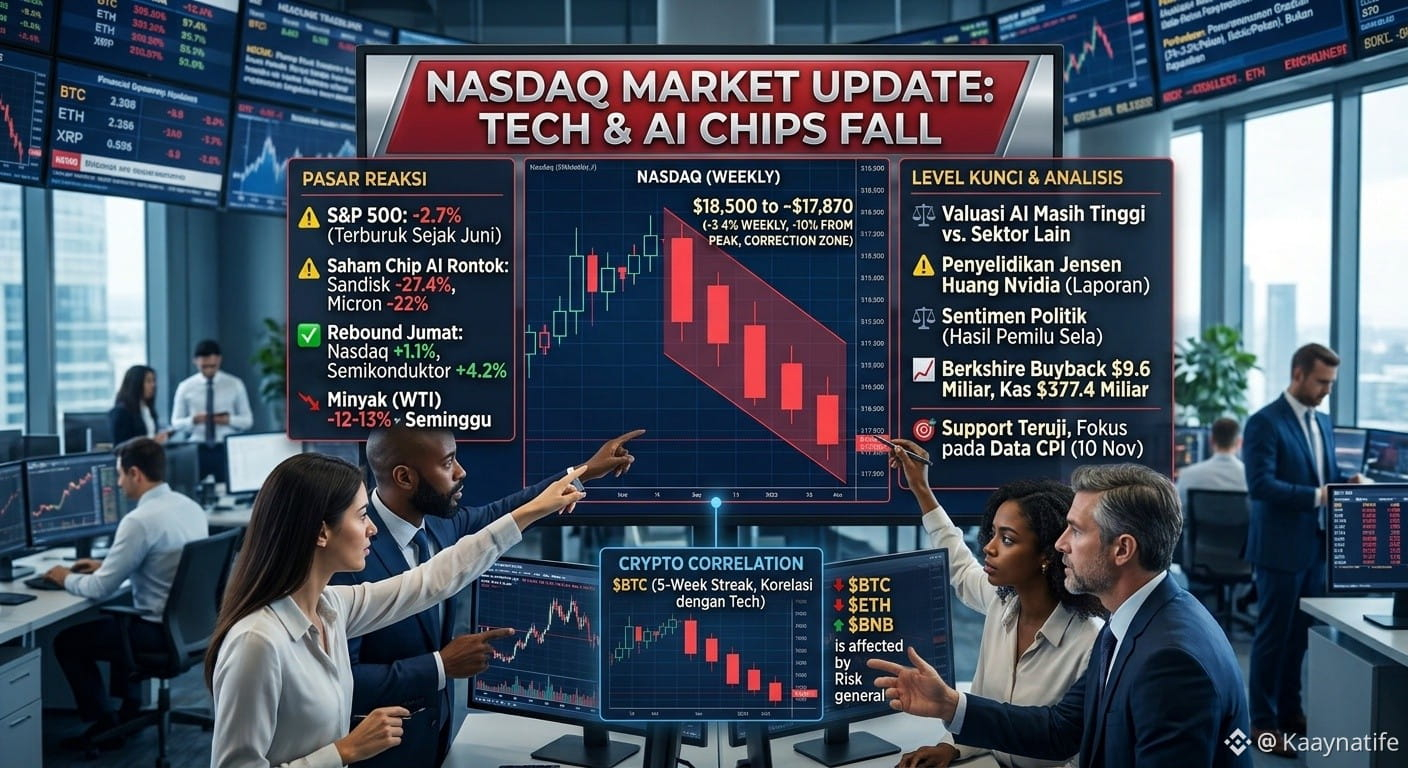
#aichipslumpnasdaq 📉 Nasdaq Anjlok 3,4% Seminggu, Saham Chip AI Rontok — Peluang Beli atau Awal Penurunan Lebih Dalam?
Data yang perlu kamu tahu:
⚠️Nasdaq 3,4% dalam sepekan dan masuk zona koreksi (turun 10% dari puncaknya sebulan lalu). Ini penurunan mingguan keempat berturut-turut
⚠️ S&P 500 turun 2,7%, terburuk sejak Juni. Kamis jadi hari terburuk, dengan nilai pasar yang hilang diperkirakan $2–3 triliun dalam sehari
⚠️ Saham chip memori terpukul paling dalam: Sandisk -27,4%, Micron -22%. Sektor teknologi (XLK) turun sekitar 8%
✅ Jumat ada rebound: Nasdaq naik 1,1% dan indeks semikonduktor naik 4,2%, didukung data tenaga kerja yang lebih kuat dari perkiraan
Reaksi pasar?
Di tengah aksi jual, ada sinyal lain. Harga minyak turun sekitar 12–13% dalam seminggu (WTI) karena harapan meredanya konflik Timur Tengah. Imbal hasil obligasi AS 10 tahun ditutup 4,86%, dekat level terendah dua bulan. Berkshire Hathaway mencatat buyback rekor $9,6 miliar di Q3 dengan kas $377,4 miliar. Di saat yang sama, dewan direksi Nvidia membuka penyelidikan independen atas laporan media bahwa CEO Jensen Huang diduga jadi target operasi intelijen asing. Ini masih laporan, belum terbukti.
Kenapa ini beda dari biasanya?
Biasanya koreksi chip dipicu hasil laporan keuangan yang mengecewakan. Kali ini pemicunya politik dan sentimen. Hasil pemilu sela AS membuat investor khawatir soal pengawasan lebih ketat terhadap perusahaan infrastruktur AI. Indeks S&P 500 berbobot sama hanya turun 1,1%, jadi tekanannya terkonsentrasi di AI dan chip, bukan seluruh pasar.
Pemicu utama:
Dua sisi yang saling tarik. Sisi hati-hati: valuasi AI masih tinggi, kekhawatiran pembiayaan, dan ketidakpastian regulasi. Sisi optimis: minyak dan imbal hasil yang turun mengurangi tekanan inflasi, dan sebagian analis menilai koreksi ini bisa jadi peluang jangka panjang. Tidak ada yang bisa memastikan sisi mana yang menang.
$TAO $RENDER $NEAR
{spot}(NEARUSDT)
{spot}(RENDERUSDT)
#aichipslumpnasdaq
#NASDAQ
#aichipslumpnasdaq 📉 Nasdaq Anjlok 3,4% Seminggu, Saham Chip AI Rontok — Peluang Beli atau Awal Penurunan Lebih Dalam?
Data yang perlu kamu tahu:
⚠️Nasdaq 3,4% dalam sepekan dan masuk zona koreksi (turun 10% dari puncaknya sebulan lalu). Ini penurunan mingguan keempat berturut-turut
⚠️ S&P 500 turun 2,7%, terburuk sejak Juni. Kamis jadi hari terburuk, dengan nilai pasar yang hilang diperkirakan $2–3 triliun dalam sehari
⚠️ Saham chip memori terpukul paling dalam: Sandisk -27,4%, Micron -22%. Sektor teknologi (XLK) turun sekitar 8%
✅ Jumat ada rebound: Nasdaq naik 1,1% dan indeks semikonduktor naik 4,2%, didukung data tenaga kerja yang lebih kuat dari perkiraan
Reaksi pasar?
Di tengah aksi jual, ada sinyal lain. Harga minyak turun sekitar 12–13% dalam seminggu (WTI) karena harapan meredanya konflik Timur Tengah. Imbal hasil obligasi AS 10 tahun ditutup 4,86%, dekat level terendah dua bulan. Berkshire Hathaway mencatat buyback rekor $9,6 miliar di Q3 dengan kas $377,4 miliar. Di saat yang sama, dewan direksi Nvidia membuka penyelidikan independen atas laporan media bahwa CEO Jensen Huang diduga jadi target operasi intelijen asing. Ini masih laporan, belum terbukti.
Kenapa ini beda dari biasanya?
Biasanya koreksi chip dipicu hasil laporan keuangan yang mengecewakan. Kali ini pemicunya politik dan sentimen. Hasil pemilu sela AS membuat investor khawatir soal pengawasan lebih ketat terhadap perusahaan infrastruktur AI. Indeks S&P 500 berbobot sama hanya turun 1,1%, jadi tekanannya terkonsentrasi di AI dan chip, bukan seluruh pasar.
Pemicu utama:
Dua sisi yang saling tarik. Sisi hati-hati: valuasi AI masih tinggi, kekhawatiran pembiayaan, dan ketidakpastian regulasi. Sisi optimis: minyak dan imbal hasil yang turun mengurangi tekanan inflasi, dan sebagian analis menilai koreksi ini bisa jadi peluang jangka panjang. Tidak ada yang bisa memastikan sisi mana yang menang.
$TAO $RENDER $NEAR
#aichipslumpnasdaq
#NASDAQ
374

·
--
උසබ තත්ත්වය
📉 AI Chip Slump Hits Nasdaq – What's Happening?
The Nasdaq and major technology stocks faced heavy selling pressure last week as AI chip companies suffered big losses.
Latest Update:
Nasdaq dropped 5.52% on November 5.
Nvidia fell around 9%.
AMD lost around 17%.
Semiconductor stocks suffered their biggest daily decline since 2020.
On Monday, Asian markets and US futures showed signs of recovery.
Why Is This Happening?
Investors are worried that new regulations and slower data-center construction could affect future demand for AI chips.
Stocks to Watch:
$NVDAB $AMD $AVGO $INTC $TSM
What's Next?
If investors regain confidence, AI stocks may recover. However, continued uncertainty could create more pressure on technology stocks.
Final Thought:
AI is still growing, but investors want to see real profits from AI investments.
#AIChipSlumpNasdaq #NVIDIA #NASDAQ #StockMarket #Technology
{stock_us}(AMD.US)
{spot}(NVDABUSDT)
{spot}(TSMBUSDT)
📉 AI Chip Slump Hits Nasdaq – What's Happening?
The Nasdaq and major technology stocks faced heavy selling pressure last week as AI chip companies suffered big losses.
Latest Update:
Nasdaq dropped 5.52% on November 5.
Nvidia fell around 9%.
AMD lost around 17%.
Semiconductor stocks suffered their biggest daily decline since 2020.
On Monday, Asian markets and US futures showed signs of recovery.
Why Is This Happening?
Investors are worried that new regulations and slower data-center construction could affect future demand for AI chips.
Stocks to Watch:
$NVDAB $AMD $AVGO $INTC $TSM
What's Next?
If investors regain confidence, AI stocks may recover. However, continued uncertainty could create more pressure on technology stocks.
Final Thought:
AI is still growing, but investors want to see real profits from AI investments.
#AIChipSlumpNasdaq #NVIDIA #NASDAQ #StockMarket #Technology
100

·
--
#AIChipSlumpNasdaq
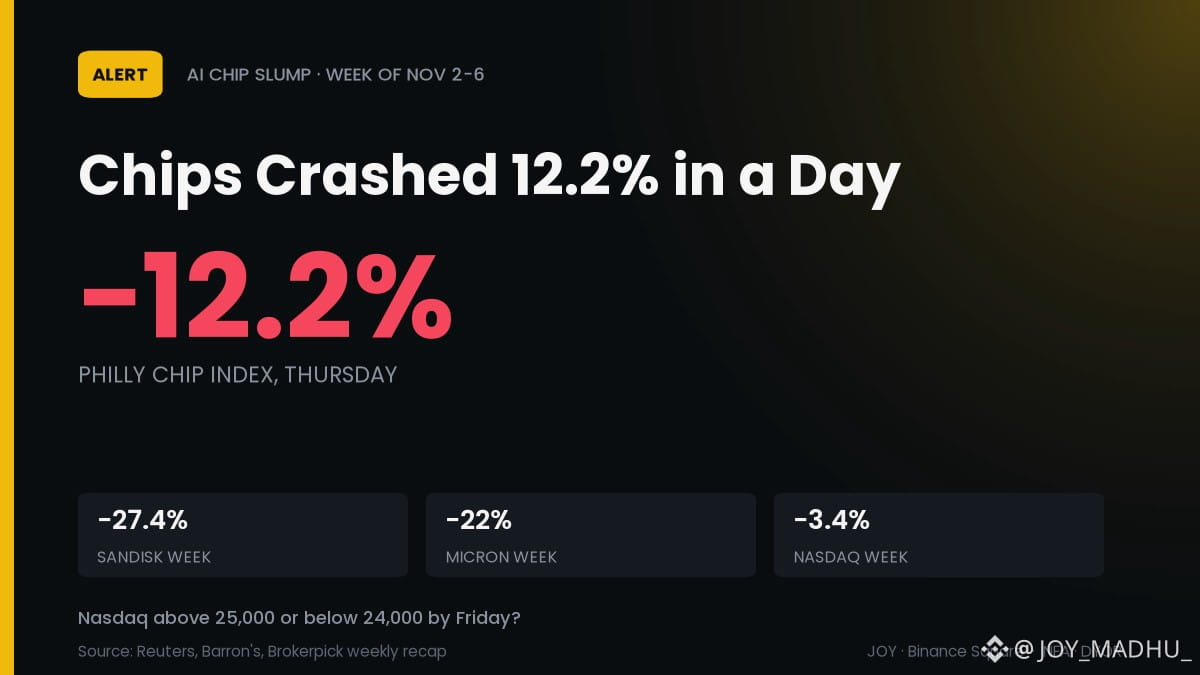
🧨 Chips Lost 12.2% in One Day. Crypto Didn't Escape
The AI-chip selloff handed the Nasdaq a fourth straight weekly loss, and rising Fed hike bets carried the risk-off mood into crypto.
📉 Philadelphia chip index fell 12.2% on Thursday alone
📉 SanDisk -27.4% and Micron -22% on the week
📊 Nasdaq -3.4% to 24,579, a 4th weekly drop in a row
🏦 December hike odds near 80% after the 165K payrolls beat
📉 BTC fell 4.5% last week, a fifth red weekly close
Zoom out: tech and BTC are now trading the same rate fear into Tuesday's CPI.
Nasdaq above 25,000 or below 24,000 by Friday? 👇
$BTC $ETH
#AIChipSlumpNasdaq #Nasdaq #Macro
1
100

·
--
උසබ තත්ත්වය
#AIChipSlumpNasdaq
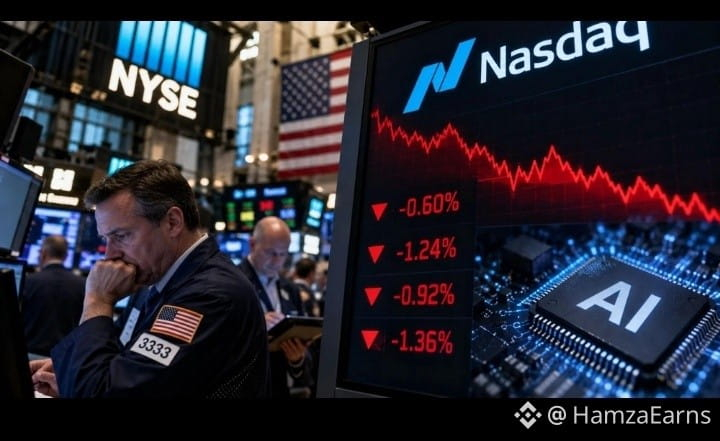
AI Chip Slump Nasdaq — Easy Explanation 📉
It means US technology stocks are falling, especially companies that make AI computer chips.
Why are stocks falling?
🤖 Companies are spending too much money on AI.
💰 Investors are worried about when they will make profits.
📉 Investors are selling their shares.
😟 This is putting pressure on AI chip companies.
Which companies are affected?
NVIDIA
AMD
Micron
Broadcom
What happens next?
🔴 Bearish: Stock prices may fall further.
🟢 Bullish: Prices may recover if investors start buying again.
Simple conclusion: AI is not finished. Investors are just becoming more careful about investing in AI companies.
The market is under pressure, but recovery is still possible.
$TAO
{future}(TAOUSDT)
$NEAR
{future}(NEARUSDT)
$FET
{future}(FETUSDT)
#AIChipSlumpNasdaq
AI Chip Slump Nasdaq — Easy Explanation 📉
It means US technology stocks are falling, especially companies that make AI computer chips.
Why are stocks falling?
🤖 Companies are spending too much money on AI.
💰 Investors are worried about when they will make profits.
📉 Investors are selling their shares.
😟 This is putting pressure on AI chip companies.
Which companies are affected?
NVIDIA
AMD
Micron
Broadcom
What happens next?
🔴 Bearish: Stock prices may fall further.
🟢 Bullish: Prices may recover if investors start buying again.
Simple conclusion: AI is not finished. Investors are just becoming more careful about investing in AI companies.
The market is under pressure, but recovery is still possible.
$TAO
$NEAR
$FET

58

·
--
#AIChipSlumpNasdaq
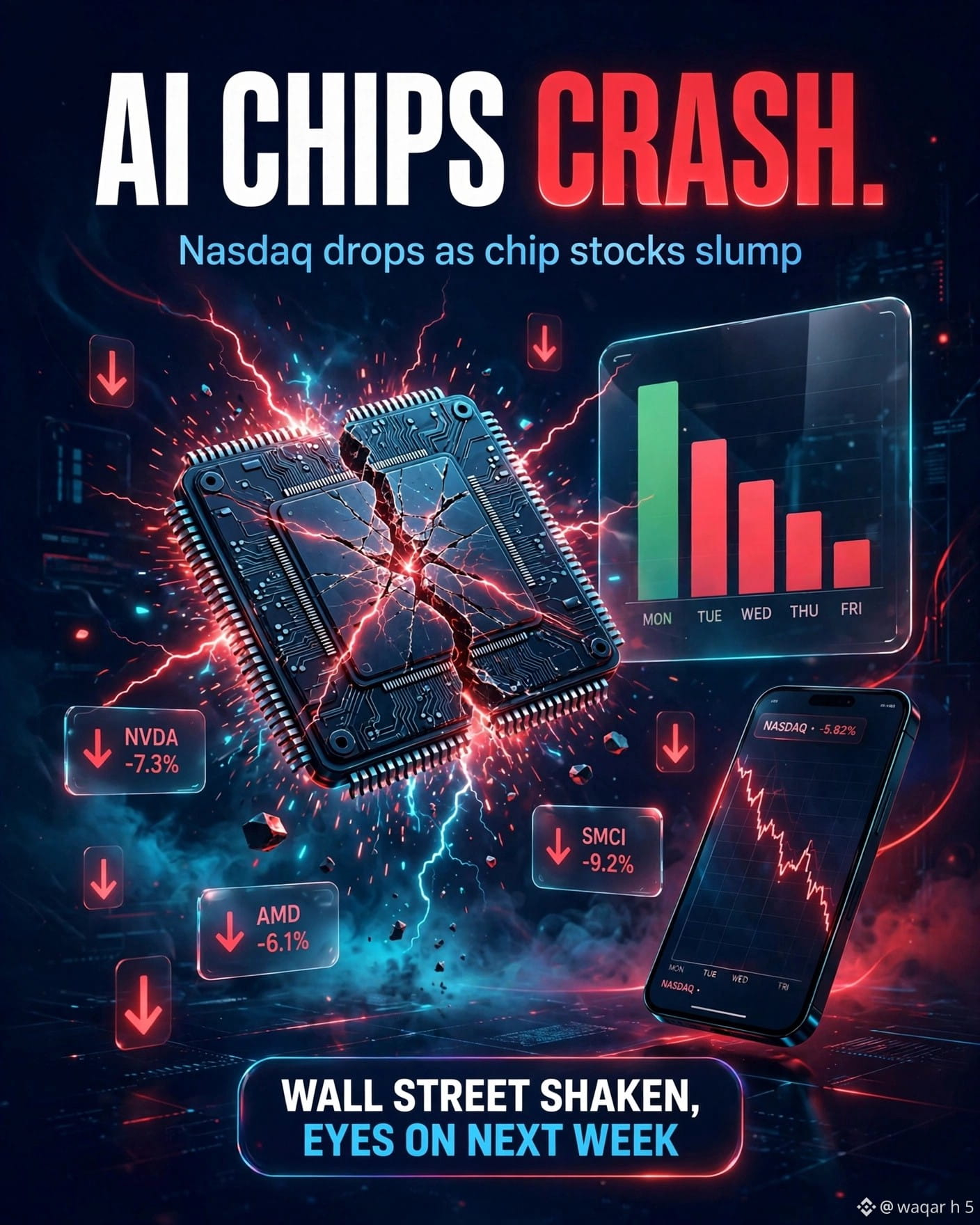
AI CHIPS CRASH.
Nasdaq took a hit as AI chip stocks slumped hard this week.
Red across the board, sentiment shaken, and traders are asking one thing — is this a reset or the start of something bigger?
What is your move — buy the dip, stay out, or wait for confirmation?
#AI #Nasdaq #ChipStocks #MarketNews
User-6279aa89:
Follow me and I’ll follow you back; let’s grow together on Binance Square. newbies
4
1
244

·
--
ලිපිය
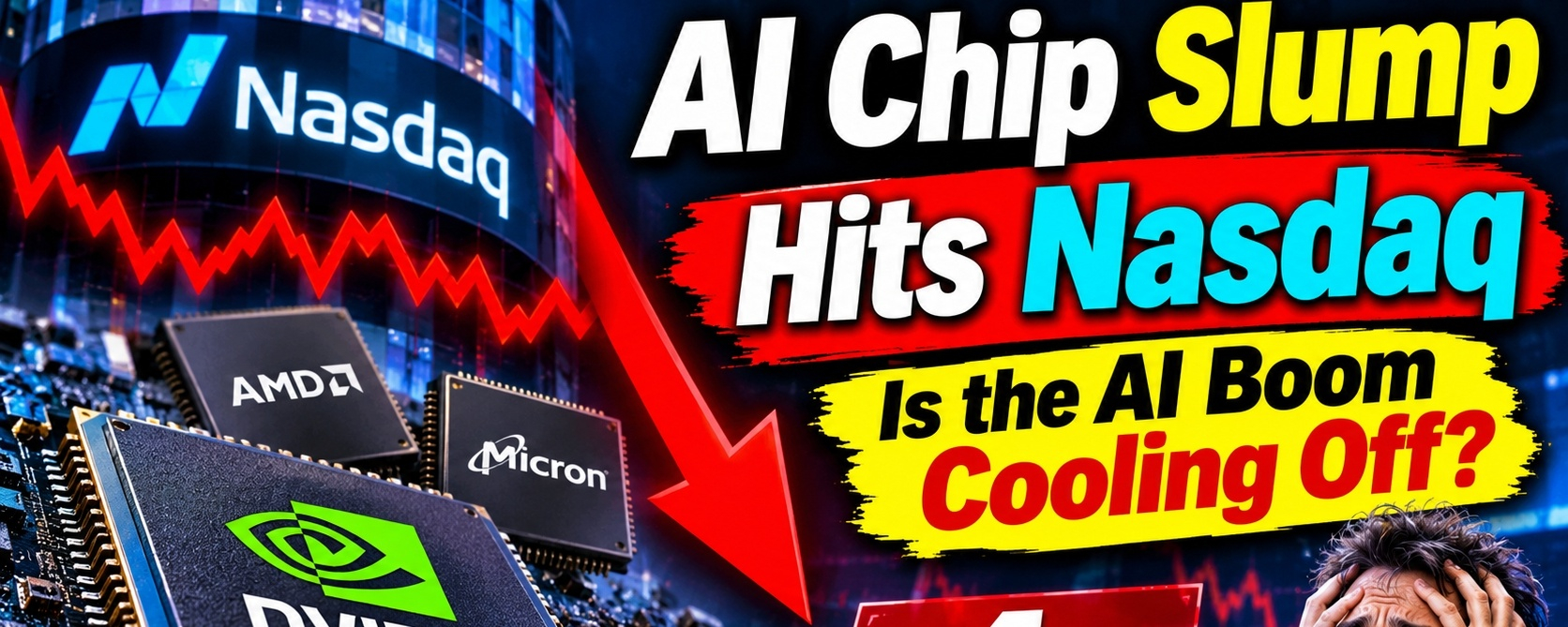
📉 AI Chip Slump Hits Nasdaq: Is the AI Boom Cooling Off? 💻🔥#AIChipSlumpNasdaq
## 🔍 Introduction
For more than a year, AI chip stocks were the engine of Wall Street. Nvidia, Micron, AMD and other semiconductor names carried the Nasdaq to record after record. 🚀 Then, in early November 2026, the mood flipped fast. Chip stocks were hit hard, and the Nasdaq went down with them. 😨
## 💥 What Happened This Week?
The Nasdaq Composite fell about 4% on Thursday, 5 November, ending roughly 10% below the previous month's record close, which put it in correction territory. Micron and AMD each dropped about 16%, Nvidia lost around 8%, and the VIX fear gauge rose above 22. 📊
One market tracker estimated that twelve AI-linked stocks lost about $930 billion in combined market value within the first minutes of that session. That figure is the tracker's own arithmetic, but it shows how concentrated the losses were in a handful of giant companies. 🏢
Reports also described this as a second day of heavy chip selling, coming right after the US midterm elections. 🗳️ Gold and silver rallied on a weaker dollar, and OpenAI pledged to cover data center power costs after midterm voters rejected rapid AI expansion. ⚡
## 🧠 Why Are AI Chip Stocks Falling?
Several pressures are stacking up at once:
- 💰 **Sky-high valuations:** Chip stocks had been the biggest winners of the AI trade, so even small disappointments trigger big selling.
- 🏗️ **Doubts about AI spending:** Tech giants have committed billions to AI infrastructure, but clear evidence that AI products can earn returns to justify that spending is still elusive.
- 📈 **Rising rates and inflation fears:** In June, the Nasdaq fell 4.2% in one session after a strong jobs report pushed bond yields up, making AI spending more expensive. Higher yields hurt growth stocks.
- 🇨🇳 **New competition:** In July, a report said China's DeepSeek was developing its own AI chip, which could reduce its dependence on Nvidia and Huawei.
- 🏛️ **Politics:** Public and political pushback against fast AI expansion adds a new risk that markets did not price in before.
## 🕰️ This Is Not the First Wobble
The November drop follows a pattern. Chip stocks sold off in June and again in July, when mounting doubts about the sustainability of the AI-driven rally dragged the Nasdaq lower. Each time, buyers stepped in and the rally resumed. This time the damage is bigger, and the Nasdaq has now crossed the 10% correction line. 📉
## 🔄 The Bull and Bear Views
🐂 **The bull case:** Corrections are normal after a huge run. Earlier this year Morgan Stanley argued that chip weakness could mean market gains are broadening to other areas, with investors turning to AI hyperscalers. 🌱 Demand for data centers and memory chips has not disappeared.
🐻 **The bear case:** One research firm warned that the shakeout in AI-related stocks "has much further to run." If AI spending slows or profits disappoint, valuations could fall further. ⚠️
## 🛡️ What Should Investors Do?
1. 🧘 **Don't panic sell.** Big single-day drops often reverse partly, but not always.
2. 🎯 **Check your concentration.** If most of your portfolio is Nvidia, Micron and AMD, a 10% to 16% daily fall hurts a lot.
3. 🧩 **Diversify.** Mixing sectors, and keeping some cash, reduces the damage from one theme cracking.
4. 📅 **Watch the next catalysts:** Interest rates, inflation data, earnings from big AI spenders, and any new policy on AI.
5. 🚫 **Avoid leverage.** Volatile sectors can liquidate leveraged positions fast.
## 🔮 Conclusion
The AI chip slump is a reminder that even the strongest trends move in waves. 🌊 The long-term AI story is far from over, but markets are now asking tougher questions about profits, power costs and politics. The next few weeks will show whether this is a healthy reset or the start of a deeper fall. Stay informed, stay disciplined and manage risk. 💪
⚠️ *This article is for education only and is not financial advice. Please do your own research.*
**:** #AIChips 💻 #Nasdaq 📉 #Nvidia 🟩 #StockMarket 📊 #TechSelloff 🔻
Sources:
- [Nasdaq plunges 4% into correction as AI chip stocks get hammered](https://zeli.app/story/50381623)
- [Nvidia Leads $930B Drop in 12 AI Stocks](https://fourweekmba.com/ai-nvidia-leads-930b-drop-in-12-ai-stocks-by-10-04-a-m-et/)
- [Chips sector bloodbath drags Nasdaq down 4.2% (Axios)](https://axios.com/2026/06/05/stocks-nasdaq-tech-stocks)
- [Nasdaq sinks as AI worries hit chipmakers (Reuters via StreetInsider)](https://www.streetinsider.com/General+News/Nasdaq+sinks+as+AI+worries+hit+chipmakers/26737604.html)
- [Chip stocks plunge, but bargain-hunters limit scale of tech rout](https://www.galvnews.com/eedition/page-b2/page_152ad582-e535-5789-87fd-83914f788618.html)#US Data Center Rules May Constrain AI Expansion #CPITestsDecemberRateOutlook #JobsReportRaisesHikeOdds #TetherPlans€28.8MForJuventusCapitalIncrease
📉 AI Chip Slump Hits Nasdaq: Is the AI Boom Cooling Off? 💻🔥
#AIChipSlumpNasdaq
## 🔍 Introduction
For more than a year, AI chip stocks were the engine of Wall Street. Nvidia, Micron, AMD and other semiconductor names carried the Nasdaq to record after record. 🚀 Then, in early November 2026, the mood flipped fast. Chip stocks were hit hard, and the Nasdaq went down with them. 😨
## 💥 What Happened This Week?
The Nasdaq Composite fell about 4% on Thursday, 5 November, ending roughly 10% below the previous month's record close, which put it in correction territory. Micron and AMD each dropped about 16%, Nvidia lost around 8%, and the VIX fear gauge rose above 22. 📊
One market tracker estimated that twelve AI-linked stocks lost about $930 billion in combined market value within the first minutes of that session. That figure is the tracker's own arithmetic, but it shows how concentrated the losses were in a handful of giant companies. 🏢
Reports also described this as a second day of heavy chip selling, coming right after the US midterm elections. 🗳️ Gold and silver rallied on a weaker dollar, and OpenAI pledged to cover data center power costs after midterm voters rejected rapid AI expansion. ⚡
## 🧠 Why Are AI Chip Stocks Falling?
Several pressures are stacking up at once:
- 💰 **Sky-high valuations:** Chip stocks had been the biggest winners of the AI trade, so even small disappointments trigger big selling.
- 🏗️ **Doubts about AI spending:** Tech giants have committed billions to AI infrastructure, but clear evidence that AI products can earn returns to justify that spending is still elusive.
- 📈 **Rising rates and inflation fears:** In June, the Nasdaq fell 4.2% in one session after a strong jobs report pushed bond yields up, making AI spending more expensive. Higher yields hurt growth stocks.
- 🇨🇳 **New competition:** In July, a report said China's DeepSeek was developing its own AI chip, which could reduce its dependence on Nvidia and Huawei.
- 🏛️ **Politics:** Public and political pushback against fast AI expansion adds a new risk that markets did not price in before.
## 🕰️ This Is Not the First Wobble
The November drop follows a pattern. Chip stocks sold off in June and again in July, when mounting doubts about the sustainability of the AI-driven rally dragged the Nasdaq lower. Each time, buyers stepped in and the rally resumed. This time the damage is bigger, and the Nasdaq has now crossed the 10% correction line. 📉
## 🔄 The Bull and Bear Views
🐂 **The bull case:** Corrections are normal after a huge run. Earlier this year Morgan Stanley argued that chip weakness could mean market gains are broadening to other areas, with investors turning to AI hyperscalers. 🌱 Demand for data centers and memory chips has not disappeared.
🐻 **The bear case:** One research firm warned that the shakeout in AI-related stocks "has much further to run." If AI spending slows or profits disappoint, valuations could fall further. ⚠️
## 🛡️ What Should Investors Do?
1. 🧘 **Don't panic sell.** Big single-day drops often reverse partly, but not always.
2. 🎯 **Check your concentration.** If most of your portfolio is Nvidia, Micron and AMD, a 10% to 16% daily fall hurts a lot.
3. 🧩 **Diversify.** Mixing sectors, and keeping some cash, reduces the damage from one theme cracking.
4. 📅 **Watch the next catalysts:** Interest rates, inflation data, earnings from big AI spenders, and any new policy on AI.
5. 🚫 **Avoid leverage.** Volatile sectors can liquidate leveraged positions fast.
## 🔮 Conclusion
The AI chip slump is a reminder that even the strongest trends move in waves. 🌊 The long-term AI story is far from over, but markets are now asking tougher questions about profits, power costs and politics. The next few weeks will show whether this is a healthy reset or the start of a deeper fall. Stay informed, stay disciplined and manage risk. 💪
⚠️ *This article is for education only and is not financial advice. Please do your own research.*
**:** #AIChips 💻 #Nasdaq 📉 #Nvidia 🟩 #StockMarket 📊 #TechSelloff 🔻
Sources:
- [Nasdaq plunges 4% into correction as AI chip stocks get hammered](https://zeli.app/story/50381623)
- [Nvidia Leads $930B Drop in 12 AI Stocks](https://fourweekmba.com/ai-nvidia-leads-930b-drop-in-12-ai-stocks-by-10-04-a-m-et/)
- [Chips sector bloodbath drags Nasdaq down 4.2% (Axios)](https://axios.com/2026/06/05/stocks-nasdaq-tech-stocks)
- [Nasdaq sinks as AI worries hit chipmakers (Reuters via StreetInsider)](https://www.streetinsider.com/General+News/Nasdaq+sinks+as+AI+worries+hit+chipmakers/26737604.html)
- [Chip stocks plunge, but bargain-hunters limit scale of tech rout](https://www.galvnews.com/eedition/page-b2/page_152ad582-e535-5789-87fd-83914f788618.html)#US Data Center Rules May Constrain AI Expansion #CPITestsDecemberRateOutlook #JobsReportRaisesHikeOdds #TetherPlans€28.8MForJuventusCapitalIncrease
192

·
--
近期AI芯片行业确实遭遇了下滑,纳斯达克相关指数也受到影响。我查阅了最新数据,多家AI芯片公司财报均显示营收和利润下滑,市场需求明显减弱。我认为,这主要是由于前期过度炒作导致的泡沫破裂,以及大型科技公司自研芯片能力的提升,挤压了市场空间。虽然短期内行业面临挑战,但长期来看,AI芯片仍是重要发展方向。企业应调整策略,注重技术创新和成本控制。#AIChipSlumpNasdaq
$BTC
近期AI芯片行业确实遭遇了下滑,纳斯达克相关指数也受到影响。我查阅了最新数据,多家AI芯片公司财报均显示营收和利润下滑,市场需求明显减弱。我认为,这主要是由于前期过度炒作导致的泡沫破裂,以及大型科技公司自研芯片能力的提升,挤压了市场空间。虽然短期内行业面临挑战,但长期来看,AI芯片仍是重要发展方向。企业应调整策略,注重技术创新和成本控制。#AIChipSlumpNasdaq
$BTC
$BTC
74

#AIChipSlumpNasdaq La reciente desaceleración en las cotizaciones del sector de semiconductores de inteligencia artificial y su consiguiente presión bajista sobre el índice Nasdaq evidencia un proceso de recalibración en las expectativas de retorno del gasto en capital (*CapEx*) de las principales corporaciones tecnológicas. A pesar de los incrementos sostenidos en los ingresos brutos reportados por las firmas de diseño de microchips de frontera, la elevación de los costos de fabricación en nodos avanzados, los cuellos de botella en la cadena de empaquetado tridimensional y el escrutinio sobre los márgenes operativos netos han detonado una contracción en los múltiplos de valuación. Esta corrección en el índice de semiconductores de Filadelfia $SOXLB refleja una mayor exigencia por parte de los inversores institucionales, quienes demandan una monetización transparente de la infraestructura informacional antes de validar precios basados en proyecciones de crecimiento exponencial. $NVDAB
Desde la perspectiva de la estructuración de portafolios y la transmisión de riesgo sistémico, la toma de beneficios en los valores de hardware de IA ha desencadenado una rotación táctica de liquidez hacia sectores defensivos de menor volatilidad implícita e instrumentos de deuda soberana de alta calidad. La compresión en las primas de riesgo accionarias y la expansión temporal de los diferenciales de bid-ask spreads en los títulos tecnológicos ajustan las condiciones financieras globales, desapalancando las posiciones en las mesas de negociación cuantitativa. En conclusión, la desaceleración de los chips de IA impone un reequilibrio necesario sobre las valoraciones del Nasdaq; a corto y mediano plazo, la capacidad del sector para demostrar eficiencias operativas reales y absorber los costos de la transición energética dictará la estabilización de los parqués internacionales.
Desde la perspectiva de la estructuración de portafolios y la transmisión de riesgo sistémico, la toma de beneficios en los valores de hardware de IA ha desencadenado una rotación táctica de liquidez hacia sectores defensivos de menor volatilidad implícita e instrumentos de deuda soberana de alta calidad. La compresión en las primas de riesgo accionarias y la expansión temporal de los diferenciales de bid-ask spreads en los títulos tecnológicos ajustan las condiciones financieras globales, desapalancando las posiciones en las mesas de negociación cuantitativa. En conclusión, la desaceleración de los chips de IA impone un reequilibrio necesario sobre las valoraciones del Nasdaq; a corto y mediano plazo, la capacidad del sector para demostrar eficiencias operativas reales y absorber los costos de la transición energética dictará la estabilización de los parqués internacionales.
1
122

#AIChipSlumpNasdaq 🚨 CRYPTO & STOCK MARKET ALERT: AI CHIP CRASH SPARKS ALTCOIN SELL-OFF!
The global risk-off sentiment is putting serious pressure on crypto markets as AI semiconductor stocks suffer a massive correction.
📉 CRYPTO LOSERS — 24H
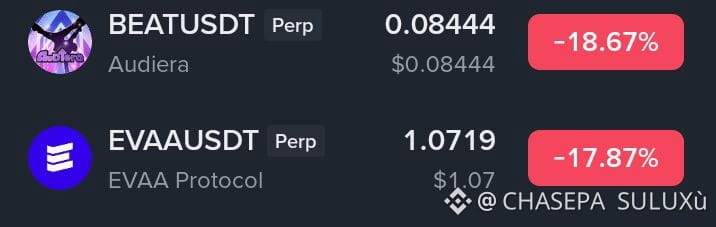
🔴 EVAA: -17.94%
🔴 BEAT: -18.75%
🔴 ACT: -14.61%
📊 KEY MARKET DEVELOPMENTS
EVAA: Significant token distribution raises selling-pressure concerns.
BEAT: 11.25M token unlock raises dilution concerns.
ACT: Still up 17.48% over 7 days despite today's correction.
🔥 AI CHIP MARKET CRASH
Nasdaq Composite entered correction territory.
Approximately $2.5 trillion in Nasdaq-100 market value was wiped out.
SanDisk, Micron and Western Digital suffered major losses.
Political uncertainty and AI infrastructure regulation fears intensified selling pressure.
⚠️ WHAT'S NEXT?
Will this become a deeper market correction, or will institutional buyers trigger another recovery?
WATCH THESE LEVELS:
Selling pressure and trading volume.
Token unlock and distribution activity.
BTC market direction.
Nasdaq and semiconductor recovery.
🚨 IMPORTANT: Sharp declines can create opportunities, but falling prices do not automatically mean a reversal is coming. Avoid FOMO and excessive leverage.
💬 Which asset could recover first: EVAA, BEAT or ACT?
Like 👍 Share 🔄 Follow and Comment!
#CryptoMarket #Binance #EVAA #BEAT #ACT #Altcoins #CryptoNews #AIChipSlumpNasdaq #Nasdaq #Semiconductors #MarketCrash #TradingRisk
Not financial advice. For educational purposes only.
1
180

·
--
බෙයාරිෂ්
සත්යායනය කළ
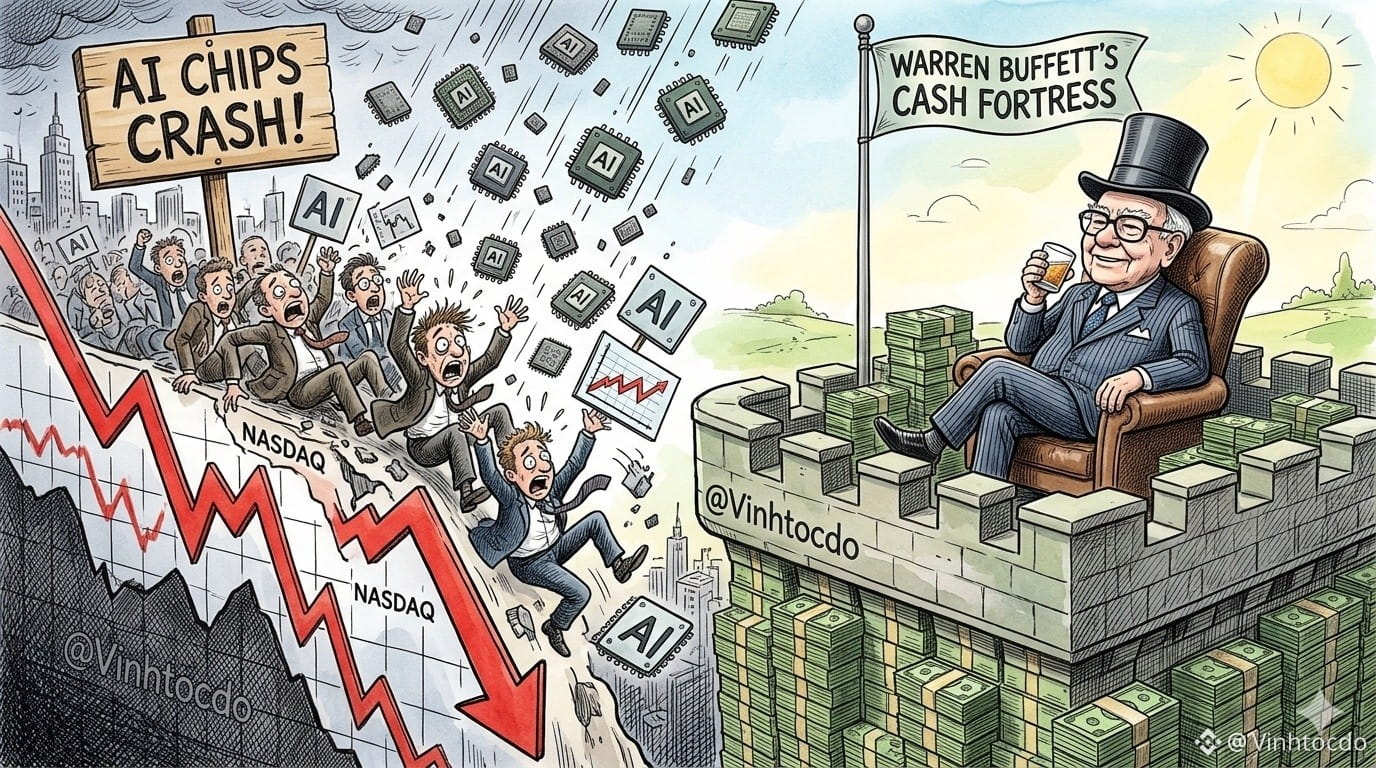
Nasdaq giảm 3,4% một tuần qua, đường 50 ngày hay 200 ngày gì cũng rớt ráo do các ông lớn chip AI thi nhau "cắm đầu".
Micron (MU) giảm 22%, Sandisk (SNDK) bốc hơi 27.4% một tuần, cổ đông AI thở oxy hàng loạt khi nghe tin đồn cụ Jensen Huang bị dính chiến dịch gián điệp.
Trong khi đó, cụ Warren Buffett (Berkshire) lại ôm đống tiền mặt 377.4 tỷ USD và âm thầm gom kỷ lục 9.6 tỷ USD cổ phiếu quỹ. Đúng là "người giàu có lối đi riêng"!
Trader phải làm gì? Đừng thấy "đỏ sàn" mà bắt dao rơi! Nhìn mấy đường trung bình động gãy sạch là biết phe gấu đang chiếm ưu thế. Hãy giữ cái đầu lạnh, hạ đòn bẩy, ngồi im chờ thị trường tạo đáy rõ ràng. Cứ bật chế độ phòng thủ như cụ Buffett cho lành!
⚠️ Đây không phải lời khuyên tài chính!
#AIChipSlumpNasdaq #NasdaqCrash #TechStocks #NvidiaNews #WarrenBuffett #VINHTOCDO
Click giao dịch bên dưới để ủng hộ tôi:
$MUB
{spot}(MUBUSDT)
$SNDKB
{spot}(SNDKBUSDT)
$JCT
{future}(JCTUSDT)
Nasdaq giảm 3,4% một tuần qua, đường 50 ngày hay 200 ngày gì cũng rớt ráo do các ông lớn chip AI thi nhau "cắm đầu".
Micron (MU) giảm 22%, Sandisk (SNDK) bốc hơi 27.4% một tuần, cổ đông AI thở oxy hàng loạt khi nghe tin đồn cụ Jensen Huang bị dính chiến dịch gián điệp.
Trong khi đó, cụ Warren Buffett (Berkshire) lại ôm đống tiền mặt 377.4 tỷ USD và âm thầm gom kỷ lục 9.6 tỷ USD cổ phiếu quỹ. Đúng là "người giàu có lối đi riêng"!
Trader phải làm gì? Đừng thấy "đỏ sàn" mà bắt dao rơi! Nhìn mấy đường trung bình động gãy sạch là biết phe gấu đang chiếm ưu thế. Hãy giữ cái đầu lạnh, hạ đòn bẩy, ngồi im chờ thị trường tạo đáy rõ ràng. Cứ bật chế độ phòng thủ như cụ Buffett cho lành!
⚠️ Đây không phải lời khuyên tài chính!
#AIChipSlumpNasdaq #NasdaqCrash #TechStocks #NvidiaNews #WarrenBuffett #VINHTOCDO
Click giao dịch bên dưới để ủng hộ tôi:
$MUB
$SNDKB
$JCT
3
80

#AIChipSlumpNasdaq #AIChipSlumpNasdaq
AI stocks are falling, Nasdaq is red 📉
Everyone said AI will never fall, now look!
But smart people know - when Nasdaq falls, Crypto also falls, then both pump together.
Is this the end of AI hype or just a small dip?
Comment: End or Dip? 👇
#AI #Nasdaq #Crypto #BTC
AI stocks are falling, Nasdaq is red 📉
Everyone said AI will never fall, now look!
But smart people know - when Nasdaq falls, Crypto also falls, then both pump together.
Is this the end of AI hype or just a small dip?
Comment: End or Dip? 👇
#AI #Nasdaq #Crypto #BTC
2
1
66
·
--

ලිපිය
Macroeconomic Catalysts & Intermarket Correlations• The OI Resiliency Trap: Total perpetual Open Interest sits at $328 billion, falling a mere 0.6% over 24 hours. While a standard leverage flush usually causes a sharp drop in OI as positions close out, this minor dip indicates that new traders stepped in to buy the dip, or existing longs stubbornly remargined. The risk has not been fully reset.
• The 3,200% $BTC Volatility Jump: Bitcoin-specific liquidations surged by over 3,200% compared to the prior day. This exponential spike proves that traders were radically underprepared for a downside move, caught off-guard by an exceptionally crowded trade.
• Imbalanced Funding Rates: Prior to the crash, over 75% of accounts across BTC, ETH, and $SOL were aggressively long. Funding rates were heavily positive (longs paying shorts), creating an expensive, unsustainable "holding fee" for bulls that amplified the pressure to sell when prices stalled.
The root cause of the crypto flush originated in legacy markets, reinforcing cryptocurrency's current status as a high-beta risk asset:
• US Tech & AI Bleed: A 5.5% drop in the Nasdaq dragged down speculative tech growth stocks, directly souring institutional appetite for crypto.
• Negative ETF Outflows: Spot Bitcoin ETF flows flipped net-negative, choking off the continuous institutional spot buying pressure that typically absorbs derivatives liquidations.
• Fragile Base Sentiment: The Crypto Fear and Greed Index was firmly pinned in "Fear" before the event, meaning spot markets lacked the organic, confident bidding power to stop the leverage-induced bleeding.
Forward-Looking Risk Assessment & What to Watch
The market is currently in a fragile equilibrium. To determine whether this event was a healthy leverage reset or the first leg of a structural bear trend, monitor these three specific pillars:
• Funding Rate Normalization: Look for funding rates to flatten out toward 0%. If funding rates rapidly spike back into highly positive territory while prices remain stagnant, it indicates unyielding, dangerous long speculation is returning.
• OI Composition Shift: Watch BTC and $ETH Open Interest rebuilds alongside a more balanced long-to-short ratio. A healthier market requires short-sellers to provide a two-sided liquidity cushion.
• Legacy Market Stabilization: Crypto cannot sustainably recover until the Nasdaq finds a structural floor and spot ETF flows flip back to net-positive inflows over a sustained 3-to-5 day moving average.
#BitcoinFiveWeeklyLosses #AIChipSlumpNasdaq #BinanceReopensWithdrawalsForHYPE&APT #SouthKoreaDraftLawTargets15To20%ShareholderCap #TradFiForBeginners
Macroeconomic Catalysts & Intermarket Correlations
• The OI Resiliency Trap: Total perpetual Open Interest sits at $328 billion, falling a mere 0.6% over 24 hours. While a standard leverage flush usually causes a sharp drop in OI as positions close out, this minor dip indicates that new traders stepped in to buy the dip, or existing longs stubbornly remargined. The risk has not been fully reset.
• The 3,200% $BTC Volatility Jump: Bitcoin-specific liquidations surged by over 3,200% compared to the prior day. This exponential spike proves that traders were radically underprepared for a downside move, caught off-guard by an exceptionally crowded trade.
• Imbalanced Funding Rates: Prior to the crash, over 75% of accounts across BTC, ETH, and $SOL were aggressively long. Funding rates were heavily positive (longs paying shorts), creating an expensive, unsustainable "holding fee" for bulls that amplified the pressure to sell when prices stalled.
The root cause of the crypto flush originated in legacy markets, reinforcing cryptocurrency's current status as a high-beta risk asset:
• US Tech & AI Bleed: A 5.5% drop in the Nasdaq dragged down speculative tech growth stocks, directly souring institutional appetite for crypto.
• Negative ETF Outflows: Spot Bitcoin ETF flows flipped net-negative, choking off the continuous institutional spot buying pressure that typically absorbs derivatives liquidations.
• Fragile Base Sentiment: The Crypto Fear and Greed Index was firmly pinned in "Fear" before the event, meaning spot markets lacked the organic, confident bidding power to stop the leverage-induced bleeding.
Forward-Looking Risk Assessment & What to Watch
The market is currently in a fragile equilibrium. To determine whether this event was a healthy leverage reset or the first leg of a structural bear trend, monitor these three specific pillars:
• Funding Rate Normalization: Look for funding rates to flatten out toward 0%. If funding rates rapidly spike back into highly positive territory while prices remain stagnant, it indicates unyielding, dangerous long speculation is returning.
• OI Composition Shift: Watch BTC and $ETH Open Interest rebuilds alongside a more balanced long-to-short ratio. A healthier market requires short-sellers to provide a two-sided liquidity cushion.
• Legacy Market Stabilization: Crypto cannot sustainably recover until the Nasdaq finds a structural floor and spot ETF flows flip back to net-positive inflows over a sustained 3-to-5 day moving average.
#BitcoinFiveWeeklyLosses #AIChipSlumpNasdaq #BinanceReopensWithdrawalsForHYPE&APT #SouthKoreaDraftLawTargets15To20%ShareholderCap #TradFiForBeginners
64

·
--
Nasdaq panic over $CHIP is the best noise we get all week
everyone sees the 0.5 percent dip today and thinks the whole theme is dead
volume sits at 1.6M which means buyers are still sitting right inside the range
im just watching the low near 0.03137 to see if bids actually hold up here
a clean drop under that bottom 24h range number proves the whole thesis wrong instantly
Open $CHIP and set an alert at that level
agree or panic
#AIChipSlumpNasdaq #CHIP
2

·
--
#aichipslumpnasdaq
Nasdaq Tech Realignment: AI Chip Slump Meets Broader Ecosystem Repricing
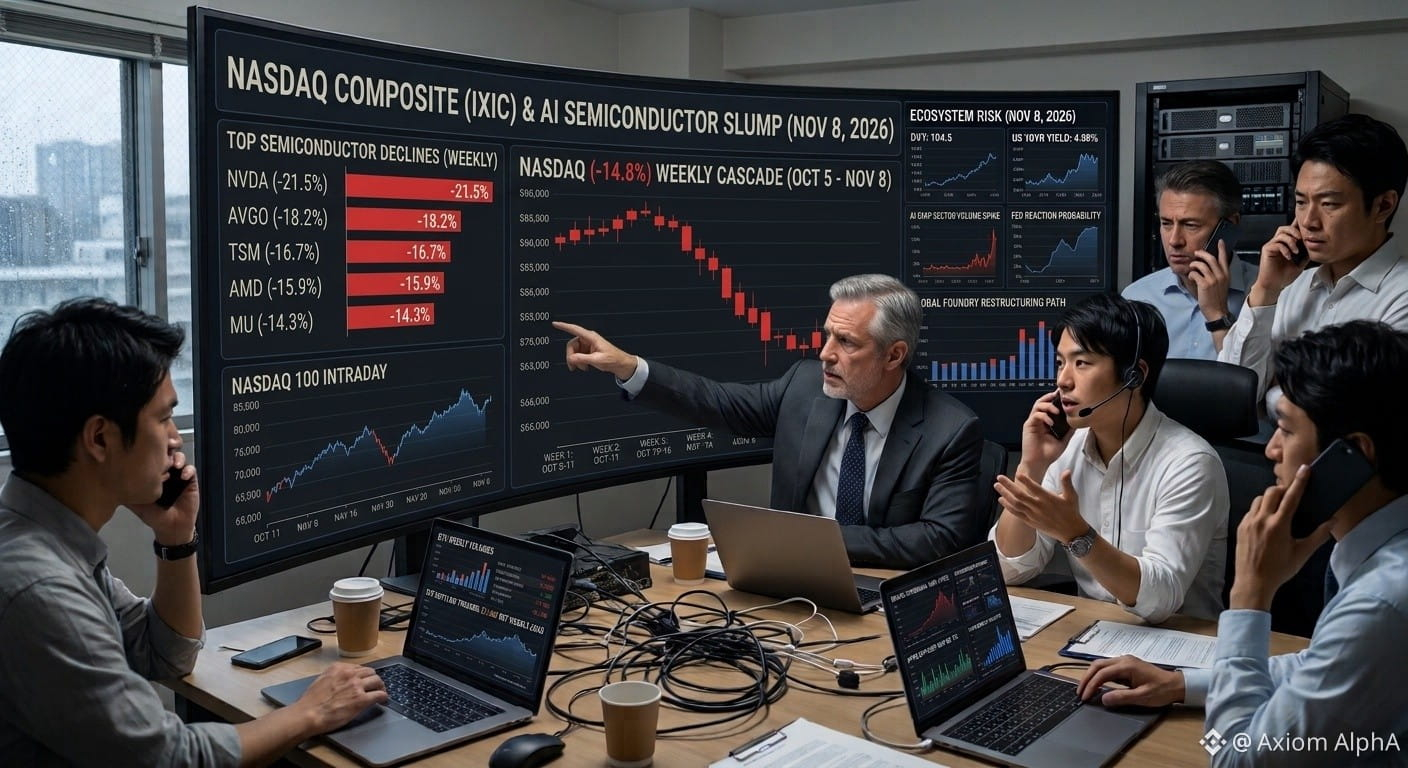
The tech sector and broad equities face a sharp structural correction, driven by a violent sell-off in AI semiconductor leaders. The Nasdaq Composite fell by 3.09% (795 points), led by massive downside pressure across top chipmakers including NVDA (-21.5%), AVGO (-18.2%), TSM (-16.7%), AMD (-15.9%), and MU (-14.3%). Growing unease over the massive capital expenditure pace for data center construction—coupled with restrictive macro liquidity (DXY at 104.5 and US 10YR Yield maintaining 4.88%)—has forced institutional portfolios to rebalance exposure.
As high-beta chip stocks pull back, capital is actively rotating into defensive exchange-traded products (ETPs) and broad sector instruments to hedge against tech volatility.
📈 Multi-Asset Trade Plan ($BRKB, $JETS ETP,$XLE ETP)
$BRKB (Crypto / Exchange Utility Ecosystem)
Market Bias: Strategic Dip Accumulation / Decentralized Infrastructure Hedge
Buy Zone: $570.42 – $573.55
Target 1 (T1): $580.88
Target 2 (T2): $582.15
Stop Loss (SL): 570.31
$JETS.ETF (U.S. Global Jets ETP / Airline & Transport)
Market Bias: Oversold Value Rebound / Mean-Reversion Long
Buy Zone: $26.50 – $27.40
Target 1 (T1): $29.80
Target 2 (T2): $32.10
Stop Loss (SL): $25.60
$XLE.ETF (Energy Select Sector ETP)
Market Bias: Geopolitical Supply Shock Hedge / Value Accumulation
Buy Zone: $60.80 – $62.20
Target 1 (T1): $66.50
Target 2 (T2): $70.00
Stop Loss (SL): $59.40
🛡️ Risk Management Parameters
Position Sizing: Strictly enforce < 2% total portfolio risk per trade.
Order Execution: Utilize laddered limit orders within designated Buy Zones; refrain from chasing market orders during high-volatility news
{future}(BRKBUSDT)
{etf_us}(JETS.ETF)
{etf_us}(XLE.ETF)
#Technology #NASDAQ #ETP #MarketRotation
#aichipslumpnasdaq
Nasdaq Tech Realignment: AI Chip Slump Meets Broader Ecosystem Repricing
The tech sector and broad equities face a sharp structural correction, driven by a violent sell-off in AI semiconductor leaders. The Nasdaq Composite fell by 3.09% (795 points), led by massive downside pressure across top chipmakers including NVDA (-21.5%), AVGO (-18.2%), TSM (-16.7%), AMD (-15.9%), and MU (-14.3%). Growing unease over the massive capital expenditure pace for data center construction—coupled with restrictive macro liquidity (DXY at 104.5 and US 10YR Yield maintaining 4.88%)—has forced institutional portfolios to rebalance exposure.
As high-beta chip stocks pull back, capital is actively rotating into defensive exchange-traded products (ETPs) and broad sector instruments to hedge against tech volatility.
📈 Multi-Asset Trade Plan ($BRKB , $JETS ETP,$XLE ETP)
$BRKB (Crypto / Exchange Utility Ecosystem)
Market Bias: Strategic Dip Accumulation / Decentralized Infrastructure Hedge
Buy Zone: $570.42 – $573.55
Target 1 (T1): $580.88
Target 2 (T2): $582.15
Stop Loss (SL): 570.31
$JETS.ETF (U.S. Global Jets ETP / Airline & Transport)
Market Bias: Oversold Value Rebound / Mean-Reversion Long
Buy Zone: $26.50 – $27.40
Target 1 (T1): $29.80
Target 2 (T2): $32.10
Stop Loss (SL): $25.60
$XLE.ETF (Energy Select Sector ETP)
Market Bias: Geopolitical Supply Shock Hedge / Value Accumulation
Buy Zone: $60.80 – $62.20
Target 1 (T1): $66.50
Target 2 (T2): $70.00
Stop Loss (SL): $59.40
🛡️ Risk Management Parameters
Position Sizing: Strictly enforce < 2% total portfolio risk per trade.
Order Execution: Utilize laddered limit orders within designated Buy Zones; refrain from chasing market orders during high-volatility news
#Technology #NASDAQ #ETP #MarketRotation
169

·
--
$ETH trades like tech beta, not like money: the Nasdaq fell 3.4% last week on the AI chip slide and crypto slid with it.
#AIChipSlumpNasdaq #Write2Earn
Do you hold ETH as a tech bet or as money, and why?
$ETH trades like tech beta, not like money: the Nasdaq fell 3.4% last week on the AI chip slide and crypto slid with it.
#AIChipSlumpNasdaq #Write2Earn
Do you hold ETH as a tech bet or as money, and why?
#AIChipSlumpNasdaq #Write2Earn
Do you hold ETH as a tech bet or as money, and why?
72
·
--
Nasdaq dips mean nothing for $CHIP because hype always comes back
people panic sell the moment tech stocks breathe out
smart traders look for the bounce in the range
volume is sitting at 1.5M so eyes are still on it
movement is tight with that 1.9 percent drop today
waiting to see if bids hold near the bottom of the day
a clean break under 0.03137 proves my read is wrong
Do not take my word for it, tap $CHIP and look at the candles
bullish or bearish
#AIChipSlumpNasdaq #CHIP
4

·
--
Five red weeks in a row and now the AI selloff is dragging crypto down with it.
BTC is hanging around $75k, fear and greed is sitting at 29, and ETH is getting hit even harder. The jobs report just put a December hike back on the table and CPI is still to come, so honestly nobody knows if the worst is over or if this is just the warm-up.
Not calling a bottom here, just watching how the market handles the next few days. Are you buying this fear or waiting for CPI to print first?
$BTC $ETH #BitcoinFiveWeeklyLosses #AIChipSlumpNasdaq #BinancePick

1
152
තවත් අන්තර්ගතයන් ගවේෂණය කිරීමට ඇතුල් වන්න
Binance චතුරශ්රය හි ගෝලීය ක්රිප්ටෝ පරිශීලකයින් හා එක්වන්න
⚡️ ක්රිප්ටෝ පිළිබඳ නවතම සහ ප්රයෝජනවත් තොරතුරු ලබා ගන්න.
💬 ලොව විශාලතම ක්රිප්ටෝ හුවමාරුව මගින් විශ්වාස කෙරේ.
👍 සත්යායනය කරන ලද නිර්මාණකරුවන්ගෙන් සැබෑ විදසුන් සොයා ගන්න.
විද්යුත් තැපෑල / දුරකථන අංකය
නැගී එන මාතෘකා
1
#BinanceReopensWithdrawalsForMoreAssets
1.7M නැරඹීම්
6,833 සාකච්ඡා කරමින්
2
#BitcoinFiveWeeklyLosses
21,568 නැරඹීම්
524 සාකච්ඡා කරමින්
3
#AIChipSlumpNasdaq
11,349 නැරඹීම්
302 සාකච්ඡා කරමින්
4
#NvidiaInvestigatesAfterHuang’sAffairApology
9,122 නැරඹීම්
160 සාකච්ඡා කරමින්
5
#EthereumSpotETFsPost$365MWeeklyOutflow
172 නැරඹීම්
14 සාකච්ඡා කරමින්
6
#TradFiForBeginners
246,619 නැරඹීම්
2,211 සාකච්ඡා කරමින්
7
#SouthKoreaDraftLawTargets15To20%ShareholderCap
173,910 නැරඹීම්
909 සාකච්ඡා කරමින්
8
#KeplrAdvisesSocialLoginUsersToTransferAssets
81,578 නැරඹීම්
632 සාකච්ඡා කරමින්
9
#TetherPlans€28.8MForJuventusCapitalIncrease
58,201 නැරඹීම්
465 සාකච්ඡා කරමින්
10
#JobsReportRaisesHikeOdds
1M නැරඹීම්
4,637 සාකච්ඡා කරමින්