

#falconfinance
falconfinance
4.1M views
77,537 සාකච්ඡා කරමින්
උණුසුම්
නවතම


·
--
🚨 FF-DƏ HƏRƏKƏT BAŞLAYA BİLƏR! 🔥
$FF /USDT izləyənlər buraya 👀
Mənim LONG planım:
🟢 Entry: $0.120–0.123
🎯 TP1: $0.130
🎯 TP2: $0.138
🚀 TP3: $0.150
🛑 SL: $0.116
📌 $0.123 üzərində güclü həcm gəlsə, momentum sürətlənə bilər.
Sual: FF əvvəl $0.15, yoxsa $0.11 görəcək? 👇
Şərhdə LONG 🔥 və ya SHORT 🔻 yaz!
⚠️ Yatırım məsləhəti deyil. Volatil coinlərdə stop-loss və risk idarəsi vacibdir.
#FF #FalconFinance @falcon_finance
🚨 FF-DƏ HƏRƏKƏT BAŞLAYA BİLƏR! 🔥
$FF /USDT izləyənlər buraya 👀
Mənim LONG planım:
🟢 Entry: $0.120–0.123
🎯 TP1: $0.130
🎯 TP2: $0.138
🚀 TP3: $0.150
🛑 SL: $0.116
📌 $0.123 üzərində güclü həcm gəlsə, momentum sürətlənə bilər.
Sual: FF əvvəl $0.15, yoxsa $0.11 görəcək? 👇
Şərhdə LONG 🔥 və ya SHORT 🔻 yaz!
⚠️ Yatırım məsləhəti deyil. Volatil coinlərdə stop-loss və risk idarəsi vacibdir.
#FF #FalconFinance @Falcon Finance
$FF /USDT izləyənlər buraya 👀
Mənim LONG planım:
🟢 Entry: $0.120–0.123
🎯 TP1: $0.130
🎯 TP2: $0.138
🚀 TP3: $0.150
🛑 SL: $0.116
📌 $0.123 üzərində güclü həcm gəlsə, momentum sürətlənə bilər.
Sual: FF əvvəl $0.15, yoxsa $0.11 görəcək? 👇
Şərhdə LONG 🔥 və ya SHORT 🔻 yaz!
⚠️ Yatırım məsləhəti deyil. Volatil coinlərdə stop-loss və risk idarəsi vacibdir.
#FF #FalconFinance @Falcon Finance
1
154

·
--
බෙයාරිෂ්
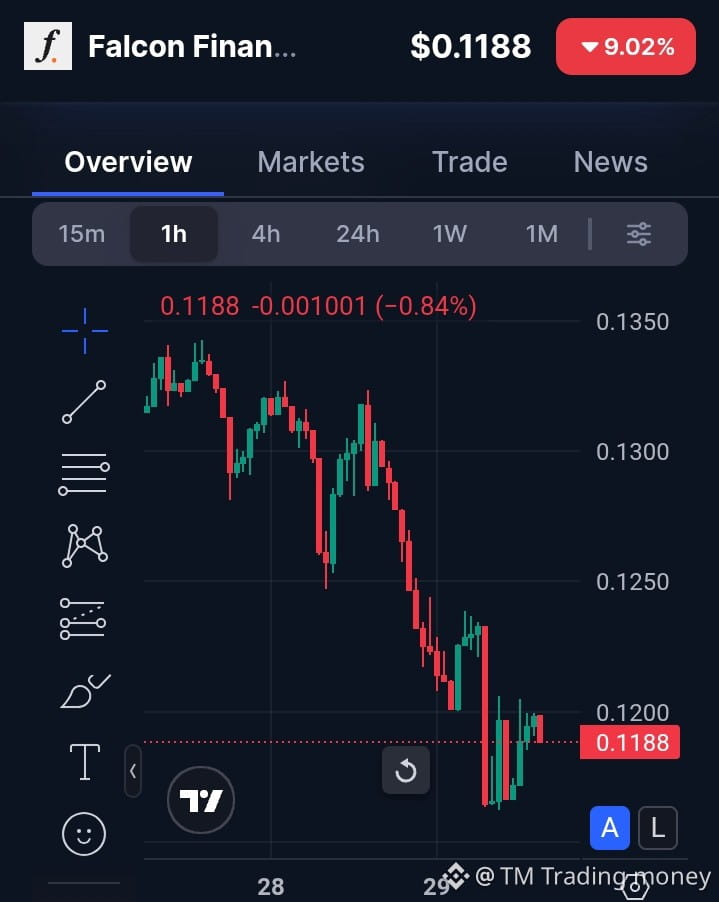
$FF drops 9.02% in 24H 📉
Price: $0.1188
Steady downtrend → sharp sell-off → small rebound.
#FF #FalconFinance #Crypto #Altcoins $FF
{future}(FFUSDT)
$FF drops 9.02% in 24H 📉
Price: $0.1188
Steady downtrend → sharp sell-off → small rebound.
#FF #FalconFinance #Crypto #Altcoins $FF
Price: $0.1188
Steady downtrend → sharp sell-off → small rebound.
#FF #FalconFinance #Crypto #Altcoins $FF
115


ලිපිය
Falcon Finance Surges as fUSD Launches: A Stablecoin That Actually Shares Reserve YieldInstitutions holding fUSD can now earn roughly 3% annually, something no other regulated dollar stablecoin currently offers. Here's how it works.
💵 Stablecoin issuers have quietly collected billions in yield for years while holders earned nothing. Falcon Finance just built a stablecoin that flips that arrangement.
FF surged nearly 5% as Falcon Finance launched fUSD, a new U.S. dollar payment stablecoin issued by Anchorage Digital Bank, the first federally chartered crypto bank in the country.
🏦 Here's the actual problem this stablecoin is built to solve.
With over 320 billion dollars in dollar stablecoins now circulating and short-dated Treasury yields sitting near 4%, holders collectively forgo well over 10 billion dollars a year in potential returns. That income has historically gone entirely to issuers, not the people actually holding the tokens. fUSD is designed specifically to close that gap.
⚙️ Here's how it actually works.
fUSD is issued by Anchorage Digital Bank under direct federal oversight, built to be GENIUS Act ready, the federal framework for payment stablecoins. Because that law restricts stablecoin issuers from paying interest directly, Falcon Finance operates a separate institutional rewards program, targeting roughly 3% annually, tied to the stablecoin's underlying Treasury-backed reserves. It's a structure no other regulated U.S. dollar stablecoin currently offers.
🔐 This also extends something Falcon Finance already had running.
fUSD sits alongside USDf, Falcon's existing crypto-native synthetic dollar with over 1.6 billion dollars in circulating supply, already ranked among the top ten stablecoins on Ethereum. fUSD is positioned as its regulated counterpart, purpose-built for institutional trading, collateral, and treasury use cases rather than DeFi composability.
🧠 Why does this actually matter beyond one token launch?
This is a genuine structural innovation in a space that's mostly competed on trust and distribution rather than economics. Most major stablecoins keep 100% of their reserve yield as issuer profit. fUSD sharing a portion of that yield with institutional holders is a real, differentiated model, not just a new logo on the same product.
✅ What this means for you
If you're holding FF, understand what's actually driving this move, a genuine product differentiation in a crowded stablecoin market, not speculative hype. That kind of structural advantage tends to be more durable than a typical listing pump.
If you're an institutional user evaluating stablecoin options, fUSD's yield-sharing model is worth understanding directly, roughly 3% annually is a meaningful difference compared to holding a stablecoin that pays you nothing while the issuer earns Treasury yield on your deposits.
If you're trying to spot where stablecoin competition is heading next, this is a genuine signal, expect more issuers to eventually face pressure to share reserve economics as products like fUSD demonstrate it's both possible and in demand.
🟢 Bullish scenario
fUSD gains real institutional adoption, its yield-sharing model becomes a genuine competitive advantage, and Falcon Finance's broader stablecoin ecosystem, both USDf and fUSD, sees compounding demand.
🔴 Risk scenario
Institutional adoption stays limited to early partners, competing stablecoin issuers don't feel pressured to match the yield-sharing model, and this remains a niche product rather than reshaping the broader market.
👀 Three things to watch
1️⃣ Institutional adoption
Do major trading firms and treasury desks beyond Falcon's own initial deployment actually adopt fUSD at scale?
2️⃣ Competitor response
Do other major stablecoin issuers introduce similar yield-sharing structures in response, or does fUSD stay a unique offering?
3️⃣ USDf and fUSD synergy
Does the combined ecosystem of Falcon's regulated and synthetic stablecoins grow together, reinforcing each other's adoption?
💡 The key takeaway
This wasn't a hype-driven token pump. It was a real structural innovation, a stablecoin that finally shares reserve economics with the people actually holding it, launching with real institutional infrastructure behind it.
The real question is whether this yield-sharing model becomes the new institutional standard, forcing competitors to follow, or stays a differentiated niche product in a market that's historically kept all the yield for issuers alone.
That is the part worth watching.
This post is for informational and educational purposes only and is not financial advice. Crypto markets are volatile. Always conduct your own research before making financial decisions.
#BinanceSquare #FalconFinance #Stablecoin #fUSD #Crypto
{spot}(FFUSDT)
Falcon Finance Surges as fUSD Launches: A Stablecoin That Actually Shares Reserve Yield
Institutions holding fUSD can now earn roughly 3% annually, something no other regulated dollar stablecoin currently offers. Here's how it works.
💵 Stablecoin issuers have quietly collected billions in yield for years while holders earned nothing. Falcon Finance just built a stablecoin that flips that arrangement.
FF surged nearly 5% as Falcon Finance launched fUSD, a new U.S. dollar payment stablecoin issued by Anchorage Digital Bank, the first federally chartered crypto bank in the country.
🏦 Here's the actual problem this stablecoin is built to solve.
With over 320 billion dollars in dollar stablecoins now circulating and short-dated Treasury yields sitting near 4%, holders collectively forgo well over 10 billion dollars a year in potential returns. That income has historically gone entirely to issuers, not the people actually holding the tokens. fUSD is designed specifically to close that gap.
⚙️ Here's how it actually works.
fUSD is issued by Anchorage Digital Bank under direct federal oversight, built to be GENIUS Act ready, the federal framework for payment stablecoins. Because that law restricts stablecoin issuers from paying interest directly, Falcon Finance operates a separate institutional rewards program, targeting roughly 3% annually, tied to the stablecoin's underlying Treasury-backed reserves. It's a structure no other regulated U.S. dollar stablecoin currently offers.
🔐 This also extends something Falcon Finance already had running.
fUSD sits alongside USDf, Falcon's existing crypto-native synthetic dollar with over 1.6 billion dollars in circulating supply, already ranked among the top ten stablecoins on Ethereum. fUSD is positioned as its regulated counterpart, purpose-built for institutional trading, collateral, and treasury use cases rather than DeFi composability.
🧠 Why does this actually matter beyond one token launch?
This is a genuine structural innovation in a space that's mostly competed on trust and distribution rather than economics. Most major stablecoins keep 100% of their reserve yield as issuer profit. fUSD sharing a portion of that yield with institutional holders is a real, differentiated model, not just a new logo on the same product.
✅ What this means for you
If you're holding FF, understand what's actually driving this move, a genuine product differentiation in a crowded stablecoin market, not speculative hype. That kind of structural advantage tends to be more durable than a typical listing pump.
If you're an institutional user evaluating stablecoin options, fUSD's yield-sharing model is worth understanding directly, roughly 3% annually is a meaningful difference compared to holding a stablecoin that pays you nothing while the issuer earns Treasury yield on your deposits.
If you're trying to spot where stablecoin competition is heading next, this is a genuine signal, expect more issuers to eventually face pressure to share reserve economics as products like fUSD demonstrate it's both possible and in demand.
🟢 Bullish scenario
fUSD gains real institutional adoption, its yield-sharing model becomes a genuine competitive advantage, and Falcon Finance's broader stablecoin ecosystem, both USDf and fUSD, sees compounding demand.
🔴 Risk scenario
Institutional adoption stays limited to early partners, competing stablecoin issuers don't feel pressured to match the yield-sharing model, and this remains a niche product rather than reshaping the broader market.
👀 Three things to watch
1️⃣ Institutional adoption
Do major trading firms and treasury desks beyond Falcon's own initial deployment actually adopt fUSD at scale?
2️⃣ Competitor response
Do other major stablecoin issuers introduce similar yield-sharing structures in response, or does fUSD stay a unique offering?
3️⃣ USDf and fUSD synergy
Does the combined ecosystem of Falcon's regulated and synthetic stablecoins grow together, reinforcing each other's adoption?
💡 The key takeaway
This wasn't a hype-driven token pump. It was a real structural innovation, a stablecoin that finally shares reserve economics with the people actually holding it, launching with real institutional infrastructure behind it.
The real question is whether this yield-sharing model becomes the new institutional standard, forcing competitors to follow, or stays a differentiated niche product in a market that's historically kept all the yield for issuers alone.
That is the part worth watching.
This post is for informational and educational purposes only and is not financial advice. Crypto markets are volatile. Always conduct your own research before making financial decisions.
#BinanceSquare #FalconFinance #Stablecoin #fUSD #Crypto
💵 Stablecoin issuers have quietly collected billions in yield for years while holders earned nothing. Falcon Finance just built a stablecoin that flips that arrangement.
FF surged nearly 5% as Falcon Finance launched fUSD, a new U.S. dollar payment stablecoin issued by Anchorage Digital Bank, the first federally chartered crypto bank in the country.
🏦 Here's the actual problem this stablecoin is built to solve.
With over 320 billion dollars in dollar stablecoins now circulating and short-dated Treasury yields sitting near 4%, holders collectively forgo well over 10 billion dollars a year in potential returns. That income has historically gone entirely to issuers, not the people actually holding the tokens. fUSD is designed specifically to close that gap.
⚙️ Here's how it actually works.
fUSD is issued by Anchorage Digital Bank under direct federal oversight, built to be GENIUS Act ready, the federal framework for payment stablecoins. Because that law restricts stablecoin issuers from paying interest directly, Falcon Finance operates a separate institutional rewards program, targeting roughly 3% annually, tied to the stablecoin's underlying Treasury-backed reserves. It's a structure no other regulated U.S. dollar stablecoin currently offers.
🔐 This also extends something Falcon Finance already had running.
fUSD sits alongside USDf, Falcon's existing crypto-native synthetic dollar with over 1.6 billion dollars in circulating supply, already ranked among the top ten stablecoins on Ethereum. fUSD is positioned as its regulated counterpart, purpose-built for institutional trading, collateral, and treasury use cases rather than DeFi composability.
🧠 Why does this actually matter beyond one token launch?
This is a genuine structural innovation in a space that's mostly competed on trust and distribution rather than economics. Most major stablecoins keep 100% of their reserve yield as issuer profit. fUSD sharing a portion of that yield with institutional holders is a real, differentiated model, not just a new logo on the same product.
✅ What this means for you
If you're holding FF, understand what's actually driving this move, a genuine product differentiation in a crowded stablecoin market, not speculative hype. That kind of structural advantage tends to be more durable than a typical listing pump.
If you're an institutional user evaluating stablecoin options, fUSD's yield-sharing model is worth understanding directly, roughly 3% annually is a meaningful difference compared to holding a stablecoin that pays you nothing while the issuer earns Treasury yield on your deposits.
If you're trying to spot where stablecoin competition is heading next, this is a genuine signal, expect more issuers to eventually face pressure to share reserve economics as products like fUSD demonstrate it's both possible and in demand.
🟢 Bullish scenario
fUSD gains real institutional adoption, its yield-sharing model becomes a genuine competitive advantage, and Falcon Finance's broader stablecoin ecosystem, both USDf and fUSD, sees compounding demand.
🔴 Risk scenario
Institutional adoption stays limited to early partners, competing stablecoin issuers don't feel pressured to match the yield-sharing model, and this remains a niche product rather than reshaping the broader market.
👀 Three things to watch
1️⃣ Institutional adoption
Do major trading firms and treasury desks beyond Falcon's own initial deployment actually adopt fUSD at scale?
2️⃣ Competitor response
Do other major stablecoin issuers introduce similar yield-sharing structures in response, or does fUSD stay a unique offering?
3️⃣ USDf and fUSD synergy
Does the combined ecosystem of Falcon's regulated and synthetic stablecoins grow together, reinforcing each other's adoption?
💡 The key takeaway
This wasn't a hype-driven token pump. It was a real structural innovation, a stablecoin that finally shares reserve economics with the people actually holding it, launching with real institutional infrastructure behind it.
The real question is whether this yield-sharing model becomes the new institutional standard, forcing competitors to follow, or stays a differentiated niche product in a market that's historically kept all the yield for issuers alone.
That is the part worth watching.
This post is for informational and educational purposes only and is not financial advice. Crypto markets are volatile. Always conduct your own research before making financial decisions.
#BinanceSquare #FalconFinance #Stablecoin #fUSD #Crypto
1
2
147

·
--
උසබ තත්ත්වය
$FF
{spot}(FFUSDT)
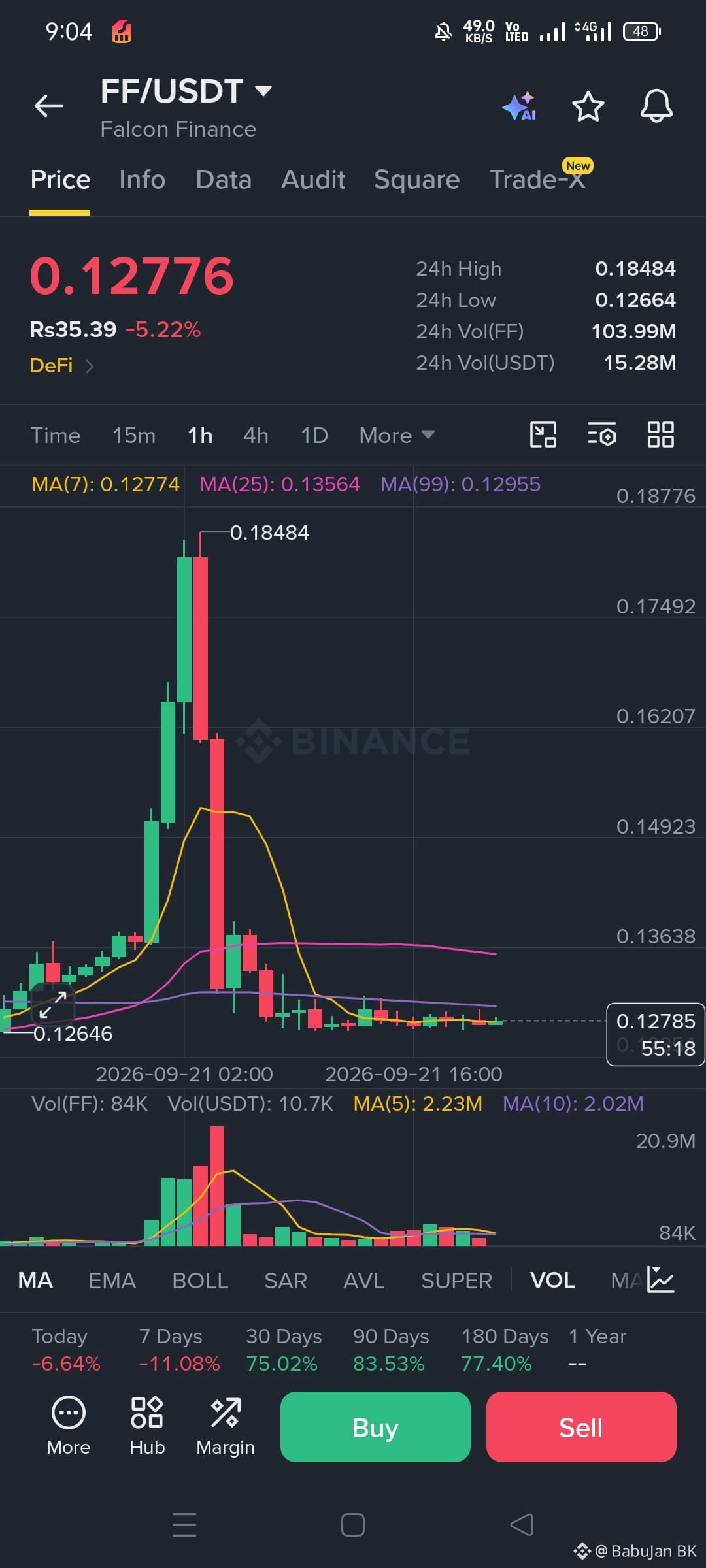
/USDT Spot Buying Setup
🟢 Buy: $0.127–$0.130
🟢 Second Buy: $0.118–$0.122
🎯 TP: $0.145 → $0.160
🔴 SL: Below $0.114
Don’t chase the pump—wait for the Buy zone.#ff #FalconFinance #SpotTrading
$FF
/USDT Spot Buying Setup
🟢 Buy: $0.127–$0.130
🟢 Second Buy: $0.118–$0.122
🎯 TP: $0.145 → $0.160
🔴 SL: Below $0.114
Don’t chase the pump—wait for the Buy zone.#ff #FalconFinance #SpotTrading
/USDT Spot Buying Setup
🟢 Buy: $0.127–$0.130
🟢 Second Buy: $0.118–$0.122
🎯 TP: $0.145 → $0.160
🔴 SL: Below $0.114
Don’t chase the pump—wait for the Buy zone.#ff #FalconFinance #SpotTrading
2
194

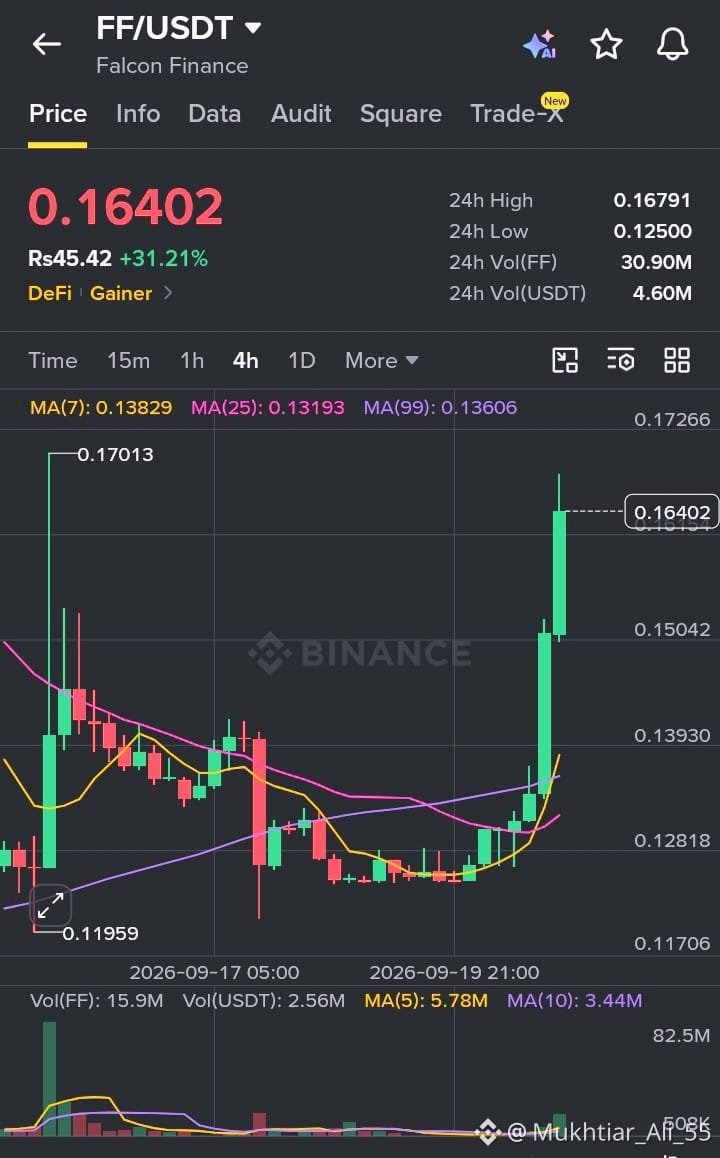
🚨 FALCON FINANCE ($FF) SURGES WITH IMPRESSIVE MOMENTUM — CAN BULLS BREAK LOCAL RESISTANCE? 🚀🔥
$FF | FF/USDT
💰 Price: 0.16402
📈 24H Change: +31.21%
📊 24H High: 0.16791
📉 24H Low: 0.12500
💵 24H Volume (USDT): 4.60M
⚠️ Market Breakdown (4H Timeframe):
Falcon Finance experienced a massive vertical breakout after breaking out of a tight consolidation base 🧨
🔻 A huge full-bodied green expansion candle pushed price straight toward the 0.16791 peak
🔻 Minor upper shadow near 0.16791 shows slight initial profit-taking near resistance levels
🔻 Strong price reaction above previous structural highs demonstrates robust demand 🧲
📈 Moving Averages Tell the Story:
📌 MA(7): 0.13829
📌 MA(25): 0.13193
📌 MA(99): 0.13606
✅ Price is trading well above MA(7), MA(25), and MA(99) moving averages
✅ MA(7) is curving sharply upward, confirming powerful short-term momentum
✅ Moving average cluster around 0.131–0.138 now acts as a strong macro support zone 🐂
📊 Volume Insight:
🟢 Strong volume green bars supporting the current breakout leg
💥 Confirms genuine market buying power rather than a low-liquidity spike
⚠️ Elevated volatility — watch for potential higher-level consolidation or retest
🧠 What This Means:
This is a powerful trend acceleration phase 🚀
Bulls are firmly in control as price approaches the previous high-water mark near 0.17013
🔹 Short-term trend: Strongly Bullish
🔹 Momentum: High / Expansion
🔹 Market emotion: Bullish / Greed 🤑
🎯 Key Levels to Watch:
🟢 Support: 0.15042 – 0.13829 zone
🔴 Resistance: 0.16791 – 0.17013 zone
📌 Holding above 0.15042 maintains immediate bullish pressure for another leg higher
📌 A clean break above 0.17013 opens the door for further price discovery ⬆️
💡 Final Take:
🧨 $FF is showing exceptional strength during this breakout push
🧘 Avoid chasing tops — wait for healthy setups
🛡️ Always enforce strict risk control
Trade discipline over fear of missing out 💎
#FalconFinance #FF
$FF
{spot}(FFUSDT)
🚨 FALCON FINANCE ($FF ) SURGES WITH IMPRESSIVE MOMENTUM — CAN BULLS BREAK LOCAL RESISTANCE? 🚀🔥
$FF | FF/USDT
💰 Price: 0.16402
📈 24H Change: +31.21%
📊 24H High: 0.16791
📉 24H Low: 0.12500
💵 24H Volume (USDT): 4.60M
⚠️ Market Breakdown (4H Timeframe):
Falcon Finance experienced a massive vertical breakout after breaking out of a tight consolidation base 🧨
🔻 A huge full-bodied green expansion candle pushed price straight toward the 0.16791 peak
🔻 Minor upper shadow near 0.16791 shows slight initial profit-taking near resistance levels
🔻 Strong price reaction above previous structural highs demonstrates robust demand 🧲
📈 Moving Averages Tell the Story:
📌 MA(7): 0.13829
📌 MA(25): 0.13193
📌 MA(99): 0.13606
✅ Price is trading well above MA(7), MA(25), and MA(99) moving averages
✅ MA(7) is curving sharply upward, confirming powerful short-term momentum
✅ Moving average cluster around 0.131–0.138 now acts as a strong macro support zone 🐂
📊 Volume Insight:
🟢 Strong volume green bars supporting the current breakout leg
💥 Confirms genuine market buying power rather than a low-liquidity spike
⚠️ Elevated volatility — watch for potential higher-level consolidation or retest
🧠 What This Means:
This is a powerful trend acceleration phase 🚀
Bulls are firmly in control as price approaches the previous high-water mark near 0.17013
🔹 Short-term trend: Strongly Bullish
🔹 Momentum: High / Expansion
🔹 Market emotion: Bullish / Greed 🤑
🎯 Key Levels to Watch:
🟢 Support: 0.15042 – 0.13829 zone
🔴 Resistance: 0.16791 – 0.17013 zone
📌 Holding above 0.15042 maintains immediate bullish pressure for another leg higher
📌 A clean break above 0.17013 opens the door for further price discovery ⬆️
💡 Final Take:
🧨 $FF is showing exceptional strength during this breakout push
🧘 Avoid chasing tops — wait for healthy setups
🛡️ Always enforce strict risk control
Trade discipline over fear of missing out 💎
#FalconFinance #FF
$FF
$FF | FF/USDT
💰 Price: 0.16402
📈 24H Change: +31.21%
📊 24H High: 0.16791
📉 24H Low: 0.12500
💵 24H Volume (USDT): 4.60M
⚠️ Market Breakdown (4H Timeframe):
Falcon Finance experienced a massive vertical breakout after breaking out of a tight consolidation base 🧨
🔻 A huge full-bodied green expansion candle pushed price straight toward the 0.16791 peak
🔻 Minor upper shadow near 0.16791 shows slight initial profit-taking near resistance levels
🔻 Strong price reaction above previous structural highs demonstrates robust demand 🧲
📈 Moving Averages Tell the Story:
📌 MA(7): 0.13829
📌 MA(25): 0.13193
📌 MA(99): 0.13606
✅ Price is trading well above MA(7), MA(25), and MA(99) moving averages
✅ MA(7) is curving sharply upward, confirming powerful short-term momentum
✅ Moving average cluster around 0.131–0.138 now acts as a strong macro support zone 🐂
📊 Volume Insight:
🟢 Strong volume green bars supporting the current breakout leg
💥 Confirms genuine market buying power rather than a low-liquidity spike
⚠️ Elevated volatility — watch for potential higher-level consolidation or retest
🧠 What This Means:
This is a powerful trend acceleration phase 🚀
Bulls are firmly in control as price approaches the previous high-water mark near 0.17013
🔹 Short-term trend: Strongly Bullish
🔹 Momentum: High / Expansion
🔹 Market emotion: Bullish / Greed 🤑
🎯 Key Levels to Watch:
🟢 Support: 0.15042 – 0.13829 zone
🔴 Resistance: 0.16791 – 0.17013 zone
📌 Holding above 0.15042 maintains immediate bullish pressure for another leg higher
📌 A clean break above 0.17013 opens the door for further price discovery ⬆️
💡 Final Take:
🧨 $FF is showing exceptional strength during this breakout push
🧘 Avoid chasing tops — wait for healthy setups
🛡️ Always enforce strict risk control
Trade discipline over fear of missing out 💎
#FalconFinance #FF
$FF
70

·
--
උසබ තත්ත්වය
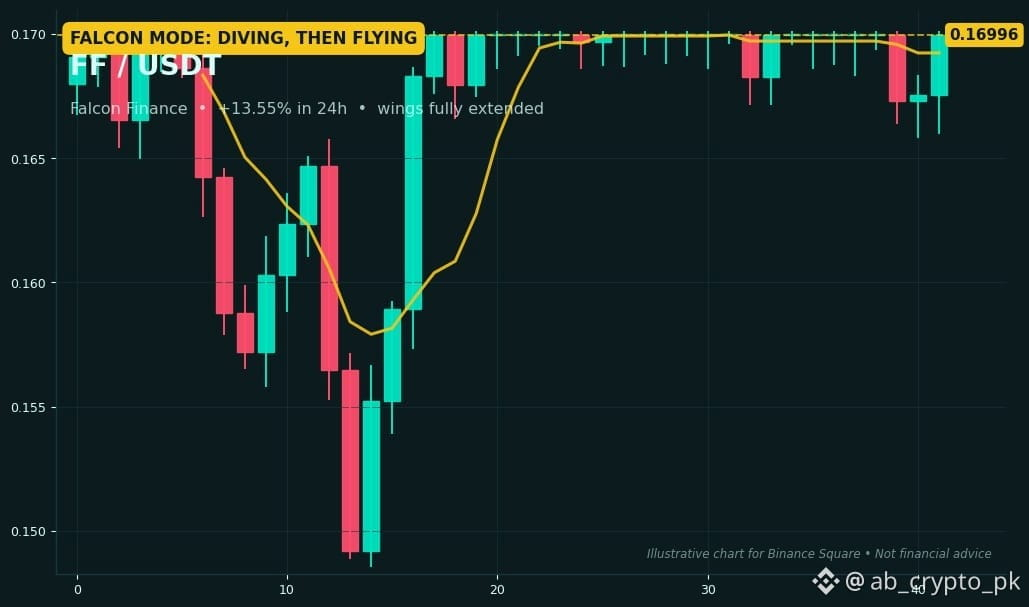
$FF (Falcon Finance — Wings Extended)
Falcon Finance (FF) +13.55%: This Bird Forgot It Could Fly 🦅💨
Body: FF spent the session diving like it lost its job, its keys, AND its will to live — bottoming near $0.11959. Then someone whispered "you're a FALCON" and it went from pigeon to predator in one candle.
📈 The numbers: • Price: 0.14384
• 24h High:0.17013 / Low: 0.11959 (that's a 42% intraday range, buckle up 😅)
• Volume: 142.46M FF (20.91M USDT) • 30 Days: +117.57% 🟢🟢 • 180 Days: +98.45% 🟢
🔍 What's actually happening: This chart is a masterclass in "diamond hands vs. paper hands." The dip to $0.1196 flushed the weaklings, and the recovery has been falcon-esque — sharp, aggressive, and slightly terrifying if you're short. DeFi season vibes are strong with this one.
The V-shaped recovery is beautiful... and also a warning. Coins that pump this hard can retrace just as fast. The $0.17 high is the next boss level. Beat it, and the sky's literally the name (Falcon, get it? I'll see myself out 🚪).
💡 My take: Momentum is real, but so is volatility. This is a rollercoaster that removed its safety bar for fun. Trade the trend, respect the stop-loss, and don't marry the bird. 💍🚫
⚠️ High risk, high reward. Not financial advice — my falcon is as good as yours.
#FF #FalconFinance #DeFi #Crypto #BinanceSquare #BullRun #CryptoHumor
#DYOR
$FF (Falcon Finance — Wings Extended)
Falcon Finance (FF) +13.55%: This Bird Forgot It Could Fly 🦅💨
Body: FF spent the session diving like it lost its job, its keys, AND its will to live — bottoming near $0.11959. Then someone whispered "you're a FALCON" and it went from pigeon to predator in one candle.
📈 The numbers: • Price: 0.14384
• 24h High:0.17013 / Low: 0.11959 (that's a 42% intraday range, buckle up 😅)
• Volume: 142.46M FF (20.91M USDT) • 30 Days: +117.57% 🟢🟢 • 180 Days: +98.45% 🟢
🔍 What's actually happening: This chart is a masterclass in "diamond hands vs. paper hands." The dip to $0.1196 flushed the weaklings, and the recovery has been falcon-esque — sharp, aggressive, and slightly terrifying if you're short. DeFi season vibes are strong with this one.
The V-shaped recovery is beautiful... and also a warning. Coins that pump this hard can retrace just as fast. The $0.17 high is the next boss level. Beat it, and the sky's literally the name (Falcon, get it? I'll see myself out 🚪).
💡 My take: Momentum is real, but so is volatility. This is a rollercoaster that removed its safety bar for fun. Trade the trend, respect the stop-loss, and don't marry the bird. 💍🚫
⚠️ High risk, high reward. Not financial advice — my falcon is as good as yours.
#FF #FalconFinance #DeFi #Crypto #BinanceSquare #BullRun #CryptoHumor
#DYOR
Falcon Finance (FF) +13.55%: This Bird Forgot It Could Fly 🦅💨
Body: FF spent the session diving like it lost its job, its keys, AND its will to live — bottoming near $0.11959. Then someone whispered "you're a FALCON" and it went from pigeon to predator in one candle.
📈 The numbers: • Price: 0.14384
• 24h High:0.17013 / Low: 0.11959 (that's a 42% intraday range, buckle up 😅)
• Volume: 142.46M FF (20.91M USDT) • 30 Days: +117.57% 🟢🟢 • 180 Days: +98.45% 🟢
🔍 What's actually happening: This chart is a masterclass in "diamond hands vs. paper hands." The dip to $0.1196 flushed the weaklings, and the recovery has been falcon-esque — sharp, aggressive, and slightly terrifying if you're short. DeFi season vibes are strong with this one.
The V-shaped recovery is beautiful... and also a warning. Coins that pump this hard can retrace just as fast. The $0.17 high is the next boss level. Beat it, and the sky's literally the name (Falcon, get it? I'll see myself out 🚪).
💡 My take: Momentum is real, but so is volatility. This is a rollercoaster that removed its safety bar for fun. Trade the trend, respect the stop-loss, and don't marry the bird. 💍🚫
⚠️ High risk, high reward. Not financial advice — my falcon is as good as yours.
#FF #FalconFinance #DeFi #Crypto #BinanceSquare #BullRun #CryptoHumor
#DYOR
87

·
--
උසබ තත්ත්වය
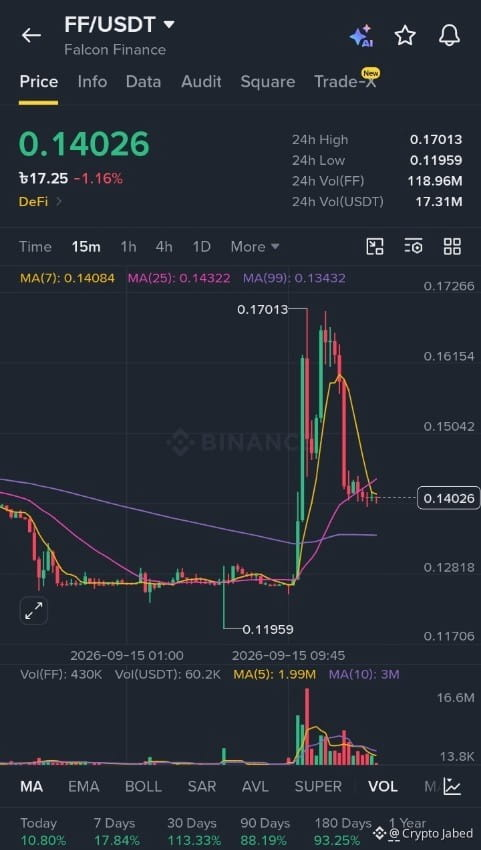
$FF — Sharp Rejection!
FF spiked to $0.170, then dropped hard. Now holding near $0.14.
🟢 LONG $FF
Entry: $0.1390 – $0.1410
TP1: $0.1500
TP2: $0.1620
SL: $0.1320
S: $0.1320 | R: $0.1500
Bounce or downside?
You can trade from here.👇$FF
{future}(FFUSDT)
#FF #FalconFinance #BinanceSquare
$FF — Sharp Rejection!
FF spiked to $0.170, then dropped hard. Now holding near $0.14.
🟢 LONG $FF
Entry: $0.1390 – $0.1410
TP1: $0.1500
TP2: $0.1620
SL: $0.1320
S: $0.1320 | R: $0.1500
Bounce or downside?
You can trade from here.👇$FF
#FF #FalconFinance #BinanceSquare
FF spiked to $0.170, then dropped hard. Now holding near $0.14.
🟢 LONG $FF
Entry: $0.1390 – $0.1410
TP1: $0.1500
TP2: $0.1620
SL: $0.1320
S: $0.1320 | R: $0.1500
Bounce or downside?
You can trade from here.👇$FF
#FF #FalconFinance #BinanceSquare
2
56

·
--
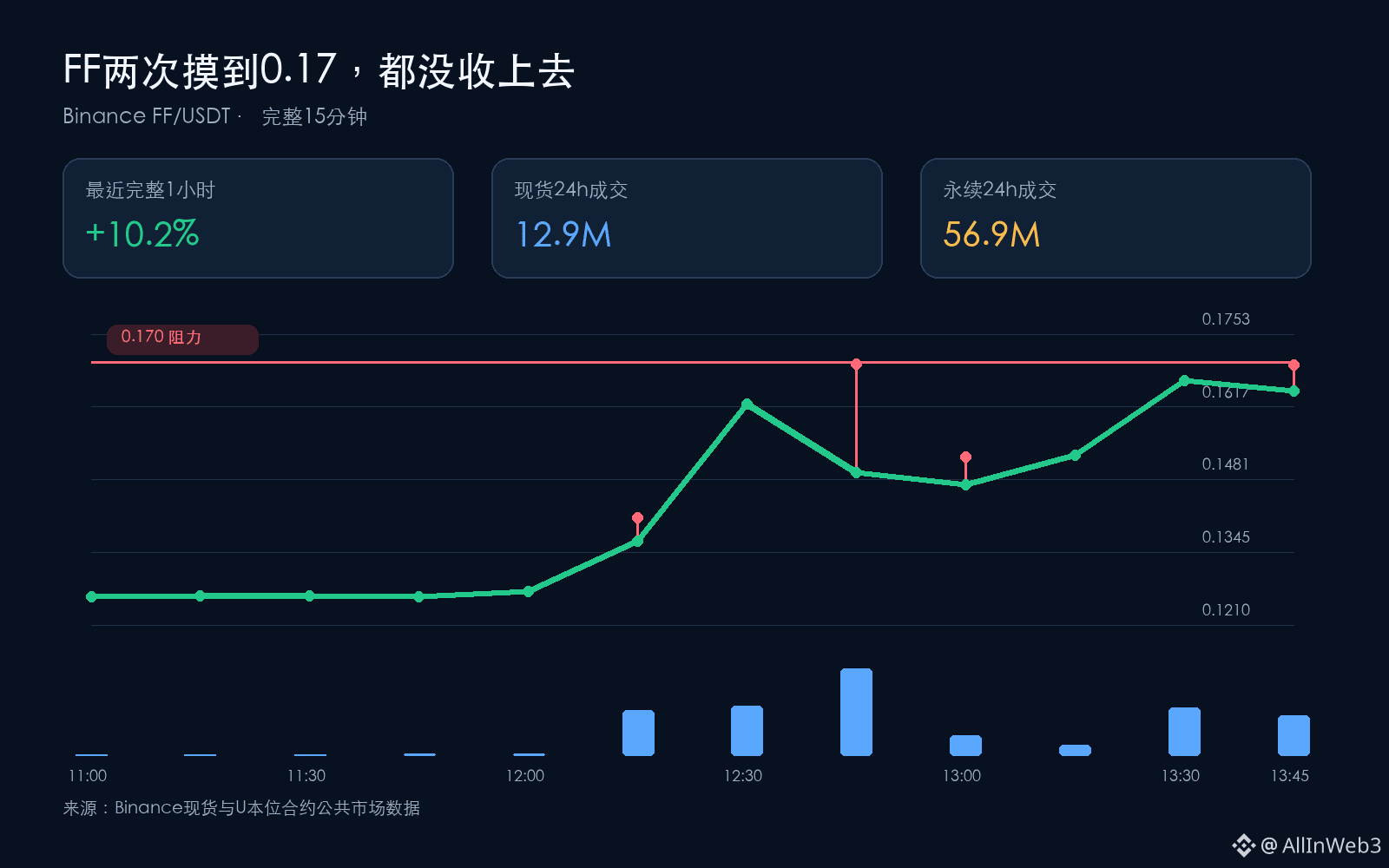
$FF这段我偏多,但0.165上方不追。12:45第一次摸到0.1697,收盘被压回0.1493;13:45第二次摸到0.1694,这次收在0.1646。两次都没站上0.17,可第二次回落明显更浅——卖压还在,承接也在变强。
这不是只靠合约画出来的线:Binance现货24小时成交约1290万美元,永续约5690万美元,BSC主池、Alpha、现货与永续价格都在0.165附近。数量OI近1小时只增约0.7%,4小时费率约+0.0009%,杠杆还没抢到发烫。
我只等0.154—0.158缩量守住,或15分钟收上0.170后下一根仍守0.165;1小时收破0.145,修复失效。问题只剩一个:当现货买盘已经到场,0.17还在挡谁?#FF #FalconFinance #合约
$FF 这段我偏多,但0.165上方不追。12:45第一次摸到0.1697,收盘被压回0.1493;13:45第二次摸到0.1694,这次收在0.1646。两次都没站上0.17,可第二次回落明显更浅——卖压还在,承接也在变强。
这不是只靠合约画出来的线:Binance现货24小时成交约1290万美元,永续约5690万美元,BSC主池、Alpha、现货与永续价格都在0.165附近。数量OI近1小时只增约0.7%,4小时费率约+0.0009%,杠杆还没抢到发烫。
我只等0.154—0.158缩量守住,或15分钟收上0.170后下一根仍守0.165;1小时收破0.145,修复失效。问题只剩一个:当现货买盘已经到场,0.17还在挡谁?#FF #FalconFinance #合约
这不是只靠合约画出来的线:Binance现货24小时成交约1290万美元,永续约5690万美元,BSC主池、Alpha、现货与永续价格都在0.165附近。数量OI近1小时只增约0.7%,4小时费率约+0.0009%,杠杆还没抢到发烫。
我只等0.154—0.158缩量守住,或15分钟收上0.170后下一根仍守0.165;1小时收破0.145,修复失效。问题只剩一个:当现货买盘已经到场,0.17还在挡谁?#FF #FalconFinance #合约
1
99

·
--
උසබ තත්ත්වය
$FF
{spot}(FFUSDT)
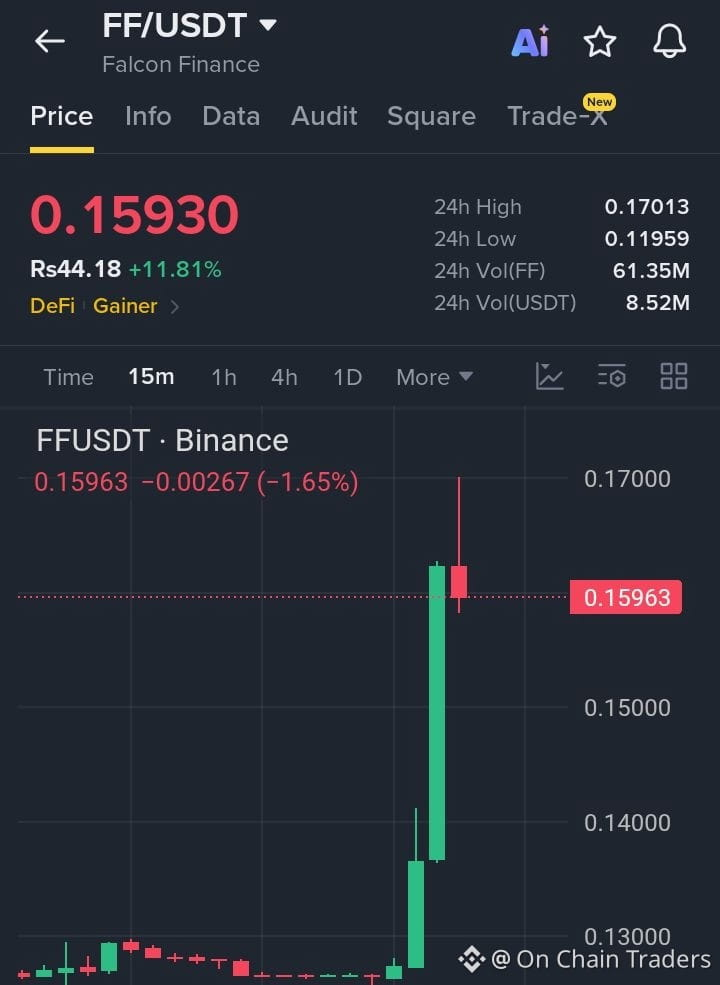
is showing strong momentum with a potential bull flag forming after the rally. A breakout above $0.1700 could trigger the next leg up.
Entry: $0.1550–$0.1590 TP1: $0.1700 | TP2: $0.1850 | TP3: $0.2000 SL: $0.1480
Bullish above $0.1600 — watch for volume confirmation. #FF #FalconFinance #Binance
$FF
is showing strong momentum with a potential bull flag forming after the rally. A breakout above $0.1700 could trigger the next leg up.
Entry: $0.1550–$0.1590 TP1: $0.1700 | TP2: $0.1850 | TP3: $0.2000 SL: $0.1480
Bullish above $0.1600 — watch for volume confirmation. #FF #FalconFinance #Binance
is showing strong momentum with a potential bull flag forming after the rally. A breakout above $0.1700 could trigger the next leg up.
Entry: $0.1550–$0.1590 TP1: $0.1700 | TP2: $0.1850 | TP3: $0.2000 SL: $0.1480
Bullish above $0.1600 — watch for volume confirmation. #FF #FalconFinance #Binance
1
128

·
--
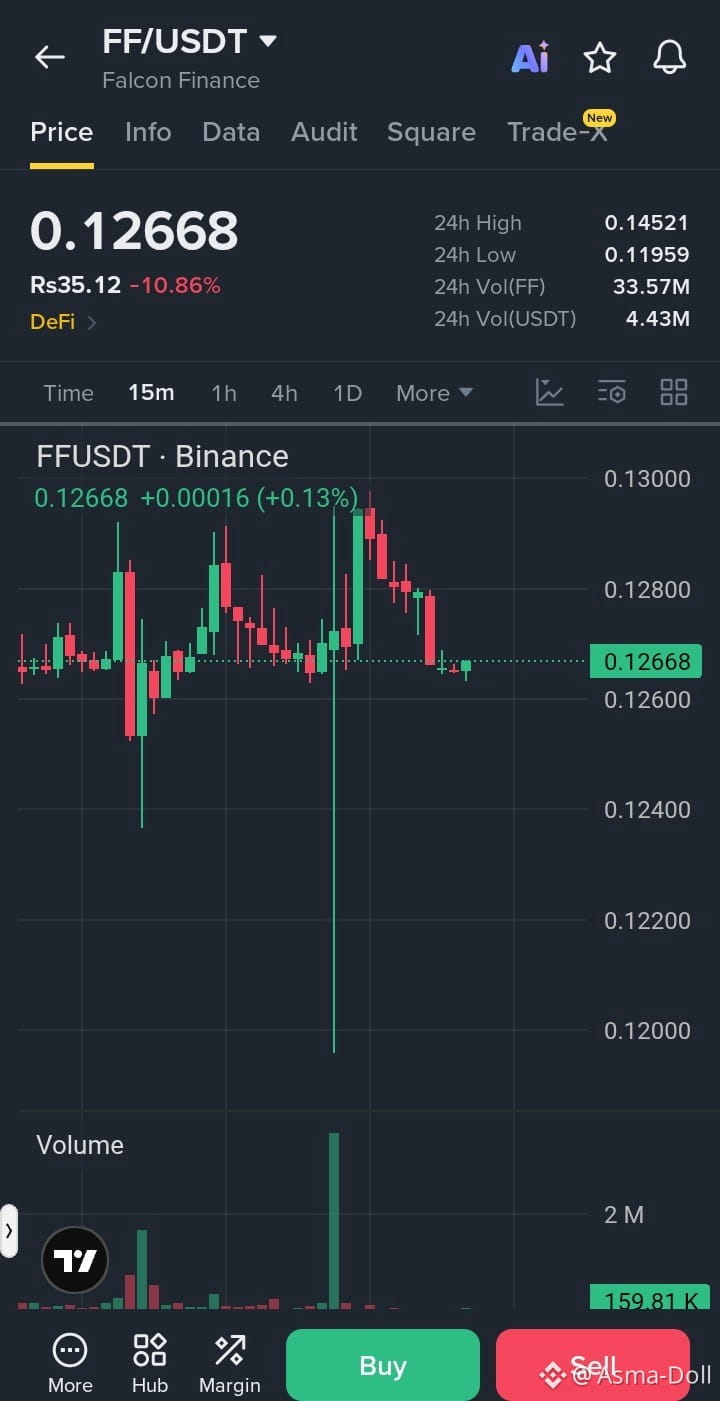
🔻 $FF /USDT — SHORT SIGNAL
Entry: 0.1260 – 0.1280
Stop Loss (SL): 0.1320
TP1: 0.1220
TP2: 0.1195
TP3: 0.1150
Trade here $FF
{future}(FFUSDT)
Analysis:
Strong rejection from 0.145+ zone
Currently down around 10%, showing strong selling pressure
Price is hovering close to the 0.1195–0.1200 support
Breakdown below 0.1240 can accelerate the bearish move
Current structure favors a short, but a bounce from support is possible.
Confirmation:
Clean break below 0.1240 with volume → stronger short continuation.
⚠️ Risk: High volatility. Keep position size small and don't over-leverage.
#FF #FalconFinance #FFUSDT #CryptoShort #Binance
🔻 $FF /USDT — SHORT SIGNAL
Entry: 0.1260 – 0.1280
Stop Loss (SL): 0.1320
TP1: 0.1220
TP2: 0.1195
TP3: 0.1150
Trade here $FF
Analysis:
Strong rejection from 0.145+ zone
Currently down around 10%, showing strong selling pressure
Price is hovering close to the 0.1195–0.1200 support
Breakdown below 0.1240 can accelerate the bearish move
Current structure favors a short, but a bounce from support is possible.
Confirmation:
Clean break below 0.1240 with volume → stronger short continuation.
⚠️ Risk: High volatility. Keep position size small and don't over-leverage.
#FF #FalconFinance #FFUSDT #CryptoShort #Binance
Entry: 0.1260 – 0.1280
Stop Loss (SL): 0.1320
TP1: 0.1220
TP2: 0.1195
TP3: 0.1150
Trade here $FF
Analysis:
Strong rejection from 0.145+ zone
Currently down around 10%, showing strong selling pressure
Price is hovering close to the 0.1195–0.1200 support
Breakdown below 0.1240 can accelerate the bearish move
Current structure favors a short, but a bounce from support is possible.
Confirmation:
Clean break below 0.1240 with volume → stronger short continuation.
⚠️ Risk: High volatility. Keep position size small and don't over-leverage.
#FF #FalconFinance #FFUSDT #CryptoShort #Binance
35

·
--
උසබ තත්ත්වය
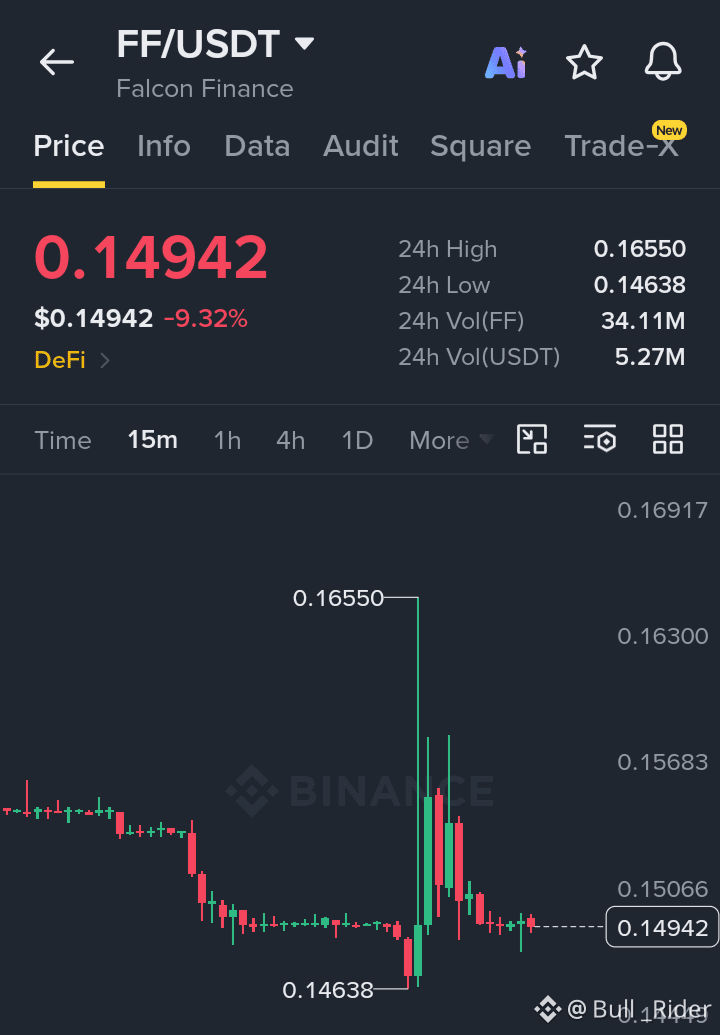
$FF $FF (Falcon Finance) on the 15m spot chart is forming a tight compression base (-9.32%), currently trading around 0.14942 following a sharp rejection from its spike high at 0.16550, attempting to build a local support floor directly above its 0.14638 launch floor base and 24h low of 0.14638.
* Target 1: 0.15066
* Target 2: 0.15683
* Target 3: 0.16550
Buy / Trade $FF #FF #FalconFinance #TradeCard
{future}(FFUSDT)
$FF $FF (Falcon Finance) on the 15m spot chart is forming a tight compression base (-9.32%), currently trading around 0.14942 following a sharp rejection from its spike high at 0.16550, attempting to build a local support floor directly above its 0.14638 launch floor base and 24h low of 0.14638.
* Target 1: 0.15066
* Target 2: 0.15683
* Target 3: 0.16550
Buy / Trade $FF #FF #FalconFinance #TradeCard
* Target 1: 0.15066
* Target 2: 0.15683
* Target 3: 0.16550
Buy / Trade $FF #FF #FalconFinance #TradeCard
1
53

🚀 $FF
{spot}(FFUSDT)
/USDT — BULLISH LONG TRADE SIGNAL 📈
🔥 Price: 0.16892 USDT
🟢 Supertrend: 0.16535 — bullish trend intact
📍 Support: 0.16535
🎯 Entry: 0.1680–0.1690
🎯 TP1: 0.17180 | TP2: 0.17500 | TP3: 0.18000
🛡️ SL: 0.16480
⚡ Momentum remains positive while price holds above the Supertrend. Trade with proper risk management.
#FF #FalconFinance #CryptoTrading
🚀 $FF
/USDT — BULLISH LONG TRADE SIGNAL 📈
🔥 Price: 0.16892 USDT
🟢 Supertrend: 0.16535 — bullish trend intact
📍 Support: 0.16535
🎯 Entry: 0.1680–0.1690
🎯 TP1: 0.17180 | TP2: 0.17500 | TP3: 0.18000
🛡️ SL: 0.16480
⚡ Momentum remains positive while price holds above the Supertrend. Trade with proper risk management.
#FF #FalconFinance #CryptoTrading
/USDT — BULLISH LONG TRADE SIGNAL 📈
🔥 Price: 0.16892 USDT
🟢 Supertrend: 0.16535 — bullish trend intact
📍 Support: 0.16535
🎯 Entry: 0.1680–0.1690
🎯 TP1: 0.17180 | TP2: 0.17500 | TP3: 0.18000
🛡️ SL: 0.16480
⚡ Momentum remains positive while price holds above the Supertrend. Trade with proper risk management.
#FF #FalconFinance #CryptoTrading

1
143

·
--
$BTC 56.3 USDT රඳවා තැබීම්
🔥 $FF COIN — ENTRY SETUP UPDATE
Falcon Finance (FF) is trading around $0.169, up roughly 12% in 24h and more than 66% over 7 days, so momentum is strong but chasing the pump carries risk.
📍 Entry Zone: $0.158–$0.164
✅ Confirmation: 15m candle closes above $0.171 with strong volume
🛑 Stop Loss: $0.151
🎯 TP1: $0.180
🎯 TP2: $0.195
🎯 TP3: $0.210
🟢 Support: $0.158–$0.160
🔴 Resistance: $0.170–$0.175
❌ Invalidation: 15m/1h close below $0.151
⚠️ Important: FF has already made a strong move, so wait for a pullback or confirmed breakout instead of FOMO entry. These are technical levels, not guaranteed outcomes.
#FF #FalconFinance #Crypto #BinanceSquare #Trading #Altcoins
🔥 $FF COIN — ENTRY SETUP UPDATE
Falcon Finance (FF) is trading around $0.169, up roughly 12% in 24h and more than 66% over 7 days, so momentum is strong but chasing the pump carries risk.
📍 Entry Zone: $0.158–$0.164
✅ Confirmation: 15m candle closes above $0.171 with strong volume
🛑 Stop Loss: $0.151
🎯 TP1: $0.180
🎯 TP2: $0.195
🎯 TP3: $0.210
🟢 Support: $0.158–$0.160
🔴 Resistance: $0.170–$0.175
❌ Invalidation: 15m/1h close below $0.151
⚠️ Important: FF has already made a strong move, so wait for a pullback or confirmed breakout instead of FOMO entry. These are technical levels, not guaranteed outcomes.
#FF #FalconFinance #Crypto #BinanceSquare #Trading #Altcoins
Falcon Finance (FF) is trading around $0.169, up roughly 12% in 24h and more than 66% over 7 days, so momentum is strong but chasing the pump carries risk.
📍 Entry Zone: $0.158–$0.164
✅ Confirmation: 15m candle closes above $0.171 with strong volume
🛑 Stop Loss: $0.151
🎯 TP1: $0.180
🎯 TP2: $0.195
🎯 TP3: $0.210
🟢 Support: $0.158–$0.160
🔴 Resistance: $0.170–$0.175
❌ Invalidation: 15m/1h close below $0.151
⚠️ Important: FF has already made a strong move, so wait for a pullback or confirmed breakout instead of FOMO entry. These are technical levels, not guaranteed outcomes.
#FF #FalconFinance #Crypto #BinanceSquare #Trading #Altcoins
88

·
--
$FF Update 🔎 Can Falcon Finance hold its gains after a powerful weekly breakout?
💰 Price now: ~$0.150 | 24h: Volatile
📊 Market cap: ~$471.6M | Rank: #110
📈 24h range: $0.1441 – $0.1596
📰 What's happening:
FF surged sharply this week, including a 24% daily jump on September 8 before consolidating near $0.15. Trading volume remains elevated, although recent 24-hour volume has cooled from the previous day.
🔥 Key catalyst:
Falcon Finance continues building infrastructure connecting traditional and decentralized finance, with $FF positioned as the protocol's native token tied to ecosystem growth and USDf adoption.
👀 Next step to watch:
🔴 Bearish case: Losing $0.144 could expose the $0.12–$0.13 area.
🟢 Bullish case: Breaking above $0.160 could put the recent breakout momentum back in focus.
📝 My take:
FF has delivered a strong breakout, but the sharp rally means volatility and profit-taking remain important risks.
Not financial advice, DYOR ⚠️
#FalconFinance #FF #CryptoAnalysis $FF
$FF Update 🔎 Can Falcon Finance hold its gains after a powerful weekly breakout?
💰 Price now: ~$0.150 | 24h: Volatile
📊 Market cap: ~$471.6M | Rank: #110
📈 24h range: $0.1441 – $0.1596
📰 What's happening:
FF surged sharply this week, including a 24% daily jump on September 8 before consolidating near $0.15. Trading volume remains elevated, although recent 24-hour volume has cooled from the previous day.
🔥 Key catalyst:
Falcon Finance continues building infrastructure connecting traditional and decentralized finance, with $FF positioned as the protocol's native token tied to ecosystem growth and USDf adoption.
👀 Next step to watch:
🔴 Bearish case: Losing $0.144 could expose the $0.12–$0.13 area.
🟢 Bullish case: Breaking above $0.160 could put the recent breakout momentum back in focus.
📝 My take:
FF has delivered a strong breakout, but the sharp rally means volatility and profit-taking remain important risks.
Not financial advice, DYOR ⚠️
#FalconFinance #FF #CryptoAnalysis $FF
💰 Price now: ~$0.150 | 24h: Volatile
📊 Market cap: ~$471.6M | Rank: #110
📈 24h range: $0.1441 – $0.1596
📰 What's happening:
FF surged sharply this week, including a 24% daily jump on September 8 before consolidating near $0.15. Trading volume remains elevated, although recent 24-hour volume has cooled from the previous day.
🔥 Key catalyst:
Falcon Finance continues building infrastructure connecting traditional and decentralized finance, with $FF positioned as the protocol's native token tied to ecosystem growth and USDf adoption.
👀 Next step to watch:
🔴 Bearish case: Losing $0.144 could expose the $0.12–$0.13 area.
🟢 Bullish case: Breaking above $0.160 could put the recent breakout momentum back in focus.
📝 My take:
FF has delivered a strong breakout, but the sharp rally means volatility and profit-taking remain important risks.
Not financial advice, DYOR ⚠️
#FalconFinance #FF #CryptoAnalysis $FF

66
·
--
උසබ තත්ත්වය
$FF
{spot}(FFUSDT)
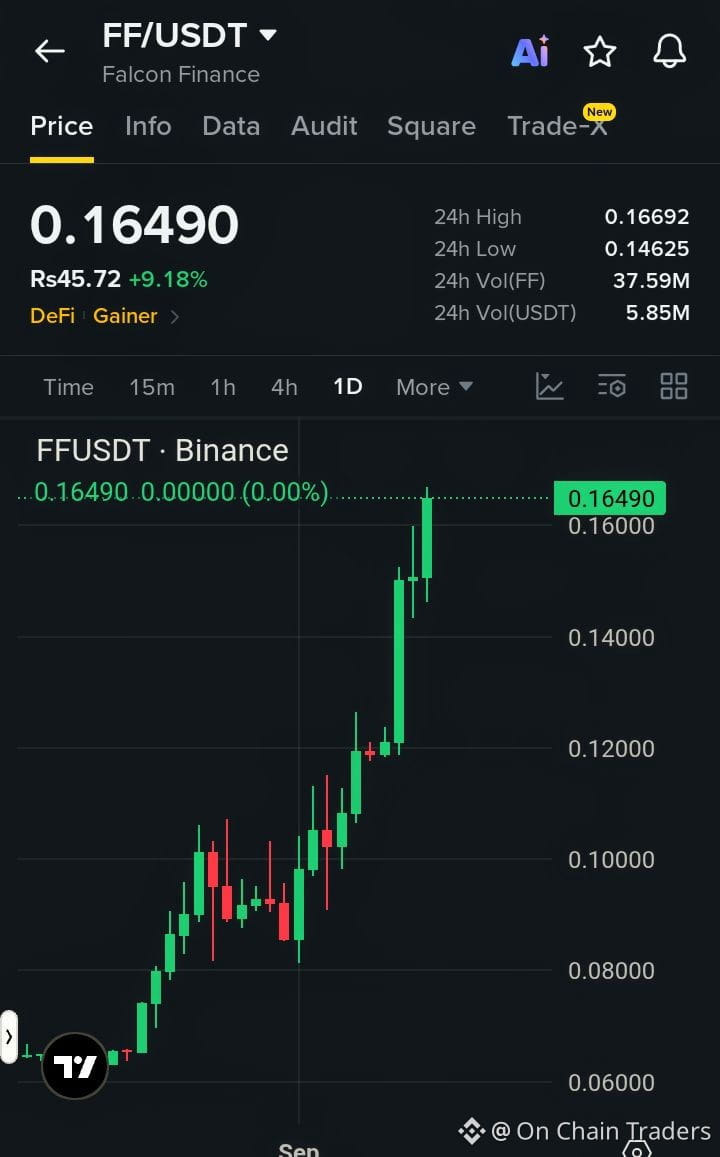
is showing strong bullish momentum, up 9%+ with price pressing the 24H high near $0.1669. �
📌 Pattern: Bullish continuation / breakout attempt
🎯 Entry: $0.1600–$0.1640
🎯 TP1: $0.1700 | TP2: $0.1780 | TP3: $0.1850
🛑 SL: $0.1530 — below key support
🔥 Next move: Bullish above $0.1669; rejection there could trigger a pullback toward $0.1600.
#FF #FalconFinance #Binance #Crypto
$FF
is showing strong bullish momentum, up 9%+ with price pressing the 24H high near $0.1669. �
📌 Pattern: Bullish continuation / breakout attempt
🎯 Entry: $0.1600–$0.1640
🎯 TP1: $0.1700 | TP2: $0.1780 | TP3: $0.1850
🛑 SL: $0.1530 — below key support
🔥 Next move: Bullish above $0.1669; rejection there could trigger a pullback toward $0.1600.
#FF #FalconFinance #Binance #Crypto
is showing strong bullish momentum, up 9%+ with price pressing the 24H high near $0.1669. �
📌 Pattern: Bullish continuation / breakout attempt
🎯 Entry: $0.1600–$0.1640
🎯 TP1: $0.1700 | TP2: $0.1780 | TP3: $0.1850
🛑 SL: $0.1530 — below key support
🔥 Next move: Bullish above $0.1669; rejection there could trigger a pullback toward $0.1600.
#FF #FalconFinance #Binance #Crypto
1
54

·
--
$FF interesting zone to watch 👀
$FF is around $0.16558 after a +9.71% move in 24h. Momentum is positive, but I’d like to see whether this area can turn into support.
Zone to watch: around $0.16558 — confirmation and a clean hold are key.
Bullish scenario: hold ➝ reclaim ➝ breakout ➝ next resistance levels
Invalidation: no precise daily-close level from this snapshot alone.
Personally, I’d rather let price prove the setup than guess the top.
#FF #FalconFinance #CryptoTrading
$FF interesting zone to watch 👀
$FF is around $0.16558 after a +9.71% move in 24h. Momentum is positive, but I’d like to see whether this area can turn into support.
Zone to watch: around $0.16558 — confirmation and a clean hold are key.
Bullish scenario: hold ➝ reclaim ➝ breakout ➝ next resistance levels
Invalidation: no precise daily-close level from this snapshot alone.
Personally, I’d rather let price prove the setup than guess the top.
#FF #FalconFinance #CryptoTrading
$FF is around $0.16558 after a +9.71% move in 24h. Momentum is positive, but I’d like to see whether this area can turn into support.
Zone to watch: around $0.16558 — confirmation and a clean hold are key.
Bullish scenario: hold ➝ reclaim ➝ breakout ➝ next resistance levels
Invalidation: no precise daily-close level from this snapshot alone.
Personally, I’d rather let price prove the setup than guess the top.
#FF #FalconFinance #CryptoTrading
209
·
--
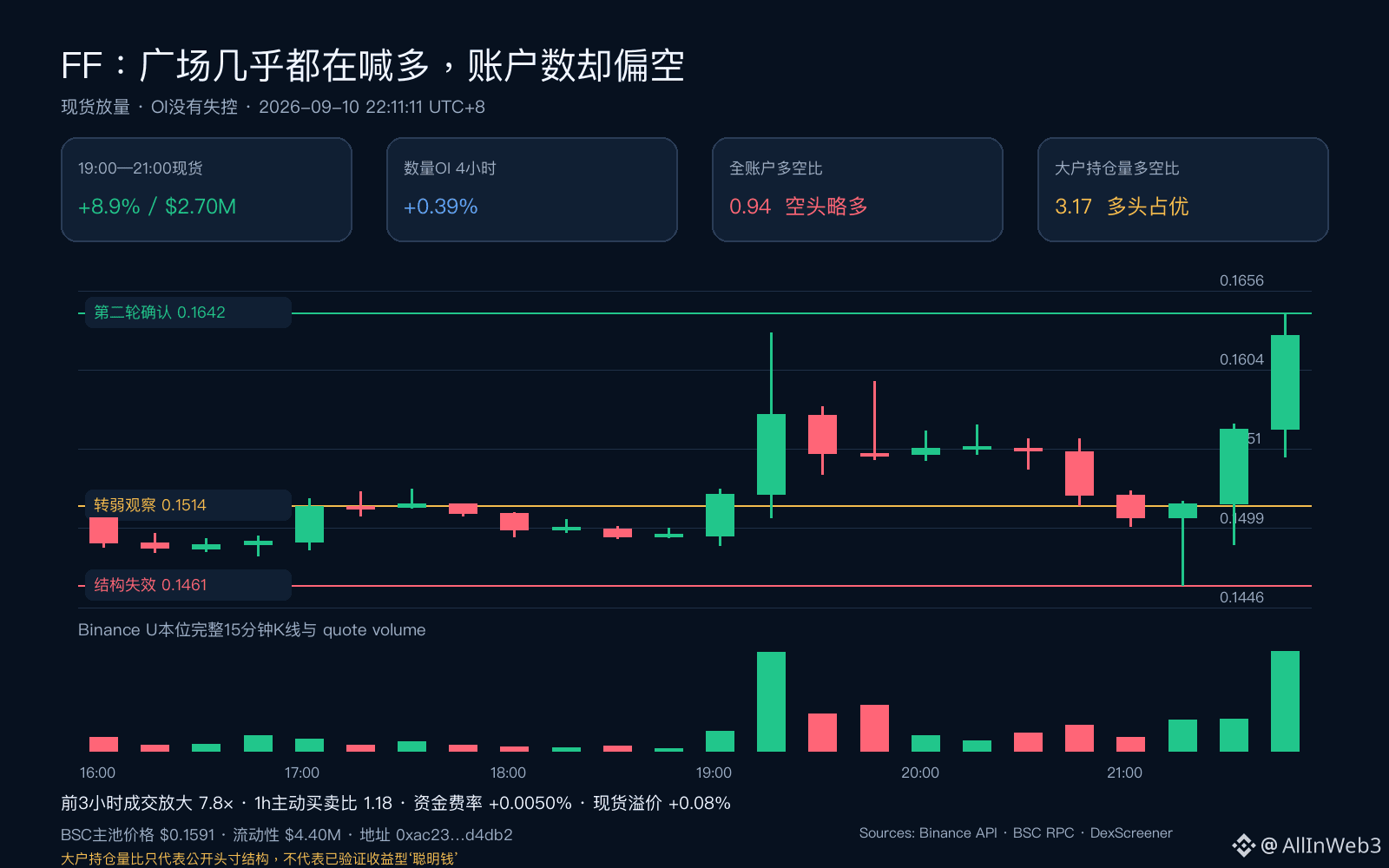
$FF广场几乎一边倒喊多,币安账户数却还偏空。我短线偏多,但0.16上方不追,先看这批空头会不会真被挤走。
19:00—21:00,现货从0.14947开到0.16283收,三小时涨8.9%,成交约270万美元,是前3小时的7.8倍;数量OI四小时却只增0.39%。22:11快照里,全账户多空比0.94,空头账户略多;大户持仓量多空比3.17,最近1小时主动买卖比1.18,资金费率也只有+0.005%。这更像现货放量、大户偏多、空头还没投降,不像多头杠杆已经挤满。
15分钟放量收上0.1642且OI同步增,我才认第二轮;收破0.1514先看0.1461,1小时再丢0.1461,这轮结构就坏了。广场都在喊多,真正的燃料可能还是没认输的空头。#FF #FalconFinance #多空博弈 #热点币
$FF 广场几乎一边倒喊多,币安账户数却还偏空。我短线偏多,但0.16上方不追,先看这批空头会不会真被挤走。
19:00—21:00,现货从0.14947开到0.16283收,三小时涨8.9%,成交约270万美元,是前3小时的7.8倍;数量OI四小时却只增0.39%。22:11快照里,全账户多空比0.94,空头账户略多;大户持仓量多空比3.17,最近1小时主动买卖比1.18,资金费率也只有+0.005%。这更像现货放量、大户偏多、空头还没投降,不像多头杠杆已经挤满。
15分钟放量收上0.1642且OI同步增,我才认第二轮;收破0.1514先看0.1461,1小时再丢0.1461,这轮结构就坏了。广场都在喊多,真正的燃料可能还是没认输的空头。#FF #FalconFinance #多空博弈 #热点币
19:00—21:00,现货从0.14947开到0.16283收,三小时涨8.9%,成交约270万美元,是前3小时的7.8倍;数量OI四小时却只增0.39%。22:11快照里,全账户多空比0.94,空头账户略多;大户持仓量多空比3.17,最近1小时主动买卖比1.18,资金费率也只有+0.005%。这更像现货放量、大户偏多、空头还没投降,不像多头杠杆已经挤满。
15分钟放量收上0.1642且OI同步增,我才认第二轮;收破0.1514先看0.1461,1小时再丢0.1461,这轮结构就坏了。广场都在喊多,真正的燃料可能还是没认输的空头。#FF #FalconFinance #多空博弈 #热点币
93

·
--
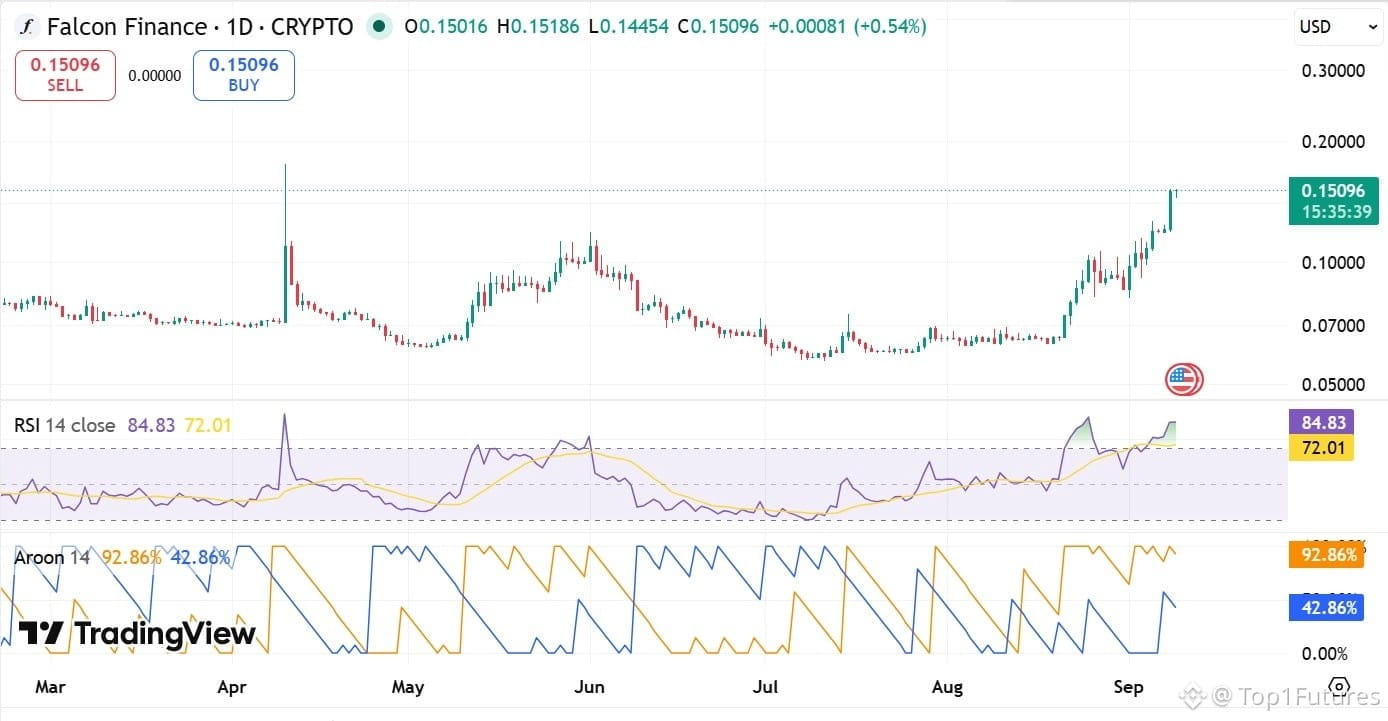
$FF is catching serious attention after a strong 25% move, pushing the token to around $0.159 and its market cap above $465M. 🚀
The rally came after #FF held the important $0.11 support, while trading activity exploded. Volume jumped more than 1,200%, showing that market interest has increased sharply.
At the same time, Open Interest and derivatives volume also climbed, meaning traders are taking bigger positions and expecting more volatility.
But there’s one thing to watch 👀 — profit-taking. Selling pressure has started increasing, while RSI has reached 84, suggesting FF is heavily overbought.
If buyers stay in control, $0.20 could become the next major target. But if selling pressure grows, FF could pull back toward the $0.11 support.
#FF
#FalconFinance
#Altcoins
$FF is catching serious attention after a strong 25% move, pushing the token to around $0.159 and its market cap above $465M. 🚀
The rally came after #FF held the important $0.11 support, while trading activity exploded. Volume jumped more than 1,200%, showing that market interest has increased sharply.
At the same time, Open Interest and derivatives volume also climbed, meaning traders are taking bigger positions and expecting more volatility.
But there’s one thing to watch 👀 — profit-taking. Selling pressure has started increasing, while RSI has reached 84, suggesting FF is heavily overbought.
If buyers stay in control, $0.20 could become the next major target. But if selling pressure grows, FF could pull back toward the $0.11 support.
#FF
#FalconFinance
#Altcoins
The rally came after #FF held the important $0.11 support, while trading activity exploded. Volume jumped more than 1,200%, showing that market interest has increased sharply.
At the same time, Open Interest and derivatives volume also climbed, meaning traders are taking bigger positions and expecting more volatility.
But there’s one thing to watch 👀 — profit-taking. Selling pressure has started increasing, while RSI has reached 84, suggesting FF is heavily overbought.
If buyers stay in control, $0.20 could become the next major target. But if selling pressure grows, FF could pull back toward the $0.11 support.
#FF
#FalconFinance
#Altcoins
1
156

Small-cap tokens don't usually move 24% in a day without a reason. $FF just did.
{future}(FFUSDT)
FF broke out sharply on September 8, and the move is still extending into September 9.
FACT: FF closed near $0.1502 on Sept 8, up ~24.1% from ~$0.121. FACT: Daily volume hit ~100.8M FF — a clear spike. SIGNAL: CoinGecko shows another ~22.6% move on Sept 9, suggesting continuation, not a one-off.
No confirmed fundamental catalyst has surfaced yet. This looks like liquidity + narrative rotation into a low-cap asset — the kind of move that's fast to build and fast to unwind.
FF may be in an early discovery phase, but without a clear catalyst, this stays speculative.
Price holding above the Sept 8 high with sustained volume.
Volume fades and price rejects back below the breakout zone.
Fast pumps are easy to spot. Real strength shows up in what happens next.
$SC
{spot}(SCUSDT)
$IQ
#FalconFinance #FFToken #CryptoResearch #SmallCapCrypto #MarketRotation
Small-cap tokens don't usually move 24% in a day without a reason. $FF just did.
FF broke out sharply on September 8, and the move is still extending into September 9.
FACT: FF closed near $0.1502 on Sept 8, up ~24.1% from ~$0.121. FACT: Daily volume hit ~100.8M FF — a clear spike. SIGNAL: CoinGecko shows another ~22.6% move on Sept 9, suggesting continuation, not a one-off.
No confirmed fundamental catalyst has surfaced yet. This looks like liquidity + narrative rotation into a low-cap asset — the kind of move that's fast to build and fast to unwind.
FF may be in an early discovery phase, but without a clear catalyst, this stays speculative.
Price holding above the Sept 8 high with sustained volume.
Volume fades and price rejects back below the breakout zone.
Fast pumps are easy to spot. Real strength shows up in what happens next.
$SC
$IQ
#FalconFinance #FFToken #CryptoResearch #SmallCapCrypto #MarketRotation
FF broke out sharply on September 8, and the move is still extending into September 9.
FACT: FF closed near $0.1502 on Sept 8, up ~24.1% from ~$0.121. FACT: Daily volume hit ~100.8M FF — a clear spike. SIGNAL: CoinGecko shows another ~22.6% move on Sept 9, suggesting continuation, not a one-off.
No confirmed fundamental catalyst has surfaced yet. This looks like liquidity + narrative rotation into a low-cap asset — the kind of move that's fast to build and fast to unwind.
FF may be in an early discovery phase, but without a clear catalyst, this stays speculative.
Price holding above the Sept 8 high with sustained volume.
Volume fades and price rejects back below the breakout zone.
Fast pumps are easy to spot. Real strength shows up in what happens next.
$SC
$IQ
#FalconFinance #FFToken #CryptoResearch #SmallCapCrypto #MarketRotation
1
141

·
--
උසබ තත්ත්වය
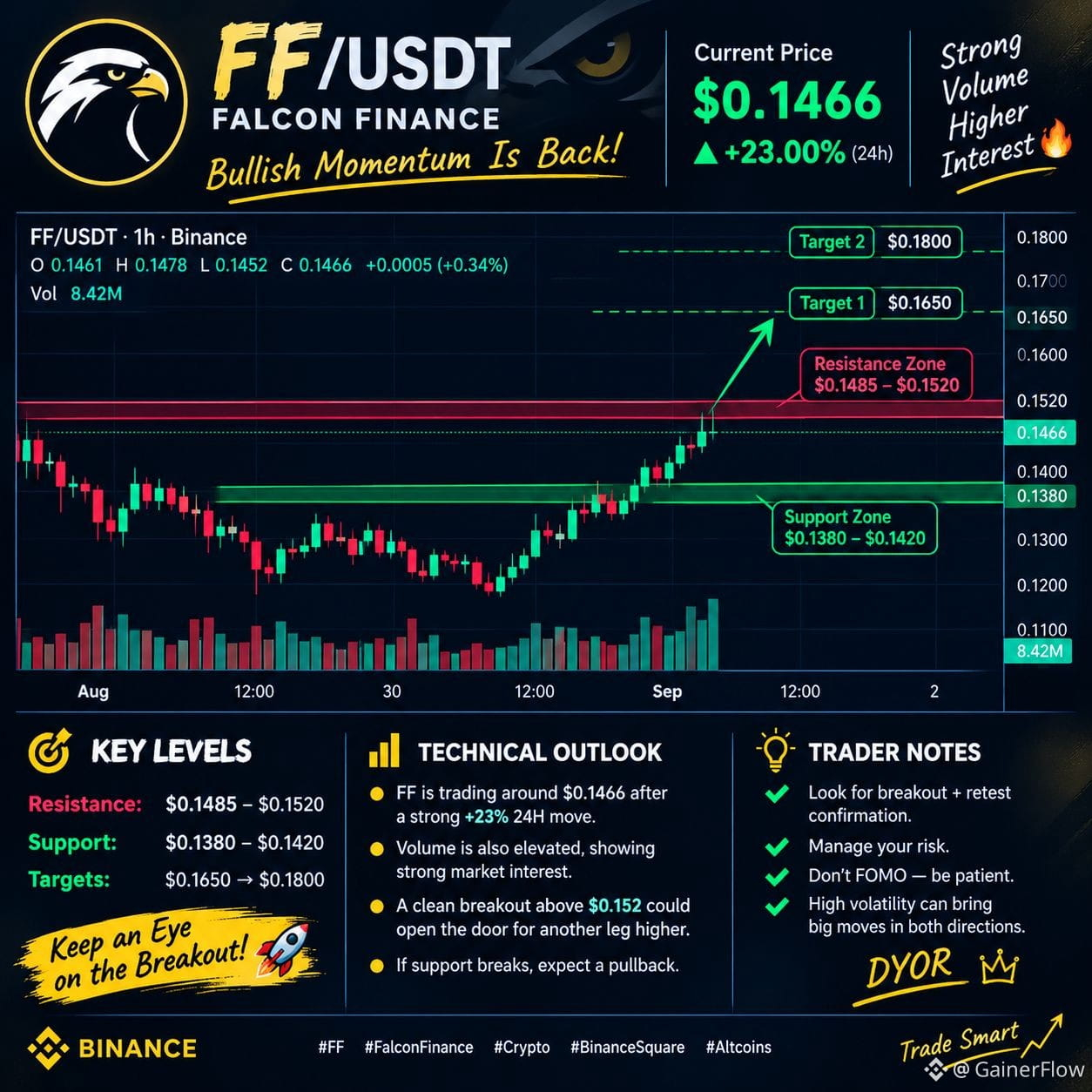
🚀 $FF — Bullish Momentum Is Back!
$FF
{future}(FFUSDT)
is trading around $0.1466 after a strong +23% 24H move. Volume is also elevated, showing strong market interest.
📌 Resistance: $0.1485–$0.1520
📌 Support: $0.138–$0.142
🎯 Targets: $0.165 → $0.180
A clean breakout above $0.152 could open the door for another leg higher. If support breaks, expect a pullback.
⚠️ High volatility — don’t FOMO. Wait for confirmation & manage risk. DYOR.
#ChinaAugustCPIRises0.8%YoY
#USStrikesTargetsNearHormuzAndJask
#ff #FalconFinance
#Crypto #BinanceSquare
#Altcoins
🚀 $FF — Bullish Momentum Is Back!
$FF
is trading around $0.1466 after a strong +23% 24H move. Volume is also elevated, showing strong market interest.
📌 Resistance: $0.1485–$0.1520
📌 Support: $0.138–$0.142
🎯 Targets: $0.165 → $0.180
A clean breakout above $0.152 could open the door for another leg higher. If support breaks, expect a pullback.
⚠️ High volatility — don’t FOMO. Wait for confirmation & manage risk. DYOR.
#ChinaAugustCPIRises0.8%YoY
#USStrikesTargetsNearHormuzAndJask
#ff #FalconFinance
#Crypto #BinanceSquare
#Altcoins
$FF
is trading around $0.1466 after a strong +23% 24H move. Volume is also elevated, showing strong market interest.
📌 Resistance: $0.1485–$0.1520
📌 Support: $0.138–$0.142
🎯 Targets: $0.165 → $0.180
A clean breakout above $0.152 could open the door for another leg higher. If support breaks, expect a pullback.
⚠️ High volatility — don’t FOMO. Wait for confirmation & manage risk. DYOR.
#ChinaAugustCPIRises0.8%YoY
#USStrikesTargetsNearHormuzAndJask
#ff #FalconFinance
#Crypto #BinanceSquare
#Altcoins
85
තවත් අන්තර්ගතයන් ගවේෂණය කිරීමට ඇතුල් වන්න
Binance චතුරශ්රය හි ගෝලීය ක්රිප්ටෝ පරිශීලකයින් හා එක්වන්න
⚡️ ක්රිප්ටෝ පිළිබඳ නවතම සහ ප්රයෝජනවත් තොරතුරු ලබා ගන්න.
💬 ලොව විශාලතම ක්රිප්ටෝ හුවමාරුව මගින් විශ්වාස කෙරේ.
👍 සත්යායනය කරන ලද නිර්මාණකරුවන්ගෙන් සැබෑ විදසුන් සොයා ගන්න.
විද්යුත් තැපෑල / දුරකථන අංකය
නැගී එන මාතෘකා
1
#BitcoinClears$85200
9,866 views
202 සාකච්ඡා කරමින්
2
#AltcoinSeasonIndexHoldsAbove60For5Days
49,985 views
1,115 සාකච්ඡා කරමින්
3
#USADPAdds90000JobsInSeptember
23,401 views
626 සාකච්ඡා කරමින්
4
#USCorePCEEasesTo3%InAugust
17,523 views
483 සාකච්ඡා කරමින්
5
#KospiPostsWorstQuarterSince2020
12,371 views
474 සාකච්ඡා කරමින්
6
#SECToClarifyOnChainFundraisingRules
29,636 views
645 සාකච්ඡා කරමින්
7
#UKFCAOpensCryptoFirmAuthorization
29,203 views
542 සාකච්ඡා කරමින්
8
#JapanMOFStudyGroupOnTokenizedGovtBonds
19,994 views
413 සාකච්ඡා කරමින්
9
#QNTRises287%
90,704 views
899 සාකච්ඡා කරමින්
10
#TrumpRejectsAIRulesForVoluntaryAudits
53,333 views
786 සාකච්ඡා කරමින්