

Crypto News Navigator
55 Публикации

Crypto News Navigator
Отправить жалобу
Заблокировать пользователя
Crypto News Navigator is a trusted source for real-time crypto prices and market data. News and trends included.
Открытая сделка
10.1 мес.
0 подписок(и/а)
33 подписчиков(а)
140 понравилось
Посты
Портфель
Все
Цитирования
Статья
Что произошло после того, как Airdrop Arbitrum изменил всёГодовщина Airdrop Arbitrum рассказывает две разные истории
16 мая 2026 года. 92.65 миллиона дополнительных токенов ARB были разблокированы для команды, советников и инвесторов. Почти не зарегистрировано в крипто Twitter. 23 марта 2023 года. Когда оригинальный airdrop Arbitrum отправил более 1.16 миллиарда токенов примерно 625,000 кошелькам в одной транзакции, это чуть не сломало инфраструктуру RPC сети. Это одно событие airdrop задало стандарт для каждого другого крупного второго уровня в плане владения сообществом, управления и дизайна стимулов на многие годы.
Что произошло после того, как Airdrop Arbitrum изменил всё
Годовщина Airdrop Arbitrum рассказывает две разные истории
16 мая 2026 года. 92.65 миллиона дополнительных токенов ARB были разблокированы для команды, советников и инвесторов. Почти не зарегистрировано в крипто Twitter. 23 марта 2023 года. Когда оригинальный airdrop Arbitrum отправил более 1.16 миллиарда токенов примерно 625,000 кошелькам в одной транзакции, это чуть не сломало инфраструктуру RPC сети. Это одно событие airdrop задало стандарт для каждого другого крупного второго уровня в плане владения сообществом, управления и дизайна стимулов на многие годы.
16 мая 2026 года. 92.65 миллиона дополнительных токенов ARB были разблокированы для команды, советников и инвесторов. Почти не зарегистрировано в крипто Twitter. 23 марта 2023 года. Когда оригинальный airdrop Arbitrum отправил более 1.16 миллиарда токенов примерно 625,000 кошелькам в одной транзакции, это чуть не сломало инфраструктуру RPC сети. Это одно событие airdrop задало стандарт для каждого другого крупного второго уровня в плане владения сообществом, управления и дизайна стимулов на многие годы.
1
201
Статья
Ставки Filecoin тихо достигли четырнадцати процентовСтавки по Filecoin прибыли, как тихое обновление программного обеспечения, о котором мало кто знает
Пример традиционных финансов - скажем, крупный банк решает изменить условия обслуживания своего продукта по сберегательным счетам. Команды по соблюдению норм отправляют мемо, регуляторы получают возможность высказать свое мнение, а клиенты получают какое-то уведомление о внесенных изменениях в бумажном виде. В начале 2026 года аналогичное заметное изменение параметров стейкинга Filecoin было принято с минимальным шумом со стороны участников индустрии. На самом деле, единственное объявление, которое было опубликовано, оказалось далеко в пределах предложений по управлению File и документации по продукту, мимо которого пролистали 99% розничных держателей. Эта тишина и делает изменения значительными. На данный момент существует множество ликвидных протоколов стейкинга и вариантов делегирования провайдеров хранения на Filecoin, которые не были доступны всего 365 дней назад. Экономика этих продуктов и возможности доходности, которые они предоставляют держателям, совершенно не похожи на стейкинг "вашего крипто" на вашей средней цепочке proof-of-stake.
Ставки Filecoin тихо достигли четырнадцати процентов
Ставки по Filecoin прибыли, как тихое обновление программного обеспечения, о котором мало кто знает
Пример традиционных финансов - скажем, крупный банк решает изменить условия обслуживания своего продукта по сберегательным счетам. Команды по соблюдению норм отправляют мемо, регуляторы получают возможность высказать свое мнение, а клиенты получают какое-то уведомление о внесенных изменениях в бумажном виде. В начале 2026 года аналогичное заметное изменение параметров стейкинга Filecoin было принято с минимальным шумом со стороны участников индустрии. На самом деле, единственное объявление, которое было опубликовано, оказалось далеко в пределах предложений по управлению File и документации по продукту, мимо которого пролистали 99% розничных держателей. Эта тишина и делает изменения значительными. На данный момент существует множество ликвидных протоколов стейкинга и вариантов делегирования провайдеров хранения на Filecoin, которые не были доступны всего 365 дней назад. Экономика этих продуктов и возможности доходности, которые они предоставляют держателям, совершенно не похожи на стейкинг "вашего крипто" на вашей средней цепочке proof-of-stake.
Пример традиционных финансов - скажем, крупный банк решает изменить условия обслуживания своего продукта по сберегательным счетам. Команды по соблюдению норм отправляют мемо, регуляторы получают возможность высказать свое мнение, а клиенты получают какое-то уведомление о внесенных изменениях в бумажном виде. В начале 2026 года аналогичное заметное изменение параметров стейкинга Filecoin было принято с минимальным шумом со стороны участников индустрии. На самом деле, единственное объявление, которое было опубликовано, оказалось далеко в пределах предложений по управлению File и документации по продукту, мимо которого пролистали 99% розничных держателей. Эта тишина и делает изменения значительными. На данный момент существует множество ликвидных протоколов стейкинга и вариантов делегирования провайдеров хранения на Filecoin, которые не были доступны всего 365 дней назад. Экономика этих продуктов и возможности доходности, которые они предоставляют держателям, совершенно не похожи на стейкинг "вашего крипто" на вашей средней цепочке proof-of-stake.
1
3
676
Статья
Безопасность кошельков Stellar Lumen стала серьезной в 2026 годуЧто требуют протоколы X-Ray и Yardstick от Stellar кошельков
Два обновления протокола за четыре месяца. Вот что сеть Stellar Lumen представила в начале 2026 года, и оба обновления касались изменений в безопасности кошельков XLM на уровне протокола. Протокол 25 "X-Ray" интегрировал нативную криптографию с нулевым разглашением в смарт-контракты Soroban 22 января 2026 года. Протокол 26 "Yardstick" вышел 6 мая и ввел механизм Quorum Freeze и проверку 256-битной арифметики. Для держателей Stellar Lumens это были не просто добавления функций. Они переписали базовые стандарты безопасности для каждого кошелька, который взаимодействует с сетью. Если вы сейчас ищете кошелек для xlm, вам нужно знать, что изменилось и что эти изменения значат для вашего хранилища ценностей.
Безопасность кошельков Stellar Lumen стала серьезной в 2026 году
Что требуют протоколы X-Ray и Yardstick от Stellar кошельков
Два обновления протокола за четыре месяца. Вот что сеть Stellar Lumen представила в начале 2026 года, и оба обновления касались изменений в безопасности кошельков XLM на уровне протокола. Протокол 25 "X-Ray" интегрировал нативную криптографию с нулевым разглашением в смарт-контракты Soroban 22 января 2026 года. Протокол 26 "Yardstick" вышел 6 мая и ввел механизм Quorum Freeze и проверку 256-битной арифметики. Для держателей Stellar Lumens это были не просто добавления функций. Они переписали базовые стандарты безопасности для каждого кошелька, который взаимодействует с сетью. Если вы сейчас ищете кошелек для xlm, вам нужно знать, что изменилось и что эти изменения значат для вашего хранилища ценностей.
Два обновления протокола за четыре месяца. Вот что сеть Stellar Lumen представила в начале 2026 года, и оба обновления касались изменений в безопасности кошельков XLM на уровне протокола. Протокол 25 "X-Ray" интегрировал нативную криптографию с нулевым разглашением в смарт-контракты Soroban 22 января 2026 года. Протокол 26 "Yardstick" вышел 6 мая и ввел механизм Quorum Freeze и проверку 256-битной арифметики. Для держателей Stellar Lumens это были не просто добавления функций. Они переписали базовые стандарты безопасности для каждого кошелька, который взаимодействует с сетью. Если вы сейчас ищете кошелек для xlm, вам нужно знать, что изменилось и что эти изменения значат для вашего хранилища ценностей.
1
1
386
Статья
Tagger только что стал самым дешевым способом монетизировать влияниеКогда TAG Crypto отделился от падения платформ для создателей контента
Торгуя по цене $0.001572, токен crypto вырос на 134% за последнюю неделю, в то время как более широкий рынок крипты споткнулся. Аналитики в большинстве своем говорят, что это 100% спекулятивный моментум, полностьюDisconnected от утилиты Tagger протокола в блокчейне. А что если они что-то упускают? Что если рынок оценивает слой монетизации, родом из блокчейна, который так дешев в использовании, что он принципиально конкурирует со всеми централизованными платформами для создателей контента. Наратив вокруг токенизации создателей в основном сосредоточен на дорогих веб-сайтах, финансируемых венчурными капиталистами, которые просто воспроизводят динамику извлечения из web2 с прикрепленным токеном. Вместо этого Tagger направляет ценность на микро-задачи и на-цепные стимулы, так широко распространенные, что стоимость самого тега, находящегося на уровне долей цента, все еще остается жизнеспособной валютой. Это тезис, в который стоит углубиться.
Tagger только что стал самым дешевым способом монетизировать влияние
Когда TAG Crypto отделился от падения платформ для создателей контента
Торгуя по цене $0.001572, токен crypto вырос на 134% за последнюю неделю, в то время как более широкий рынок крипты споткнулся. Аналитики в большинстве своем говорят, что это 100% спекулятивный моментум, полностьюDisconnected от утилиты Tagger протокола в блокчейне. А что если они что-то упускают? Что если рынок оценивает слой монетизации, родом из блокчейна, который так дешев в использовании, что он принципиально конкурирует со всеми централизованными платформами для создателей контента. Наратив вокруг токенизации создателей в основном сосредоточен на дорогих веб-сайтах, финансируемых венчурными капиталистами, которые просто воспроизводят динамику извлечения из web2 с прикрепленным токеном. Вместо этого Tagger направляет ценность на микро-задачи и на-цепные стимулы, так широко распространенные, что стоимость самого тега, находящегося на уровне долей цента, все еще остается жизнеспособной валютой. Это тезис, в который стоит углубиться.
Торгуя по цене $0.001572, токен crypto вырос на 134% за последнюю неделю, в то время как более широкий рынок крипты споткнулся. Аналитики в большинстве своем говорят, что это 100% спекулятивный моментум, полностьюDisconnected от утилиты Tagger протокола в блокчейне. А что если они что-то упускают? Что если рынок оценивает слой монетизации, родом из блокчейна, который так дешев в использовании, что он принципиально конкурирует со всеми централизованными платформами для создателей контента. Наратив вокруг токенизации создателей в основном сосредоточен на дорогих веб-сайтах, финансируемых венчурными капиталистами, которые просто воспроизводят динамику извлечения из web2 с прикрепленным токеном. Вместо этого Tagger направляет ценность на микро-задачи и на-цепные стимулы, так широко распространенные, что стоимость самого тега, находящегося на уровне долей цента, все еще остается жизнеспособной валютой. Это тезис, в который стоит углубиться.
1
260
Статья
GoPlus GPS заблокировала миллионы мошеннических транзакцийДанные GoPlus Security показывают, что Web3 под атакой
GoPlus Security остановила 2.3 миллиона мошеннических транзакций в апреле 2026 года. Эта цифра заслуживает внимания. Она была рассчитана на основе защитного слоя протокола, что означает, что было обработано более 717 миллионов API-запросов ежемесячно по более чем 40 блокчейнам, на которых были обнаружены угрозы. Добавьте к этому $45.8 миллиона сбережений пользователей от взломов и уязвимостей, найденных в более чем 30 проектах экосистемы. Картина начинает проясняться. Инфраструктура, лежащая в основе криптокошельков, на которые полагаются большинство пользователей (например, MetaMask, Trust Wallet, Uniswap), фактически подвергается атаке каждый день. Вопрос не в том, происходят ли атаки на продукты GoPlus. Что означает распространенность этих атак для безопасности на цепочке в целом в 2026 году — вот открытый вопрос.
GoPlus GPS заблокировала миллионы мошеннических транзакций
Данные GoPlus Security показывают, что Web3 под атакой
GoPlus Security остановила 2.3 миллиона мошеннических транзакций в апреле 2026 года. Эта цифра заслуживает внимания. Она была рассчитана на основе защитного слоя протокола, что означает, что было обработано более 717 миллионов API-запросов ежемесячно по более чем 40 блокчейнам, на которых были обнаружены угрозы. Добавьте к этому $45.8 миллиона сбережений пользователей от взломов и уязвимостей, найденных в более чем 30 проектах экосистемы. Картина начинает проясняться. Инфраструктура, лежащая в основе криптокошельков, на которые полагаются большинство пользователей (например, MetaMask, Trust Wallet, Uniswap), фактически подвергается атаке каждый день. Вопрос не в том, происходят ли атаки на продукты GoPlus. Что означает распространенность этих атак для безопасности на цепочке в целом в 2026 году — вот открытый вопрос.
GoPlus Security остановила 2.3 миллиона мошеннических транзакций в апреле 2026 года. Эта цифра заслуживает внимания. Она была рассчитана на основе защитного слоя протокола, что означает, что было обработано более 717 миллионов API-запросов ежемесячно по более чем 40 блокчейнам, на которых были обнаружены угрозы. Добавьте к этому $45.8 миллиона сбережений пользователей от взломов и уязвимостей, найденных в более чем 30 проектах экосистемы. Картина начинает проясняться. Инфраструктура, лежащая в основе криптокошельков, на которые полагаются большинство пользователей (например, MetaMask, Trust Wallet, Uniswap), фактически подвергается атаке каждый день. Вопрос не в том, происходят ли атаки на продукты GoPlus. Что означает распространенность этих атак для безопасности на цепочке в целом в 2026 году — вот открытый вопрос.
1
189

Статья
Почему объем Vow утроился, в то время как цена осталась стабильнойЦена Vow не изменилась, но книги ордеров говорят об обратном
Vow запустился с ценой на бирже $0.027 12 марта. Суточный объем торгов был вялым - всего $51,920. Перенесемся на два месяца вперед. Токен сейчас стоит $0.02964. Это увеличение примерно на 9.8%. Далеко от луны. Но самое странное, когда сравниваем эти две даты, средний суточный объем превысил $130k. Несколько сессий даже показали объемы выше $115k. Это в 2.5-3 раза больше, чем мы видели в середине марта, но ценовое движение удивительно похоже на то, с чего все началось. Если вы следите за новостями криптовалюты vow, это расхождение между объемом и ценой, вероятно, самая большая история вокруг токена в эти дни. Должен ли был VOW двигаться? Кто знает. Он не двигался. Кто торговал vow? Почему они стали торговать им больше? Какие исторические примеры, если таковые имеются, соответствуют этому типу объемно-ценового действия в микрокапитализированных криптовалютах?
Почему объем Vow утроился, в то время как цена осталась стабильной
Цена Vow не изменилась, но книги ордеров говорят об обратном
Vow запустился с ценой на бирже $0.027 12 марта. Суточный объем торгов был вялым - всего $51,920. Перенесемся на два месяца вперед. Токен сейчас стоит $0.02964. Это увеличение примерно на 9.8%. Далеко от луны. Но самое странное, когда сравниваем эти две даты, средний суточный объем превысил $130k. Несколько сессий даже показали объемы выше $115k. Это в 2.5-3 раза больше, чем мы видели в середине марта, но ценовое движение удивительно похоже на то, с чего все началось. Если вы следите за новостями криптовалюты vow, это расхождение между объемом и ценой, вероятно, самая большая история вокруг токена в эти дни. Должен ли был VOW двигаться? Кто знает. Он не двигался. Кто торговал vow? Почему они стали торговать им больше? Какие исторические примеры, если таковые имеются, соответствуют этому типу объемно-ценового действия в микрокапитализированных криптовалютах?
Vow запустился с ценой на бирже $0.027 12 марта. Суточный объем торгов был вялым - всего $51,920. Перенесемся на два месяца вперед. Токен сейчас стоит $0.02964. Это увеличение примерно на 9.8%. Далеко от луны. Но самое странное, когда сравниваем эти две даты, средний суточный объем превысил $130k. Несколько сессий даже показали объемы выше $115k. Это в 2.5-3 раза больше, чем мы видели в середине марта, но ценовое движение удивительно похоже на то, с чего все началось. Если вы следите за новостями криптовалюты vow, это расхождение между объемом и ценой, вероятно, самая большая история вокруг токена в эти дни. Должен ли был VOW двигаться? Кто знает. Он не двигался. Кто торговал vow? Почему они стали торговать им больше? Какие исторические примеры, если таковые имеются, соответствуют этому типу объемно-ценового действия в микрокапитализированных криптовалютах?
1
469
Статья
Токен платформы HashKey имеет смысл для одного типа трейдераТокен платформы HashKey выглядит как карта лояльности, а не как лотерейный билет
Думайте о HSK так же, как платиновые участники программы лояльности думают о статусе. Вы не покупаете Delta SkyMiles. Вы зарабатываете их, летаючи на Delta раз в неделю. Преимущества накапливаются одно на другое. Токен платформы HashKey спроектирован так же. Трейды происходят на бирже HashKey, независимо от того, держите ли вы HSK или нет. Сегодня HSK торгуется по цене $0.17, что на 93.8% ниже исторического максимума в $2.56. Это не спекулятивный токен для рискованных вложений. HSK имеет смысл экономически только как утилитарный токен в одном случае: если вы трейдер, уже участвующий в экосистеме биржи HashKey, который хочет снизить комиссии, получать вознаграждения за стекинг и иметь регулируемый вход на крипторынок Гонконга. HSK не для большинства портфелей. Он для портфелей, которые уже генерируют объем через HashKey.
Токен платформы HashKey имеет смысл для одного типа трейдера
Токен платформы HashKey выглядит как карта лояльности, а не как лотерейный билет
Думайте о HSK так же, как платиновые участники программы лояльности думают о статусе. Вы не покупаете Delta SkyMiles. Вы зарабатываете их, летаючи на Delta раз в неделю. Преимущества накапливаются одно на другое. Токен платформы HashKey спроектирован так же. Трейды происходят на бирже HashKey, независимо от того, держите ли вы HSK или нет. Сегодня HSK торгуется по цене $0.17, что на 93.8% ниже исторического максимума в $2.56. Это не спекулятивный токен для рискованных вложений. HSK имеет смысл экономически только как утилитарный токен в одном случае: если вы трейдер, уже участвующий в экосистеме биржи HashKey, который хочет снизить комиссии, получать вознаграждения за стекинг и иметь регулируемый вход на крипторынок Гонконга. HSK не для большинства портфелей. Он для портфелей, которые уже генерируют объем через HashKey.
Думайте о HSK так же, как платиновые участники программы лояльности думают о статусе. Вы не покупаете Delta SkyMiles. Вы зарабатываете их, летаючи на Delta раз в неделю. Преимущества накапливаются одно на другое. Токен платформы HashKey спроектирован так же. Трейды происходят на бирже HashKey, независимо от того, держите ли вы HSK или нет. Сегодня HSK торгуется по цене $0.17, что на 93.8% ниже исторического максимума в $2.56. Это не спекулятивный токен для рискованных вложений. HSK имеет смысл экономически только как утилитарный токен в одном случае: если вы трейдер, уже участвующий в экосистеме биржи HashKey, который хочет снизить комиссии, получать вознаграждения за стекинг и иметь регулируемый вход на крипторынок Гонконга. HSK не для большинства портфелей. Он для портфелей, которые уже генерируют объем через HashKey.
1
16
Статья
Золотая лихорадка рестейкинга, которая похоронила своих собственных старателейСтранная неделя KernelDAO и почему он все еще на плаву
Крипта Kernel — это DeFi как ваш местный банк для финансов: слишком укоренившийся, чтобы потерпеть неудачу. После того как он пережил недавний шейк-аут рестейкинга, который сверг многих конкурентов эры 2024 года, KernelDAO сегодня сидит на $2 миллиарда TVL по трем продуктам, десяткам партнерских DeFi-протоколов и еле-еле выживает после того, что могло стать его худшей неделей на данный момент.
KernelDAO, который собрал $10 миллионов в своем частном раунде продаж в 2024 году от инвесторов, включая Binance Labs, Laser Digital и SCB Limited, продолжает развиваться на фоне сломанного рынка. Верующие начинают согреваться к проекту, так как его долгожданное обновление продукта и кроссчейн-мост должны выйти в ближайшие месяцы.
Золотая лихорадка рестейкинга, которая похоронила своих собственных старателей
Странная неделя KernelDAO и почему он все еще на плаву
Крипта Kernel — это DeFi как ваш местный банк для финансов: слишком укоренившийся, чтобы потерпеть неудачу. После того как он пережил недавний шейк-аут рестейкинга, который сверг многих конкурентов эры 2024 года, KernelDAO сегодня сидит на $2 миллиарда TVL по трем продуктам, десяткам партнерских DeFi-протоколов и еле-еле выживает после того, что могло стать его худшей неделей на данный момент.
KernelDAO, который собрал $10 миллионов в своем частном раунде продаж в 2024 году от инвесторов, включая Binance Labs, Laser Digital и SCB Limited, продолжает развиваться на фоне сломанного рынка. Верующие начинают согреваться к проекту, так как его долгожданное обновление продукта и кроссчейн-мост должны выйти в ближайшие месяцы.
Крипта Kernel — это DeFi как ваш местный банк для финансов: слишком укоренившийся, чтобы потерпеть неудачу. После того как он пережил недавний шейк-аут рестейкинга, который сверг многих конкурентов эры 2024 года, KernelDAO сегодня сидит на $2 миллиарда TVL по трем продуктам, десяткам партнерских DeFi-протоколов и еле-еле выживает после того, что могло стать его худшей неделей на данный момент.
KernelDAO, который собрал $10 миллионов в своем частном раунде продаж в 2024 году от инвесторов, включая Binance Labs, Laser Digital и SCB Limited, продолжает развиваться на фоне сломанного рынка. Верующие начинают согреваться к проекту, так как его долгожданное обновление продукта и кроссчейн-мост должны выйти в ближайшие месяцы.
2
355
Статья
Прогноз цены BitTorrent до 2040 года на основе эволюции обмена файламиЧто покупают вам массовые установки сети за доли пенни
Токен BitTorrent (BTT) торгуется за $0.000000323572995 на середину апреля 2026 года. Это снижение на 90% от его исторического максимума. Но сеть, на которой он работает, находится на вершине одной из крупнейших децентрализованных сетей в мире: 573 миллиона установок клиентов, плюс недавно обновленная децентрализованная файловая система (BTFS v4.0). Так что же происходит? Доступ BTT в сравнении с его ценой. Поможет ли принятие децентрализованного хранения в течение следующих 15 лет решить эту загадку? Любой реалистичный прогноз цены bittorrent на 2040 год начинается здесь. Реальные примеры использования встречаются с токеномикой, которая делает повышение цены за единицу невероятно сложным.
Прогноз цены BitTorrent до 2040 года на основе эволюции обмена файлами
Что покупают вам массовые установки сети за доли пенни
Токен BitTorrent (BTT) торгуется за $0.000000323572995 на середину апреля 2026 года. Это снижение на 90% от его исторического максимума. Но сеть, на которой он работает, находится на вершине одной из крупнейших децентрализованных сетей в мире: 573 миллиона установок клиентов, плюс недавно обновленная децентрализованная файловая система (BTFS v4.0). Так что же происходит? Доступ BTT в сравнении с его ценой. Поможет ли принятие децентрализованного хранения в течение следующих 15 лет решить эту загадку? Любой реалистичный прогноз цены bittorrent на 2040 год начинается здесь. Реальные примеры использования встречаются с токеномикой, которая делает повышение цены за единицу невероятно сложным.
Токен BitTorrent (BTT) торгуется за $0.000000323572995 на середину апреля 2026 года. Это снижение на 90% от его исторического максимума. Но сеть, на которой он работает, находится на вершине одной из крупнейших децентрализованных сетей в мире: 573 миллиона установок клиентов, плюс недавно обновленная децентрализованная файловая система (BTFS v4.0). Так что же происходит? Доступ BTT в сравнении с его ценой. Поможет ли принятие децентрализованного хранения в течение следующих 15 лет решить эту загадку? Любой реалистичный прогноз цены bittorrent на 2040 год начинается здесь. Реальные примеры использования встречаются с токеномикой, которая делает повышение цены за единицу невероятно сложным.
1
316
Статья
Купите Power Ledger до того, как эти три энергетических обязательства вступят в силуТри обязательства по соблюдению закрываются одновременно
Обновление RED III (Директива о возобновляемой энергии) Европейской комиссии должно быть принято в закон государствами-членами ЕС до середины 2026 года. Новый RED III требует отслеживаемости всех REC (Сертификатов возобновляемой энергии) на уровне мегаватт-часа для целей мониторинга. Предлагаемая новая структура RET (Цели в области возобновляемой энергии) для Австралии начнётся с января 2027 года и потребует цифровых подтверждаемых доказательств всех LGC (Сертификатов крупномасштабного производства), выданных для крупномасштабного производства. ЕС CBAM (Механизм корректировки углеродных границ) должен быть полностью функциональным к 2026 году, и предложенная регламентация потребует аудируемых данных об использовании энергии в цепочке поставок от импортеров.
Купите Power Ledger до того, как эти три энергетических обязательства вступят в силу
Три обязательства по соблюдению закрываются одновременно
Обновление RED III (Директива о возобновляемой энергии) Европейской комиссии должно быть принято в закон государствами-членами ЕС до середины 2026 года. Новый RED III требует отслеживаемости всех REC (Сертификатов возобновляемой энергии) на уровне мегаватт-часа для целей мониторинга. Предлагаемая новая структура RET (Цели в области возобновляемой энергии) для Австралии начнётся с января 2027 года и потребует цифровых подтверждаемых доказательств всех LGC (Сертификатов крупномасштабного производства), выданных для крупномасштабного производства. ЕС CBAM (Механизм корректировки углеродных границ) должен быть полностью функциональным к 2026 году, и предложенная регламентация потребует аудируемых данных об использовании энергии в цепочке поставок от импортеров.
Обновление RED III (Директива о возобновляемой энергии) Европейской комиссии должно быть принято в закон государствами-членами ЕС до середины 2026 года. Новый RED III требует отслеживаемости всех REC (Сертификатов возобновляемой энергии) на уровне мегаватт-часа для целей мониторинга. Предлагаемая новая структура RET (Цели в области возобновляемой энергии) для Австралии начнётся с января 2027 года и потребует цифровых подтверждаемых доказательств всех LGC (Сертификатов крупномасштабного производства), выданных для крупномасштабного производства. ЕС CBAM (Механизм корректировки углеродных границ) должен быть полностью функциональным к 2026 году, и предложенная регламентация потребует аудируемых данных об использовании энергии в цепочке поставок от импортеров.
1
91

Статья
Почему QANX Может Превзойти Даже Если Квантовые Компьютеры Никогда Не МатериализуютсяКогда Квантовая Тезис Не Является Полным Быком
Тезис, циркулирующий вокруг QANplatform, заключается в том, что это игра на квантовую устойчивость. Успешность этого зависит от того, насколько точно рынок определяет время появления квантовых компьютеров. Если Bitcoin достигнет X к тому времени, когда крипторынки поверят, что кубиты достигнут Y, ранние покупатели будут выглядеть блестяще. Торгуясь по цене $0.01238 за токен QANX с рыночной капитализацией около $21 миллиона (QANX CoinGecko), токен торгуется на 93.9% ниже ATH. Рынок крайне пессимистичен относительно квантовой вычислительной тезиса.
Почему QANX Может Превзойти Даже Если Квантовые Компьютеры Никогда Не Материализуются
Когда Квантовая Тезис Не Является Полным Быком
Тезис, циркулирующий вокруг QANplatform, заключается в том, что это игра на квантовую устойчивость. Успешность этого зависит от того, насколько точно рынок определяет время появления квантовых компьютеров. Если Bitcoin достигнет X к тому времени, когда крипторынки поверят, что кубиты достигнут Y, ранние покупатели будут выглядеть блестяще. Торгуясь по цене $0.01238 за токен QANX с рыночной капитализацией около $21 миллиона (QANX CoinGecko), токен торгуется на 93.9% ниже ATH. Рынок крайне пессимистичен относительно квантовой вычислительной тезиса.
Тезис, циркулирующий вокруг QANplatform, заключается в том, что это игра на квантовую устойчивость. Успешность этого зависит от того, насколько точно рынок определяет время появления квантовых компьютеров. Если Bitcoin достигнет X к тому времени, когда крипторынки поверят, что кубиты достигнут Y, ранние покупатели будут выглядеть блестяще. Торгуясь по цене $0.01238 за токен QANX с рыночной капитализацией около $21 миллиона (QANX CoinGecko), токен торгуется на 93.9% ниже ATH. Рынок крайне пессимистичен относительно квантовой вычислительной тезиса.
1
21
Статья
Zano имеет цепную реакцию катализаторов, развивающуюся к Q2Почему конфиденциальные монеты сталкиваются с другим рынком в этом году
Торгуясь по цене $9.64, токен Zano имеет рыночную капитализацию около $147 миллионов, что на 46% ниже рекордов, близких к $17.81. Каждый из четырех катализаторов, включенных в дорожную карту криптопроекта zano на 2026 год, может существенно повлиять на эту оценку.
Контекст имеет значение. В 2025 году было 73 криптобиржи, которые исключили конфиденциальные монеты. Это было на 43% больше, чем всего два года назад, когда 51 биржа исключила их. Это привело к падению цен на меньшие конфиденциальные монеты. Но в результате они оказались в несколько ироничной ситуации: меньше централизованных бирж для торговли, но больше спроса от людей, которые действительно хотят то, что предлагает продукт.
Zano имеет цепную реакцию катализаторов, развивающуюся к Q2
Почему конфиденциальные монеты сталкиваются с другим рынком в этом году
Торгуясь по цене $9.64, токен Zano имеет рыночную капитализацию около $147 миллионов, что на 46% ниже рекордов, близких к $17.81. Каждый из четырех катализаторов, включенных в дорожную карту криптопроекта zano на 2026 год, может существенно повлиять на эту оценку.
Контекст имеет значение. В 2025 году было 73 криптобиржи, которые исключили конфиденциальные монеты. Это было на 43% больше, чем всего два года назад, когда 51 биржа исключила их. Это привело к падению цен на меньшие конфиденциальные монеты. Но в результате они оказались в несколько ироничной ситуации: меньше централизованных бирж для торговли, но больше спроса от людей, которые действительно хотят то, что предлагает продукт.
Торгуясь по цене $9.64, токен Zano имеет рыночную капитализацию около $147 миллионов, что на 46% ниже рекордов, близких к $17.81. Каждый из четырех катализаторов, включенных в дорожную карту криптопроекта zano на 2026 год, может существенно повлиять на эту оценку.
Контекст имеет значение. В 2025 году было 73 криптобиржи, которые исключили конфиденциальные монеты. Это было на 43% больше, чем всего два года назад, когда 51 биржа исключила их. Это привело к падению цен на меньшие конфиденциальные монеты. Но в результате они оказались в несколько ироничной ситуации: меньше централизованных бирж для торговли, но больше спроса от людей, которые действительно хотят то, что предлагает продукт.
1
1
363
Статья
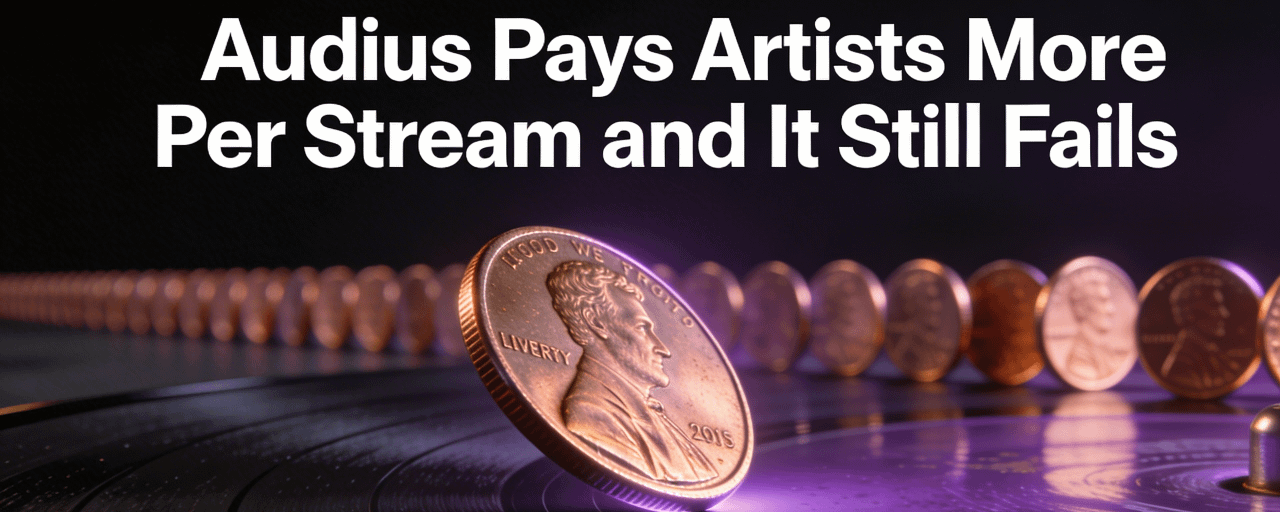
Audius платит артистам больше за поток, и это всё равно провалПоток в $0.01 продюсера из спальни изменил всё
Один артист загрузил трехпесенный EP на платформу в прошлом октябре. Когда он посмотрел на свои статистические данные по потокам в следующем месяце, он был поражён. Эти три песни заработали больше от потокового воспроизведения на Audius за один месяц, чем музыкант заработал на Spotify за два года. Конечно, реальные доллары были ничтожны. Но в относительном масштабе это научило его чему-то. Audius — это публичный, децентрализованный протокол потокового аудио. Думайте об этом как о блокчейн Spotify. Сотни артистов загрузили свою музыку на Audius бесплатно с минимальными ограничениями.
Audius платит артистам больше за поток, и это всё равно провал
Поток в $0.01 продюсера из спальни изменил всё
Один артист загрузил трехпесенный EP на платформу в прошлом октябре. Когда он посмотрел на свои статистические данные по потокам в следующем месяце, он был поражён. Эти три песни заработали больше от потокового воспроизведения на Audius за один месяц, чем музыкант заработал на Spotify за два года. Конечно, реальные доллары были ничтожны. Но в относительном масштабе это научило его чему-то. Audius — это публичный, децентрализованный протокол потокового аудио. Думайте об этом как о блокчейн Spotify. Сотни артистов загрузили свою музыку на Audius бесплатно с минимальными ограничениями.
Один артист загрузил трехпесенный EP на платформу в прошлом октябре. Когда он посмотрел на свои статистические данные по потокам в следующем месяце, он был поражён. Эти три песни заработали больше от потокового воспроизведения на Audius за один месяц, чем музыкант заработал на Spotify за два года. Конечно, реальные доллары были ничтожны. Но в относительном масштабе это научило его чему-то. Audius — это публичный, децентрализованный протокол потокового аудио. Думайте об этом как о блокчейн Spotify. Сотни артистов загрузили свою музыку на Audius бесплатно с минимальными ограничениями.
1
234
Статья
Бывшие руководители Sony создали первый регулируемый токен ЯпонииВетераны Sony, которые покинули потребительскую электронику ради блокчейна
В 2021 году на него не обратили много внимания, когда токен японского стартапа Jasmy Corporation получил одобрение регуляторов от Финансового управления Японии (FSA) для листинга на японских криптобиржах. Перенесемся на пять лет вперед, и эта относительно скромная компания с головным офисом в Токио, в которой работают бывшие руководители Sony, тихо разработала функциональную платформу IoT для данных, наладила корпоративные партнерства и осталась верной своим корням как оригинальный легально соответствующий криптотокен Японии. Когда большинство людей слышат вопрос о том, что такое jasmy coin, они в первую очередь думают о спекуляциях с ценами. Но более глубокий ответ заключается в том, что токен JasmyCoin представляет собой нечто гораздо более редкое в крипто: токен, обеспеченный реальной физической инфраструктурой для владения данными. Это в мире, который, как ожидается, будет иметь 75 миллиардов подключенных устройств к 2030 году.
Бывшие руководители Sony создали первый регулируемый токен Японии
Ветераны Sony, которые покинули потребительскую электронику ради блокчейна
В 2021 году на него не обратили много внимания, когда токен японского стартапа Jasmy Corporation получил одобрение регуляторов от Финансового управления Японии (FSA) для листинга на японских криптобиржах. Перенесемся на пять лет вперед, и эта относительно скромная компания с головным офисом в Токио, в которой работают бывшие руководители Sony, тихо разработала функциональную платформу IoT для данных, наладила корпоративные партнерства и осталась верной своим корням как оригинальный легально соответствующий криптотокен Японии. Когда большинство людей слышат вопрос о том, что такое jasmy coin, они в первую очередь думают о спекуляциях с ценами. Но более глубокий ответ заключается в том, что токен JasmyCoin представляет собой нечто гораздо более редкое в крипто: токен, обеспеченный реальной физической инфраструктурой для владения данными. Это в мире, который, как ожидается, будет иметь 75 миллиардов подключенных устройств к 2030 году.
В 2021 году на него не обратили много внимания, когда токен японского стартапа Jasmy Corporation получил одобрение регуляторов от Финансового управления Японии (FSA) для листинга на японских криптобиржах. Перенесемся на пять лет вперед, и эта относительно скромная компания с головным офисом в Токио, в которой работают бывшие руководители Sony, тихо разработала функциональную платформу IoT для данных, наладила корпоративные партнерства и осталась верной своим корням как оригинальный легально соответствующий криптотокен Японии. Когда большинство людей слышат вопрос о том, что такое jasmy coin, они в первую очередь думают о спекуляциях с ценами. Но более глубокий ответ заключается в том, что токен JasmyCoin представляет собой нечто гораздо более редкое в крипто: токен, обеспеченный реальной физической инфраструктурой для владения данными. Это в мире, который, как ожидается, будет иметь 75 миллиардов подключенных устройств к 2030 году.
1
5
421
Статья
Прогноз цены Velo: Почему модели на основе графиков все пропускаютПочему каждое предсказание цены Velo, которое вы прочитали, неверно
Торгуясь на уровне $0.0037, Velo упал на 99.8% от своего исторического максимума в $2.29. Активность на уровне протокола показала увеличение ежедневных транзакций на 255.5% в первом квартале 2025 года. Когда вы видите разрыв между ростом в блокчейне и ценой токена, это действительно освещает, что не так с традиционными моделями прогнозирования цен на velo. Большинство, если не все, модели, используемые для прогнозирования цены VELO, были разработаны для оценки BTC или ETH. Постройте график исторического движения цен. Добавьте пару скользящих средних. Учитывайте циклы доминирования Биткойна. Прогнозируйте наперед. Звучит довольно субъективно. И все же, вот что вы получаете: огромный список чисел с добавленными некоторыми доверительными интервалами. При этом полностью игнорируя реальные факторы цен, которые обычно важны для утилитарного токена, стремящегося захватить долю рынка в экосистеме платежей Юго-Восточной Азии, такой как Velo.
Прогноз цены Velo: Почему модели на основе графиков все пропускают
Почему каждое предсказание цены Velo, которое вы прочитали, неверно
Торгуясь на уровне $0.0037, Velo упал на 99.8% от своего исторического максимума в $2.29. Активность на уровне протокола показала увеличение ежедневных транзакций на 255.5% в первом квартале 2025 года. Когда вы видите разрыв между ростом в блокчейне и ценой токена, это действительно освещает, что не так с традиционными моделями прогнозирования цен на velo. Большинство, если не все, модели, используемые для прогнозирования цены VELO, были разработаны для оценки BTC или ETH. Постройте график исторического движения цен. Добавьте пару скользящих средних. Учитывайте циклы доминирования Биткойна. Прогнозируйте наперед. Звучит довольно субъективно. И все же, вот что вы получаете: огромный список чисел с добавленными некоторыми доверительными интервалами. При этом полностью игнорируя реальные факторы цен, которые обычно важны для утилитарного токена, стремящегося захватить долю рынка в экосистеме платежей Юго-Восточной Азии, такой как Velo.
Торгуясь на уровне $0.0037, Velo упал на 99.8% от своего исторического максимума в $2.29. Активность на уровне протокола показала увеличение ежедневных транзакций на 255.5% в первом квартале 2025 года. Когда вы видите разрыв между ростом в блокчейне и ценой токена, это действительно освещает, что не так с традиционными моделями прогнозирования цен на velo. Большинство, если не все, модели, используемые для прогнозирования цены VELO, были разработаны для оценки BTC или ETH. Постройте график исторического движения цен. Добавьте пару скользящих средних. Учитывайте циклы доминирования Биткойна. Прогнозируйте наперед. Звучит довольно субъективно. И все же, вот что вы получаете: огромный список чисел с добавленными некоторыми доверительными интервалами. При этом полностью игнорируя реальные факторы цен, которые обычно важны для утилитарного токена, стремящегося захватить долю рынка в экосистеме платежей Юго-Восточной Азии, такой как Velo.
1
17
BORA не то, что вы думаете, и это на самом деле суть
METABORA GAMES запустила платформу взаимодействия с игроками с контентом на основе миссий, загружаемыми мини-играми и игровыми стимулами 31 марта. Тишина. Смертельная тишина. Эта нереакция говорит о многом в отношении одной из самых упрямых проблем брендинга в криптовалюте. Найдите "bora bora currency" в Google, и вы найдете цены на курорты вместо блогов разработчиков.
BORA не то, что вы думаете, и это на самом деле суть
METABORA GAMES запустила платформу взаимодействия с игроками с контентом на основе миссий, загружаемыми мини-играми и игровыми стимулами 31 марта. Тишина. Смертельная тишина. Эта нереакция говорит о многом в отношении одной из самых упрямых проблем брендинга в криптовалюте. Найдите "bora bora currency" в Google, и вы найдете цены на курорты вместо блогов разработчиков.
METABORA GAMES запустила платформу взаимодействия с игроками с контентом на основе миссий, загружаемыми мини-играми и игровыми стимулами 31 марта. Тишина. Смертельная тишина. Эта нереакция говорит о многом в отношении одной из самых упрямых проблем брендинга в криптовалюте. Найдите "bora bora currency" в Google, и вы найдете цены на курорты вместо блогов разработчиков.
1
92
Статья
Биржи DigiByte, ранжированные по ликвидности и фактической доступностиГде купить DigiByte в 2026 году: $1.86M ежедневный объем говорит о тревожной ситуации
Итак, DigiByte торгуется с 24-часовым объемом $1.86M на 173 биржах. Криптовалюта с рыночной капитализацией $72.62M имеет умеренную ликвидность. Ежедневные сделки на самой ликвидной бирже (Binance, пара DGB к USD) составляют $127,071. Так что, если вы ищете, где купить DigiByte сегодня, список бирж, поддерживающих его, больше не является вашим самым большим вопросом. Вашим самым большим вопросом теперь является то, какая биржа может обработать вашу сделку без проскальзывания 3%.
Биржи DigiByte, ранжированные по ликвидности и фактической доступности
Где купить DigiByte в 2026 году: $1.86M ежедневный объем говорит о тревожной ситуации
Итак, DigiByte торгуется с 24-часовым объемом $1.86M на 173 биржах. Криптовалюта с рыночной капитализацией $72.62M имеет умеренную ликвидность. Ежедневные сделки на самой ликвидной бирже (Binance, пара DGB к USD) составляют $127,071. Так что, если вы ищете, где купить DigiByte сегодня, список бирж, поддерживающих его, больше не является вашим самым большим вопросом. Вашим самым большим вопросом теперь является то, какая биржа может обработать вашу сделку без проскальзывания 3%.
Итак, DigiByte торгуется с 24-часовым объемом $1.86M на 173 биржах. Криптовалюта с рыночной капитализацией $72.62M имеет умеренную ликвидность. Ежедневные сделки на самой ликвидной бирже (Binance, пара DGB к USD) составляют $127,071. Так что, если вы ищете, где купить DigiByte сегодня, список бирж, поддерживающих его, больше не является вашим самым большим вопросом. Вашим самым большим вопросом теперь является то, какая биржа может обработать вашу сделку без проскальзывания 3%.
3
166

Статья
Интеграция Aave Wallet открыла новый рынокПользователи Aave Wallet утроились после изменения математики на этапе регистрации
Точка боли, которая была широко понята на протяжении многих лет, оказалась трудной для преодоления: люди, которые хотели децентрализованные кредитные протоколы, не использовали их. Самый крупный DeFi кредитный протокол по общей заблокированной стоимости (TVL), Aave, работал над этой проблемой на протяжении большей части 2025 года через интеграции aave wallet, которые упрощают пользователям обмена заимствование в цепи, не покидая свою панель инструментов. Ранние результаты начинают изменять то, кто использует DeFi кредитные протоколы и как они их используют.
Интеграция Aave Wallet открыла новый рынок
Пользователи Aave Wallet утроились после изменения математики на этапе регистрации
Точка боли, которая была широко понята на протяжении многих лет, оказалась трудной для преодоления: люди, которые хотели децентрализованные кредитные протоколы, не использовали их. Самый крупный DeFi кредитный протокол по общей заблокированной стоимости (TVL), Aave, работал над этой проблемой на протяжении большей части 2025 года через интеграции aave wallet, которые упрощают пользователям обмена заимствование в цепи, не покидая свою панель инструментов. Ранние результаты начинают изменять то, кто использует DeFi кредитные протоколы и как они их используют.
Точка боли, которая была широко понята на протяжении многих лет, оказалась трудной для преодоления: люди, которые хотели децентрализованные кредитные протоколы, не использовали их. Самый крупный DeFi кредитный протокол по общей заблокированной стоимости (TVL), Aave, работал над этой проблемой на протяжении большей части 2025 года через интеграции aave wallet, которые упрощают пользователям обмена заимствование в цепи, не покидая свою панель инструментов. Ранние результаты начинают изменять то, кто использует DeFi кредитные протоколы и как они их используют.
1
141
Статья
Sahara AI только что решила проблему управления, которую никто не предвиделSahara AI: Рамки управления, которых не хватало децентрализованному ИИ
Существует коммерческое предложение, которое пытается использовать каждый децентрализованный проект ИИ. "Открытые данные." "Открытые вычисления." "Открытые модели." О чем они никогда не говорят? Кто справляется со всем хаосом, который происходит между ними. Sahara AI, торгующая по цене $0.026 с рыночной капитализацией в $76 миллионов, тихо строит то, что она описывает как "рамки управления" для автономных агентов с тех пор, как это стало модным. Рамки управления автоматизируют то, как агенты открывают, оплачивают и проверяют данные из различных источников через сети без доверия.
Sahara AI только что решила проблему управления, которую никто не предвидел
Sahara AI: Рамки управления, которых не хватало децентрализованному ИИ
Существует коммерческое предложение, которое пытается использовать каждый децентрализованный проект ИИ. "Открытые данные." "Открытые вычисления." "Открытые модели." О чем они никогда не говорят? Кто справляется со всем хаосом, который происходит между ними. Sahara AI, торгующая по цене $0.026 с рыночной капитализацией в $76 миллионов, тихо строит то, что она описывает как "рамки управления" для автономных агентов с тех пор, как это стало модным. Рамки управления автоматизируют то, как агенты открывают, оплачивают и проверяют данные из различных источников через сети без доверия.
Существует коммерческое предложение, которое пытается использовать каждый децентрализованный проект ИИ. "Открытые данные." "Открытые вычисления." "Открытые модели." О чем они никогда не говорят? Кто справляется со всем хаосом, который происходит между ними. Sahara AI, торгующая по цене $0.026 с рыночной капитализацией в $76 миллионов, тихо строит то, что она описывает как "рамки управления" для автономных агентов с тех пор, как это стало модным. Рамки управления автоматизируют то, как агенты открывают, оплачивают и проверяют данные из различных источников через сети без доверия.
1
101
·
--
Рост
Индекс глобального принятия криптовалют 2026 года: Индия лидирует, в то время как страны Африки к югу от Сахары стремительно развиваются
Индия занимает первое место в шестом ежегодном Индексе глобального принятия криптовалют, в то время как страны Африки к югу от Сахары показывают свои лучшие результаты за всю историю, с четырьмя странами в топ-20. Новая методология впервые включает сети второго уровня и взвешивание стейблкоинов.
Узнайте больше на нашем сайте.
Индекс глобального принятия криптовалют 2026 года: Индия лидирует, в то время как страны Африки к югу от Сахары стремительно развиваются
Индия занимает первое место в шестом ежегодном Индексе глобального принятия криптовалют, в то время как страны Африки к югу от Сахары показывают свои лучшие результаты за всю историю, с четырьмя странами в топ-20. Новая методология впервые включает сети второго уровня и взвешивание стейблкоинов.
Узнайте больше на нашем сайте.
Индия занимает первое место в шестом ежегодном Индексе глобального принятия криптовалют, в то время как страны Африки к югу от Сахары показывают свои лучшие результаты за всю историю, с четырьмя странами в топ-20. Новая методология впервые включает сети второго уровня и взвешивание стейблкоинов.
Узнайте больше на нашем сайте.
1
2
60
Войдите, чтобы посмотреть больше материала
Присоединяйтесь к пользователям криптовалют по всему миру на Binance Square
⚡️ Получайте новейшую и полезную информацию о криптоактивах.
💬 Нам доверяет крупнейшая в мире криптобиржа.
👍 Получите достоверные аналитические данные от верифицированных создателей контента.
Эл. почта/номер телефона
В тренде
BinancePick
Просмотров: 2.8M
148,178 обсуждают
Присоединяйтесь к #EarningsSeason: прогнозируйте финансовые результаты на Binance Pick и делитесь своим мнением на Binance Square!
Binance Square Official
·Лайков: 403
·Просмотров: 341k
EarningsSeason
Просмотров: 5.1M
25,288 обсуждают
ПротоколFOMC
Просмотров: 59,752
246 обсуждают