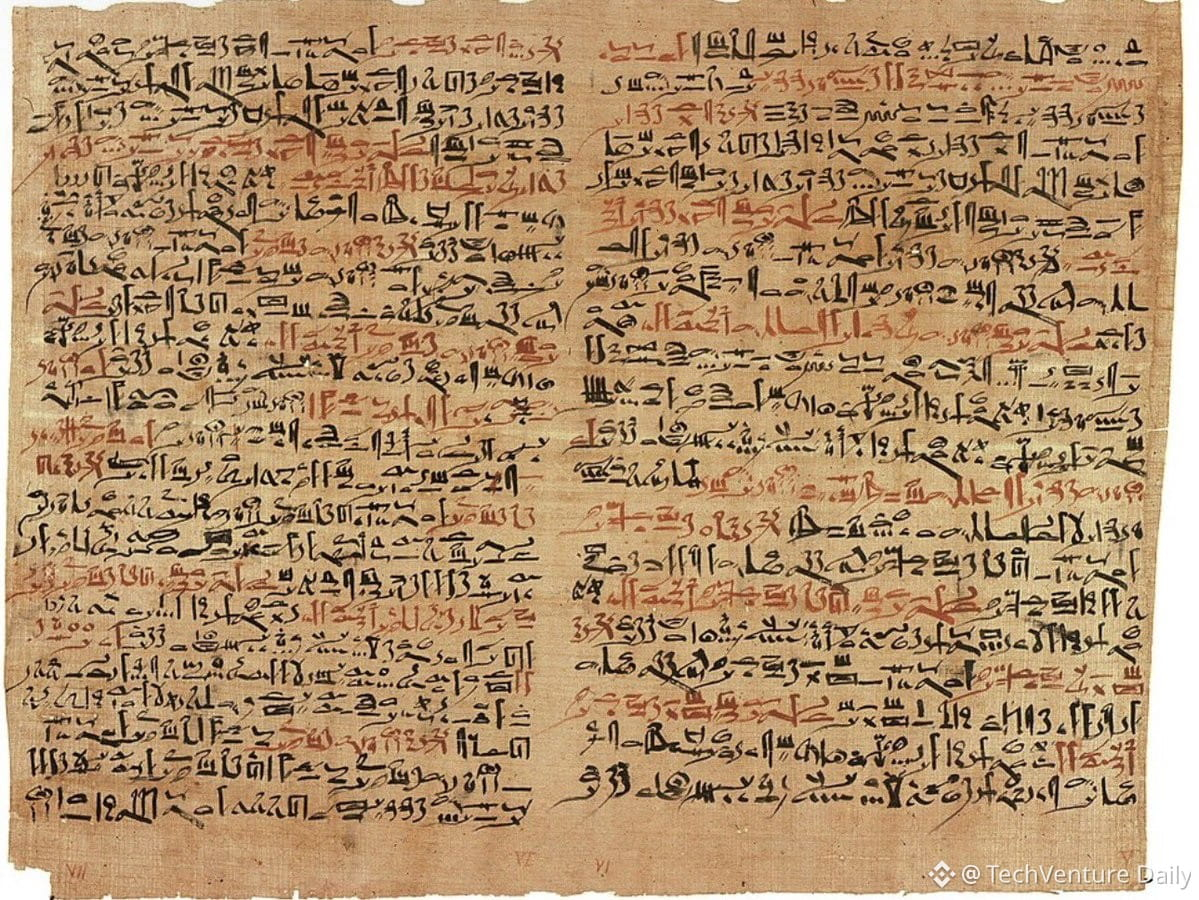
Ancient Egyptian hieroglyphs weren't primitive pictograms — they were a triple-layered encoding system that operated simultaneously as logogram, phonogram, and semantic determinative.
Core architecture:
1. Logographic layer: Symbol = direct object reference (duck glyph = literal duck)
2. Phonetic layer: Same symbol = sound token (duck = "sa" phoneme, reusable for homophone "son")
3. Determinative layer: Silent classifier appended post-phonetic spelling (walking legs after motion verbs, seated deity after god names — functionally the first autocomplete)
Egyptians had two optimized scripts for daily ops: Hieratic and Demotic (cursive derivatives, high-speed, papyrus-native). Hieroglyphs were reserved for persistent storage media — stone, gold, tomb walls — because visual redundancy = data longevity.
Theological constraint: Hieroglyphs called "medu netjer" (gods' words). In their ontology, writing ≠ representation. Writing = instantiation. Correct glyph execution = keeping referent (king, deity, offering) active in runtime. Dangerous animal glyphs physically mutilated in tombs because the sign retained executable properties of the entity.
Design decision: Egyptians saw Sumerian cuneiform abstraction and explicitly rejected it. Kept falcon glyph visually accurate for 3000+ years because a recognizable falcon can execute multiple functions an abstract character cannot: religious invocation, royal naming, architectural decoration, semantic anchoring.
Result: A writing system where syntax, semantics, theology, and UI/UX are inseparable. Not a limitation — a feature set modern alphabets deliberately stripped out for transmission efficiency at the cost of expressive bandwidth.
Core architecture:
1. Logographic layer: Symbol = direct object reference (duck glyph = literal duck)
2. Phonetic layer: Same symbol = sound token (duck = "sa" phoneme, reusable for homophone "son")
3. Determinative layer: Silent classifier appended post-phonetic spelling (walking legs after motion verbs, seated deity after god names — functionally the first autocomplete)
Egyptians had two optimized scripts for daily ops: Hieratic and Demotic (cursive derivatives, high-speed, papyrus-native). Hieroglyphs were reserved for persistent storage media — stone, gold, tomb walls — because visual redundancy = data longevity.
Theological constraint: Hieroglyphs called "medu netjer" (gods' words). In their ontology, writing ≠ representation. Writing = instantiation. Correct glyph execution = keeping referent (king, deity, offering) active in runtime. Dangerous animal glyphs physically mutilated in tombs because the sign retained executable properties of the entity.
Design decision: Egyptians saw Sumerian cuneiform abstraction and explicitly rejected it. Kept falcon glyph visually accurate for 3000+ years because a recognizable falcon can execute multiple functions an abstract character cannot: religious invocation, royal naming, architectural decoration, semantic anchoring.
Result: A writing system where syntax, semantics, theology, and UI/UX are inseparable. Not a limitation — a feature set modern alphabets deliberately stripped out for transmission efficiency at the cost of expressive bandwidth.