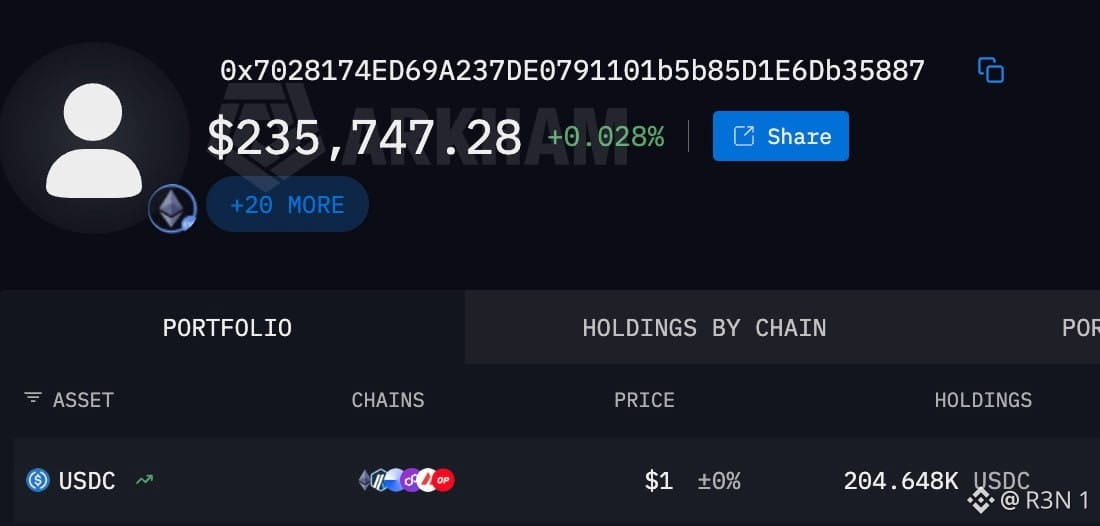
Over $235,000 gone from hundreds of wallets in 48 hours, and nobody's actually named the malware doing it. That gap between the dollar figure and the missing details is the real story here.
The mechanics being described are straightforward enough, a remote access trojan harvesting credentials and hijacking active sessions to bypass authentication entirely, letting attackers piggyback on a victim's already logged in state rather than needing to steal a password and log in separately.
That's a real, well understood attack pattern. What's missing is everything that would normally accompany a claim like this, no named malware family, no malicious domains, no file hashes, no command and control infrastructure, no security researchers attached to the findings.
There's a real on chain trail behind it though. An Ethereum address tied to this activity showed up in a Russian language Telegram post two days before the wider "malware" framing spread, describing it as a new drainer wallet and claiming similar addresses were pulling in at least $200,000 a day. That claim hasn't been independently verified either, but it's the closest thing to hard evidence attached to any of this so far.
My honest take: something real is happening, hundreds of victims and a documented wallet aren't nothing. But right now this is a wallet balance with a headline attached, not a mapped out malware campaign. Calling it a confirmed RAT operation with known mechanics gets ahead of what's actually been shown.
What I'd want before treating this as settled: an actual security report naming the strain and how it's spreading, since that's the one piece every version of this story is still missing.
$BTC #Altcoin Season# $ETH #BTC Price Analysis#
The mechanics being described are straightforward enough, a remote access trojan harvesting credentials and hijacking active sessions to bypass authentication entirely, letting attackers piggyback on a victim's already logged in state rather than needing to steal a password and log in separately.
That's a real, well understood attack pattern. What's missing is everything that would normally accompany a claim like this, no named malware family, no malicious domains, no file hashes, no command and control infrastructure, no security researchers attached to the findings.
There's a real on chain trail behind it though. An Ethereum address tied to this activity showed up in a Russian language Telegram post two days before the wider "malware" framing spread, describing it as a new drainer wallet and claiming similar addresses were pulling in at least $200,000 a day. That claim hasn't been independently verified either, but it's the closest thing to hard evidence attached to any of this so far.
My honest take: something real is happening, hundreds of victims and a documented wallet aren't nothing. But right now this is a wallet balance with a headline attached, not a mapped out malware campaign. Calling it a confirmed RAT operation with known mechanics gets ahead of what's actually been shown.
What I'd want before treating this as settled: an actual security report naming the strain and how it's spreading, since that's the one piece every version of this story is still missing.
$BTC #Altcoin Season# $ETH #BTC Price Analysis#