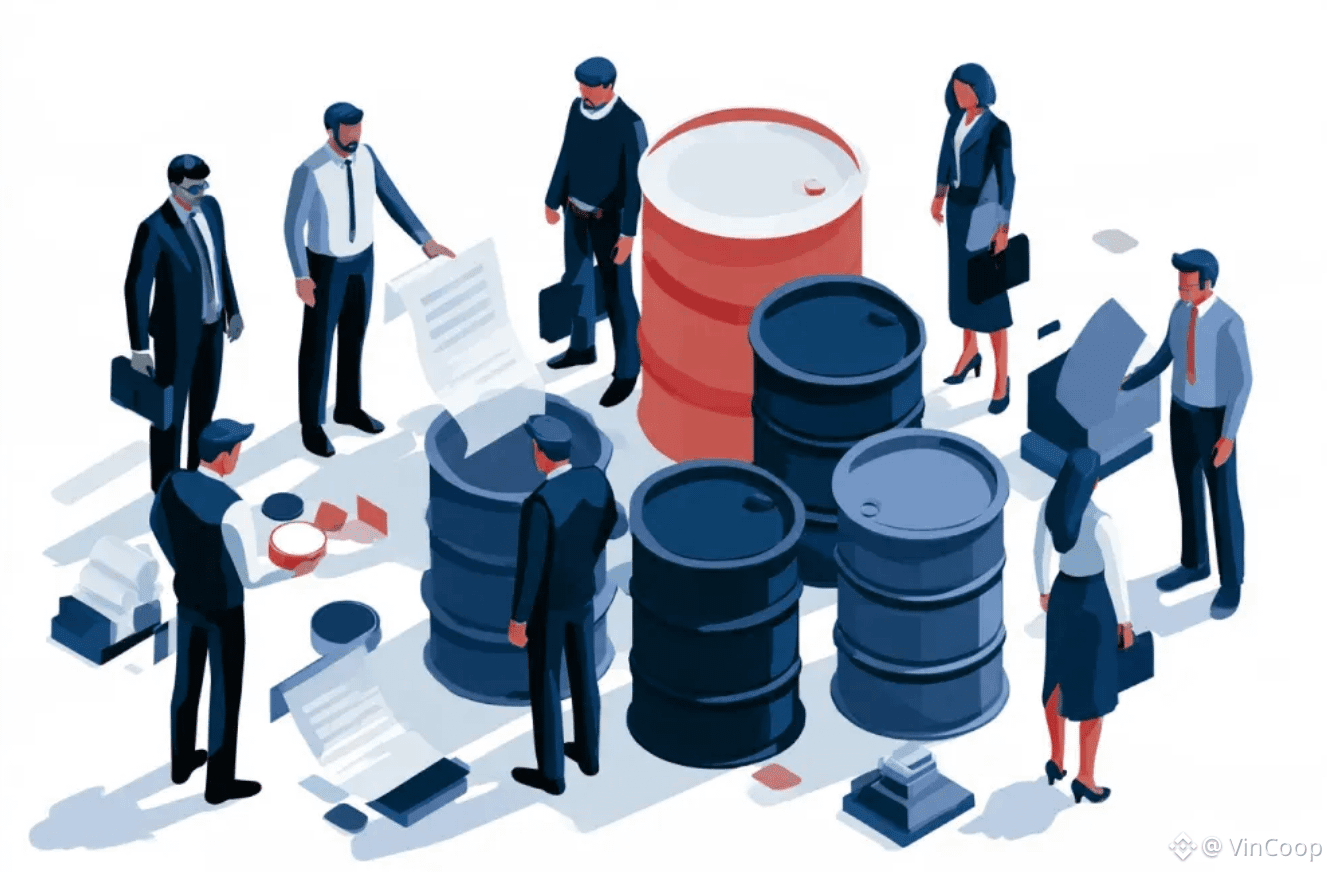
USDT Moved the Money - but It Couldn’t Remove Counterparty Risk $USDT sat at the center of a $230M Venezuelan oil transaction that ultimately delivered only a fraction of the contracted cargo, according to a Financial Times investigation into Poland’s state-controlled energy group Orlen. The deal can be reduced to one chain: Orlen Trading Switzerland → $230M advance → intermediaries → USDT conversion → local brokers → PDVSA-linked oil supply The original contract covered roughly 6M barrels worth $345M. Yet only one fuel-oil cargo valued at about $28.8M was reportedly delivered. Including shipping and legal costs, the Polish government now estimates Orlen’s wider losses at around $424M. What stands out is where the risk actually accumulated. USDT solved the settlement problem created by restricted banking access: value could move quickly across borders and outside conventional correspondent-bank rails. But every additional intermediary introduced another layer of execution, custody and counterparty risk. At one point, according to the FT, staff physically carried USB devices containing tens of millions of dollars in USDT to meetings in Caracas. That makes this less a story about stablecoin technology failing and more about what stablecoins cannot solve. A payment rail can make settlement faster and more accessible; it cannot guarantee that the seller, broker or intermediary on the other side of the transaction will ultimately deliver the underlying asset. #Altcoin Season# #StableCoin #Ad #USDT

Посты

--
Отказ от ответственности. Содержит мнения третьих сторон. Не является рекомендацией. Binance AI не предоставляет гарантий. См. Правила и условия.