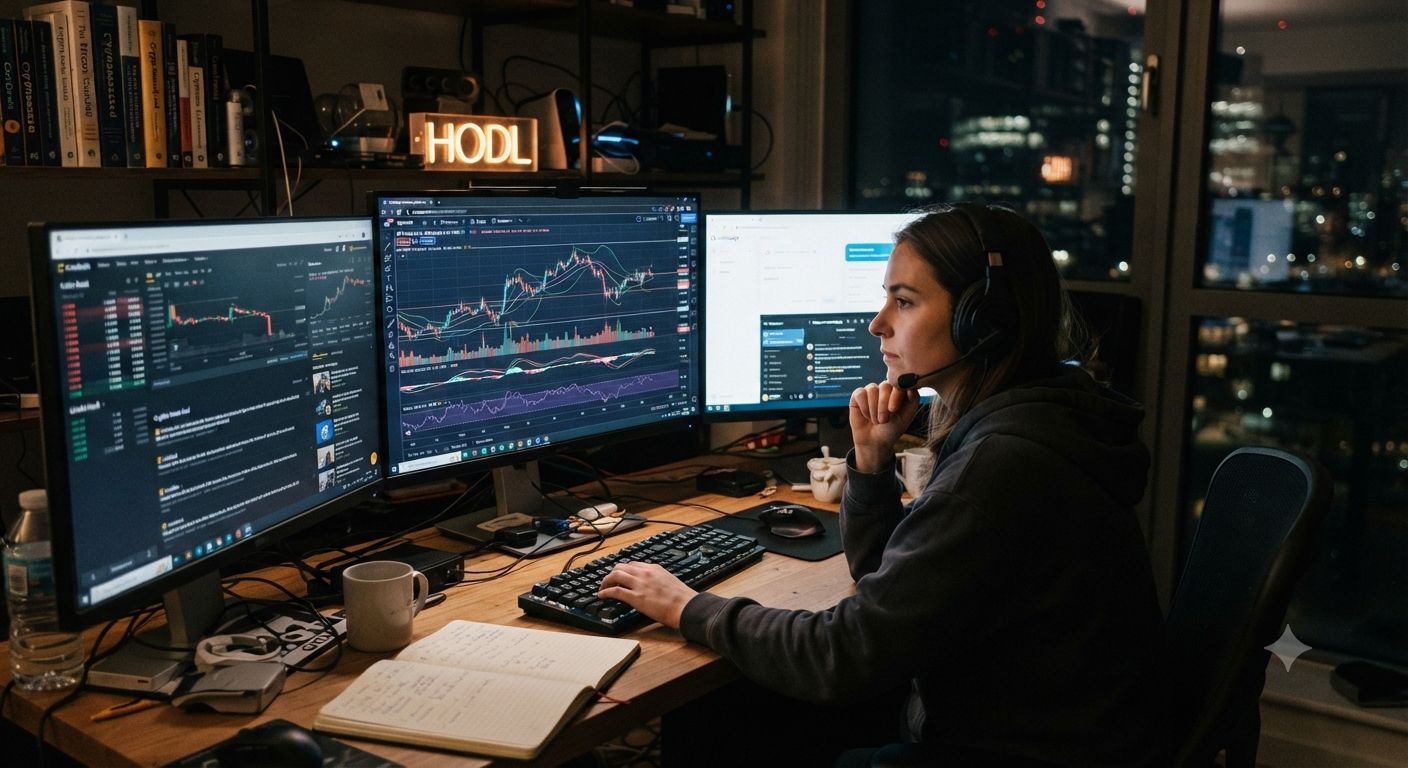
The landscape of cryptocurrency trading has undergone a dramatic evolution. Gone are the days when success in digital asset markets depended solely on staying glued to a 24/7 price chart or relying on gut feelings in a Telegram chat group. Today, the hottest and most transformative trend in the crypto sphere is the widespread democratization and sophistication of algorithmic and AI-driven trading.
What once required a team of quantitative developers and expensive institutional infrastructure is now accessible to everyday retail traders. But as automated strategies take center stage, they are fundamentally altering how the market moves, reacts, and evolves.
The Rise of AI and Bot-Driven Markets
Cryptocurrency markets never sleep. Operating 365 days a year across global decentralized exchanges (DEXs) and centralized platforms, they generate an overwhelming firehose of data. Human traders simply cannot process order book dynamics, sentiment shifts, macroeconomic announcements, and on-chain metrics fast enough to keep up.
Enter automated trading bots and machine learning models. Modern platforms now allow traders to deploy complex strategies—ranging from simple grid trading and dollar-cost averaging (DCA) bots to advanced sentiment-analysis algorithms that scan social media in real time.
Key drivers behind this trend include:
* Speed and Execution: Algorithms can detect arbitrage opportunities across different exchanges and execute trades in milliseconds, long before a human can manually click a button.
* Emotionless Discipline: The biggest enemy of a crypto trader is often psychology—panic selling during a flash crash or FOMO buying at a local top. Bots strictly follow programmed parameters regardless of market panic.
* Backtesting Capabilities: Traders can test strategies against years of historical market data to evaluate risk and profitability before risking a single dollar of capital.
The Double-Edged Sword of Automation
While algorithmic trading provides efficiency, it has also introduced new dynamics and risks into the digital asset ecosystem.
On one hand, liquidity has deepened, and bid-ask spreads on major pairs have tightened, making markets more efficient. On the other hand, the proliferation of high-frequency trading (HFT) bots has supercharged market volatility. When a cascade of liquidations is triggered, automated deleveraging loops can cause prices to plunge or spike with breathtaking speed, leaving human traders—and poorly coded bots—wiped out in minutes.
Furthermore, retail traders now face a competitive asymmetry. Competing against institutional-grade algorithms means that simple technical analysis strategies are becoming less effective, forcing everyday participants to adapt or leverage smart tooling of their own.
Navigating the New Era
The shift toward AI and automation does not mean human intuition is entirely obsolete. Successful trading in an algorithm-dominated market requires a blend of high-level strategic oversight and technological literacy. Traders are increasingly focusing less on manual chart-watching and more on strategy design, risk management frameworks, and understanding the macro narratives that drive capital flows.
As machine learning models grow more powerful and decentralized finance (DeFi) protocols become more integrated, the line between traditional quantitative finance and retail crypto trading continues to blur. For those navigating the markets, the message is clear: the future of crypto trading belongs to those who can effectively collaborate with code, rather than compete against it.