
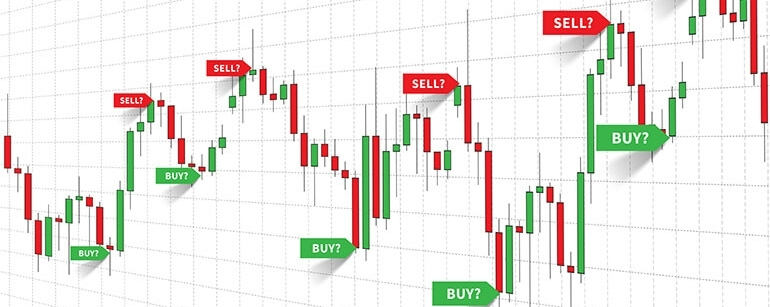

Today I’d like to discuss trading signals in the cryptocurrency market and share my personal view on how they should be used.
A trading signal is a recommendation or a specific set of conditions that points to a possible trade entry. Usually, it includes the trade direction — Long or Short, an entry price, Take Profit levels, and a Stop Loss. These signals can be generated by traders, algorithms, trading bots, or analytical services.
However, I personally do not consider a trading signal to be a direct instruction saying: “Buy here” or “Sell here.”
For me, a trading signal is nothing more than another kind of indicator that should always be analyzed in the context of the overall market picture.
For example, if a Bitcoin buy signal appears, it does not mean that you should immediately open a Long position. I would also look at the trend direction, trading volume, RSI, moving averages, support and resistance levels, market structure, and the situation on higher timeframes.
If several independent factors confirm the same idea, the signal becomes much more interesting.
For example:
Trading Signal → LONG
At the same time:
- the price is near a strong support level;
- buying volume is increasing;
- RSI is recovering from oversold conditions;
- the market structure remains bullish;
- the higher timeframe confirms an uptrend.
In this situation, the trading signal becomes part of a larger confirmation system.
But if the signal says LONG while the market is approaching strong resistance, volume is decreasing, and the higher-timeframe trend remains bearish, I would be very cautious about entering such a trade.
This is why I believe blindly copying someone else’s trading signals is a mistake.
There is no signal, indicator, or strategy in the cryptocurrency market that can provide a 100% success rate. Even a very high-quality signal can still end with a Stop Loss.
That is why a trader’s main goal should not be to search for the “perfect signal,” but to learn how to combine confirmations from several independent sources of information.
Trading signals can definitely be useful. They can help draw attention to a potential setup that a trader may have missed. But the final decision should always be made only after your own analysis.
In my opinion, a trading signal is not a command to act. It is simply another indicator saying: “Pay attention to this market situation.”
The trader’s job is to check it, look for additional confirmations, evaluate the risk, and only then make a decision.
In my view, this approach is far more reasonable than simply following every trading signal that appears.