Understanding the Vision Behind TermMax
The decentralized finance ecosystem has grown significantly, moving from simple token swaps and basic lending into a much broader financial environment. As DeFi continues to mature, the demand for more structured and flexible financial products is also increasing. This is one of the reasons I have been exploring @TermMax and learning more about what the TermMax ecosystem is building through @TermMaxFi.
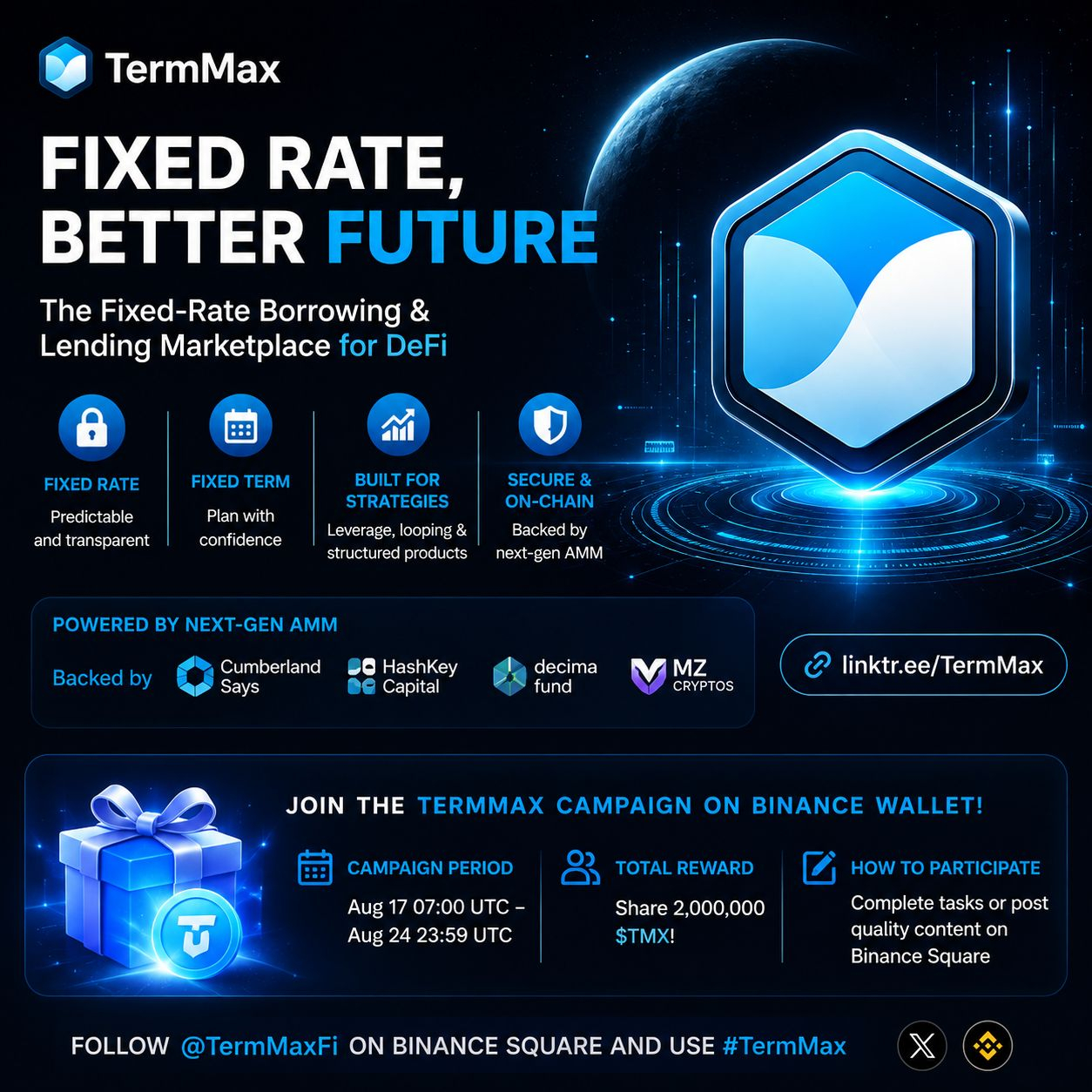
TermMax focuses on decentralized fixed-rate borrowing and lending while also supporting options trading. Bringing these functions together creates an interesting approach to on-chain finance and opens the door to a wider range of financial strategies.
Why Fixed-Rate Borrowing and Lending Matter
One of the key ideas behind TermMax is fixed-rate borrowing and lending. In many decentralized markets, lending and borrowing rates can change depending on supply, demand and overall market conditions. This variability can make it difficult for users to plan financial positions with certainty.
A fixed-rate approach offers a different structure. By working with a predetermined rate, users can have a clearer understanding of the borrowing or lending terms associated with their positions. This can be particularly interesting for users who value predictability when considering their DeFi strategies.
The Role of Options Trading
Another important part of the TermMax ecosystem is options trading. Options can provide additional flexibility for managing exposure to market movements and developing different financial strategies.
Bringing options functionality into a decentralized environment adds another layer to the TermMax ecosystem. Instead of focusing exclusively on lending or borrowing, the protocol is exploring several areas of on-chain finance and creating a broader financial infrastructure.
A Broader DeFi Ecosystem
What makes @TermMax interesting to me is the combination of different financial functions. Fixed-rate borrowing, fixed-rate lending and options trading can each serve different purposes, but together they can contribute to a more diverse decentralized financial environment.
The future development of DeFi will likely depend not only on new technologies but also on how useful, accessible and reliable the financial products built on top of those technologies become. Projects working on structured financial infrastructure therefore have an interesting role to play in the next phase of decentralized finance.
Looking Ahead
There is still a lot of room for innovation across DeFi, including improvements in liquidity, security, user experience and financial product design. For TermMax, the continued development of its ecosystem and products will be important to watch.
I’m interested in following @TermMaxFi and seeing how the protocol develops its fixed-rate markets and options functionality over time. Rather than focusing only on short-term attention, I think the long-term value of a DeFi project comes from building useful infrastructure that can serve real users and support a sustainable ecosystem.
$TMX