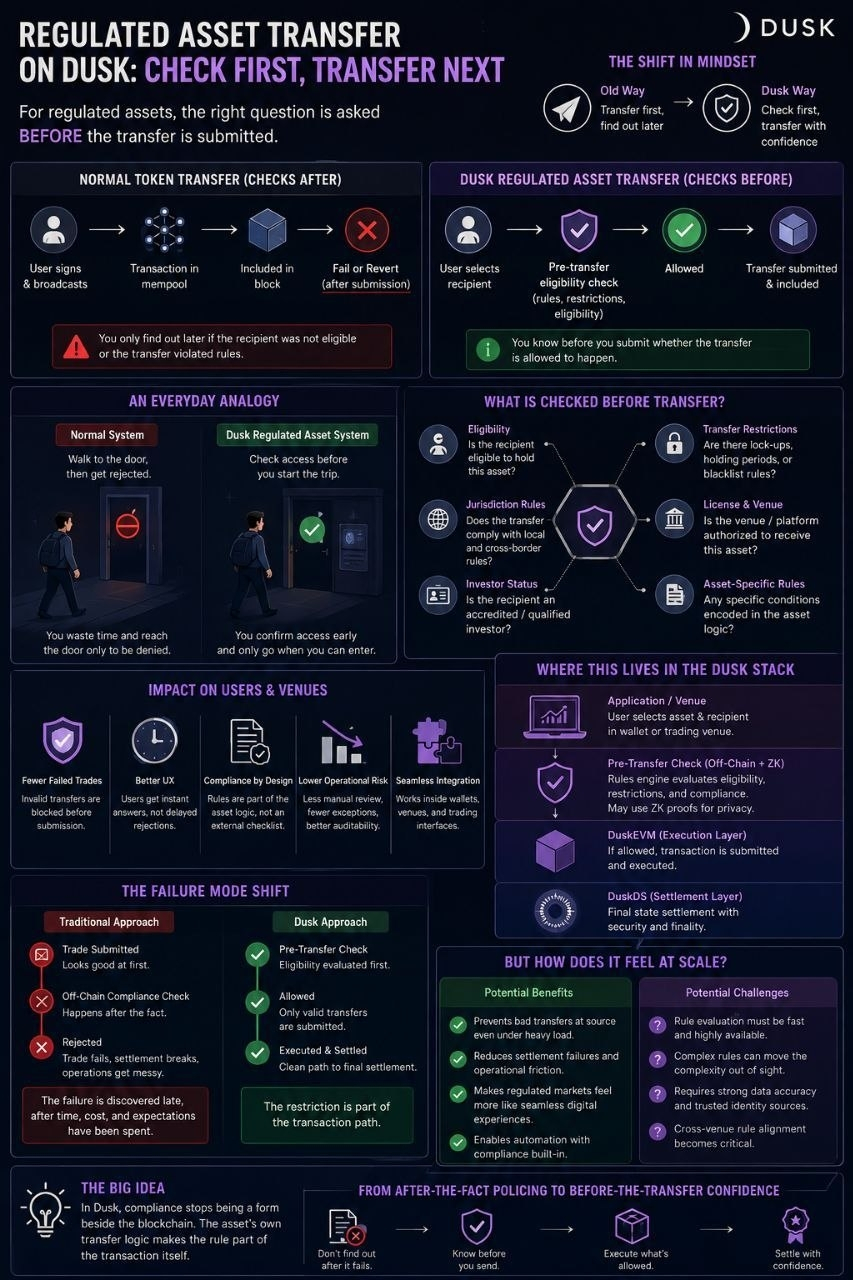
#dusk $DUSK @Dusk I kept thinking a regulated asset transfer worked like a normal token transfer: sign it, broadcast it, then find out whether it worked.
Then I noticed the more interesting question can come first: is the recipient actually allowed to receive it?
With regulated assets, eligibility and transfer restrictions can be checked before the transfer is submitted instead of discovering the problem after the transaction fails.
That changes the failure mode. A normal token asks "can this address receive?" A regulated asset may need to ask "is this address legally eligible to receive this asset right now?"
Like checking your badge before walking to a restricted door instead of finding out at the entrance.
That's where Dusk's approach gets interesting to me: compliance isn't necessarily a form sitting beside the transaction. The rule can become part of the asset's transfer logic.
Still wondering: does moving eligibility checks earlier actually make regulated markets smoother, or just hide the complexity better?
Then I noticed the more interesting question can come first: is the recipient actually allowed to receive it?
With regulated assets, eligibility and transfer restrictions can be checked before the transfer is submitted instead of discovering the problem after the transaction fails.
That changes the failure mode. A normal token asks "can this address receive?" A regulated asset may need to ask "is this address legally eligible to receive this asset right now?"
Like checking your badge before walking to a restricted door instead of finding out at the entrance.
That's where Dusk's approach gets interesting to me: compliance isn't necessarily a form sitting beside the transaction. The rule can become part of the asset's transfer logic.
Still wondering: does moving eligibility checks earlier actually make regulated markets smoother, or just hide the complexity better?