
Robinhood Chain wallets are moving fast right now, and $ETH traders will recognise the setup, because Robinhood Chain is one of the six chains Banana Gun's Telegram bot already covers.
If you want to mirror somebody else's positions on this chain instead of hunting tokens yourself, copy trading through the Banana Gun Telegram bot is live and works the same way it does on Ethereum, Solana, Base, BNB Chain and MegaETH.
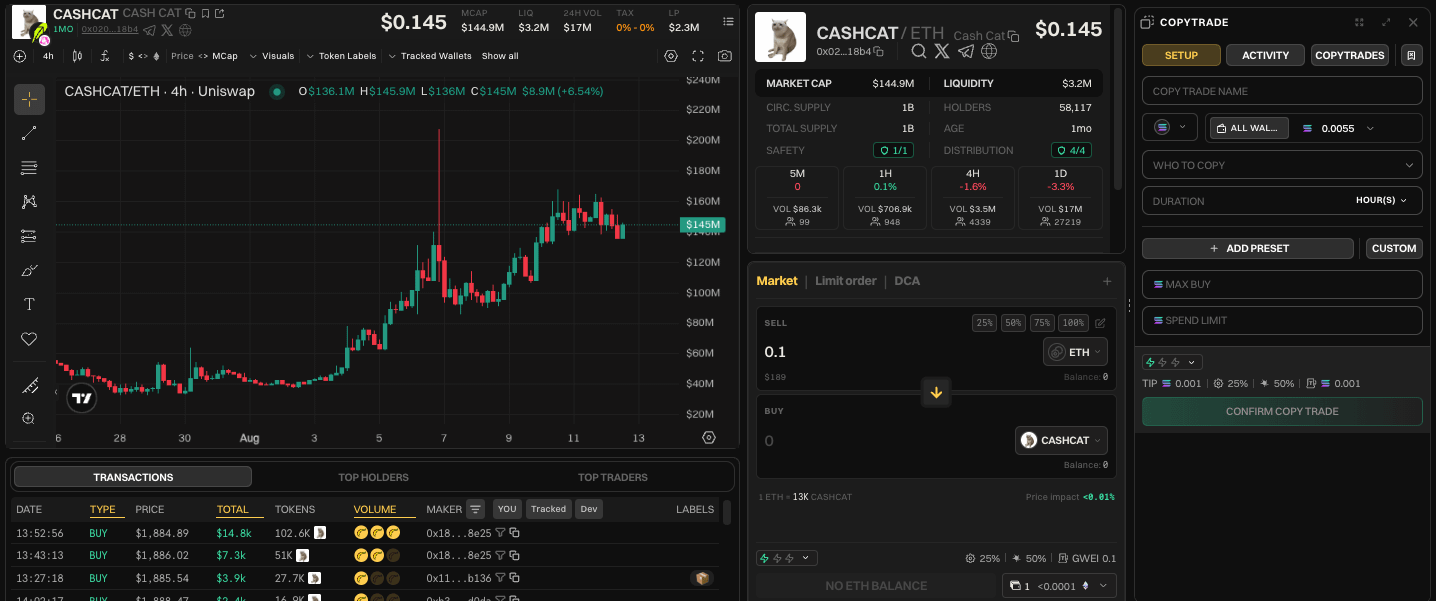
Short version: pick a wallet, tell the bot how to copy it, set hard limits so one bad trade cannot wreck the rest, then manage the exit with the same attention you gave the entry.
None of that changes because the chain is new. What changes is how thin the track record is, and that shifts nearly all of the risk onto wallet selection.
What copy trading on Robinhood Chain actually does
Copy trading mirrors another wallet's buys inside your own, using your own funds and your own settings. Banana Gun shipped this on Robinhood Chain the day the chain opened to trading bots, alongside market buys, limit orders and faster execution. There was no separate setup step and no waitlist.
That matters because copy trading is only as good as the wallet on the other end. The mechanism is identical everywhere Banana Gun supports it. The judgment call about who to follow is where a new chain gets harder, not the software itself.
Picking a wallet worth following
Robinhood Chain does not have years of wallet history the way $SOL or Ethereum trading does. Treat every wallet you find as an early sample size, not a proven record.
Look for a pattern of multiple exits, not one lucky trade, and check whether position sizes shrink as market cap rises instead of staying reckless.
A wallet worth copying on a brand new chain trades like it has already survived a bad week: sized entries, staggered buys, exits that actually show up on the chain.
A wallet with entries and no sells has given you no evidence it knows how to leave a trade, and leaving is half the job.
Setting the copy mode and the limits
Banana Gun gives you three copy modes here: Simple, Advanced and Advanced Presets, the same three it runs on every supported chain. Which one suits you is worth reading in the bot itself before you commit size, because a chain this young gives you no track record to fall back on.
Set Buy Fixed so every copied trade uses the same position size instead of scaling with whatever the target wallet spent. Turn on Buy Only Once, which applies a 7 day block against repeat entries from the same wallet, so one wallet cannot quietly stack your exposure.
Then set Min and Max Market Cap filters to stay out of the thinnest launches and out of anything already too large to move meaningfully.
Managing the exit, not just the entry
Copy trading fails most often on the exit, because a copied buy still needs your own exit logic. Trailing Stop Loss protects gains as a position runs, adjusting the stop upward without you watching a chart all day.
Limit orders let you fix an exit price ahead of time instead of reacting once a token starts moving.
Neither depends on what the copied wallet does after you buy. That wallet might hold for hours or sell in minutes, and you have no visibility into which until it happens on-chain. Your own trailing stop or limit order is the only exit plan you actually control.
Common mistakes on a new chain
Copying a wallet found in a screenshot with no visible history is the most common mistake, and the costliest one on a chain this new. Skipping the Min and Max Market Cap filters is close behind, since without them the bot will copy into microcaps that can move sharply before the notification even lands.
The third mistake is assuming Banana Gun is the only bot here. Maestro also supports Robinhood Chain, and TradeWiz, Bloom and Sigma have all been reported trading it too. That competition does not change how copy trading works, but ignoring it invites bad assumptions about how thin liquidity actually is right now.
Safety defaults help regardless of chain. Honeypot detection blocks contracts you cannot sell, Anti-Rug and Anti-Rug GWEI carry an 80-85% success rate, and Reorg Protection covers a failure mode that has nothing to do with wallet selection. None of it replaces picking the right wallet first.
Auth runs through Privy, using Google, Twitter or Telegram login, non-custodial by design. The bot executes the trade you approve. It is not a substitute for the wallet research above.
If you have copy traded on a newer chain before, what actually convinced you to trust a wallet enough to switch the copy on?
#BinanceSquare #RobinhoodChain #CopyTrading #TradingBots