

Most people only look at the price.
Smart investors look at what is happening behind the price.
Right now, Ethereum is trading around $1,860, roughly 17% below its realized price (the average price paid by all ETH holders). Historically, whenever ETH has traded below its realized price, it has often represented periods of undervaluation and long-term accumulation—not guaranteed bottoms, but areas that have historically attracted patient buyers.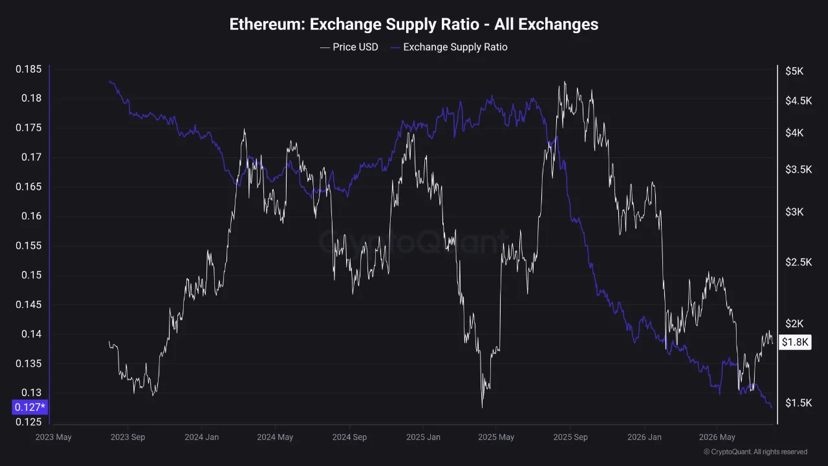
The on-chain data is becoming even more interesting.
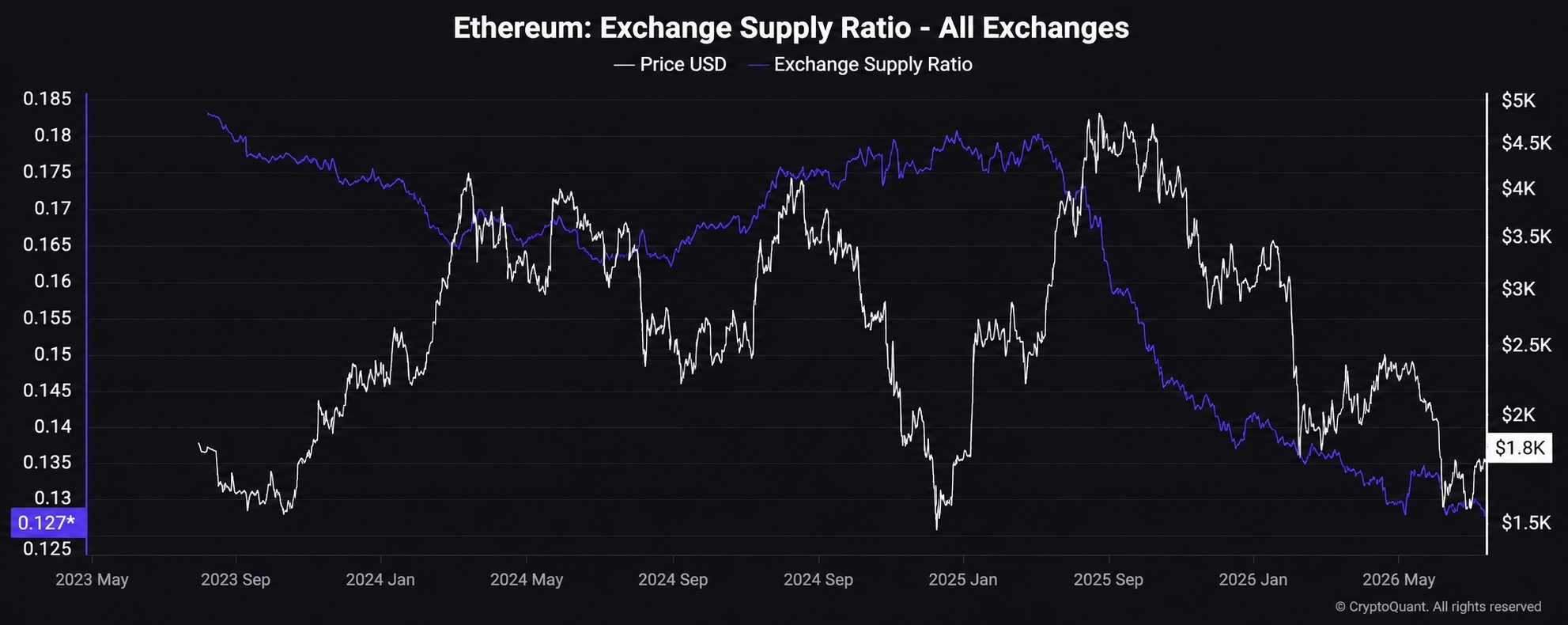
Exchange reserves continue to decline, with ETH held on centralized exchanges falling to around 15.1 million ETH, far below previous peaks above 21 million ETH. Binance alone has seen its ETH reserves shrink significantly as more investors move coins into self-custody or staking.
Why does this matter?
When fewer coins remain on exchanges, the liquid supply available for selling becomes smaller. At the same time, nearly 34% of all ETH is now staked, locking away an even larger portion of the circulating supply. If demand begins to return while supply continues tightening, the market could become much more sensitive to buying pressure.
However, there is an important detail many investors overlook.
CryptoQuant notes that the market has not yet confirmed a full cycle bottom. Only 2 of the 5 major bottoming indicators have reached historical reversal levels. That means Ethereum appears to be in a gradual accumulation phase, not a confirmed trend reversal.
This distinction matters because accumulation phases often test investors’ patience. Prices can remain weak before a stronger move begins.
The biggest takeaway isn’t that Ethereum will immediately rally.
It’s that on-chain fundamentals are quietly improving while sentiment remains cautious. History has shown that these conditions are often worth watching closely.
The market rewards those who prepare before the crowd arrives—not those who chase after the headlines.
#DYOR — Not financial advice.