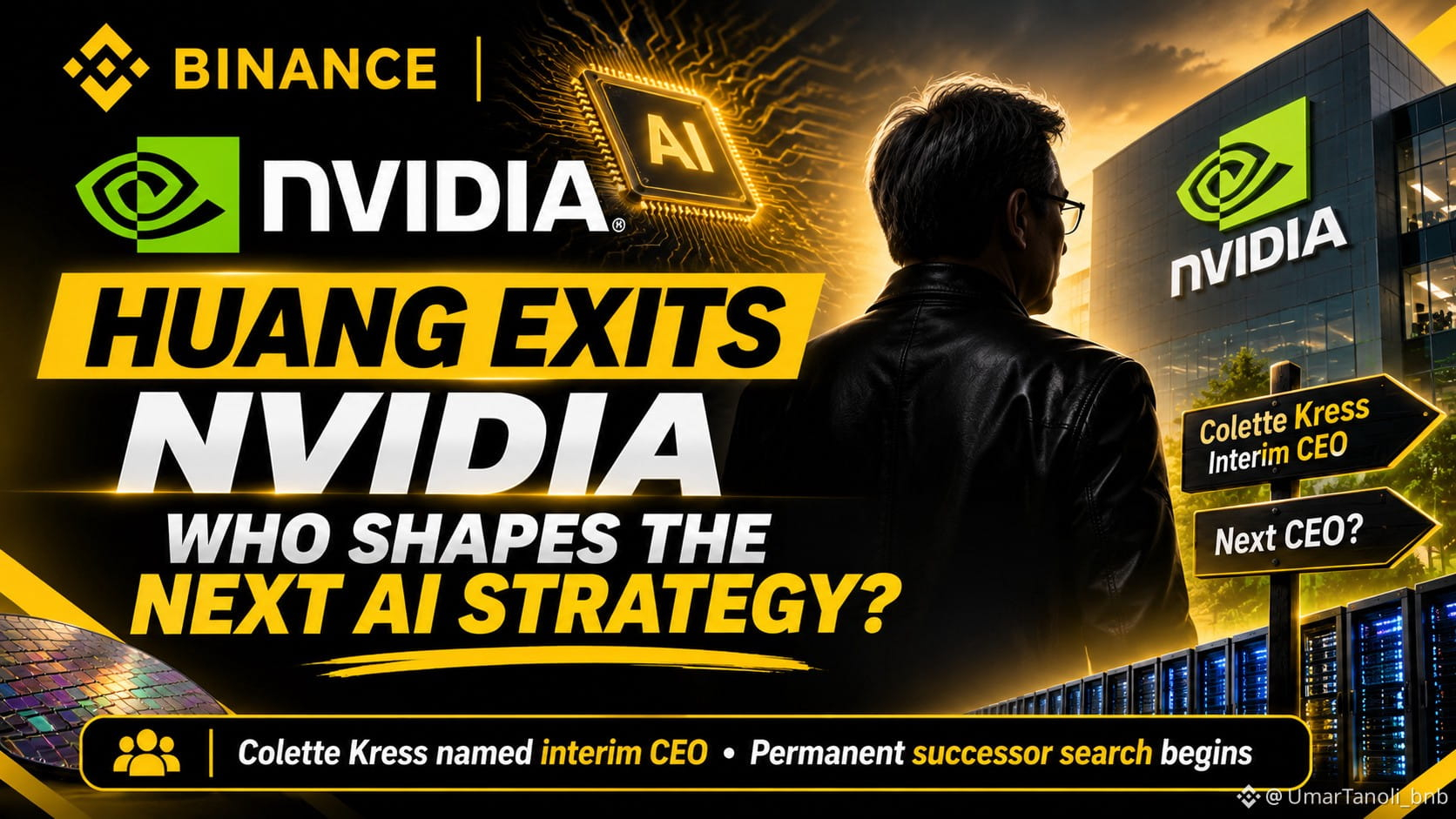
Jensen Huang's exit from NVIDIA has changed the conversation around one of the biggest companies in the AI industry.
After leading NVIDIA for 33 years, Huang has officially resigned as President and CEO, effective immediately. The company's board has appointed longtime CFO Colette Kress as interim CEO while it begins searching for a permanent replacement.
This is not just another leadership change. Huang was one of the main people behind NVIDIA's transformation from a graphics-chip company into a central player in the global AI revolution.
What makes this situation interesting is the strategy NVIDIA will follow from here.
The company is not only selling powerful AI chips. It has also become deeply involved in the wider AI infrastructure ecosystem through investments, partnerships and support for data-centre projects.
Investors are now asking an important question: Can NVIDIA maintain the same vision, business relationships and pace of expansion without the person who led its growth for more than three decades?
My take: NVIDIA's biggest strength is not just Jensen Huang. Its engineering teams, CUDA ecosystem, products and customer relationships have taken years to build. These strengths don't disappear overnight because a CEO leaves.
However, replacing a founder who has played such a central role in the company's strategy will not be easy. The next leadership team will have to prove that NVIDIA's long-term direction remains strong.
I believe the next few months will be important for understanding how the company handles this transition, especially with competition in AI hardware continuing to grow.
What do you think? Can NVIDIA maintain its dominance in the AI industry without Jensen Huang, or was his leadership a major part of its competitive advantage?
#JensenHuang #AI #Technology #StockMarket #BinanceSquare
#HuangExitNvidiaStrategyInFocus