
206 Atlas
72k Публикации

206 Atlas
Отправить жалобу
Заблокировать пользователя
Atlas | Cryptoholic | Trader King | Sharing Market insight and analysis | NFA | DYOR

Владелец BNB
Трейдер с частыми сделками
5 г
8.0K+ подписок(и/а)
14.5K+ подписчиков(а)
25.5K+ понравилось
Посты
Все
Видео
·
--

Статья
Genius Terminal: The Next-Gen On-Chain Trading Platform Shaping the Future of DeFiIn the rapidly evolving world of decentralized finance, traders often struggle with fragmented liquidity, slow execution, and frustrating user experiences across multiple blockchains. Genius Terminal emerges as a powerful solution — a professional-grade, non-custodial trading operating system designed to deliver centralized exchange (CEX) speed and simplicity while maintaining full on-chain transparency and user control.
What Exactly is Genius Terminal?
Genius Terminal is a unified multi-chain trading platform that aggregates liquidity from over 150 decentralized exchanges (DEXs) across more than 10 blockchains, including Ethereum, Solana, Base, Arbitrum, BNB Chain, and others.
Unlike traditional aggregators that only handle basic swaps, Genius functions as a complete trading “operating system.” It combines spot trading, perpetual futures, pre-launch token access, portfolio management, and yield opportunities — all within one sleek, intuitive interface.
The platform’s standout philosophy is “DeFi without the painful DeFi UX.” Users can execute complex cross-chain trades without manual bridging, multiple wallet approvals, or annoying pop-ups. Thanks to advanced atomic routing and signatureless execution technology, trades feel as smooth as on Binance or other top CEXs, yet users always retain full custody of their assets.
Key Features That Set Genius Apart
1. Ghost Orders – Superior Privacy & Anti-MEV Protection
One of the most impressive innovations is Ghost Orders. Large trades are intelligently split and routed through multiple paths (up to hundreds of wallets), minimizing slippage and protecting users from front-running bots. This privacy layer is particularly valuable for whales and professional traders operating in a transparent blockchain environment.
2. Seamless Multi-Chain Experience
Genius makes assets across different chains behave as if they’re in one unified balance. Traders can move between networks instantly without the usual hassle of bridges or wrapped tokens.
3. Advanced Trading Tools
Real-time token screener and market insights
Limit orders, Take-Profit/Stop-Loss
Copy trading functionality
Pre-launch token trading opportunities
Portfolio-native yield generation (including the native usdGG stablecoin system)
4. User-Centric Design
No more stuck transactions or RPC errors. The interface is clean, fast, and built specifically for serious traders who value both performance and simplicity.
The $GENIUS Token: Utility Beyond Hype
The native token $GENIUS powers the entire ecosystem. Launched in April 2026 with a total supply of 1 billion tokens, it offers genuine utility:
Tiered trading fee discounts
Enhanced governance rights
Access to premium platform features
Participation in liquidity incentives and reward programs
Referral benefits (up to 45% of invitees’ trading fees in some tiers)
A significant portion of tokens was distributed through Season 1 airdrop based on Genius Points earned via actual trading activity, rewarding real users rather than just speculators. The project has strong backing, including support from prominent industry figures and institutions.
Why Genius Terminal Matters for DeFi
Most DeFi platforms focus on either liquidity or basic swapping. Genius takes a different approach: it builds the professional infrastructure layer that sophisticated traders actually need. By solving real pain points — speed, privacy, and usability — the platform has the potential to become the default terminal for on-chain trading, much like how Bloomberg terminals dominate traditional finance.
As DeFi continues to mature and attract more institutional and professional capital, tools like Genius Terminal will play a crucial role in bridging the gap between centralized convenience and decentralized freedom.
Final Thoughts
Genius Terminal represents a meaningful step forward in DeFi infrastructure. For traders tired of juggling multiple wallets, slow bridges, and MEV attacks, this platform offers a refreshing, high-performance alternative.
If you’re an active on-chain trader, it’s definitely worth exploring at tradegenius.com.
Follow official account: @GeniusOfficial
Token: $GENIUS
Hashtag: #genius
Genius Terminal: The Next-Gen On-Chain Trading Platform Shaping the Future of DeFi
In the rapidly evolving world of decentralized finance, traders often struggle with fragmented liquidity, slow execution, and frustrating user experiences across multiple blockchains. Genius Terminal emerges as a powerful solution — a professional-grade, non-custodial trading operating system designed to deliver centralized exchange (CEX) speed and simplicity while maintaining full on-chain transparency and user control.
What Exactly is Genius Terminal?
Genius Terminal is a unified multi-chain trading platform that aggregates liquidity from over 150 decentralized exchanges (DEXs) across more than 10 blockchains, including Ethereum, Solana, Base, Arbitrum, BNB Chain, and others.
Unlike traditional aggregators that only handle basic swaps, Genius functions as a complete trading “operating system.” It combines spot trading, perpetual futures, pre-launch token access, portfolio management, and yield opportunities — all within one sleek, intuitive interface.
The platform’s standout philosophy is “DeFi without the painful DeFi UX.” Users can execute complex cross-chain trades without manual bridging, multiple wallet approvals, or annoying pop-ups. Thanks to advanced atomic routing and signatureless execution technology, trades feel as smooth as on Binance or other top CEXs, yet users always retain full custody of their assets.
Key Features That Set Genius Apart
1. Ghost Orders – Superior Privacy & Anti-MEV Protection
One of the most impressive innovations is Ghost Orders. Large trades are intelligently split and routed through multiple paths (up to hundreds of wallets), minimizing slippage and protecting users from front-running bots. This privacy layer is particularly valuable for whales and professional traders operating in a transparent blockchain environment.
2. Seamless Multi-Chain Experience
Genius makes assets across different chains behave as if they’re in one unified balance. Traders can move between networks instantly without the usual hassle of bridges or wrapped tokens.
3. Advanced Trading Tools
Real-time token screener and market insights
Limit orders, Take-Profit/Stop-Loss
Copy trading functionality
Pre-launch token trading opportunities
Portfolio-native yield generation (including the native usdGG stablecoin system)
4. User-Centric Design
No more stuck transactions or RPC errors. The interface is clean, fast, and built specifically for serious traders who value both performance and simplicity.
The $GENIUS Token: Utility Beyond Hype
The native token $GENIUS powers the entire ecosystem. Launched in April 2026 with a total supply of 1 billion tokens, it offers genuine utility:
Tiered trading fee discounts
Enhanced governance rights
Access to premium platform features
Participation in liquidity incentives and reward programs
Referral benefits (up to 45% of invitees’ trading fees in some tiers)
A significant portion of tokens was distributed through Season 1 airdrop based on Genius Points earned via actual trading activity, rewarding real users rather than just speculators. The project has strong backing, including support from prominent industry figures and institutions.
Why Genius Terminal Matters for DeFi
Most DeFi platforms focus on either liquidity or basic swapping. Genius takes a different approach: it builds the professional infrastructure layer that sophisticated traders actually need. By solving real pain points — speed, privacy, and usability — the platform has the potential to become the default terminal for on-chain trading, much like how Bloomberg terminals dominate traditional finance.
As DeFi continues to mature and attract more institutional and professional capital, tools like Genius Terminal will play a crucial role in bridging the gap between centralized convenience and decentralized freedom.
Final Thoughts
Genius Terminal represents a meaningful step forward in DeFi infrastructure. For traders tired of juggling multiple wallets, slow bridges, and MEV attacks, this platform offers a refreshing, high-performance alternative.
If you’re an active on-chain trader, it’s definitely worth exploring at tradegenius.com.
Follow official account: @GeniusOfficial
Token: $GENIUS
Hashtag: #genius
What Exactly is Genius Terminal?
Genius Terminal is a unified multi-chain trading platform that aggregates liquidity from over 150 decentralized exchanges (DEXs) across more than 10 blockchains, including Ethereum, Solana, Base, Arbitrum, BNB Chain, and others.
Unlike traditional aggregators that only handle basic swaps, Genius functions as a complete trading “operating system.” It combines spot trading, perpetual futures, pre-launch token access, portfolio management, and yield opportunities — all within one sleek, intuitive interface.
The platform’s standout philosophy is “DeFi without the painful DeFi UX.” Users can execute complex cross-chain trades without manual bridging, multiple wallet approvals, or annoying pop-ups. Thanks to advanced atomic routing and signatureless execution technology, trades feel as smooth as on Binance or other top CEXs, yet users always retain full custody of their assets.
Key Features That Set Genius Apart
1. Ghost Orders – Superior Privacy & Anti-MEV Protection
One of the most impressive innovations is Ghost Orders. Large trades are intelligently split and routed through multiple paths (up to hundreds of wallets), minimizing slippage and protecting users from front-running bots. This privacy layer is particularly valuable for whales and professional traders operating in a transparent blockchain environment.
2. Seamless Multi-Chain Experience
Genius makes assets across different chains behave as if they’re in one unified balance. Traders can move between networks instantly without the usual hassle of bridges or wrapped tokens.
3. Advanced Trading Tools
Real-time token screener and market insights
Limit orders, Take-Profit/Stop-Loss
Copy trading functionality
Pre-launch token trading opportunities
Portfolio-native yield generation (including the native usdGG stablecoin system)
4. User-Centric Design
No more stuck transactions or RPC errors. The interface is clean, fast, and built specifically for serious traders who value both performance and simplicity.
The $GENIUS Token: Utility Beyond Hype
The native token $GENIUS powers the entire ecosystem. Launched in April 2026 with a total supply of 1 billion tokens, it offers genuine utility:
Tiered trading fee discounts
Enhanced governance rights
Access to premium platform features
Participation in liquidity incentives and reward programs
Referral benefits (up to 45% of invitees’ trading fees in some tiers)
A significant portion of tokens was distributed through Season 1 airdrop based on Genius Points earned via actual trading activity, rewarding real users rather than just speculators. The project has strong backing, including support from prominent industry figures and institutions.
Why Genius Terminal Matters for DeFi
Most DeFi platforms focus on either liquidity or basic swapping. Genius takes a different approach: it builds the professional infrastructure layer that sophisticated traders actually need. By solving real pain points — speed, privacy, and usability — the platform has the potential to become the default terminal for on-chain trading, much like how Bloomberg terminals dominate traditional finance.
As DeFi continues to mature and attract more institutional and professional capital, tools like Genius Terminal will play a crucial role in bridging the gap between centralized convenience and decentralized freedom.
Final Thoughts
Genius Terminal represents a meaningful step forward in DeFi infrastructure. For traders tired of juggling multiple wallets, slow bridges, and MEV attacks, this platform offers a refreshing, high-performance alternative.
If you’re an active on-chain trader, it’s definitely worth exploring at tradegenius.com.
Follow official account: @GeniusOfficial
Token: $GENIUS
Hashtag: #genius
1
4
80
·
--

Статья
What You MUST Know Before Investing in These Top CoinsMost people don’t lose money because they pick the wrong coin.
They lose because they don’t understand how each coin actually behaves before entering.
Here’s how these top coins really work — beyond surface-level hype:
***
### 🟠 Bitcoin (BTC)
Bitcoin is the foundation of everything. It doesn’t just move on its own — it dictates how the entire market flows. When BTC trends strongly, capital stays inside Bitcoin, and altcoins struggle to outperform. But when BTC slows down or moves sideways, liquidity begins rotating outward — first into Ethereum, then into larger altcoins, and eventually into smaller caps. That’s why buying altcoins while BTC is pushing into resistance is one of the most common losing moves. You’re effectively betting against the flow of capital.
***
### 🔵 Ethereum (ETH)
Ethereum is where the market starts to show its true intentions. While Bitcoin controls direction, ETH reveals how much risk the market is willing to take. When ETH begins outperforming BTC, it often signals that capital is starting to flow deeper into the ecosystem, preparing the ground for altcoin rallies. However, ETH doesn’t usually move explosively at first — it builds momentum gradually. Many traders get impatient and rotate out too early, not realizing that ETH strength is often the early stage of a much bigger move across the entire alt market.
***
### 🟤 OKX (OKB)
OKB is similar to exchange tokens like BNB, but it operates in its own ecosystem tied to OKX. Its value comes from platform utility — trading fee discounts, ecosystem perks, and exchange growth. This gives it a relatively stable demand base during normal conditions. However, like all exchange-linked assets, its biggest risk doesn’t come from charts but from external factors. Regulatory pressure, exchange reputation, or shifts in user activity can all impact its price unexpectedly. That means OKB often looks stable… until something outside the market changes the game.
***
### 🟣 Solana (SOL)
Solana is a classic momentum-driven asset. It thrives in bullish environments where speculation is high and capital is actively chasing growth. Its speed and low fees attract both developers and users, fueling rapid expansion during good times. But that same strength turns into weakness during pullbacks. SOL doesn’t move slowly — it expands fast and corrects just as aggressively. Most retail investors enter after seeing strong performance, not realizing they are buying into extended moves. In reality, Solana rewards precision and timing far more than blind conviction.
***
### 🔴 XRP (XRP) XRP doesn’t follow the normal rhythm of the crypto market. Instead of trending smoothly, it spends long periods moving sideways before suddenly reacting to major news or legal developments. Its price behavior is heavily tied to external catalysts, which makes it unpredictable if you rely only on technical analysis. This creates frustration for traders who expect consistent movement. XRP isn’t a coin that rewards constant activity — it rewards patience and awareness of upcoming events.
***
### 🟢 Cardano (ADA)
Cardano is often seen as a “safe” altcoin because of its structured development and strong community. But from a market perspective, it tends to move slower than its competitors. ADA rarely leads rallies; instead, it follows once the broader trend has already been confirmed. This makes it less volatile, but also less exciting for short-term traders. Its behavior reflects steady positioning rather than aggressive growth, which can either be an advantage or a limitation depending on timing.
***
### ⚫ Polkadot (DOT)
Polkadot is a narrative-driven asset. Its core idea — connecting multiple blockchains — is powerful, but the market only rewards that idea when attention returns to it. Without a strong narrative, DOT often underperforms despite solid fundamentals. When the interoperability story becomes relevant again, it can move quickly. This creates a unique dynamic where success depends not just on development, but on whether the market is currently paying attention.
***
### 🔷 Chainlink (LINK)
Chainlink operates more quietly than most top coins, but its role is critical. It sits at the center of DeFi infrastructure, providing data that many protocols rely on. Despite that, its price action often lags behind more hype-driven assets. LINK tends to accumulate slowly and move later, usually when larger capital begins positioning more seriously in the market. It’s not a coin that attracts sudden retail hype — it’s one that reflects deeper, more calculated activity.
***
### 🟤 Avalanche (AVAX)
Avalanche behaves like a more aggressive version of Ethereum. It grows quickly when the ecosystem narrative is strong, but it also declines faster when momentum fades. It doesn’t have the same resilience as ETH, which makes it more sensitive to market conditions. Traders often use AVAX as a higher-risk way to gain exposure to the smart contract sector, but that comes with increased volatility. It’s a coin that demands active management rather than passive holding.
***
### 🟩 Polygon (MATIC) Polygon represents real-world adoption within the crypto space. With strong partnerships and a clear role in scaling Ethereum, its long-term outlook remains solid. However, its price behavior doesn’t always match its progress. Positive developments don’t instantly translate into upward movement, which can confuse investors expecting quick reactions. MATIC tends to move more gradually, and its biggest gains usually come when broader market momentum aligns with its growth story.
***
### 🔵 Arbitrum (ARB)
Arbitrum is part of the next phase of Ethereum scaling, and its importance continues to grow as demand for Layer 2 solutions increases. However, unlike more established assets, ARB is still forming its market structure. Token unlocks, evolving supply dynamics, and relatively new positioning can all influence its price in ways that fundamentals alone don’t explain. It has strong potential, but also requires deeper understanding of tokenomics and timing.
***
# 🧠 The Truth Most People Don’t Realize
The market doesn’t move randomly.
Capital flows in a clear order:
BTC → ETH → Large caps → Altcoins → Retail enters
By the time most people feel confident, the move is already late.
***
# 🔥 Final Thought
You don’t win by choosing the “best coin.”
You win by understanding how money flows between them.
***
💬 So bro…
Are you following the flow — or fighting it?
👉 If you want me to break down any specific coin in detail, drop it in the comments below. 👇
What You MUST Know Before Investing in These Top Coins
Most people don’t lose money because they pick the wrong coin.
They lose because they don’t understand how each coin actually behaves before entering.
Here’s how these top coins really work — beyond surface-level hype:
***
### 🟠 Bitcoin (BTC)
Bitcoin is the foundation of everything. It doesn’t just move on its own — it dictates how the entire market flows. When BTC trends strongly, capital stays inside Bitcoin, and altcoins struggle to outperform. But when BTC slows down or moves sideways, liquidity begins rotating outward — first into Ethereum, then into larger altcoins, and eventually into smaller caps. That’s why buying altcoins while BTC is pushing into resistance is one of the most common losing moves. You’re effectively betting against the flow of capital.
***
### 🔵 Ethereum (ETH)
Ethereum is where the market starts to show its true intentions. While Bitcoin controls direction, ETH reveals how much risk the market is willing to take. When ETH begins outperforming BTC, it often signals that capital is starting to flow deeper into the ecosystem, preparing the ground for altcoin rallies. However, ETH doesn’t usually move explosively at first — it builds momentum gradually. Many traders get impatient and rotate out too early, not realizing that ETH strength is often the early stage of a much bigger move across the entire alt market.
***
### 🟤 OKX (OKB)
OKB is similar to exchange tokens like BNB, but it operates in its own ecosystem tied to OKX. Its value comes from platform utility — trading fee discounts, ecosystem perks, and exchange growth. This gives it a relatively stable demand base during normal conditions. However, like all exchange-linked assets, its biggest risk doesn’t come from charts but from external factors. Regulatory pressure, exchange reputation, or shifts in user activity can all impact its price unexpectedly. That means OKB often looks stable… until something outside the market changes the game.
***
### 🟣 Solana (SOL)
Solana is a classic momentum-driven asset. It thrives in bullish environments where speculation is high and capital is actively chasing growth. Its speed and low fees attract both developers and users, fueling rapid expansion during good times. But that same strength turns into weakness during pullbacks. SOL doesn’t move slowly — it expands fast and corrects just as aggressively. Most retail investors enter after seeing strong performance, not realizing they are buying into extended moves. In reality, Solana rewards precision and timing far more than blind conviction.
***
### 🔴 XRP (XRP) XRP doesn’t follow the normal rhythm of the crypto market. Instead of trending smoothly, it spends long periods moving sideways before suddenly reacting to major news or legal developments. Its price behavior is heavily tied to external catalysts, which makes it unpredictable if you rely only on technical analysis. This creates frustration for traders who expect consistent movement. XRP isn’t a coin that rewards constant activity — it rewards patience and awareness of upcoming events.
***
### 🟢 Cardano (ADA)
Cardano is often seen as a “safe” altcoin because of its structured development and strong community. But from a market perspective, it tends to move slower than its competitors. ADA rarely leads rallies; instead, it follows once the broader trend has already been confirmed. This makes it less volatile, but also less exciting for short-term traders. Its behavior reflects steady positioning rather than aggressive growth, which can either be an advantage or a limitation depending on timing.
***
### ⚫ Polkadot (DOT)
Polkadot is a narrative-driven asset. Its core idea — connecting multiple blockchains — is powerful, but the market only rewards that idea when attention returns to it. Without a strong narrative, DOT often underperforms despite solid fundamentals. When the interoperability story becomes relevant again, it can move quickly. This creates a unique dynamic where success depends not just on development, but on whether the market is currently paying attention.
***
### 🔷 Chainlink (LINK)
Chainlink operates more quietly than most top coins, but its role is critical. It sits at the center of DeFi infrastructure, providing data that many protocols rely on. Despite that, its price action often lags behind more hype-driven assets. LINK tends to accumulate slowly and move later, usually when larger capital begins positioning more seriously in the market. It’s not a coin that attracts sudden retail hype — it’s one that reflects deeper, more calculated activity.
***
### 🟤 Avalanche (AVAX)
Avalanche behaves like a more aggressive version of Ethereum. It grows quickly when the ecosystem narrative is strong, but it also declines faster when momentum fades. It doesn’t have the same resilience as ETH, which makes it more sensitive to market conditions. Traders often use AVAX as a higher-risk way to gain exposure to the smart contract sector, but that comes with increased volatility. It’s a coin that demands active management rather than passive holding.
***
### 🟩 Polygon (MATIC) Polygon represents real-world adoption within the crypto space. With strong partnerships and a clear role in scaling Ethereum, its long-term outlook remains solid. However, its price behavior doesn’t always match its progress. Positive developments don’t instantly translate into upward movement, which can confuse investors expecting quick reactions. MATIC tends to move more gradually, and its biggest gains usually come when broader market momentum aligns with its growth story.
***
### 🔵 Arbitrum (ARB)
Arbitrum is part of the next phase of Ethereum scaling, and its importance continues to grow as demand for Layer 2 solutions increases. However, unlike more established assets, ARB is still forming its market structure. Token unlocks, evolving supply dynamics, and relatively new positioning can all influence its price in ways that fundamentals alone don’t explain. It has strong potential, but also requires deeper understanding of tokenomics and timing.
***
# 🧠 The Truth Most People Don’t Realize
The market doesn’t move randomly.
Capital flows in a clear order:
BTC → ETH → Large caps → Altcoins → Retail enters
By the time most people feel confident, the move is already late.
***
# 🔥 Final Thought
You don’t win by choosing the “best coin.”
You win by understanding how money flows between them.
***
💬 So bro…
Are you following the flow — or fighting it?
👉 If you want me to break down any specific coin in detail, drop it in the comments below. 👇
They lose because they don’t understand how each coin actually behaves before entering.
Here’s how these top coins really work — beyond surface-level hype:
***
### 🟠 Bitcoin (BTC)
Bitcoin is the foundation of everything. It doesn’t just move on its own — it dictates how the entire market flows. When BTC trends strongly, capital stays inside Bitcoin, and altcoins struggle to outperform. But when BTC slows down or moves sideways, liquidity begins rotating outward — first into Ethereum, then into larger altcoins, and eventually into smaller caps. That’s why buying altcoins while BTC is pushing into resistance is one of the most common losing moves. You’re effectively betting against the flow of capital.
***
### 🔵 Ethereum (ETH)
Ethereum is where the market starts to show its true intentions. While Bitcoin controls direction, ETH reveals how much risk the market is willing to take. When ETH begins outperforming BTC, it often signals that capital is starting to flow deeper into the ecosystem, preparing the ground for altcoin rallies. However, ETH doesn’t usually move explosively at first — it builds momentum gradually. Many traders get impatient and rotate out too early, not realizing that ETH strength is often the early stage of a much bigger move across the entire alt market.
***
### 🟤 OKX (OKB)
OKB is similar to exchange tokens like BNB, but it operates in its own ecosystem tied to OKX. Its value comes from platform utility — trading fee discounts, ecosystem perks, and exchange growth. This gives it a relatively stable demand base during normal conditions. However, like all exchange-linked assets, its biggest risk doesn’t come from charts but from external factors. Regulatory pressure, exchange reputation, or shifts in user activity can all impact its price unexpectedly. That means OKB often looks stable… until something outside the market changes the game.
***
### 🟣 Solana (SOL)
Solana is a classic momentum-driven asset. It thrives in bullish environments where speculation is high and capital is actively chasing growth. Its speed and low fees attract both developers and users, fueling rapid expansion during good times. But that same strength turns into weakness during pullbacks. SOL doesn’t move slowly — it expands fast and corrects just as aggressively. Most retail investors enter after seeing strong performance, not realizing they are buying into extended moves. In reality, Solana rewards precision and timing far more than blind conviction.
***
### 🔴 XRP (XRP) XRP doesn’t follow the normal rhythm of the crypto market. Instead of trending smoothly, it spends long periods moving sideways before suddenly reacting to major news or legal developments. Its price behavior is heavily tied to external catalysts, which makes it unpredictable if you rely only on technical analysis. This creates frustration for traders who expect consistent movement. XRP isn’t a coin that rewards constant activity — it rewards patience and awareness of upcoming events.
***
### 🟢 Cardano (ADA)
Cardano is often seen as a “safe” altcoin because of its structured development and strong community. But from a market perspective, it tends to move slower than its competitors. ADA rarely leads rallies; instead, it follows once the broader trend has already been confirmed. This makes it less volatile, but also less exciting for short-term traders. Its behavior reflects steady positioning rather than aggressive growth, which can either be an advantage or a limitation depending on timing.
***
### ⚫ Polkadot (DOT)
Polkadot is a narrative-driven asset. Its core idea — connecting multiple blockchains — is powerful, but the market only rewards that idea when attention returns to it. Without a strong narrative, DOT often underperforms despite solid fundamentals. When the interoperability story becomes relevant again, it can move quickly. This creates a unique dynamic where success depends not just on development, but on whether the market is currently paying attention.
***
### 🔷 Chainlink (LINK)
Chainlink operates more quietly than most top coins, but its role is critical. It sits at the center of DeFi infrastructure, providing data that many protocols rely on. Despite that, its price action often lags behind more hype-driven assets. LINK tends to accumulate slowly and move later, usually when larger capital begins positioning more seriously in the market. It’s not a coin that attracts sudden retail hype — it’s one that reflects deeper, more calculated activity.
***
### 🟤 Avalanche (AVAX)
Avalanche behaves like a more aggressive version of Ethereum. It grows quickly when the ecosystem narrative is strong, but it also declines faster when momentum fades. It doesn’t have the same resilience as ETH, which makes it more sensitive to market conditions. Traders often use AVAX as a higher-risk way to gain exposure to the smart contract sector, but that comes with increased volatility. It’s a coin that demands active management rather than passive holding.
***
### 🟩 Polygon (MATIC) Polygon represents real-world adoption within the crypto space. With strong partnerships and a clear role in scaling Ethereum, its long-term outlook remains solid. However, its price behavior doesn’t always match its progress. Positive developments don’t instantly translate into upward movement, which can confuse investors expecting quick reactions. MATIC tends to move more gradually, and its biggest gains usually come when broader market momentum aligns with its growth story.
***
### 🔵 Arbitrum (ARB)
Arbitrum is part of the next phase of Ethereum scaling, and its importance continues to grow as demand for Layer 2 solutions increases. However, unlike more established assets, ARB is still forming its market structure. Token unlocks, evolving supply dynamics, and relatively new positioning can all influence its price in ways that fundamentals alone don’t explain. It has strong potential, but also requires deeper understanding of tokenomics and timing.
***
# 🧠 The Truth Most People Don’t Realize
The market doesn’t move randomly.
Capital flows in a clear order:
BTC → ETH → Large caps → Altcoins → Retail enters
By the time most people feel confident, the move is already late.
***
# 🔥 Final Thought
You don’t win by choosing the “best coin.”
You win by understanding how money flows between them.
***
💬 So bro…
Are you following the flow — or fighting it?
👉 If you want me to break down any specific coin in detail, drop it in the comments below. 👇
66
·
--
Статья
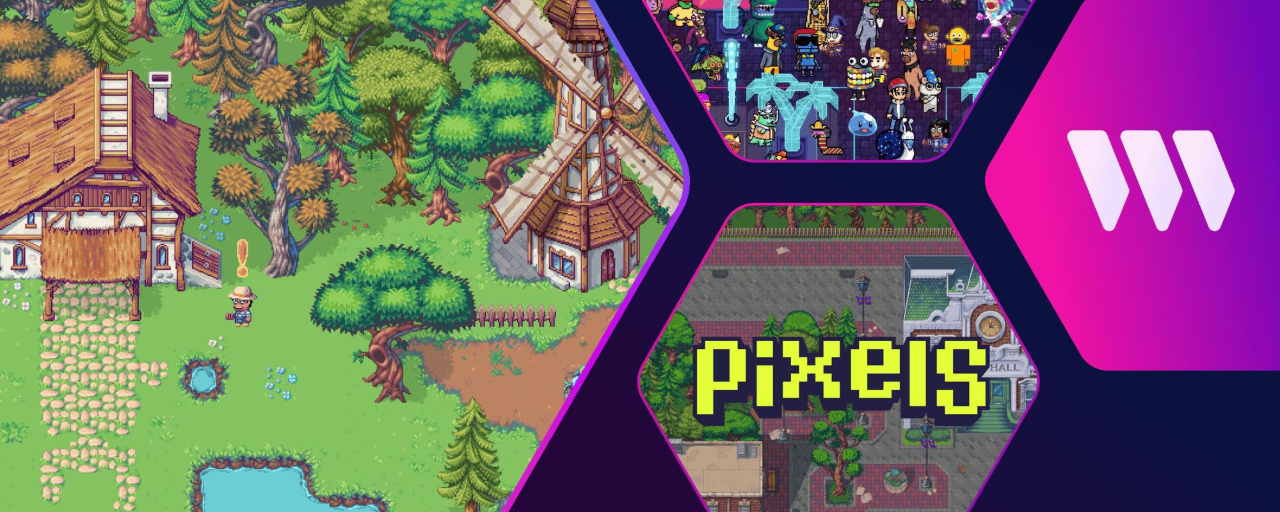
The Hidden Advantage in @Pixels: Why System Design Beats Grinding ($PIXEL)In most Web3 games, players often assume that spending more time leads to better results. However, @pixels challenges this idea by rewarding structure and efficiency over pure effort. The difference between average players and high performers is not how much they play, but how well they design their system.
At its core, Pixels is a system-based game. Every element — farming, crafting, trading — is interconnected. Players who understand these connections can create workflows that generate consistent output with minimal wasted effort. Those who don’t often find themselves stuck in repetitive loops with limited progress.
One of the most overlooked aspects is farm layout and timing. Efficient players design their farms in a way that reduces idle time and maximizes output cycles. Instead of randomly planting crops, they plan around timing, resource availability, and long-term goals. This transforms farming from a basic task into a strategic process.
Another key factor is resource flow. In Pixels, resources are constantly moving through different stages — from raw materials to crafted items to upgrades. Players who manage this flow effectively can create a compounding system where each step supports the next. This is where efficiency starts to outperform effort.
The role of $PIXEL becomes more apparent at this stage. Instead of treating it as something to extract, advanced players use it to improve their system. Whether through unlocking better tools or enhancing productivity, $PIXEL becomes part of the infrastructure that supports long-term growth.
Time is another critical variable. Players who log in without a plan often waste valuable opportunities. In contrast, structured players know exactly what to prioritize during each session. This allows them to achieve more in less time, giving them a clear advantage.
What makes this even more interesting is that the gap continues to widen over time. Small efficiency improvements compound, leading to significantly better outcomes in the long run. Meanwhile, inefficient players struggle to catch up, even if they spend more time in the game.
However, building an optimized system is not easy. It requires observation, experimentation, and continuous adjustment. Players need to understand not just what works, but why it works. This level of thinking separates those who play casually from those who truly master the system.
Ultimately, @pixels is not a game of effort — it is a game of design. Players who treat it as a system to be optimized will naturally outperform those who rely on grinding alone.
And in an environment shaped by efficiency, that difference becomes impossible to ignore.
#BinanceSquare #PIXEL
The Hidden Advantage in @Pixels: Why System Design Beats Grinding ($PIXEL)
In most Web3 games, players often assume that spending more time leads to better results. However, @Pixels challenges this idea by rewarding structure and efficiency over pure effort. The difference between average players and high performers is not how much they play, but how well they design their system.
At its core, Pixels is a system-based game. Every element — farming, crafting, trading — is interconnected. Players who understand these connections can create workflows that generate consistent output with minimal wasted effort. Those who don’t often find themselves stuck in repetitive loops with limited progress.
One of the most overlooked aspects is farm layout and timing. Efficient players design their farms in a way that reduces idle time and maximizes output cycles. Instead of randomly planting crops, they plan around timing, resource availability, and long-term goals. This transforms farming from a basic task into a strategic process.
Another key factor is resource flow. In Pixels, resources are constantly moving through different stages — from raw materials to crafted items to upgrades. Players who manage this flow effectively can create a compounding system where each step supports the next. This is where efficiency starts to outperform effort.
The role of $PIXEL becomes more apparent at this stage. Instead of treating it as something to extract, advanced players use it to improve their system. Whether through unlocking better tools or enhancing productivity, $PIXEL becomes part of the infrastructure that supports long-term growth.
Time is another critical variable. Players who log in without a plan often waste valuable opportunities. In contrast, structured players know exactly what to prioritize during each session. This allows them to achieve more in less time, giving them a clear advantage.
What makes this even more interesting is that the gap continues to widen over time. Small efficiency improvements compound, leading to significantly better outcomes in the long run. Meanwhile, inefficient players struggle to catch up, even if they spend more time in the game.
However, building an optimized system is not easy. It requires observation, experimentation, and continuous adjustment. Players need to understand not just what works, but why it works. This level of thinking separates those who play casually from those who truly master the system.
Ultimately, @Pixels is not a game of effort — it is a game of design. Players who treat it as a system to be optimized will naturally outperform those who rely on grinding alone.
And in an environment shaped by efficiency, that difference becomes impossible to ignore.
#BinanceSquare #PIXEL
At its core, Pixels is a system-based game. Every element — farming, crafting, trading — is interconnected. Players who understand these connections can create workflows that generate consistent output with minimal wasted effort. Those who don’t often find themselves stuck in repetitive loops with limited progress.
One of the most overlooked aspects is farm layout and timing. Efficient players design their farms in a way that reduces idle time and maximizes output cycles. Instead of randomly planting crops, they plan around timing, resource availability, and long-term goals. This transforms farming from a basic task into a strategic process.
Another key factor is resource flow. In Pixels, resources are constantly moving through different stages — from raw materials to crafted items to upgrades. Players who manage this flow effectively can create a compounding system where each step supports the next. This is where efficiency starts to outperform effort.
The role of $PIXEL becomes more apparent at this stage. Instead of treating it as something to extract, advanced players use it to improve their system. Whether through unlocking better tools or enhancing productivity, $PIXEL becomes part of the infrastructure that supports long-term growth.
Time is another critical variable. Players who log in without a plan often waste valuable opportunities. In contrast, structured players know exactly what to prioritize during each session. This allows them to achieve more in less time, giving them a clear advantage.
What makes this even more interesting is that the gap continues to widen over time. Small efficiency improvements compound, leading to significantly better outcomes in the long run. Meanwhile, inefficient players struggle to catch up, even if they spend more time in the game.
However, building an optimized system is not easy. It requires observation, experimentation, and continuous adjustment. Players need to understand not just what works, but why it works. This level of thinking separates those who play casually from those who truly master the system.
Ultimately, @Pixels is not a game of effort — it is a game of design. Players who treat it as a system to be optimized will naturally outperform those who rely on grinding alone.
And in an environment shaped by efficiency, that difference becomes impossible to ignore.
#BinanceSquare #PIXEL
1
93
·
--

Статья
Why Most Players Will Never Maximize @Pixels ($PIXEL) — And What Top Players Do DifferentlyIn most Web3 games, the gap between average players and top performers is often misunderstood. Many assume that success comes from spending more time or entering early. However, in @pixels , powered by $PIXEL , the real difference lies in how players approach the system itself.
The majority of players treat Pixels as a casual farming experience. They log in, complete basic actions, and log out without a clear plan. While this approach works in the short term, it often leads to slow progression and limited efficiency. Over time, these players fall behind without fully understanding why.
Top players, on the other hand, approach the game very differently. They treat it as a system to be optimized. Every action is intentional. Farming is not random — it is planned. Crafting is not reactive — it is strategic. Resources are not just collected — they are allocated with purpose.
One of the key differences is time efficiency. Instead of trying to do everything, experienced players focus only on high-impact activities. They understand which actions generate the most value and prioritize those consistently. This allows them to achieve better results with less wasted effort.
Another important factor is resource management. In Pixels, not all resources are equal. Some are better reinvested, while others are better traded. Top players constantly evaluate these decisions instead of following a fixed routine. This flexibility gives them a significant advantage over time.
The role of $PIXEL also highlights this gap. Average players often treat it as a reward to extract, selling it quickly without considering long-term benefits. In contrast, advanced players view it as a tool. They use $P$PIXEL improve efficiency, unlock better systems, and strengthen their position within the ecosystem.
Behavioral consistency is another defining trait. High-level players do not rely on motivation — they rely on routine. They build structured gameplay habits that allow them to progress steadily regardless of market conditions or short-term fluctuations.
Additionally, top players pay close attention to the in-game economy. They observe trends, adapt to changes, and adjust their strategies accordingly. This awareness allows them to stay ahead while others react too late.
However, this level of optimization is not easy. It requires patience, discipline, and a willingness to think differently. Many players are not willing to put in this effort, which is exactly why the gap continues to grow.
In the end, @pixels is not just about playing — it is about understanding systems. Those who take the time to learn and optimize will naturally outperform those who don’t.
And in a competitive environment, that difference becomes everything.
#pixel #BinanceSquare #PIXEL
Why Most Players Will Never Maximize @Pixels ($PIXEL) — And What Top Players Do Differently
In most Web3 games, the gap between average players and top performers is often misunderstood. Many assume that success comes from spending more time or entering early. However, in @Pixels , powered by $PIXEL , the real difference lies in how players approach the system itself.
The majority of players treat Pixels as a casual farming experience. They log in, complete basic actions, and log out without a clear plan. While this approach works in the short term, it often leads to slow progression and limited efficiency. Over time, these players fall behind without fully understanding why.
Top players, on the other hand, approach the game very differently. They treat it as a system to be optimized. Every action is intentional. Farming is not random — it is planned. Crafting is not reactive — it is strategic. Resources are not just collected — they are allocated with purpose.
One of the key differences is time efficiency. Instead of trying to do everything, experienced players focus only on high-impact activities. They understand which actions generate the most value and prioritize those consistently. This allows them to achieve better results with less wasted effort.
Another important factor is resource management. In Pixels, not all resources are equal. Some are better reinvested, while others are better traded. Top players constantly evaluate these decisions instead of following a fixed routine. This flexibility gives them a significant advantage over time.
The role of $PIXEL also highlights this gap. Average players often treat it as a reward to extract, selling it quickly without considering long-term benefits. In contrast, advanced players view it as a tool. They use $P$PIXEL improve efficiency, unlock better systems, and strengthen their position within the ecosystem.
Behavioral consistency is another defining trait. High-level players do not rely on motivation — they rely on routine. They build structured gameplay habits that allow them to progress steadily regardless of market conditions or short-term fluctuations.
Additionally, top players pay close attention to the in-game economy. They observe trends, adapt to changes, and adjust their strategies accordingly. This awareness allows them to stay ahead while others react too late.
However, this level of optimization is not easy. It requires patience, discipline, and a willingness to think differently. Many players are not willing to put in this effort, which is exactly why the gap continues to grow.
In the end, @Pixels is not just about playing — it is about understanding systems. Those who take the time to learn and optimize will naturally outperform those who don’t.
And in a competitive environment, that difference becomes everything.
#pixel #BinanceSquare #PIXEL
The majority of players treat Pixels as a casual farming experience. They log in, complete basic actions, and log out without a clear plan. While this approach works in the short term, it often leads to slow progression and limited efficiency. Over time, these players fall behind without fully understanding why.
Top players, on the other hand, approach the game very differently. They treat it as a system to be optimized. Every action is intentional. Farming is not random — it is planned. Crafting is not reactive — it is strategic. Resources are not just collected — they are allocated with purpose.
One of the key differences is time efficiency. Instead of trying to do everything, experienced players focus only on high-impact activities. They understand which actions generate the most value and prioritize those consistently. This allows them to achieve better results with less wasted effort.
Another important factor is resource management. In Pixels, not all resources are equal. Some are better reinvested, while others are better traded. Top players constantly evaluate these decisions instead of following a fixed routine. This flexibility gives them a significant advantage over time.
The role of $PIXEL also highlights this gap. Average players often treat it as a reward to extract, selling it quickly without considering long-term benefits. In contrast, advanced players view it as a tool. They use $P$PIXEL improve efficiency, unlock better systems, and strengthen their position within the ecosystem.
Behavioral consistency is another defining trait. High-level players do not rely on motivation — they rely on routine. They build structured gameplay habits that allow them to progress steadily regardless of market conditions or short-term fluctuations.
Additionally, top players pay close attention to the in-game economy. They observe trends, adapt to changes, and adjust their strategies accordingly. This awareness allows them to stay ahead while others react too late.
However, this level of optimization is not easy. It requires patience, discipline, and a willingness to think differently. Many players are not willing to put in this effort, which is exactly why the gap continues to grow.
In the end, @Pixels is not just about playing — it is about understanding systems. Those who take the time to learn and optimize will naturally outperform those who don’t.
And in a competitive environment, that difference becomes everything.
#pixel #BinanceSquare #PIXEL
1
151
·
--
Статья
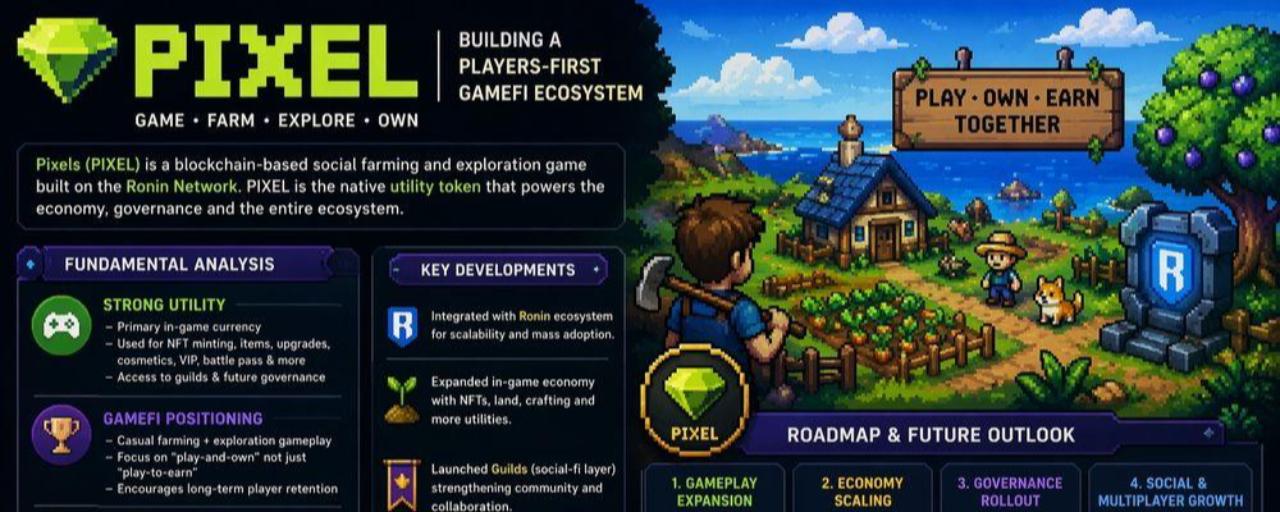
What Actually Drives Demand for in the @Pixels Ecosystem?In any Web3 gaming project, long-term sustainability depends on one critical factor: real demand. Without it, even well-designed systems can collapse under selling pressure. In the case of @pixels , the question is not just how rewards are distributed, but what truly motivates players to keep using the system over time.
One of the strongest drivers of demand comes from utility. Instead of functioning only as a reward, $PIXEL is integrated directly into gameplay. Players use it to unlock features, improve efficiency, and access deeper layers of the experience. This creates a continuous need rather than a one-time interaction.
Progression also plays a major role. As players advance, their reliance on in-game systems increases. Early gameplay may feel simple, but over time, optimization becomes more important. This naturally pushes players to engage more deeply with the ecosystem, increasing overall demand.
Another key factor is the presence of “token sinks.” These are mechanisms that encourage players to spend rather than extract value. Whether through upgrades, crafting, or unlocking new opportunities, these systems help balance supply and reduce pressure from constant selling. A well-designed sink system is essential for maintaining long-term stability.
Player behavior further strengthens this loop. Active users who return daily tend to engage more with the system and spend more resources over time. This means retention directly impacts how strong the overall economy becomes. A consistent player base often leads to healthier demand dynamics.
Social interaction also contributes to this effect. Trading, cooperation, and shared activities create more opportunities for value to circulate. Instead of a closed system, the game becomes a living ecosystem where interactions naturally increase usage.
However, challenges still exist. If resource generation outpaces usage, or if player growth slows, demand can weaken. Maintaining the right balance between supply, utility, and engagement will be critical going forward.
Overall, the strength of the system lies in how well it connects player behavior with in-game utility. $PIXEL is not just a reward, but a functional part of the ecosystem. As long as engagement remains strong and new use cases continue to develop, demand can remain stable.
In the long run, sustainable systems are not driven by hype, but by consistent usage, smart design, and active participation.
#pixel #BinanceSquare #PIXEL
What Actually Drives Demand for in the @Pixels Ecosystem?
In any Web3 gaming project, long-term sustainability depends on one critical factor: real demand. Without it, even well-designed systems can collapse under selling pressure. In the case of @Pixels , the question is not just how rewards are distributed, but what truly motivates players to keep using the system over time.
One of the strongest drivers of demand comes from utility. Instead of functioning only as a reward, $PIXEL is integrated directly into gameplay. Players use it to unlock features, improve efficiency, and access deeper layers of the experience. This creates a continuous need rather than a one-time interaction.
Progression also plays a major role. As players advance, their reliance on in-game systems increases. Early gameplay may feel simple, but over time, optimization becomes more important. This naturally pushes players to engage more deeply with the ecosystem, increasing overall demand.
Another key factor is the presence of “token sinks.” These are mechanisms that encourage players to spend rather than extract value. Whether through upgrades, crafting, or unlocking new opportunities, these systems help balance supply and reduce pressure from constant selling. A well-designed sink system is essential for maintaining long-term stability.
Player behavior further strengthens this loop. Active users who return daily tend to engage more with the system and spend more resources over time. This means retention directly impacts how strong the overall economy becomes. A consistent player base often leads to healthier demand dynamics.
Social interaction also contributes to this effect. Trading, cooperation, and shared activities create more opportunities for value to circulate. Instead of a closed system, the game becomes a living ecosystem where interactions naturally increase usage.
However, challenges still exist. If resource generation outpaces usage, or if player growth slows, demand can weaken. Maintaining the right balance between supply, utility, and engagement will be critical going forward.
Overall, the strength of the system lies in how well it connects player behavior with in-game utility. $PIXEL is not just a reward, but a functional part of the ecosystem. As long as engagement remains strong and new use cases continue to develop, demand can remain stable.
In the long run, sustainable systems are not driven by hype, but by consistent usage, smart design, and active participation.
#pixel #BinanceSquare #PIXEL
One of the strongest drivers of demand comes from utility. Instead of functioning only as a reward, $PIXEL is integrated directly into gameplay. Players use it to unlock features, improve efficiency, and access deeper layers of the experience. This creates a continuous need rather than a one-time interaction.
Progression also plays a major role. As players advance, their reliance on in-game systems increases. Early gameplay may feel simple, but over time, optimization becomes more important. This naturally pushes players to engage more deeply with the ecosystem, increasing overall demand.
Another key factor is the presence of “token sinks.” These are mechanisms that encourage players to spend rather than extract value. Whether through upgrades, crafting, or unlocking new opportunities, these systems help balance supply and reduce pressure from constant selling. A well-designed sink system is essential for maintaining long-term stability.
Player behavior further strengthens this loop. Active users who return daily tend to engage more with the system and spend more resources over time. This means retention directly impacts how strong the overall economy becomes. A consistent player base often leads to healthier demand dynamics.
Social interaction also contributes to this effect. Trading, cooperation, and shared activities create more opportunities for value to circulate. Instead of a closed system, the game becomes a living ecosystem where interactions naturally increase usage.
However, challenges still exist. If resource generation outpaces usage, or if player growth slows, demand can weaken. Maintaining the right balance between supply, utility, and engagement will be critical going forward.
Overall, the strength of the system lies in how well it connects player behavior with in-game utility. $PIXEL is not just a reward, but a functional part of the ecosystem. As long as engagement remains strong and new use cases continue to develop, demand can remain stable.
In the long run, sustainable systems are not driven by hype, but by consistent usage, smart design, and active participation.
#pixel #BinanceSquare #PIXEL
59
·
--
Статья
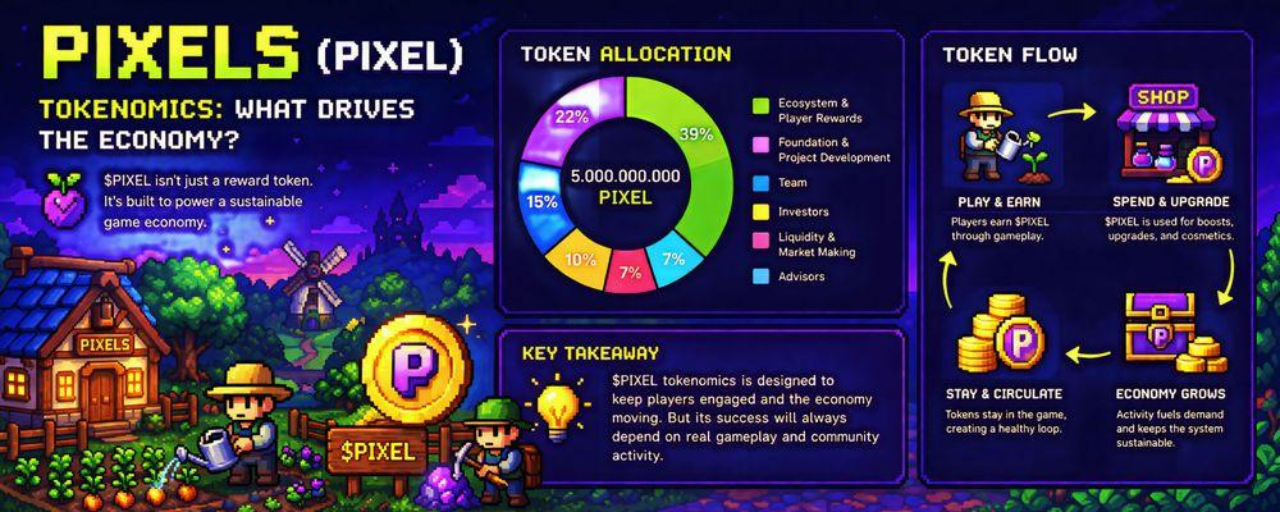
Is @Pixels ($PIXEL) Building a Real Economy or Just Another GameFi Cycle?One of the biggest questions surrounding Web3 gaming today is whether projects are creating real, sustainable economies or simply repeating the same short-term cycles seen in earlier GameFi trends. @pixels , powered by $PIXEL, presents an interesting case that sits somewhere between these two possibilities.
At a surface level, Pixels follows familiar mechanics: players farm resources, craft items, and participate in a player-driven marketplace. However, the deeper structure of the game suggests a more intentional design. Instead of focusing solely on rewards, Pixels emphasizes continuous interaction within its ecosystem. Every resource produced is meant to be used, traded, or reinvested, creating a circular flow rather than a one-way extraction.
This circular economy is one of the key differences. In many previous GameFi models, value was quickly extracted by players who entered early and left once rewards declined. Pixels attempts to reduce this behavior by making resources useful beyond immediate profit. Players are encouraged to keep resources within the system, whether through crafting, upgrading, or participating in more advanced activities.
The role of $PIXEL further reinforces this structure. Rather than functioning only as a reward token, it is integrated into multiple layers of gameplay. From unlocking features to enhancing efficiency, $PIXEL becomes part of the decision-making process. This creates a more stable demand compared to systems where tokens are primarily sold off by users.
Another critical factor is player retention. Pixels appears to focus heavily on daily engagement, encouraging players to return regularly through structured gameplay loops. This is important because retention is often a stronger indicator of long-term success than short-term user spikes. A stable player base can support a healthier economy, even during periods of lower market excitement.
However, the system is not without risks. Like any GameFi project, Pixels still depends on continuous development and user growth. Without new content or expanding participation, even a well-designed economy can slow down. Additionally, balancing resource production and demand will remain a long-term challenge.
From a broader perspective, @pixels reflects an evolution in Web3 gaming design. It moves away from pure speculation and toward systems that rely on interaction, consistency, and player behavior. This approach aligns more closely with traditional gaming models, where value is created through engagement rather than extraction.
So, is Pixels building a real economy? The answer is not fully clear yet — but it is definitely moving in a more sustainable direction compared to many previous GameFi projects.
#pixel #Crypto #GameFi $PIXEL
{spot}(PIXELUSDT)
Is @Pixels ($PIXEL) Building a Real Economy or Just Another GameFi Cycle?
One of the biggest questions surrounding Web3 gaming today is whether projects are creating real, sustainable economies or simply repeating the same short-term cycles seen in earlier GameFi trends. @Pixels , powered by $PIXEL , presents an interesting case that sits somewhere between these two possibilities.
At a surface level, Pixels follows familiar mechanics: players farm resources, craft items, and participate in a player-driven marketplace. However, the deeper structure of the game suggests a more intentional design. Instead of focusing solely on rewards, Pixels emphasizes continuous interaction within its ecosystem. Every resource produced is meant to be used, traded, or reinvested, creating a circular flow rather than a one-way extraction.
This circular economy is one of the key differences. In many previous GameFi models, value was quickly extracted by players who entered early and left once rewards declined. Pixels attempts to reduce this behavior by making resources useful beyond immediate profit. Players are encouraged to keep resources within the system, whether through crafting, upgrading, or participating in more advanced activities.
The role of $PIXEL further reinforces this structure. Rather than functioning only as a reward token, it is integrated into multiple layers of gameplay. From unlocking features to enhancing efficiency, $PIXEL becomes part of the decision-making process. This creates a more stable demand compared to systems where tokens are primarily sold off by users.
Another critical factor is player retention. Pixels appears to focus heavily on daily engagement, encouraging players to return regularly through structured gameplay loops. This is important because retention is often a stronger indicator of long-term success than short-term user spikes. A stable player base can support a healthier economy, even during periods of lower market excitement.
However, the system is not without risks. Like any GameFi project, Pixels still depends on continuous development and user growth. Without new content or expanding participation, even a well-designed economy can slow down. Additionally, balancing resource production and demand will remain a long-term challenge.
From a broader perspective, @Pixels reflects an evolution in Web3 gaming design. It moves away from pure speculation and toward systems that rely on interaction, consistency, and player behavior. This approach aligns more closely with traditional gaming models, where value is created through engagement rather than extraction.
So, is Pixels building a real economy? The answer is not fully clear yet — but it is definitely moving in a more sustainable direction compared to many previous GameFi projects.
#pixel #Crypto #GameFi $PIXEL
At a surface level, Pixels follows familiar mechanics: players farm resources, craft items, and participate in a player-driven marketplace. However, the deeper structure of the game suggests a more intentional design. Instead of focusing solely on rewards, Pixels emphasizes continuous interaction within its ecosystem. Every resource produced is meant to be used, traded, or reinvested, creating a circular flow rather than a one-way extraction.
This circular economy is one of the key differences. In many previous GameFi models, value was quickly extracted by players who entered early and left once rewards declined. Pixels attempts to reduce this behavior by making resources useful beyond immediate profit. Players are encouraged to keep resources within the system, whether through crafting, upgrading, or participating in more advanced activities.
The role of $PIXEL further reinforces this structure. Rather than functioning only as a reward token, it is integrated into multiple layers of gameplay. From unlocking features to enhancing efficiency, $PIXEL becomes part of the decision-making process. This creates a more stable demand compared to systems where tokens are primarily sold off by users.
Another critical factor is player retention. Pixels appears to focus heavily on daily engagement, encouraging players to return regularly through structured gameplay loops. This is important because retention is often a stronger indicator of long-term success than short-term user spikes. A stable player base can support a healthier economy, even during periods of lower market excitement.
However, the system is not without risks. Like any GameFi project, Pixels still depends on continuous development and user growth. Without new content or expanding participation, even a well-designed economy can slow down. Additionally, balancing resource production and demand will remain a long-term challenge.
From a broader perspective, @Pixels reflects an evolution in Web3 gaming design. It moves away from pure speculation and toward systems that rely on interaction, consistency, and player behavior. This approach aligns more closely with traditional gaming models, where value is created through engagement rather than extraction.
So, is Pixels building a real economy? The answer is not fully clear yet — but it is definitely moving in a more sustainable direction compared to many previous GameFi projects.
#pixel #Crypto #GameFi $PIXEL
1
39
·
--

Статья
Why Player Behavior Matters More Than Rewards in @PixelsIn the evolving landscape of Web3 gaming, one of the most overlooked factors is player behavior. While many projects focus heavily on token rewards and short-term incentives, long-term success often depends on how players interact with the system over time. @pixels , powered by PIXEL , provides an interesting case study in this regard.
Unlike traditional play-to-earn models that rely heavily on financial rewards, Pixels places a stronger emphasis on engagement and routine. Players are encouraged to return daily, not because they are chasing immediate profits, but because the game creates a sense of progression. This subtle shift in design has significant implications for sustainability.
When players develop habits — such as farming regularly, optimizing resources, or participating in community activities — they become part of a stable ecosystem. This stability is crucial. In many failed GameFi projects, users entered only for rewards and left once incentives decreased. Pixels attempts to address this issue by making the gameplay itself enjoyable and rewarding beyond just financial gain.
Another important element is how $PIXEL integrates into this behavior loop. Instead of being a simple reward token, it functions as a tool within the ecosystem. Players use $PIXEL unlock features, improve efficiency, and access deeper layers of the game. This creates a continuous demand for the token, rather than a one-time extraction event.
From a design perspective, this approach aligns more closely with successful traditional games. In those environments, retention is driven by experience, not just rewards. By applying similar principles, @pixels increases its chances of maintaining an active player base even during less favorable market conditions.
Community interaction further reinforces this behavior. When players share strategies, trade resources, or collaborate, the game becomes more than just an individual experience. It evolves into a social ecosystem, where engagement is naturally sustained through interaction.
However, this model also comes with challenges. Maintaining long-term engagement requires continuous updates, new content, and careful balancing of the in-game economy. Without these elements, even the most well-designed systems can lose momentum.
Overall, the strength of @pixels lies in its ability to shape player behavior rather than simply reward it. By encouraging consistency, interaction, and strategic thinking, the ecosystem built around closer to a sustainable model.
In the long run, projects that successfully align player behavior with ecosystem growth are more likely to survive — and potentially thrive — in the competitive world of Web3 gaming.
#pixel #crypto
Why Player Behavior Matters More Than Rewards in @Pixels
In the evolving landscape of Web3 gaming, one of the most overlooked factors is player behavior. While many projects focus heavily on token rewards and short-term incentives, long-term success often depends on how players interact with the system over time. @Pixels , powered by PIXEL , provides an interesting case study in this regard.
Unlike traditional play-to-earn models that rely heavily on financial rewards, Pixels places a stronger emphasis on engagement and routine. Players are encouraged to return daily, not because they are chasing immediate profits, but because the game creates a sense of progression. This subtle shift in design has significant implications for sustainability.
When players develop habits — such as farming regularly, optimizing resources, or participating in community activities — they become part of a stable ecosystem. This stability is crucial. In many failed GameFi projects, users entered only for rewards and left once incentives decreased. Pixels attempts to address this issue by making the gameplay itself enjoyable and rewarding beyond just financial gain.
Another important element is how $PIXEL integrates into this behavior loop. Instead of being a simple reward token, it functions as a tool within the ecosystem. Players use $PIXEL unlock features, improve efficiency, and access deeper layers of the game. This creates a continuous demand for the token, rather than a one-time extraction event.
From a design perspective, this approach aligns more closely with successful traditional games. In those environments, retention is driven by experience, not just rewards. By applying similar principles, @Pixels increases its chances of maintaining an active player base even during less favorable market conditions.
Community interaction further reinforces this behavior. When players share strategies, trade resources, or collaborate, the game becomes more than just an individual experience. It evolves into a social ecosystem, where engagement is naturally sustained through interaction.
However, this model also comes with challenges. Maintaining long-term engagement requires continuous updates, new content, and careful balancing of the in-game economy. Without these elements, even the most well-designed systems can lose momentum.
Overall, the strength of @Pixels lies in its ability to shape player behavior rather than simply reward it. By encouraging consistency, interaction, and strategic thinking, the ecosystem built around closer to a sustainable model.
In the long run, projects that successfully align player behavior with ecosystem growth are more likely to survive — and potentially thrive — in the competitive world of Web3 gaming.
#pixel #crypto
Unlike traditional play-to-earn models that rely heavily on financial rewards, Pixels places a stronger emphasis on engagement and routine. Players are encouraged to return daily, not because they are chasing immediate profits, but because the game creates a sense of progression. This subtle shift in design has significant implications for sustainability.
When players develop habits — such as farming regularly, optimizing resources, or participating in community activities — they become part of a stable ecosystem. This stability is crucial. In many failed GameFi projects, users entered only for rewards and left once incentives decreased. Pixels attempts to address this issue by making the gameplay itself enjoyable and rewarding beyond just financial gain.
Another important element is how $PIXEL integrates into this behavior loop. Instead of being a simple reward token, it functions as a tool within the ecosystem. Players use $PIXEL unlock features, improve efficiency, and access deeper layers of the game. This creates a continuous demand for the token, rather than a one-time extraction event.
From a design perspective, this approach aligns more closely with successful traditional games. In those environments, retention is driven by experience, not just rewards. By applying similar principles, @Pixels increases its chances of maintaining an active player base even during less favorable market conditions.
Community interaction further reinforces this behavior. When players share strategies, trade resources, or collaborate, the game becomes more than just an individual experience. It evolves into a social ecosystem, where engagement is naturally sustained through interaction.
However, this model also comes with challenges. Maintaining long-term engagement requires continuous updates, new content, and careful balancing of the in-game economy. Without these elements, even the most well-designed systems can lose momentum.
Overall, the strength of @Pixels lies in its ability to shape player behavior rather than simply reward it. By encouraging consistency, interaction, and strategic thinking, the ecosystem built around closer to a sustainable model.
In the long run, projects that successfully align player behavior with ecosystem growth are more likely to survive — and potentially thrive — in the competitive world of Web3 gaming.
#pixel #crypto
15
·
--
Статья
Understanding the Long-Term Economy of @Pixels and the Role of $PIXELOne of the most important questions in Web3 gaming today is whether a project can truly sustain itself over time. Many GameFi projects in the past experienced rapid growth followed by equally rapid decline, mainly because their economies were built around short-term incentives rather than long-term engagement. The @pixels ecosystem, powered by $PIXEL, is attempting to take a different path.
At the center of Pixels is a player-driven economy. Unlike traditional systems where value is extracted quickly, Pixels focuses on creating continuous interaction between players and the in-game environment. Every action — farming, crafting, trading — contributes to a cycle where resources are constantly produced and consumed. This helps maintain balance and reduces the risk of oversupply.
One of the key elements supporting this model is the presence of multiple utility layers for $PIXEL. The token is not limited to rewards; it is actively used within the ecosystem. Players rely on $PIXEL for upgrades, access to advanced features, participation in certain activities, and interaction with other players. This creates ongoing demand rather than one-time usage.
Another important factor is behavioral design. Pixels encourages players to return regularly by structuring progress around daily and long-term goals. This approach increases retention, which is one of the most critical metrics in any gaming ecosystem. A stable and active player base naturally strengthens the economy.
The integration of social elements also plays a significant role. @pixels is not just an individual experience — it is a shared environment where players interact, trade, and learn from each other. Social interaction increases engagement and extends the lifecycle of the game. In many cases, strong communities are what keep projects alive even during market downturns.
From a broader perspective, Pixels reflects a shift in GameFi design. Instead of focusing on immediate financial rewards, it prioritizes sustainable engagement and gradual growth. This aligns more closely with traditional gaming success models, where user experience and retention drive long-term value.
However, sustainability is not guaranteed. The ecosystem still depends on continuous development, new content, and the ability to attract new users. Without innovation, even well-designed systems can stagnate.
Overall, @pixels represents a more mature approach to Web3 gaming. By combining a player-driven economy, active utility for $PIXEL , and a focus on long-term engagement, it is positioning itself differently from many previous GameFi projects.
Whether this model succeeds at scale remains to be seen, but it is clearly a step in a new direction for the industry.
#pixel #crypto #pixel
Understanding the Long-Term Economy of @Pixels and the Role of $PIXEL
One of the most important questions in Web3 gaming today is whether a project can truly sustain itself over time. Many GameFi projects in the past experienced rapid growth followed by equally rapid decline, mainly because their economies were built around short-term incentives rather than long-term engagement. The @Pixels ecosystem, powered by $PIXEL , is attempting to take a different path.
At the center of Pixels is a player-driven economy. Unlike traditional systems where value is extracted quickly, Pixels focuses on creating continuous interaction between players and the in-game environment. Every action — farming, crafting, trading — contributes to a cycle where resources are constantly produced and consumed. This helps maintain balance and reduces the risk of oversupply.
One of the key elements supporting this model is the presence of multiple utility layers for $PIXEL . The token is not limited to rewards; it is actively used within the ecosystem. Players rely on $PIXEL for upgrades, access to advanced features, participation in certain activities, and interaction with other players. This creates ongoing demand rather than one-time usage.
Another important factor is behavioral design. Pixels encourages players to return regularly by structuring progress around daily and long-term goals. This approach increases retention, which is one of the most critical metrics in any gaming ecosystem. A stable and active player base naturally strengthens the economy.
The integration of social elements also plays a significant role. @Pixels is not just an individual experience — it is a shared environment where players interact, trade, and learn from each other. Social interaction increases engagement and extends the lifecycle of the game. In many cases, strong communities are what keep projects alive even during market downturns.
From a broader perspective, Pixels reflects a shift in GameFi design. Instead of focusing on immediate financial rewards, it prioritizes sustainable engagement and gradual growth. This aligns more closely with traditional gaming success models, where user experience and retention drive long-term value.
However, sustainability is not guaranteed. The ecosystem still depends on continuous development, new content, and the ability to attract new users. Without innovation, even well-designed systems can stagnate.
Overall, @Pixels represents a more mature approach to Web3 gaming. By combining a player-driven economy, active utility for $PIXEL , and a focus on long-term engagement, it is positioning itself differently from many previous GameFi projects.
Whether this model succeeds at scale remains to be seen, but it is clearly a step in a new direction for the industry.
#pixel #crypto #pixel
At the center of Pixels is a player-driven economy. Unlike traditional systems where value is extracted quickly, Pixels focuses on creating continuous interaction between players and the in-game environment. Every action — farming, crafting, trading — contributes to a cycle where resources are constantly produced and consumed. This helps maintain balance and reduces the risk of oversupply.
One of the key elements supporting this model is the presence of multiple utility layers for $PIXEL . The token is not limited to rewards; it is actively used within the ecosystem. Players rely on $PIXEL for upgrades, access to advanced features, participation in certain activities, and interaction with other players. This creates ongoing demand rather than one-time usage.
Another important factor is behavioral design. Pixels encourages players to return regularly by structuring progress around daily and long-term goals. This approach increases retention, which is one of the most critical metrics in any gaming ecosystem. A stable and active player base naturally strengthens the economy.
The integration of social elements also plays a significant role. @Pixels is not just an individual experience — it is a shared environment where players interact, trade, and learn from each other. Social interaction increases engagement and extends the lifecycle of the game. In many cases, strong communities are what keep projects alive even during market downturns.
From a broader perspective, Pixels reflects a shift in GameFi design. Instead of focusing on immediate financial rewards, it prioritizes sustainable engagement and gradual growth. This aligns more closely with traditional gaming success models, where user experience and retention drive long-term value.
However, sustainability is not guaranteed. The ecosystem still depends on continuous development, new content, and the ability to attract new users. Without innovation, even well-designed systems can stagnate.
Overall, @Pixels represents a more mature approach to Web3 gaming. By combining a player-driven economy, active utility for $PIXEL , and a focus on long-term engagement, it is positioning itself differently from many previous GameFi projects.
Whether this model succeeds at scale remains to be seen, but it is clearly a step in a new direction for the industry.
#pixel #crypto #pixel
2
47
·
--
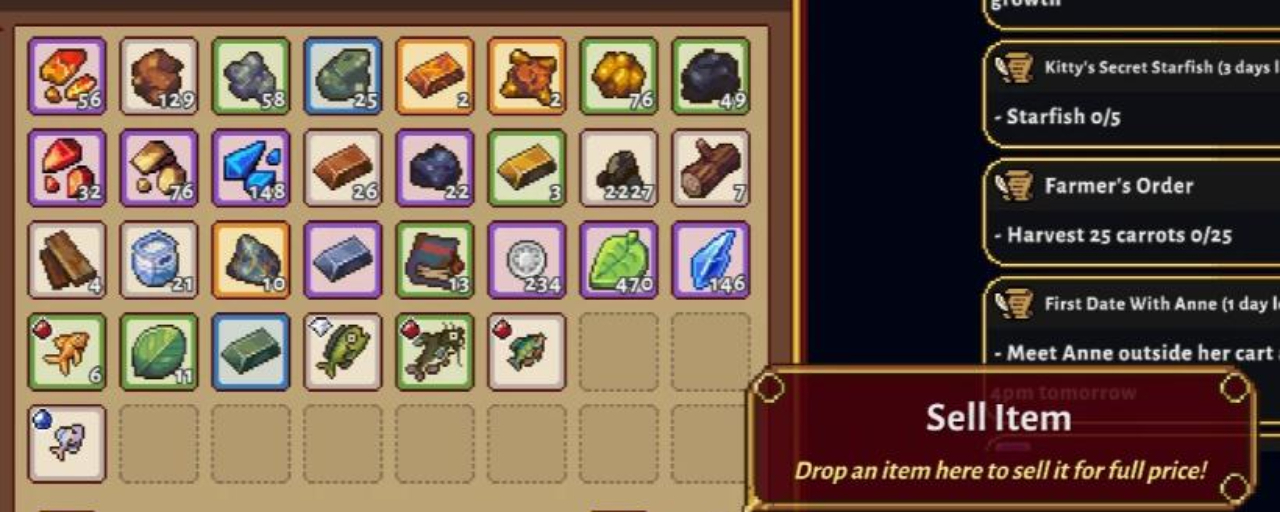
Статья
How to Play Pixels Efficiently: A Beginner’s Guide to Earning and Growing with $PIXELIf you want to improve your performance in @pixels , understanding strategy is far more important than simply spending more time in the game. Many players make the mistake of focusing only on grinding, while more experienced players focus on optimizing their actions within the ecosystem powered by $PIXEL .
The first key strategy is crop planning. Not all crops are equal — some grow faster, while others may provide better long-term value depending on how they are used. Instead of planting randomly, try to create a rotation system where your farm is always active. This minimizes downtime and ensures a steady flow of resources.
Next, focus on resource allocation. Early in the game, it might be tempting to sell everything you produce. However, a more effective approach is to reinvest your resources into crafting. Crafted items often unlock new opportunities and can significantly improve your efficiency. Over time, this creates a compounding effect where your productivity increases without requiring additional effort.
Time management is another crucial factor. @pixels rewards consistency, but not all actions are equally valuable. Efficient players prioritize tasks that generate the most impact. For example, completing quests or crafting key items may provide more long-term benefits than simply harvesting basic crops repeatedly.
Inventory management is also often overlooked. Keeping your inventory organized allows you to react quickly to new opportunities, whether it’s crafting, trading, or completing quests. Wasting time searching for resources or running out of space can slow down your progress significantly.
Another important aspect is understanding when to use $PIXEL. Instead of treating it as something to immediately sell, consider how it can enhance your gameplay. Using $PIXEL for upgrades or unlocking features can increase your efficiency and lead to better returns in the future. This is especially important for players aiming to stay competitive as the ecosystem grows.
Community interaction can also provide an edge. Observing how other players approach the game, sharing strategies, and learning from experienced users can accelerate your progress. @pixels is not just about individual play — it’s a shared environment where knowledge can be just as valuable as resources.
Finally, think long-term. Pixels is designed as a sustainable ecosystem, not a quick-profit system. Players who approach it with patience and a strategic mindset tend to benefit the most. Short-term decisions may feel rewarding, but long-term planning is what truly separates successful players from the rest.
If you combine these strategies — planning, efficiency, and smart use of $P$PIXEL you can significantly improve your experience and performance within @Pixels.
#pixel #BinanceSquare
How to Play Pixels Efficiently: A Beginner’s Guide to Earning and Growing with $PIXEL
If you want to improve your performance in @Pixels , understanding strategy is far more important than simply spending more time in the game. Many players make the mistake of focusing only on grinding, while more experienced players focus on optimizing their actions within the ecosystem powered by $PIXEL .
The first key strategy is crop planning. Not all crops are equal — some grow faster, while others may provide better long-term value depending on how they are used. Instead of planting randomly, try to create a rotation system where your farm is always active. This minimizes downtime and ensures a steady flow of resources.
Next, focus on resource allocation. Early in the game, it might be tempting to sell everything you produce. However, a more effective approach is to reinvest your resources into crafting. Crafted items often unlock new opportunities and can significantly improve your efficiency. Over time, this creates a compounding effect where your productivity increases without requiring additional effort.
Time management is another crucial factor. @Pixels rewards consistency, but not all actions are equally valuable. Efficient players prioritize tasks that generate the most impact. For example, completing quests or crafting key items may provide more long-term benefits than simply harvesting basic crops repeatedly.
Inventory management is also often overlooked. Keeping your inventory organized allows you to react quickly to new opportunities, whether it’s crafting, trading, or completing quests. Wasting time searching for resources or running out of space can slow down your progress significantly.
Another important aspect is understanding when to use $PIXEL . Instead of treating it as something to immediately sell, consider how it can enhance your gameplay. Using $PIXEL for upgrades or unlocking features can increase your efficiency and lead to better returns in the future. This is especially important for players aiming to stay competitive as the ecosystem grows.
Community interaction can also provide an edge. Observing how other players approach the game, sharing strategies, and learning from experienced users can accelerate your progress. @Pixels is not just about individual play — it’s a shared environment where knowledge can be just as valuable as resources.
Finally, think long-term. Pixels is designed as a sustainable ecosystem, not a quick-profit system. Players who approach it with patience and a strategic mindset tend to benefit the most. Short-term decisions may feel rewarding, but long-term planning is what truly separates successful players from the rest.
If you combine these strategies — planning, efficiency, and smart use of $P$PIXEL you can significantly improve your experience and performance within @Pixels.
#pixel #BinanceSquare
The first key strategy is crop planning. Not all crops are equal — some grow faster, while others may provide better long-term value depending on how they are used. Instead of planting randomly, try to create a rotation system where your farm is always active. This minimizes downtime and ensures a steady flow of resources.
Next, focus on resource allocation. Early in the game, it might be tempting to sell everything you produce. However, a more effective approach is to reinvest your resources into crafting. Crafted items often unlock new opportunities and can significantly improve your efficiency. Over time, this creates a compounding effect where your productivity increases without requiring additional effort.
Time management is another crucial factor. @Pixels rewards consistency, but not all actions are equally valuable. Efficient players prioritize tasks that generate the most impact. For example, completing quests or crafting key items may provide more long-term benefits than simply harvesting basic crops repeatedly.
Inventory management is also often overlooked. Keeping your inventory organized allows you to react quickly to new opportunities, whether it’s crafting, trading, or completing quests. Wasting time searching for resources or running out of space can slow down your progress significantly.
Another important aspect is understanding when to use $PIXEL . Instead of treating it as something to immediately sell, consider how it can enhance your gameplay. Using $PIXEL for upgrades or unlocking features can increase your efficiency and lead to better returns in the future. This is especially important for players aiming to stay competitive as the ecosystem grows.
Community interaction can also provide an edge. Observing how other players approach the game, sharing strategies, and learning from experienced users can accelerate your progress. @Pixels is not just about individual play — it’s a shared environment where knowledge can be just as valuable as resources.
Finally, think long-term. Pixels is designed as a sustainable ecosystem, not a quick-profit system. Players who approach it with patience and a strategic mindset tend to benefit the most. Short-term decisions may feel rewarding, but long-term planning is what truly separates successful players from the rest.
If you combine these strategies — planning, efficiency, and smart use of $P$PIXEL you can significantly improve your experience and performance within @Pixels.
#pixel #BinanceSquare
5
·
--
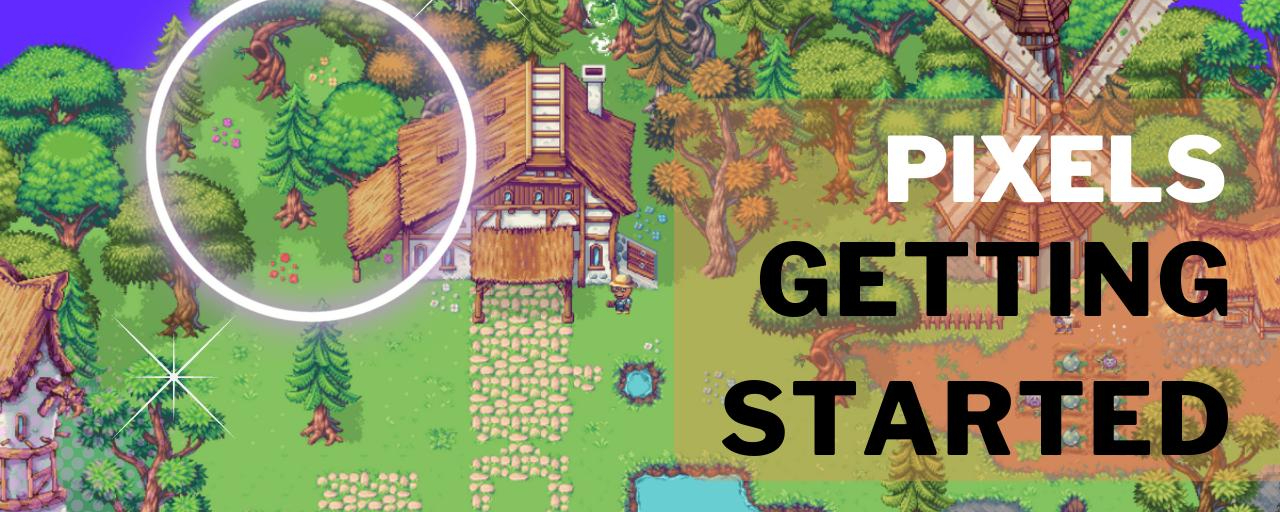
Статья
HOW TO STARTED INIf you’re new to @pixels and wondering how to get started effectively, here’s a simple beginner-friendly guide to help you understand the core gameplay and how to progress efficiently within the ecosystem powered by $PIXEL.
First, when you enter the game, your main focus should be on learning the basic mechanics. Start with farming — planting and harvesting crops is one of the easiest ways to generate early resources. These resources are essential because they form the foundation of your in-game progression.
Next, pay attention to quests. Pixels provides a variety of tasks that guide you through the gameplay. Completing quests not only helps you understand different features of the game, but also rewards you with valuable items and sometimes exposure to $PIXEL-related activities. Many new players skip this step, but it is actually one of the fastest ways to level up early on.
Crafting is another key element you should not ignore. Instead of selling all your resources immediately, consider using them to craft items. Crafted items often have higher utility and can help you unlock more advanced gameplay features. Over time, this will allow you to optimize your resource usage rather than just focusing on short-term gains.
As you progress further, you’ll notice that managing your time and resources becomes increasingly important. Efficient players tend to plan their actions — deciding when to plant, when to harvest, and when to craft. This creates a rhythm that maximizes productivity within the game.
Another important tip is to stay active in the community. @pixels has a strong social aspect, and interacting with other players can provide valuable insights. Whether it’s learning new strategies or understanding market trends, community engagement can significantly improve your gameplay.
When it comes to $PIXEL , don’t treat it as just a reward to sell immediately. Instead, think of it as a tool. Using $PIXEL within the ecosystem — whether for upgrades, access, or participation in advanced features — can provide more long-term value than simply cashing out early.
Finally, be patient. Pixels is designed as a long-term experience, not a quick-profit game. Players who consistently engage, learn, and adapt their strategies tend to perform much better over time.
If you approach @pixels with the right mindset — focusing on learning and gradual progress — you’ll likely find the experience both rewarding and sustainable.
#pixel #GameFi #BinanceSquare #PIXEL
HOW TO STARTED IN
If you’re new to @Pixels and wondering how to get started effectively, here’s a simple beginner-friendly guide to help you understand the core gameplay and how to progress efficiently within the ecosystem powered by $PIXEL .
First, when you enter the game, your main focus should be on learning the basic mechanics. Start with farming — planting and harvesting crops is one of the easiest ways to generate early resources. These resources are essential because they form the foundation of your in-game progression.
Next, pay attention to quests. Pixels provides a variety of tasks that guide you through the gameplay. Completing quests not only helps you understand different features of the game, but also rewards you with valuable items and sometimes exposure to $PIXEL -related activities. Many new players skip this step, but it is actually one of the fastest ways to level up early on.
Crafting is another key element you should not ignore. Instead of selling all your resources immediately, consider using them to craft items. Crafted items often have higher utility and can help you unlock more advanced gameplay features. Over time, this will allow you to optimize your resource usage rather than just focusing on short-term gains.
As you progress further, you’ll notice that managing your time and resources becomes increasingly important. Efficient players tend to plan their actions — deciding when to plant, when to harvest, and when to craft. This creates a rhythm that maximizes productivity within the game.
Another important tip is to stay active in the community. @Pixels has a strong social aspect, and interacting with other players can provide valuable insights. Whether it’s learning new strategies or understanding market trends, community engagement can significantly improve your gameplay.
When it comes to $PIXEL , don’t treat it as just a reward to sell immediately. Instead, think of it as a tool. Using $PIXEL within the ecosystem — whether for upgrades, access, or participation in advanced features — can provide more long-term value than simply cashing out early.
Finally, be patient. Pixels is designed as a long-term experience, not a quick-profit game. Players who consistently engage, learn, and adapt their strategies tend to perform much better over time.
If you approach @Pixels with the right mindset — focusing on learning and gradual progress — you’ll likely find the experience both rewarding and sustainable.
#pixel #GameFi #BinanceSquare #PIXEL
First, when you enter the game, your main focus should be on learning the basic mechanics. Start with farming — planting and harvesting crops is one of the easiest ways to generate early resources. These resources are essential because they form the foundation of your in-game progression.
Next, pay attention to quests. Pixels provides a variety of tasks that guide you through the gameplay. Completing quests not only helps you understand different features of the game, but also rewards you with valuable items and sometimes exposure to $PIXEL -related activities. Many new players skip this step, but it is actually one of the fastest ways to level up early on.
Crafting is another key element you should not ignore. Instead of selling all your resources immediately, consider using them to craft items. Crafted items often have higher utility and can help you unlock more advanced gameplay features. Over time, this will allow you to optimize your resource usage rather than just focusing on short-term gains.
As you progress further, you’ll notice that managing your time and resources becomes increasingly important. Efficient players tend to plan their actions — deciding when to plant, when to harvest, and when to craft. This creates a rhythm that maximizes productivity within the game.
Another important tip is to stay active in the community. @Pixels has a strong social aspect, and interacting with other players can provide valuable insights. Whether it’s learning new strategies or understanding market trends, community engagement can significantly improve your gameplay.
When it comes to $PIXEL , don’t treat it as just a reward to sell immediately. Instead, think of it as a tool. Using $PIXEL within the ecosystem — whether for upgrades, access, or participation in advanced features — can provide more long-term value than simply cashing out early.
Finally, be patient. Pixels is designed as a long-term experience, not a quick-profit game. Players who consistently engage, learn, and adapt their strategies tend to perform much better over time.
If you approach @Pixels with the right mindset — focusing on learning and gradual progress — you’ll likely find the experience both rewarding and sustainable.
#pixel #GameFi #BinanceSquare #PIXEL
1
18
·
--
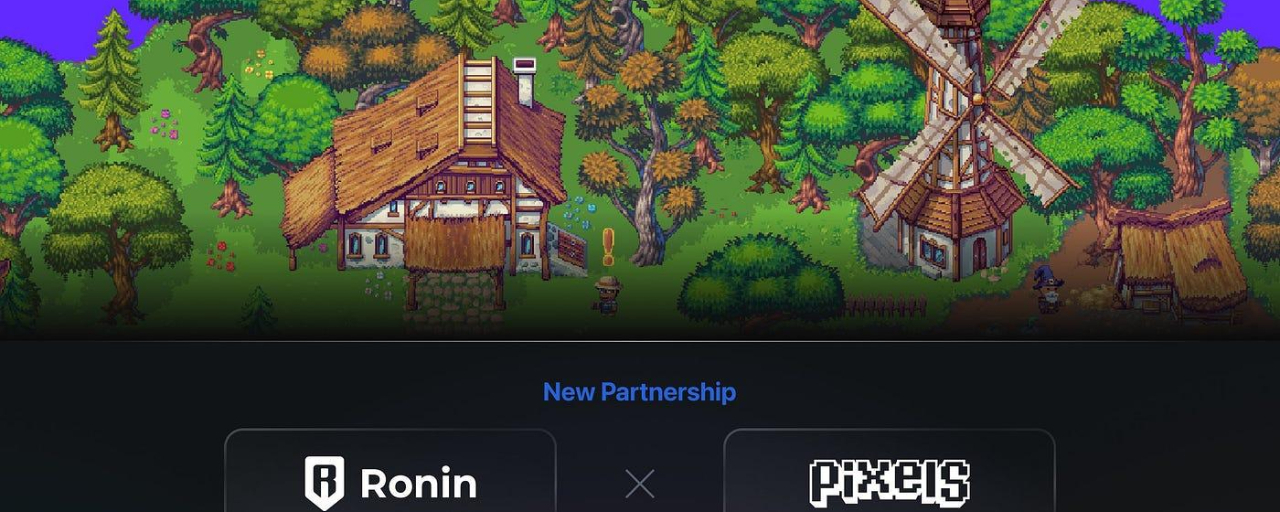
Статья
INSIDE OF PIXELOne of the biggest challenges in Web3 gaming has always been sustainability. Many GameFi projects in the past attracted users quickly, but failed to retain them because their economies were built around extraction rather than participation. The @Pixels ecosystem is attempting to solve this problem by designing a more balanced and interactive economic loop powered by $PIXEL .
At the core of Pixels lies a simple but effective idea: players should not only earn tokens, but also spend them in meaningful ways. This is where the concept of “token sinks” becomes extremely important. In Pixels, $PIXEL is used across multiple layers of the game — from crafting advanced items to upgrading land, minting NFTs, and accessing premium gameplay features. These sinks help reduce constant selling pressure and encourage reinvestment into the ecosystem.
Another interesting aspect is how the game structures progression. Instead of allowing players to immediately maximize rewards, Pixels introduces gradual progression systems that require time, effort, and strategic resource management. This design naturally increases player retention, as users are incentivized to come back daily to optimize their gameplay.
The social element also plays a key role. @Pixels is not just a solo farming experience — it integrates community interaction, trading, and collaborative gameplay. These features increase the utility of in-game assets and create more reasons for players to stay active. A strong social layer often determines whether a Web3 game survives or fades away.
Furthermore, the decision to build on the Ronin Network gives Pixels access to a gaming-focused infrastructure that has already proven successful with other titles. This allows for faster transactions, lower costs, and a smoother user experience — all of which are essential for onboarding non-crypto-native players.
From a macro perspective, Pixels represents a shift in how GameFi projects are designed. Instead of focusing on short-term hype cycles, it emphasizes long-term engagement and economic balance. If this model continues to evolve successfully, it could serve as a blueprint for future Web3 games.
However, risks still exist. The sustainability of the ecosystem depends heavily on maintaining active users and continuously introducing new content. Without innovation, even well-designed systems can lose momentum over time.
Overall, @Pixels is not just another GameFi experiment — it is a case study in how to build a more sustainable digital economy. The real question is whether it can maintain this balance as it scales.
#pixel
INSIDE OF PIXEL
One of the biggest challenges in Web3 gaming has always been sustainability. Many GameFi projects in the past attracted users quickly, but failed to retain them because their economies were built around extraction rather than participation. The @Pixels ecosystem is attempting to solve this problem by designing a more balanced and interactive economic loop powered by $PIXEL .
At the core of Pixels lies a simple but effective idea: players should not only earn tokens, but also spend them in meaningful ways. This is where the concept of “token sinks” becomes extremely important. In Pixels, $PIXEL is used across multiple layers of the game — from crafting advanced items to upgrading land, minting NFTs, and accessing premium gameplay features. These sinks help reduce constant selling pressure and encourage reinvestment into the ecosystem.
Another interesting aspect is how the game structures progression. Instead of allowing players to immediately maximize rewards, Pixels introduces gradual progression systems that require time, effort, and strategic resource management. This design naturally increases player retention, as users are incentivized to come back daily to optimize their gameplay.
The social element also plays a key role. @Pixels is not just a solo farming experience — it integrates community interaction, trading, and collaborative gameplay. These features increase the utility of in-game assets and create more reasons for players to stay active. A strong social layer often determines whether a Web3 game survives or fades away.
Furthermore, the decision to build on the Ronin Network gives Pixels access to a gaming-focused infrastructure that has already proven successful with other titles. This allows for faster transactions, lower costs, and a smoother user experience — all of which are essential for onboarding non-crypto-native players.
From a macro perspective, Pixels represents a shift in how GameFi projects are designed. Instead of focusing on short-term hype cycles, it emphasizes long-term engagement and economic balance. If this model continues to evolve successfully, it could serve as a blueprint for future Web3 games.
However, risks still exist. The sustainability of the ecosystem depends heavily on maintaining active users and continuously introducing new content. Without innovation, even well-designed systems can lose momentum over time.
Overall, @Pixels is not just another GameFi experiment — it is a case study in how to build a more sustainable digital economy. The real question is whether it can maintain this balance as it scales.
#pixel
At the core of Pixels lies a simple but effective idea: players should not only earn tokens, but also spend them in meaningful ways. This is where the concept of “token sinks” becomes extremely important. In Pixels, $PIXEL is used across multiple layers of the game — from crafting advanced items to upgrading land, minting NFTs, and accessing premium gameplay features. These sinks help reduce constant selling pressure and encourage reinvestment into the ecosystem.
Another interesting aspect is how the game structures progression. Instead of allowing players to immediately maximize rewards, Pixels introduces gradual progression systems that require time, effort, and strategic resource management. This design naturally increases player retention, as users are incentivized to come back daily to optimize their gameplay.
The social element also plays a key role. @Pixels is not just a solo farming experience — it integrates community interaction, trading, and collaborative gameplay. These features increase the utility of in-game assets and create more reasons for players to stay active. A strong social layer often determines whether a Web3 game survives or fades away.
Furthermore, the decision to build on the Ronin Network gives Pixels access to a gaming-focused infrastructure that has already proven successful with other titles. This allows for faster transactions, lower costs, and a smoother user experience — all of which are essential for onboarding non-crypto-native players.
From a macro perspective, Pixels represents a shift in how GameFi projects are designed. Instead of focusing on short-term hype cycles, it emphasizes long-term engagement and economic balance. If this model continues to evolve successfully, it could serve as a blueprint for future Web3 games.
However, risks still exist. The sustainability of the ecosystem depends heavily on maintaining active users and continuously introducing new content. Without innovation, even well-designed systems can lose momentum over time.
Overall, @Pixels is not just another GameFi experiment — it is a case study in how to build a more sustainable digital economy. The real question is whether it can maintain this balance as it scales.
#pixel
1
39
·
--

Статья
WHAT IS PIXELS?The @pixels ecosystem is gradually evolving into one of the most interesting experiments in Web3 gaming today. While many projects in the GameFi sector have struggled to maintain long-term user engagement, Pixels is taking a different approach — focusing on sustainable gameplay and a functioning in-game economy powered by $PIXEL.
At its core, Pixels is a social farming RPG built on the Ronin Network. Players can farm crops, gather resources, craft items, and trade within a player-driven marketplace. However, what makes this ecosystem unique is not just the gameplay, but how the economy is structured.
Unlike traditional play-to-earn models, where users farm tokens and immediately sell them, Pixels introduces multiple “token sinks” — mechanisms that encourage spending rather than constant selling. Players use $PIXEL for minting NFTs, accessing premium features, upgrading assets, and participating in social systems such as guilds. This creates a circular economy where tokens are continuously reused rather than extracted.
Another important aspect is the shift in GameFi design philosophy. Pixels is moving away from “earn-first” mechanics and instead focusing on “fun-first” gameplay. This is critical because long-term success in Web3 gaming depends on real player retention, not just speculative farming. A game that people genuinely enjoy will naturally generate demand for its token.
Recent updates, such as the introduction of staking and more complex resource systems, further enhance this model. These features encourage players to stay engaged and think strategically, rather than simply grinding for rewards. (Binance)
In addition, the broader ecosystem is evolving. Pixels is no longer just a single game — it is becoming part of a larger multi-game and social platform where user activity and attention become valuable assets. This aligns with the idea of an “attention economy,” where time spent in the ecosystem directly contributes to value creation.
Another key factor is the maturity of its tokenomics. With a significant portion of the supply already in circulation, the market is gradually shifting away from fear of token unlocks toward fundamentals like user growth and ecosystem expansion. (CoinMarketCap)
Ultimately, the future of @pixels will depend on one thing: whether it can continue attracting real users and maintaining a balanced economy. If it succeeds, $PIXEL could become more than just a gaming token — it could represent a fully functional digital economy driven by player activity.
For now, Pixels remains one of the few GameFi projects worth closely watching.
#pixel @pixels $PIXEL
WHAT IS PIXELS?
The @Pixels ecosystem is gradually evolving into one of the most interesting experiments in Web3 gaming today. While many projects in the GameFi sector have struggled to maintain long-term user engagement, Pixels is taking a different approach — focusing on sustainable gameplay and a functioning in-game economy powered by $PIXEL .
At its core, Pixels is a social farming RPG built on the Ronin Network. Players can farm crops, gather resources, craft items, and trade within a player-driven marketplace. However, what makes this ecosystem unique is not just the gameplay, but how the economy is structured.
Unlike traditional play-to-earn models, where users farm tokens and immediately sell them, Pixels introduces multiple “token sinks” — mechanisms that encourage spending rather than constant selling. Players use $PIXEL for minting NFTs, accessing premium features, upgrading assets, and participating in social systems such as guilds. This creates a circular economy where tokens are continuously reused rather than extracted.
Another important aspect is the shift in GameFi design philosophy. Pixels is moving away from “earn-first” mechanics and instead focusing on “fun-first” gameplay. This is critical because long-term success in Web3 gaming depends on real player retention, not just speculative farming. A game that people genuinely enjoy will naturally generate demand for its token.
Recent updates, such as the introduction of staking and more complex resource systems, further enhance this model. These features encourage players to stay engaged and think strategically, rather than simply grinding for rewards. (Binance)
In addition, the broader ecosystem is evolving. Pixels is no longer just a single game — it is becoming part of a larger multi-game and social platform where user activity and attention become valuable assets. This aligns with the idea of an “attention economy,” where time spent in the ecosystem directly contributes to value creation.
Another key factor is the maturity of its tokenomics. With a significant portion of the supply already in circulation, the market is gradually shifting away from fear of token unlocks toward fundamentals like user growth and ecosystem expansion. (CoinMarketCap)
Ultimately, the future of @Pixels will depend on one thing: whether it can continue attracting real users and maintaining a balanced economy. If it succeeds, $PIXEL could become more than just a gaming token — it could represent a fully functional digital economy driven by player activity.
For now, Pixels remains one of the few GameFi projects worth closely watching.
#pixel @Pixels $PIXEL
At its core, Pixels is a social farming RPG built on the Ronin Network. Players can farm crops, gather resources, craft items, and trade within a player-driven marketplace. However, what makes this ecosystem unique is not just the gameplay, but how the economy is structured.
Unlike traditional play-to-earn models, where users farm tokens and immediately sell them, Pixels introduces multiple “token sinks” — mechanisms that encourage spending rather than constant selling. Players use $PIXEL for minting NFTs, accessing premium features, upgrading assets, and participating in social systems such as guilds. This creates a circular economy where tokens are continuously reused rather than extracted.
Another important aspect is the shift in GameFi design philosophy. Pixels is moving away from “earn-first” mechanics and instead focusing on “fun-first” gameplay. This is critical because long-term success in Web3 gaming depends on real player retention, not just speculative farming. A game that people genuinely enjoy will naturally generate demand for its token.
Recent updates, such as the introduction of staking and more complex resource systems, further enhance this model. These features encourage players to stay engaged and think strategically, rather than simply grinding for rewards. (Binance)
In addition, the broader ecosystem is evolving. Pixels is no longer just a single game — it is becoming part of a larger multi-game and social platform where user activity and attention become valuable assets. This aligns with the idea of an “attention economy,” where time spent in the ecosystem directly contributes to value creation.
Another key factor is the maturity of its tokenomics. With a significant portion of the supply already in circulation, the market is gradually shifting away from fear of token unlocks toward fundamentals like user growth and ecosystem expansion. (CoinMarketCap)
Ultimately, the future of @Pixels will depend on one thing: whether it can continue attracting real users and maintaining a balanced economy. If it succeeds, $PIXEL could become more than just a gaming token — it could represent a fully functional digital economy driven by player activity.
For now, Pixels remains one of the few GameFi projects worth closely watching.
#pixel @Pixels $PIXEL
1
8
·
--
BTC.D looks ready to crash.
This is bullish for alts.
Source : Gordon
What do you think? 👇$BTC $ETH $BNB
BTC.D looks ready to crash.
This is bullish for alts.
Source : Gordon
What do you think? 👇$BTC $ETH $BNB
This is bullish for alts.
Source : Gordon
What do you think? 👇$BTC $ETH $BNB
3
5
35
·
--
💥BREAKING💥
THE U.S. MAY BE MOVING TOWARD ENDING INCOME TAX! 🤑
TREASURY SECRETARY SCOTT BESSENT JUST SAID
“ YOU’LL SEE AN IMMEDIATE BOOST IN YOUR REAL INCOME WHETHER WEEKLY OR MONTLY ”
THIS IS GIGA BULLISH FOR CRYPTO 😇$BTC $ETH
💥BREAKING💥
THE U.S. MAY BE MOVING TOWARD ENDING INCOME TAX! 🤑
TREASURY SECRETARY SCOTT BESSENT JUST SAID
“ YOU’LL SEE AN IMMEDIATE BOOST IN YOUR REAL INCOME WHETHER WEEKLY OR MONTLY ”
THIS IS GIGA BULLISH FOR CRYPTO 😇$BTC $ETH
THE U.S. MAY BE MOVING TOWARD ENDING INCOME TAX! 🤑
TREASURY SECRETARY SCOTT BESSENT JUST SAID
“ YOU’LL SEE AN IMMEDIATE BOOST IN YOUR REAL INCOME WHETHER WEEKLY OR MONTLY ”
THIS IS GIGA BULLISH FOR CRYPTO 😇$BTC $ETH
3
28
·
--
🔥🔥🔥 BREAKING:
PRESIDENT TRUMP JUST SAID ON CNBC NEWS:
"BITCOIN TAKES A LOT OF PRESSURE OFF THE DOLLAR. IT'S A GREAT THING FOR OUR ECONOMY."
GIGA BULLISH FOR THE CRYPTO MARKET!!
$BTC $ETH $SOL
🔥🔥🔥 BREAKING:
PRESIDENT TRUMP JUST SAID ON CNBC NEWS:
"BITCOIN TAKES A LOT OF PRESSURE OFF THE DOLLAR. IT'S A GREAT THING FOR OUR ECONOMY."
GIGA BULLISH FOR THE CRYPTO MARKET!!
$BTC $ETH $SOL
PRESIDENT TRUMP JUST SAID ON CNBC NEWS:
"BITCOIN TAKES A LOT OF PRESSURE OFF THE DOLLAR. IT'S A GREAT THING FOR OUR ECONOMY."
GIGA BULLISH FOR THE CRYPTO MARKET!!
$BTC $ETH $SOL
1
5
29
·
--
💥💥💥BREAKING💥💥💥
TRUMP JUST SAID "THE STRAIT OF HORMUZ IS OPENING!"
GIGA BULLISH FOR MARKETS!! 🤑🤑🤑
💥💥💥BREAKING💥💥💥
TRUMP JUST SAID "THE STRAIT OF HORMUZ IS OPENING!"
GIGA BULLISH FOR MARKETS!! 🤑🤑🤑
TRUMP JUST SAID "THE STRAIT OF HORMUZ IS OPENING!"
GIGA BULLISH FOR MARKETS!! 🤑🤑🤑
4
8
·
--
💥💥💥BREAKING 💥💥💥
THE FED WILL INJECT $5,058,000,000.00 INTO THE MARKETS TOMORROW AT 9 AM ET, RIGHT BEFORE THE MARKET OPEN!
THEY'RE OFFICIALLY CONTINUING T-BILL PURCHASES AND TURNING THE MONEY PRINTER BACK ON!
GIGA BULLISH FOR MARKETS!
$ETH $SOL
💥💥💥BREAKING 💥💥💥
THE FED WILL INJECT $5,058,000,000.00 INTO THE MARKETS TOMORROW AT 9 AM ET, RIGHT BEFORE THE MARKET OPEN!
THEY'RE OFFICIALLY CONTINUING T-BILL PURCHASES AND TURNING THE MONEY PRINTER BACK ON!
GIGA BULLISH FOR MARKETS!
$ETH $SOL
THE FED WILL INJECT $5,058,000,000.00 INTO THE MARKETS TOMORROW AT 9 AM ET, RIGHT BEFORE THE MARKET OPEN!
THEY'RE OFFICIALLY CONTINUING T-BILL PURCHASES AND TURNING THE MONEY PRINTER BACK ON!
GIGA BULLISH FOR MARKETS!
$ETH $SOL
5
2
6
61
·
--
Middle East Update – April 12Negotiations between US and Iran in Islamabad have officially broken down after nearly 21 hours. No deal. No ceasefire extension confirmed.
Here's what's happening on the ground:
Strait of Hormuz – 20% of global oil passes here. Iran has threatened restricted access. Oil up 3% today.
Sanctions – No relief for Iran. This means Iranian oil continues to flow through unofficial channels, and rumored Bitcoin payments for tanker passage remain a real but unverified risk.
Military posture – No new strikes, but both sides are repositioning. US Navy assets remain in region.
Crypto impact – be specific:
BTC as oil hedge – Historically, BTC correlates with oil during supply shocks. Watch $72K resistance; if oil spikes further, BTC could follow.
Risk-off flows – Some capital is moving to stables (USDT, USDC) temporarily. On-chain shows $400M outflow from spot BTC ETFs in past 24h.
My take:
Range-bound trading for 48–72 hours. BTC support $65K, resistance $72K. Don't short, don't go all-in long. Wait for either a clear de-escalation (bullish) or new military action (bearish short-term).
Stay nimble.
#TRUMP #iran
Middle East Update – April 12
Negotiations between US and Iran in Islamabad have officially broken down after nearly 21 hours. No deal. No ceasefire extension confirmed.
Here's what's happening on the ground:
Strait of Hormuz – 20% of global oil passes here. Iran has threatened restricted access. Oil up 3% today.
Sanctions – No relief for Iran. This means Iranian oil continues to flow through unofficial channels, and rumored Bitcoin payments for tanker passage remain a real but unverified risk.
Military posture – No new strikes, but both sides are repositioning. US Navy assets remain in region.
Crypto impact – be specific:
BTC as oil hedge – Historically, BTC correlates with oil during supply shocks. Watch $72K resistance; if oil spikes further, BTC could follow.
Risk-off flows – Some capital is moving to stables (USDT, USDC) temporarily. On-chain shows $400M outflow from spot BTC ETFs in past 24h.
My take:
Range-bound trading for 48–72 hours. BTC support $65K, resistance $72K. Don't short, don't go all-in long. Wait for either a clear de-escalation (bullish) or new military action (bearish short-term).
Stay nimble.
#TRUMP #iran
Here's what's happening on the ground:
Strait of Hormuz – 20% of global oil passes here. Iran has threatened restricted access. Oil up 3% today.
Sanctions – No relief for Iran. This means Iranian oil continues to flow through unofficial channels, and rumored Bitcoin payments for tanker passage remain a real but unverified risk.
Military posture – No new strikes, but both sides are repositioning. US Navy assets remain in region.
Crypto impact – be specific:
BTC as oil hedge – Historically, BTC correlates with oil during supply shocks. Watch $72K resistance; if oil spikes further, BTC could follow.
Risk-off flows – Some capital is moving to stables (USDT, USDC) temporarily. On-chain shows $400M outflow from spot BTC ETFs in past 24h.
My take:
Range-bound trading for 48–72 hours. BTC support $65K, resistance $72K. Don't short, don't go all-in long. Wait for either a clear de-escalation (bullish) or new military action (bearish short-term).
Stay nimble.
#TRUMP #iran
3
2
116
Войдите, чтобы посмотреть больше материала
Присоединяйтесь к пользователям криптовалют по всему миру на Binance Square
⚡️ Получайте новейшую и полезную информацию о криптоактивах.
💬 Нам доверяет крупнейшая в мире криптобиржа.
👍 Получите достоверные аналитические данные от верифицированных создателей контента.
Эл. почта/номер телефона
В тренде
BTCBreaks80K
Просмотров: 113,823
1,818 обсуждают
BTCUSD
Направление: Покупка
Уровень Stop-Loss: 80517.8
Уровень Take-Profit: 81369.63
Давайте объясню: Цена удерживается выше ключевой поддержки, а SMA (8 и 20 периодов) показывают бычий тренд. MACD демонстрирует позитивный импульс, хотя гистограмма слегка ослаблена. RSI находится в нейтральной зоне, что оставляет потенциал для роста вверх к локальному сопротивлению. Рекомендуем: BUY #BTCBreaks80K $GOOGL.US
Abdulhamid81
·Лайков: 0
·Просмотров: 115
比特币突破8万
Просмотров: 89,925
270 обсуждают
EthereumReclaims$2600
Просмотров: 6
20 обсуждают