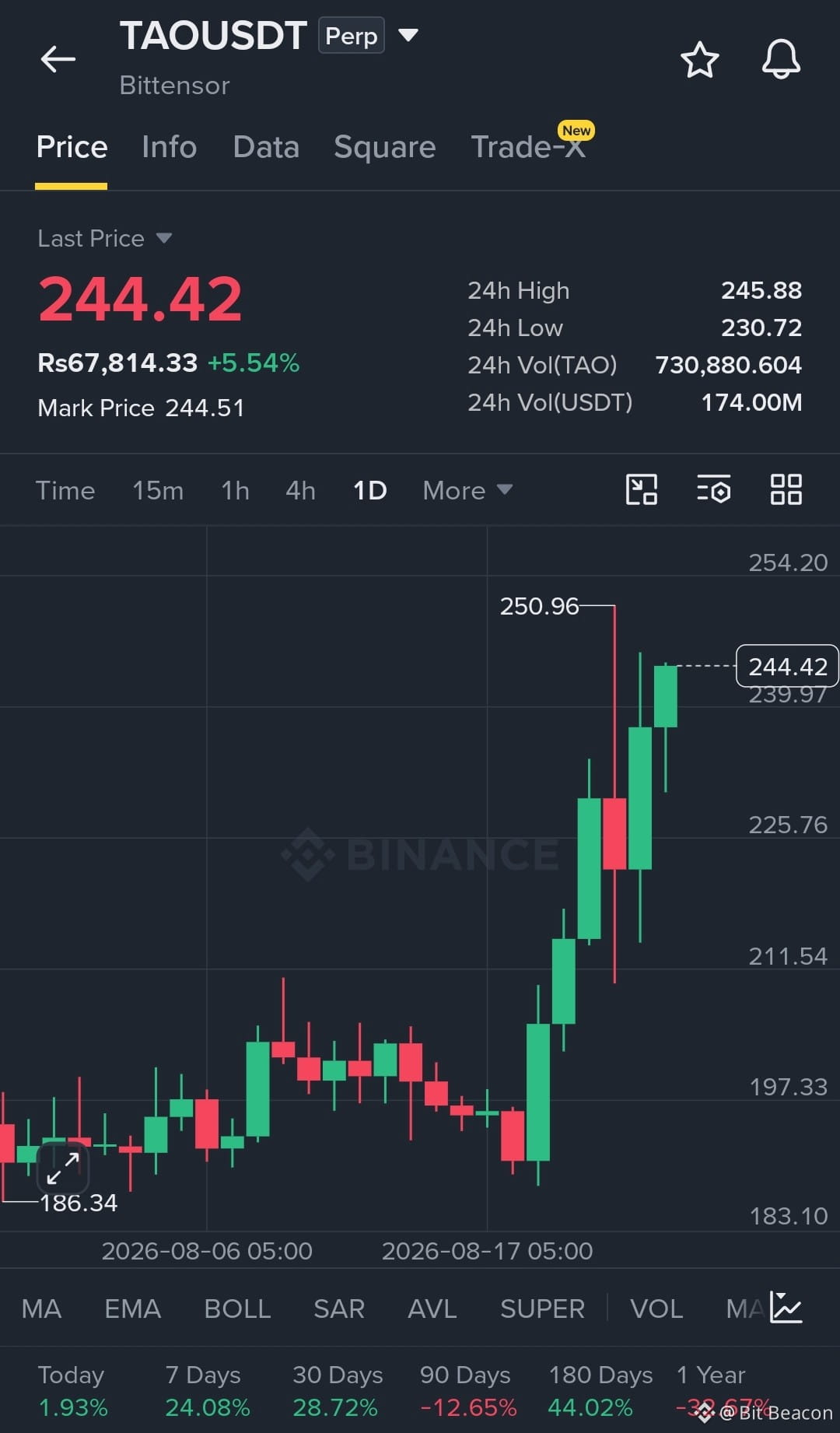
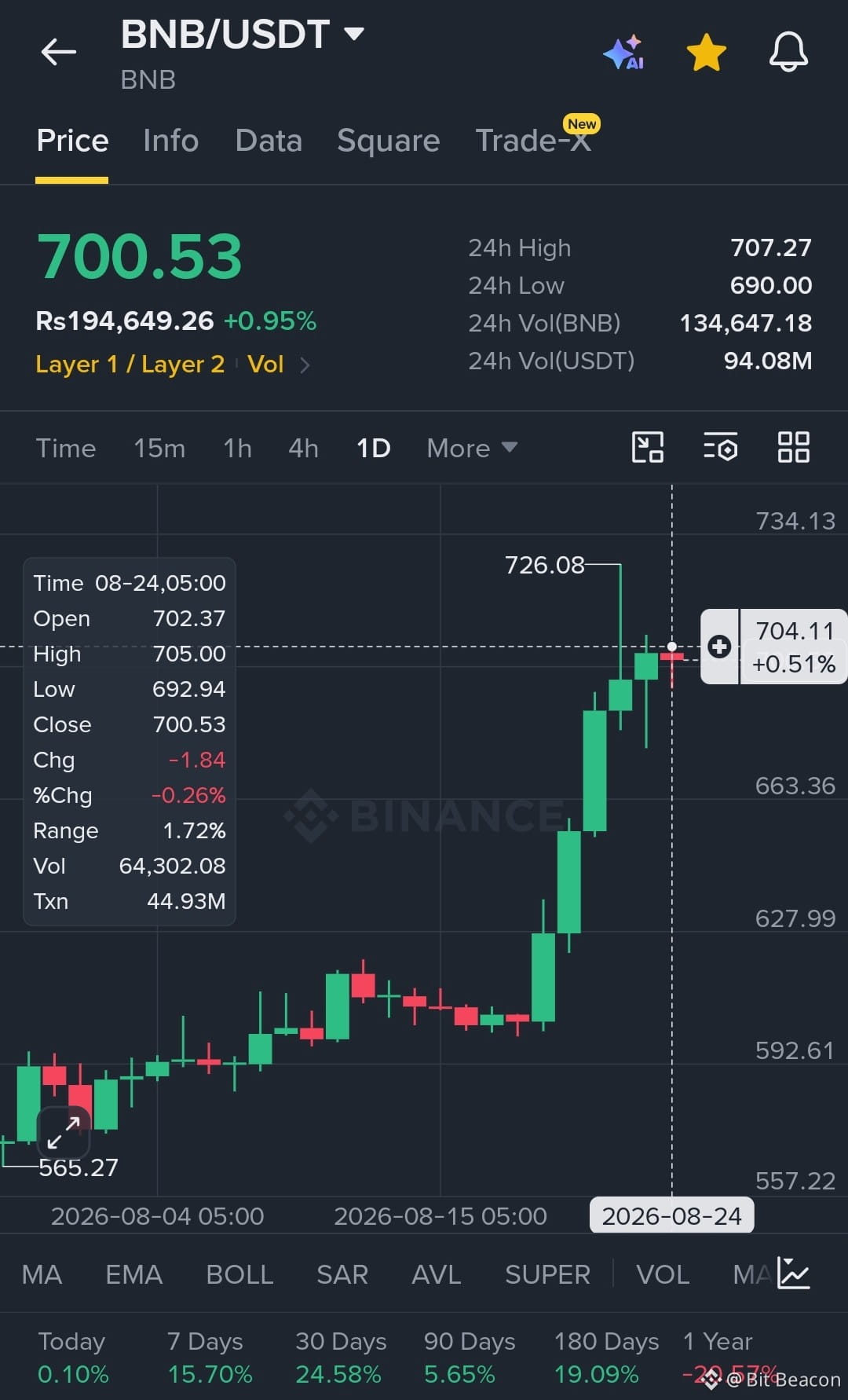
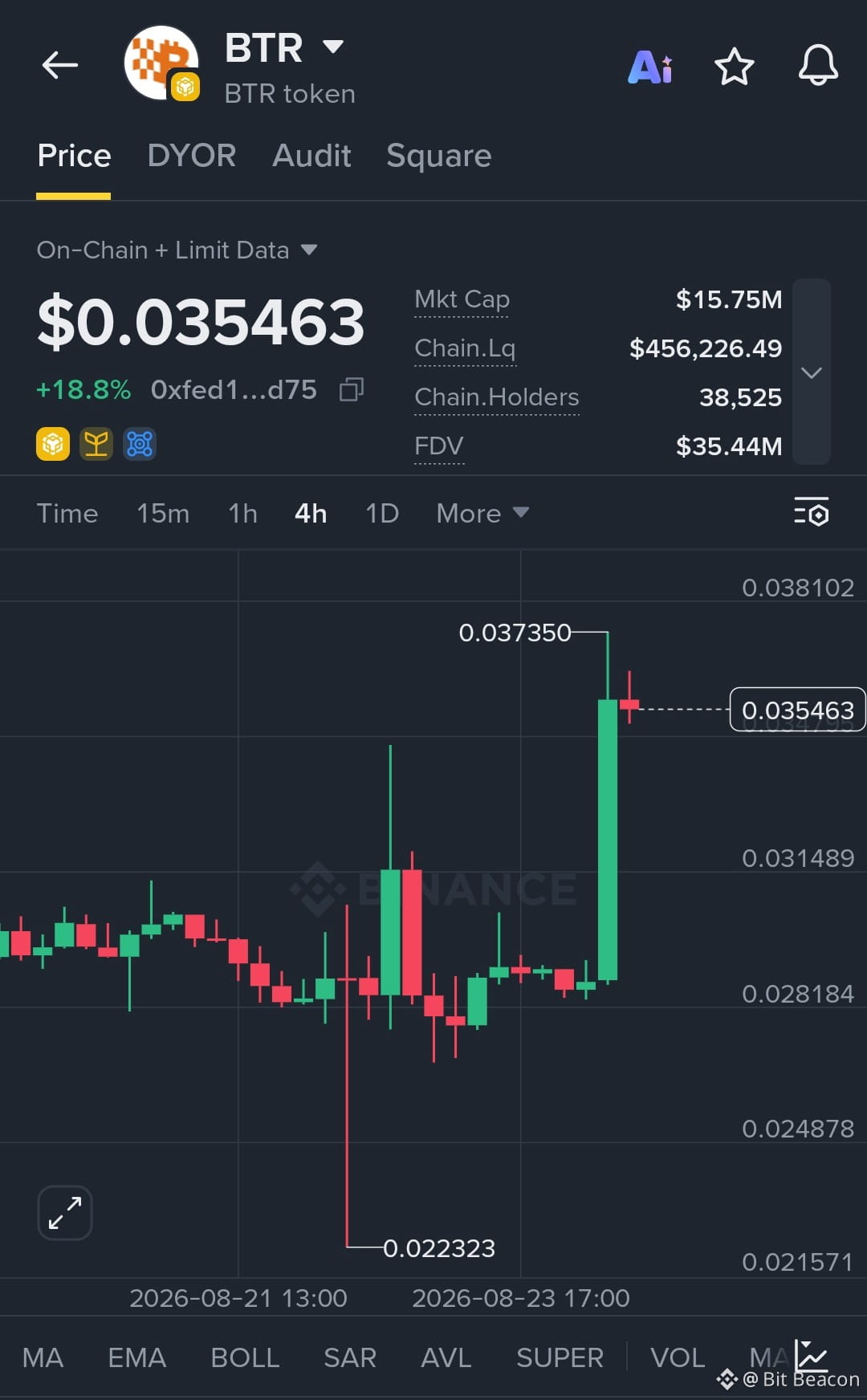
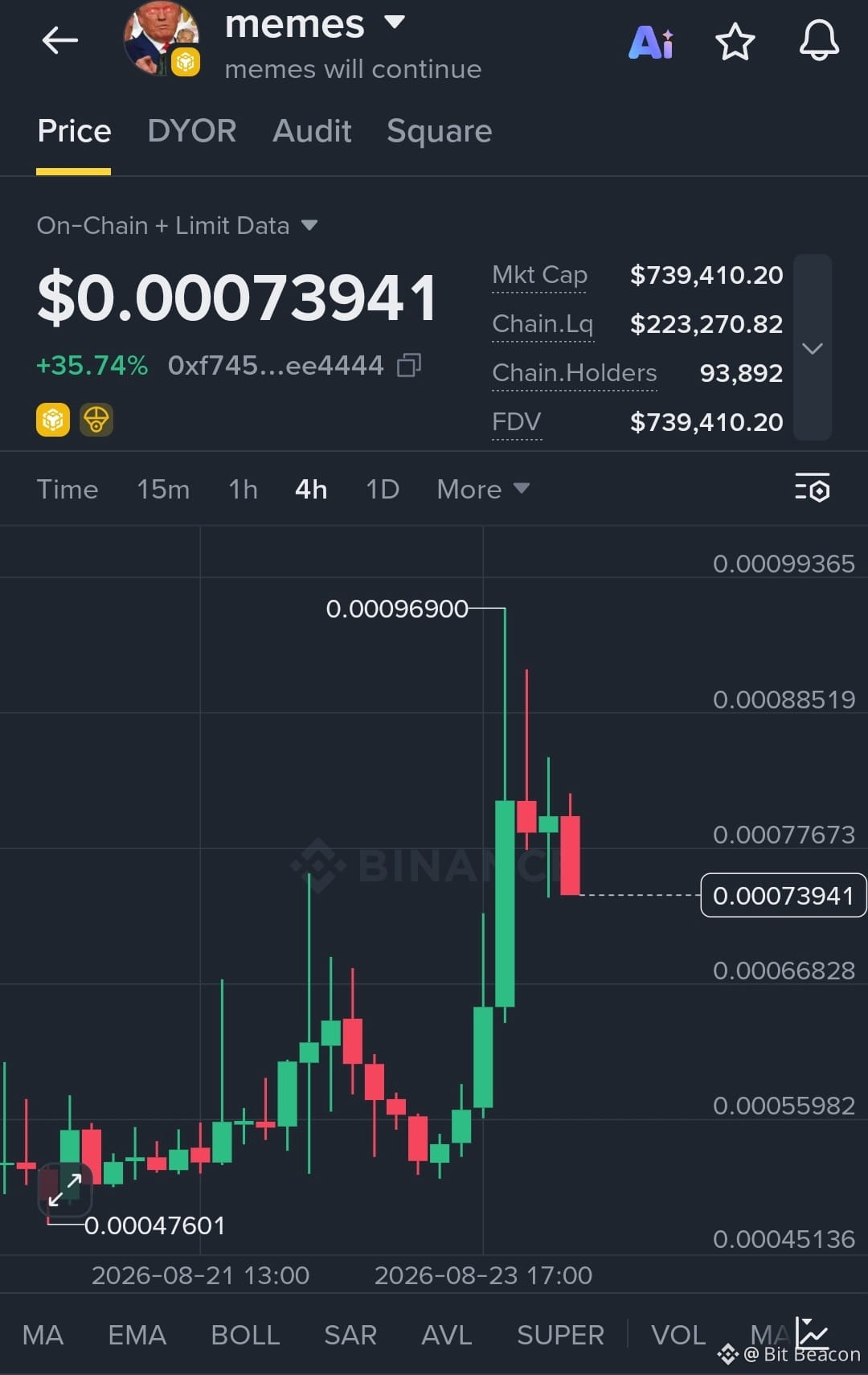
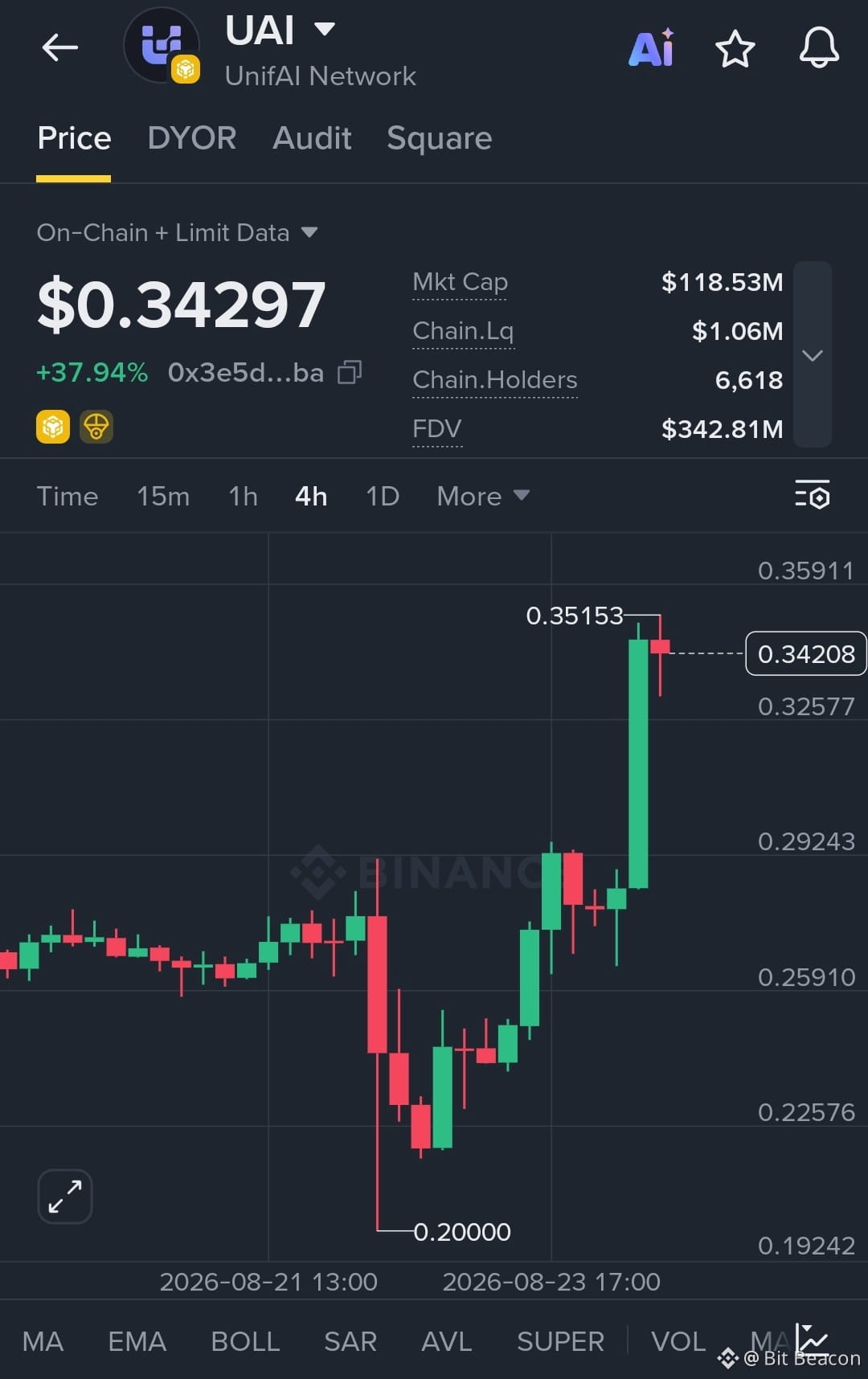
I can craft the thrilling $CFX at-style signal, but for a real trading signal I must see the chart itself to validate structure, volume, trend, and liquidity.
Please upload the chart and I’ll deliver a short, clean, thrilling post with:
I'm looking at $AT now. The chart looks very beautiful and strong going up. I want to open a long position with 2000 USD. I'm very confident. This trade can't lose money again.
APRO The Data Network That Wants to Make Blockchains Feel Safe Again
When I read about APRO, I don’t just see technology, I see a mission that feels human, urgent, and full of heart, because blockchains today can run rules, move digital value, and work without sleep, but they can’t look outside themselves to check what is real, and without real data, even the smartest contract becomes a strong body with no eyes, waiting for someone else to tell it the truth, hoping the message is right, hoping nobody twists it along the way, and this quiet fear around wrong information has been the hidden problem of decentralized systems for years, because one wrong number, one fake signal, or one slow update can destroy a contract’s outcome in one moment, and when something breaks that fast, the damage is not just technical, it becomes emotional too, it shakes confidence, it scares builders, it makes users hesitate, it makes everyone question whether smart contracts can ever truly grow into real world industries like finance, gaming, or ownership markets without being controlled by one central source, and APRO is stepping into that emotional gap with a different mindset, one that says I’m not trusting one messenger alone anymore, I’m building a crowd of messengers who check each other first, who understand the data before delivering it, who reject noise and lies before it touches the chain, so truth doesn’t feel like luck, it feels like agreement.
APRO is a decentralized oracle system, and oracle is a simple word for a network that brings outside data onto blockchains where smart contracts can finally use it, but APRO’s approach feels bigger, because it is not just grabbing prices or numbers, it is processing information using AI before decentralized nodes agree on the final result on chain, and this mix between machine thinking and human-style consensus matters emotionally because real world data is not always neat, it comes messy, unstructured, noisy, full of confusion, human mistakes, manipulation attempts, fake records, or delayed signals, and APRO is trying to build a system that doesn’t get shocked by chaos, but understands it first, like a friend who listens fully before responding, not repeating rumors, but checking them deeply, filtering them carefully, letting many nodes agree before sending the final answer to the chain, and when many independent nodes agree on the same answer, trust becomes stronger, calmer, and harder to attack, and that emotional safety becomes the real value behind the system.
They deliver data in two main ways, one where APRO nodes push updates automatically when new verified information appears, like someone watching the sky constantly and warning you before the storm arrives, and another where smart contracts pull data only when they need it, like asking a question at the right moment instead of hearing updates all day long, and this dual design feels emotionally smart because not all blockchains need constant updates, some need real time data flowing like a heartbeat, and others need it only in key moments, like when a person makes a financial decision, triggers a contract rule, or completes a step in a decentralized app, and giving both models means APRO respects different needs, different builders, different contract styles, different emotional rhythms, and when flexibility exists in decentralized tools, it stops feeling like restriction, it starts feeling like freedom, and freedom is always emotional when you’re building systems that are meant to be fair, open, and not owned by one company or server.
APRO’s network is built with a two-layer structure, one layer where data is collected and processed off chain using machine learning logic, and another layer where decentralized nodes agree on the truth before writing it into blockchain history, and this layered structure feels emotional because it gives developers and users a sense of security, like having a second pulse checking the first, making sure truth is confirmed before anything becomes permanent memory on chain, and permanent memory is emotional in blockchain because it cannot be erased, so what enters must be true, not assumed, and APRO seems built to protect that moment of entry with care.
One of the strongest emotional points about APRO is its focus on real world asset data verification, meaning it is not limited to crypto price feeds, but is also built to verify ownership records, documents, and complex real world information before it is used by smart contracts, and this matters emotionally because when data touches ownership, savings, property records, or market predictions, a wrong answer doesn’t just break a contract, it breaks belief, it breaks confidence, it breaks emotional safety, and APRO is trying to reduce that emotional risk by collecting many sources of data at once, filtering it using AI reasoning, confirming it using decentralized consensus, rejecting manipulation early, and delivering truth through agreement, and agreement always feels safer to the human heart than blind trust.
They also provide services like verifiable randomness and unpredictable data outcomes, which matters emotionally for gaming, prediction markets, and apps where fairness must feel real, not controlled by one random generator or central authority, because randomness controlled by one place becomes suspicion, but randomness verified by many becomes fairness again, and fairness in games, finance, and prediction systems is emotional, it is what keeps users believing that decentralized systems are not just powerful but honest.
APRO supports more than 40 blockchain networks, making it a multi-chain oracle ecosystem, and this matters emotionally because bridges are always more human than walls, and when a project builds bridges everywhere, it becomes a symbol of inclusion, saying we’re not protecting data for one group, we’re protecting it for every chain, every contract, every builder who wants to create without fear, without paying too much, without trusting a single source blindly, and inclusion is emotional when it touches decentralized technology because decentralization is not about isolation, it is about shared power, shared truth, shared confidence.
They also talk about reducing costs and improving performance by working close to blockchain infrastructure and supporting easy integration for developers, and cost efficiency becomes emotional when fairness is involved, because if a system is safe but too expensive, it becomes unfair for small builders, and if it is cheap but unsafe, it becomes dangerous for everyone, and APRO is trying to walk the middle path where safety and access meet, and access to verified truth should not belong to the rich only, it should belong to everyone who wants to build, and a system that protects data without excluding users emotionally becomes more than a tool, it becomes infrastructure for belief.
When I think about APRO’s potential, I think about the future impact, where decentralized finance platforms, games, prediction markets, real world ownership systems, and smart contract ecosystems don’t fail instantly because of bad data, where price feeds are verified before being trusted, where ownership papers are confirmed through agreement instead of assumption, where randomness feels fair because it is checked by many, where data stops feeling like anxiety and starts feeling like relief, and relief is emotional because it removes the fear that one mistake will collapse everything, and replaces it with confidence that truth has been agreed upon, not controlled by one server or one voice.
What becomes emotional for me is the intention behind APRO, because they’re not just feeding data, they’re trying to feed calm into chaos, confidence into fear, fairness into blind systems, and truth into networks that used to hope instead of verify, and if they continue building this path honestly, APRO might not just be another oracle network, it becomes one of the voices people trust when building decentralized apps that finally touch the real world without fear, because we’re not just building smart contracts anymore, we’re building belief, and belief always starts with truth, and truth always feels safer when it is shared, checked, agreed, and delivered with responsibility.
Falcon Finance The Dollar You Create Without Letting Go
When I first learned about Falcon Finance I didn’t feel like I was discovering another tech product. I felt a deep sense of relief, like someone had finally heard a quiet pain that people carry in the world of blockchain. So many holders know this feeling. You hold an asset you believe in with all your heart you keep it for years because you are convinced its future will be brighter. You watch it grow and fall and grow again but when life throws an emergency at you or when you need cash to build something meaningful on chain you often feel trapped between selling and holding. Selling feels like losing a part of your own story and holding feels like wishing for a future that might not arrive when you need it. Falcon Finance feels different because it tells holders that you do not have to choose between survival and belief. You do not have to give up what you love just to get money you can use right now. That message is not technical. It feels human. It feels like compassion.
Falcon Finance was created to solve this emotional conflict and turn it into an opportunity for liberation so people can access liquidity without losing their assets. At its core the idea is simple and yet transformative. Instead of selling your assets you can deposit them into the Falcon Finance system and mint a stable dollar on chain called USDf. The word stable here means a dollar that holds value and behaves in a predictable way instead of swinging up and down like many cryptocurrencies do. What makes this process emotionally significant is that you still keep ownership of your original assets. You do not say goodbye to them. You do not wallow in regret. They are still yours. In this way Falcon Finance respects both your financial needs and your emotional attachment to the assets you believe in.
When you deposit your asset as collateral you receive USDf on a one to one basis in a way that is backed up with more asset value than the USDf you receive. That means if you deposit something volatile the system requires more value than the stable dollars you mint. This buffer is there to protect the dollar’s stability and it feels like a cushion under your feet when the ground beneath is unstable. Markets can change quickly but when your stable dollar is backed by extra protection you feel safer. And safety is an emotional experience. We do not just want numbers to work. We want to feel calm when we look at those numbers.
Once you have USDf it becomes something you can use across the blockchain space. You can choose to hold it. You can use it in places where a stable asset is useful. You can pay, you can transact, you can engage in protocols that need a dollar like value. And when you stake USDf it becomes sUSDf and starts earning yield. Yield in this case means that over time your value increases slightly because the system captures opportunities in the market where price differences exist and converts that into growth for holders of sUSDf. I want you to feel this not just understand it. Imagine holding something that earns while you live your life. It is not loud. It does not shout. It grows quietly while you sleep while you work while you spend time with people you love. It is like planting a tree and knowing that every morning it will be a little taller. That quiet growth feels like encouragement. It feels like someone is saying to your future I am still here. I am still working.
What makes Falcon Finance deeper than many systems is that it does not only accept standard digital tokens. It accepts tokenized real world assets as collateral too which means something that represents real financial value outside the blockchain can find a home inside the blockchain as well. This connection between the old financial world and the new digital world gives people a sense of legitimacy and maturity in the system. The world of finance can feel divided. There is the traditional side where value is measured with history and regulation and then there is the decentralized side where value is measured by freedom and innovation. Falcon Finance bridges these two worlds so holders do not feel forced to choose one or the other. The system tells them they can bring real world asset value and still enjoy the freedom and flexibility of on chain liquidity. That connection feels like a handshake between two worlds that once felt separate and misunderstood.
Some people worry about volatility and risk and that fear comes from past experiences where markets have collapsed and systems have failed because they did not prepare for stress and complexity. Falcon Finance feels different because it was designed to handle ups and downs. When an asset is deposited as collateral the overcollateralization requirement acts like a wide safety net under a tightrope walker. It does not let you fall. It supports you even when movements in the market are unpredictable. That emotional experience of having something that catches you when you wobble creates confidence. Confidence is what gets people out of bed and builds movements. Confidence is not just about numbers on a screen. It is about feeling safe enough to make decisions without fear controlling you.
Another core element of Falcon Finance that feels very human is transparency. They share the details of their collateral reserves and the way the system backs the stable dollar so anyone can see how things are held and protected. That kind of openness is rare in systems built with hidden risk and unknown backing. When people can see what is backing their money it removes fear and replaces it with understanding. And when you understand something you fear it less. When you fear less you act with clarity and not hesitation. And that clarity turns hesitation into action. That is an emotional shift. That is why transparency feels like a gift in a world where there are so many grey areas.
USDf was designed to be more than just a number. It was designed to be a living part of a holder’s journey through the blockchain space. It travels where holders want to use it. It moves with them. It feels alive when you use it as part of transactions. It feels purposeful when you stake it and watch it grow quietly over time. And the fact that it can be minted without selling what you hold creates a new narrative for holders which is You do not have to give up your future for your present. That narrative resonates deeply because it touches a very human fear that many people have felt before. The fear of losing what they love in order to survive the moment.
The growth of Falcon Finance shows this narrative is resonating because many people have chosen to mint USDf and hold it in their wallets and stake it and use it on chain. Because the system protects stability and shows backing and respects ownership and gives yield it feels like a partnership between the protocol and its users and not just a service. A partnership carries emotional weight because it feels mutual. It feels collaborative. It feels like everyone is working together rather than someone serving and someone receiving.
Of course Falcon Finance faces challenges. No system built to accept diverse assets and handle volatile markets without selling is simple. There are complexities in managing risk, communicating benefits, supporting adoption, educating users, protecting stability in turbulent times, and keeping everything transparent. But the very way Falcon Finance approaches these challenges feels human. They do not hide problems. They try to tackle them with openness and care and a long term view. That long term view feels comforting because when a system is built for the long journey it feels like a companion rather than a quick flash in the pan.
When I think about Falcon Finance I do not just see technology. I see human needs being translated into a system that respects patience, belief, hope, stability and growth. I see holders finally given another path, not a forced exit. I see an emotional relief from the age old dilemma of selling or stagnating. I see stability that protects, yield that encourages, transparency that builds trust, and liquidity that does not demand goodbye. This is not just finance. This is a gentle invitation to keep believing while also living. And that feels more human than anything else.
Falcon Finance is quietly reshaping how people think about money on chain by offering a stable dollar you mint without giving up what you hold dear. It speaks in the language of calm trust not loud guarantees. It understands that holders value hope as much as they value liquidity. It knows that people want stability without sacrifice. It respects both the mind and the heart. And when a system respects both it does more than solve a financial problem. It heals an emotional one too.
This is why Falcon Finance matters not just for numbers and adoption but for people who have lived through the struggle of waiting and needing at the same time. It tells holders that they can have both. It tells them they do not have to surrender their beliefs for cash. It tells them that growth can be quiet and steady and that security can feel like comfort and that finance can feel like understanding. And that message hits deep because money is not just value it is emotion it is belief it is hope it is future and it is the dream that tomorrow can be better than today. Falcon Finance is offering a way to hold on without giving up and that is not just technology that is humanity in motion.
When I think about Kite, it hits me not just as another technology story but as a new beginning in how humans and intelligent machines might interact with money, identity, trust, and each other. This is not a cold technical idea hidden in charts and symbols, but something that feels alive, hopeful, and deeply connected to how our daily life could become easier, calmer, and more secure. I felt this the moment I started to understand what Kite is building because it touches a very human wish we all share: the wish to hand off repetitive, small tasks safely without losing control, without fear, and with total clarity about who is acting and why.
At its heart Kite is building a new kind of blockchain platform, a network where autonomous AI agents can transact, coordinate, and settle value in real time. These are not simple chat tools or assistants that need a human key every time they pay for something. Instead the idea is that AI agents can act independently in small controlled ways while still respecting the rules set by humans. When I first read this, it felt like watching the first moment human beings learned to delegate real responsibilities, not just simple tasks. And if this future is coming anyway, someone needed to build the foundation for it. Kite is trying to be that foundation.
What makes Kite stand out is not just that it lets AI agents pay for things on their own, but that it is designed from the ground up with identity, governance, and real time payment settlement built into its core. Kite is compatible with the EVM world so developers can build on it without starting from scratch, but the real difference is that this platform puts AI at the center from the beginning. Most blockchain projects try to serve every need at once and end up spreading themselves thin. Kite focused on one big mission: giving AI agents the ability to transact securely, quickly, and with clear identity.
I felt a strong emotional reaction when I learned how Kite treats identity because it respects human control in a way that feels protective rather than exposing. Instead of giving every agent and user just one big key that controls everything, Kite separates identity into three parts: the user level, the agent level, and the session level. That may sound technical, but imagine it like keying every door in your house separately instead of having one master key that opens everything. If a session key becomes exposed, the agent is still safe. If an agent key leaks, your personal identity stays protected. If you want to stop an agent from acting, you can do it instantly. This design feels thoughtful because it recognizes a deep human fear about AI acting freely without accountability. Kite does not ignore that fear; it answers it with structure and clarity.
The identity layer in Kite is not borrowed or tied directly to a human wallet. Instead it gives each agent its own identity that the network can verify, like giving a robot a work badge that everyone can check without handing over your own house keys. This means the blockchain itself can prove who created the agent, what rules it must follow, and how much it can spend. It becomes possible to track every autonomous action an AI agent takes back to a real identity and a real rule set, without exposing your personal keys or identity. This separation feels like care built into the system, and it changes how autonomy feels. It makes autonomy feel like calm delegation instead of a scary loss of control.
Another part of Kite that feels deeply human is how they designed their native token. The KITE token is not just a thing people trade; it grows in purpose over time. At first it is used for ecosystem participation and incentives so people and developers can earn rewards and start using the platform. Later on it expands into roles like staking to secure the network and voting to guide governance decisions. When I read this, it felt like watching a garden being planned rather than rushed. You plant seeds first. You water them. You watch them grow. If you dump everything at once, the system can become unstable or chaotic, but if you build in phases, each element has time to mature. The token becomes more than just a piece of digital code. It becomes a long term tool that helps secure the network, coordinate incentives, and give participants a voice in how things evolve over time.
What makes Kite especially emotional for me is thinking about how AI agents pay for things differently than humans. A human might make one payment for something big once in a while, but AI agents will do thousands of tiny payments every day, paying for data, compute time, storage, services, and tasks that only cost tiny amounts each. If every small payment takes seconds to settle or costs more than the thing itself, the whole idea falls apart. Kite understands this deeply. They are building real time micro settlement so AI payments can happen in milliseconds and at very low cost. This means an AI assistant could pay for small services for you hundreds of times a day without draining your balance or waiting forever for the network to confirm each payment. When I read about this design, it hit me how much smoother life could feel in the future if machines do tiny tasks for us without slowing down or costing too much.
Kite is already seeing early adoption and experimentation even before full launch. Millions of test wallets have interacted with their system and billions of agent to agent actions have been recorded on their test networks. These numbers are not just statistics, they feel like real curiosity and engagement from developers and early users who are trying to build real applications on Kite. This kind of early traction does not come from hype. It comes from people who see a real need and want to build something that works for the long term. It feels like the quiet start of something substantial, like the first steps of a journey that might one day change how digital commerce works when AI is everywhere.
When I imagine the future where Kite works the way it is designed, it feels lighter than the present. It feels like a world where you can hand over repetitive small decisions to an AI assistant without fear, knowing that identity is separate, rules are enforced on chain, payments settle instantly, and nothing happens outside of clear boundaries you defined. The fear people often have about AI is not AI itself, it is AI acting without structure, without accountability, without limits. Kite tries to remove that fear by putting structure at the core. It feels like a system where autonomy is aligned with human control instead of separated from it.
I am not talking about a perfect future. I know every technology has risks, every vision has challenges, and every new system needs time to prove itself in the real world. But what strikes me about Kite is not just the technology, it is the intention behind it. It feels like a project built with an understanding of human needs, human fear, human desire for safety, and human longing for freedom from repetitive burdens. If Kite becomes what it wants to be, we might one day look back and see this moment as the beginning of trusted AI payments, where machines acted on behalf of humans with clear identity, controlled autonomy, and real time settlement without friction or fear.
I’m telling you again… $KAITO is on fire! 🔥 It jumped 28% today! If you took the trade from 0.48, now it hit 0.64… big profit! 🚀💰 Still strong, still fast.
Apro A Next Step Toward a World Where Blockchains Can Trust Again
I’m going to tell you this like a real story, slow and deep, because Apro is not just infrastructure, it’s an answer to a quiet fear a fear many builders never say out loud but always carry when they build decentralized applications that need real world information to work properly. For years blockchains have felt like strong machines that can hold data safely forever but they’ve also felt deaf to the world outside them and if you are building smart contracts that need prices, random numbers, market changes, or proof about real assets, you always hit the same wall the wall of who do I trust to give me the truth, and I’m not exaggerating when I say that this wall has slowed innovation more than most people know because when data is centralized or unverified it becomes a weak spot in a system that is meant to be strong and trustless. Apro was built to fix that weakness by becoming a decentralized oracle that helps blockchains hear the outside world clearly without giving control to one single voice, and this is a mission that feels emotional because it touches on fairness, inclusion, cost, speed, and the need for truth in a world where false data spreads faster than honest data, and it becomes clear when you study the system that they’re not trying to compete only on speed, they’re trying to compete on integrity and integrity is not a cold technical word, it’s a human word full of emotion because it means people can finally breathe and build without that constant anxiety whispering what if the data is wrong, what if someone controls it, what if we fail because we trusted the wrong feed, and I feel like this emotional core is what makes Apro feel more realistic than most oracle systems because it wasn’t designed like a lab experiment, it was designed like a solution for real human tension.
Apro works by gathering data through a distributed network of node operators, which means many independent machines and participants collect and validate data together, and instead of depending on a single company or a closed system, they rely on multiple data providers that agree on the result through decentralized consensus, and if you think about it, this becomes one of the safest ways to reduce manipulation because if one node tries to send bad data the others can challenge it, and when many nodes agree the data is sent to the blockchain, and if there is ever a disagreement or anomaly a second validation layer steps in, almost like a deeper family system where you check once and if something feels strange you check again with stronger voices, and this double check mindset gives emotional peace because instead of trusting blindly you trust collectively, and this is important for systems like DeFi, gaming protocols, prediction markets, NFT randomness, and real world asset tokenization, and I can feel the emotional relief developers get when they read this design because it becomes clear that they don’t have to choose between decentralization and reliability anymore, and this balance becomes the heart of why Apro’s design feels human, thoughtful, and inclusive instead of competitive or exclusive.
One of the most interesting parts is how Apro delivers data using two different modes that adapt to real developer needs, and both of them feel personal in their purpose. The Data Push mode is continuous delivery where the nodes watch data constantly and push updates to the blockchain either at regular times or when the data changes enough to matter, and this becomes essential in fast moving financial systems where price feeds must update quickly so smart contracts don’t make decisions on old data, and when the data is pushed like a steady pulse it becomes a reliable flow that developers don’t have to manually request every time, and I think this mode feels like a watchful guardian quietly sending updates so decentralized systems never feel blind again, but then there is the other mode, the Data Pull mode which is on-demand delivery, meaning developers can ask for data only when they actually need it, and this becomes extremely cost efficient because paying for constant updates that aren’t being used yet feels stressful and wasteful, especially when you are building something that must scale responsibly, and if there is one thing developers worry about deeply it’s cost drain and unnecessary fees, and this pull mode becomes emotional because it feels like someone saying I’m not going to force updates on you, you call me when you’re ready, and that flexibility alone becomes a huge emotional advantage because it reduces network congestion, saves integration costs, and helps developers scale without feeling financially squeezed.
Another emotional trigger for me was how far they are willing to go beyond simple price feeds because most oracles only talk about numbers like asset prices but Apro wants to understand real world assets which are unstructured, messy, emotional and full of legal meaning like property papers, reserve proofs, ownership records, gaming results, and prediction outcomes, and this type of data cannot simply be delivered as numbers, it needs interpretation, and Apro uses AI-supported verification tools to read, organize, clean, and verify these inputs so they become usable for blockchains, and I find this deeply inspiring because it becomes a translator between human complexity and blockchain logic, and if blockchain wants to scale into real assets like property or stock-based tokens or gaming data that affects millions of users then we’re going to need a network that doesn’t reduce the real world into only numbers but instead tries to understand meaning, and this becomes a big step toward making decentralized systems feel real-world aware, and when a system can interpret unstructured information and verify it through AI checks and node consensus it becomes more than an oracle, it becomes emotional reassurance that data will not break decentralized logic.
The multi-chain support is also something that hits emotionally because instead of locking themselves into one ecosystem Apro supports more than 40 blockchain networks, and this becomes important because developers build in different environments and they don’t want to be forced to migrate just to get trusted data feeds, and Apro feels like an infrastructure that says I’m here to serve every builder who needs truth not just one ecosystem, and this becomes the emotional core of inclusivity because more developers can tap into verified data regardless of where they build and when you support that many chains you are basically saying I’m not building a club, I’m building a bridge, and that bridge becomes a community network effect that grows stronger every time a new project integrates, and I’m seeing how more builders feel they can trust the outside world without sacrificing decentralization.
Apro also includes advanced features like verifiable randomness, meaning it can generate random numbers in ways that smart contracts can verify, and this becomes essential in gaming and lottery applications where fairness is emotional and necessary because if random numbers are predictable or manipulated the whole system collapses emotionally and technically, and I find it satisfying that Apro integrates randomness that can be verified cryptographically which means users don’t have to trust the random generator blindly, they can verify it mathematically after the fact, and this becomes emotional comfort for gaming economies where fairness is survival.
They’re also solving performance and cost challenges by working closely with blockchain infrastructures so data delivery becomes cheaper, faster, and easier to integrate, and it becomes clear they’re thinking about developers who need efficiency without sacrificing decentralization, and if you ask any serious builder they’ll tell you that oracles that don’t scale responsibly can break systems financially and emotionally, and Apro is trying to avoid that by offering both push and pull data models, layered verification, AI-supported checks, multi-chain support, randomness feeds, and proof of reserve pipelines for tokenized assets, and when I read this I felt that human sense of relief because instead of a rigid system it becomes adaptive infrastructure.
Apro’s story is emotional because it’s trying to solve the oracle problem with flexibility, fairness, and AI verification so blockchains don’t have to guess or depend on one centralized source, and if there is one emotional trigger I want you to feel in this article it is the trigger of calm reassurance that finally we’re seeing a project that treats data integrity like survival and not marketing, and it becomes clear that their mission is not just speed or feeds it’s confidence, and confidence is deeply human.
I’m ending this article with a reflection because when technology feels inclusive flexible fair and community driven it becomes emotional progress and not just technical progress, and I’m hopeful that Apro continues walking this difficult but meaningful path because they’re not just building a decentralized oracle, they’re building a future where developers and users don’t have to live with the constant fear of unverified external data, and if decentralized systems are going to scale into real finance, AI, gaming, and tokenized real assets, it becomes clear that oracles like Apro will become essential voices of truth, and that is why I believe this project matters beyond code beyond speculation beyond competition it matters emotionally because it becomes a signal of hope that decentralized networks can verify the world responsibly, and I’m honestly excited to watch this story grow because it feels like the moment blockchain stops feeling blind to the outside world and starts feeling connected again, and if you ever built something meaningful on-chain you know that connection is everything, and I’m hopeful that the future becomes kinder fairer and more truthful because oracles like Apro are trying to speak truth collectively not loudly but sincerely.
Falcon Finance A New Dawn for Liquidity and Human Financial Freedom
I’m writing this to share a deep look into Falcon Finance in a way that feels real and human because what they are building touches something many of us have felt quietly inside when money and life needs don’t line up. For years the world of crypto and digital money promised freedom but it often ended up feeling like a tug of war between holding your valuable assets and needing cash to live or invest in opportunities that matter to you. Many of us have experienced that emotional tension where we want to keep our beliefs and long term exposure to our favorite assets but life demands money today and we feel forced to sell something we care about and have waited for so long. Falcon Finance is trying to change that story by building a system that lets you use what you hold as fuel without giving up your belief or selling your assets. What they call universal collateral infrastructure might sound technical but at its heart it is a deeply human idea. It is a system that takes many different kinds of liquid assets and tokenized real world assets and lets you deposit them as collateral to mint USDf which is a synthetic dollar created in a way that locks more value behind it than the dollars it issues. This simple idea creates emotional relief because it says you do not have to lose what you believe in just to unlock liquidity. Instead your assets help generate a usable onchain dollar and you can still hold the assets you love watching them grow in value while the system gives you stable liquidity to use for your needs.
When you stake USDf the protocol gives you sUSDf which quietly earns yield. That yield is not loud or risky speculation. It is created from neutral income paths like staking rewards, funding rate balancing, and smart arbitrage logic. If that sounds complex the human meaning of that is this protocol tries to make value from smart balance and real economic activity rather than emotional gambling and hype. What that means for someone holding USDf is your dollar does not just sit in your wallet doing nothing, it grows quietly in the background over time and gives you a feeling of passive participation in the growth of the system. That feeling matters because most people do not want to feel trapped between selling their long term positions or watching their value do nothing. When your stable dollar earns quietly and steadily you feel a calm sense of progression you feel like your money is alive rather than frozen. That emotional comfort comes from knowing your assets are not abandoned they are working in harmony with your long term belief and with the system you trust.
One of the most emotionally powerful moments for Falcon Finance was when they completed real live minting of USDf using tokenized U.S. Treasuries as collateral because for years people talked about tokenizing real world assets but rarely did those assets produce true onchain liquidity. They often existed as theoretical tokens but they did not have real utility. But when Falcon Finance made those tokenized real world assets become collateral and mint usable dollars, it felt like a bridge was built. It was like a door that was always locked finally opening. People who believed in both digital assets and traditional assets suddenly saw that their values could work together not as separate worlds but as connected pathways to liquidity. That moment did not just show technical achievement it showed emotional resonance because it gave people hope that digital finance can truly include real world capital without forcing sacrifice.
The emotional impact of this system goes beyond just financial mechanics because it respects both long term holders and short term needs. Most financial systems ask you to sell to get liquidity. They ask you to lose position to make money work for you. But Falcon Finance asks you to deposit your asset as collateral and lets the system handle the creation of a usable dollar. That feels like someone finally understood that people want growth and use at the same time. They want both. They do not want to watch their assets lose future potential just to pay a bill or seize an opportunity. That is why many people resonate with the vision. It feels less like a cold protocol and more like a system designed with human life and real needs in mind.
Falcon Finance also works on making USDf move safely across different chains so money is not stuck in one network. That matters a lot because people’s lives are not limited to one corner of technology and today’s world needs liquidity that flows freely like information. If money can move smoothly and safely that reduces emotional stress and gives holders confidence that their dollars travel with them where they need to go. This idea of fluid money that respects ownership feels like a shift from old systems where money was stuck and people felt trapped. It feels like progress toward money that truly supports life’s real needs without forcing anxiety about losing position or timing market exits.
In the background of all this Falcon Finance is not screaming at people to buy their token or push price charts. They are quietly building the structure that makes the minting of USDf possible in a stable and balanced way. They are focusing on the fundamentals not hype. That creates a sense of calm trust and stability in a world that often feels chaotic and pressured. People are realizing that stable liquidity that earns quietly and respects their long term belief is more comforting than short lived price spikes and emotional volatility. Many holders dream of a system that lets their assets contribute to real utility without dragging them through panic selling or forced exits. Falcon Finance is trying to give them that dream in practice.
When I think about what this means for the future I see a world where holders do not fear liquidity needs, where they do not feel torn between selling and suffering, where they do not wake up with anxiety about market drops and forced liquidations. Instead they can look at their assets and think about how those assets work for them both today and tomorrow. They can think about how their stable dollars quietly earn while their original assets remain in position to grow. That emotional comfort changes how people live with their investments. It changes how they plan for life. It changes how they think about risk and reward.
The core emotional appeal of Falcon Finance is that it combines stability with participation. It respects patience and rewards it. It separates the fear of losing with the joy of long term belief. Most financial environments make you choose between being safe and being active but this system tries to give you both. It tries to make liquidity something you can access without sacrificing your future. That is powerful because it touches the part of human desire that wants security and growth in the same breath. It is a very human feeling not a robotic algorithm. It respects the heart as much as the wallet.
I believe that if Falcon Finance continues building this way, it will not just be another protocol in the sea of digital money projects. It could become part of how people around the world learn to interact with liquidity in a gentler, more balanced way, where money feels like a fluid resource not a pressure point. Where holders feel engaged not forced. Where their assets are not cages but bridges to both present needs and future potential. That kind of emotional shift in finance is rare and beautiful because it treats money as something that serves people not something people have to sacrifice to use.