

Are we talking about what people are most interested about?
Maybe we are keeping the information attached to what to community already into Web3 finds interesting, following trends, hashtags.
Let's see what are the Top 15 online searches about WEB3 an try to explain in simple words what each of them means. Let's include rather that assume knowledge.
*IMPORTANT: This is a basic guide. We aware of the risks of entering this ecosystem without the proper information. Go deeper in every point of this list, ask questions, talk to people already into Web3, Crypto and Blockchain to enter this world in a safer and more informed way.
Most searched Topics:
What is Web3?
Blockchain basics
Crypto Wallets
#ETH and crypto coins
DeFi
NFTs
Metaverse
DAOs
Crypto games — P2E
Smart Contracts
Crypto Investment
Oracles - ChainLink
Altcoins
Future of Web3
Main changes from Web2 to Web3
1 - WHAT IS WEB3:
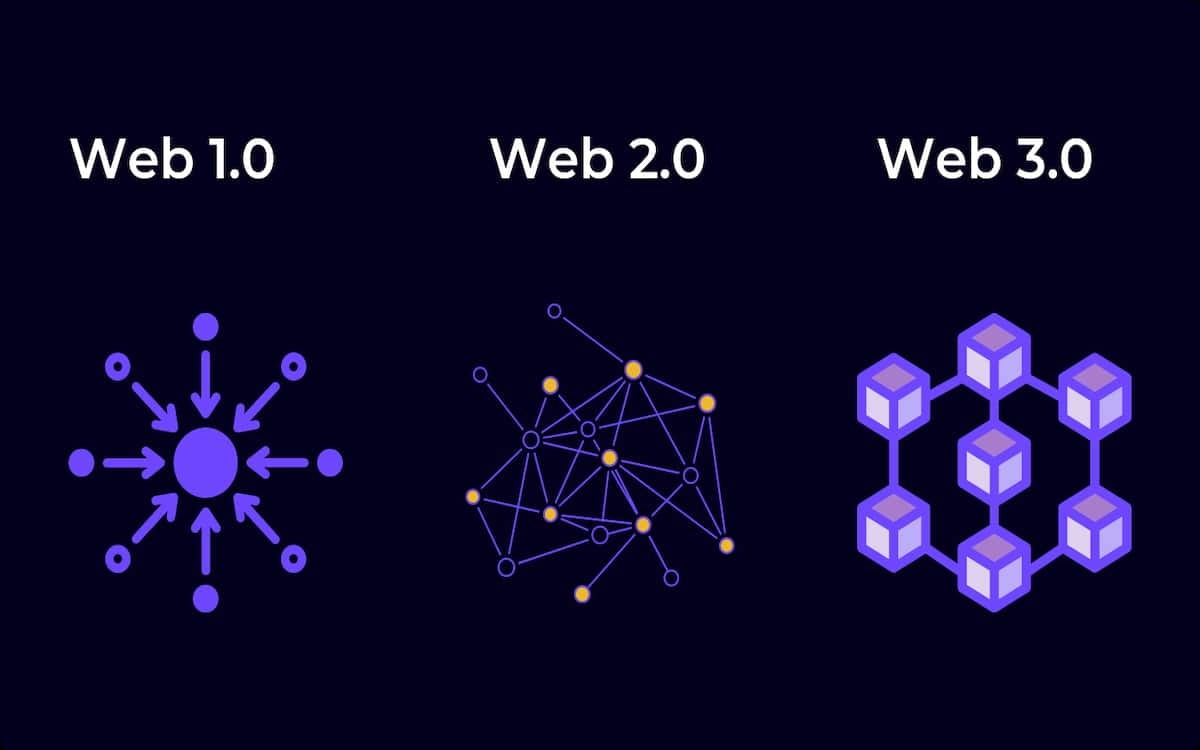
Web1 meant reading — Web2 was about reading and writing — Web3 is about ownership. When you use the current applications like Social Media, all the data gets stored on the company’s servers, and well the majority of big platforms are handled by only a handful of companies.
We trust these companies with our data and have faith in them. We do it because we don’t have any other options yet and it is our main option of having an "online life" or "online presence", from individuals to businesses. Artists never really own the things that they make. You don’t ‘really’ have control over your own money — banks do. Banks have the power to freeze someone’s account and we have plenty of examples in history when it has happened, where the withdrawals had stopped multiple times.
This was a gist for you about how we live in a centralized world.
There are plenty of other examples on why this is important and we need the world of decentralization and Web3.
Centralized platforms have been dominant for so long that many people don't see or understand or have forgotten that there is a better way to build internet services.
Crypto Communities are a powerful way to develop community-owned networks and provide a level playing field for 3rd-party developers, creators, and businesses. We saw the value of decentralized systems in the first era of the internet. Hopefully we’ll get to see it again in the next.
In a short line. Web3 is the evolution of internet as we know it, were the main change is the transfer of control to the real protagonists of the network, the users.
2 - #Blockchain basics:
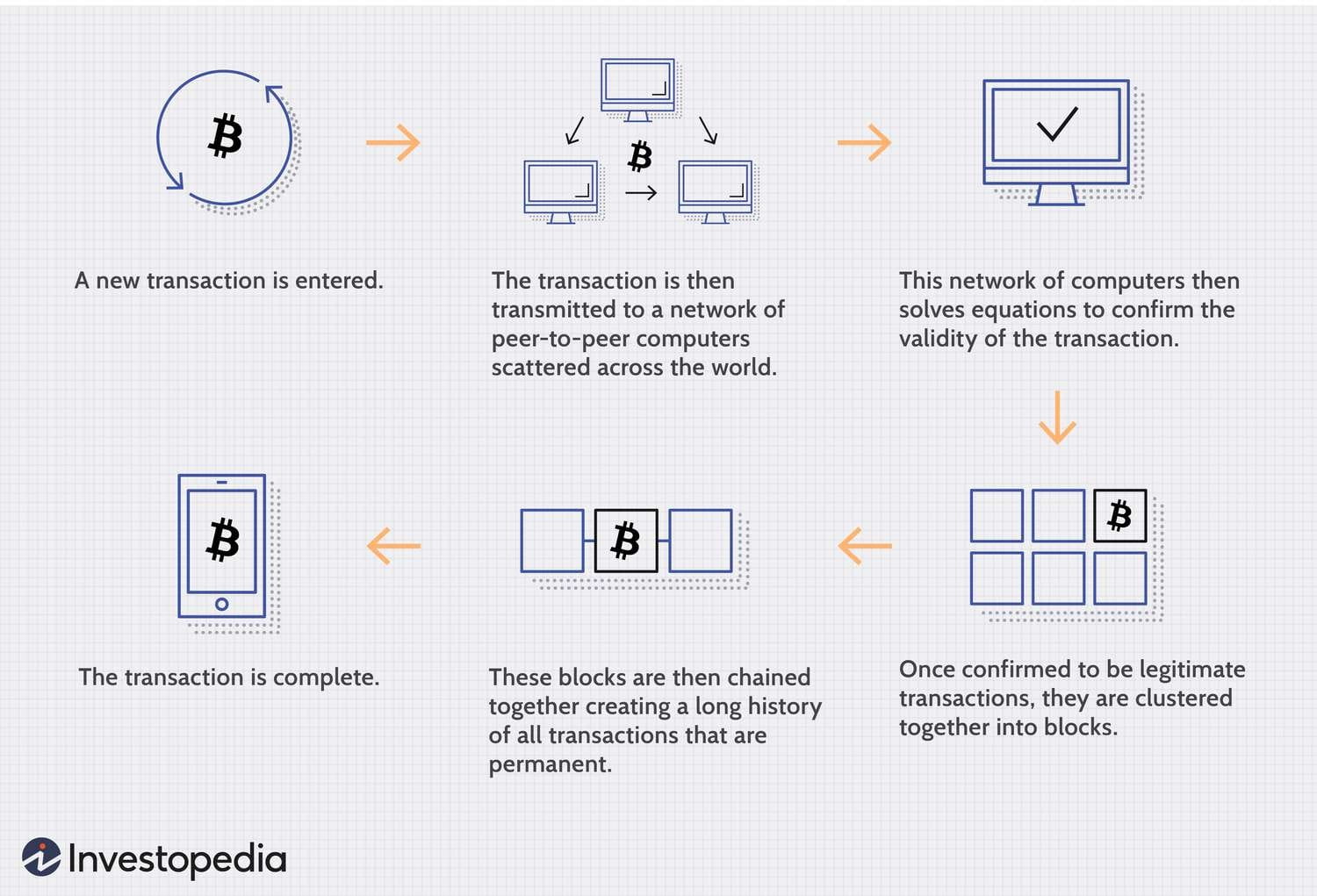
Blockchain is a chain of “blocks” or a shared ledger of data — everyone can see what is going on and all the transactions happening in real time.
If trust can be set by code, then creators don’t have to rely on middlemen. They:
Don’t have to trust banks to get paid
Don’t have to trust lawyers to draft a contract
Don’t have to trust social networks to make a living
Blockchains are:
Decentralized: Transactions are stored on a network of computers (nodes).
Immutable: Transactions cannot be changed once committed to the block.
Open: Transactions can be viewed by anyone.
Bitcoin uses blockchain and therefore is decentralized, immutable, and open. It’s also:
Hard capped: There will only ever be 21M bitcoin.
Single-purpose: Many holders just want it to be a digital token that stores value.
From a developer perspective, think of a backend which never goes down and people can see what you’re doing anonymously with an address. You can deploy your product and use it to create a decentralized app where everyone owns what they make.Blockchain provides:
Decentralization
Trustless System
Security
3 - Wallets:
On Blockchain, your wallet is your identity. There are no names, there are just wallet addresses.
An online wallet is just like the one in your pocket — we need that to store money.
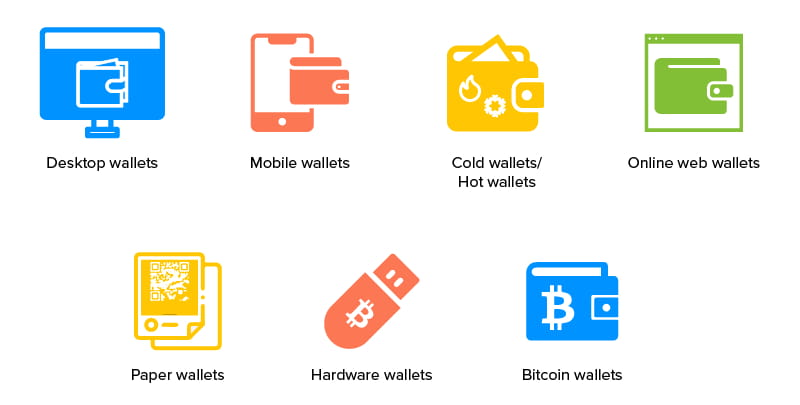
These wallets are either software (e.g., Coinbase, Metamask, Rainbow) or hardware (e.g., Ledger). There are toher formats that fall into the "software" category or the "hardware" category. See the image below to see more examples.
Easiest way to get started is to just experiment with things. Find an exchange where you can purchase some crypto. Setup a wallet like metamask, transfer the money to that wallet, and then see if you can swap some tokens.
*In every step, please be aware the risk that this carries. Be carefull, use this guide as a baseline information in order to research even deeper. Protect your money and learn in the process.
Every wallet has a security key that you need to keep safe with you. Make sure you don’t lose that. In the majority of cases, most people will just use an exchange to manage their money like binance and coinbase.
A consensus algorithm is a process in computer science used to achieve agreement on a single data value among distributed processes or systems.
Proof of work and proof of stake are 2 major consensus algorithm. Let’s discuss those.
POW: Nodes (miners) try to solve a problem — first one that solves it gets the reward — other nodes check if it’s correct.
POS: miners stake their share to solve the problem — other validators check it and get a share if it’s correct — eventually add the block to the chain.
4 - Ethereum and other coins:
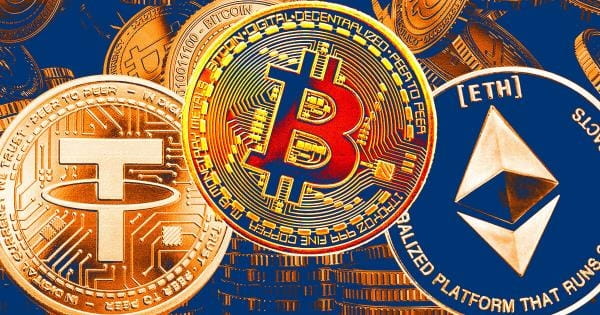
Unlike Bitcoin, Ethereum has a complete programming language inside it, so programmers can write code and make apps on Ethereum.
Bitcoin is a digital gold. It’s a store of value & a medium of exchange. Ethereum is the infrastructure of a digital city. It was imagined as a foundation for businesses and applications to be built atop.
You can use Solidity Language to code smart contracts and then build decentralized apps (dapps) on top of the ethereum blockchain. There are other (and faster) chains that you can develop on — like polygon, solana. Think of the blockchain as a big backend database which runs all the time and can store things for you!
For the coins, we see coins everywhere — shiba inu and dogecoin are going to the moon according to some people. Unfortunately, they don’t have any logic behind those products! They are just meme coins.
There is a lot of thought behind real projects like ethereum and a complete structure of ‘tokenomics’ is defined before launching the product.
When it comes to ETH, there has been big news about this coin that can change its usability in the near future.
There are other stablecoins which you can buy to earn passive income through staking, yield farming, lending, etc, or just to hold and use it as a saving account. Examples are DAI, USDT, etc.
5 - DeFi:
DeFi or Decentralized Finance is a movement that aims at making a new financial system that is open to everyone and doesn’t require trusting intermediaries like banks. To achieve that defi relies heavily on cryptography, blockchain and smart contracts.
DeFi, or decentralized finance, refers to the “ecosystem of financial applications being built with blockchain technology and without banks.”
An awesome reason to learn Defi is the fact that APY returns from some of the apps are 10–20% as compared to the traditional 0.01% from the banks. Think about that — a 2000x more return on your money?
There are some super important concepts like staking, lending, yield farming.
We strongly recommend to search information about this main concepts in order to have the full picture of DeFi and its resourses ecosystem.
6 - NFTs:
Fungible tokens are interchangeable (e.g., the US dollar, bitcoin). Non-fungible tokens (NFTs) are unique (e.g., art, music, domain names, Metaverse and real life assets).
NFTs are much more than just images. Think of ownership. You own your house -> you want to sell it -> every time you sell it -> you get some ownership royalty on it. Now think of owning an art piece or something. You sell that and get royalty on that.
Artists have been selling things they made for years without ownership. Now they’re turning to their true fans to make much more money off of the work they do.
NFTs can and will be everywhere. Everything will eventually become an NFT. From a ticket to a concert to any other physical asset in real and virtual worlds, descentralized, unique and protected in its ownership.
7 - METAVERSE:
Today’s generation spends their day scrolling on their phones, we spend majority of our time online, the next generation will spend even much time on the Internet and thus Metaverse gives a complete new interactive nature to Internet. It opens up a whole new industry for innovation.
#Metaverse is more about the time and the experience rather than about a place or virtual reality. It has many different sub sections and forms like gaming but the overall structure is about your digital identity and the transition from a game to a game-like experience based on Blockchain.
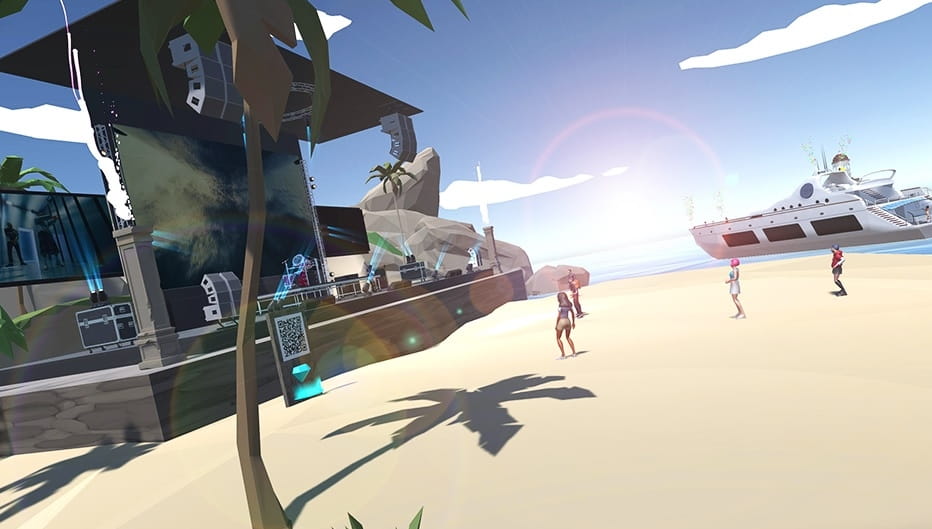
Decentraland, as one of the main examples, is an online metaverse where you can own land, build on that land, and customize avatars — has an expansive map with 100K plots, which were originally sold in 2017, and now has a land floor of 1.2 ETH. A game-like environment based on Blockchain, NFT Assets, etc.
Xave World, an opne world Metaverse based on Music and Entertainment. A gaming experience as any MMORPG, with the development to become blockchain connected and then, become a Metaverse by definition.
But, to understand the origins and the base structure, always think about a game. Eventually, the different spaces within the Metaverse will become the ultimate game, the future of Internet as we know it.
People are buying virtual lands worth millions and creating an online identity inside the metaverse. Soon people might wear VR headsets, sit in meetings from home, buy more virtual lands, play more games, work, create networking environments, and more.
A large part of NFT projects are promising to be compatible in metaverses, or better yet creating their own metaverses, but also the Metaverse projects will include many assets that, by denifition, are NFTs.
Metaverse is nothing but a virtual place and time where people are walking around with their digital identities. The art that they make carries more weight than the shoes they are wearing and are the fundamental part of the constant evolution of this environment.
8 - DAOs:
DAOs are decentralized autonomous organizations — they run without a captain. This automatically reduces the risk of corruption and other malpractices.
Example: token holders of MakerDAO building a decentralized stablecoin are able to govern the system and vote on parameters such as fees charged.
We’ve also seen DAOs emerge that are catered for more specific investment opportunities such as owning NFT art and virtual gaming items.
There are a number of tools built for creating and coordinating DAOs such as Aragon, DAOStack, DAOhaus, Llama, and MyCo so that members do not have to build everything from scratch.
DAOs work on relationships and it’s important to iterate on ideas regularly to maintain the integrity of the ideas
9 - Gaming, Play to earn:
The rise of play to earn (P2E) and metaverse games is one of the biggest innovations to come in 2022/3 with an inclination of P2E becoming part of the metaverse and not the other way around. Gaming has often been described as the potential breakout case to bring in more people into Web3.
Axie Infinity is a Pokémon-like game built on the Ethereum blockchain in which people buy digital pets, called Axies, as NFTs, and breed, battle, and trade them.
In April, Axie did about $670k in revenue.
In May, it did $3.0 million.
In June, $12.2 million.
In Fortnite, everything that a user buys is cosmetic. Buying a certain skin won’t give you a better chance at winning battles, just like buying a new shirt IRL won’t make you stronger. You just do it to show off that you can, or that you have style, or for all of the reasons that people spend on fancy things.
There are many learning based games like crypto zombies which you can complete to learn solidity and the basics of ethereum development.
In June, Japanese mobile game Ni No Kuni: Cross Worlds set the speed record, hitting $100M in revenue in just eleven days, despite only launching in five markets.
Farmers World is another game where players can engage in farming-based activities like building cow sheds, chicken coops, and tending to crops.
Metaverses are virtual environments that come in the form of immersive experiences, because of its 3D modeling and augmented or virtual reality spaces.
Play to Earn or the endless possibilities of transfering business units into the metaverse will become part of the ecosystem.
10 - Smart Contracts:
Smart contracts are the building blocks of all decentralized applications. Just like you see user authentication, servers, backend in a web2 application — smart contracts are the basic thing you need to add to
Learning smart contract development means learning Solidity, which is the programming language behind that.
Things are a little different. You deploy the functions, pay for the writing functions, test it differently using a testnet, writes need to be accepted by the network, everything is public, building on chains is hard, and much more!
There are plenty of interactive games like crypto zombies which you can play to learn solidity, plus endless articles to gather information about the application of smart contracts.
11 - Investment basics:
Crypto market is the most volatile market we’ve seen which brings in the most FOMO among people. (THIS IS WHY YOU NEED MORE INFORMATION BEFORE ENTERING THE WORLD OF INVESTMENTS)
There is no perfect stock or crypto to buy. Do your own research and invest for the long term by taking majority stakes in the most popular projects like bitcoin and ethereum.
Every influencer you can find has a different view on coins and newer projects, most of them get paid for what they speak so make sure you do complete research before getting into it.
Coinbase, #Binance and other exchanges have a way to buy crypto with your bank account. Then you can transfer the money to a wallet or a hardware storage thing.
Defi offers a variety of options for passive income through lending, staking, and yield farming. Please read the conditions for every exchange and platform — usually there is a vesting period where the exchanges hold the amount for a certain period of time.
Take advantage of BINANCE ACADEMY, a great place to go deeper into this issues.
12 - Oracles - chainlink:
Smart Contracts need something to interact with the real world data. And we can’t trust a single point of interaction to fetch this data. The data that we get is still centralized. The weather API that we use in a simple app can take the app down if the company providing that API goes down. Problem to the solution we use Oracles, which work as decentralized ways to get real world data into the smart contracts. One of the leading Oracles => Chainlink.
Chainlink is a decentralized blockchain oracle network built on Ethereum. The network is intended to be used to facilitate the transfer of tamper-proof data from off-chain sources to on-chain smart contracts.
If you use an external API you are actually putting the decentralization at risk because this API is centralized and it is owned by an entity, so if tomorrow this API for some reason goes down you would not be able to do anything about it and your app would be useless.
13 - Altcoins:
Any coin or project other than bitcoin is called an altcoin but the massive success of ethereum, solana, and other projects don’t really justify the name.
Many altcoins are built using the basic framework of bitcoin, giving most of them that much-desired aspect of being “peer-to-peer”. Also, much like bitcoin, they aim to provide a cheap and efficient means of transaction.
Ethereum is the biggest altcoin and we’ve seen the potential of it.
Another famous altcoin and project is Solana. It’s faster and cheaper to build on and uses Rust as the underlying language. Checkout the resources if you’re interested.
Another reason why altcoins are important is that they make great investment tools. With the success of bitcoin in investors’ minds, people are looking to get in on the ground floor by creating and investing in new and practical cryptocurrencies — then selling it when the value rises.
For finding coin values and market caps, coinmarketcap is a nice website.
Take into account that, while Altocoins create a more diverse ecosystem, also requires more research of the project behind each one of them. As a community, we can make the same mistakes of the past. Support, yes, but based on real and trustworthy information.
14 & 15 - The Future - What is next?
All top companies are getting into blockchain and web3 through NFTs, metaverse, their projects, and more.
Google has set up multiple teams and Youtube is bringing NFTs specifically for the creators.
Meta is going all in for the NFTs on instagram and metaverse through VR related things.
Apple is going to launch their characters, metaverse, and NFTs for their users.
And you?
You can start developing applications with any ideas that you may have. Find a no code list, check what all basic information you need, and talk to your users!
Check the ethereum and metamask docs to see what all they are building.
You can open any freelancing website like fiverr and see what all contracts they are getting.
Join discords and stay active there. Get skilled in whatever aspect of web3 you like and start spreading knowledge on twitter. Linkedin and Instagram are still slow but there is information and community there aswell.
Research, get creative, be original, stay informed. Stay tuned. The future is yet to be discovered and Web3 is and will remain as an everchanging landscape.
It’s a beautiful road ahead, don’t stop!
Thanks for reading! Please support Xave World Academy! Follow and share and lets grow together!