
#ibsgovaccountmints1btokensdrains5.71m
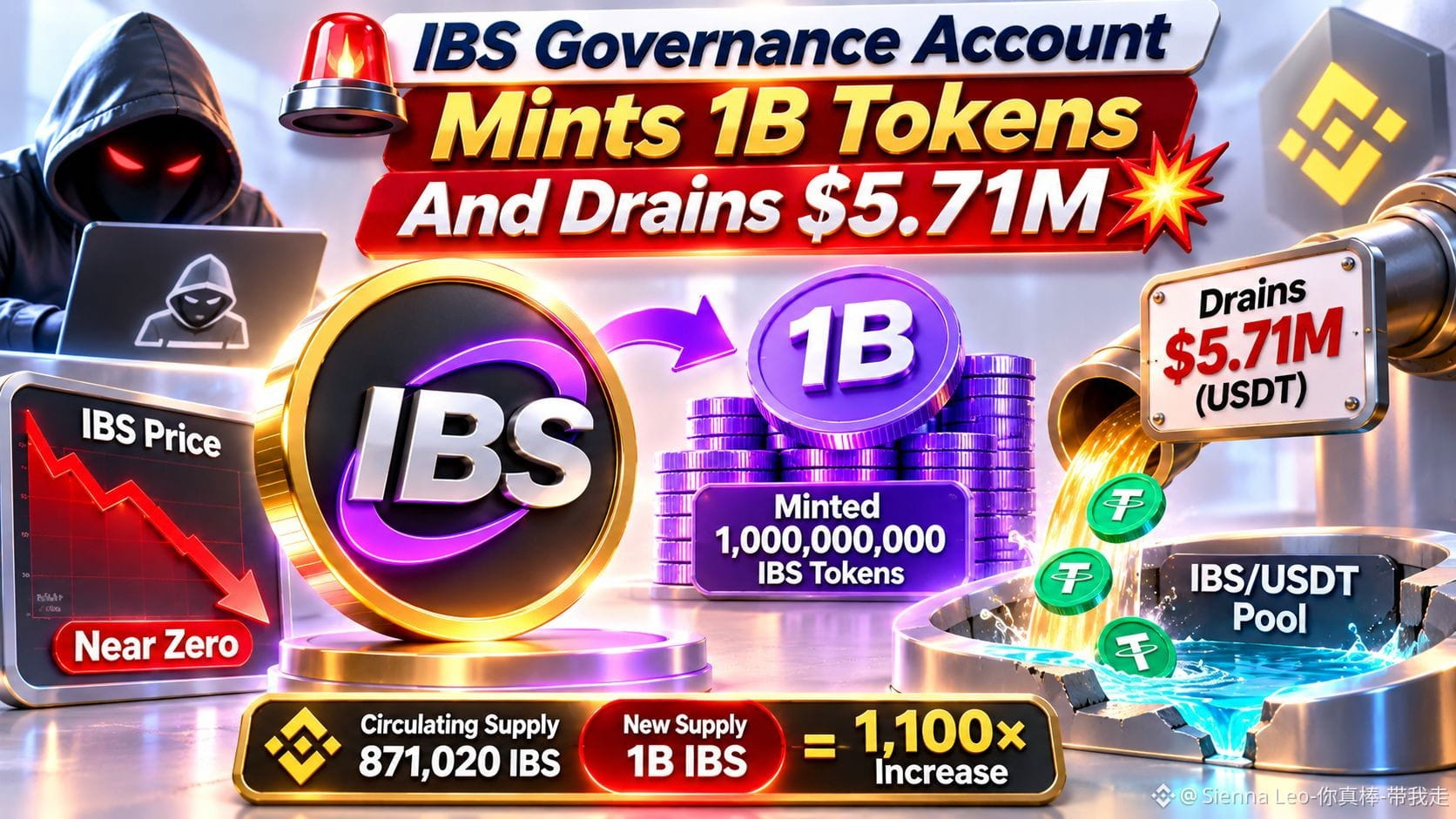
🚨 IBS Governance Account Mints 1B Tokens And Drains $5.71M 💥
A pool looks healthy at breakfast. By lunch, it holds almost nothing. One account with the right permission pressed a single button, and trust evaporated.
Security firm Blockaid reports that a privileged governance account on BNB Chain minted 1 billion IBS tokens. The tokens were swapped for USDT, draining about $5.71 million from the IBS/USDT pool.
Onchain data points to two rounds of minting and selling. IBS then fell to near zero.
The scale tells the story. CoinGecko lists only 871,020 IBS in circulation, so 1 billion new tokens was roughly 1,100 times the existing supply.
My take: the primary driver was access control, not market demand. This looks less like a clever code bug and more like too much power sitting in one account.
The secondary factor is thin liquidity. A pool that holds real USDT on one side is only as safe as the minting rules on the other.
The project's security page lists audits by CertiK and BitsLab. Audits help, but they cannot guarantee safe key management or sound permissions.
Balance check: details are still developing. No recovery plan had been disclosed at the time of reporting.
Practical insight: before using a DeFi token, check who can mint, whether keys are multisig, and how deep real liquidity runs.
In DeFi, the scariest vulnerability is sometimes a legitimate permission.
Should protocols be required to publish mint authority and key controls in plain sight?
Disclaimer: This is not financial advice. Always do your own research.
#DeFiSecurity #BNBChain #GrowWithSAC $BNB $USDT $ETHFI
#IBSGovAccountMints1BTokensDrains5.71M